


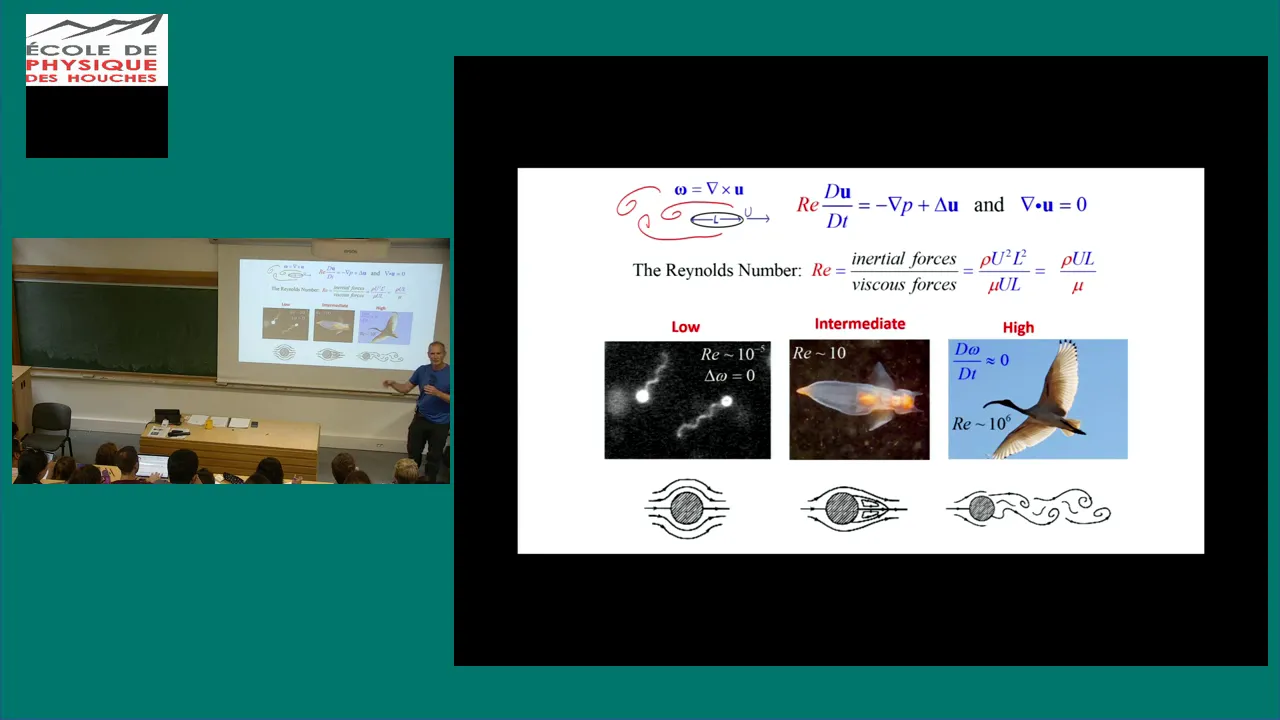




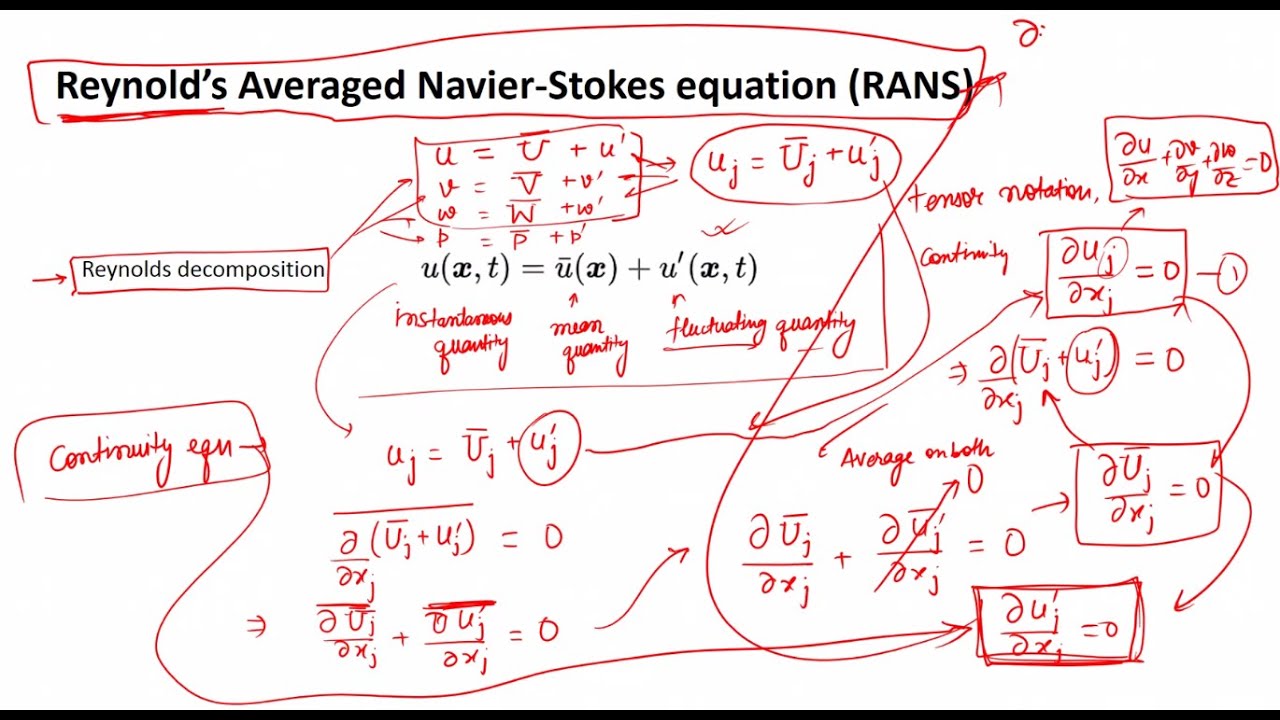


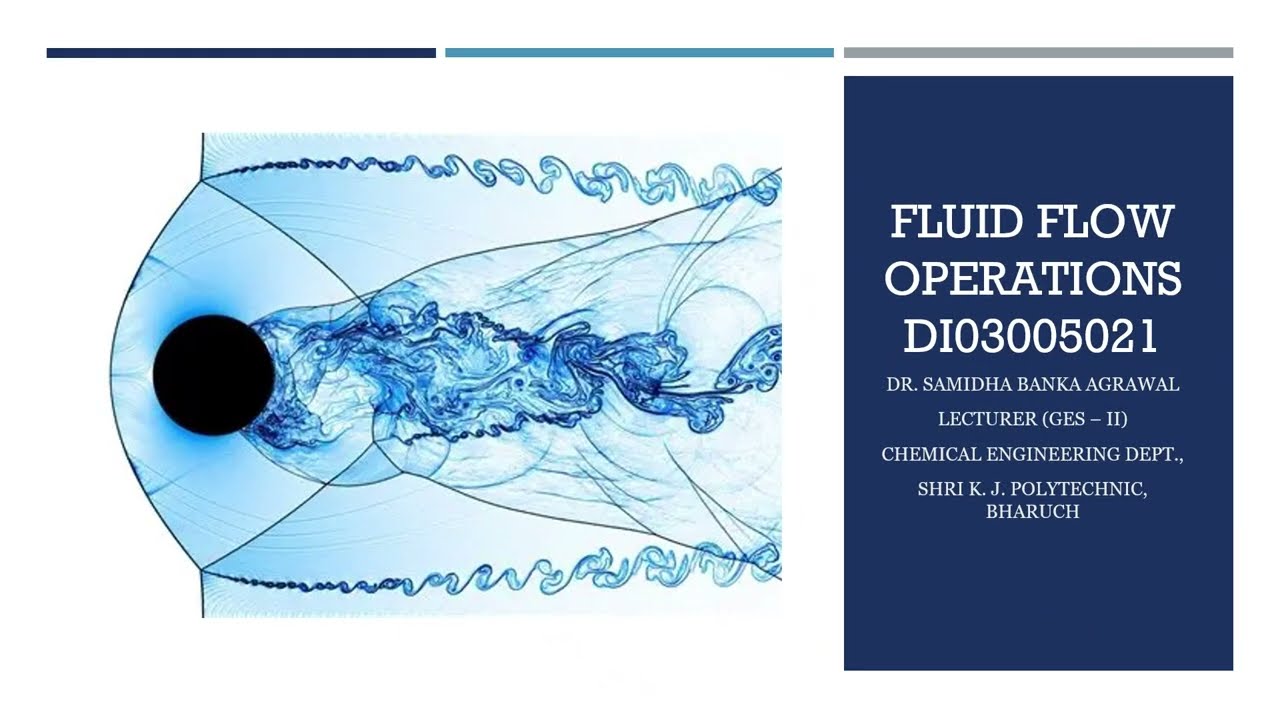





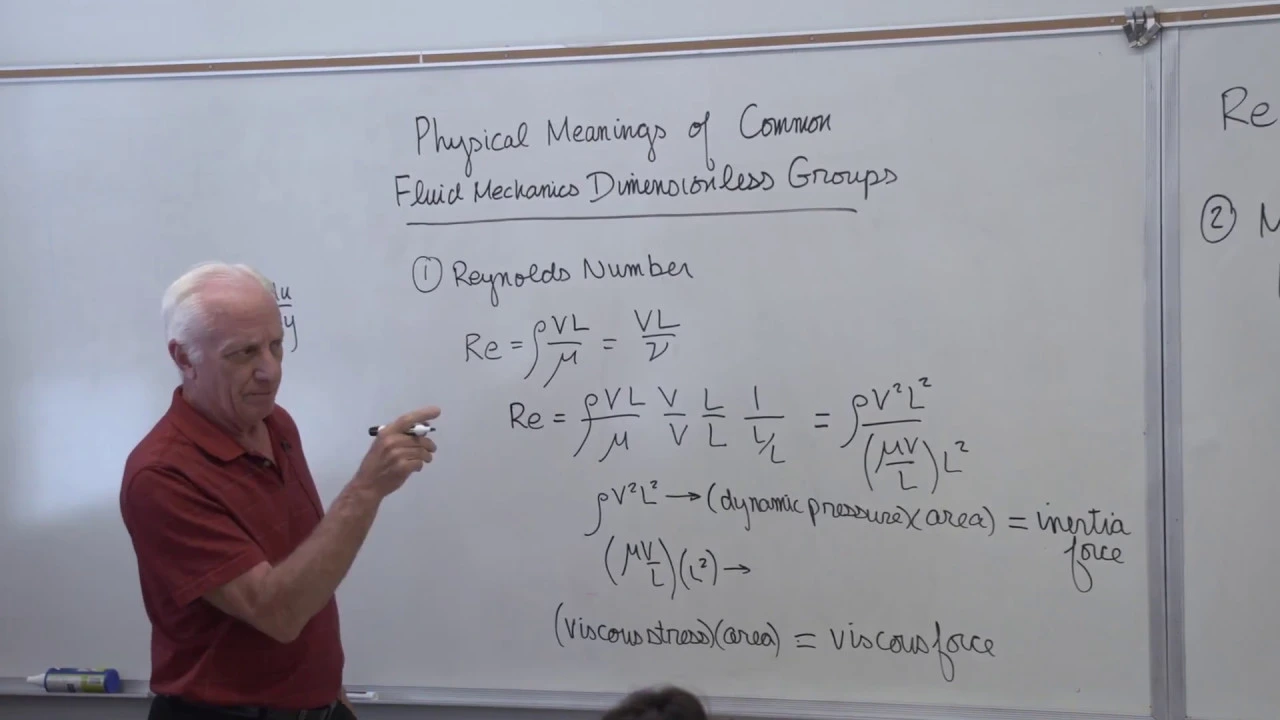


Laminar flow is a type of fluid flow characterized by smooth, orderly motion where streamlines are parallel and there is no mixing between different layers of the fluid, unlike turbulent flow which is chaotic with pressure fluctuations; engineers use the Reynolds Number (calculated as Re = ρvL/μ, where ρ is density, v is velocity, L is characteristic length, and μ is viscosity) to predict whether a flow will be laminar or turbulent, with lower Reynolds numbers indicating more laminar flow and higher numbers indicating more turbulent flow.
Laminar Flow and the Reynolds Number: A Fluid Dynamics Overview
Added:Basic fluid properties, specifically fluid density and dynamic viscosity, which dictate how fluids resist deformation.
The physical distinction between inertial forces (momentum of fluid particles) and viscous forces (internal friction within the fluid).
The concept of dimensionless parameters in physics and engineering, and how they are used to compare different physical systems.
Fundamental principles of fluid motion, including pressure gradients, velocity fields, and basic conservation laws (mass and momentum).
Boundary layer theory, exploring how fluid flow behaves near solid boundaries and how boundary layers transition from laminar to turbulent.
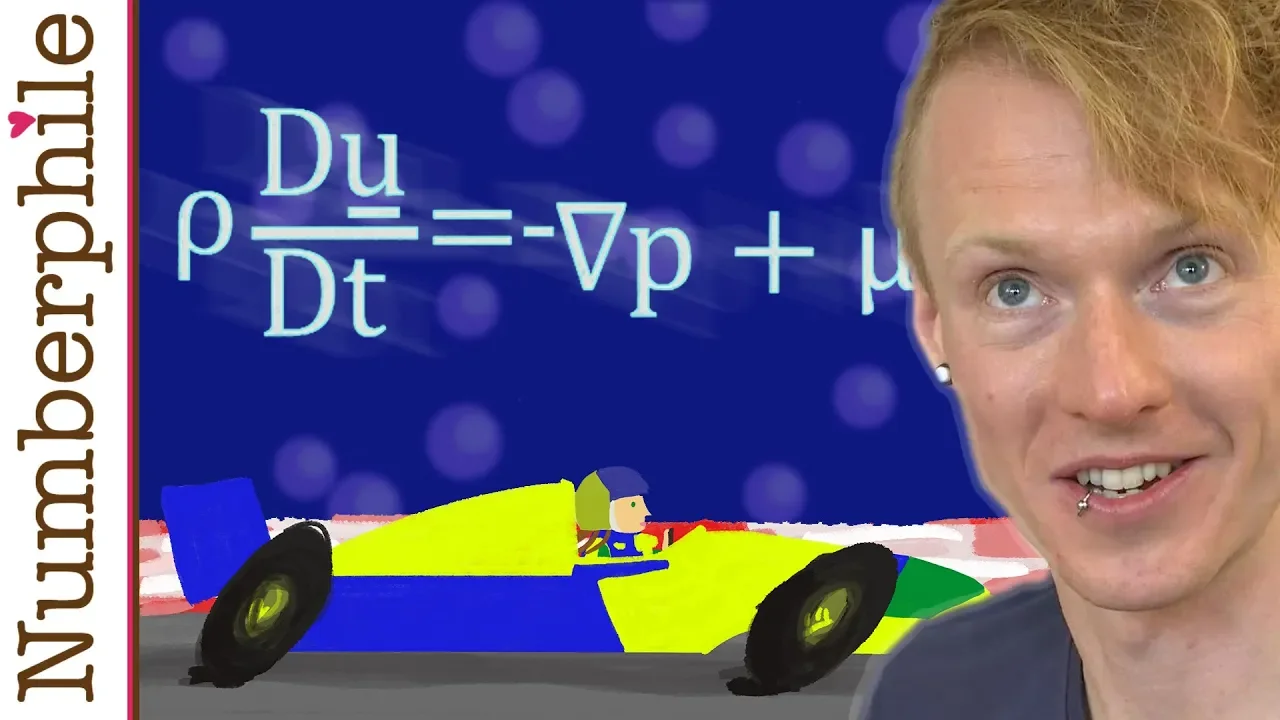
The Navier-Stokes equations, which mathematically describe the motion of viscous fluids, and how they are solved for different flow regimes.
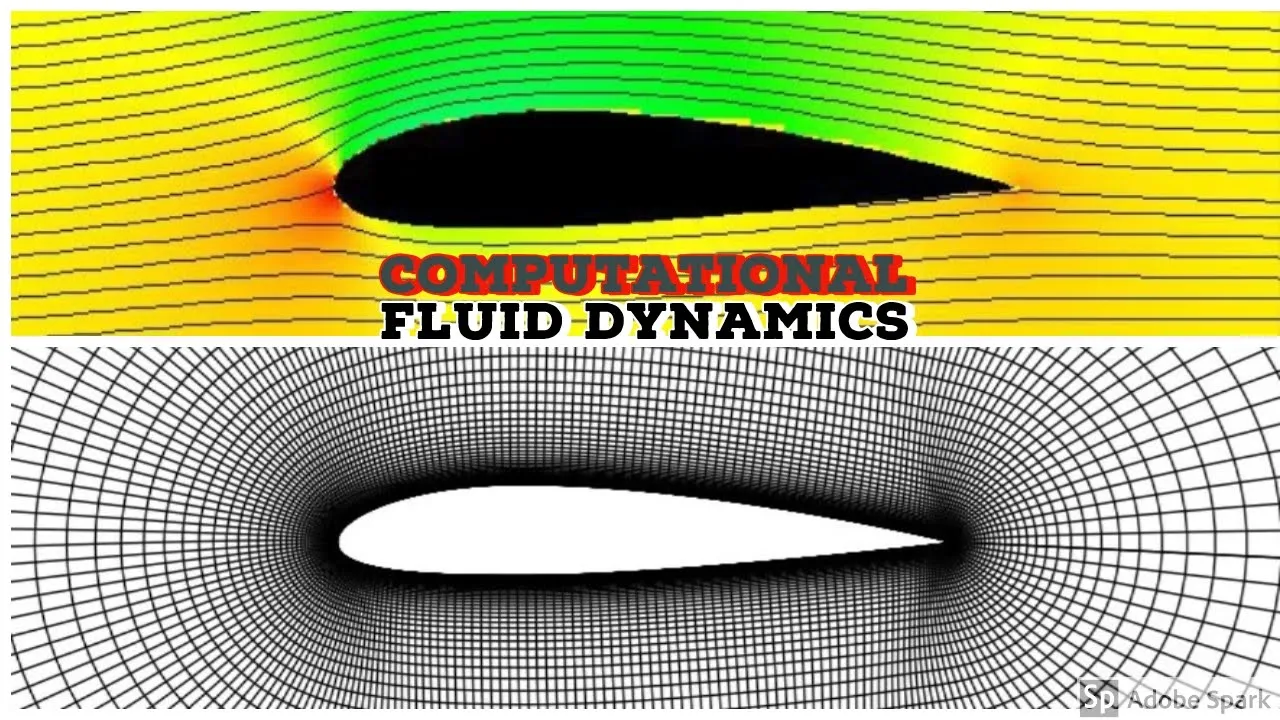
Introduction to Computational Fluid Dynamics (CFD), focusing on how computers simulate laminar and turbulent flows in complex geometries.
Practical aerodynamic and hydrodynamic applications, such as calculating drag coefficients, designing efficient pipe systems, and utilizing Reynolds number similarity for scale-model wind tunnel testing.
8.4M views242.6Klikes14:03Original Release: 2019-01-27
Hey, it's me Destin, welcome back to Smarter Every Day.
I love, laminar flow.
And people send me tweets about laminar flow, all over the internet, its time to do, the laminar flow video.
Check this out, big pool.
We're going to see if we can make, laminar flow happen.
I should be able to poke a hole, in this pool, and get a glassy looking jet, that comes out this pool. That's what laminar flow is.
It's very orderly, looks like glass.
Okay, so here we go, ready, three, two, this feels so wrong.
Let's see if we get laminar flow, no, we don't.
(laughs) Now I've got a hole in a pool.
Okay, laminar flow is a function of geometry, obviously I had the wrong geometry.
We're going to try a big spike, here we go.
Oh golly.
Okay. (Laughs) Alright.
No, it doesn't work.
So my shape's not right.
My shape's not right, what do I do.
Work, work, work, work with me.
Ah, there we go, okay, so.
I got laminar flow right here, and its going turbulent, right here.
Why?
Laminar flow is a function of the geometry, the velocity, and the kinematic viscosity, of the fluid that you're working with.
Right now, my velocity, is not fast enough, to have laminar flow, because there's not enough pressure, so if I move it down, I should have more pressure.
So, let's plug this back up, well now I have a problem.
That's out.
I'm doing a bad job of explaining laminar flow, what we need to do, we need to go, around the world, to different places I've observed laminar flow in the past several years.
And we need to let me show you, various things that I've seen along the way.
Laminar flow is orderly, all streamlines are parallel, and there's no mixing of the flow.
It's all like how you would imagine, water flowing through pipe, everything is straight and parallel.
Turbulent flow however, is chaotic, there's pressure fluctuations throughout, you get the idea.
Engineers have this special term, called the Reynolds Number.
To try and help predict, what type of flow, they might be dealing with.
The top of the equation are the things that describe the flow itself, like the velocity, the density, the geometry, etc. But the bottom of the equation is viscosity of the fluid.
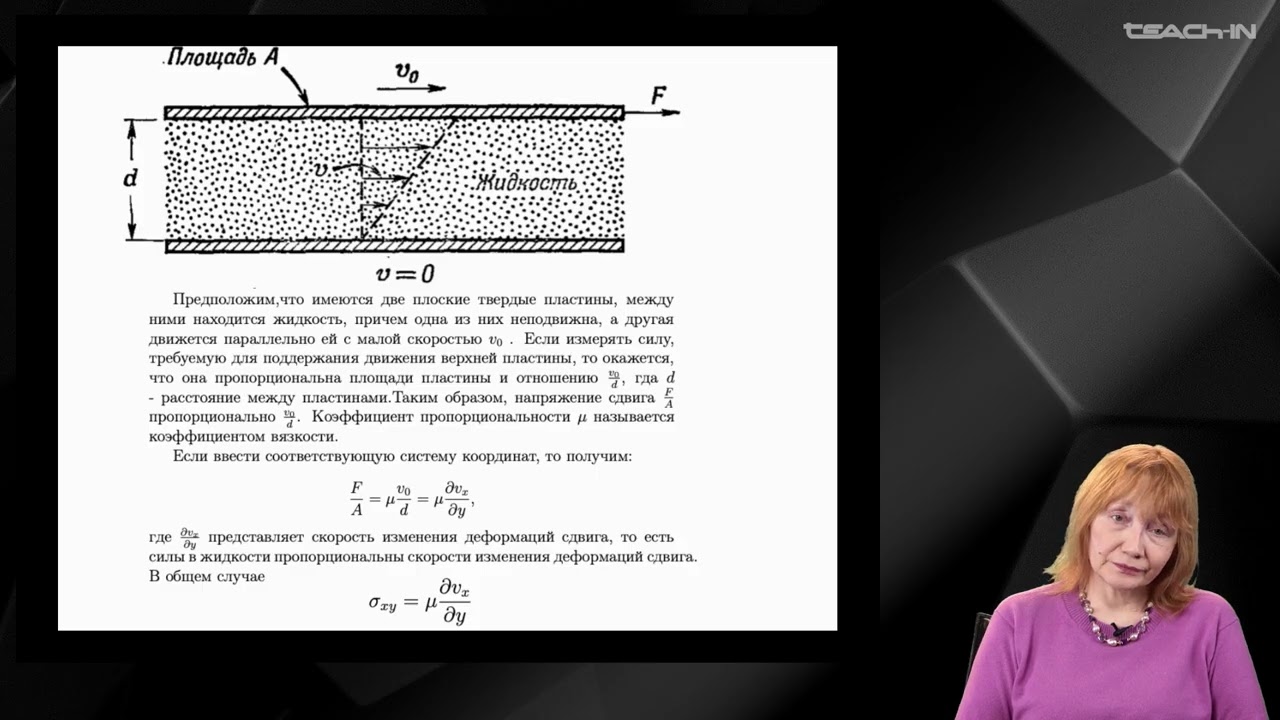
Like how thick the fluid is, like water vs honey.
A lower Reynolds Number, means that the flow is more laminar, and in my opinion, more awesome.
But a high Reynolds Number means that it's more turbulent.
So if you look at the equation, you can kinda see what's going on here.
If you have more viscosity, that means Reynolds Number gets smaller, therefore the flow is more laminar.
But if you increase the velocity of the flow, or the size of the flow, Reynolds Number gets bigger, therefore you have more turbulent flow.
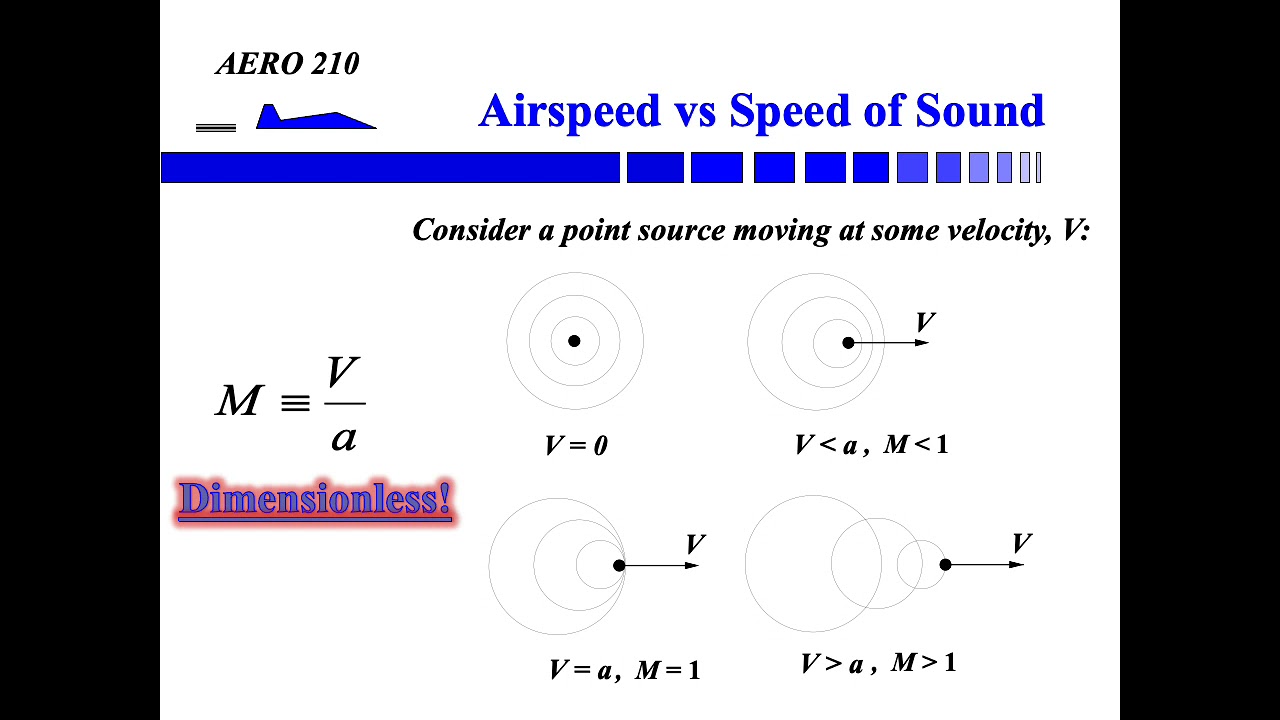
If you keep Reynolds Number and the mock number the same, you can make a model of whatever you're trying to fly, and you can get a good idea if turbulence or laminar flow is going to happen over the model.
That's exactly what they did with the Saturn V, this is the big Saturn V right here.
But in order to approximate what was going to happen, they made a wind tunnel model.
You can use wind tunnel models, like this little four inch model.
To approximate the flow, over the entire, Saturn V rocket.
As flow comes through here, and goes across this Apollo capsule, if the string flickers as turbulent flow, if it's steady, it's laminar flow.
Check this out. (whirring) So as we change the angle of attack, you can see the different types of flow, take place.
It's a little hard to see it, with just the strings, but Sarah-Kate, who goes to school with my daughter, made an awesome science fair project.
You've got to see this.
Okay, to demonstrate laminar flow and turbulent flow, this is Sarah-Kate, science fair winner, extraordinaire.
Right, - yes sir.
- [Destin] You going to show us how it works?
So NASA Glenn Research Center, and you just built it from the plans?
- Yes sir, - [Destin] That's awesome.
- [Sarah-Kate] I had parental supervision and guidance.
So you have to pick your scent.
- [Destin] Frankincense, dragons blood, that's pretty legit.
Orange, that's got to be good.
That's a weird smell.
- [Sarah-Kate] Okay, now I'll blow them out.
- [Destin] Okay, and so, that's going to make the smoke come through, this pipe right here right?
- [Sarah-Kate] Yep.
Now I'll turn on the fan.
(fan whirs) - [Destin] So got to get the light correct, right?
- [Sarah-Kate] Yep.
- [Destin] Okay, so that's pulling it through, should we be able to see it, yet?
- [Sarah-Kate] Yeah, you can already see it.
- [Destin] You can already see, oh what the heck.
You sure can, look at that.
Oh that's cool, look at that.
Okay, cool, so, laminar flow, are the straight lines that go across, correct?
- [Sarah-Kate] Yep.
- [Destin] So that's a zero angle of attack?
- [Sarah-Kate] Yes.
- [Destin] So give me a real high angle of attack.
There you go, look at that.
So we're getting flow separation, along the backside here, and we're getting turbulence back in here right?
- [Sarah-Kate] Mm hmm.
Let's see.
- [Destin] This is like the coolest science fair project you've ever done?
- [Sarah-Kate] It's the only science fair project I've ever done.
(laughs) - [Destin] Look at that turbulence back there.
So ultimately, what were you trying to learn here?
- [Sarah-Kate] Basically, I was just trying to learn more about, airflow shapes, and flow separation, and stall.
And make a good visual representation of all those things.
- [Destin] Well I think you accomplished that.
Look, man, look a it from this angle right here.
You can see, you can see the separation back there.
Look at that.
That's a really good angle.
This is an awesome experiment.
Are you going, you're going to regionals now right?
- [Sarah-Kate] Yes sir.
- [Destin] You're going to win.
Do it.
If you've ever been to the Detroit airport, there's an awesome fountain, like right in the middle of the whole concourse area.
And you can see laminar flow in action, programmed with computers.
- [Destin] It's the awseomest fountain, let's go look at it.
What do you call this flow?
That flow right there.
- Laminar flow.
- [Destin] What's it called? - Laminar flow.
- [Destin] Laminar flow, some daddies don't teach their kids cool words like this.
- Oh, I already know alias.
- [Destin] Yeah?
- And all that other stuff.
- [Destin] You don't appreciate this.
- I do.
- [Destin] You just don't, you just don't appreciate, what.
You just don't appreciate laminar flow.
Let's go.
(phone buzzes) Dude.
Did you get the funnel?
Yep, alright, so here we go.
Thank you.
Ow my finger.
Okay there we go.
This is a Go-Pro right?
So what's happening is, the flow is going into the funnel, and as the flow goes in there.
All of the streamlines of the water, are lining up.
And so its flowing parallel right, once you get all the flow going in one direction.
You can divert the laminar flow, and the streamlines, stay in the same orientation.
So look, you can start to make things like, sheets you see that?
Look at that.
It's working.
That's got ridges on it.
(gasps) Okay, look at this, so if you get all the laminar flow going in one direction.
You can put things that, look at that it made a bubble.
Okay, you can make a sheet, like a sphere, of laminar flow.
Okay, so there's a really cool children museum, in Chattanooga, that I found this, and I put my phone up under it.
Look at that, I could put my head in that.
That is beautiful.
This is probably my favorite kind of fountain.
And the cool thing about it, is the flow rate at the center has to be high enough, so that, it's glassy, like you have enough flow to make a complete covering.
But it's not too high, where you go turbulent at this location right here.
Right there.
See it's wanting to go turbulent, but it's not.
And as, the water, drops off.
There's enough volumetric flow, to cover and make it glassy, 360 degrees here.
Which is awesome.
So what I'm going to do, is put my phone in there, and see if we can see through the laminar flow.
Let's see if it's smooth enough.
Okay, you ready?
Another thing I like to think about, is the inverse square law, and the flow rate as it comes out.
Anyway here we go.
(muffled water flowing) That works doesn't it?
So the next question is, can you hear me?
So it's totally engulfed with water, I don't know if you can here me or not, but the microphone is probably full of water at this point, but let's try this.
Can you hear me better now?
I like this a lot.
(water flowing) I like that a lot, okay.
It's really fun, when you're 30 something years old, and you have to wait for the two year olds.
So you can do you're little fluid experiment.
I love laminar flow, and I want you to love it too.
Prince Rupert, you're in my light, move.
Thank you.
Okay, so, the thing that I think is so neat here, is if you think about the volumetric flow rate, if it's not enough, you don't have water go all the way to the bottom.
You see how it's breaking up here.
But, if you control all of these variables, perfectly, you can make a fountain do exactly what you want.
This is beautiful.
I really respect people that design fountains like this, because it has to do with flow rate, has to do with, pressure, the nozzle geometry.
Anything, can disturb, the flow.
- [Destin] It's amazing watch, touch it, come here.
- [Woman] Oh, it's shot, it's up, are we going to go up, and then down?
- [Destin] Yeah, touch it, touch it.
- Are we allowed to touch this?
- [Destin] Well we're doing it.
Ah that's so stinking cool, I love it.
You know why I love it?
Laminar flow.
Can you imagine they had to perfectly level this, because that's gravity fed.
And then you have to make sure the flow, into the orifice there, is perfectly perfectly level.
All the way across, oh my gosh.
This mall in Chicago wins, for the coolest fountain.
And probably the number one reason, why I want you to love laminar flow, and this is not an exaggeration.
We literally use laminar flow to protect the integrity of the moon rocks.
And that is not an exaggeration.
So, I'm about to show you a clip of how that works, and if you would like to consider subscribing to Smarter Every Day, while we watch this, this from a future episode.
- Now that we're dressed in our bunny suits, we're going to go into our air shower, and we stay in there for one minute.
And it's a laminar flow, - [Destin] You have no idea how much, - it separates between a less clean area, and a clean area.
- [Destin] You have no idea how much I like laminar flow.
(laughs) - [Destin] You don't even know, I can't even explain it to you.
- You really love it don't you.
(laughs) - [Destin] I do.
So here we go.
Laminar flow.
Is this going to make our hair fly around?
- No, it's not that kind.
- It's just really slow laminar flow.
- In the meteorite lab, they have the little tunnels, that actually would make your hair flow, they found that stirred up more particles.
So this was designed, - Turbulence was bad. - Exactly, yes.
- That's why this is laminar.
- Laminar good, turbulence, bad.
- Got it, I dig it, I like laminar flow.
- That's our minute up.
- Is our minute up? - Yes.
- [Destin] Our microwave is done.
- [Andrea] So watch your step down.
- I'm watching it, boom.
Wow, alright.
Okay, I hope you enjoyed this video, I'm going to do what's called, the soft sell.
I'm just going to give an option to you.
You can either take it or leave it.
I like exploring the world, using goofy stuff like this.
And I film stuff all over the world, and I throw it together in videos like this.
If you would like to consider subscribing to Smarter Every Day.
It's basically a declaration for your love of laminar flow, and low Reynolds Numbers.
That's pretty much what it is at this point.
So, if you would like to do that, you may subscribe, if you feel like this video earned it.
And you could even hit the bell.
If you're not ashamed of it.
So, that's an option for ya.
If you'd like to subscribe to Smarter Every Day, you can do that, if not, no big deal.
Thank you to everyone, who sends me laminar flow pictures on twitter.
I really enjoy them.
I am Destin, this week, this video is sponsored by tacos.
I hope you enjoy that too, have a good one, bye.
- [Destin] What are you doing?
- Making tacos.
- Making tacos.
This episode of Smarter Every Day, is sponsored by Hello Fresh.
Which is a meal kit delivery service, which we use at the Sandlin house, to cook meals and eat around the table as a family.
They send food to your house, and you can just cook per the recipe, which is enclosed.
They have premeasured ingredients, it's a great thing.
The reason we like it, is because it makes everything simple, and how we do life, in the evenings.
And it let's us eat yummy food.
- [Destin] How do you know when they're done?
- Timer.
(laughs) - So if you want to try this, I highly recommend it.
We love it.
You get really good food, and your kids learn how to cook.
You can do this by going to Hellofresh.com, and use the promo code, smarter80.
For the New Year they have a special where you can get, eight free meals basically, 80 dollars off your first month of Hello Fresh.
Do that by going to HelloFresh.com, use the promo code smarter80.
Come look at these tacos.
- [Destin] So am I at a taco truck?
- [Boy] Yep.
- [Destin] Nice.
Thanks for making me tacos.
- You're welcome.
- [Destin] Would you rather have tacos or a haircut?
- Tacos.
(laughs) - [Destin] Will you get a haircut anyway?
- Yeah.
- [Destin] Okay.
So it works out to about 6.99 a serving, which is a really good deal.
If you want 80 bucks off your first month of Hello Fresh, go to HelloFresh.com and use the promo code smarter80, and get 80 bucks off, it's good stuff.
Bye.
If you're mom doesn't love laminar flow, your mom is wrong.
(laughs) There's only one thing left to do, the taste test.
(laughs) That was laminar flow.
Let's taste turbulent flow now.
Yeah laminar flow is better.
(laughs)
Up Next
44:08
Scaling Laws in Microsystems | MEMS Module 4 Explained
@ece-pesitm5917
2.6K views•2020-08-06

12:53
21cm Hyperfine Transition in Neutral Hydrogen: Radio Astronomy Basics
@AaronRobertParsons
12.4K views•2011-10-13
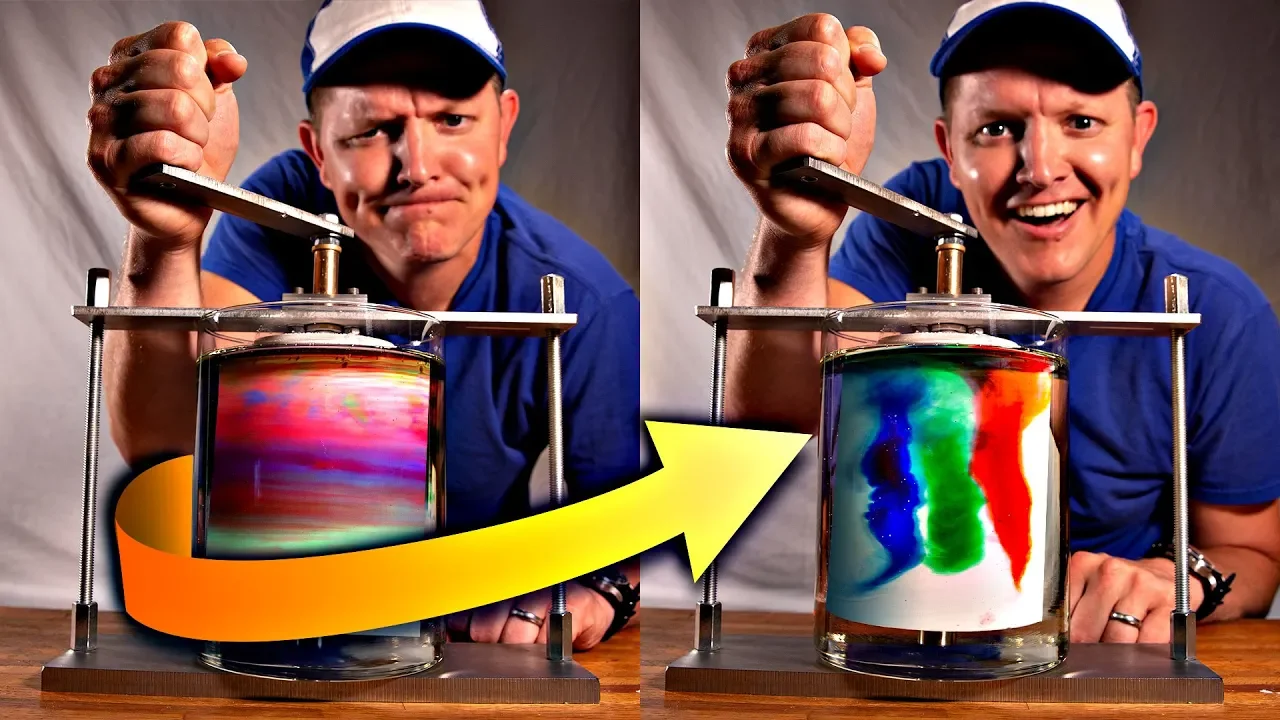
9:35
Taylor-Couette Flow: Unmixing Colors with Reversible Laminar Flow
@smartereveryday
5.4M views•2019-05-22

27:14
Entropy and the Second Law of Thermodynamics Explained
@veritasium
27.5M views•2023-07-01
Related Study Plans & Knowledge Roadmaps
Structured learning paths in Physics
physics
Nuclear Physics (Decay, Fission & Reactors)
01Atomic Structure and the Binding Force
02Radioactive Decay and Half-Life
03Nuclear Fission Mechanics and Chain Reactions
+ 2 more learning modules
12h5 modules
Explore Roadmap
physics
Soft Matter (Polymers, Colloids & Rheology)
01Foundations of Soft Matter & Thermal Forces
02Polymer Physics and Macromolecules
03Colloids, Surfactants, and Self-Assembly
+ 2 more learning modules
38h5 modules
Explore Roadmap
physics
Analytical Mechanics: Lagrangian & Hamiltonian
01Mathematical Foundations: Calculus of Variations
02From Newtonian Mechanics to Constraint Dynamics
03The Principle of Least Action & Lagrangian Mechanics
+ 3 more learning modules
28h6 modules
Explore Roadmap
physics
General Relativity (Spacetime & Cosmology)
01Foundations of Relativity: Special Relativity
02The Geometry of Spacetime: Equivalence Principle & Curvature
03Einstein's Field Equations: The Mathematics of Gravity
+ 2 more learning modules
55h5 modules
Explore Roadmap