



















![[개정판, 기침제거ver] 토양학 합본 - 10강~14강](https://i.ytimg.com/vi/SklMMiGSWOk/maxresdefault.jpg)







Plants transport water and minerals through specialized vascular systems where xylem cells, which are dead at maturity, facilitate bulk flow of water from roots to leaves via cohesion-tension mechanisms driven by transpiration pull; mineral nutrients are classified as essential elements that plants cannot synthesize themselves, with uptake occurring through specific membrane transporters, and their availability depends on soil chemistry including pH, cation exchange, and chelation processes that affect nutrient speciation and bioavailability.
Plant Physiology Lecture 6: Xylem Transport & Mineral Nutrition
Added:Basic anatomy of vascular plants, specifically the structural differences between xylem and phloem, and root tissue organization.
The physical and chemical properties of water, including hydrogen bonding, cohesion, adhesion, and capillary action.
The concept of water potential and how concentration and pressure gradients drive the movement of water.
Cellular transport mechanisms, including passive diffusion, facilitated diffusion, and active transport across cell membranes.
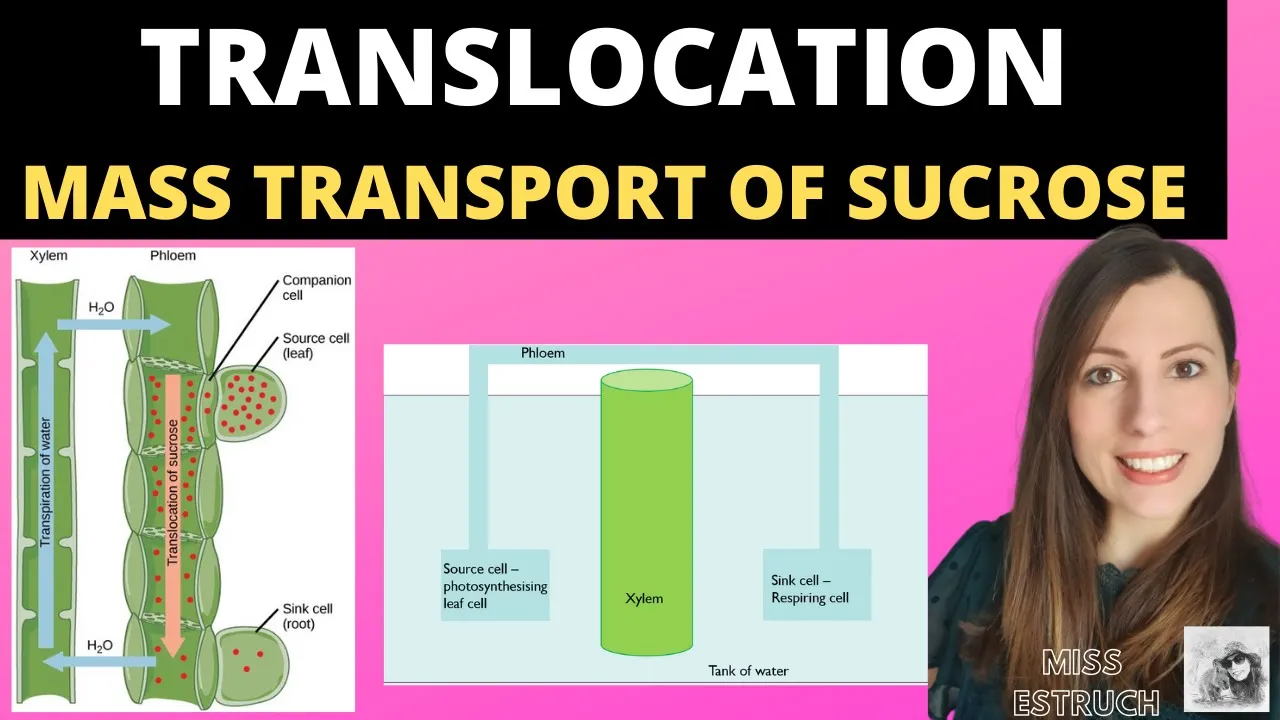
Phloem translocation mechanisms, focusing on the pressure-flow (mass-flow) hypothesis for organic solute transport from source to sink.
The specific biochemistry of plant metabolism, detailing how individual macronutrients and micronutrients function as enzymatic cofactors or structural components.
Agricultural and ecological applications, including soil science, fertilizer management, and the formulation of hydroponic nutrient solutions.
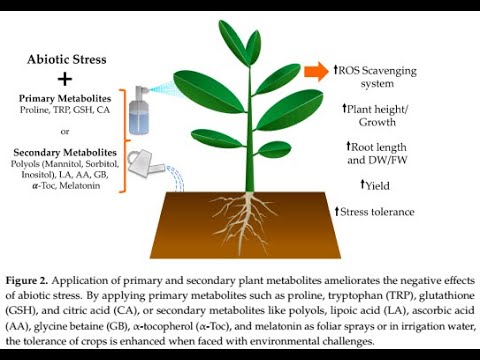
Plant physiological responses to environmental and abiotic stress, such as drought, soil salinity, and heavy metal toxicity.
20.6K views168likes1:14:50Original Release: 2013-01-22
So last time we got to go back to our last lecture where we were talking about transport in the xyllem and let me just quickly review the things that we're talking about as far as processes and the roots.
One of the most important um terminology things that you need to be comfortable with is simplastic versus apoplastic transport. It's not just relevant in the roots. It's relevant throughout the plant. When we talk about xylem and pham transport, when we talk about where compounds are diffusing, when we talk about hormones moving, when we talk about RNAs moving, we need to think about the pathways that they're following. So, be comfortable with the distinction between simplic and aoplastic and what it means as far as passing between those two regions having to cross a plasma membrane. Okay. So in the context of the root then what we saw was when we go from the soil and is the soil simlast or apoplast or neither?
Apoplast the soil is equivalent to the apoplast. It's continuous with the cell walls of the of the epidermal cells.
Right? So it's basically water that is sticking on the surface of those soil particles. So we can find two pathways that the two general types of pathways that solutes and water can follow from the soil into the xylem. And how about the xyllem? Apoplast simpl.
We didn't talk about that yet, but you remember probably from are the xyllem cells alive or dead? Apoplast or simpl.
Apoplast. Right? So we got to move water and solutes from the apoplast in the soil to the apoplast of the xyllem. And the thing that confuses it, the thing that makes it difficult for that to happen directly is the presence of the casparian strip. This subized cell wall that's impermeable to water, which requires that everything that is moving from the soil to the xyllem must cross a plasma membrane somewhere outside the endodermis. It may be right at the end where it crosses the plasma membrane or it may be way out here at the in a tip of a root root hair. It doesn't matter.
But somewhere it's got to get into the simlast so it can get through the endodermis. Once it's through the endodermis somewhere it's got to get back out into the apoplast to get to the xyllem. Okay. So we discussed several things that the casparian strip does for the plant. One of the things that we mentioned was without the Casparian strips, you don't get plants much taller than 10 cm or so because of the role that the Casparian strip does in preventing water to move easily from the xyllem back out into the soil. So you should be thinking about these things.
Um the other thing that we talked about was this process of gutation.
the possibility that positive root pressure is generated through transport processes in the roots. So we know from the stuff we talked about earlier that there is a negative pressure that's being produced in the xyllem. It's the xyllem is under tension and that under the right conditions is more than sufficient to pull water from the soil into the xyllem. But there are times when the roots or the plants actually exude small plants will exude water from the from the tips of their leaves and we call this gutation and it's due to the presence of a positive pressure in the roots and that positive pressure is generated by active transport. We'll talk about this in the lecture on Tuesday. active transport of solutes into the xyllem so that solutes accumulate there.
Water follows osmotically and builds up a positive pressure. That positive pressure is not sufficient to move water up more than about 10 cm or so. Can't move it to the top of the tree, but it does contribute something under some circumstances.
Okay. So we really need to be thinking about how the physical characteristics of the cells the slast the apoplast the plasma desmma the plasma membrane and the casparian strip dictate what's happening when we're thinking about movement of water into the xylem but also the things that we'll talk about in lecture next Tuesday moving solutes from the soil to the xyllem Casperian strip and all the membranes and everything are certainly playing a role in that. Make sure that that makes sense to you. Okay, questions on this before we finish up this topic. We've talked about what's happening up in the leaves. We talked about what's happening in the roots.
What we haven't talked about is the plumbing system that connects the two.
So, we'll finish up for just talking for a few minutes about the xyllem.
So one of the things about xyllem that um we mentioned earlier that's clearly interesting is that at maturity the xyllem cells are dead. So that means the cells must grow. They must be alive.
They get to their regular size and then the developmental end of that pathway is cell death. So it's a good example of a process called apoptosis.
It's basically programmed cell death.
Without this, we couldn't have functional xyllem.
Functional xyllem cells are dead at the at the end of their development process.
And we'll see that there's lots of benefits for this. Well, one of the What are the benefits of having a dead cell?
No cytoplasm.
No cytoplasm. Why is that a benefit?
It's true. There's no cytoplasm, but Okay.
So, without having to worry about all the membranes and stuff.
Yeah. Okay. So, no internal membranes and no plasma membrane. Right. What else?
Well, you don't need energy to kind of keep them alive.
You don't need energy to keep alive, right? So they're they're basically the cell the plants invested energy in them and they're done. What else?
The water sticks to itself better.
Well, because you don't have all the other things involved.
So does water stick to a plasma membrane?
Yeah, sort of. This remember that the interior of the plasma membrane is hydrophobic, but the surfaces of membranes are hydrophilic, right? But what's this? What's the surface of a xyllem cell?
A cell wall. And what as far as water is concerned, what is a cell wall?
Hydrophilic or hydrophobic?
Very hydrophobic, right? And very porous. So lots of capacity to hold water. So water will hold on to the cell wall pretty well. In fact, we saw when we talked about evaporative processes in the leaves how important water in the cell, the water holding to the cell wall is to generate the negative pressures.
One more thing that's important about the xyllem cells. We talked about transport within a cell. How about transport between the cells?
Okay, let's step back. By what mechanism is water or water and solutes transported in the xyllem from the roots to the to the leaves?
Yeah. Um bulk flow. That's what I'm looking at for bulk flow. Okay. So, and for the the rates of bulk flow in the xyllem can be um well, what is the the range of rates here? I can't remember.
uh 1 to 40 meters per hour.
Okay, so that's remember we talked about uh 30 years to diffuse one meter. So lot faster than that. So what does that mean in terms of resistance to flow in the xylem?
It's low resistance. So that means not just resistance within the cells, but how many xyllem cells do you have to go through to get from a root to the top of a tree?
Lots, right? I mean, I'm not looking for a number, but lots. So if there was a resistance between the cells, that would be a problem. So what is it that allows water to flow freely between xyllem cells?
Um, some of them have open ends. So the the vessel elements which are more common in angioperms have larger open ends. So one cell connects directly with the next cell. In gymnosperms it's more common to see these tracheids. And the tracheids basically are long thin things but what connects one cell to the next are all these pits. They're basically they're they're much larger than a plasma desmina.
But the pits themselves are not just open holes. Um the pit um has a very uh regular structure associated with them.
And the pit has this taurus structure in there that will allow will allow water to flow through it at moderate rates.
But if the water tries to move through too quickly, the Taurus gets pushed up against the side of the pit and blocks it or at least blocks it somewhat.
Right? So this is a mechanism for what what does this do for the xyllem to have these little sort of safety gates on all the pits that connect adjacent cells?
Yeah, that's one thing that can happen because what happens? What happens?
Well, first of all, what how would we characterize the water in a column of xyllem cells? It's continuous.
What about the pressure part of it? It's under tension, right? So, what happens if cavitation forms?
What happens? So, let's just say that the point here's here's this column of water and at the point where my hands are, cavitation forms and a bubble is created. What happens to the water around that bubble?
It's How many you are in the lab?
Did you use the pressure bomb?
Oh, you haven't done it yet. I thought you did it last week. Okay, you'll use it. You'll do it today then. When you cut a leaf, if you look at the end of the xyllem at the end of that cut, is the water pouring out? Is the water at the end of the cut or did the water get pulled back?
Gets pulled back, right? Because it's under tension, right? So if you form an air bubble, the water's going to pull back away from the air bubble because in the air bubble, there's no hydrogen bonding or anything to hold hold things together, right? So these can prevent help to prevent um when things snap back, air bubbles moving into other cells. If you cut the xyllem, if an insect or a chewing insect or something like that cuts through the xylem, it helps prevent water loss from the xyllem. Okay. Keeps water from flowing too quickly through the xyllem.
Okay. So the the structure of this is both to permit relatively low resistance um transport of the water by bulk flow, excuse me, but also to prevent water from flowing too quickly and prevent gas bubbles from moving from one cell to the next. And we'll come back. I think there's going to be plenty of time at the end of the lecture today after we do the mineral nutrition to come back and talk about cavitation and gas bubbles and things like that. All right.
Okay. So, here's another um microraph of xyllem showing the extensive pit structure. So you might think that although the xyllem cells particularly the vessel elements tend to line up end to end that transport would be primarily upwards through a column of cells. This extensive pit structure lets xyllem transport be really through a network of cells. Okay? There's lots of communication between adjacent cells. If one cell got blocked, it's easy for the water to move around it through the pits to go to neighboring cells.
Okay, questions about the plumbing system.
Okay, so just a couple of things then to remind us of the big picture here as far as water transport in the xyllem.
It's evaporation in the leaves that's causing the negative pressure, right?
And it's the interaction of the water with the cell walls that's doing that.
But what allows the water column to be pulled up from the top?
A property of water allows it to be pulled up from the top cohesion. Right?
So there's hydrogen bonding that tends to resist the water column breaking. And typically to break a water column under physiological conditions, the difference in water, you got to have something on the order of minus 20 to minus40 megapascals.
So the tension on the water column has to be very high before the water column will break. But it does break especially in desert plants. It breaks in the xylem almost every day. But interestingly if you come back the next morning all those cavitation bubbles that created were created during the day are gone the next day. And if we have time we'll talk about that at the how that happens at the end of the lecture.
So the cohesion tension theory seems to work really well in terms of describing how water is transported through the xyllem.
But to be honest with you, there's a lot of disagreement about this. Not disagreement at sort of the big scale of things, but disagreement at sort of a finer scale. Is the xyllem under tension? Absolutely.
How much tension is it under under physiological conditions is very controversial because the xyllem is very often surrounded by living cells xyllem parankma cells and those cells metabolically can expand and contract and if they expand and contract they will regulate the pressure in the xyllem to some extent right so there's lots of arguments about how this actually works so although the big picture everyone agrees the tension cohesion mechanism is the main thing that's working. The role that for example living cells around the xyllem play in this process is not we really don't agree on very much. So it's one of the big areas of sort of traditional plant physiology where we don't have all the answers yet.
Okay, questions before we go on to talking about mineral nutrition.
Everybody's all right with this? I'm sure you're not.
All right.
Okay. So, mineral nutrition. This is um I have to honestly tell you, for me, this is one of my least favorite topics to talk about because really what we're doing is we're just glossing over the surface of some really interesting stuff.
So when we talk about um the symptoms of mineral deficiencies, you know, this is this is pretty complicated and we don't really go into any detail at all. Um so some of you have probably taken soil science classes where you have some experience at this and maybe have a better feel for it. Um but the the textbook has lots of descriptions of what um some of the mineral nutrients are used for. You don't have to memorize that. You can look it up if you need to.
Right? I really want you to come away with the bigger picture of what's going on here. Okay. So, when we talk about mineral nutrients, we're talking about um elements that are derived from the soil in ionic form.
So, among all the things that plants need, what are the non-mineral nutrients or the non-mineral elements?
Well, water's not an element.
So, what would you what elements would you say are?
Yeah. Like that are non-mineral that are So, if mineral elements are things that the plant gets from the soil in ionic form, then what are the non-mineral elements or non-mineral nutrients? Patrick hydrogen oxygen hydrogen oxygen and carbon where they come from from water and from carbon dioxide and from gaseous oxygen. Yeah. So carbon, hydrogen, oxygen, those are the non-mineral nutrients. Everything else is a mineral nutrient.
And it should be clear to you that mineral nutrition is is relatively important um if nothing else from an agonomic perspective.
Because we know that in order for farmers to get the maximum yield of whatever plant they're growing, very often they have to add fertilizer.
So the converse of that, what that implies is that the absence or limiting nutrients also limits growth. Okay?
So understanding what the plants need and how they get it from the soil and how much is available is really important.
The other end of the story is one of our biggest problems in how we affect our environment is the fact that when we add fertilizer to the soil more of the compounds that we add end up other places besides the plants.
So fertilizer that we add to soil, a lot of it gets leeched out and ends up in groundwater and ends up in runoff. If you have nitrogen-based fertilizer that's got ammonia in it, volatilization, the ammonia going into the atmosphere is a problem. All of those things have real environmental consequences that we need to be aware of. So from the most general perspective, it's really worthwhile to at least understand at the big picture level what's going on as far as mineral nutrition and plants are concerned. So we're going to talk today primarily about what's required and how we understand how we study what's required in plants and in the lecture on next Tuesday we'll talk about the uptake mechanisms how ions are actually um taken up into cells and later on in the semester we'll talk about once we get those inorganic ions into a cell how are they then incorporated into organic material. So for example, nitrate ion is the main way that nitrogen is taken up into plants. But nitrogen in plants is mostly in proteins and nucleic acids. So how do you go from an inorganic ion to these organic compounds? That's the assimilation process.
Okay.
So well how do we define an essential element? If we say something is essential, what do we mean?
What do we mean? Hear me.
nutrients because the plant can't make them by themselves.
The plant can't what?
Make the nutrients by themselves. Like they can make proteins out of other nutrients, but they can't make So does that mean non-essential elements that the plant can make them?
No. No. But it's necessary for plant growth, too.
Okay. So, let's be a little bit more rigorous than that because there are many things that can make plants grow better, but if you take them away, the plant will still grow, right? So, when we talk about essential nutrients, we're talking about nutrients that if you take them away, the plant cannot grow or the plant cannot complete its life cycle. So for example, one of the elements that you'll see in the list, boron.
For some places, for some plants, the only place that boron is essential is in pollen germination, right? The plant will grow just fine without boron, but if you don't challenge the plant to complete its life cycle, you'd never know that boron was essential for pollen tube formation.
Okay? So we need to be rigorous about the plant can't complete grow and complete its life cycle without it.
That's essential. If there are lots of elements that if we give it to the plant it'll grow better. Silicon for example is not required by mo by plants. There are few that require but most don't. And but if you give silicon to plants they'll grow better. Okay.
So basically then what that means is that except for carbon dioxide, water, oxygen and sunlight, everything else that the plant needs to grow comes from the soil in the form of mineral nutrients in organic ions from the soil.
So one of the things the book spends some time doing that I really don't like very much is classifying these nutrients.
Oh, sorry. Let's just let me just step back for one second. I forgot I wanted to say something about this. We'll come back to talk about nutrient cycles um when we talk about uh assimilation of nutrients. But one of the things to keep in mind is so if we talked about the fact that let's say we're talking about nitrate and the main source of nitrogen for plants. So the way plants get their nitrogen is by taking it up from the soil.
Is soil nitrogen the only form of nitrogen that's that we need to be thinking about in this process? No, of course not. There's nitrogen that's in the plants themselves that when the plants die can be recycled back into the soil. There's nitrogen in living and dead animals. Most of the nitrogen on Earth is in the atmosphere.
And nitrogen is continually moving among all these pools. So if we think about what limits the availability of nitrate for plant growth, it's not necessarily the size of the pool of nitrogen. It may be the rate at which these other processes put nitrate into that pool so that it's available for plants taking up. Most commonly that's the limiting factor. It's not how much sits in the soil at any given time.
It's how quickly that nitrate that's being taken up by plants can be replaced by other processes. If it's replaced very slowly, then nitrogen's going to be limiting. If it's replaced quickly, then nitrogen may not be limiting to the plants. Does that make sense? Yeah. So, we'll come back and talk more about this later.
Okay. So, on to thinking about classification of nutrients. The two main ways that plants are or nutrients are classified is by one how much of them the plants need. How much of that nutrient is in a typical plant. So there's this mac m macronutrients and micronutrients categorization where the distinction between macro and micro is if it's less than 0.1 grams of that compound per gram of dry weight then that is sorry 0.1 uh milligrams per gram dry weight then that's classified as a micronutrient.
That's qualitatively useful, but it doesn't tell us first of all what any of these things are doing in the plant and what might happen to the plant if they're limiting or if they're absent.
And also there's a very wide range of requirements from these from way down here from malibduminum where you need almost nothing to a nitrogen where you obvious obviously need lots of it.
Right? So, it's it's not a very to me it's not a very satisfying way. I'll certainly never ask you what's the difference between a macronutrient and a micronutrient because it's just not that useful. The other way that the the book does it is by um functional groups, but to be honest, this is a pretty poor mechanism as well. So, group ones are things that are nutrients that are part of carbon compounds. So, nitrogen and sulfur. Yes. So nitrogen's parts of uh amino acids and nucleic acids. Sulfur is part of amino acids.
But what about phosphorus? Isn't phosphorus part of organic compounds, fatty uh lipids and uh nucleic acids? So why phosphorus is in group two instead of group one? I don't know. Group two, it says, well, important in energy storage and structural integrity. Well, that's already pretty heterogeneous, right?
Because certainly phosphorus, we'll see, plays a really important role in energy storage, things like ATP. But what's ATP got to do with silicon and boron that are more related to creating cell walls?
So, not very natural groups.
little better are the group three and group four ones where the group three are ones that remain largely in ionic form. Well, actually all the group four ones stay in ionic form too. Um so but these are ones like sodium, chloride, calcium, potassium. These are common components of the cytoplasm. They're the main ions that are present in the cytoplasm. They also serve other roles too. They can be co-actors in a lot of different proteins, but most of them are in the cytoplasm.
The last group are those that are involved in redux reactions. So iron for example is in all the cytochromes that are involved in electron transport.
Zinc, copper, nickel and malibdum are involved in lots of enzymes that are involved in redux reactions.
So one of the things that we should step back from this classification and think about is what are the consequences of a plant that doesn't have enough malibdum?
What happens to the plant?
One of one of the questions that came um that you turned in last night that several of you asked about is how come so many of the mineral deficiencies affect the color of the leaves? Right.
One of the things that they they talk about in the text is all the different things that happen to leaves when they have mineral deficiencies.
Why why would we expect that the leaves might have changes in their color characteristics associated with a number of different types of mineral deficiencies?
Anna.
Yeah. So, one of the obvious ones would be magnesium because this is a central this this is a central atom that's in the middle of the hem ring of chlorophylls. So, if you don't have magnesium, you can't make chlorophylls.
But, for example, malibdum list it right here, nitrate reductase, the key enzyme that reduces nitrate to the level of ammonia so that it can be incorporated into organic compounds so you can make proteins. You don't have malibdum, you don't have nitrate reductase, you don't have good nitrogen incorporation. And a awful lot of the nitrogen in a leaf ends up in what biochemical process?
What's one of the main biochemical processes that happens in leaves that also is related to the color of the leaves?
Photosynthesis, right? So not being able to make the proteins that are involved in photosynthesis without malibdum is going to affect the color of leaves. Another thing that you don't probably don't think about right off the top of your head is a lot of these redux reactions. Zinc and copper and iron are involved in dealing with free radicals, dealing with reactive oxygen species. If you can't deal with reactive oxygen species, the first thing that gets damaged are the chloroplasts, right? because that's where a lot of reactive oxygen species are produced.
So, deficiencies in a lot of these ions end up causing changes in the pigmentation of the leaf associated with either inability to produce chlorophyll or chloroplast or damage to chlorophyll or chloroplast. So, that's what sort of ties all these things together to photosynthesis and the green color of the leaves because so many of these things either directly or indirectly affect that. Yes.
free radicals.
Um are free radicals damaging to living components?
Yeah. Right. Um so if the chloroplast is the main source of free radicals in the cell, what organel is going to get damaged first by free radicals? Okay, that's basically it. One of the things when we talk about uh starting next Thursday, week from today when we start talking about photosynthesis chlorophyll in the presence of oxygen is one of the most dangerous compounds known. Can you believe that chlorophyll sensitizes very easily the formation of free radicals when it absorbs sunlight? So in the presence of molecular oxygen, chlorophyll is really dangerous. In fact, it's one of the most effective compounds that have been used to treat cancer. If you can get chlorophyll into cancer cells and turn the light on, you can kill the cancer cells.
Yeah, photodnamic therapy is the name of that, right? So, so keep in that's something to sort of keep in the back of your mind from an interesting evolutionary perspective.
Plant must have to do a lot of stuff to make sure that those free radicals don't accumulate enough to under normal conditions to kill the chloroplast. If they did, plants would never have survived. Photosynthesis would never have worked. So, it is true. You take pure chlorophyll, put it in solution in the presence of oxygen, turn the light on, you produce tons of free radicals.
That normally doesn't happen in the plants unless some of this stuff is missing. Then it makes it a lot easier to either produce them or not be able to deal with them once they're made. Okay.
So let's think about if you wanted to study mineral nutrition in plants.
How do we go about doing this? You want to know whether boron is required or malibdum is required for plant growth. How do we go about doing this? What's the general form of the experiment we need to do? How about Stella?
Yeah. Or the sort of the extreme would be give them none of it, right? To see what works. Okay. That's basically it. That's really the the basis of most experiments that look at trying to identify essential elements.
Let's grow the plants in the absence of that element and see what happens. How easy is it? How easy is it to grow plants in the absence of malibdum or nickel?
It's not easy.
It's very difficult because first of all, if we go back to this table, plants don't need a heck of a lot of it.
So, very small trace amounts of that.
Unless you measure how much of it's in in your whatever you're growing your plant in very carefully, you won't actually have you may think there's no malibdum in there, but it it came along with the iron you put in.
It's or it's just natural part of the soil, right? Okay. So, there's a lot of complications. We'll talk about a number of them in studying plant mineral nutrition, but one of the ones that should be obvious is that we can't do these sorts of studies in soil because we cannot control the chemical composition of soil very well.
So it means that basically all of the work that's going to be done in these sorts of experiments are going to be some sort of hydroponic because we can control the chemical composition of a water solution a lot more easily than we can control the chemical composition of soil.
So there's a number of different types of techniques that are available for growing things hydroponically. You can just literally submerge the roots in water and that works just fine as long as you bubble lots of oxygen through the water. Why is that important?
Respiration.
Pardon me.
Respiration. Yeah. So, the the roots are doing respiration, but isn't there water? Isn't there oxygen in the root in the water?
Well, it's Yeah, oxygen's not really soluble in water. But what's the other thing about water and gases that's important as far as plants are concerned?
It's there. You you remember why are the air spaces in the leaves rather than being filled with cells?
Because gases diffuse six orders of magnitude more slowly. So even if there's lots of oxygen in the water, if you don't move the water around, the water immediately adjacent to the roots very quickly becomes depleted of oxygen because oxygen diffuses so slowly. So constantly mixing it is very important.
Another way that's often done is by spraying the water on the roots. So the water the roots aren't actually surrounded by water all the time, but you're spraying water on them. So there's water dripping down off the roots all the time. One that's been used here a lot at Cornell that works pretty well is um growing the roots on a film system. So basically you have a tilted bed that you're allowing the water to to drip down and the roots are in contact with this and take up the stuff that they need.
So number of different sorts of techniques but what we really want to focus on is what's the composition and how do we maintain the composition of u the growing solutions. So for example we put um low amounts of malibdum in this um water that these plants are growing in. What happens to the concentration of malibdum as the plants grow? it decreases. Right? So, one of the things that you have to be aware of is that the plants themselves by taking up nutrients are changing the concentrations.
And if you're trying to grow them at constant concentration in order to see what the effective concentration is, for example, grow them in 10 different concentrations, you have to com you have to renew this medium, replace this medium pretty regularly in order to keep the concentration constant.
We'll also see that plants do things to modify the environment of their roots.
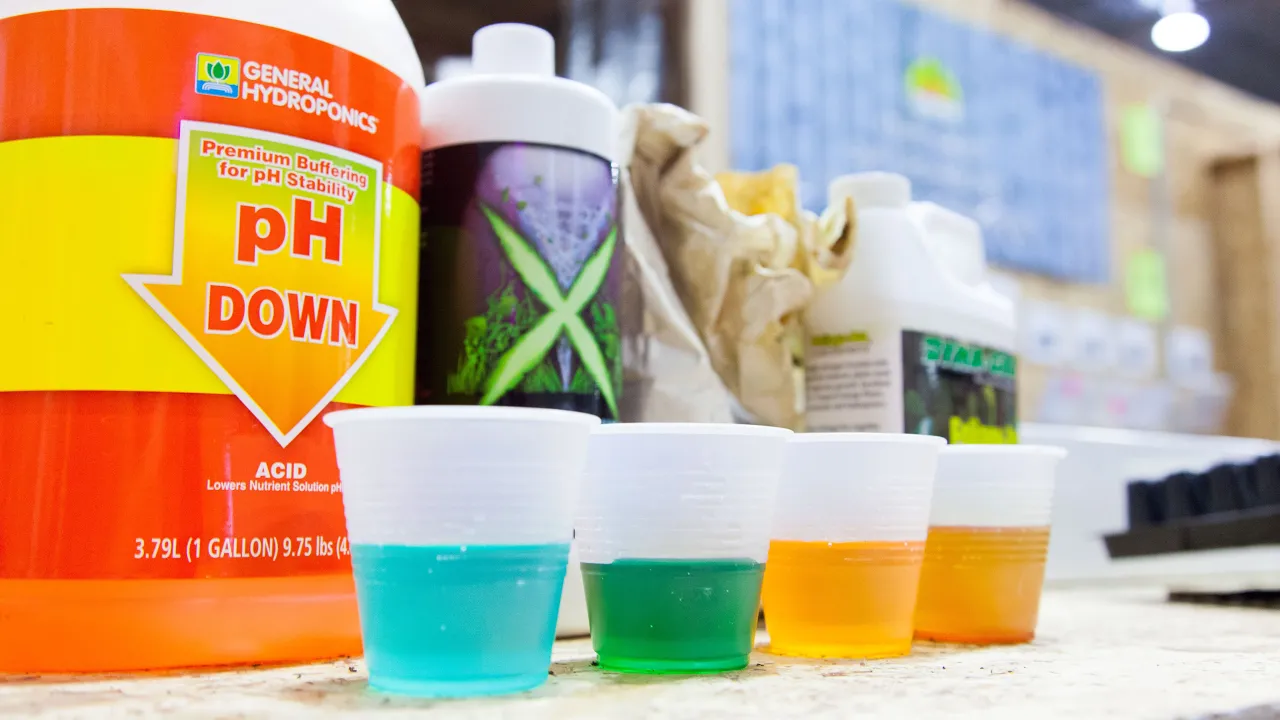
One of the main things they do is they pump protons out. So, they'll acidify the medium, right? And if you change the pH of the medium, that's going to change, we'll see, will change the compounds that are present in there, change the availability of compounds for the the plants to take up. Okay? So, another aspect of hydroponic growth, not just in terms of making sure we have what what we need in there, is to recognize that we need to constantly replace the medium to keep the concentrations constant. You can't just have them growing in there for a week and not have some effect of that.
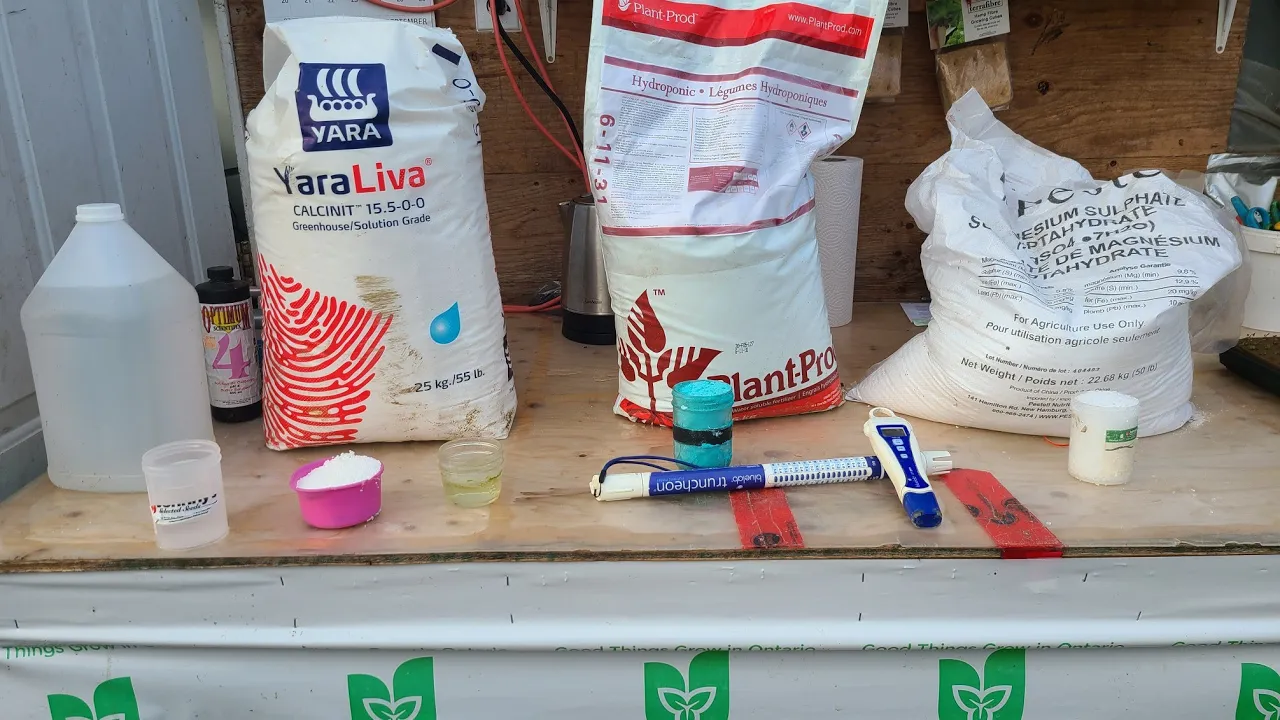
Okay. So now we can imagine that if we can you know go to our chemical supply house and buy some iron containing compound and some malibdinum containing compound that we can very carefully measure out what we want and control the composition of these medias.
But in fact that's not the case. It's a it becomes a lot more complicated than that. So for example, usually iron is added to growth solutions like this in solutions of iron chloride, either iron 2 or iron 3, very soluble.
Put it in water, dissolves, no problem.
But the other things that we have to put in here, some of the other ions that need to be in here in order for plants to grow, sulfate and phosphate and iron sulfates and iron phosphates are extremely insoluble.
So if you put for example, you put sulfate in as let's say sodium sulfate and you put iron in as iron chloride, both very soluble. But when iron and sulfate come together in solution, they form insoluble precipitates.
And as we'll see when we talk about iron uptake, when we talk about ion uptake by plants, just like enzymes are very specific for their substrates, transport proteins that carry iron or sulfate from the external medium into the cell are also very specific. they required dissolved ions. If the ion has formed a precipitate and is sitting at the bottom of the growth chamber, that iron is no longer available. Okay, so this is a question of what's referred to as speciation.
The ions can interact with each other to form different chemical species that may make them unavailable. Okay, so iron phosphate precipitates out or iron hydroxides one of the most common one is is interaction of iron with the O ions that are just present in water highly insoluble.
Okay, so the total concentration of iron you very carefully measured it out to have the right amount of iron in there and the total concentration is right but the forms that are available for the plant to take up may be in very low availability. Okay, so one of the things that we need to do is deal with this speciation problem in particular the formation of precipitates and one of the way sorry one of the main ways this is done is by using something called chilators.
Helilators are compounds that allow ions to stay in their dissolve form. Prevents the formation of of insoluble precipitates.
And one of the most common chilators that's used is a compound called EDTA.
You don't need to know what it stands for. Ethylene diamine tetra acetic acid.
Almost all chelators are polyacids.
So acids in terms of their interaction with the world we call them acids because they give up protons easily right. So that means if they give up a proton the acid group has a negative charge. So EDTA has got four acid groups on it all of which can ionize all of which can form negative charges. And then those negative charges that EDTA can fold up in such a way that allows metal cations ions to be interacting with those either negative charges or oxygen atoms with extra electrons on them to facilitate to stabilize that ion in solution.
Okay? So it prevents these precipitates from forming. One of you asked the question, how does that work?
Why? If we don't add EDTA and we put iron in water, we get lots of iron hydroxides that that precipitate out. If we add EDTA and then we add the iron to water, much more of the iron stays in solution. Why? What's going on there?
Don't I'm not looking for detailed chemical explanations.
I'm thinking purely of energy. What did we learn back in the second lecture that should explain this?
Which one is more stable? Which one has a larger free energy change to form? The iron hydroxide precipitates or the iron EDTA complexes?
Which one's going to be more stable?
I'm hearing both. So I don't I don't want I don't it's okay to say either one, but I what I really want you to do is say why why do you say that the iron hydroxides that precipitate out are more stable if more of the iron stays in solution in the EDTA complexes.
If you have a reaction that can go in two different ways and one has a small delta G and one has a big delta G, which one is going to be favored?
The big delta G. So why does the keelation is this favored over the formation of the precipitates?
Yeah, there's a bigger delta G. This is a more stable complex, right? So basically what the chilation is doing is allowing a chemical reaction to happen that prevents that out competes these other reactions so that these ions stay in solution and it turns out that these are easily taken up not the EDTA but the ions that are bound to the EDTA can be easily taken up by plants. In fact many of the ions that are present in soil in some sorts of soil are already chelated. soil provides lots of natural chilators. Okay, so one of the things that turns out to be extremely important when you're making these nutrient solutions for studying things is not just the amount of the individual elements that you add, but the amount of the chilators because the amount of chilators will determine how much of these elements are actually in solution versus sitting at the bottom in precipitate. You don't want to have any sitting at the bottom of precipitate if you're doing experiments like this.
Okay.
So, we talked about nutrient deficiencies. How many of you taken a soil science class? Right. So, did you learn how to identify nutrient deficiencies by looking at leaves? Yeah.
Easy or hard?
It's it's difficult. Yeah. I mean, good soil scientists can look at a leaf and come up with a pretty good guess of what's going on. actually had a a PhD student who worked in my lab, an engineering student who developed a technique to from satellites to look at infrared images of plants and at the same time look at um a process that we'll talk about uh next week, the fluoresence, the the emission of light by the plants related to photosynthetic processes. And with those two parameters could very precisely from satellite images tell you this area of you know central Iowa is deficient in this particular nutrient. It worked really well. I was shocked when he started the project. I said it would never work but he got it. One of the things I always tell students, you want to impress me, prove me I'm wrong. And he definitely did that. So where do these what are the how do how does a person link these symptoms with deficiency?
Well, one way you can do it is take a soil science class and you just learn these things. You memorize them, right?
But the other thing is these symptoms that you see here are in somehow related to how the compounds are used biochemically in the plant.
And that's the thing that I'm more interested in thinking about, not for all of them, but to at least think about in general, how does deficiency of nitrogen or iron or things like that show up as these symptoms? What's missing in the plant that causes this to happen? Okay. So, one of the main deficiencies that we hear about is nitrogen deficiency. So, here's corn plants on this side that are growing in the presence presence of plenty of nitrogen. Here's nitrogen deficient corn plants. And you can see there's these are a lot yellower. Okay. So it should be really clear why nitrogen deficiency causes yellow leaves. Um we haven't we haven't talked about the details of it yet but in the leaf most of the protein that's in leaves is involved in photosynthesis. If you can't make proteins you can't make the photosynthetic machinery the leaves aren't as green. It's that simple.
But how about if we look at a corn plant and ask which leaves are the most yellow and which leaves are the most green if they're nitrogen deficient.
All you soil science people, what right? That's basically it. So remember, one of the plant sort of big goals in life is to grow, to add new leaves, right? And to add new leaves, you got to have nitrogen and phosphorus and all that list of things there. One of the things a plant can do is it can sacrifice those compounds from the old leaves to allow adding new leaves, new growth, right? Because it's if it's competing for sunlight, it allows it to grow up higher. if it's replacing tissues that have been damaged by insects, it allows them to do that. So, there's a there's a evolutionary um desire, if you want to continue to be able to grow. So, for many nutrients, plants will sacrifice the use of those nutrients in the old leaves, transport them up, and put them in the new leaves.
And nitrogen is a good example of that.
So, you're correct. the the the the thing that makes this happen is the mobility of the nutrient, but not all nutrients can be mobilized that way. So, here's iron deficient plants and what you see doesn't really show up quite as well as I'd like, but the yellow and white is not in the old leaves, but it's in the newest leaves.
So right away when you see deficiencies that is primarily in the newest leaves rather than the old leaves, the first thing you say is non-mobile nutrient.
The plant can't take iron from the older leaves and and get it up to the new leaves.
So nutrient deficiencies show up most quickly in plants where the nutrient deficient the the the nutrient that is deficient is non-mobile because the new leaves right away show the symptoms.
In plants that can mobilize the nutrients it's a little bit a little bit more challenging.
Okay.
The other thing we need to think about in just in the most general sense is that any compound that a plant needs, we can really define three different concentration ranges. The one we want is this adequate zone. We're providing enough of it but not too little or too much. So if you're a farmer trying to optimize your corn growth, then you probably want to be in this region. If we're in this deficiency zone, then just like the substrate for an enzyme, if the concentration is lower, then the rate of growth is going to be less or maybe the production of the harvestable about a part of the plant that you're interested is going to be less. But we certainly also need to keep in mind that compounds can be toxic when they're present in too high a concentration. The classic example is oxygen. Oxygen is actually not very good for living tissues. And if you um uh for example, if you uh are subjected to carbon monoxide, so you have carbon monoxide poisoning. The treatment for carbon monoxide poisoning is putting you in a high oxygen environment. But you have to be very careful doing that because too long exposure to high oxygen can cause more damage than lack of oxygen. Well, they'll both kill you in the long run.
Okay, so too much of anything is not good for you. All right, the thing is that where this adequate concentration range is differs for different plants, for different nutrients.
What is going to be a characteristic of the plant that's going to determine where this adequate range is?
Why might one plant have at a certain concentration be adequate and another plant be limited even though the same amount of that element is present there?
Yes. So differences differences in the speciation because pH can affect these things too. Yep. So that's one thing.
How about differences in the plants?
Uh, so a higher growth rate would mean needing more of it from the soil. Yep, that's a good one.
Yep. So adaptations to deal with it.
What might be an adaptation to dealing with low nutrient availability?
Being able to expand their root network.
That would be good. plants that can expand their root networks more would be more likely to grow well in nutrient deficient soils than those that can't.
One of the things that we'll talk about next Tuesday is we talked about the fact that um proteins that are involved in transport of solutes across membranes are just like enzymes. They have a KM.
If an enzyme has a very high KM, then you get down to low concentrations, it doesn't do very well. It doesn't have have very high affinity for the substrate. If it has a very low KM, it has high affinity. It could it can continue to take up the substrate to very low concentrations. And there's big differences in the affinity of key transporters in the plasma membranes of root cells in different types of plants.
Some are very efficient at taking up nitrogen and others are not right. They just evolve that way for whatever reason.
Okay, so let's switch gears for just a second and think about we've been talking about growth under hydroponic conditions.
Let's switch to talk about growth under soil conditions because the properties of the soil have a lot to do with not just what compounds are there but how available are those compounds to the plants and one of the main reasons for this is that soils most soils contain varying amounts of clay particles. Clay minerals naturally have a negative charge associated with them. So any clay minerals that are present in the soil have negative charges that are associated with them. And one of the things that we wouldn't shouldn't be surprised at is that the negative charges on these clay particles attract positively charged ions from the soil.
So in terms of availability, in terms of the ability of soil plants to take up compounds from the soil in general, positively charged ions, most of the things on that list we saw, are harder to take up the more clay minerals there are in the soil because if they're stuck by electrostatic interactions to the clay particles, then they're not available for the plants to take up.
Okay. So, one of the things that that um plants can do is try and dislodge those bound cations ions from the clay particles. And the main way that they do that is by releasing protons into the soil.
We'll see when we talk about membrane transport processes next week that one of the main transport processes that happens in any plant cell, not just root cells, is pumping protons out.
But root cells do more of it than average. And one of the main reasons they do more of that is those protons can then fill up some of these they can interact with these negative charges on the on the clay minerals and dislodge the ions that are bound there. It's a process called cation exchange.
Some of you who live around central New York or central Pennsylvania are probably familiar with water softeners.
That's that's that's a water softener right there.
Changing the mineral composition of the solution around it by cation exchange processes. Okay. Plants are doing it in order to liberate positively charged cations ions from the soil and make them available. So production of protons is a key thing for plant roots to do and allows them to change the characteristics of the soil to allow the plants to grow better to get more stuff from the soil.
So if we want to make a list of what plants can do to modify the soil to make them grow better. So changes in pH largely associated with these cation exchange processes. Plants also release chilators.
They don't release EDTA, but citric acid, the thing that makes citrus fruits acidic.
Many plant roots have the ability to produce citric acid as a chilator to make more available positively charged ions from the soil.
And there's another really interesting one. The textbook doesn't talk about it, but I'll mention it briefly. Compounds called cideraphores.
Cidurophores are proteins, proteins that very specifically chilate one type of metal ion. So there are iron iron cider, there are zinc cadiraors, there are nickel cadiraors.
And under nutrient limiting conditions, if nickel is limiting, some plants will actually make these proteins, release the proteins in the soil to help make nickel more available to the plant or make iron more available to the plant. It seems kind of weird to make proteins and just release the proteins out into the soil because it seems like you're letting a lot of high energy compounds get away from the the the plant to do that. But they do it and it must work or they wouldn't do it. So interesting ways that the plants can alter their soil environment to make ions more available for uptake.
Okay.
So one of the other aspects of pH that we need to think about is that pH affects the solubility of many ions.
Solubility in in particular. So for example, we've already talked about iron on the list here. So iron becomes less soluble at lower pHes because it tends to favor the formation of iron hydroxides and at the higher pH it favors the formation of iron oxides.
Right? So pH affects the availability of a lot of different ions through changing this speciation thing that we talked about before. So, it should be pretty clear from looking at this that that pH is between, you know, mid to upper fours to maybe mid to upper sixes would be optimum for most plants.
And if the soil pH is different than that, either the plant has to do some of these things to try and make it better or it I mean certainly one of them is it can do things to change the pH around the plant.
Okay. So, soil pH is going to have an important effect. There's another thing that's not shown on there. Um, you've all heard about acid rain.
What why is acid rain bad for plants?
Is it related to this picture here?
Does lower pH make it harder for plants to take up required ions? Certainly. But the most important reason that acid precipitation is bad, particularly in regions like the aderondex isn't on here because there are other ions in the soil that plants don't use but can be toxic and the main one associated with acid rain is aluminum.
Acidity increases the amount of free aluminum that's in the soil. So if as the pH gets lower, the amount of free aluminum in the soil goes up and aluminum is toxic to plants.
Okay. So, we need to think about pH effects not just in terms of what the plant needs but also in terms of what might be toxic to the plant.
Yeah.
No.
Yeah. So, do do you if aluminum is a toxic is toxic to plants, do plants have proteins that specifically take up aluminum?
What would you think?
Think evolution. Would they have them?
No, probably not. But aluminum does get into plants because it can the specificity of transporters is not perfect, right? So if you have a lot of aluminum, the aluminum can get in on an iron transporter, right? And if you get much aluminum in plants, they don't grow very well.
Okay? So we need to think about speciation both in terms of the compounds that are required by plants, but also compounds that might be toxic to plants.
All right?
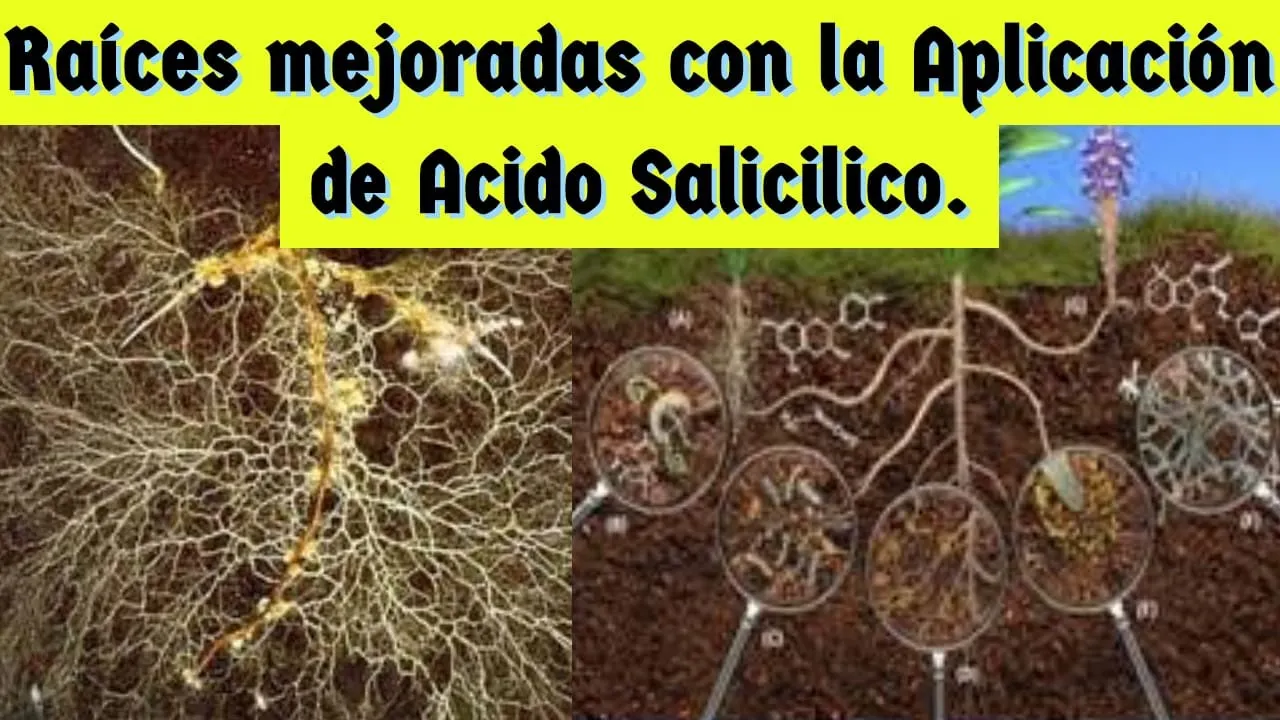
So just quickly root systems. There's lots of different types of root systems.
So um who's the botonist here? Which one's monocott and which one's dicots?
Yeah, monocots, dicots, right? It's not it's not important that you know which one's which. But it is important that you recognize that different root architectures are going to have different effects in terms of for example dealing with water deficiencies or nutrient deficiencies. Root systems that can go down deeper or extend into new regions more rapidly are going to benefit plants that are living in water or nutrient deficient regions much more than those that aren't.
Okay. If we think about looking more at the microscopic level when we talk about in later in the semester when we talk about development of roots we have a little group of cells down here at the tip of the root the apical merist stem this is where all the new cells that are being produced in the root are coming from. So in this immediately around this region the cells generally are not functionally mature.
So you typically don't get a lot of interaction with the soil from these cells down here. It's further up along as development starts to go along. So you get into this maturation zone, one of the things you start to see are root hairs. What are root hairs doing for uptake from the soil?
Yeah. Just increasing surface area through which transport can happen. So you would expect that uptake of things from the soil would be much more likely to happen in regions where there's root hairs than where there's not. Okay. So obviously there's a functional gradient as we go from the tip of the root up along the axis of the root where there'll be some region. It's usually close to the tip but not right at the tip where there's the maximum uptake from the soil. We know that if we get into woody plants that once the roots get more than a year old, they get stuff coating them and there's no uptake there anymore. So most of the uptake for for almost all types of plants is not at the tip but near the tips of the roots. Not surprisingly in the part of the roots where there are the most root hairs.
Okay.
So one of the things we need to think about and we can go back to our discussion of diffusion is if the roots themselves are taking up ions from the solution. So here's distance from the root surface.
Here's the root surface right here. What we're plotting is how the concentration of nutrients vary as you move away from the root tip and not the root surface. And not surprisingly, very close to the root surface, it's most depleted. So the actual concentration of solutes that the roots are seeing are typically much lower than the concentration only a few millimeters away from the root.
So if you're measuring the characteristics of of the bulk soil in terms of what's available to the plant, you may be getting entirely the wrong picture.
What does this tell you about which types of plants will be most effective in taking up nutrients from the soil?
No, because aren't all those root surface areas just going to be depleted near them?
Okay. Yes. So, you're absolutely right.
If you have more, that's going to help.
But there's something that's even more important.
Yeah. Faster growing roots. The more those roots move into places where roots haven't been before, the more of the nutrients in the soil are going to be available to it. Okay. So in regions where for example when the soil is more dry so that nutrients can't move in solution as much the ability to move into grow into new regions is going to be very important for sustained growth of the plant. Right? So it should be clear that this is complicated what's going on here. It's not quite as simple as as we might like it to be. Okay.
Let's just finish off by talking about one one brief thing that um I would say over the last 20 years or so is exploded in importance and interest and this is the interaction of fungi with plant roots. So these all fall into the general category of microisy.
Who's good at spelling? R R H Y Z Ae.
Oh, okay. I I You know what I'm talking about, right? I'm the world's worst speller.
So, without my spell checker, I'm completely lost. Okay. So these are soil fungi that live specifically in interaction with plant roots. It's a symbiotic relationship. So what what do we mean when we say symbiotic relationship?
It's benefiting both organisms. So what are the microisy getting from the plants?
Food. Well, let's be more specific.
They're not handing them steaks or cheeseburgers. What What are they getting? sugars, carbohydrates. Yeah.
Products of photosynthesis. What's the plant getting from the microisy?
Um, yeah, but let's be a little bit more specific about what's going on here because the the microisy aren't producing water. They're not producing nutrients.
So, what are they changing as far as the plant is concerned?
Surface area. The availability of surface area. In the simplest sense, you can think of all these micro these are these little lines here represent the hy the m the the fungi tend to grow as mats of cells either on the surface of the plants they grow they can grow in between the cells in the roots or they can actually grow into cells in the roots. So there's two different types of microisy, but basically what they're doing is increasing the surface area that the plant has in contact with the soil. How this works in terms of water transport and nutrient transport is really interesting, really complicated.
We got a number of labs on campus that are that are working on this sort of thing. But it should be clear because microisy are so common and that plant growth is less efficient when the microisy are taken away that this is an important interaction. There are relatively few plant groups that don't have microisy associated with them.
Unfortunately, arabidopsis is one of them. Our main model organism, there's no microisal interactions with arabidopsis that that occur naturally.
Okay. So in terms of the um what's going on with these interactions, the primary thing is just extending the apoplast, the surface area through which things can easily be transmitted to the plant in exchange for carbon from the plant. What happens in a situation when the soil has plenty of nutrients in it?
Does the plant need the microisy then?
Less so.
So, is that still a symbiotic relationship?
No. So there's a really interesting dynamic going on here that when the the nutrient is not limiting the microisy are more parasitic. They're getting stuff from the plant but the plant's not not really getting any benefit from the presence of the microisy. And it's a really interesting balance point when the plant detects that it's not getting as much from the microisy as it wants and the things that it does in response to that.
Okay. So, I think I got one more. Yeah, here's a microraph of a root hair and all this stuff covering it is microisy, right? So, it's very common for plants to have very close association with microisy. You've probably heard the the um suggestion that microisy are the largest organisms on Earth because the fungal mats, all of these guys growing together can fill a whole forest.
right? They're not really an organism like we are, but they certainly are a, you know, this giant mass of cells that does some things in coordination. So, it's pretty interesting. Okay, so unfortunately, we didn't get to talking about um cavitation. Let me leave you with this to think about.
Imagine a scenario.
This would be a good question to put on an exam.
Yeah, you'll find that I do this a lot.
Imagine a scenario where we have a line of xyllem cells, right? And it's not a single line.
There's several of them together that the tension in the xyllem gets high enough that a bubble forms in here. Okay. So, this is a bubble. And what would that bubble be filled with?
What? Once that bubble forms, once it's been there for a few minutes, what's it going to be filled with?
Air.
Why do you say water vapor?
Yeah, I know. So when that bubble first forms, when the water when the hydrogen bonds break and the the the things the water pulls apart, there's actually nothing there.
It's pretty much a vacuum.
But remember our the the experiment that we talked about the other day where we put uh water into a container with dry air. Water vapor is going to leave the liquid and go into the gas phase until it's in equilibrium. That bubble is full of water vapor, unhydrogen bonded water molecules. Okay, so I said that these things form readily in desert plants simply because the air is very dry and the soil is very dry. So there's it takes a lot of tension to pull water up from the roots. Cavitation happens on a regular basis. What I want you to think about, it's one of the supplementary study questions, but this would be really useful. What are some mechanisms that you can think of by which the plant can make that bubble go away?
There's lots of possible mechanisms and I don't it's much less important to me that you know the right answer because in fact plant physiologists don't know the right answer. There's still a lot of discussion over this happens. But there are four or five different mechanisms that could get rid of that bubble. I want you to think of at least one.
Figure out how how a plant could do that. I'll give you a hint. Typically, it happens at night and not in the daytime.
Okay.
So, like I said, if if it's not clear to you, look through the supplementary study questions for today. um or actually it was for lecture five and there's one question that talks about this. Okay, if you if you can answer that question then you understand plant water relations pretty well. Okay, good.
So, have a good weekend and we'll see you next
Up Next

6:05
Enzymes and Catalysis: How They Accelerate Biochemical Reactions
@khanacademymedicine
502K views•2013-12-06

39:12
Taste Matters: Why We Like the Food We Do | Professor John Prescott
@smagforlivet-video
409 views•2015-12-07

77:38
Plant Defense Mechanisms and Signal Transduction Pathways | Plant Physiology Lecture
@CornellTL
9K views•2013-02-07

7:08
Bacteriophages: Earth's Deadliest Killers and Future Antibiotics
@kurzgesagt
34.6M views•2018-05-13
Related Study Plans & Knowledge Roadmaps
Structured learning paths in Biology
biology
Analyzing Animal Venoms: Genetics & Pharma
01Molecular Biology & Physiology Foundations
02Venom Evolution & Toxin Gene Recruitment
03Neurotoxins & Ion Channel Pharmacology
+ 2 more learning modules
18h5 modules
Explore Roadmap
biology
RNAi: Biogenesis, RISC & Gene Silencing
01Molecular Biology Foundations: DNA to Protein
02Introduction to RNA Interference (RNAi)
03Molecular Biogenesis of miRNA and siRNA
+ 2 more learning modules
10h5 modules
Explore Roadmap
biology
Mycorrhizae: Signaling, Biophysics & Ecology
01Foundations of Mycorrhizal Symbiosis
02Molecular Signaling and Root Colonization
03Biophysics and Bioenergetics of Nutrient Exchange
+ 1 more learning modules
11h4 modules
Explore Roadmap
biology
Circadian Clocks: TTFL, SCN & Periphery
01Foundations of Molecular Biology & Gene Expression
02Introduction to Chronobiology and Actograms
03The Core TTFL: Molecular Architecture of the Clock
+ 3 more learning modules
14h6 modules
Explore Roadmap