











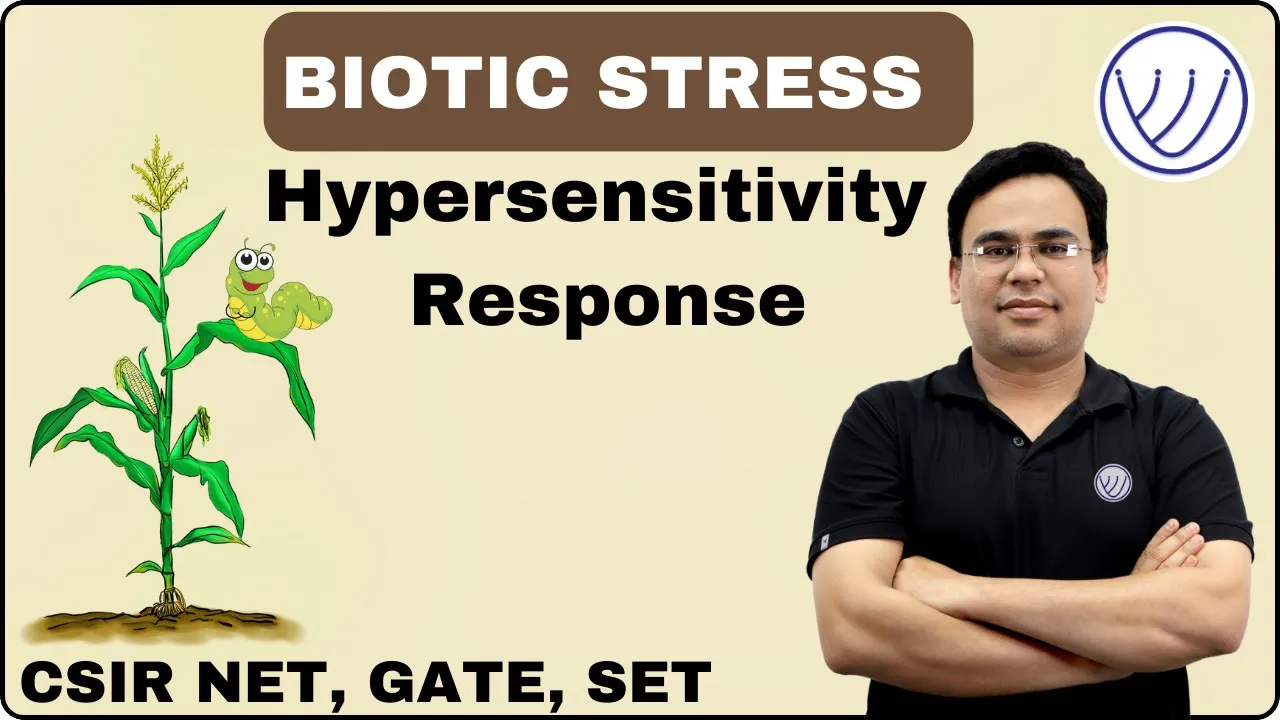




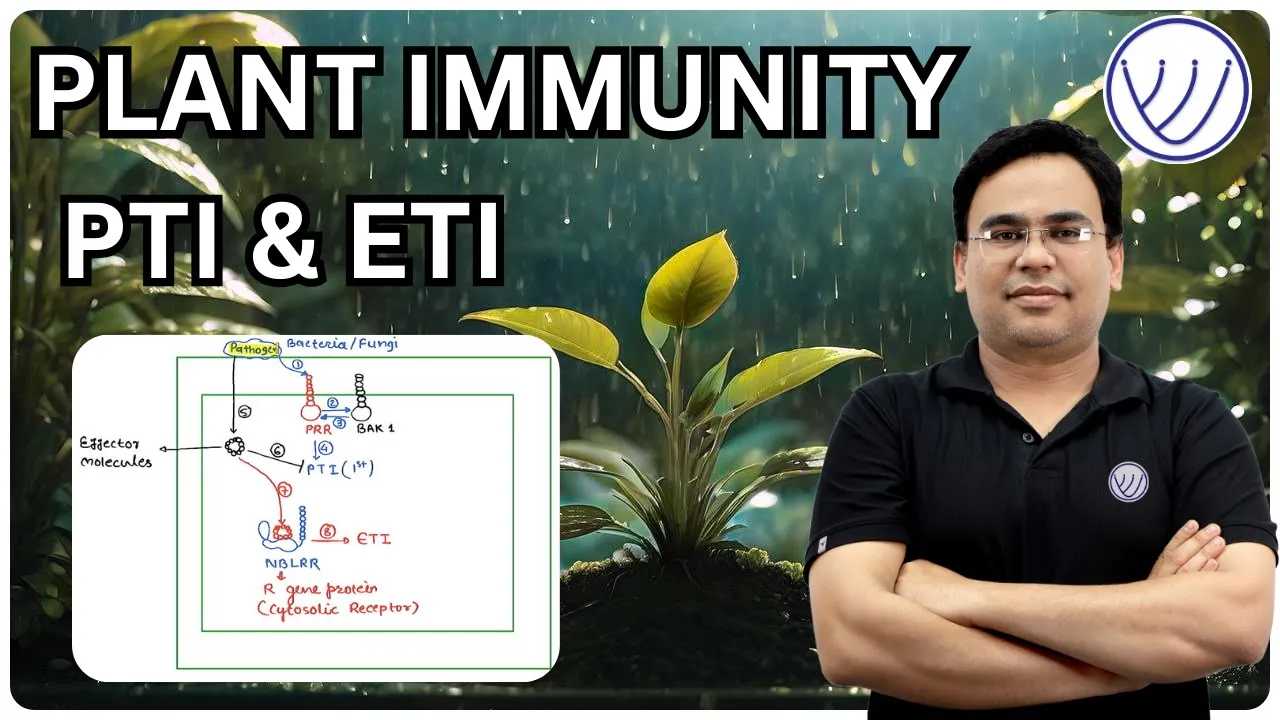




Plants employ sophisticated signal transduction pathways to coordinate defense responses against herbivores and pathogens, utilizing local responses (where elicitors trigger jasmonic acid production in affected cells) and systemic responses (where jasmonic acid and salicylic acid are transported through the phloem to prepare the entire plant). These pathways involve receptors that detect external signals, followed by cascades of molecular events including phosphorylation and dephosphorylation, ultimately leading to gene expression changes that produce defense compounds such as amylase inhibitors, protease inhibitors, lectins, and phytoalexins. The hypersensitive response represents a key defense mechanism involving programmed cell death to contain pathogen spread, while systemic acquired resistance (SAR) provides long-term protection throughout the plant.
Plant Defense Mechanisms and Signal Transduction Pathways | Plant Physiology Lecture
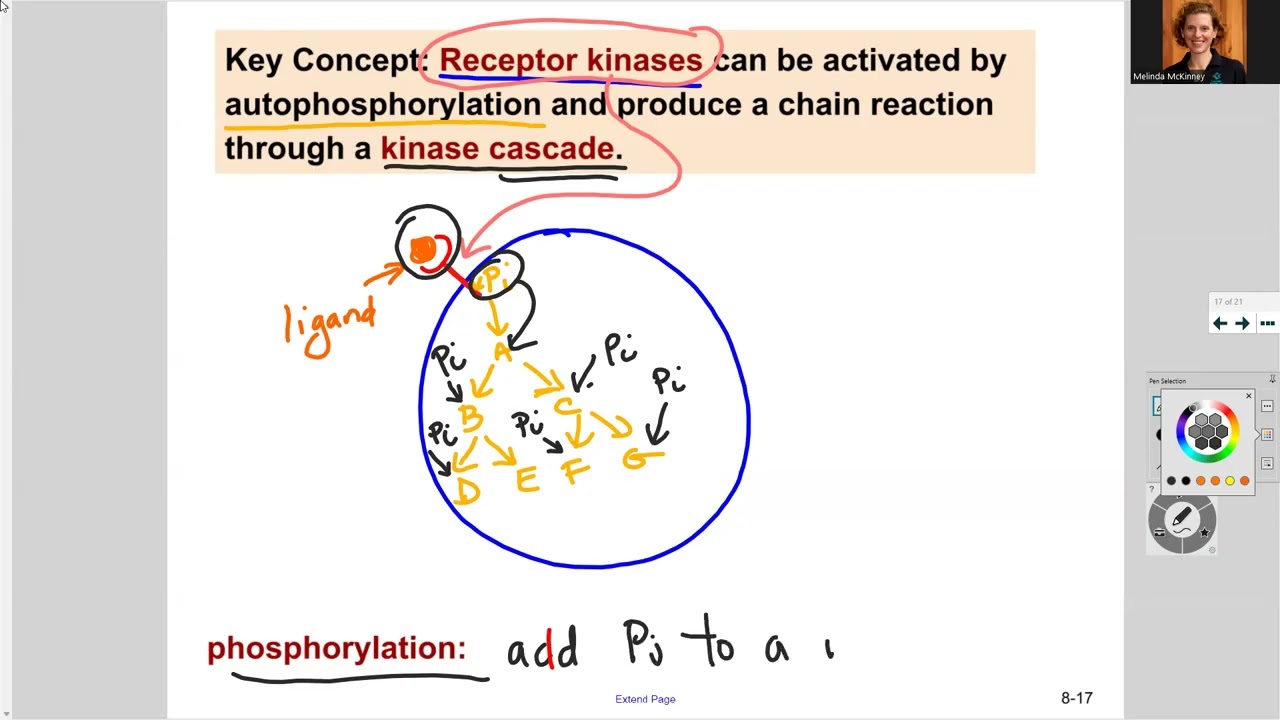
Added:so i believe we discussed the two sort of roles that jasminic acid plays in responses to herbivory one is the local response where elicitors remember those are molecules that are present specifically associated with the in this case insects but it also might be mammals that are eating or pathogens those elicitors are signaling molecules that start a sequence of events so we said that in the case of local responses it was often compounds that are present in the saliva of the eating insects trigger the production of jasminic acid that then trigger certain responses in the local cells but the other thing that this is showing is that those same elicitors in the phloem parenchyma cells can generate a signaling a another local signaling molecule that basically goes just to the neighboring cells to the the companion cells that also turns on the synthesis of giasmonic acid but now that jasminic acid is specifically brought into the phloem so it can be transmitted to the rest of the plant so this what you want to do from this is to contrast local responses versus systemic responses both of them are obviously going to be important in terms of dealing with herbivores or dealing with pathogens the local response is the pathogen or the herbivore is already there on those leaves the systemic response says get ready these guys are coming okay so in terms of herbivory yes sorry systemic response or this jasmonic acid itself produced okay so this is yeah so this is sort of um really a semantic issue almost and that is what's where what what part of this do we call signaling right so there's signaling that's local so something must be happening in this phloem parenchyma cell to detect the presence of the elicitor and in response to that elicitor secrete this pro-systemin the system and then creates a local response in the companion cell system and triggers the formation of desmonic acid the jasminic acid then goes by the normal pathway into the phloem and that jasmonic acid must trigger local responses and all the other cells it contacts to trigger the formation of whatever compounds are going to inhibit the herbivory so there's obviously a sequence of signaling here and we're going to talk about this in a little bit more detail in just a few minutes the way i like to think of it and certainly the way i'll present it to you is that signal transduction is a cellular process but the end of a signal transduction pathway might be produce a molecule like systemin or produce a molecule like jasmonic acid that moves to other cells and triggers new signal transduction pathways in those cells okay so it's whether you want to call the whole thing a signal transduction pathway or what you want to call each little part of signal transduction pathway and then having some sort of chemical hormonal transmission you know if we think about it in humans for example we have lots of ways of doing intercellular signaling hormones and neurons and things like that this is basically the same thing this is intracellular signaling this is intercellular signaling but to induce that requires that the cell respond to some particular signal right so how you want to draw that line is is really up to you but i'm going to draw the line that signal transduction happens at the cellular level and the one cell the response of one cell might be to release something into the rest of the organism that in other cells trigger signal transduction pathways not present in the cell but if the cell contents get mixed up does my acid can form in the absence of a known elicitor no no you're thinking of the um cyanogenic glycosides and the glucosinolates so these guys are the ones that are the compound and the enzyme that lops off the sugar is pre are present in separate parts of the cell when the contents of those get mixed up the production of these active compounds that that are toxic to the to the herbivores are produced but in the case of jasminic acid the asthmatic acid is synthesized from linolenic acid in the chloroplast that's something that's normally there presumably there's something down here associated with this pathway that's specific to the formation of jasminic acid that's being turned on in the presence of the elicitor okay so that distinction makes sense or not really it is a response to mechanical wounding but what is the thing that what is the thing that elicits the formation of jasminic acid so if you just break the leaf or something like that it's certainly possible i'm not aware of that but certainly anybody know anybody else know anything about that it's certainly possible that's the case we'll talk about some signal transduction pathways that are induced by mechanical damage to leaves even movement of leaves can induce signal transduction pathways so what you're describing is certainly possible i'm just not aware obviously this is not my area of expertise if you find if you find something that really documents that left let me know so we can talk about it okay all right so the question still is what are the compounds that are produced either locally in the mesophyll cells or in response to the systemic movement of jasminic acid that inhibit the the eating of herbivorous insects or even mammals and there's really two main classes of these things that are produced actually three main classes they're amylase inhibitors so remember amylase is starch and there are compounds that are produced in response to these signaling pathways that inhibit the breakdown of amylase there are also protease inhibitors compounds that prevent the breakdown of proteins and there are lectins these are compounds that that bind up all sorts of proteins particularly proteins with carbohydrates associated with them so the idea behind these is not to you know taste bad but to limit the nutritional cape the nutritional quality of the materials that the the insects or the animals are eating okay so it's an interesting question from an evolutionary perspective if if the animal eats the leaves but can't get any nutritional quality out of it is that going to keep the animal from eating the leaves in the future well presumably the answer to that is yes otherwise plants wouldn't be doing this but it's a little hard to actually understand what's going on there yeah you might that might be the the sort of the expected outcome of that but clearly that can't be the case otherwise this wouldn't work right okay so let's switch now to talking about defense against pathogens and when we talk about pathogens we're talking about things like bacteria and fungi and things like that and we can really divide pathogens into two basic categories there's biotrophic pathogens versus necrotrophic and the difference between these two is biotrophic pathogens don't kill the host they infect the host and they remove compounds that they want to keep them alive to allow them to multiply but they don't kill the host where obviously necrotrophic ones do necrotrophic ones the outcome is death of the host biotrophic ones is making the host weaker so the biotrophic pathogens don't necessarily kill the organism but other things might kill the organism more easily because these biotrophic guys are taking away carbon and nitrogen that the that the organism needs okay so obviously both of these are are bad for plants and they want to be able to deal with those in some reasonable way so a number there's a number of different types of mechanisms that are induced in response to the presence of pathogens pretty much the general story is the same that is there is some sort of elicitor molecule and that elicitor may be a protein or a compound that is a component of the pathogen but very interestingly there's been a number of different types of elicitors that are identified that are the result of the interaction of the pathogen with the plant cell for example in order for this pathogen to be able to infect the cell it's got to either get into the cell or get things into the cell it means it needs to get that get through the cell wall so many plant pathogens bacteria and fungi have cellulases other enzymes that break down the plant cell wall the cellulases that break down the plant cell wall from the pathogen are different than the cellulases that are present in the plant and so the products of those breakdown are different so the plant has receptors that detect breakdown products that are the result of the pathogen being there and not the result of what the plant might be doing so there's a number of different type of elicitors that can signal what's going on here those listers will see will bind to some sort of receptor and then bring about a number of different types of responses one of the main types of responses to pathogens is called the hypersensitive response often abbreviated hr the hypersensitive response is programmed cell death it's apoptosis so those cells that are being infected by the pathogen and typically those cells that are immediately adjacent go through a pre-programmed sequence of cell death but in the process of doing that do a lot of other things one of the main things that they do is they produce a lot of reactive oxygen species reactive oxygen species are all obviously not good for any living organism they're not not just bad for plant cells so those reactive oxygen species have a negative effect on the fungi or the bacteria that are trying to to infect the cell they also turn on the production of phytolexins and other types of compounds that are involved in trying to combat the presence of the bacteria essentially the idea is kill the cells immediately in this vicinity of the pathogen infection and limit the ability of the pathogen to move further in the plant so what you end up with is little dead spots in the middle of a leaf for example where the pathogen has become isolated so if this works the leaf has sacrificed a few cells but the rest of the plant survives okay so hypersensitive response is a very localized response that limits the ability of the invading organism to get very far into the leaf another sort of thing that happens is the synthesis of hydrolytic enzymes so the cell walls of fungi and of bacteria have specific types of compounds in it that one of the things the plant can do to defend itself is to release enzymes that break down the pathogen cell wall right so the pathogen cell wall serves a very similar role that the cell wall implants do in particular it has a role in terms of osmotic characteristics the pathogens can stand to be in lower osmotic strength solutions because they have the presence of the cell wall you break down that cell wall and the pathogens the cells basically explode okay so that the ability of the plant to damage the pathogen cell wall is another way of defending itself okay i mentioned the production of fido elections final elections are a group of compounds they're very diverse they they're there's some terpenoids there's some fennel propanoids there's alkaloids that are phytoelectrons but there are compounds that are produced in active response to pathogens okay so they're not present before the pathogen is produced they're produced specifically in response to the pathogen and i think we got some examples of phytoelections from different types of organisms so you can see that they're related to um they have the basic structures of a number of different types of compounds that we were talking about before remember that secondary products the types of secondary products are that are produced follow very distinct phylogenetic patterns so you'd expect to see similar types of phytoelections if you look in for example all the legumes or if you look in a different group of plants you'd see a different group of phytoelectrons but they all serve the same general function in terms of active response producing compounds that limit the ability of pathogens to grow okay another interesting part of this that you shouldn't be particularly surprising to you is all of these responses are we would expect to see the same sort of systemic responses in response to pathogens that we talked about in in response to herbivores and this is typically required referred to it is systemic acquired resistance or sar so just like the systemic responses that happen in response to herbivory that are depend upon jazmonic acid there has to be some sort of whole plant signal that's involved in taking the information from the point where the pathogens are attacking to the rest of the plant to signal what's going on here and the molecule that does that is salicylic acid so we talked about salicylic acid on tuesday when we talked about secondary products in the benzoic acid family salicylic acid is a derivative of benzoic acid and as as some of you pointed out it's closely related to acetyl salicylic acid which is aspirin but the production of salicylic acid the local production of salicylic acid and the transmission of that product to the rest of the plant is the signal to the rest of the plant to turn on processes obviously not the hypersensitive response but to turn on the synthesis of phytoelectins and things like that to prepare the rest of the plant for the obviously high likelihood that pathogens are going to attack other cells besides those ones that the pathogen started out at interestingly there's a derivative of salicylic acid methyl salicylic acid which is volatile it can be released into the air by plants and that methyl salicylic acid is a signal to neighboring plants that the pathogens are coming so that the production of methyl salicylic acid in one plant in response to pathogens can signal neighboring plants that the same thing is happening so it's a good question so this plant is presumably investing some carbon let's say in production of a compound that in the first approximation you might say doesn't do this plant any good so what what might be a benefit of this um yeah you're heading in the right direction but i think you're missing the sort of the one key important thing right so if this plant lives in a population of similar plants what's the benefit of giving up carbon to tell the neighboring plants that pathogens are coming what's the benefit of making and helping a neighboring plant survive that's species all those things are correct but if you're missing the key link what's the role that this plant may play in the reproduction pollination right right so if plants are obligated out crosses if they're not self pollinators then the pollen's got to come from another plant right so survival of the other plant might be very beneficial in this circumstance that's this may not be the only explanation but it's certainly one possible isolation that helps you figure this out no i mean you're you're raising a completely valid point i mean the take home message from a question like that is there's a lot of things both positive and negative that really need to be taken into account and we can't really assess that in any reasonable way other than to say the plants do it if the plant doesn't it has to be it's almost certainly an overall benefit for the plant right um do all plants do this good question it was like i wonder if there's a difference i wonder if somebody has looked into it and maybe like maybe only outcrossers do it or like maybe you know self pollinators still pollinating plants might not do it or maybe plants that they that live in a big population say like i don't know like small grasses and like live all together and do it more than like a good place yeah it's a good question and i don't know the answer to it but there's one other possibility that we're overlooking there's an argument that's made that part of the role of method salicylate is within plant communication yeah it's more rapid response that's right right so it might be that this has nothing to do with signaling neighbors and evolve for signaling itself that transfer of volatiles through the air within a plant it's going to be a lot faster than transfer of salicylic acid in the xylem or the foam right so that may very well be the reason for this and the secondary effect is that it helps neighboring plants predators there's no advantage for them to signal everyone else right so there's i mean the whole idea of altruism is a very complicated thing from an evolutionary perspective you know so the bird among a flock of birds who makes noise to warn the flock of birds that there's a predator coming is immediately announcing its location to the predator why do they do that i mean obviously breeding sorts of things played an important role in that and potentially could play a role in this as well but it's complicated you're asking good questions for which there aren't necessarily definitive answers my guess is this is not uniform among all plants but i don't know that for sure anybody plant pathologists no all right okay so let's move on then we okay with this so i want to move on to talk more specifically about signal transduction pathways this has given us sort of our first really definitive ideas of the need for signaling and we talked about back at the beginning of the semester we talked about how gene expression is regulated so for example in prokaryotes the inducers and things like that and in eukaryotes transcription factors so what we want to do now is think about how to link at the cellular level signals that are happening outside the cell that are coming from outside the cell to responses that are happening inside the cell as a precursor for thinking about how do things like jasminic acid or salicylic acid how do those give the ability of the plant to signal at the whole whole level whole plant level okay so signal transduction pathways clearly what we're trying to accomplish is something that is common to all cells one of the characteristics that we describe to all cells is that they're responsive to their environment and those responses well let's list what are some cellular responses to environmental cues in any cell be very let's be very general what sorts of things might change in response to external cues in any cell water potential might but that's i might move yes say that again plant cells no not so much not so much by itself but i'm trying to be completely gentle now so movement when we talk about movement at the cellular level what are we talking about what part of the cell is being effective affected cytoskeleton right and possibly like silly uh yeah what else what other general effects yeah so let's speak more general metabolism and that means what's being affected is likely to be enzymes doesn't just happen what triggers or what what things have to happen for apoptosis to happen uh yeah so what's going to make that happen come on guys how about gene expression yeah we really need a break so if we think about changes in gene expression what are the things that are immediately going to control gene expression transcription so we think about general signal transduction cathodes somewhere we have signal and these are if it's a single transaction pathway the signal is coming from outside the cell so we start with the signal and in the end what is being affected is something associated with the cytoskeleton that's related to movement something that's associated with enzymes turning on or turning off enzymes that are already there in the cell to alter metabolism or turning on or turning off transcription factors to regulate gene expression okay so what we want to do in terms of signal transduction pathways is try to understand the molecular level what's connecting these guys so certainly one of the things that has to be here is there has to be a receptor so let's think about what are the kinds of external signals that cells might respond to and if you give a specific thing let's try to extrapolate that to something much more general so what sort of external signals might a cell respond to temperature okay so temperature less let's be more general about that well okay let's keep going and then we'll we'll generalize this one but what about environmental that's sort of like saying external generally yeah okay so but when we when we if you want to generalize temperature maybe we should say physical environment so the other thing that what other things might go along with temperature in the physical environment light yeah physical what else what other non-physical things biological okay so what sort of biological things might they respond to um but but insects cells don't respond to insects yeah um it could be mechanical so maybe we should put mechanical in here with physical because there are cells that can respond to to literally to movement where we have stretch receptors you know the this knee reaction is our cells that respond to movement biologically you have like an increase in water levels say that again our heart no hormones are not except they're external to the cell yeah oh sorry we're thinking external meaning to the plant no i'm sorry external because remember we're talking about signal transduction pathways my definition of signal transduction pathway the one i would like to at least get you to think about for today is cellulite right we'll talk a little bit about today about whole plant responses but right now i want you to think about cellular level things so hormones let's just generalize this as chemicals what else anything else ph well the ph would be protons right yeah so we if we were talking about animals could we add anything to this list actually there are some cases in plants we can add too logically so you can stimulate cells to do things by by changing their membrane potential now and when we talk about neurons and stuff like that neurons change their membrane potential usually by the binding of neurotransmitters chemical responses yeah why are hormones like wound cells change how they operate if you have like increased levels sure did we for example when we talked about nitrogen assimilation we talked about the fact that nitrate reductase enzyme is activated by nitrate and inhibited by ammonia so in a sense you can think of that that's not really a signal transduction pathway because that's just binding of the substrates to regulator sites but expression of nitrate reductase gene expression is turned on by nitrate and turned off by ammonia so there's an example where you have a chemical not hormone but a chemical signal that's altering what cells are doing right okay so we've basically got these external signals that somehow have to have to be perceived by a receptor and we'll talk more about more detail about the receptors in just a minute and then we need something else we need some way of getting information from the receptor to these various things and the simplest way to think about it is if this is an external signal particularly if it's a chemical that can't cross the plasma membrane that these receptors are often going to be on the plasma membrane not always we'll see a bunch of examples in just a minute but in the case when they're on the plasma membrane and if we're talking about changes in gene expression then there has to be something that connects those because you can't get a protein that's in the plasma membrane into the nucleus to take care of this so we need a signal transduction pathway the signal transduction pathway i mean we could say that it includes the receptor but it's key thing is to link the receptor to the cellular level response and we'll see that these signal transduction pathways in some cases can be extremely simple i mean we talked about an effective signal transduction pathway when we talked about the role that lactose plays in controlling the lac operon lactose binding to the inducer protein turns on or turns off the production of the enzymes associated with lactose metabolism right so there's a simple there's an example of a really simple signal transduction pathway okay two other things that this signal transduction pathway permits to happen besides just the connection of the receptor to the response it allows the signal transduction pathway to be tuned let's say fine tuning and that fine tuning can happen in a couple of different ways there can be amplification so in the case of the the um production of phytoalexis the presence of one elicitor molecule can end up with the productions of hundreds of thousands excuse me a phyto-election molecules that would help prevent the bacteria or the fungi from taking over the plant that represents amplification it's not a one-for-one sort of thing but one thing in many things out right that's one possibility and another possibility we'll see that's important is crosstalk that perhaps not just a single thing has to happen to turn on a response but two separate things have to happen simultaneously we'll see lots and lots of examples of that as we go through talking about plant hormones and growth and development implants because many plant responses to the environment involved antagonistic or synergistic contributions from two different hormones so in the context of signal transduction pathways what's happening at the cellular level has to respond in a coordinated way to two hormones not one so it requires some crosstalk between the signal transduction pathways and so the signal transduction pathway permits this sort of crosstalk to happen and we'll we'll see how that works in today's lecture okay so we've got a pretty good idea of what's going on at the cellular level let's remind ourselves how this now can work at the whole plant level so for example you all know or probably at least have heard of darwin's experiments with light in the dark grown coleoptiles of oat plants will bend towards a light source what darwin found was the part of the coleoptile that responds to the light that senses the light is at the tip but the part that responds in terms of differential growth that causes one side to grow faster than the other so it bends is down here we'll talk a lot more about this when we talk about light receptors and plants in a couple of weeks but what darwin immediately recognized from this and which started the whole idea of intercellular signaling implants is there must be some compound that's produced in the light sensing region that is translocated down so there's an intracellular signal so let's think about this in the context of two separate cellular signal transduction pathways so in the light sensor let's call this cell one in light sensor there's a light receptor that senses the light and at the cellular level in response to the light it produces a hormone some sort of chemical signal and this hormone is translocated through the plant inter intracellular movement and then we have cell 2 that's going to do the growth response and this has a hormone receptor and the response of the of the cell to that hormone receptor is increased growth so basically what we have are two cellular level signal transduction pathways which are coupled by a hormone we could just as easily imagine in a in an animal system this sort of coupling with a hormone or it could be coupling with a neuron right but in both cases we're talking about two separate signal transduction pathways what's happening in this cell is very different what's happening in this cell but those two those two different signal transduction pathways are coupled to provide a whole plant level response to direction of light in this particular case okay so this is why i like to emphasize the importance of signal transduction pathways at the cellular level they evolved at the cellular level prokaryotes have signal transduction pathways they're common to all cells because they're common to the earliest ancestors of all cells yeah sure yeah so there are several things in today's chapter that are not that clear and in particular the difference between signal transduction pathways between plants and animals so the absence of g proteins using tyrosine threoline rather than tyrosine kinases turning off repressor pathways rather than turning on inducer pathways you know can you can you completely um attribute that to the mixed heritage of plant cells in that sense no because animals have a similar mixed heritage so but you would have to say that the difference in plant cells must have been inherited with the photosynthetic characteristics right so in that sense it would work it would have been very nice if the book had said that right and it'd be very very nice if the book described in a little bit more detail how turning off repressors rather than turning on enhancers speeds up a pathway i don't have a clue how to explain that to you it makes no sense to me at all but we'll get to that in just a minute okay so we all right with this sort of perspective here one more thing i want to talk about general about signal transduction pathways before we go on to give some specific examples and the book's got a lot of specific examples in it right you don't need to know those examples we're going to go over each of them again when we talk about the various plant hormones and how they work what you should see are what are the commonalities that are there and how do those commonalities fit into this general picture of signal transduction pathways okay so if we think of a signal stat transaction pathways we have a receptor and then a bunch of steps we're not going to define what these steps are there can be lots of different things here and i want you to think about what's happening at each one of these steps in the simplest sense the receptor it either binds or detects its signal or it doesn't it's either on if the signal is there or it's off okay when it's on what's it going to do just in general what's it going to do okay change this confirmation but the result of that change in confirmation will be what it's got to do something to step one right in the under normal circumstances what state is step one in off right so when receptors turned on it turns on step one but step one was off before right so step one then we'll turn on step two but if step one turns on step two and never turns off the signal transduction pathway stays on so every single step in a signal transduction pathway has to be binary in terms of its characteristics it has to have an on state and an off state because if any one of these steps is on all the subsequent steps will be on so it's not just the receptor that gets turned on and off every step has to get turned on and off and students miss that too easily in thinking about signal transduction pathways let me give you an example of this let's have a signaling protein we're not going to say what it is but that signaling protein is going to have two states and as anna pointed out the key thing that differentiates these is some sort of conformational change the protein chases changes its structure one of the most common ways that this can happen to go from the off to on state is by phosphorylation taking a phosphate from atp making adp and sticking a phosphate group on this okay that changes putting that phosphate group on there it's got lots of negative charges it changes the local charge distribution the protein moves in response to that this protein has a different shape than this one same protein it's just been chemically modified this reaction does not happen spontaneously the adding of phosphate on this phosphorylation reaction is done by a protein kinase remember kinase is an enzyme that sticks a phosphate from atp onto something so there's a hexose kinase that sticks phosphates onto glucose from atp okay so this is a protein kinase it turns it on but there has to be some mechanism to turn this off as well and that turning it off is accomplished by removing the phosphate this is dephosphorylate or this is phosphorylation and this is also enzymatic this is carried out by an enzyme called a phosphatase okay so let's think about how this sort of reaction fits into a signal transduction pathway this is in the middle of a signal transduction pathway somewhere down in here what is it that causes this protein to go from the off state to the on state the protein kinase right it's the addition of the phosphate that's directly doing that but whether the phosphate is added or not depends upon the activity of the protein kinase so the protein kinase itself has to be regulated by something else in the signal transduction pathway right so in the context of turning this on it's the activity of the protein kinase that's important how about turning it off what's turning this state state a step of the signal transduction pathway off the phosphatase do we need to regulate both the protein kinase and the phosphatase why do you say probably not um could you imagine scenario where both of these were regulated yeah you could but it's simpler to have just one of them regulated and you're correct typically what's regulated is the kinase and the phosphatase is constitutive it's on all the time this isn't always true but it's true for the vast majority of signal transduction pathways that use this sort of step in it this is very common in signal transduction pathways so the kinase is regulated by step by the previous step but the phosphatase is constitutive it's always on so now there's an automatic way to turn off the signal transduction pathway and the only way it's turned on is by the kinase and how on the signal transduction pathway is depends upon how long the kinase stays active and how long the kinase stays active depends upon everything upstream from there so what you're looking at is the balance between the phosphorylation reaction and the phosphatase reaction right so it means that in general any single component of a signal transduction pathway is not on for very long the signal transaction pathways tend to go on off on off on off and it depends upon whether they're on more than they're off whether you see the signal or not whether you see the response or not okay so it's really important to think about signal transaction pathways in this context because we're gonna everything that we know almost everything that we know about signal transduction pathways comes from analysis of mutants where you give the signal and you see some altered response and the idea is to then tease apart all the components of the signal transduction pathway and try to understand what those components are based on the characteristics of the mutant so this tells you right away that for this one protein right this protein it's the same protein that exists in two different states we could imagine a mutation that would prevent phosphorylation right what's the what's going to be the phenotype of that mutant no response never see a response right could you imagine a mutation that causes the confirmation of this protein to be in this confirmation whether or not there's a phosphate there what would be the phenotype of that mutant always on right so mutations two different mutations in the same protein can give you two different phenotypes and you know the reason why now because every step in the signal transduction pathway has to have two states an on state and an off state and if the mutant happens to be stuck or have the characteristics of the off state or the on state that's going to give the phenotype of the organism in terms of the response so we'll see mutants that are insensitive to certain types of hormones ethylene insensitive mutants or we'll see mutants that grow as if ethylene was there all the time even though there's no ethylene there right so it's important to be able to connect what's happening at the molecular level to what's happening at the whole organism level if you want to understand signal transduction pathways that's right this step up here if you have to keep carrying on requires atp every time the signal transduction pathways does the information transfer that occurs in signal transduction pathways costs energy to the cell yes lots of energy of energy well okay so let's let's you can answer this question from two perspectives from the evolutionary perspective would it be better to regulate the phosphoface no because evolution didn't choose to do that it chose to regulate the kinase right so from the metabolic perspective would that be better perhaps but what that's telling you is your metabolic perspective is missing something important because evolution wouldn't have chosen that if overall it wasn't better right can't lose sight of that perspective it's too easy to say evolution screwed up right because we like to see lots of things just like that that don't make sense but what you have to do in those circumstances is say i'm asking the wrong question i don't have enough information because it's unlikely that evolution would have selected for something unless overall it was beneficial for the workers say that again okay you're forgiven okay so let's just spend a little bit of time thinking about some examples of signal transduction pathways we've we've got all the basics down as far as i'm concerned so if we think about bacterial signal signal transduction pathways the most common type of bacterial signal transduction pathway involves only two proteins it's called a two component system one of these proteins the sensor protein is typically located almost always located in the plasma membrane not surprising because the signals are very often coming from outside the cell they're always coming from outside the cell but they can't always get into the cell so we got to think about this sensor protein basically existing like this here's the plasma membrane here's the sensor protein if the signal is coming from outside the cell then this input domain is the part of the protein that's exposed outside the cell and the transmitter domain is the part that's exposed on the inside of the cell this is the same protein they're just two different parts of the protein and so it should be clear that interaction of the signal with the input domain causes a conformational change that also changes the properties of the transmitter domain in other words the res the receptor protein the sensor protein is essentially a mini signal transduction pathway it's taking information from outside the cell and that transmitting that to information inside the cell in the form of a conformational change of the protein for these bacterial two component systems the what happens in the transmitter domain is a process called auto phosphorylation basically what it does it hydrolyzes atp and sticks the phosphate onto itself not onto some other protein okay so we have when the when the signal binds atp is hydrolyzed and it sticks a phosphate onto the protein okay so signal conformational change that causes autophosphorylation the receptor protein or the sensor protein is done the other protein not surprisingly if we're talking about regulation of gene expression that other protein is a soluble protein in the cytoplasm that has dna binding characteristics right so this output domain has to have some dna binding characteristics that when it binds it either turns on or turns off somehow modifies the expression of genes and the configuration of this output domain is controlled by whether or not the receiver domain has a phosphate on it or not phosphate on it presumably this would bind to the dna and cause gene expression or prevent it from binding to the dna and inhibit gene expression and the whole signal transduction pathway in this two component pathway is nothing more than the transfer of the phosphate from the transmitter domain to the receiver domain no atpase i mean no no kinase you know no no atp involved here it's just the direct transfer of the phosphate from one to the other so it's not this is not the same as this this is a very simple phosphate transfer okay so very short signal transduction pathway works just fine but because there's only two steps in it there is no possibility of that fine tuning that i talked about no possibility of easy interplay with other signal transduction pathways or amplification having one thing causing thousands of thing products changing okay so one of the things we need to think about is how are these different in eukaryotic systems so just to show you that evolution sort of works here is part of the cytokinin signal signal transduction pathway that's present in eukaryotic plant cells and you'll notice that there are transmitter and receiver domains and we've got this new thing in here this hpt domain and let's look at these side by side so we can see what's happened here you'll notice that the receiver domain of the response protein has been stuck onto the sensor protein up here so there's sort of been a domain copying and then there's this new domain in here that's basically acting as a intermediate so this gives you actually a very important picture of how evolution works on proteins how it works on genes typically one of the main ways that new proteins are formed is by switching domains copying domains or moving domains from one protein to another so here's an example of where the receiver domain of the response protein in the prokaryote has become part of the sensor protein and the eukaryote so in the eukaryote it starts off the same way signal comes in in this case cytokinin binding the transmitter domain autophosphorylates itself but that same protein then transfers within the protein the phosphate to a receiver domain and then that phosphate is transferred onto other proteins okay so it's a modification of this extra steps well that extra steps provides for the possibility of finer tuning and how this works okay so let's turn to think about signal transduction in eukaryotes and particularly implants so it shouldn't be surprising from just this simple picture that eukaryotic signal transduction pathways are a lot more complicated than prokaryote most of the prokaryotic signal transduction pathways involve one or two proteins eukaryotes 15 to 20 of the typical eukaryotic genome encodes proteins that are involved in signal transduction that's a lot of proteins that's thousands of proteins that are involved in signal transduction pathways the human insulin signal transduction pathway in our cells in our body have now there's been 107 proteins identified that function in that signal transduction pathway somewhere at the end there there's there's there's something that affects the uptake of glucose into the cell but obviously there's got to be a lot of other things going on there and right away the thing that you should should think about is insulin is not the only thing that can that controls glucose transport in cells so there's got to be a lot of space for crosstalk with other signaling pathways so that's part of the reason they're so complicated we can define three different types of signals in any any sort of cell but we could talk about them specifically in plants we can have impermeable impermeable in terms of crossing the plasma membrane we can have permeable or often referred to as lipophilic and we also have some physical signals things like light light or temperature so let's ask the question what does this mean in terms of the location of the receptor proteins for these guys well the impermeable signals you know where the receptor receptor's going to be it's going to be on the plasma membrane so for molecules that cannot get through the plasma membrane the receptors are going to be located on the plasma membrane for molecules that can get through the plasma membrane in reality their receptors could be anywhere in the cell they can be on the plasma membrane so cytokinin for example is a membrane permeable molecule but its receptors on the plasma membrane ethylene is a membrane permeable molecule its receptor is in the on the endoplasmic reticulum um auxin we'll talk about auxin and give an example of oxygen in just a minute it's a membrane permeable permeable protein it's receptors in the nucleus when we talk about light light can be just about anywhere right light penetrates the cell and there are some light receptors the blue light receptors are in the plasma membrane and the um things like phytochrome phytochrome is moving back and forth between the the cytoplasm and the nucleus okay so where the receptor is located depends upon the characteristics of the signal okay one other thing we need to think about one of the things that that's shown diagrammatically here is if we're talking about regulation of gene expression all of these guys that are external to the nucleus somehow have to get information into the nucleus we need to think about trafficking of stuff across the nuclear membrane there's nothing about this well virtually nothing about this in the chapter but i at least want you to think about how this happens remember that the nuclear envelope has got big pores in it nuclear pores here's a picture of nuclear pore looking at it from the cytoplasmic side here's the picture of a nuclear pore looking at it from the inside of the nucleus looking out and here's a diagram of what we think the nuclear pores actually look like there's a lot of protein and stuff involved in there but if we think about trafficking of molecules between the cytoplasm and the nucleus first of all how do they get between the cytoplasm and nucleus what causes the molecule to move from the cytoplasm to the nucleus or vice versa diffusion that's it so does diffusion have any guidance other than concentration gradient no so what that means is if we want molecules to be inside the nucleus what do we need to do to make them move in you'd have to raise the concentration in the cytoplasm or lower the concentration nucleus we have to do something to the molecule once it gets inside the nucleus so it behaves as if if it's a different molecule right so phosphorylation could be one thing that could happen inside the nucleus the phosphorylated protein is a different protein than the non-phosphorylated protein so if the non if the outside the nucleus are not phosphorylated and the inside they get phosphorylated there's a diffusion gradient for it to move in this brings up the whole idea of nuclear localization the book pretty much treats as if this is if it's magic it's not magic it's simply changes in the characteristics of the signaling of the step in the signal transduction pathway it may be a protein it may be a small molecule but it's changing the relative concentrations of those things in the cytoplasm versus in the nucleus to drive diffusion now there are some of these that have the changes also cause them to bind specifically to things so if you have a protein that's floating around free and it binds specifically to something then the concentration of the free protein has gone down and you provide a diffusion gradient for it to go in as well so it's important to think about how binding and conformational changes drive diffusion into or out of the nucleus because it's we're going to see it's going to be very important yeah um yes nuclear envelope is two separate membranes um well i'll just draw a picture it's easier i don't have a say that again yeah so if we look at the nuclear envelope you know in cross-section it sort of looks like this that gives you the wrong picture because really the nuclear envelope is continuous with the endoplasmic reticulum so this represents not a break but just a poor it represents one of these guys that we're seeing in cross-section so the nuclear envelope is nothing more than extension of the endoplasmic reticulum interesting question to ask from an evolutionary perspective which came first the nuclear envelope or the endoplasmic reticulum right but they're basically the same thing so the the two membranes that make up the nuclear envelope are continuous with the membrane that makes up the endoplasmic reticulum okay you cut off the card that correctly puts it towards the poster all right say that again well you have that signal part of the protein that gets sliced off when you get to the compartment where it's supposed to be if that can happen yeah but if that doesn't happen and they look like when you go into the like this so do they just phosphorylase it so there could be other proteins in the nucleus that might be phosphorylated or dephosphorylated if it has a binding site if it binds specifically for example a transcription factor binds to the dna then what does that do to the concentration of the free transcription factors in the nucleus goes down so now we provided a diffusion gradient for those things movement so most important keep in mind this is all driven by diffusion if you think about it that way then you know it must change the concentration gradient and if it changes the concentration there's only a few things that could happen you got to change the either you've got to remove the molecule that's not happening you bind it to something or you change its properties by sticking a phosphate on or something like that okay nuclear transport receptors are things that cause them to bind in specific ways either interact with uh with the nuclear pore machinery so this to say that this is a passive everything just goes through it is completely incorrect so there are things that cause proteins to interact in a positive way with the nuclear machinery it helps helps get them to that pore so they can get into it in place yeah so it's it's a lot more complicated than i've described uh okay let's see i'm gonna skip that i want to talk about we talk about difference between plants and animals so the book lists a couple of things no g proteins in plants if you look at the previous edition of tasin zeiger talks all about g proteins right so it's only been in the last few years five years that we know there's g proteins and animals there's no g proteins and plants that we know of at least as of uh about a year ago that may have changed since then but i'm not aware of it well if you look over the sort of history of signal transduction most of it was studied earlier in yeast and in plants before it was studied in animals so yeast and animal systems became models for how plants do it and g proteins are common in those guys so g protein model was and they're things that behave like g proteins in plants sort of but they're not really g proteins okay so this was getting to the question i think that anna was asking about about differences in evolutionary origins i mean there are other important differences one of the things we talked about here in bacterial systems most of the the amino acids that get phosphorylated in bacteria are histidines in animals most of the amino acids that get phosphorylated are tyrosines and in plants it's much more common to phosphorylate threonines okay say that again threonine so they're different they're different amino acids i mean in the initial thing that gets phosphorylated yes i don't know anybody know oh it's right because they hydrolyze gtp that's right yeah thank you okay the thing that the book let me just finish up with this the thing that the book puts most of its emphasis on the differences between plants and animals is that animals regulate gene expression by positive regulation where animals do it by negative regulation and a lot of you are confused by that because the end result is turning on gene expression so how can you have positive regulation in one and negative regulation in the other so positive means it has now let me add notes here positive basically means it turns on some process and negative means it turns off some process so what we need to do is put the right words on the end of this to make it make sense so in the case of turning on this is turning on transcription the endpoint of plant signal transduction pathways is turning off repression of transcription that is in both cases before the signal comes transcription is not happening in this case it's true it's not happening because the transcription factor is not turned on in this case this happened because the transcription factor is there and ready to go but something is repressing it and what's happening in the plants is you're removing that repression okay this is animals and this is plants both yes the end result of both of these is right you go one more step and they're the same right this one's turning on transformation this one's turning on transcription but they're doing it in different ways so let's give me two more minutes and we'll give some examples of this okay and let's skip let's go to this one so it gives the book gives three different examples so here's one for associated with brass and steroids so in this case this is a regulatory molecule that under normal circumstances the presence of this phosphorylated molecule inhibits the binding of a transcription factor the signal transduction pathway turns off the kinase that sticks the phosphate onto this molecule and when you turn that off that repression is gone the the um the transcription factor binds and expression goes on okay so you're removing the activity of this repressor to allow the transcription factors to bind and make signal transduction work here's another example this is associated with phytochrome here is a protein that when it's localized in the nucleus interacts with transcription factors to block transcription and what phytochrome does is changes the localization of this protein so it tells you right away that something more has got to be happening in this protein doesn't just magically somehow move to the cytoplasm some conformational change or some characteristic has got to change about this protein it's not phosphorylation something else changes about this protein that causes it to move out into the cytoplasm and then allow these light dependent transcripts to happen the most common one and the one we'll come back to discuss briefly at the after the break is degradation of repressors so this is an example from the auxin signal transduction pathway where the transcription factors that are needed to activate transcription of the oxygen dependent genes are present in the cell all the time but what prevents the transcription of the auxin-dependent genes is the presence of this repressor protein the aux iaa protein when that protein is present it binds with these transcription factors prevents transcription from happening the end result of the signal transduction pathway for auxin is that that repressor protein is literally broken down so for those of you who are familiar with it the main system that's involved in breaking down proteins in eukaryotic cells is the ubiquitin dependent system it sticks ubiquinone is a little protein it's a protein tag that means destroy this protein when ubiquitin gets stuck on something that protein gets broken down and that's what we'll come back to to finish up this discussion topic um on tuesday after break that's the last thing we need to think about so remember lots of examples in the textbook you do not need to know the details of the examples but you should see the commonalities between these three examples of negative effects on repression that are present in most plant signal transduction pathways
Up Next
Jasmonic Acid: Plant Hormone Biosynthesis, Signaling, and Defense Roles
@Vidyamitra
4.6K views•2017-09-11
Bacterial Communication: Quorum Sensing and Biofilm Formation Explained
@JHUAAP
12.6K views•2011-06-28

Enteric Nervous System Explained: The Gut's Brain | Neurobiology Lecture
@alumniu6029
438 views•2018-09-12
Bacteriophages: Earth's Deadliest Killers and Future Antibiotics
@kurzgesagt
34.6M views•2018-05-13
Related Study Plans & Knowledge Roadmaps
Structured learning paths in Biology