


















The weak nuclear force appears weak compared to electromagnetism because its force carriers (W and Z bosons) are extremely massive, requiring enormous amounts of energy to create them; this makes weak interactions rare at everyday energy scales, though they become dominant in high-energy environments like top quark decays where sufficient energy exists to produce these massive particles.
Why the Weak Nuclear Force Is So Much Weaker Than Electromagnetism
Added:The basic framework of the Standard Model of particle physics, including the distinction between matter particles (fermions) and force carriers (bosons).
The concept of gauge bosons as mediators of fundamental forces, specifically how photons mediate the electromagnetic force.
Heisenberg's Uncertainty Principle, with a focus on the energy-time uncertainty relation and its role in the creation of virtual particles.
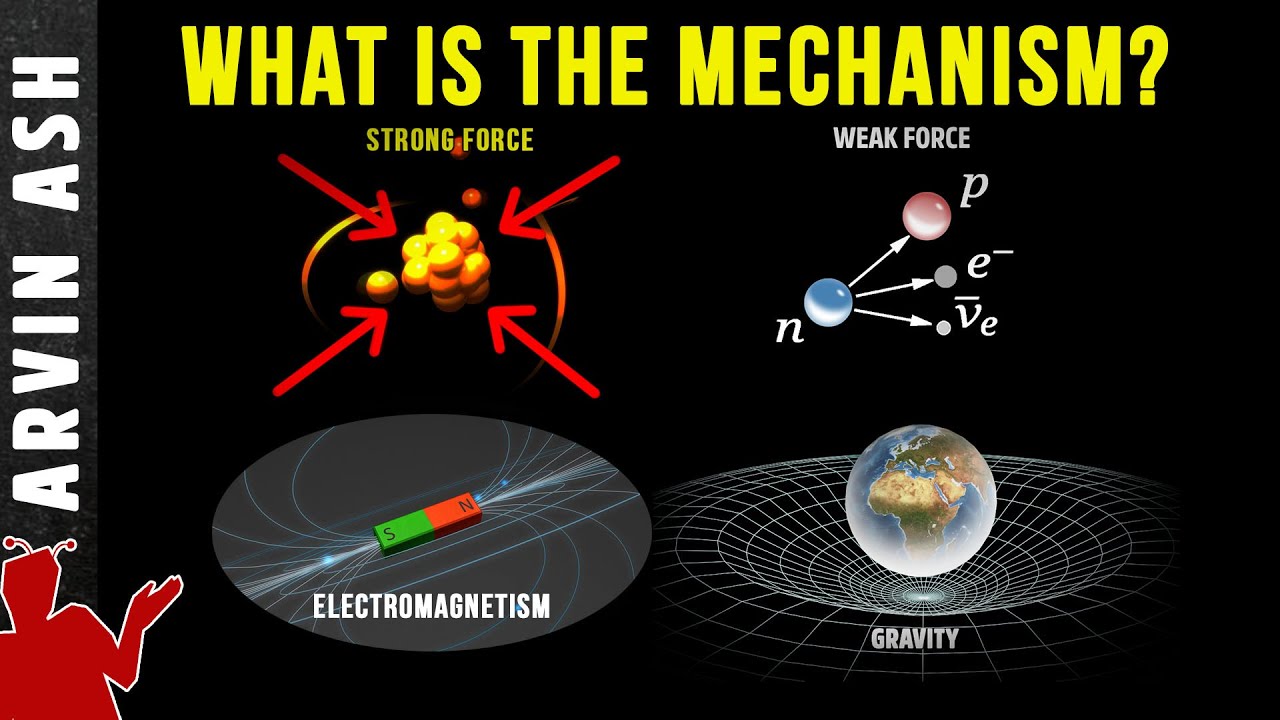
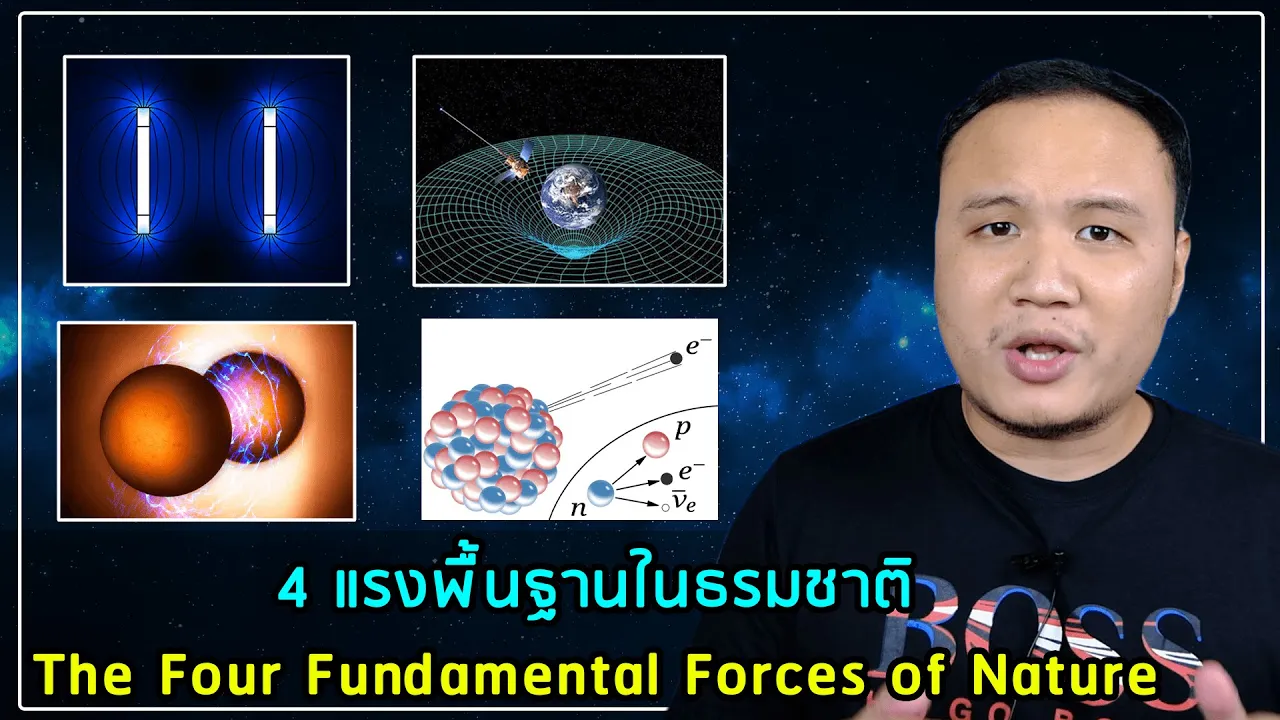
The fundamental differences between the four forces of nature, particularly their ranges and relative strengths.
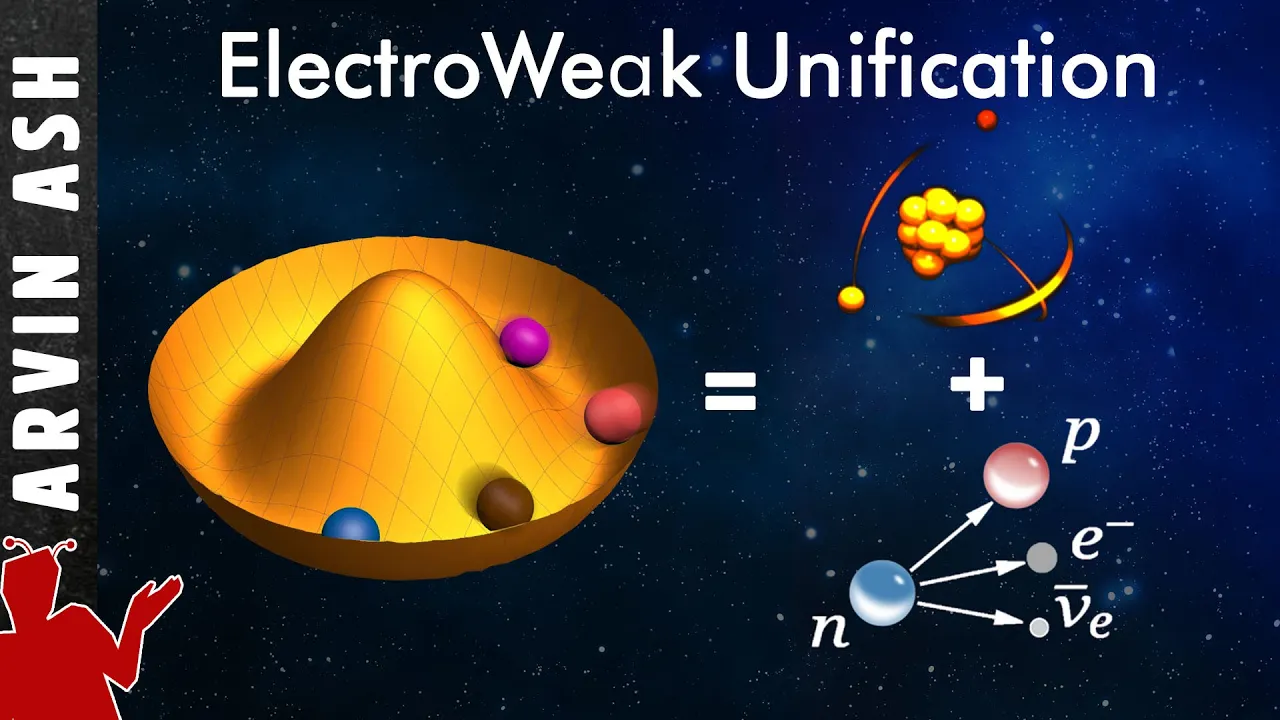
Electroweak Unification Theory, which describes how electromagnetism and the weak force merge into a single electroweak force at high energy scales.
The Higgs Mechanism and the Higgs Field, which explain the physical process by which W and Z bosons acquire their massive properties.
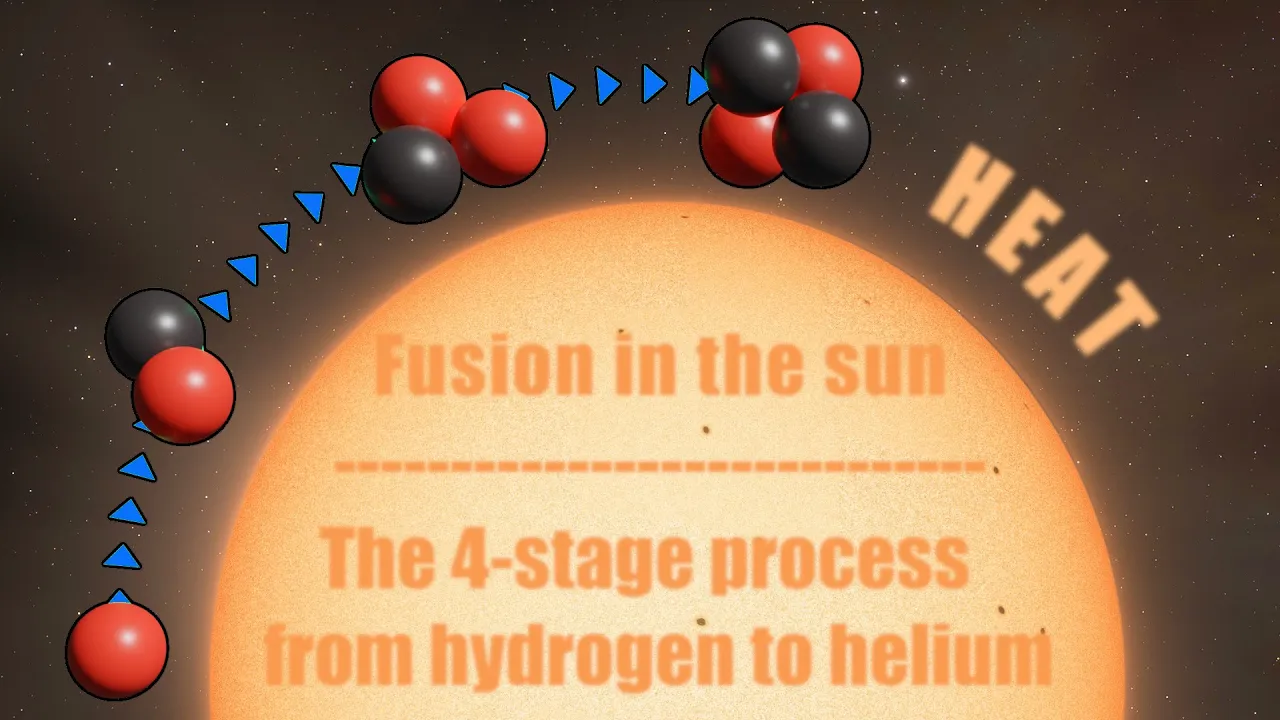
The mechanics of Beta Decay and its implications for astrophysics, such as governing the slow, steady nuclear fusion rate inside the Sun.
Experimental particle physics at colliders like the Large Hadron Collider (LHC), focusing on how W and Z bosons are produced, detected, and measured.
822.1K views19.9Klikes10:32Original Release: 2017-04-14
There are lots of questions one could ask about particle physics, from why there exists quarks to why would anyone care about particle physics at all.
Luckily, the answer to that last one is easy. We study particle physics because it’s totally bleeping awesome. I mean, come on- who would even ask such a silly question?
However, there are questions that even reasonable people might ask. For instance, one question might be why the various subatomic forces have different strengths. At a distance scale about the size of a proton, the strong nuclear force is the strongest. Electromagnetism is about one percent as strong as the strong force. And the weak nuclear force is only about 0.001 percent as strong as the strong force.
Just why these forces have the strength they do is an interesting one and the answer differs, depending on the force. So, I thought I’d tell you why the weak force is so much weaker than the electromagnetic force when they have so much in common. They’ve even been unified into a single force that we call the electroweak force, but that particular story I’ll leave for another day.
To understand what’s going on, you need to remember a few things. The first thing is that the photon is the particle that mediates the electromagnetic force. It is massless and has no electrical charge. For the weak force, there are two particles that mediate the interaction. They are the W and Z bosons. Both of these particles are very massive.
The W boson has an electric charge and the Z boson is neutral.
The points I’ll be making are universal, but let’s just compare the photon and the Z boson for purposes of illustration. And, to do that, I’ll describe a specific example.
Let’s talk about when a quark and antimatter quark come together and annihilate into a force carrying particle, which then decays into an electron and antimatter electron.
There’s nothing particularly special about this particular process. It just helps me make my point.
So we see here two Feynman diagrams that show what’s going on. On the left hand side, we see that quark and antiquark coming together, making a photon, and then decaying into the electron and antimatter electron. On the right hand side, we see the same thing, but with a Z boson. They’re obviously very similar.
I made another video about Feynman diagrams that’s relevant. It might be worth your time to watch it. While Feynman diagrams are little drawings that help visualize what is going on, they are also equations in disguise. In this case, each diagram contains seven elements. There are the two incoming particles and the two outgoing particles. That’s four.
Then there are the two vertices where the interactions occur. That brings us to six.
And finally, we have the force carrying particle. That’s seven, and we see that both the electromagnetic and the weak force Feynman diagrams have the same number of components.
We could therefore write an equation that kind of brings that all together. For instance, we could say that the EM interaction is equal to incoming particle 1 times incoming particle 2 times outgoing particle 1 times outgoing particle 2 times the creation vertex times the decay vertex times the created particle. And, for the weak force, we can say the same thing.
So, since this equation structure governs both interactions and the diagrams are so similar, what exactly is the difference that makes the weak force so much weaker than electromagnetism?
Well, we see that the incoming and outgoing particles are the same in both cases, so they can’t be the source of the difference. So let’s just gray them out. That means that we’re left with the two vertices and the force carrying particle.
The vertex terms contain within them the charge of the interaction and it seems pretty reasonable that the difference might occur there. After all, we know that in electromagnetism that some particles have a lot of charge and others don’t. However, if we actually calculate the weak force charge and the electromagnetic charge, we find that they turn out to be pretty similar in magnitude. They’re not the same, so don’t think that. But they’re not so different. So that isn’t the cause either. So let’s gray them out too.
And that leaves us with the force carrying term. Now the trick is to explain how the force carrying term causes the weak force to be so weak.
To take this next step, we need to talk about the Heisenberg Uncertainty Principle. This is one of the principles of quantum mechanics. It’s often said that it means that you can’t simultaneously measure a particle’s momentum and position and that’s true.
But there’s another expression of the Uncertainty Principle that says that if you look at a particle for a shorter and shorter time duration, you will have a less and less precise measurement of the particle’s energy. And, since energy and mass are connected via Einstein’s equation E equals M C squared, that means a particle’s mass can also differ from what’s expected.
So that’s a lot to get your head around, so let’s just take a step back. Basically what this is saying is that while a photon has zero mass, if the photon participates in an interaction that takes a very short time, for that split second, the photon might have a mass. Similarly, the Z boson has a nominal mass of 91 billion electron volts of energy, but its actual mass might differ in interactions that are very brief.
This, of course, means that the mass of the Z boson can vary from interaction to interaction.
That’s a pretty mind blowing concept, but it’s true.
In fact, we have studied the Z boson to death and while we know that its most probable mass is 91 billion electron volts, it really has a range and we can easily find it to be anywhere between 89.5 and 94.5 billion electron volts.
Now that’s just the normal range. The mass of any particular Z boson could be anywhere between 0 electron volts and infinity. It’s just very rare to find it outside that normal range.
And we can quantify how likely it is for the Z boson to have any particular mass. If the most likely mass is 91 billion electron volts, you can find it with a mass of 88.5 billion electron volts about twenty percent as often. Finding it with a mass of 76 billion electron volts is only about one percent as likely and finding it smaller than that is even more unlikely.
So now we’re ready to answer the question of why the weak force is so weak. It boils down to energy. So let me hang some numbers on that.
The type of radioactive decay using the weak force is called beta decay. It’s when a neutron decays into a proton and emits an electron and a neutrino. An example of this kind of decay is the carbon 14 decay that is used to date how old some objects are.
If you look at it more deeply, what you see is essentially that the neutron emits a W particle, which then decays into an electron and a neutrino. And you can figure out the mass that this particular W particle must have. It turns out that it must have a mass of 156,000 electron volts or, in round numbers, 0.0002 billion electron volts.
Now the W particle has a natural mass, which is 80 billion electron volts and its natural range is between 78 and 82 billion electron volts. That means that’s incredibly, stupidly, ridiculously rare for a W particle to have a mass of 0.0002 billion electron volts. It just almost never happens.
And because it almost never happens, then it is exceedingly unlikely that, for example, a carbon 14 nucleus will emit a W particle and decay. That means interactions that proceed by the weak force are very rare and THAT is why we call the weak force weak. It’s a matter of energy and the probability of making such a very light W particle.
Now I wouldn’t be telling you the complete story if I didn’t tell you about how top quarks decay. Top quarks decay by emitting a W boson and turning into a bottom quark.
And they do this decay so fast that it happens before the top quark can interact via either the electromagnetic force or the strong force. In fact, in top quark interactions, the weak force actually happens first, which suggests that this is the strongest of the forces in that situation.
Don’t feel bad if you feel a bit confused. I’ve been telling you that the weak force is weak and I just told you that in one case it was super strong. And again, the reason is energy. A top quark has a mass of 172 billion electron volts, so it has enough energy to decay into a W particle with only 80 billion electron volts of energy. And, if it can decay, it will.
But in the world of nuclear physics, which is much lower energy than the world of the top quark, the decay involves only something like 0.0002 billion electron volts of energy, which means that it won’t happen until a W particle is created with an outrageously unlikely mass. When that happens, then that form of nuclear decay can proceed.
So that’s the basic idea. The weak force is weak in radioactive decay because it can’t happen until a very rare W particle happens. But in interactions with enough energy, it’s easy to make W particles and, in those circumstances, the weak force isn’t weak at all.
In fact, this is an excellent example of just how complicated particle physics can be- indeed any advanced science. The simplest lessons are right, but incomplete. And as you dig deeper and deeper into the subject, your mind can get blown again and again.
Up Next
3:27
Higgs Boson Explained: What Is It and Why It Matters
@fermilab
3.5M views•2011-07-07

12:53
21cm Hyperfine Transition in Neutral Hydrogen: Radio Astronomy Basics
@AaronRobertParsons
12.4K views•2011-10-13
105:22
The Dark Universe: Dark Matter & Dark Energy Explained
@fermilab
7.7M views•2016-06-06

27:14
Entropy and the Second Law of Thermodynamics Explained
@veritasium
27.5M views•2023-07-01
Related Study Plans & Knowledge Roadmaps
Structured learning paths in Physics
physics
Nuclear Physics (Decay, Fission & Reactors)
01Atomic Structure and the Binding Force
02Radioactive Decay and Half-Life
03Nuclear Fission Mechanics and Chain Reactions
+ 2 more learning modules
12h5 modules
Explore Roadmap
physics
Soft Matter (Polymers, Colloids & Rheology)
01Foundations of Soft Matter & Thermal Forces
02Polymer Physics and Macromolecules
03Colloids, Surfactants, and Self-Assembly
+ 2 more learning modules
38h5 modules
Explore Roadmap
physics
Analytical Mechanics: Lagrangian & Hamiltonian
01Mathematical Foundations: Calculus of Variations
02From Newtonian Mechanics to Constraint Dynamics
03The Principle of Least Action & Lagrangian Mechanics
+ 3 more learning modules
28h6 modules
Explore Roadmap
physics
General Relativity (Spacetime & Cosmology)
01Foundations of Relativity: Special Relativity
02The Geometry of Spacetime: Equivalence Principle & Curvature
03Einstein's Field Equations: The Mathematics of Gravity
+ 2 more learning modules
55h5 modules
Explore Roadmap