


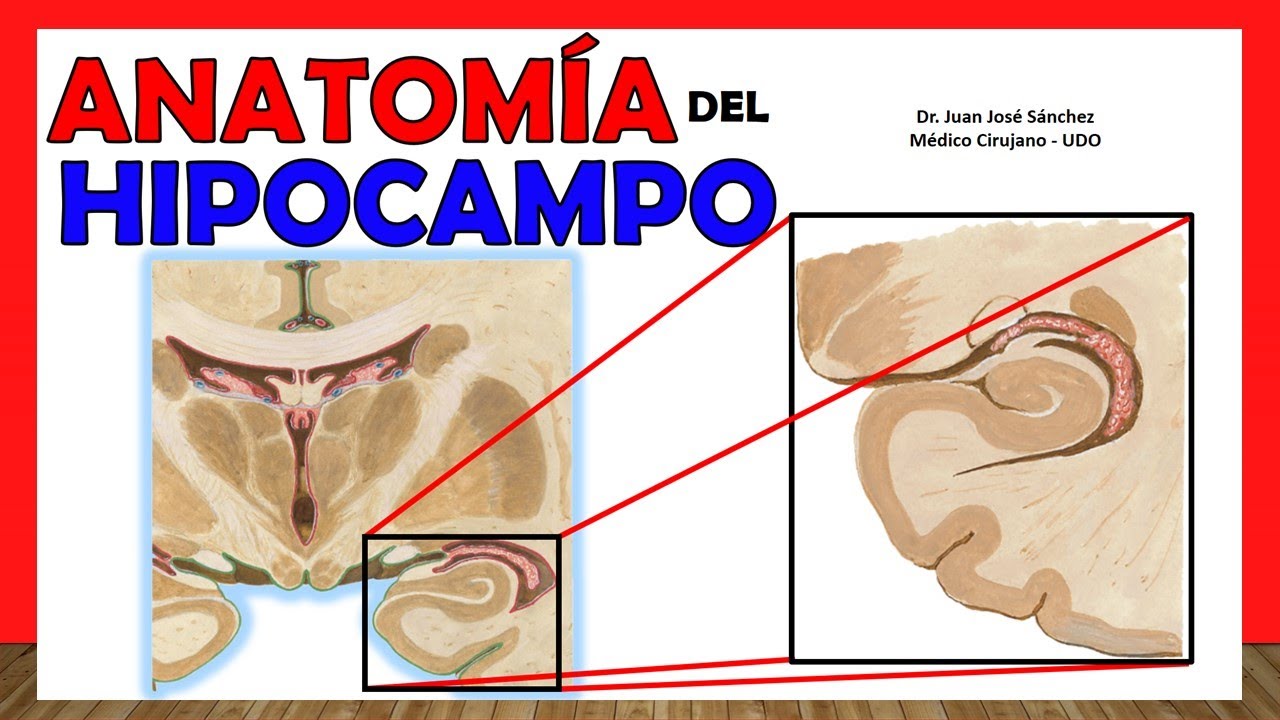

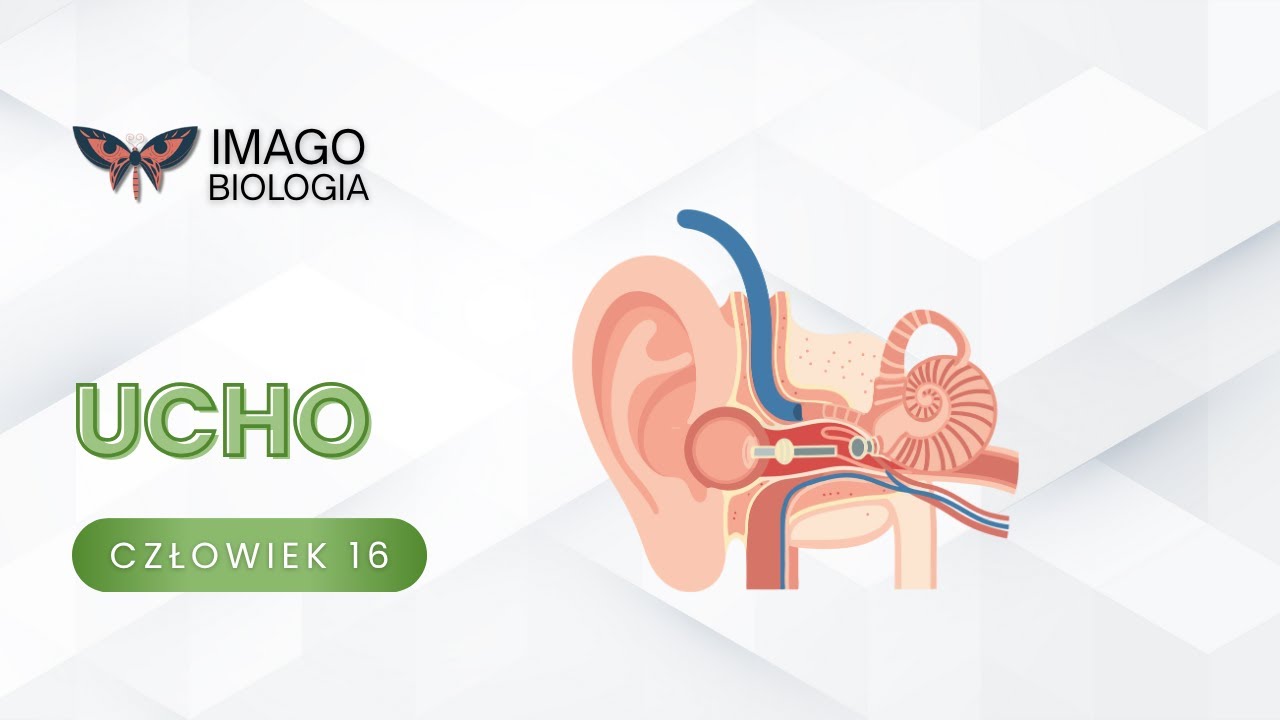













The human brain determines our sense of location through an integrated system involving the vestibular system (inner ear fluid detecting movement), proprioception (body position awareness), and specialized neurons called place cells and grid cells in the hippocampus that create internal spatial maps; however, the exact location of the self within the body remains a profound mystery, with people typically pointing to either their chest or head when asked to indicate themselves, reflecting how cultural, sensory, and cognitive factors collectively construct our experience of where we are.
How Your Brain Maps Your Location and Self in Space
Added:Basic neuroanatomy, particularly the functions of the hippocampus, cerebral cortex, and sensory processing centers.
The fundamentals of the vestibular system in the inner ear and its role in maintaining balance and spatial orientation.
The concept of proprioception, which is the body's subconscious ability to perceive its own position, motion, and equilibrium in space.
An introductory understanding of cognitive mapping, representing how organisms mentally organize and navigate physical environments.
The neurobiology of place cells and grid cells, including the Nobel Prize-winning research on the brain's internal GPS system.
Neurological disorders associated with spatial navigation deficits, such as Alzheimer's disease and spatial neglect.
The cognitive science and philosophy of 'self-location' and embodiment, including experimental phenomena like the rubber hand illusion and out-of-body experiences.
Applications of biological spatial mapping in technology, such as developing bio-inspired navigation algorithms (SLAM) for robotics and autonomous vehicles.
267.3K views10.3Klikes59:47Original Release: 2026-02-24
I don't know your name, but I want you to follow along. And Hannah, you too, with a little experiment. We're starting right off the bat with an experiment.
All right, everyone, point at your forehead.
>> Okay, are you pointing at your forehead?
Good. Now, point to your chest.
Now, point at your knees.
Point at your nose.
Now, point at your shoulders. Now, point at yourself.
Where are you pointing? Same place as chest.
>> Same place as chest. Interesting. Down in the comments below, let us know where you are pointing. Did you do the chest, the belly, go back up to the face? Where is the unique seat of yourself? Where are you? Where am I? How do we know any of this stuff? Where am I in my body?
Where am I in the universe? Well, that's what we're talking about today. And this is going to take two parts really. I think the the first part is going to be a sort of a standard straightforward answer to this question as I guess ordinary humans would ask it. Where in the world are you? How do you work out where you are? And then in the second part, we're going to delve deep into Michael's I mean the the the the wonders of your mind, Michael, of what does it mean to say you are where you are? Is that fair?
>> That's right, Hannah. And as it turns out, both of those questions are related in a boring way, but they're unrelated in a fascinating way. There we go.
That's that's the hook and tease for this episode right there.
>> This episode is brought to you by Cancer Research UK.
>> The word cancer comes from the Greek caros, meaning crab. And Hypocrates used that word because tumors can spread out like crabs legs.
>> For a long time, cancer was poorly understood. And so I think because of that, it was almost scarier and and people didn't even say its name. But what science has done since is replace uncertainty with understanding. But that understanding isn't instant because cancer isn't just one disease. It's it's hundreds of different diseases, each behaving differently depending on where it is and its genes. And that complexity is why progress in cancer research can feel like it's slow. But step by step, research is saving and improving lives.
And that's why Cancer Research UK, the world's largest charitable funer of cancer research, supports work across more than 200 types of cancer, from the tiny changes inside cells that start the disease to better ways to spot it earlier and treat it more precisely. For more information about Cancer Research UK, their research and breakthroughs, and how you can support them, visit cancer research.org/therest is science.
All right. Well, let's start up uh with I mean, you know, you're sitting in your chair, you know where you are in the room around you, but I want to know how do you know? How do you know which way is up? Um because there are times when actually it's extremely difficult to work it out. Um people who get stuck in avalanches report not knowing which way the ground is, which way the sky is. Uh when you are sort of when you don't have any visual information when the usual things that you use as cues are stripped away, it's incredibly difficult to orient yourself. I've heard that and I I I love thinking about it because it's so frightening to be like buried in snow, not knowing which way is up, not knowing which way to like crawl out. And I have in while I'm laying in bed thinking of how I would survive certain things, I've come up with my strategy. Can I tell you what it is?
>> Yeah, go ahead.
>> It would be to drool.
>> Yes, that is that's the actual trick.
>> Is that a real thing that you should do?
>> That's the real trick is to spit and see which way the the saliva goes. Yeah.
>> And then you know which way down is.
>> Exactly. Right. Michael, you what what other scenarios are you imagining in your mind at at at nighttime that you're trying to survive?
>> Um, a lot of illegal stuff like I'd often I found this very relaxing to imagine how I could get to and deface the Hollywood sign without being stopped or caught.
>> Okay.
>> Just like imagining going up the hill and the steps I would take and what I would wear and then suddenly I'd be asleep. It was a great It was like rather than counting sheep, I committed crimes.
>> That That would be your imaginary fantasy. Um Okay. Did you have one for uh if you were surfing and you got wiped out on a surfboard and then working out which way to swim?
>> Okay. Yeah. Here it's it would be it would be bubbles. I would I would exhale bubbles and watch which way they went. I I like I have to say that I've never um well I mean I've I've surfed but I don't think you can really call it surfing but like is that something that happens that you're underwater for long enough that you could consciously sort of say I'm going to blow a bubble and see which direction it moves in?
>> That's what I'm wondering too cuz I think in both of these examples if you haven't been in these scenarios you might say how can you not know which way is up? You'll feel it. But when you are packed into avalanche snow or when you are disoriented, you've spiraled, you're surrounded by water, you're buoyant everywhere, it is not immediately obvious. So there are other scenarios um when this kind of total confusion of of which way is up, which direction you're in happens slightly more unusually um in the microgravity of of the International Space Station or uh you know in uh in space rockets in general. So because okay so one of the ways that you are anchoring yourself is is of course vision looking at which way gravity is working where the horizon is and so on.
Um, but you also have inside your ear in the sort of semi-ircular canals these incredibly intricate design. Um, it's essentially like a biological accelerometer which can tell which way you're moving um and which way you are you're oriented. But when you're in microgravity, the system which relies on on uh gravity pulling it downwards end up floating freely and uh they start signaling to your brain that you are constantly falling and flailing. Um but your eyes meanwhile see this very static cabin. So, so your brain panics because of course for the whole history of our evolution, the only situations you'd be in when your eyes didn't match what your ears were telling you would be if you'd been poisoned >> or or if you were falling. If you were in freef fall.
>> True. If you were in freef fall. Yeah, of course.
>> Both of them are bad scenarios.
>> Very I would say very bad. If you're if you're falling long enough for you to uh your brain to register that there's a mismatch um in uh prehistoric times, I would say overall bad. I would say things are not looking good for you or your future offspring. But uh the thing is is that it sort of assumes that it's this uh that you've been you you've you've had some kind of toxin. So it kind of pulls this emergency cord getting you to vomit.
>> The puking is a really good thing. Like your body is trying its best to say, "Look, if I've been poisoned, let me get out what's in the stomach. It might have been something I just ate." So if you're dizzy, if you're in the vomit rocket, like throwing up is is your body's like primitive way of fixing what we invented.
>> Right. Totally. And the thing is there is like a lower level of this. People who are carick or travel sick in general, uh your body is feeling the physical sensation of this car moving, accelerating, breaking, you know, moving around. Um but it's especially prevalent if you're reading or looking at your phone. you're watching something that's static and and your body is like this these two things don't mesh time to feel sick which is why the the trick to if you feel caric is to look out the window sort of connect yourself with the outside to connect yourself with emotion anyway most people feel a little bit of sick when they um end up in the space station but there was one guy a senator who uh flew to to space on the um on the space shuttle um called Jake Gah and He really struggled like a lot. So he vomited so much that NASA decided to they should set a new metric of 1.0 gards is like the limit of how much a human can reasonably vomit when when they experience this situation. Most people get to 0.1 GS by the way. H >> how specific is it? Like could I use it to measure my flu symptoms? Oh man, I'm at half a gone. I don't think so. I think it was just, to be honest, them throwing shade at this pathetic senator who was too much of a weakling to be an astronaut.
>> If I was him, I would not see it as shade. I would see it as an honor. You know, I'm down in the history books. I'm I'm podcast fodder now. I'm I'm a measure of vomit amount. Like, at least that's something.
>> It's true. It's going to live on beyond beyond you, beyond your lifetime. Um, this whole thing about this mismatch between your your ears and your eyes, your ears in general, working out which way you're up. Um, there's something really dangerous that can happen to pilots with this because inside your ear, the way that this works partly is is about fluid moving through your ear through these little canals. Um, and that means that if you enter into a really long steady bank, as you would if you were flying an aircraft, if you're sort of like doing a really long bank, >> what can happen is that the fluid can can eventually catch up with the the canal walls, which means your brain then thinks that you're level even though you're still banking. So what has happened in the past, this is called the graveyard spin instantly um is that when when a pilot finally levels the plane to get it straight, the fluid shifts again, which means that the the the brain thinks that actually you've you're banking in the opposite direction. It thought you were banking and you've gone straight and it thinks you were straight and now you're banking in the opposite direction. This was a really big problem in in the RAF um that pilots would have to overrule their body believing that they were banking because otherwise what they would do is correct for this sort of phantom turn and then re-enter the original spin and then they end up spiraling downwards. They feel like they're perfectly level um but but then of course can end up getting themselves in a position that they can't then pull out of. Wow, that's a great example of why your instruments are so important in a plane and why pilots need to learn how to do instrument only flying. Like literally with the windshields blacked out, you should be able to fly the plane, take it off, land it because the human body is just Yeah, it's it it acclimates to the bank and it's not built for that kind of thing. Um, what a great example of that because I always think it would be so scary to not be able to see if I was a pilot and yet in reality the instruments know better than you because your instrument did not evolve for slow aircraft banking.
>> Yeah. I mean, your body almost never lies to you, but when it is strapped into a hunk of metal and flying through the sky at like crazy altitudes and pulling strange maneuvers, your body is going to lie to you. Your body is going to lie to you.
>> Did you know, speaking of the vestibular system and fluid in the ear giving us a sense of balance, I have topshelf vertigo?
>> Do you? Yes. So, what that means is if I look up, like if I'm looking at the top shelf of something, usually it's when I'm looking up at a skyscraper, I'll go ahead and do it. When I look up like that and I come back down, I get very dizzy. Do you?
>> I don't know which way is up. And the funny thing that this causes is that if I'm drinking out of a can and I'm walking and I'm finishing the can, I have to go like way up high, then I come back down and I stagger around and stumble like I'm drunk. So, it looks like I'm drinking beer and I'm really drunk for only about like two seconds and then and then it normalizes. But it means that I just cannot if I'm riding a bike and I look up at something, I'm going to crash. So, I have to just like never look up at things. When I'm when I'm when I'm, you know, walking around a new city and everyone's like, "Wow, look at that skyscraper." I'm like, "I'll Google it. I can't I can't look up at it because when I come back down, I'll fall over." Have you heard of straws? Just a just a just a little suggestion there for you. Just a little suggestion.
>> Oh man, I have heard of straws, but I never thought to connect the two.
>> So, have you worked out why this why this is? I mean, it is you have these like little canals and it's about fluid moving through those canals compared to sort of um there's like hairs and and little bones in there as well, right?
What So, have you worked out why this might be?
>> I haven't looked up the cause. I just kind of embrace it as an unquestioned part of myself. But, uh let me see. Oh, it's got a better name. Benign peroximal positional vertigo.
>> Top shelf is better, though. Top shelf makes it sound like you get it every time you go to a supermarket.
Reach for the beans.
>> Yeah, it's Well, the crystals in my ear fluid slide around and they start spinning like the sloshing of the liquid. I guess my brain doesn't correct for cuz when I go back down, the water isn't like, "Oh, you're down again." and the water's like, "Whoa, I'm still trying to find my balance." And my brain does not interpret that. It doesn't ignore that.
>> That's how you have to think of it.
Imagine if you had a cup of tea in a car. Um, you would uh it' be very messy for starters, but if you think that the the the rigid sides of the cup are going to move with the car, um, but you have the the sort of inertia of the fluid, the fluid will like slosh against the sides. That's essentially how it works inside of your ears. Um, so I guess yeah, if you've got these these subtle subtle things either in the physical structure of your system or the way that your brain's interpreting it, >> yeah, for most people that kind of confusion would only be caused by intense spinning and then that fluid keeps sloshing after you stop and you feel dizzy. But for me, it takes the littlest motion and only looking up. If I look to the side quickly, I'm fine. If I look down, I'm fine. But for some reason, looking up, my brain goes, "All right, this fluid's out of control.
You're spinning. You're gonna fall.
Let's just fall over."
>> Have you ever been on one of those um uh NASA use them as training devices, I think, where they put you essentially in the center of a gyroscope and spin you around and so you can move in all directions.
>> I did that at Space Camp. I earned my gold Space Camp wings, by the way, but let's not make this podcast about Michael's achievements. I went for three years, you know, whatever. Big deal.
Point is, >> wait, as a kid?
>> As a kid? Yeah.
>> Okay.
>> They've got three levels and I got into them all and I loved it. I absolutely loved it. But I was a kid back then and I didn't have topshelf vertigo back then. It was like it was like a a later in life phenomenon.
>> Okay. So, this is what your body's using. Your body's using vision fine standard. It's using your inner ear stuff, but it also has this third mechanism to work out where you are in space, which is propriception. So these are essentially the signals from your muscles, from your joints, from your skin. Uh your your you you basically have a map in your mind that you build up when you are extremely young that tells your body where your arms and legs are positioned in space relative to your to your to your body effectively at all times. Um thing is this can go wrong, right? So, in the 1970s, there was this man called um Ian Wartman, and he had this very rare viral infection that completely destroyed all of his sensory nerves for touch and propriception below the neck.
>> Wow.
>> So, he describes that essentially he woke up one day, he knew he'd been sick, he didn't lose any of the the motor nerves, so he can move his muscles. Um, but he describes how he woke up one day and he literally felt like he was a head floating on a pillow.
like he felt as though he didn't have any body in space. And he could tell that his um that his legs, one was under the duvet cover and one was out because there was a temperature difference, but he couldn't tell that it was legs. He couldn't tell. It was just the weirdest strangest feeling of being this sort of floating floating head in space. Um if he closed his eyes, he he did not know what position his body was in. Had no idea at all. The crazy thing about this story with Ian Waterman is that because he could still see his body, he was able to to sort of look at his hand and go, "Okay, I want to move my hand from this position to that position. I want to like clench my fist." So, he had to relearn how to move his body, which he could only do by visually looking at it at all times >> by watching >> by watching it.
>> Wow. See, this is a sense that we don't talk about very often, propriception.
But when you imagine someone losing it, you realize how important it is. It's what allows you to close your eyes and stretch out your hand and touch the tip of your nose. Like, look at that. I didn't even look. And that's because I can feel where my body is. But if you lose that, like this guy did, um, that sucks. But what a phenomenal experiment and and experience.
>> Totally. So that's that's you knowing where your body is, knowing which way up you are, but knowing where you are. So where you are relative to your surroundings >> in the environment.
>> Exactly. There is just some of my favorite research ever has been done into this uh to work out exactly how your brain does it. So, this story starts back in the 50s um when they were doing some quite horrifying brain surgeries on um people. You know, someone might have epilepsy or whatever, they would just go in and lop out a chunk chunk of their brain. Yeah.
>> Um and there was one patient in particular who had a section of his hippocampus removed. Uh and at that point, this this um this this patient could no longer recognize hospital staff. So it sort of some of his memory had been damaged, but he also could no longer find his way to the bathroom.
>> Huh.
>> And this was the point where people um realized that this there's this connection, right? He couldn't he couldn't recall day-to-day events um of his hospital life. And and this was the point where scientists were like, well, maybe navigation requires us making memories of space in this quite specific way. Maybe us understanding where we are is is down to us remembering where we've been essentially.
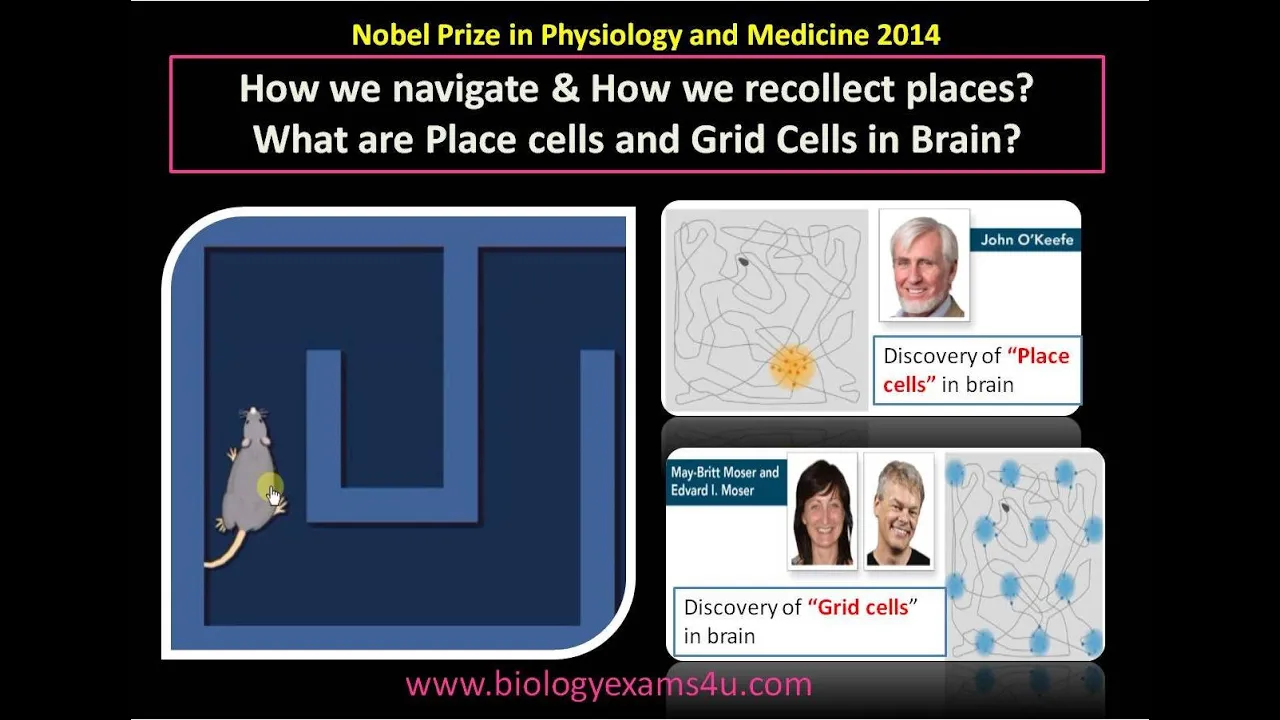
>> In the 1970s then a little while later there's um uh a guy called John O'Keefe at UCL my um my alamata uh and um he has worked out this way. He's basically invented a very precise little hat that you can put on a rat's head. Um, and this will measure the electrical signal from one neuron at a time inside this rat's brain. So, it's extremely precise.
Okay. It's like the tiny tiny tiniest little wire is going into the rat's brain >> into one brain cell. One neuron.
>> Wow.
>> One brain cell. Exactly. And uh this is the 1970s, so he hasn't got it rigged up to anything particularly fancy. It's just to a little microphone that just goes pop when this neuron fires. And it's in the hypoc campus of this rat.
And this rat's having a lovely time.
It's running around in this this little space. Um, and what he noticed is that um this neuron would fire when the rat was in a particular part of the room. So the the rat would run over there and it would go pop and then the the rat would run off in a different part of the room and it would go silent. And only when it went back to that exact same spot would this thing go off. Huh? So Johnny keep sitting there and this like it's like popcorn basically the sound of popcorn whenever the rat is in this particular part of the room. So he's like well maybe there's something going on about that part of the room. So he took away all the food. He turned off the lights.
He you know um he rotated the walls and this cell still fired in the exact same spot in the room. And it as he rotated the walls, the the firing field rotated with them. It's the way the rat was orienting itself. He is the right word.
>> Orienting. Orientating sounds good, too, though.
>> I don't know. It was working out where it was relative to the walls. And that's what this neuron was doing.
>> And this was relative to the walls. So, what about in the dark?
>> In the dark, it could still tell roughly where it was in this space. And this the the the neurons still fired in exactly the same spot.
>> Wow.
>> So it's like this it's almost like you know the red pin you get on Google Maps.
It's basically like this this neuron is firing at that that moment.
>> Um now a little bit later they were like well let's see what this neuron does when we change the room. So they stretched the room kept exactly everything the same but just made the room a bit wider. Alice in Wonderlanding it. Right. Yeah. Um, and whereas before this neuron had fired in a really tight little circle, now the neuron fired in an oval shape where it had been stretched with exactly the same dimensions as the way the room had stretched.
>> Wow.
>> Isn't that cool?
>> That's such a cool experimental design.
Stretch the room and you've stretched the the mental map.
>> Exactly. Which means that our internal maps, they treat rooms like balloons, right? Rather that can stretch and that can bend. That we're not taking direct exact measurements.
>> It's like we didn't mean for this to happen, but life forms already are prepared to travel through spaceime with all of its curvatures and stretching.
>> I mean, life forms live in spaceime, so why not?
>> Why not bring on the nearly as fast as light vehicles? We're ready. So, by now we have these really clear understandings of they're called play cells. That's what they've been named.
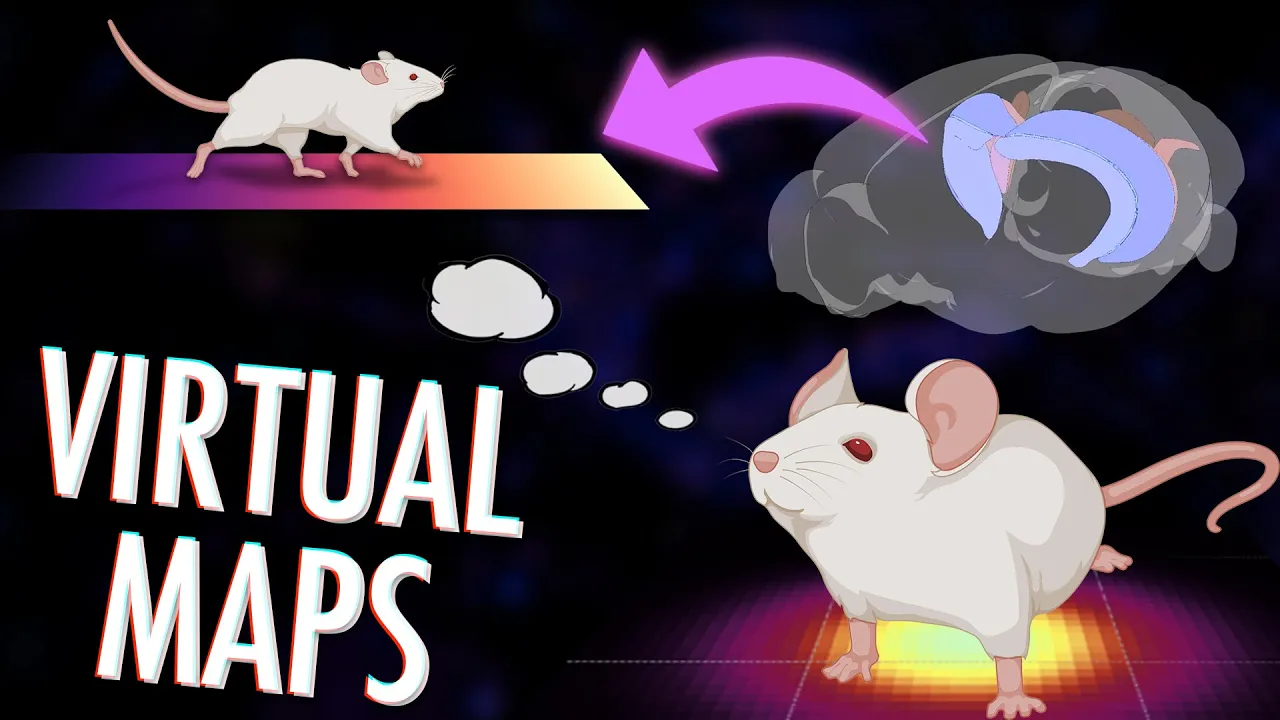
There's um there's some amazing experiments where they have mice. So, you put on this the same kind of hat.
You pop it on a little mouse and you you you hold the mouse steady, but you let its legs run on this kind of styrofoam ball. So, it can run in any direction it wants to. can like move around and and then you pop the mouse inside what is essentially like a IMAX for mice, right?
So this curved screen, this projected space, it's in virtual reality and then you let the mouse navigate through Quake 2 video game.
>> You are describing like a literal mouse.
>> Yes. for a computer like the old ball in the mouse, right? For a computer, this is this is the same ball, but there's a literal mouse on top of it.
>> Literal mouse on top of it who's controlling the direction. That's exactly what I'm describing. Exactly what I'm describing.
But the key point about this is that the mouse believes is in reality, I guess, is sort of trying to navigate to a drink of water down one end of one corridor or whatever it might be.
um it can go in any direction it likes.
But what they find is that the play cells don't distinguish between real spaces and virtual spaces.
>> You still get this same pattern that one neuron will fire in one particular place like a red pin on a Google maps um in this in this virtual imaginary space.
>> Well, I didn't know they' done this with mice. I I did it to myself in an episode of Minefield. I worked with the researchers at at UC Irvine and they had me run like a rat in a maze, like a giant humansized maze and u they also scanned my brain to check the size of my hippocampus. Then they had me play 3D video games for like a week or two. Um, which I I didn't play video games much.
So this was like a big change in my lifestyle. I had to play like for hours and hours every day navigating these brand new novel 3D spaces. And after that, not only was I better at navigating real life mazes, but also my hippocampus got physically larger, a little bit larger. Like maybe it needed more cells, more place cells. And that all happened >> by exercising my sense of direction in virtual spaces. The brain didn't distinguish between the real and the virtual.
>> It doesn't care. And that's the thing.
It's like the all of this stuff about the eyes and the ears mismatching. You can get the opposite by the way. You can get it where you people feel VR sick where the mismatch between the eyes and the ears. The ears isn't doing anything but your but your eyes think something is coming where you you again feel really nauseous. But the brain in terms of the way it's navigating doesn't care.
It's just it's not whether it's an imagined space or a real one. It's it's still firing in the same way. So So you have this um you have these play cells.
But the other thing that was probably growing inside your brain at the same time where you were doing all this practice um is in the entorial cortex.
So um this is uh by the early 2000s everyone knows about play cells. But the question is play cells are sort of like here's a landmark. Here's an interesting here's an interesting red pin on the map. But it doesn't really tell us how you navigate between them. It doesn't say anything about distance or direction.
So um some researchers looked in this other part of the brain in this interal cortex and they did the same thing. They put a tiny little hat on a rat look to see when this when these neurons were firing and uh they were firing as the rat was moving around but it was a complete mess. Initially it just looked like a total junk that didn't make any sense at all. And then they realized that maybe the room that they'd put the rat in was just too small. So they they made a much bigger room for this rat and then realized that there is a second system that your brain is using. You have play cells, but you also have something called grid cells. The way that the the mice's brain was mapping this space was almost like a chessboard.
There is a neuron that fires every time that it goes through a white square. So if a if a rat runs from one side of the room to the other, this neuron will fire at regular intervals as it crosses the space, it's the same neuron, but you have not not it's not just black and white. You have like many many many different grid cells and they are the the cells are sort of overlapping with one another. They're like spatial interval cells. It's not so much about the location, it's about okay, you've covered three feet and another three feet and another three feet. Are they sensitive to direction like one of them is just for east west motions and one's for north south?
>> No, they end up being this tightly packed grid. Um, and actually it's I mean I gave the chessboard analogy, but they're actually hexagons. They're actually extremely neatly packed hexagons. Oh, >> and this is the thing is that normally biology is a mess, right? like, you know, biology is like blobs and gradients and squiggles. And this was this this pre-programmed coordinate system that we found in in mice and rats and has since been found within humans.
And and this is the way that we're navigating. If you only had play cells, it is the same as having like a a bunch of polaroids of like interesting places, but no idea how they connect together, >> right?
>> And if you only had grid cells, you'd have a ruler and a compass, but no landmarks. And it's when you put those two together that you are able to navigate spaces.
>> They're two different systems. Man, I wonder if there are life forms that have only one and not the other. If they've got a more simple brain and then through evolution, some of us like rats uh have both. M so one thing I do know is that um I was working with some roboticists in actually a few years ago now maybe like 22 23 and they were trying to mimic this exact same system of grid cells and play cells um because they think that it is the most efficient way to navigate through an environment. So, we've got these two systems, place cells and grid cells, and they aren't just like given at birth. They are dynamic through your life. Um, as I was talking about, um, it's been shown, um, not just by minefield, but by lots of studies that >> the more novel places you visit and navigate, the bigger, like the physically bigger the hippocampus in your brain gets. And I think one of the first and most famous places this was found was in the brains of London taxi cab drivers. Right? This is a famous story because >> in order to be a licensed taxi cab driver in London, you need to be able to recall more than 20,000 streets and 100,000 landmarks all within a six mile radius of Charing Cross. There's a test you have to pass. And if you pass it, you have what they call the knowledge.
Okay. The test is really uh so fun.
It'll be something like you'll sit down at a desk and the instructor will say, "Okay, so you pick someone up on Essex Road and they say, "I lost my cat. Help me find the cat." And you start driving east. Name each street you pass as you go. And so they have in their brains a map made of many different systems probably that corresponds to the reality of London, the city. I should say actually my my ex-husband who I'm still extremely really good friends with um he's doing this at the moment. He's learning the knowledge at the moment. So even though GPS now basically means you don't really need to know it all off by heart. I mean in the 1850s sure when uh when London this web of streets is basically impossible to navigate for anyone who who didn't know them. Now with GPS you don't need to. But there's still this real prestige that comes with it.
>> There's also, I think, this this idea that um if somebody is willing to go through that, >> uh then they just have this um professionalism and dedication to the job that that you don't necessarily get with like a you know, like a ride hailing app or whatever it might be.
>> That's right. That's why I was so happy to learn that despite the fact that we all have GPS devices, the knowledge is still required to be a black cab driver in London.
>> Yeah. I mean, they earn good money, right? Like it's a really good, well- paid job. Um, you get to use the bus lanes in London. You can move around.
You you know, Black Cab is still like the fastest way to move around in London in a vehicle. Uh there's a cabbie who I know really well, a very good friend of mine. Um and I have played this game with him before where I have shown him pictures of uh streets in London to see if he can work out what the street is.
See how quickly he can get the correct answer.
>> Can I submit one too?
>> You abs you absolutely.
>> Okay, let me let me send you one.
>> Okay, one second. Let's go on street view. Okay, I've got one here. Right.
What's this? Where is it? Should we uh should we reveal re reveal to the audience before I call him?
>> Okay. So, I'm looking at your picture.
Did you you went and got this on Street View?
>> Yeah. This is taken from Street View and I'm like retrodoxing myself. These are the shops next to Carrick Court where I lived when I lived in London. Directly across from Kennington Tube Station on Kennington Park Road looking away from the station to the right of Carrot Court.
>> Okay. All right, I'm going to give him a call. Hang on, let me uh let me send in the picture.
And um let's give him a call. I'm going to give him no time to to consider it.
>> Hello.
>> Hey.
>> Hello.
>> Did you see the image?
>> Yes, I did.
>> Go on. What do you Where do you think it is?
>> I very quickly straight away I thought Brunswick Square.
>> Right.
>> Yeah. So you've got flats above shops, >> got trees around it. So that was my instant thought, but I don't know what all the different shops are, but looking at the shops, I think the Brunswick square shops are maybe a little bit >> bit posher.
>> Should I give you a clue? Is south of the river. Hang on. Hang on, Michael.
London cavies don't go south of the river.
>> I know. That's why this is a really tough one.
in that case. Okay. My other stab in the dark is somewhere around Kennington, Yan Castle, something like that.
>> You're right. It's Kennington Park.
>> I was just about to say, okay, then. So, is it very close to the station, Kennet station?
>> Yes, exactly. It's exactly across from the station.
>> That's good. That's really good, Rich.
>> There's There's a group of flats and some shops just across the road from the station. There you go. I'm a genius.
You are a genius. Amazing. Amazing.
Rich, thank you. I appreciate it.
>> At least I haven't let you down.
>> No, you absolutely haven't. Thank you very much. I'll um I'll see you for my lift home later. Yeah.
>> Cheers. Bye.
>> Byebye.
>> Very handsy. That's really cool. I mean, even knowing the science behind it, like I shouldn't be surprised, but to see it happen in real life, the actual human trick of it all is is just really it makes me feel proud of our species.
>> I think this is the thing. If you are if you haven't spent a lot of time in London um and aren't familiar with the city, I think that you wouldn't necessarily appreciate just how phenomenally impressive that is. I mean, this city is vast, vast, and we're picking streets completely at random with no discernable characteristics on them. There's no sort of no shop signs, no, you know, awnings with names on, just like a a a random building somewhere random in London. And he's he's getting he's getting it, you know, pretty much spot on straight away.
>> Yeah. Yeah. Yeah. Yeah. If you if you've never been there before, you might think, "Oh, well, it must be that each street has a very unique style of building." But it's much subtler than that, >> what he's able to do.
>> Yeah. Well, there you go. Incredible what the human mind can do.
>> We've been talking about how the human brain orients itself in space. And we've talked about place cells and grid cells and liquid in the ear. We've talked about landmarks in the eyes. But language also plays a role in how we understand three-dimensional space. So in 2011, a team from the Maxplank Institute of Psycho Linguistics decided to compare two groups of children. Okay.
One group was from a tribe in Namibia and the other was just some Dutch children. Okay. Just some Dutch children, you know. Yeah. Yeah.
To researchers, they're a dime a dozen.
But what they did is they compared these two um groups of children. Why? Because their languages were very different.
Okay. Um the the the children from the Netherlands, their language involved words like left, right, in front of and behind. These relative terms, right?
Left is different if I'm facing this way or if I'm facing this way. My left is different than your left. They're relative to me. But in the language spoken by these Namibian children, there were no relative directions. Everything was absolute. They only had words for north, south, east, west. And it's not always the cardinal directions. Other tribes have languages that are absolute in direction that might be in reference to say a landmark like is is that mountain um you know in front or behind the thing something like that. Anyway, >> in the experiment, they set up a table that say ran east west, like a long table, and they lined up toys on this in a particular order, and they had the kids remember the order. And then they moved the table 90°, and they asked the children to arrange the animals again in the same order they'd seen previously.
And the Dutch children did it the way I think many of you listening would do it.
They arranged them left to right in the same way.
But the children from Namibia arranged them according to the cardinal directions. So instead of having everything go to the left, to the left, to the left, they said, "Well, no, no, no. The toys are now going to have to go the other way on the table because they used to all be facing south and so I will keep them facing south because that's the way they conceived of space and objects in it."
>> That is so fascinating. So you end up with all these toys squished along the short short run of the table.
>> Exactly. To the Dutch children, what mattered was who was to the left and the right of of a target toy. But to the Namibian children, what mattered was which way the animals had been facing the entire time. So instead of being left to right, but now facing say west, they were all still facing south. And they didn't even fit on the table. So what mattered was what was what was relevant was the the cardinal absolute directions.
>> So okay, right. Two things. First off, um I do wonder if you had a a spider on your leg, right? You're like cuz you sort of say uh I don't know to to a Dutch charge be like there's a spider on your left leg and you sort of brush it off and it's fine. But if you with the movieian children, you'd be like it's on your northwest leg. No, don't turn around. No, it's your southeast leg.
>> That's right. That's exactly right. And and it it's it's like a superpower. It sounds that way to us because we are just we we don't I mean especially with GPS, I really don't need to know which way north is. I can just get as lost as I want and then my phone will tell me where to go. Um now it it is however true that if you took um if you take a person who has an absolute direction language only and you spin them around and make them dizzy, they do lose track of which way north is just like we do.
Uh whereas if you spun me around, I would not forget which way left was.
>> No. True. But you would never know which way north was.
>> I But I never knew which way north was.
That's right.
>> Exactly. I mean, that really demonstrates that it's it's a cognitive effort then that they're keeping track from the last time they knew what north was rather than it's it's not a magical trick. It is something that's a a sort of um a a decision as it were something that is a direct consequence of the language. It's nice. It's a really nice study.
>> Just as we've learned from studies on place cells and grid cells, it is about memory. They remember and they keep um even a non-concious memory of how they have moved and what that would mean for the direction of north. Whereas those of us whose culture does not pay attention to cardinal directions in the same way, we don't have to.
>> I do wonder though. Okay, so so that's sort of where things are in relation to each other. I also wonder about we were talking about propriception a bit before the break, but I also wonder about the map that you have of your own body because presumably you're not born with that, right? So how we orient ourselves in space is very uh culturally dependent.
But what isn't is where we put ourselves in our bodies.
>> Mhm.
>> Going back to the experiment we did at the very beginning of this podcast, point to yourself. Where are you pointing? There's generally only two places people point regardless of their culture, their age, their gender, their life experiences. They point either to the head or to the chest.
>> I wonder what the ratio was in our comments. I wonder >> we should we'll do a little study. Yeah, >> I can barely imagine saying point to yourself. I sort of doesn't feel right to me to point to your head.
>> Yeah, point to yourself. And and I I want to talk about this and and I don't have a big whisbang insight to give because a lot of this is research that I did years ago for an episode about like where is your seat of consciousness or where do you think it is? Where does it feel like it is? And I didn't know enough about consciousness to find an answer. So I never made the episode. But I wanted to share some of the cool things I found on this journey. And some one of these days it'll make it into an episode.
>> Mhm.
>> So, as it turns out, like where people point when you ask them to point to themselves depends almost entirely on context. So, for example, um there was a great study that was done. I I love the the experimental design here. They had people go into a room where there was a pole from the the the floor to the ceiling and it had this um arrow on it and you could move the arrow up and down. And they told people to just move the arrow until it pointed at them.
And as it turns out, if they walk into the room and the arrow is down on the ground at the bottom of the pole, they'll pull it up until it reaches their chest and they'll stop and they'll say, "There, I did it." But if you begin with the arrow near the top of the pole when they enter the room, they'll only pull it down to their face.
>> Ah, so it's like anchoring but for arrows and where you are.
>> Yes. Where you think you are in your body is very much dependent on how it's been anchored, right? Um, they could also have a person go in with a blindfold on. And if you have a blindfold on, you're a little bit more likely to have it point at your chest than at your face. If you have a blindfold off, you are much more likely to point it at your eyes, at your face.
But this this question of where you are in your body has a very specific uh target in psychology. It's called the ego center.
>> Mhm.
>> And the ego center is the name for where I believe the very middle, the center of myself is. And you can ask people this and they all understand it, right? They all understand like, oh yeah, sure. like my life is basically a POV video game.
Where am I seeing the world from? So the eyes become this really dominant sense for determining where we think that we are. And interestingly um all the sensory holes influence it because if you give someone like a map of a body and you tell them to pinpoint exactly where they think they are, it's almost always a place right in between the eyes. just a little bit back. Just a few inches back or maybe even like just like a centimeter behind the eyes in between.
>> Like your conscious center sits just behind your eyes.
>> That's right. Like if you're some kind of little rat like driving your body around, we think that we are that rat sitting right behind the eyes. But people who have been blind since birth place their ego center in between the eyes but much further back almost in the middle of the head, right in between the ears. because sight hasn't dominated and and put in its influence on No, no, no.
You're right here. You're up here where you see things.
>> What about deaf people? Because I sort of wonder, I mean, there's a lot for for for for people who have, you know, full hearing, full vision, there's a lot going on in in your head, right? But but I can imagine that for people who are deaf and who use sign language, like their communication center is their hands, right? Does that end up changing things? uh if if the person is just deaf, no, it doesn't seem to um we'll link studies below, but the eyes are just so um rich with information that they position themselves at near the eyes. Now in the congenitally deaf and blind there's very little information because a person in with with those conditions is often it's just hard to even ask them like where is yourself? M >> but there are a lot of just from like anecdotal reading online there's a lot of discussion of tactile thoughts dreams being tactile and what I haven't been able to find is any real confirmation that um a deaf and blind person from birth pictures themselves say in their fingers or in their lips or somewhere where there's a lot of touch information coming in. M >> I think that even without um vision and hearing, we still have other things that make our head um a focus like the breathing and taste. It all comes in through stuff up here. And it also can move around a lot. Our limbs can also move around a lot. But the trunk, the the torso is hypothesized to be an extremely universal anchor point for where we say we are because it just it doesn't move independently. I can't move my torso without also moving my arms. Um, my legs and arms and my head can be in weird positions, but my body is always that central point, which also probably explains why so many of us point to the chest for the self. And of course, there's also the fact that when you feel things deeply, you often feel it in your gut and in your heart. Your heart speeds up. And this isn't just about um emotions. It's also about like what what did ancient people think?
Aristotle believed that all of our memories and our thoughts were happening in the heart.
>> Well, because they thought they thought the brain was there to sort of cool down the body, right? Cool down the blood.
>> That's right. They thought that the the brain's only purpose was to cool down the the blood. The heart was clearly more important because when you looked inside a human body, you saw all of these veins and arteries that went everywhere. Clearly, those were the the marionette strings that the heart pulled to make us move. It was clearly the seat of consciousness and this is where we are. Um so where you think you are in your body isn't just about your sensory holes. It's also about your culture and what you know. So I also wonder though that um just tracing that backwards I wonder whether you would get less people saying I am here. You know I sort of the seat of my ego is is right in where my brain is. If you rewound the clock and asked the ancient Greeks, would they have all said in the chest?
>> Yeah. Yeah. And and the ancient Egyptians as well. And so at some point there was a change where we switched from the heart is where my thinking happens to the brain is where my thinking happens. And I mean a lot of this is and I don't have a point that I've reached with this research, but I've looked a lot into the feeling of mental exhaustion. Like if you if you're thinking a lot, doesn't it kind of feel like your head is tired? So why didn't ancient people say, "Man, when I think a lot, my head is tired because we don't have nerves in our brain." Actually, generally, if you've been doing a lot of cognitive work, your your your head area will feel tired because you've been using your eyes a lot.
>> Um, and you haven't been using the other parts of your body a lot. But to me, it's still a bit of a mystery why the brain was so unimportant when it came to the location of the self in the body to the ancients.
>> I do sort of wonder though because as you said, you don't have nerve endings in your brain. I mean, this is the reason why you can have people who have brain surgery while they're still awake, right? Um, I I sort of wonder whether you feel like your brain is tired because we now know that that is where everything is happening. How much it's really difficult to disentangle one from the other. One thing I did think that was really interesting that you said there is that it's interesting how as you said the eyes this like real magnetic center where so much information comes in from them that you are it's it's almost impossible not to imagine that your consciousness is centered near them but then at the same time it's interesting how you said that people put their ego their ego center between the eyes where there isn't an eye you know that's right Yes. Okay. So, yes, this reminds me. I think I've told you this before, but I want everyone to hear about the Cyclops effect.
If you ask a child who is like, I don't know, 2 years old, like young enough to look through a cardboard tube or to look inside a tube. Here's like a tube. Okay.
Um, they will put the tube right in between their eyes and they won't be able to look inside of it. And that's because of course our brain takes both of the images from both of our eyes and combines them into one image right in between the eyes. And as an adult we learn that like yes that's how it feels but I have two eyes. And so around the age of like three three and a half kids start to when asked to look inside a tube they put it up to just one eye.
They tend to keep both eyes open though.
>> Adorable. Adorable little cyclops.
>> It's really adorable. And uh this is honestly another reason I haven't done a video on this is that I lost that window with my daughter. I needed to do the experiment with her to get good footage of it happening. And now she's too old.
She knows that she has two eyes and she doesn't just like vision isn't just coming out of the middle between them.
Um and there's there's one video on YouTube where a parent asks their kids and the kids do it. They like they like stick the thing right in between their eyes and get confused about why they can't see inside of it. But I can't use that footage because it's like someone else's children. But it's a phenomenal illustration of this effect. They call it the Cyclops effect.
>> It sort of feels like this is the perfect opportunity. If you have if you happen to know or live with a small person under the age of three, see if you can get a video of them doing Cyclops effect and send it into us.
>> Yes. Yes, please. And of course, won't use anything without a lot of discussion. But um it's just hilarious to see it happen. And there's just literally one video on YouTube and it is so it's like so funny but also really deep about how we understand our bodies that it takes a while to learn that you have two eyes.
>> Well, okay. So, here's the thing. You just said now you're an adult. You know that you have two eyes. But the thing is is that I think that you know it intellectually, but I think your body uh actually often defaults to thinking that you have one eye. So, the the really nice way to do this is if you get like a little roll of paper and um you hold it up to uh say your right eye and then you hold your your left hand up right next to it and keep both of your eyes open.
What will happen very quickly? I mean, initially your brain's like, "What's going on?" But very quickly, it then looks like you've got a hole in your hand, right? like your brain is essentially combining those two images as though you have one eye. And I think what's really nice about this is that actually when you're walking around, the reason why your brain is doing this is because you need one eye for walking effectively. You know, your your little 2-year-old child who's um a cute little cyclops, they are biologically perfect walkers. We only switch to one eye when we're using tools.
>> Yeah. when you're being much more precise and specific that you know the distance between your eyes starts to matter. So, you know, these little babies, they're they're great at walking, terrible hunters, terrible at using tools.
>> And not to go on about this forever, but if you want to ruin the effect of the hole in the hand, put a photograph of a person's face on your hand because the brain privileges faces when it comes to combining two different images from uh each eye. And there's actually another name for this which is the Cheshire cat effect where the face is so important that it stays on top and it might fade a little bit but the eyes and the mouth will always be there. Um the brain doesn't uh combine them with what the other eye is getting.
>> I didn't know that. I didn't know that.
Every day with you, Michael, every day is a school day. So, the the last thing I wanted to say is that I've been trying to tease out the contexts that affect why sometimes we point to the face or we think of the face as the self and why sometimes we don't. For example, if someone said, "Oh, hey, Michael, can I get a picture of you?" If I gave them a photo of my knee, they would be very confused.
If I gave them a picture of my entire body from the neck down, they would say, "I'm sorry, this is not what we wanted."
And I'd be like, "What do you mean that's 90% of my body's surface area?"
Like, that's the that's me. They'd be like, "No, no, we just wanted your face." And I'm like, "But my face is such a small part of my body. How can that be me?"
At the same time though, when we're talking with each other, we won't just reference the face uh with gestures.
to to refer to ourselves. Like if I said something like, "And you know what?
She took my car." I point to the chest.
It would be very weird to say, "She took my car." If I pointed to my face, I'm pointing to my like eyes right now. Even though in in in the visual world of photographs, my face is me. In the world of discourse and talking, I am my chest.
And I'm not exactly sure why that all is. The best uh explanation for the chest gesture for myself, for me, comes from uh Kinsey Cooper Rider, who said that when you're talking, any gesture you make uh moves the person's eye, unless it's like a very general gesture.
So if I if I say my book, I'll point to my chest because it doesn't distract you enough as if I like pointed to my shin, you'd be like, "Oh, why is he pointing to his shin?" And you'd have to move your head. But if I point to my chest or I just put my hand on my chest, I'm emphasizing the word mine without distracting your eye. If I pointed to my head and I said my book, >> you'd be like, "Oh, why is he pointing to his temple or his cheek?" And it would distract. But the chest is like a vague enough but not far enough away place that it just emphasizes the word.
Anyway, it's very mysterious.
>> It is very mysterious. This is why I like it so much. I I like to think that part of this is uh is potentially cultural. And maybe maybe today, Michael, we can we can make a shift.
Maybe we can we make it so that everybody from now on whenever they say something, they go, "What about me?" And just directly points to the end of the note.
>> Yeah. Yeah. Yeah. Yeah. Yeah. So, I I want to throw in one more thing that I've been I've been researching, and that's where we knock on doors. When you go up to a door and you need to knock on it, we usually knock like about here at the height of like the shoulder or the or the eye somewhere in between there, even though our hand, you know, hangs down at our waist or something. Why is that? Does is that a cross-culturally true thing? Um because you could come up to a door and knock at the bottom of the door, but we don't do that. We knock about where our voice would be coming out if we were to be talking to the person. We knock kind of where we might be looking if we were looking at the person. Is that what motivates all of us to knock on doors where we do rather than like I could knock at it down at my waist or right where my hand happened to be. But no, we like put our hand up and we knock where our mouth would be.
Maybe, maybe, maybe. I mean, there's a bit of me that wonders whether it's just because it's sort of the physics of the angles of your of your elbow, you know, that it's like it's slightly easier.
>> Sure, maybe it's just easier to control the power and the volume of your knock in that position, >> but it does it's also it does feel like at your kind of communication center, you know, it's sort of I it it does come back to everything that you're describing that you've got. It's It's almost like your center of mass, but it's like the center of me.
>> Right.
>> Right.
>> The ego center. Exactly. Exactly. So, the point is this is a lot of kind of funny stuff where there aren't a lot of clear answers. And yet, I feel like we know less about where the self resides in the body than we do how we understand where our bodies are in space, >> which is something that happens quite a lot. I mean, if you think about, we have explored the the galaxy, the solar system, and yet still the the the Mariana Trench is is a a rare anomaly in our understanding of the ocean floor.
>> I know we know more about the surface of the moon or of Neptune than we do the ocean floor. Like, so I call this the proximity paradox. It seems like the closer something is, the harder it is to really look at it and understand it. And so when it comes to the question of where are you? Finding where you are on the earth, easy peasy. Finding where you are in a room, bit harder. Finding where you are in your body, genuine mystery.
>> Yeah. Is that even a sensible question?
>> And this is what I like about this program, right? You do a program on where are you? You're not going to get this kind of stuff on uh on other science podcasts, are you?
>> No. No. You're going to leave. You're not going to leave going, "Oh, that's where I am." You're going to leave going, "What does where mean? And who am I?
I no longer understand any of the things that I thought that I thought I could take for granted." Well, okay. That I think is a good point to leave it for this episode. Make sure that you are following the rest of science wherever you get or listen to your podcast or you can like and subscribe on YouTube uh if you would like to watch us. And if you'd like to ask us any questions, which we might just answer on a Fieldnotes episode in the future, you can send that question to the rest is science goalhanger.com.
>> See you next time.
Up Next

64:50
Mind-Brain Identity Theory: Philosophy of Mind Explained
@onemorebrown
14.4K views•2014-03-30
21:55
Deciphering Neural Circuits Controlling Anorexia in Mice | Richard Palmiter
@AllenInstitute
2.3K views•2011-10-10

4:10
Vagus Nerve (CN X): Anatomy, Nuclei & Functions Explained
@Alilamedicalmedia
305.2K views•2022-10-31
13:03
How Exercise Benefits Your Brain: Science Explained
@TED
11.4M views•2018-03-21
Related Study Plans & Knowledge Roadmaps
Structured learning paths in Neuroscience
neuroscience
Appetite Regulation: Brain Circuits & Hormones
01Foundations of Endocrinology and Brain Anatomy
02Introduction to Energy Homeostasis
03Peripheral Signals: Leptin, Ghrelin, and Insulin
+ 2 more learning modules
14h5 modules
Explore Roadmap
neuroscience
Neuroeconomics: Value, Risk & Brain Mechanisms
01Foundations of Neuroscience and Brain Anatomy
02Introduction to Neuroeconomics and Subjective Value
03Dopaminergic Prediction Errors & Reinforcement Learning
+ 3 more learning modules
18h6 modules
Explore Roadmap
neuroscience
Spatial Navigation: Cells, Grids & Brain Maps
01Foundations of Brain Anatomy and Memory
02Place Cells and Head-Direction Cells
03Grid Cells: The Brain's Coordinate System
+ 2 more learning modules
12h5 modules
Explore Roadmap
neuroscience
BCIs: Neural Decoding & Prosthetic Control
01Neuroscience Foundations: How the Brain Signals Intent
02Signal Acquisition: Recording the Brain's Activity
03Neural Decoding: Translating Brain Waves into Data
+ 2 more learning modules
25h5 modules
Explore Roadmap