









![Curso GRATUITO de N8N Para Iniciantes [VERSÃO COMPLETA] | Autotic](https://i.ytimg.com/vi/RJ6mqfm0UyQ/maxresdefault.jpg)
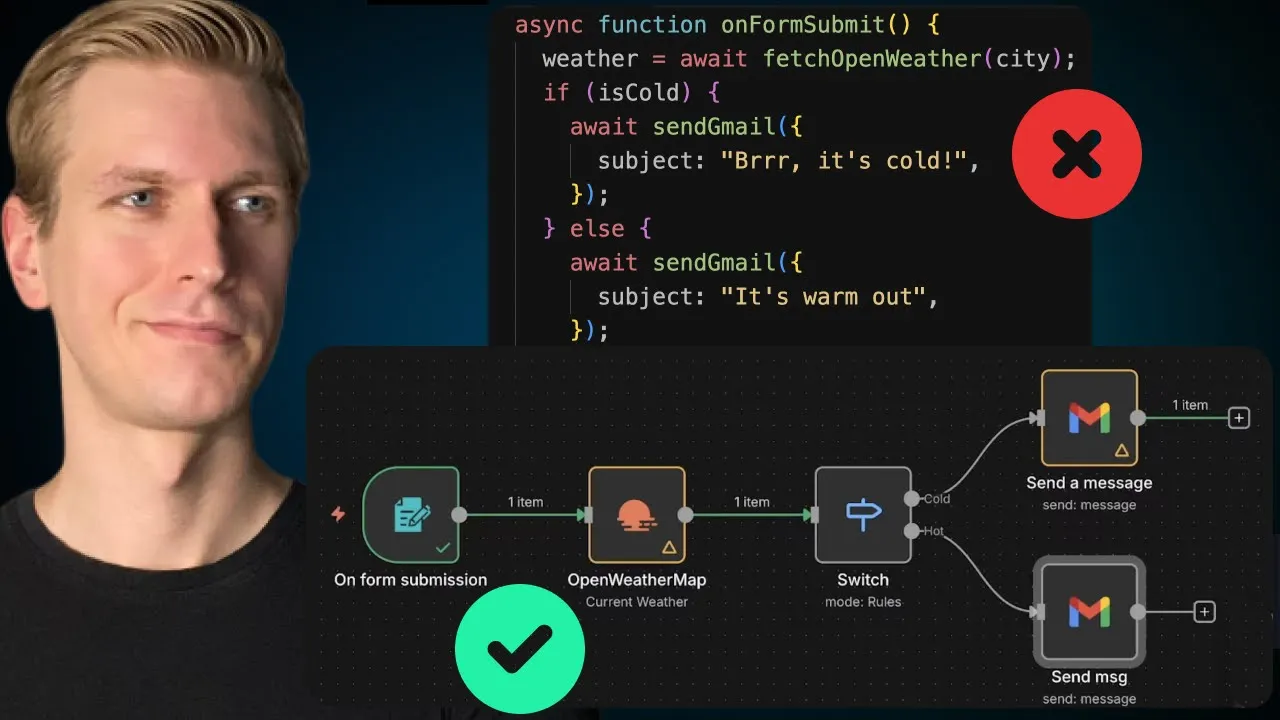
An API (Application Programming Interface) is a service that developers write programs to consume, acting as an intermediary between applications and their underlying systems. APIs use HTTP requests with four main components: URL (location of resource), method (GET for receiving data, POST for sending data), headers (context information), and body (data payload). Authentication credentials ensure authorized access. HTTP responses include status codes (200=success, 401=unauthorized, 404=not found, 500=server error), headers, and body. Webhooks (reverse APIs) enable applications to notify other systems when events occur, providing real-time updates without constant polling.
APIs and Webhooks Explained: n8n Beginner Tutorial (2/9)
Added:Basic understanding of client-server architecture and how web browsers communicate with servers.
Familiarity with data exchange formats, specifically JSON (JavaScript Object Notation), which is the standard format for API payloads.
General concept of workflow automation (i.e., triggering an action in one app based on an event in another).
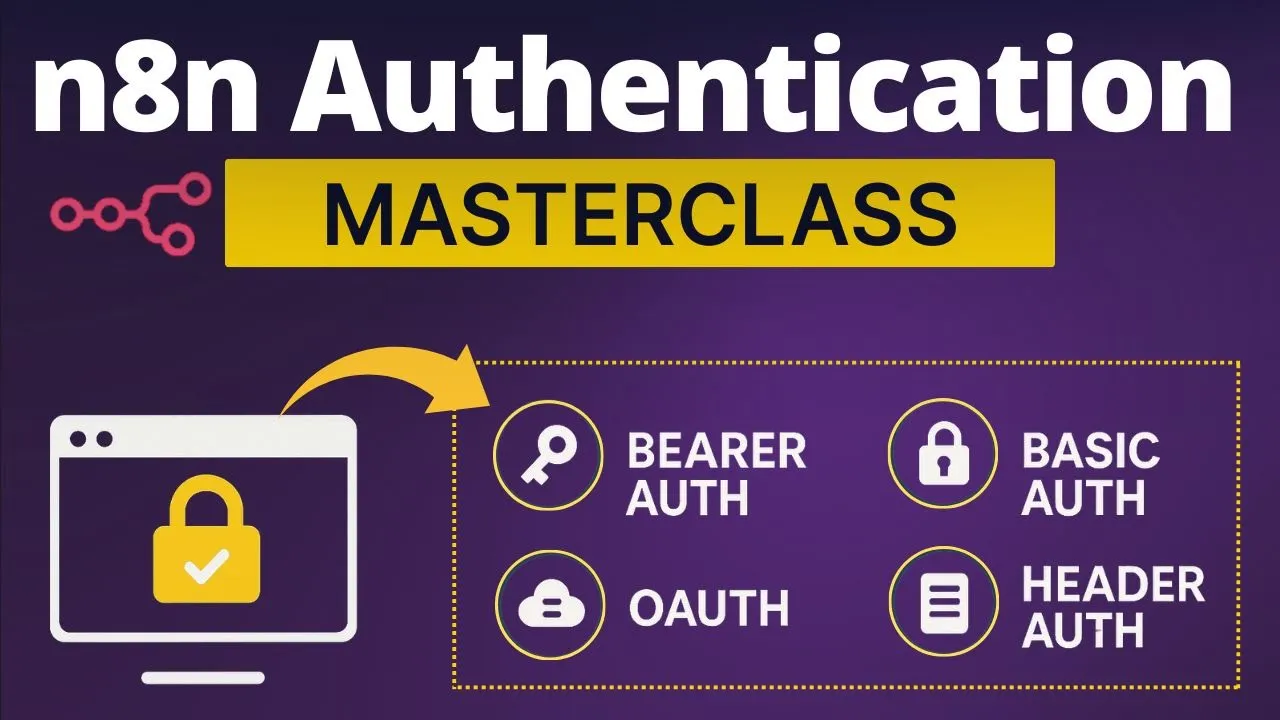
Mastering API authentication methods within n8n, such as OAuth 2.0, API keys, and Basic Auth.
Designing complex, multi-step n8n workflows utilizing conditional branching (IF/Switch nodes) and data merging.
Implementing security measures for webhooks, such as verifying cryptographic signatures and handling payload validation.
Writing custom JavaScript or Python code within n8n nodes for advanced data manipulation and transformation.
315.3K views4.7Klikes15:29Original Release: 2024-06-19
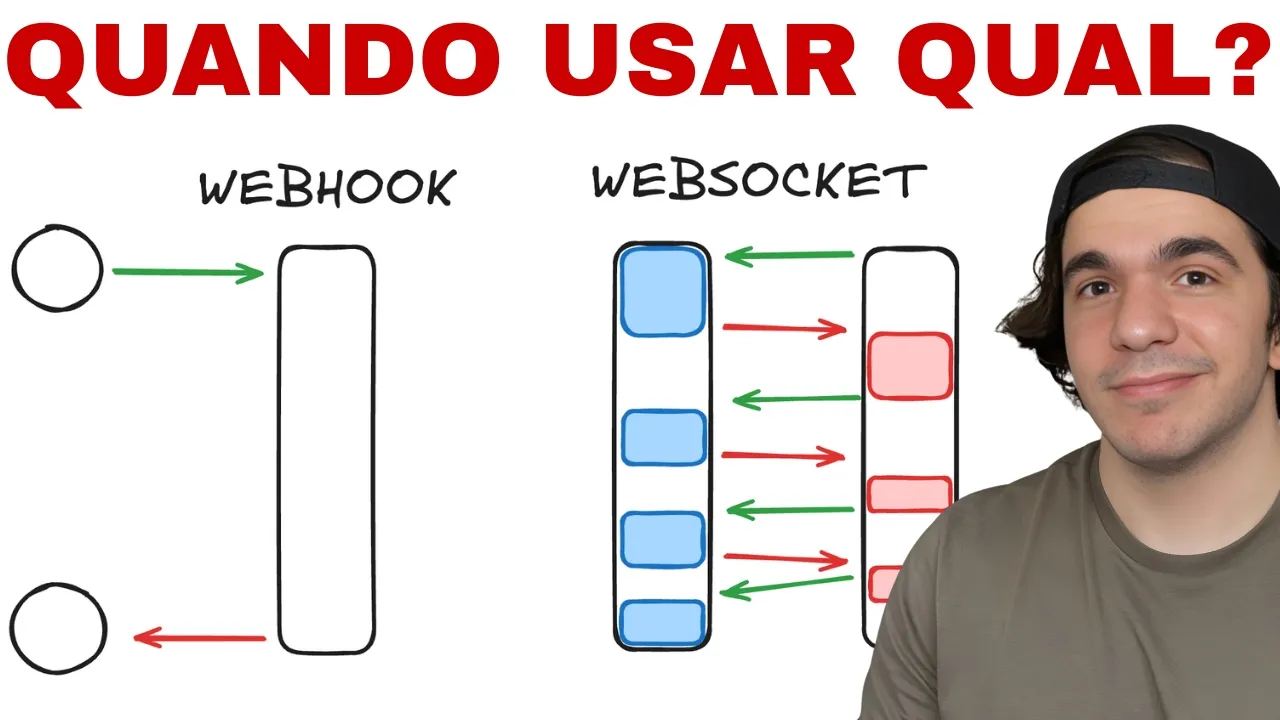
hello and welcome to the second video of the NN beginner course today we will be talking about apis and web hooks two very important Notions that you need to understand before building your first ended end workflows in this video we will be covering what an API is as well as a definition and an explanation of its main components and we will be talking about web hooks sometimes called reverse apis so first of all what is an API I'd like to start by explaining an analogy that is going to be very useful for understanding not only what an API is but also the different parts and names Associated to them so imagine you sitting at a restaurant and you go and you sit at a table how do you get food well you ask a waiter and the waiter is going to to take your order and bring it to the kitchen once the kitchen is done preparing your food the waiter will bring back your food to the table this is very very similar to how an API Works um we're going to be using uh this analogy to explain the different parts of an API um so keep this in mind while we go through this video a technical definition of an API so an API is an application programming interface it exposes a service and developers write programs to consume it so if we go back and we think of the actions or the apps in the past video we might take the example of Google Sheets so Google Sheets has an API and in the API we have different services so one of these service might be get all of the data in a specific sheet and so the Google Sheets API exposes the service that allows you to read data in the sheet developers write programmers programs to consume it so using edn we're going to be able to consume the Google Sheets API using the different services for example updating rows or getting data in a sheet using this metaphor uh we can see that the waiter is what's going to be called the interface and the application is going to be the kitchen so in this case the application might be the Google Sheets and then we're going to be using the interface to interact with the application why do we need this interface to interact with the application well it allows us to abstract the complexity imagine if every time you went to a restaurant instead of just sitting down and ordering food you had to go to the kitchen and explain your order wait for it to be done and then take your food back to your table this would be much more complicated than just asking the waiter for your food the same thing goes for applications if every time you wanted to read data in a Google sheet you had to go to Google servers find your specific sheet and then read the data from it that would be much more complicated than just using the API which gives you a very abstract but easy way to access the data from the application so how does an API work it uses what's called documentation so documentation explains how the application programming interface or API works and using the restaurant um analogy it in this case would be the menu so a little bit of terminology we send a request through the interface to the application and the application uses the interface to send a response we also have the client server Notions in this case you would be the client and the application and the interface would be the server so keep these in mind when you see these terms when using uh apis we have as mentioned earlier requests and response so we're going to break down the different components of a request and the different components of a response starting with a request there are four main components to an HTTP request in these videos we're only going to be talking about HTTP requests there are different Frameworks to make API requests such as graphql but most of the apis that you're going to use are going to use the HTTP framework everything that we're going to talk about today is mirrored in the HTTP request node the HTTP request node allows you to make HTTP requests in nen and receive the responses this is going to be very useful when building automations that need to use specific apis there are four components to an HTTP request there is the URL the method the header and the body let's look at each one of them the URL is the unique location for a resource on the web this can be a page and image a PDF or some data here we have an example of a URL you can see a scheme a host a port a path and some query parameters the scheme The Host and the path are going to be mandatory and the port and query parameters are going to be optional something that is important to note query parameters are always preceded by a question mark then we have the method the method describes the action that we want to perform at the given URL there are two main methods that we're going to be using for HTTP requests there is the get and the post method methods get most of the time allows us to receive information so if you're reading data in a Google sheet you're using the get method and post is going to allow us to send information so if we want to send information from form submission we're going to be using the post HTTP method the other methods are a little bit more rare uh we have for example delete put and patch that are less common but can be used what's very interesting with the method is there are all the time verbs which means that they describe very clearly what we're trying to do so when wondering which method you need to use think of which verb would be most appropriate to the action you're trying to accomplish then we have the header the header gives us a little bit more detail or context for a given request so for example common Lo common information that you will find in a header is going to be your location or your language preference or your device type um every time you open a page on the internet you're making an API request to a server and the server is responding with the web page so if you are browsing the internet on your computer or on your laptop top you're going to have different information or context in the header of your request an example of a header would be accept application jjon which tells the server that it would like the response of the HTTP request in the Json format then we have the body the body is optional and only exists for post requests it contains the information we would like to send to the server or application so if we take the example of form submission then the body might contain first name Maxim last name poon and then the associated email so this is the information that we are sending to the server finally we have credentials so the credential wasn't listed as a main part of the HTTP request because it isn't um a part on its own there are many different ways to use credentials a credential is how we let the application know that we are allowed to make a given request as you can imagine if anyone could read your Google Sheets or update your Google Sheets or send messages on slack that would be very dangerous so we include credentials in our HTTP requests to indicate to the server I am authorized to make this request most apis require authentication through credentials however there are some apis that do not require authentication the two most common ways to authenticate to a service are going to be through query parameters question mark API key equals followed by the API key or header authentication for example authorization colon Bearer followed by the API key another very common way to authenticate to a service is through oo every time you click sign in with Google and the little window opens and you sign in with your Google account this is an o or authentication method now we've seen everything that we need to send a request now we're going to look at how the application is going to answer with a response there are three main components to an HTTP response the status code the header and the body the status code is a three-digit number which will give you information on whether the request was successful or unsuccessful the most common status codes are going to be 200 which means okay this is the standard successful response it means your API request was executed well and the application is telling you congrats you did a good request 401 which means unauthorized this is usually an authentication problem this is the application telling you the request that you sent me does not contain the authentication information necessary to make this request this means you need to go back and check your credential and how you sent them or the access that your credentials have another one is 44 you might not remember this from the web not found usually this is a problem with the URL and means that the page or data you are looking for is not on the URL that you indicated finally we have 500 which is internal server error which indicates that the server had an error um this means it was not your fault but the server's Fault In general the very easy way to remember um and understand these codes if the status code starts with a two congrats it was a successful HTTP request if it starts with a four you made some kind of error and you need to modify your request 500 means was the servers error most of the time it just means try again later then the same way we included a header in the request the application is going to send a header in the response giving more context or detail so some common uh response headers are going to be how long is the content so how much content is in the response what type of content is it or when does this content expire um so when how long am I going to have access access to it for finally sometimes we're going to have a body the body is the actual data being returned it can be in many different formats it can be HTML if we're browsing the web it can be Json or it can be any other forms of data for example binary data then let's quickly talk about web hooks web hooks or reverse apis so imagine you're at home waiting for some friends you can either go and check the door every few minutes to see if they've arrived or you can wait for the doorbell to ring the doorbell in this analogy is a web hook it is what indicates that something that you are waiting for happened so let's say you're using stripe uh stripe is a developer platform to manage payments and you need to know every time a new payment is made in your stripe account well there are two options either we can do what is called polling so every few minutes for example we can make a new request to stripe a new API request saying is there a new payment if yes do some actions if no wait and every few minutes keep asking and keep polling the stripe application to see if we have a new payment or we can say up a web hook and every time that a new payment is made in stripe a web Hook is going to be sent to us synchronously um giving us the information on the payment so every time we're waiting for something to happen or we're waiting for information from a specific application or service sometimes these applications are going to allow us to create web hooks what we need to set up a web Hook is a URL is what is the location we are sending the information to and then we can use a tool like nadn and the web hook node to receive and manage and deal with this information triggering a workflow that was it for the second video uh of this beginner course on apis and web hooks in the next video we will be covering anded end nodes and everything you need to know to start building your first workflows see you in the next video
Up Next
23:50
Client Onboarding Automation With ClickUp: A Step-by-Step Guide
@MaximilianLesek
207 views•2026-01-08

12:54
Triumph of Orthodoxy Icon: Byzantine Art & History Explained
@BenCallan
2.1K views•2024-08-06

9:49
FastAPI vs Flask vs Django: Choosing the Right Python Web Framework
@TechWithTim
302.5K views•2024-05-26

1:42
Game of Thrones Opening Credits: A Cinematic Analysis
@gameofthrones
46.3M views•2011-04-18
Related Study Plans & Knowledge Roadmaps
Structured learning paths in General & Interdisciplinary Studies
general-studies
Elevator Engineering: History, Physics & Cities
01From Hoists to Safety Brakes: The Dawn of Vertical Lift
02Hydraulic vs. Traction: The Engineering Physics of Elevators
03Modern Speed, Safety, and Algorithms
+ 2 more learning modules
12h5 modules
Explore Roadmap
general-studies
Rubber: Material Science, History & Geopolitics
01Origins of Natural Rubber & Mesoamerican History
02The Chemistry of Natural Rubber & Vulcanization
03The Geopolitics of the Rubber Boom & Colonization
+ 2 more learning modules
12h5 modules
Explore Roadmap
general-studies
Containerization: Evolution, Logistics & Trade
01Ancient Trade & Bulk Cargo: Amphorae to Barrels
02The Industrial Revolution & Cardboard Packaging
03The Containerization Revolution: Malcom McLean
+ 2 more learning modules
12h5 modules
Explore Roadmap
general-studies
Textile Tech: Evolution, Labor & Global Impact
01Pre-Industrial Textiles: Handloom & Cottage Industry
02Mechanization: The Spinning Jenny to the Power Loom
03The Factory System & Global Labor Transformation
+ 2 more learning modules
10h5 modules
Explore Roadmap