


![Transcrição Reversa - Técnica para conseguir cDNA [CC] [PT-PT]](https://i.ytimg.com/vi_webp/y6RgsyGRqug/maxresdefault.webp)
















This video demonstrates how to remove globin and ribosomal RNA contamination from total RNA samples using the NEBNext® Globin & rRNA Depletion Kit, enabling high-quality cDNA synthesis from blood-cultured cells. The protocol involves hybridizing total RNA with DNA probes targeting globin mRNAs (HBA1/2, HBD, HBM, HBG1/2, HBQ1, HBZ) and cytoplasmic/mitochondrial rRNAs (5S, 5.8S, 18S, 28S, ITS, ETS, 12S, 16S), followed by RNase H digestion to cleave hybridized RNAs, DNase I treatment to remove DNA probes, and magnetic bead purification to isolate depleted mRNA. Key requirements include RNA input of 10ng-1μg in nuclease-free water, RNA integrity assessment, and DNA-free RNA preparation. The resulting purified mRNA is suitable for random hexamer-based cDNA synthesis and RNA sequencing applications.
mRNA Purification: Globin & rRNA Depletion Protocol for cDNA
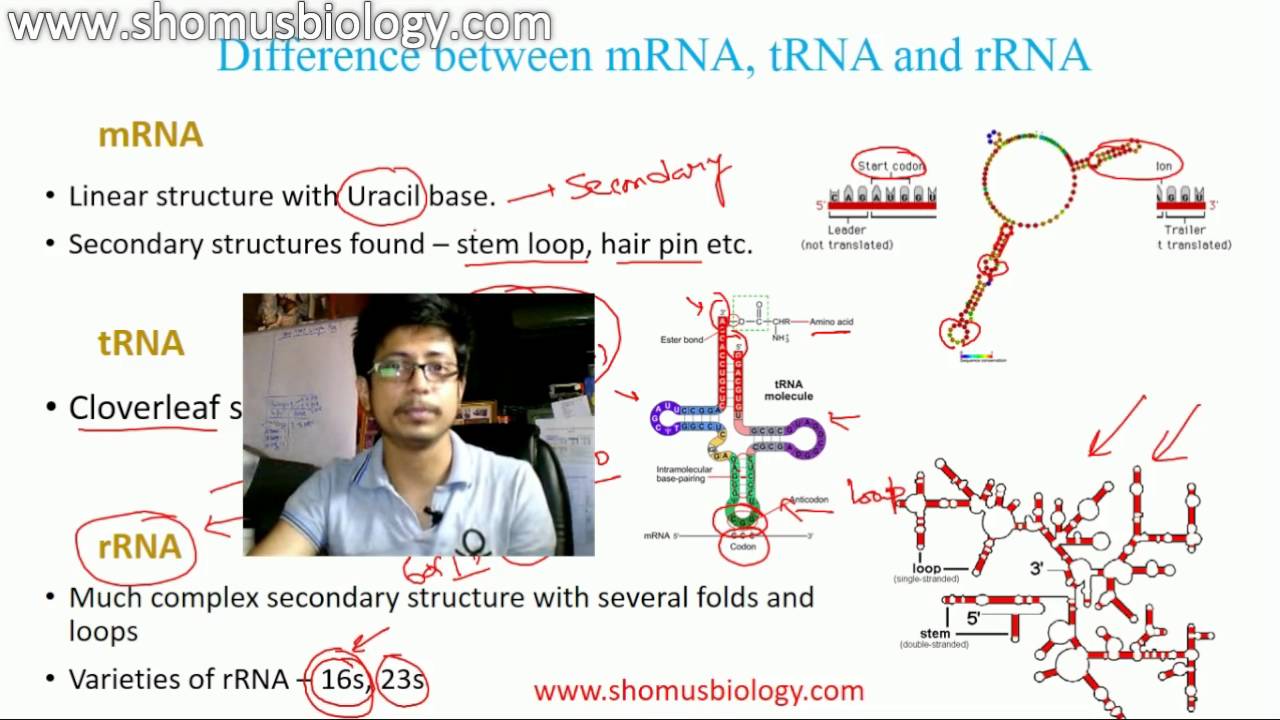
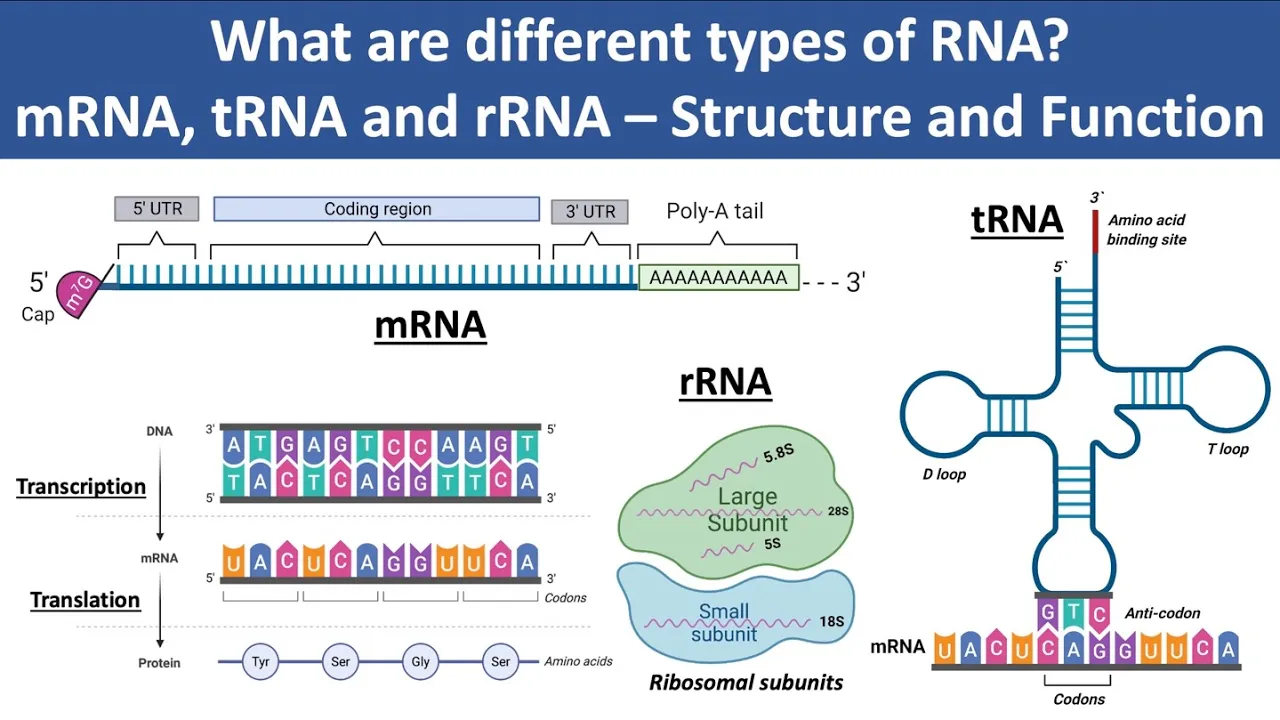
Added:[Music] with this protocol total RNA is hybridized with DNA probes singlestranded DNA probes that target your unwanted but abundant RNAs so we're talking globin messenger RNA and ribosomal RNA this step is required because globin messenger RNA is highly abundant in total RNA extracted from blood samples or if you cultured your samples with any amounts of blood having these messenger RNAs in the system makes it difficult to study messenger RNAs (mRNAs) that are lowly expressed. as you may recall, red blood cells contain hemoglobin. the globin part is actually four (4) globin chains that are joined together to form your globin; which is then paired with your heme. Incidentally, the gene on the... on your chromosomes, is chromosome 11 and 16 that provide this instruction to create globin. the chains of globin are named by Greek letters. there are seven Greek letters that are used; there is alpha, beta, delta, gamma, epsilon, zeta, and theta. so one strategy for enriching for messenger RNAs mRNA) is to deplete all those RNAs that are not messenger RNA. so in this case you will deplete all your ribosomal RNAs. in the cytosol of cells, you will find transcripts- ribosomal RNA transcripts. so you will find 5S, 5.8S, 8s, 18s, 28s, ITS and ETSs and you can target those and remove them. likewise you'll have mitochondrial ribosomal RNA 12S and 16S. so you can also remove them and so what you're left with are messenger RNA transcripts only. however like I said if you have blood in the system then you're going to also have globin messenger RNAs and this is where you will have probes that target those globin messenger RNAs and eliminate them so that you really only have messenger RNAs related to the system that you're studying. 5s ribosomal RNAs are located in the large ribosomal subunit. 5.8s ribosomal RNAs are approximately 160 nucleotides long and they are also part of the large ribosomal subunit the 18S ribosomal RNA on the other hand is part of the small ribosomal subunit it consists of 1,870 nucleotides. there's also the 28S ribosomal subunit which has approximately 5,000 nucleotides and it's also part of the large ribosomal subunit. ITS stands for internal transcribed spacer so these have approximately 200 to up to 3,000 nucleotides and they are found as a precursor of the 45s preRNA transcript but they are removed before ribosome assembly. then there are ribosomal subunits the ETSs. these are external transcribed spaces. these range from 200 to 2,000 nucleotides and they're found at the five prime (5') and three prime (3') ends of the precursor 45S preRNA transcript. Again, they are removed before ribosome assembly but their transcripts will be in the cytoplasm. a popular alternative for enriching for messenger RNA is to use short pieces (oligonucleotides) that enrich for the messenger RNA only. so this oligo-based messenger RNA enrichment this method selects for only polyadenylated messenger RNAs and naturally depletes ribosomal RNA and globin messenger RNA. but just note that with this method you may have some polyA remaining from globin messenger RNA. Here's the protocol for enriching for messenger RNAs and getting rid of globin and ribosomal RNAs. so for the next... neb... neb next globin and ribosomal RNA depletion kit, you're going to get the neb next globin and RNA depletion solution you're going to get the probe hybridization buffer they'll also supply the thermostable RNase H. you're going to get RNase H reaction buffer and then a DNA I and DNA I reaction buffer. as well as nuclease-free water. these items have to be stored at minus 20 (-20oC) then the following item has to be stored in the fridge you don't want to freeze it. so you're going to be given the RNA sample purification beads. there are other things that the kit doesn't come with but you need to get them. so you need to make 80% ethanol, you need to get a micro centrifuge, a vortex, thermocycler, as well as a magnetic rack and you need access to a bioanalyzer or tape station for fragment analysis. we'll need 200uL PCR tubes. so this protocol you're using RNase H to deplete RNA that's going to deplete globin messenger RNA. so apparently the messenger RNA is... for globin you get HBA 1/2, you get HB... HBD, HBM, HBG1 /2, HB... HBQ1 and HBZ. These are globin messenger RNAs. Then you're going to deplete cytoplasmic ribosomal RNAs. so your 5S, 5.8S, 18S, 28S, ITS and ETSs. you're also going to deplete mitochondrial ribosomal RNA so 12S and 16S. once you perform this depletion of ribosomal RNA your sample is now suitable for random prime complimentary DNA synthesis. not the oligo (dT)- based synthesis. you can also use the RNA that you deplete for RNA sequencing as well as other downstream RNA analysis. the RNA that you intend to use for depletion has to be assessed by running the RNA sample on an agent bioanalyzer. you can use the RNA 6000 nano or pico chip to determine the RNA integrity number. Additionally, the RNA has to be free of salt so no magnesium or guanidinium salts or organic solvents; your phenol and ethanol should be removed. the RNA has to be free of DNA. genomic DNA is actually a common contaminant from RNA preps and this is because it may be carried over from the interphase if you use TRIzol or other organic extractions or when the silica matrix of your solid phase RNA purification methods, is overloaded. this can be easily avoided by treating the RNA with DNase I but then you have to remove the enzyme, because any residual activity of DNase I will degrade the single stranded DNA probes necessary for your ribosomal RNA depletion. after you treat with DNase I, you have to remove the enzyme by phenol chloroform extraction and ethanol precipitation. or you can use a silica column such as with... the with... the common column based assays... um purification. Before purification, the RNA must be in nuclease-free water. for the RNA input for depletion you can use as little as 10 nano grams (ng) and as much as 1 microgram (ug) and it has to be in a volume of 10 micro Litres (ul) of nuclease-free water and you have to quantify it by an RNA specific dye-assisted fluorometric method. So the qubit or ribogreen or a bioanalyzer. so the samples have to be kept on ice throughout the process. so the first step we will have our total RNA in nuclease free water. Again we can use 10 ng to 1 ug. you will need the globin and ribosomal RNA depletion solution and the probe hybridization mix. so here you can make a master mix by adding the globin and ribosomal RNA depletion solution with the probe hybridization buffer for as many samples as you have and then add in 10 uL of your total RNA. so once you add the hybridization buffer with the globin and ribosomal RNA depletion solution, you want to mix really well. so here it's recommended you mix 10 times at least, because we've been mixing... pipetting up and down for quite some time, we need to spin it. to just briefly centrifuge it to get all the liquid to settle back into the tube. so now we need a thermal cycler. we're going to heat up the sample to 95° C for 2 minutes then we're going to ramp down to 22° and what you're going to do is set it to ramp down at 0.1° C every second. we're going to hold it at 22° C for 5 minutes. and then you can just leave it at 4° until you're ready. the program will take around 15 to 20 minutes to complete and then you want to briefly spin it down in a centrifuge, in case there was some condensation and then place it immediately on ice and we're going straight into RNase H digestion. for this step we want to grab our hybridized RNA - we need 50 uL of it. you need your themostable RNase H. Then you need your RNase H reaction buffer and some nuclease-free water. just to make up to the volume... total volume of 20 uL. again we want to mix thoroughly so we're going to pipette it up and down at least 10 times. then we're going to briefly spin it in a micro centrifuge just to collect everything nicely to the... in the tube. we incubate the tube in a preheated thermal cycler, this time we're going to incubate for 30 minutes at 50° C with the lid set to 55° after which we will hold at 4°C. after this we want to briefly spin down again just to collect everything nicely back into the tube and place it on ice and proceed immediately to DNase I digestion. in the next protocol we want to digest DNA so here we're going to use our RNase H treated RNA along with DNase I reaction buffer and the DNase I enzyme. and what we're going to do is make it up in a reaction volume of 50 uL. so we... our input for the RNase H treated RNA is 20 uL. then we add the DNase I reaction buffer at 5 uL. then we add the enzyme the DNase I at 2.5 uL and top up to 50 uL using nuclease free water. again we want to mix really well so we we will pipette up and down at least 10 times. then because we've been moving the solution around, we're going to briefly spin it just to collect everything into the tube nicely before we incubate it in a thermocycler for 30 minutes this time at 37° and we can have the lid off or if we're having the lid on then put it on 40° C. After this 37°C incubation we want to just briefly spin down again just to collect everything into the tube in case there was condensation and we're going to proceed immediately to RNA purification. for this step we either use an Agencourt RNA cleanup XP beads or the RNA sample purification beads. so what we want to do is just vortex either of these reagents so that they're resuspended. then we're going to add 90 uL which turns out to be 1.8 times the volume so 90 uL of beads to the RNA samples and we mix this again very thoroughly; so at least 10 times we need to incubate the tubes for 15 minutes on ice. and this allows the RNA to bind to the beads after this 15-minute incubation we pop it on a magnetic rack to separate the beads from the supernatant. once the solution runs clear - this may take about 5 minutes -you want to carefully remove and discard the supernatant. you want to be careful not to disturb the beads because these beads now contain the RNA. so you go ahead and add 200 uL of freshly prepared 80% ethanol to the tube, while it's on the magnetic rack and again we're going to leave this to incubate for 30 seconds and then carefully remove and discard the supernatant. we'll repeat the wash one additional time then we go ahead and completely remove residual ethanol, air dry the beads for about 5 minutes before proceeding to elute the RNA from the bead with 7 ul of nuclease free water. once we add the seven uL of nuclease free water we want to once again mix really well. so we're going to pipette up and down at least 10 times and briefly spin the tube. once we've mixed the nuclease free water with the beads we want to leave it for about 2 minutes at room temperature. then we're going to place the tubes back on the magnetic rack until the solution is clear and once it's clear we remove 5 uL of the supernatant and this contains the RNA this time. and we're going to transfer it to a nuclease free tube. the RNA is now ready for use in complementary DNA (cDNA) library synthesis or for RNA seq or other downstream applications. or you can store it at minus 80oC for long-term storage.
[Music]
Up Next

How to Calculate qPCR Efficiency Using a Standard Curve in Google Sheets
@BioResource
10.7K views•2021-04-18

Triumph of Orthodoxy Icon: Byzantine Art & History Explained
@BenCallan
2.1K views•2024-08-06

Gen5 Plate Reader Setup Guide: ELISA, Luminescence, Fluorescence Assays
@adwoabiotech
23.6K views•2021-11-26

Game of Thrones Opening Credits: A Cinematic Analysis
@gameofthrones
46.3M views•2011-04-18
Related Study Plans & Knowledge Roadmaps
Structured learning paths in General & Interdisciplinary Studies