The circular economy is an economic model that mimics natural living systems by designing products to be reused, recycled, or returned to the ecosystem, thereby eliminating waste and continuously building value from resources rather than depleting finite supplies through the traditional linear 'take-make-dispose' approach.
Circular Economy Explained: Redesigning Progress for a Restorative Future
Added:Deep Dive
The concept of a Linear Economy (the traditional 'take-make-dispose' industrial model) and its environmental and resource limitations.
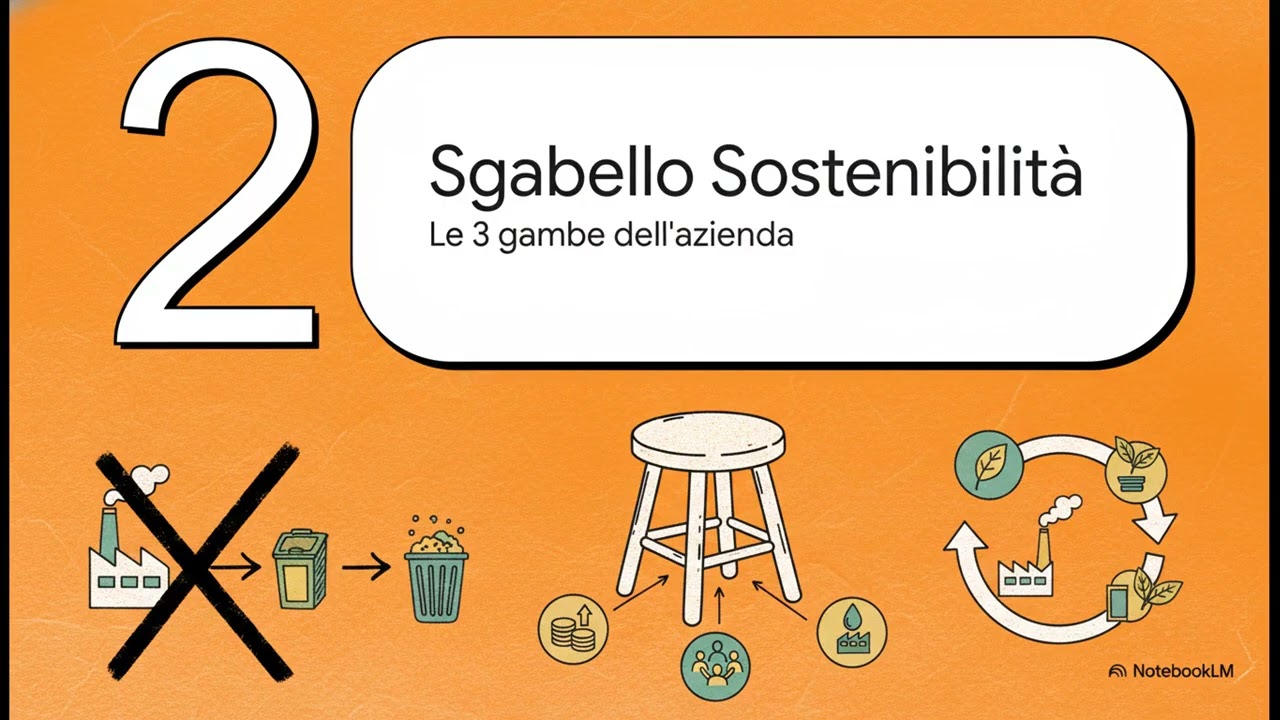
L Azienda Sostenibile
143
The traditional linear economy follows the 'take, make, use, dispose' model: taking raw materials from the earth, manufacturing products, using them, and then disposing of them in landfills. This approach creates two major problems: first, Earth's resources are finite and will eventually run out; second, it generates massive amounts of waste that we are literally drowning in. This model is unsustainable for the long term.
Click to watch →
Industrial Symbiosis And Circular Economy Presentation by Kyla Kim at Polygence's Symposium
137
A linear economy follows a take-make-dispose model where resources are extracted, products are manufactured, used, and then discarded as waste. This system is environmentally wasteful because it depletes finite resources, creates landfill waste that pollutes surroundings, and represents an inefficient use of materials and energy throughout the product lifecycle.
Click to watch →

หลักเกณฑ์การตรวจประเมินคัดเลือกอุตสาหกรรมดีเด่น "ประเภทเศรษฐกิจหมุนเวียน"
160
The linear economy model follows a 'take-make-use-dispose' pattern where resources are extracted, manufactured into products, used by consumers, and then discarded as waste. This model creates two primary problems: (1) depletion of finite natural resources at the source, and (2) accumulation of waste at the end of the process, which causes environmental problems. Very little of the waste generated can be returned to become raw materials, making this system unsustainable.
Click to watch →

10DAYS WORKSHOP -CSE
106
The linear economy model is the traditional approach where resources are taken from nature, used, and then disposed of as waste. This model has no limitations on resource consumption and leads to environmental problems. It represents the current unsustainable way of doing business.
Click to watch →
Business moving to the circular economy by Robert-Jan van Ogtrop
714
The linear economy operates on a 'take-make-dispose' model where natural resources are extracted, transformed into products and services, and then discarded as waste. This model treats natural resources as infinite despite the planet being finite. Approximately 99% of materials used become waste within six months after sale. The model creates significant problems including resource depletion, environmental pollution (plastic in oceans, toxic wastewater, nuclear waste), and an unsustainable system that depletes resources while generating massive waste.
Click to watch →
Deep Dive
Fundamentals of ecosystems and natural nutrient cycling, where waste from one organism becomes food for another.

Your Aquarium IS a Food Web!
15.2K
What one organism considers waste is actually a valuable nutrient source for other organisms in the ecosystem. When an animal produces waste, it contains nutrients and materials that other animals, especially microscopic organisms, can consume and utilize. This concept illustrates how all components of an ecosystem are interconnected, where what appears to be discarded matter becomes food for other life forms, demonstrating the holistic nature of ecological relationships.
Click to watch →

CLASS-12|C-14|PART-12|पोषक चक्र व प्रकार|कार्बन चक्र|फाॅस्फोरस चक्र|पारितंत्र सेवाऐं
5.3K
Nutrient cycling (पोषक चक्रण) is the continuous movement of essential elements through ecosystems. Nutrients are required for growth, reproduction, and biological processes. A nutrient pool represents the total amount of a nutrient in an ecosystem at a given time. Nutrients are never depleted but continuously cycle through the system: from soil to producers (plants), to consumers (animals), and back to soil upon decomposition. This cycle maintains ecosystem productivity by recycling essential elements. The pathway involves producers, primary consumers, and higher-level consumers, with nutrients returning to the environment through decomposition.
Click to watch →
Environment | Shankar IAS | Functions of an Ecosystem | Chapter 2(1) | UPSC/PCS/SSC Exams | OOkul
130.1K
Food chains continue as long as energy is available and organisms that can consume each other exist. When organisms die, their bodies become part of the detritus food chain. Decomposers break down dead matter into simpler substances that can be reused by other organisms. This decomposition process is essential for nutrient cycling and ensures that dead matter does not accumulate in ecosystems. The interconnected nature of food chains means that energy and nutrients continue to flow through the ecosystem even after organisms die, maintaining ecosystem sustainability.
Click to watch →

Aula sobre Ciclagem de Nutrientes
2K
Nutrient cycling is the movement of nutrients between atmosphere, plants, animals, soil, and water. Natural sources include rock weathering and organic matter mineralization. In natural ecosystems, nutrients flow from soil to plants and return when plants die or produce waste, maintaining balance. Plants absorb nutrients during photosynthesis, storing them in stems, roots, leaves, fruits, and seeds. This closed-loop system ensures continuous nutrient availability without artificial intervention.
Click to watch →

6) Ekosistem Ekolojisi FULL TEKRAR | 10. Sınıf Biyoloji | TYT Biyoloji Konu Anlatımı 6
117.4K
Nutrient cycling (biogeochemical cycles) describes how essential elements like carbon, nitrogen, and water move through ecosystems. Living organisms take in nutrients from their environment, use them for growth and metabolism, and then return them to the environment through waste and decomposition. This cycling ensures that nutrients are continuously available for reuse by organisms.
Click to watch →
Deep Dive
Basic understanding of renewable versus non-renewable energy sources and their roles in sustainable systems.

Complete NCERT General Science | NCERT Science Class 6th to 12th in Hindi class #24 | N.K. Sir
106.6K
Energy sources are classified into two types based on their availability: (1) Non-renewable or conventional energy sources (गैर नवीकरणीय ऊर्जा के स्रोत) - resources that will be depleted over time, such as coal and petroleum, which have limited quantity and are being consumed rapidly. (2) Renewable or non-conventional energy sources (नवीकरणीय ऊर्जा के स्रोत) - resources that will not be depleted, such as biomass, geothermal energy, wind energy, solar energy, tidal energy, and hydro power. This classification is important for understanding sustainable energy planning.
Click to watch →

الثروة المعدنية ومصادر الطاقة | الصف الخامس الابتدائي | الدرس الاول - الوحده الثالثه / المنهج الجديد
33.4K
Energy sources are categorized as renewable or non-renewable. Renewable energy sources (solar, wind, water) are clean, sustainable, and do not deplete with use. Non-renewable energy sources (coal, natural gas, petroleum) are polluting, finite, and will eventually be exhausted. Ancient humans discovered fire for heating and cooking, and Egyptians used wind power for sailing. Modern Egypt utilizes solar energy (Benban and El-Kharga solar parks), hydroelectric power (Aswan High Dam), and wind energy (Gebel El-Zeit and El-Zafrana wind farms). Non-renewable sources include coal (from Gebel El-Magharah in Sinai), natural gas (from Zohr field in Mediterranean), and petroleum (from onshore and offshore fields).
Click to watch →

50.Energy Resources and its Classification, Coal कोयला in India, Type of Coal, Geography Study91
167.8K
Renewable energy sources can be continuously replenished and used indefinitely, such as solar, wind, and tidal energy. Non-renewable energy sources are finite and will eventually be exhausted, such as coal, petroleum, and natural gas. The sun is a star in its prime (main sequence) phase, currently yellow in color. Stars evolve through stages: blue (young), yellow (prime), red (old), and eventually white dwarf. Solar energy is renewable because the sun will continue shining for billions of years.
Click to watch →

Dicas de GEOGRAFIA (Fontes de energias) - FUVEST
153K
Energy is defined as the capacity to produce work. Renewable sources include hydraulic, biomass, wind, solar, tidal, and biodiesel, while non-renewable sources include petroleum, coal, uranium, and natural gas. Brazil possesses enormous hydraulic energy potential due to its abundant river systems, with over 75% of electrical energy coming from hydroelectric sources. Major dams include Itaipu, Tucuruí, and Ilha Solteira. Biofuels like biodiesel (from soybean, palm oil, castor oil) and ethanol (from sugarcane) offer renewable alternatives, though they face challenges including competition with food crops, land concentration, and environmental concerns. Petroleum remains the world's primary energy source, with largest reserves in the Middle East, creating geopolitical risks. Brazil is now a significant petroleum producer, though it still imports some derivatives.
Click to watch →

SCIENCE | NCERT EXEMPLAR | Class-10 |महा मैराथन (Part-2) | By: Er. S.K Jha Sir.
483K
This segment covers energy source classification: renewable (solar, wind, hydro) can be replenished naturally; non-renewable (fossil fuels, nuclear) are finite. The teacher explains that acid rain is caused by SO2 and NOx reacting with water to form acids. Thermal power plants primarily use coal as fuel. The segment covers hydroelectric power: converting potential energy of water at height to kinetic energy, then to electrical energy. The ultimate energy source on Earth is the Sun. The teacher explains that ocean energy sources include tidal energy (from Moon/Sun gravitational pull), wave energy (from wind), temperature difference, and salinity difference.
Click to watch →
Deep Dive
The concept of a product's life cycle, including raw material extraction, manufacturing, distribution, use, and end-of-life disposal.
How are materials connected to sustainable development? | Katja Tasala Gradin
230
A product goes through four main phases in its lifecycle: raw material extraction, manufacturing, use phase, and end-of-life disposal or recycling. Throughout all phases, there are inputs (materials, energy) and outputs (emissions to air, soil, water, and waste) to the natural environment.
Click to watch →
SAINS TINGKATAN 5 KSSM I BAB 3 I 3.1 - KITARAN HAYAT PRODUK
28.5K
The cradle-to-grave lifecycle describes the complete journey of a product from its origin (cradle) to its disposal (grave). This includes: raw material extraction, manufacturing, transportation, use, and disposal. For example, a smartphone's lifecycle begins with mining minerals, proceeds through manufacturing, transportation, consumer use, and ends with disposal. This concept helps understand the full environmental impact of products.
Click to watch →
Life Cycle Assessment (LCA) For Beginners
158.7K
The product life cycle consists of five main phases: (1) Raw material extraction - obtaining the basic materials needed for production; (2) Processing of raw materials - transforming raw materials into usable forms; (3) Transportation - moving materials and products between locations; (4) Use phase - how the product is used by consumers; (5) Waste phase - what happens to the product after its useful life. Different assessment approaches like cradle-to-gate or cradle-to-wheel refer back to these fundamental phases.
Click to watch →
Gestão ambiental e ISO 14001 # 1/7 - Conceitos relevantes
11K
The environmental life cycle encompasses a product's entire journey from raw material extraction through manufacturing, transportation, use, and final disposal. Each stage generates environmental aspects and impacts, including resource extraction, processing, distribution, consumption, and end-of-life disposal. Products may eventually return to nature, potentially causing pollution or requiring natural regeneration time.
Click to watch →

The EPD process webinar 2
623
A product's life cycle includes: raw material extraction (e.g., iron ore from earth), transportation, manufacturing, packaging, use phase, reuse stage, and end-of-life stage (recycling, landfill, or incineration). Some studies use 'cradle-to-gate' (excluding use phase) or 'cradle-to-grave' boundaries. Energy production systems have different life cycles (e.g., wind farm construction, operation, decommissioning).
Click to watch →
Prerequisite Knowledge
- Concept 01The concept of a Linear Economy (the traditional 'take-make-dispose' industrial model) and its environmental and resource limitations.
- Concept 02Fundamentals of ecosystems and natural nutrient cycling, where waste from one organism becomes food for another.
- Concept 03Basic understanding of renewable versus non-renewable energy sources and their roles in sustainable systems.
- Concept 04The concept of a product's life cycle, including raw material extraction, manufacturing, distribution, use, and end-of-life disposal.
Subsequent Learning
- Step 01Cradle-to-Cradle (C2C) design certification guidelines and how they are applied to modern product development.
- Step 02Life Cycle Assessment (LCA) methodologies, which quantitatively measure the environmental impacts of products across their entire life cycle.
- Step 03The principles of Industrial Symbiosis, focusing on how different industries can collaborate to share resources and utilize each other's waste streams.
- Step 04Policy frameworks and economic incentives that promote circularity, such as Extended Producer Responsibility (EPR) laws and green procurement strategies.
- Step 05The study of Biomimicry, exploring how nature's time-tested patterns and strategies can inspire sustainable human design.
Circular Shift
Redesign Future
Circular Shift
0:00Playing Section
- 1
Nature recycles everything, but humans follow a linear take-make-dispose model, which depletes resources.
- 2
A circular economy mimics biology, turning waste into nutrients and maintaining material value through reuse.
Thermodynamic Limits and the Growth Dilemma of Circularity
While the circular economy is celebrated as a sustainable ideal, critics highlight fundamental physical and economic limitations. First, the Second Law of Thermodynamics dictates that materials degrade during recycling (entropy increases). Achieving a 100% closed loop is physically impossible, as recovering highly dispersed materials eventually requires prohibitive amounts of energy. Second, economists warn of the 'rebound effect' (Jevons' Paradox), where increased resource efficiency lowers costs, paradoxically driving up overall production and consumption. Finally, advocates of 'degrowth' argue that the circular economy serves as a corporate greenwashing narrative. They contend that decoupling resource use from gross domestic product (GDP) growth is a myth, and that true ecological sustainability requires an absolute reduction in consumption and economic scale, rather than merely relying on circular design to justify continued growth.
Deep Dive
Cradle-to-Cradle (C2C) design certification guidelines and how they are applied to modern product development.
FINALLY getting some answers...
58.5K
Cradle to Cradle is a global standard and voluntary third-party certification that identifies products designed for a safe, circular, and responsible economy. Products certified under this standard meet rigorous criteria across multiple categories including material health, material reutilization, renewable energy use, water stewardship, and social fairness. The certification emphasizes that products should be designed to eliminate waste and create regenerative systems rather than following traditional linear 'take-make-dispose' models.
Click to watch →

Cradle to Cradle Certified Product Standard Version 4.0 Webinar
2.7K
The Cradle to Cradle Certified standard encompasses five interconnected categories requiring simultaneous achievement: (1) Material Health ensures chemicals are safe through a four-step pathway of inventory, screening (harmonized with REACH regulations), assessment across 21 hazard endpoints, and optimization; organohalogens face progressive restrictions from Bronze to Platinum levels; VOC requirements escalate from low-emission compliance to inherently non-emitting products; supply chain optimization pathways exist through supplier certification or lifecycle assessment; (2) Product Circularity organizes into circular sourcing (increasing recycled/renewable content percentages), circular design (cycling pathway compatibility escalating from 50% to 99%), and circular systems (education, partnerships, active cycling, and monitoring); (3) Clean Air & Climate Protection requires quantification of emissions and embodied energy, with renewable energy targets escalating from 5% to over 100%; (4) Water & Soil Stewardship addresses water conservation, effluent quality, and ecosystem protection through quantification, supplier performance tracking, and positive impact projects; (5) Social Fairness follows a management systems approach from Bronze risk assessment to Platinum workplace equity requirements including inclusive hiring, pay transparency, and living wage payment. Each category escalates in rigor with certification level, requiring companies to progressively improve their products and practices toward full circular economy alignment.
Click to watch →
The Furniture Company That Changed The World (part 1)
297.7K
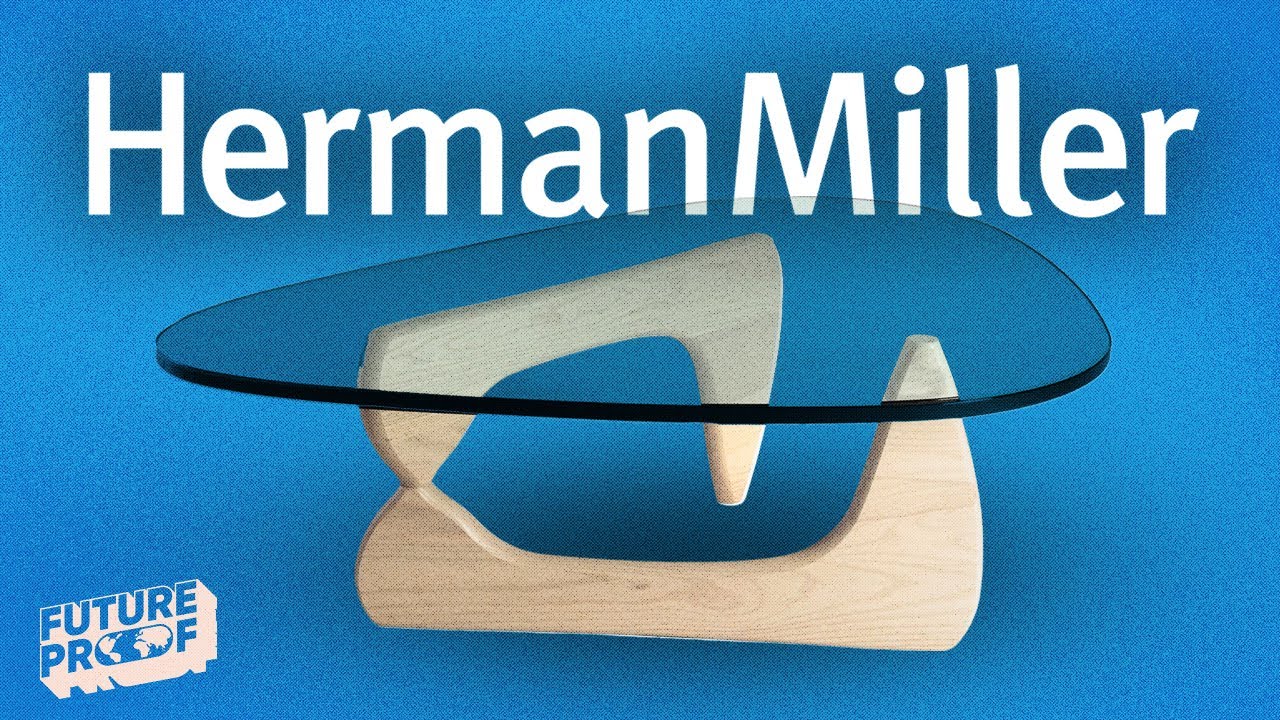
Cradle to Cradle (C2C) certification represents a comprehensive approach to sustainable product design that goes beyond simple recycling. Herman Miller received their first C2C v3 Silver certification for their newest Aeron Chair version, which uses 50% recycled materials including ocean-bound plastic. Beyond material composition, C2C principles emphasize designing products built to last, making replacement parts available, and ensuring products don't need to be reconstituted because they're durable enough to avoid disposal in the first place. This holistic approach considers the entire lifecycle of a product from creation to end-of-life.
Click to watch →
William McDonough: Cradle to Cradle Design for the Circular Carbon Economy: The Regenerative Bios...
282
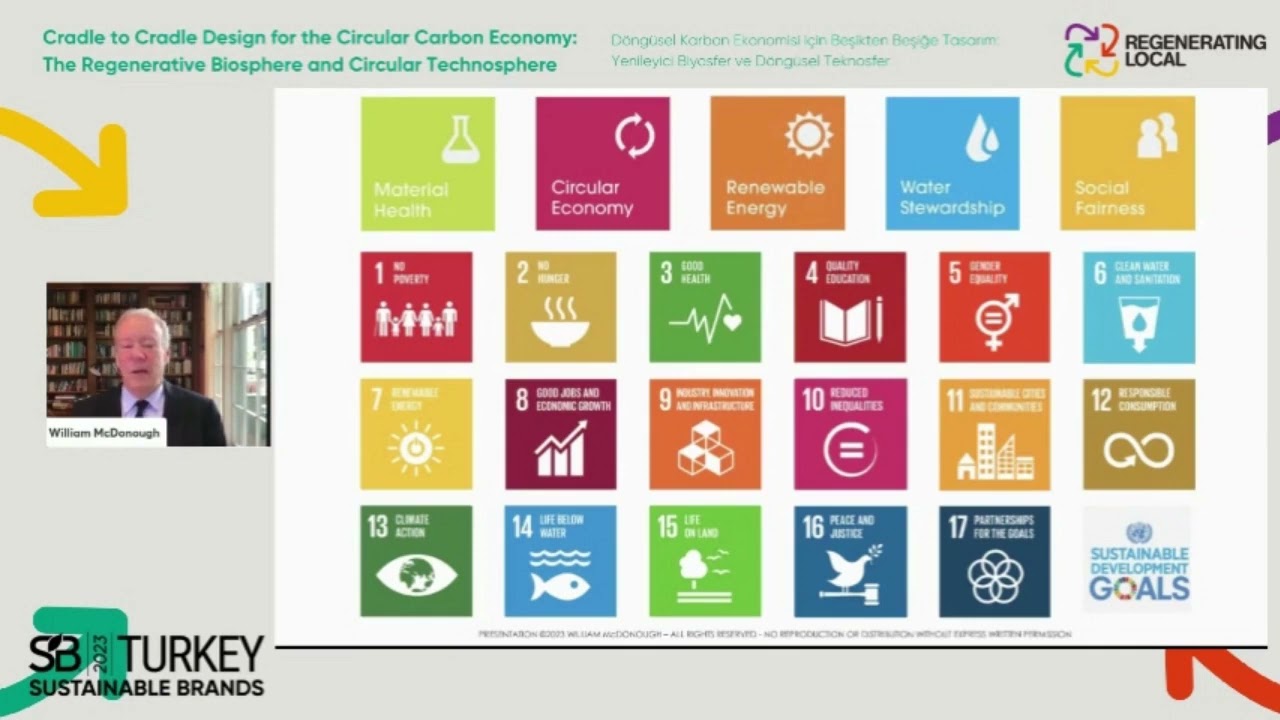
Cradle to Cradle design is built on three fundamental principles: Waste equals food (eliminating waste by making all materials nutrients), using clean energy, and celebrating diversity. The framework distinguishes between biological nutrients (returning safely to nature) and technical nutrients (circulating within human-made systems). The five Goods provide certification criteria: Material Health, Circular Economy, Renewable Energy, Water Stewardship, and Social Fairness. These five conditions serve as foundational predicates to all 17 Sustainable Development Goals, offering a comprehensive framework for sustainable business practices.
Click to watch →
Live Talk mit Tim Janßen - Cradle to Cradle NGO
227
Cradle to Cradle certification is a rigorous framework evaluating products across material health, material reutilization, renewable energy use, water stewardship, and social fairness. Products achieve Bronze to Platinum levels based on comprehensive criteria. The certification process involves independent auditors examining entire supply chains, including raw material sourcing, manufacturing processes, and end-of-life scenarios. Achieving certification requires extensive supply chain transparency—companies must know exactly what materials are in their products and where they come from. Digitalization plays a crucial role in enabling circular economy systems by tracking material composition throughout product lifecycles. Practical examples span diverse industries: textiles (C&A, Lidl with bio-based fibers), construction (modular demountable buildings), packaging (paper-based alternatives to plastic), and printing (C2C certified inks). These examples demonstrate that circular principles can be applied across diverse industries and product types, with material innovations scaling effectively even in high-volume production.
Click to watch →
Deep Dive
Life Cycle Assessment (LCA) methodologies, which quantitatively measure the environmental impacts of products across their entire life cycle.

How Life Cycle Assessment is driving sustainable change | Dr Antonia Doncila (Croda) | SCItalk
236
Life Cycle Assessment (LCA) is a methodology for measuring and quantifying environmental impacts of products, processes, or services throughout their entire life cycle—from raw material extraction through manufacturing, use, and disposal. LCA considers multiple environmental indicators including carbon emissions, resource depletion, and toxicity. The methodology follows a four-stage process: setting goals and scope, inventory analysis, impact assessment, and interpretation. Two primary system boundaries exist: cradle-to-gate (focusing on direct company operations) and cradle-to-grave (covering the complete product life cycle). Cradle-to-grave LCA is preferred because it avoids burden shifting (transferring impacts between stages) and prevents trade-offs by providing comprehensive data for strategic decision-making.
Click to watch →

Short Description of Life Cycle Assessment (LCA)
100
Life Cycle Assessment (LCA) is an internationally standardized methodology that quantifies environmental impacts across a product's entire life cycle—from raw material extraction through manufacturing, use, and disposal—to enable fair comparisons between alternatives and identify opportunities for sustainability improvements, including measuring ecological footprint (biologically productive land/water required) and carbon footprint (greenhouse gas emissions).
Click to watch →

Life Cycle Assessment (LCA) dan Penerapannya | Disertai Penyelesaian Studi Kasus
10K
Life Cycle Assessment (LCA) is a systematic methodology for evaluating the environmental impacts of products throughout their entire lifecycle, from raw material extraction to end-of-life disposal. The methodology consists of four main phases: (1) Goal and Scope Definition, which establishes the system boundaries and functional unit; (2) Inventory Analysis, which quantifies all material and energy inputs and outputs; (3) Impact Assessment, which converts inventory data into environmental impact categories using characterization factors; and (4) Interpretation, which draws conclusions and recommendations. OpenLCA is an open-source software tool that enables practitioners to conduct LCA studies by providing interfaces for database management, flow and process creation, and impact assessment calculations. The software supports various impact assessment methods including CML, ReCiPe, and others, and allows for comparative analysis between different product systems or manufacturing alternatives to support sustainable manufacturing decisions.
Click to watch →
Wouter Achten - « Analyse du cycle de vie : un outil pour la transition »
499
Life Cycle Assessment (LCA) is a comprehensive methodology for quantifying environmental impacts across a product's entire lifecycle, from raw material extraction through processing, assembly, use, and end-of-life treatment. LCA evaluates approximately 20 environmental impact indicators including climate change, water consumption, fossil resource depletion, land occupation, ecotoxicity, human toxicity, acidification, eutrophication, ozone layer depletion, and ionizing radiation. These indicators are based on environmental modeling and empirical studies, making LCA highly interdisciplinary as it requires knowledge from multiple scientific domains including medicine, chemistry, and atmospheric science. The methodology calculates cumulative emissions and environmental interactions across all stages, including atmospheric, soil, and water compartments.
Click to watch →
Lec 37 : Life-cycle assessment
18.9K
Life Cycle Assessment (LCA) is a systematic methodology for evaluating the environmental impacts of products, processes, and activities throughout their entire life cycle, encompassing four key phases: goal definition and scope setting, life cycle inventory analysis (quantifying inputs and outputs), impact assessment (evaluating environmental consequences), and interpretation (deriving conclusions and recommendations for informed decision-making).
Click to watch →
Deep Dive
The principles of Industrial Symbiosis, focusing on how different industries can collaborate to share resources and utilize each other's waste streams.
Inside the world of industrial symbiosis | The origins of the circular economy
3.1K
Industrial symbiosis applies biological concepts to industrial systems, where companies share waste streams so residues become resources for others. The Kalundborg Industrial Park in Denmark exemplifies this, with over 30 material exchanges including steam pipes connecting power stations to companies. Membership requires willingness to share streams, with associated members providing services and technologies. Success depends on multi-level collaboration spanning physical exchanges, legal frameworks, economic agreements, and supply security planning.
Click to watch →

CSI Whistle Stop #1: Raymond, WA
268
This segment explains the fundamental principles of industrial symbiosis: companies work together to exchange resources and byproducts, redefining waste as a resource. The approach involves communication and collaboration to create new value through shared resources. Denmark's Callenborg Symbiosis demonstrates this with nine companies achieving significant CO2 savings, social economic savings, and business profits annually. The presentation emphasizes that industrial symbiosis creates win-win situations for both economic and environmental benefits, helping existing industries survive, grow, or attract new businesses.
Click to watch →

Marian Chertow Talks About Industrial Ecology and Symbiosis in the Developing World
3.7K
Industrial symbiosis operates on principles of self-organization and mutual benefit among companies sharing geographic proximity. The Kalundborg case in Denmark demonstrates how companies spontaneously discovered resource exchanges without government mandates. Similar patterns emerge globally, from Puerto Rico to China, where proper coordination enables efficient sharing of water, wastewater, solid waste, energy, and steam. These exchanges reduce transportation costs and environmental impacts while creating economic value. The key insight is that beneficial exchanges already occur informally; industrial ecology provides frameworks to catalog, optimize, and scale these relationships systematically.
Click to watch →
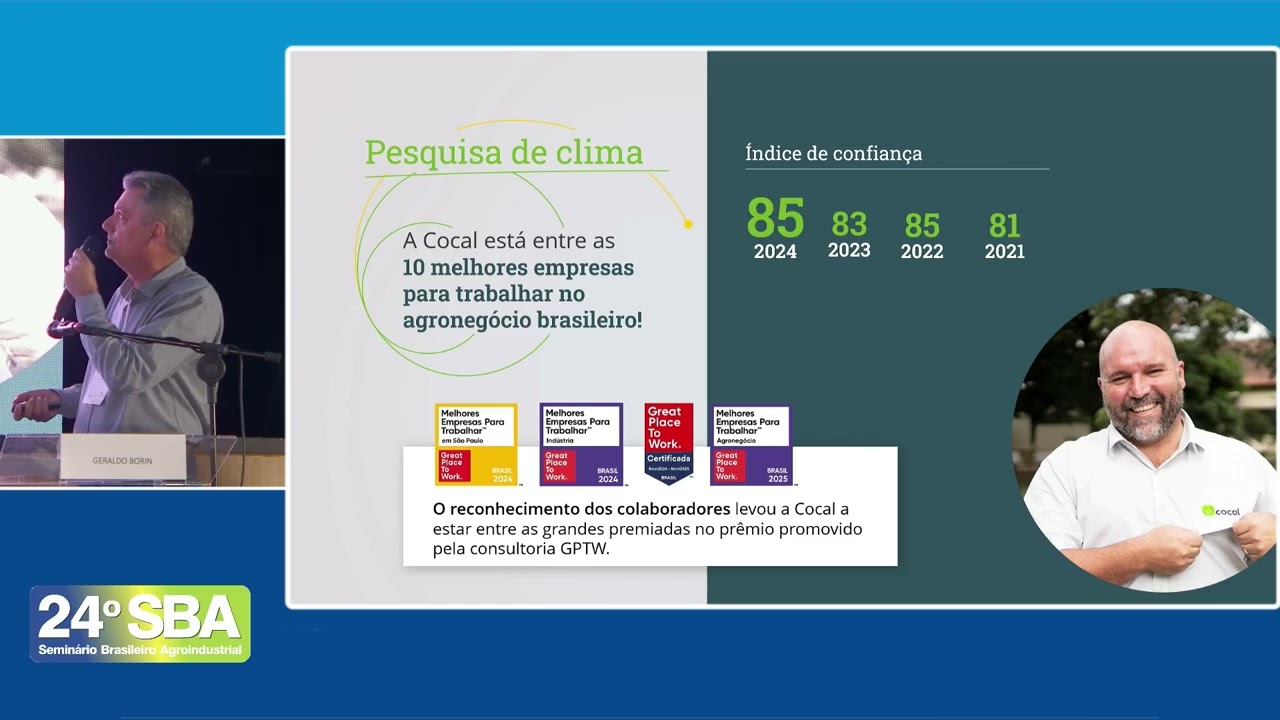
24º SBA - A Usina Completa - Geraldo Borin - Cocal
108
Industrial symbiosis involves partnerships where companies exchange materials and energy streams. COCAL partners with LESAfre (French multinational, founded 1853) to receive vinasse during harvest and supply electricity. Another partnership with a poultry farm (Grupo Shida) provides chicken manure as biodigester feedstock while COCAL supplies electricity. The company also receives urban solid waste and other industrial residues. This multi-source approach maximizes biodigester efficiency and nutrient recovery.
Click to watch →
ALICIA VALERO. Energía, minerales y colapso material | Arpa Talks #84
22.2K
In industrial symbiosis, waste from one industry becomes raw material for another. For example, gypsum from power plant flue gas desulfurization can be used by construction companies instead of virgin gypsum. This reduces resource extraction and waste disposal while creating economic value from what would otherwise be waste. The challenge is that current legislation varies by autonomous community, creating barriers to resource sharing. What's allowed in one region may be prohibited in another, creating inefficient transportation of materials.
Click to watch →
Deep Dive
Policy frameworks and economic incentives that promote circularity, such as Extended Producer Responsibility (EPR) laws and green procurement strategies.
Что такое Расширенная ответственность производителя. Система РОП.
1.8K
EPR systems create economic incentives through ecological fees that increase over time, motivating processors to seek waste and creating demand for secondary raw materials. As targets increase (potentially reaching 100% by 2027), manufacturers face greater financial pressure to find processors, reducing the ability of processors to undercut prices. This creates a stable market where processors can charge fair prices. The system incentivizes manufacturers to use recyclable packaging by reducing their ecological fees when they meet recycling targets. EPR funds flow from manufacturers to processors, creating demand for secondary raw materials and benefiting collectors through increased prices. The system promotes circular economy principles by encouraging manufacturers to design products with recyclable packaging.
Click to watch →

CEStakeholderEU Conference 2022 - Workshop 2D – Extended Producer Responsibility Schemes
175
Extended Producer Responsibility (EPR) schemes are essential economic instruments for transitioning to a circular economy, requiring producers to finance the collection, sorting, and recycling of their products through fees that should be actively modulated based on circularity criteria such as recyclability, recycled content, and environmental impact to incentivize sustainable product design and consumer choices, while ensuring fair competition and proper alignment with the waste hierarchy.
Click to watch →

Closing the loop: The role of recycled and recyclable materials in a circular economy
239
Extended Producer Responsibility (EPR) legislation represents a key policy mechanism for advancing circular fashion: (1) EPR requires producers to fund collection, sorting, and recycling infrastructure; (2) Funds collected through producer levies can support innovation in recycling technologies; (3) EPR creates financial incentives for designing recyclable products; (4) Implementation varies by country, with some systems managed by producer organizations rather than governments; (5) EPR addresses the risk of accumulating unsorted garments that might otherwise be incinerated or landfilled; (6) Successful implementation requires coordination between producers, sorters, recyclers, and policymakers.
Click to watch →
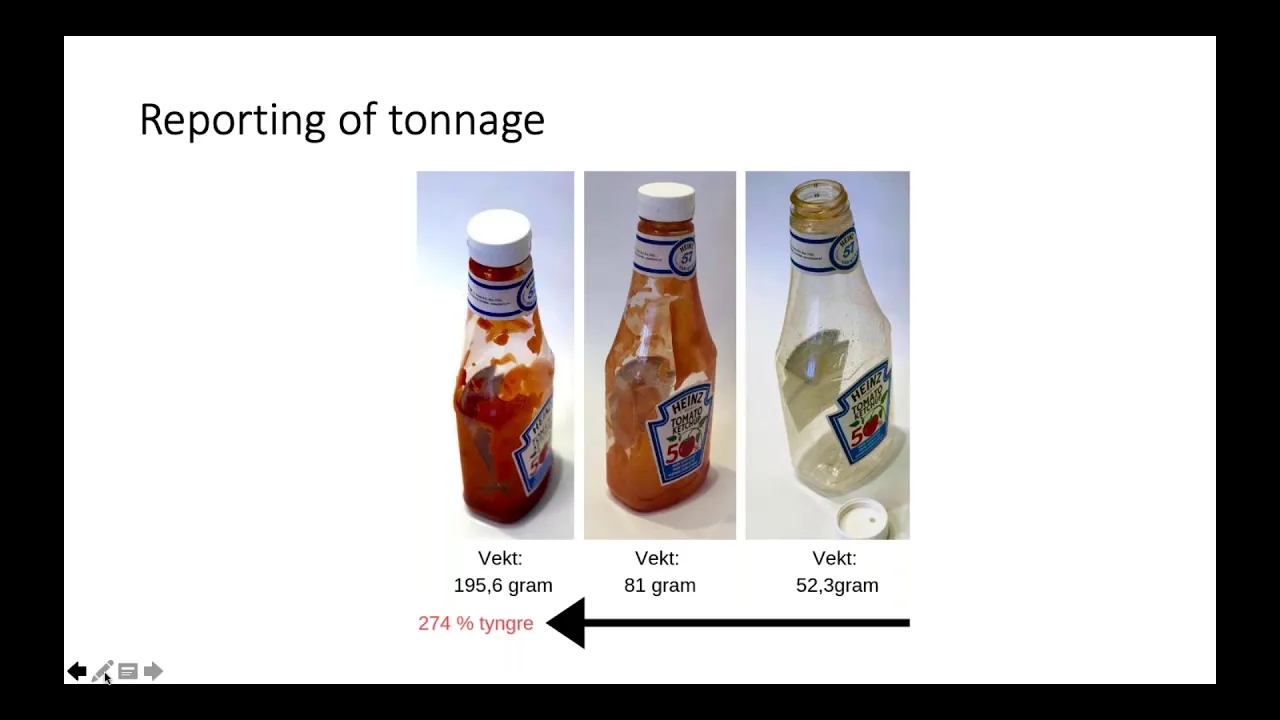
WEBINAR | NERC webinar on EPR for packaging in Europe
163
The 2015 European Circular Economy Package established transformative packaging policy including: a 10% landfill cap by 2035, 65% household waste recycling target, material-specific packaging targets (50-55% plastics, aluminum, glass, paper), and producer cost requirements (80% for new programs, 50% for existing). The new recycling calculation method moves measurement to post-sorting inputs, requiring removal of contamination losses. Article 8a establishes minimum EPR program requirements including transparency, public reporting, and cost coverage for collection, transport, and treatment. The Norwegian anti-litter fee model demonstrates an alternative approach where producers pay based on recovery rates (95% threshold), creating economic incentives for voluntary EPR participation and design improvements.
Click to watch →

The Circular Economy: From Big Idea to Transformational Action
795
Circular procurement is essential but faces barriers: the tyranny of lowest price, internal accountability problems, and verification difficulties. Research shows Canadian governments have made minimal progress on green procurement despite 25 years of policy attention. Effective interventions should address three aspects: stimulate demand through Extended Producer Responsibility (EPR), capture externalities through taxes or EPR programs, and expand capabilities through education and disclosure requirements. EPR programs in Canada have existed for over 30 years with limited success. Additional measures include requiring carbon footprint disclosure in procurement and setting minimum recycled content requirements. The transition requires treating circular economy as a socio-economic movement needing support on multiple levels simultaneously.
Click to watch →
Deep Dive
The study of Biomimicry, exploring how nature's time-tested patterns and strategies can inspire sustainable human design.
Sustainable Design and Biomimicry || #sustainability #biomimicry #design
478
Sustainable design is a philosophy that reduces environmental impact through seven key principles: form (simplest structure), function and usability, cost-effective solutions, renewable energy, durable design, biomimicry, and design for reuse and recycling. Biomimicry is an innovation approach that emulates nature's time-tested patterns and strategies to solve human challenges, such as using beetle surfaces for water collection, lotus leaves for self-cleaning paint, and kingfisher beaks for maglev train design.
Click to watch →

How Designers Use Nature To Solve Problems | Answers With Joe
393.5K
Biomimicry is a design philosophy that involves finding solutions by looking at nature or applying lessons from nature to create healthier, more sustainable technologies. The concept is based on the idea that nature has been testing, designing, and reinventing itself for billions of years, making it the greatest teacher available for human innovation. According to Janine Benyus, co-founder of the Biomimicry Institute, the key distinction is between learning about the natural world versus learning from it—using nature's time-tested strategies to solve human challenges.
Click to watch →

Odile Rodríguez De la Fuente y el Vitalismo
30.5K
Biomimicry is the science that studies and applies nature's solutions—developed over approximately 4 billion years of evolution—to human systems. Nature has created increasing diversity and complexity from limited resources while maintaining circularity (no waste, everything is recycled and reused). Human systems, by contrast, have created complexity at the expense of autonomy and resilience in their components. For example, human cells have significant autonomy with their own membranes, genetic information, and energy production, yet function within complex organisms. Human-made systems often sacrifice the autonomy and resilience of individual components for overall complexity, making them fragile. Communities that integrate nature and maintain horizontal structures would be more resilient. The current crisis reveals that the socio-economic system is like a house of cards—seemingly powerful but fragile. Technology and scientific advances are powerful tools but require wisdom and proper grounding to use effectively.
Click to watch →
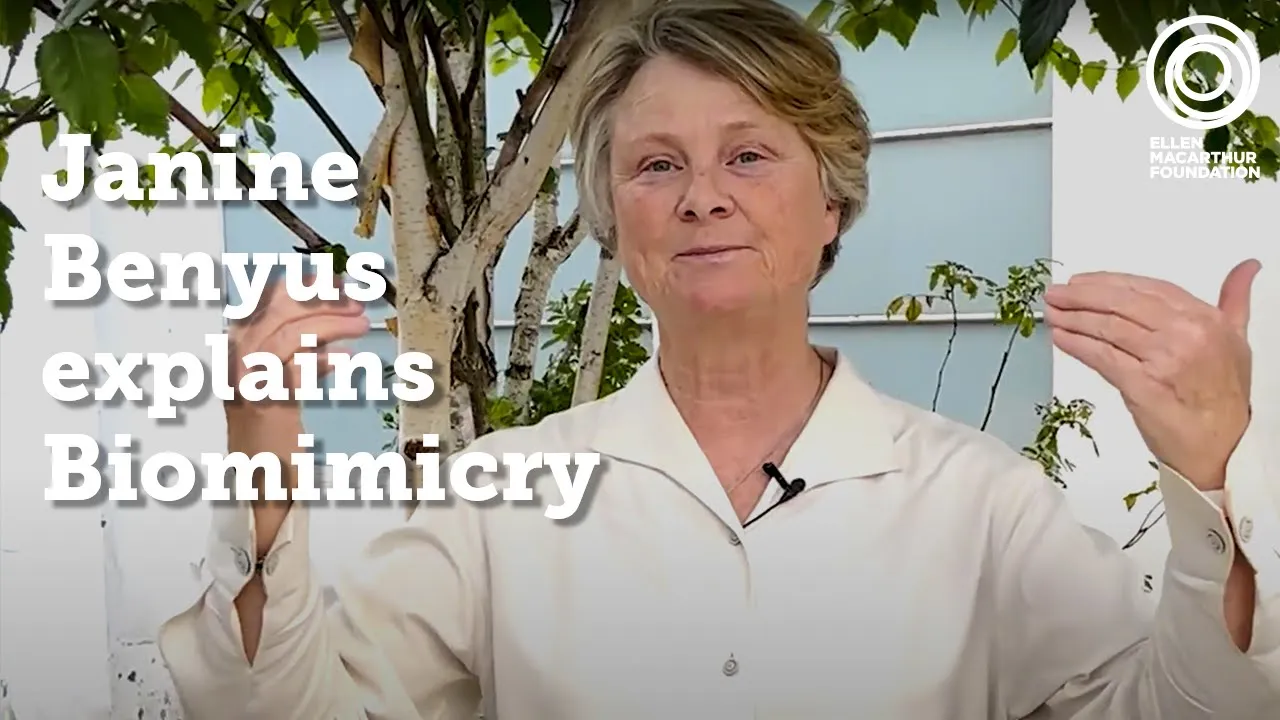
Janine Benyus explains Biomimicry
11.4K
Biomimicry is the practice of human design inspired by the natural world, where engineers and designers observe nature's evolved solutions—such as trees' Y-shaped branching for efficient fluid distribution governed by Murray's Law, which applies universally to leaf veins, lungs, and blood vessels—to create sustainable technologies and systems that enhance human environments while learning from nature's 3.8 billion years of research and development.
Click to watch →

Why Engineers Steal from Nature
469.3K
Biomimicry is defined as the science of how nature approaches the design of organisms. By studying how nature works, we can apply these natural strategies to create applications that benefit humans. This concept involves finding inspiration in the strategies that have developed over Earth's 3.85 billion years of research and development. Species alive today hold the blueprints to our design challenges, as animals have had years of evolution to work out all the kinks in their designs.
Click to watch →
Circular Shift
Redesign Future
Circular Shift
0:00- 1
Nature recycles everything, but humans follow a linear take-make-dispose model, which depletes resources.
- 2
A circular economy mimics biology, turning waste into nutrients and maintaining material value through reuse.
Thermodynamic Limits and the Growth Dilemma of Circularity
While the circular economy is celebrated as a sustainable ideal, critics highlight fundamental physical and economic limitations. First, the Second Law of Thermodynamics dictates that materials degrade during recycling (entropy increases). Achieving a 100% closed loop is physically impossible, as recovering highly dispersed materials eventually requires prohibitive amounts of energy. Second, economists warn of the 'rebound effect' (Jevons' Paradox), where increased resource efficiency lowers costs, paradoxically driving up overall production and consumption. Finally, advocates of 'degrowth' argue that the circular economy serves as a corporate greenwashing narrative. They contend that decoupling resource use from gross domestic product (GDP) growth is a myth, and that true ecological sustainability requires an absolute reduction in consumption and economic scale, rather than merely relying on circular design to justify continued growth.
The concept of a Linear Economy (the traditional 'take-make-dispose' industrial model) and its environmental and resource limitations.
Fundamentals of ecosystems and natural nutrient cycling, where waste from one organism becomes food for another.
Basic understanding of renewable versus non-renewable energy sources and their roles in sustainable systems.
The concept of a product's life cycle, including raw material extraction, manufacturing, distribution, use, and end-of-life disposal.
Cradle-to-Cradle (C2C) design certification guidelines and how they are applied to modern product development.
Life Cycle Assessment (LCA) methodologies, which quantitatively measure the environmental impacts of products across their entire life cycle.
The principles of Industrial Symbiosis, focusing on how different industries can collaborate to share resources and utilize each other's waste streams.
Policy frameworks and economic incentives that promote circularity, such as Extended Producer Responsibility (EPR) laws and green procurement strategies.
The study of Biomimicry, exploring how nature's time-tested patterns and strategies can inspire sustainable human design.
1.9M views14.6Klikes3:48@EllenMacArthurFoundationOriginal Release: 2011-08-28
Living systems have been around for a few billion years and will be around for many more.
In the living world there's no landfill. Instead, materials flow. One species waste is another's food. Energy is provided by the Sun. Things grow then die and nutrients return to the soil safely.
And it works.
Yet, as humans, we've adopted a linear approach.
We take, we make, and we dispose. A new phone comes out, so we ditch the old one, our washing machine packs up, so we buy another.
Each time we do this, we're eating into a finite supply of resources and often producing toxic waste.
It simply can't work long-term.
So, what can?
If we accept that the living world's cyclical model works, can we change our way of thinking, so that we to operate a circular economy?
Let's start with the biological cycle. How can our waste build capital rather than reduce it?
By rethinking and redesigning products and components and the packaging they come in, we can create safe and compostable materials that help grow more stuff.
As they say in the movies, no resources have been lost in the making of this material.
So, what about the washing machines, mobile phones, fridges?
We know they don't biodegrade.
Here, we're talking about another sort of rethink.
A way to cycle valuable metals, polymers, and alloys so they maintain their quality and continue to be useful beyond the shelf life of individual products.
What if the goods of today became the resources of tomorrow?
It makes commercial sense.
Instead of the throw away and replace culture we become used to, we'd adopt a return and renew one, where products and components are designed to be disassembled and regenerated.
One solution may be to rethink the way we view ownership.
What if we never actually owned our technologies, we simply license them from the manufacturers?
Now let's put these two cycles together.
Imagine if we could design products to come back to their makers, their technical materials being reused, and their biological parts increasing agricultural value and imagine that these products are made and transported using renewable energy. Here we have a model that builds prosperity long-term, and the good news is there are already companies out there who are beginning to adopt this way of working. But the circular economy isn't about one manufacturer changing one product. It's about all the interconnecting companies that form our infrastructure and economy coming together. It's about energy, it's about rethinking of the operating system itself. We have a fantastic opportunity to open new perspectives and new horizons instead of remaining trapped in the frustrations of the present with creativity and innovation, we really can rethink and redesign our future.
Up Next
184:49
Environment & Ecology: Land/Soil Pollution & Waste Management Techniques
@Dr.J12
954 views•2025-05-15

15:54
Life in Biosphere 2: Sustainable Ecosystems & Human Survival
@TED
334.9K views•2009-06-16
14:30
Microplastics Everywhere: How Plastic Impacts Our Lives
@TEDx
100.9K views•2018-05-08
10:28
Ice Stupa Artificial Glaciers: Solving Ladakh's Water Crisis
@SonamWangchuk66
3.2M views•2015-05-03
Related Study Plans & Knowledge Roadmaps
Structured learning paths in Environmental Science
environmental-science
Ocean Noise: Cetacean Impacts & Mitigation
01Fundamentals of Underwater Acoustics
02Marine Mammal Bioacoustics
03Anthropogenic Noise: Shipping & Seismic Surveying
+ 2 more learning modules
16h5 modules
Explore Roadmap
environmental-science
Road Ecology: Corridors, Overpasses & Fencing
01Foundations of Habitat Fragmentation and Carnivore Ecology
02The Road Barrier: Ecological Impacts of Transport Infrastructure
03Principles of Ecological Corridors and Connectivity Mapping
+ 3 more learning modules
14h6 modules
Explore Roadmap
environmental-science
Ocean Acidification: Kelp Buffering & Shellfish
01Fundamentals of Ocean Chemistry & pH
02Chemical Pathways of Coastal Acidification
03Bivalve Physiology & Calcification Under Stress
+ 2 more learning modules
18h5 modules
Explore Roadmap
environmental-science
Ice Stupas: Glacial Retreat & Water Security
01Foundations of Glaciology & Mountain Hydrology
02Climate Change and Glacial Retreat Dynamics
03The Science of Ice Stupas & Artificial Glaciers
+ 2 more learning modules
14h5 modules
Explore Roadmap