





![[강연] 거시 세계의 양자 물리: 온 세상이 떨고 있다 _ by이필진ㅣ 2021 '시간, 물질 그리고 우주' 4강](https://i.ytimg.com/vi/FxkItBFv8HE/maxresdefault.jpg)


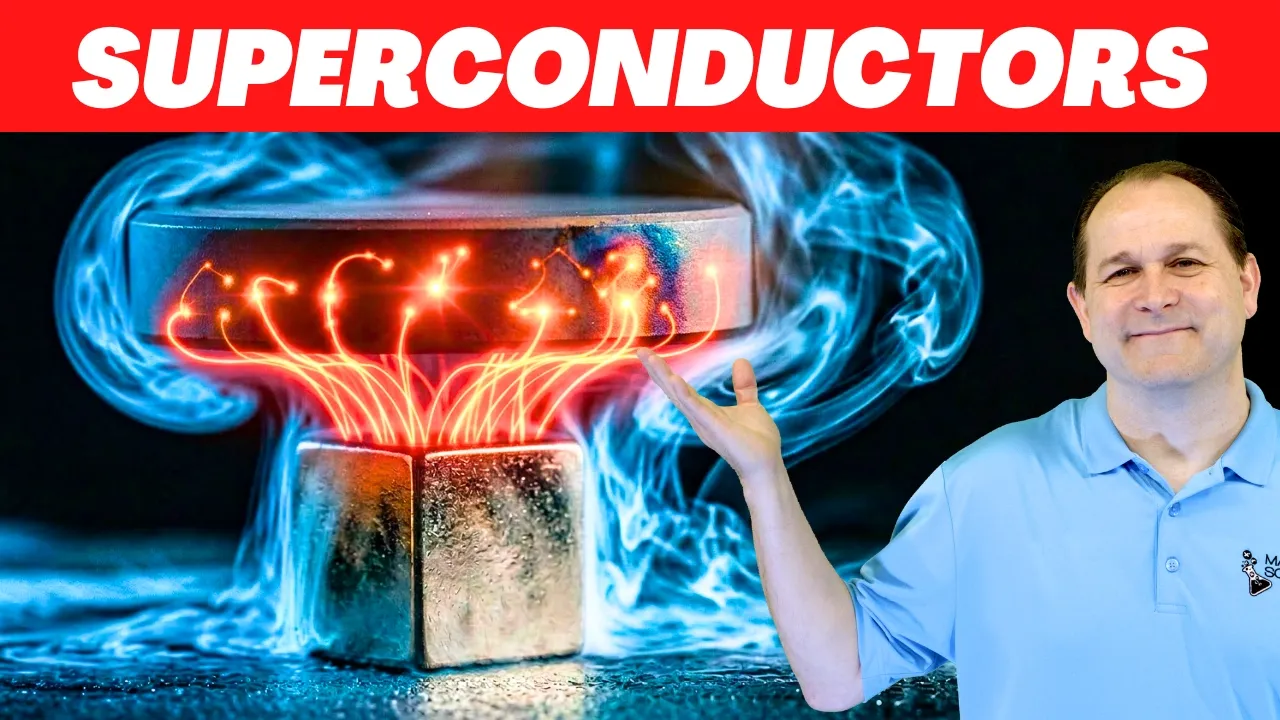











Cooper pairs are bound electron pairs that form in superconductors due to an effective attractive interaction mediated by lattice vibrations (phonons), overcoming the natural Coulomb repulsion between electrons; this quantum mechanical pairing enables zero electrical resistance and the Meissner effect, making Cooper pairs the fundamental building blocks of superconductivity as described by the BCS theory.
Cooper Pairs Explained: Superconductivity & BCS Theory
Added:Basic electrostatics and Coulomb's Law, specifically the natural electromagnetic repulsion between like-charged particles (electrons).
The physical structure of crystalline solids and the concept of lattice vibrations (phonons).
The fundamental differences between Fermions (which are subject to the Pauli exclusion principle) and Bosons.
Classical electrical resistance and how thermal agitation causes resistivity in normal conductors.
The Meissner Effect, magnetic flux quantization, and the distinction between Type I and Type II superconductors.
Josephson junctions and the quantum tunneling of Cooper pairs, which form the basis of SQUIDs (Superconducting Quantum Interference Devices).
The limitations of conventional BCS theory when applied to High-Temperature Superconductors (such as cuprates and iron-based pnictides).
Practical engineering applications of superconductivity, including MRI machines, maglev transportation, and superconducting qubits in quantum computing.
51.9K views842likes4:41Original Release: 2019-12-08
In our life we meet pairs often, one can say always. Only a tiny percentage of items exist without a pair in the world. However, having heard or read the phrase "Cooper pair" an average layman most likely will not have any association in his head for the first time. The word "pair" will be the only understandable one. Let's see what is behind this. What is a Cooper pair and... who exactly is Cooper, you ask. The outstanding scientists Lion Cooper made a huge contribution to understanding the superconductivity. Because of this, together with his colleagues John Bardeen and John Schreiber he was awarded the Nobel Prize in Physics in 1972 for jointly developed microscopic theory of superconductivity also called BCS theory. Let us briefly consider the phenomenon of superconductivity. We make call observed phenomenon as the super conductivity if: first there is a complete absence of electrical resistance in the conductor for direct current below some critical temperature; second, a complete expulsion of a magnetic field from a conductor occurs during its transition to the superconducting state by currents circulating in the surface layer. It is so cold my Meissner effect, when the magnetic flux is pushed out of the superconductor by current circulating in the surface layer. As we can see, the interest in the phenomenon of superconductivity is really great and it will manifest constantly because of the absence of resistive loss during the passage of direct current, the generation of strong magnetic fields and so on. Now let's return to Leon Cooper and his pairs, of course. How did he manage to describe this phenomenon? The fact is that superconductivity is purely quantum phenomenon. It is impossible to explain it from the classical point of view. In a superconductor as well as in a conventional conductor the charge transport is performed by conduction electrons, however there is a significant difference between conventional conductor and superconductor. In the metal electrons move each on their own under the influence of an applied electric field, while a special order, in other words correlation, arises in the electron motion in a superconductor. The spatial scale at which the electrons of the superconductor can "feel" each other is called the coherence length. The physical cause of the correlation in the motion of electrons is the effective attraction existing between them in a superconductor. One may compare it to the slipstream, when the low pressure region is created behind the first path that leads to reducing the aerodynamic resistance allowing the second one to pull close it.
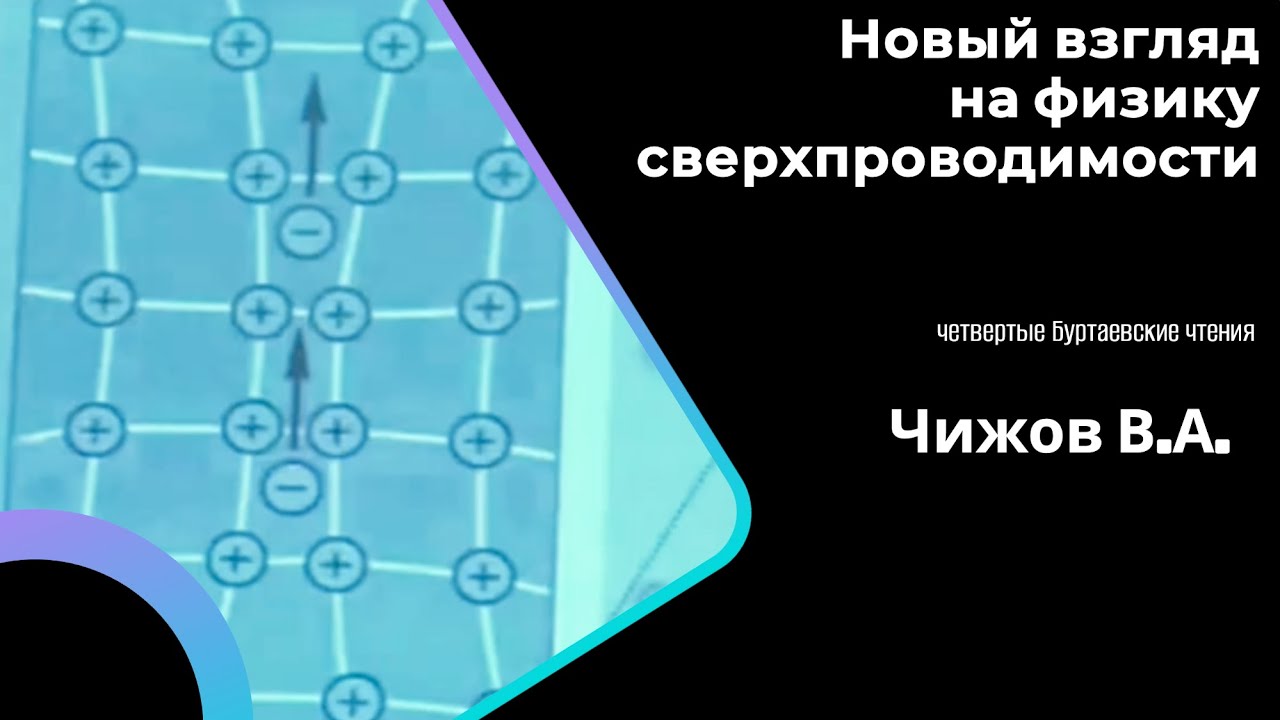
Such attraction effectively bounds electrons into pairs called Cooper pairs.
As we can see, a Cooper pair is a pair of bound electrons in a superconductor. One more association can be observed. That is all brilliant. But still what is the reason for the attraction between the electrons in a superconductor? After all, electrons, being negatively like charged particles, according to Coulomb's law must repel each other. Such Coulomb repulsion does indeed take place in a vacuum. In the case of superconductor or a metal electrons do not move in a vacuum, but in a crystal lattice. Naturally, when they move, they deform the lattice. The lattice deformation allows them to lower the potential energy and it is physically advantages. Because of this the electrons will be attracted to the place of deformation. Such a scenario is possible only in quantum mechanics, as well as the flow of this "gas" of Cooper pairs through a crystal lattice without scattering. Thus, deformation of Cooper pairs or Cooper pairing of electrons in the superconductor is advantages from an energy point of view, since this lowers the energy of the system. Let us conclude: a Cooper pair is a convenient model for describing the superconductivity phenomenon and the breakdown of Cooper pairs is the main reason to destroy superconductivity. One day scientists will manage to observe Cooper pairs experimentally. Perhaps, it will be one of our subscribers!
Thank you for your attention, like this video and share it with your friends. What next interesting phenomena would you like to be considered? Please share your ideas in the comments below. See you soon. Going to be interesting!
Up Next
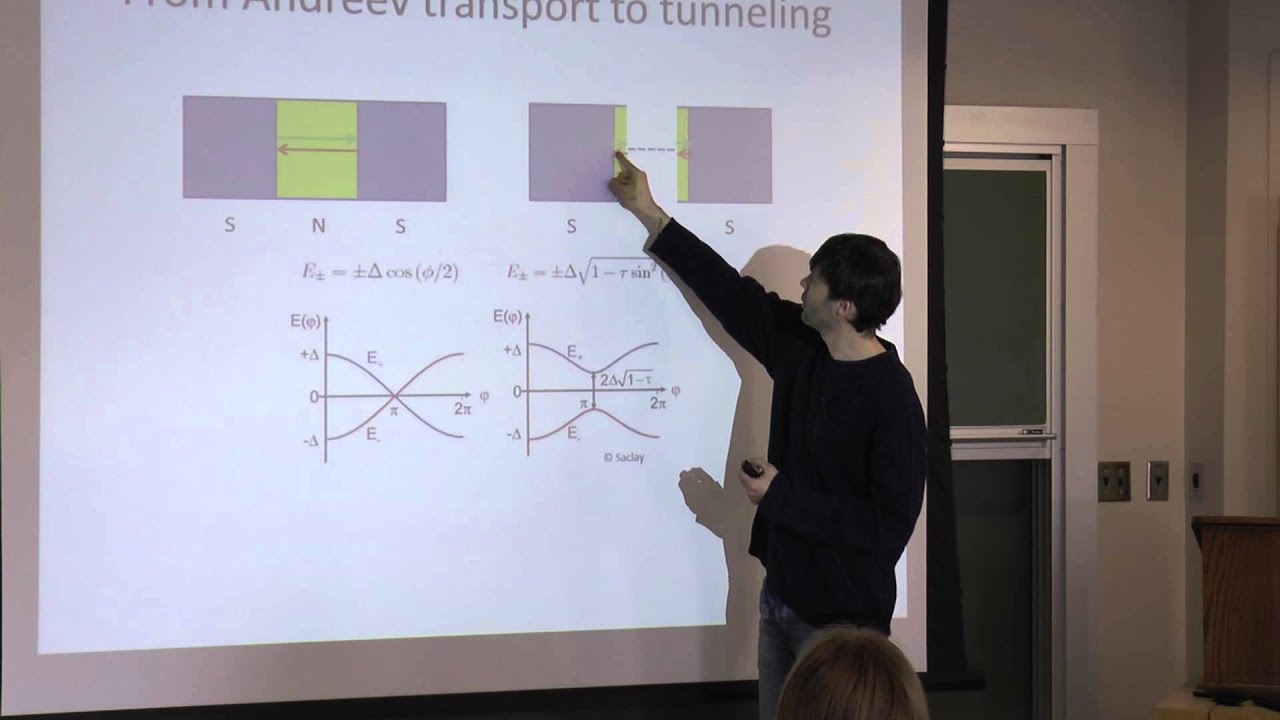
78:12
Quantum Transport Lecture 14: Josephson Effects & Supercurrent
@spinespresso
58.5K views•2013-03-07

12:53
21cm Hyperfine Transition in Neutral Hydrogen: Radio Astronomy Basics
@AaronRobertParsons
12.4K views•2011-10-13

32:32
NMR Spin Physics I: Zeeman Effect, Resonance Condition & Larmor Frequency
@nptel-indianinstituteofsci8064
2.3K views•2024-01-17

27:14
Entropy and the Second Law of Thermodynamics Explained
@veritasium
27.5M views•2023-07-01
Related Study Plans & Knowledge Roadmaps
Structured learning paths in Physics
physics
Nuclear Physics (Decay, Fission & Reactors)
01Atomic Structure and the Binding Force
02Radioactive Decay and Half-Life
03Nuclear Fission Mechanics and Chain Reactions
+ 2 more learning modules
12h5 modules
Explore Roadmap
physics
Soft Matter (Polymers, Colloids & Rheology)
01Foundations of Soft Matter & Thermal Forces
02Polymer Physics and Macromolecules
03Colloids, Surfactants, and Self-Assembly
+ 2 more learning modules
38h5 modules
Explore Roadmap
physics
Analytical Mechanics: Lagrangian & Hamiltonian
01Mathematical Foundations: Calculus of Variations
02From Newtonian Mechanics to Constraint Dynamics
03The Principle of Least Action & Lagrangian Mechanics
+ 3 more learning modules
28h6 modules
Explore Roadmap
physics
General Relativity (Spacetime & Cosmology)
01Foundations of Relativity: Special Relativity
02The Geometry of Spacetime: Equivalence Principle & Curvature
03Einstein's Field Equations: The Mathematics of Gravity
+ 2 more learning modules
55h5 modules
Explore Roadmap