





















Multiple regression extends simple linear regression by fitting a plane or higher-dimensional surface to data rather than just a line, allowing researchers to incorporate multiple predictor variables simultaneously; the core calculations for R-squared, F-value, and p-value remain fundamentally the same as in simple regression, with the key difference being that the degrees of freedom for the fitted model (P_fit) increases to match the number of parameters being estimated, enabling comparison between models with different numbers of predictors to determine if additional variables provide statistically significant improvements in prediction accuracy.
Multiple Linear Regression Explained Simply | Statistics Tutorial
Added:Understanding of Simple Linear Regression, including how independent and dependent variables relate through a single slope and intercept.
Familiarity with basic hypothesis testing concepts, including null/alternative hypotheses, p-values, and t-distributions.
Concept of basic R-squared (Coefficient of Determination) and how it measures the proportion of variance explained by a single predictor.
Basic knowledge of residuals (the difference between observed and predicted values) and standard error.
Diagnosing and addressing violations of regression assumptions (such as multicollinearity using Variance Inflation Factors, heteroscedasticity, and non-normality of residuals).
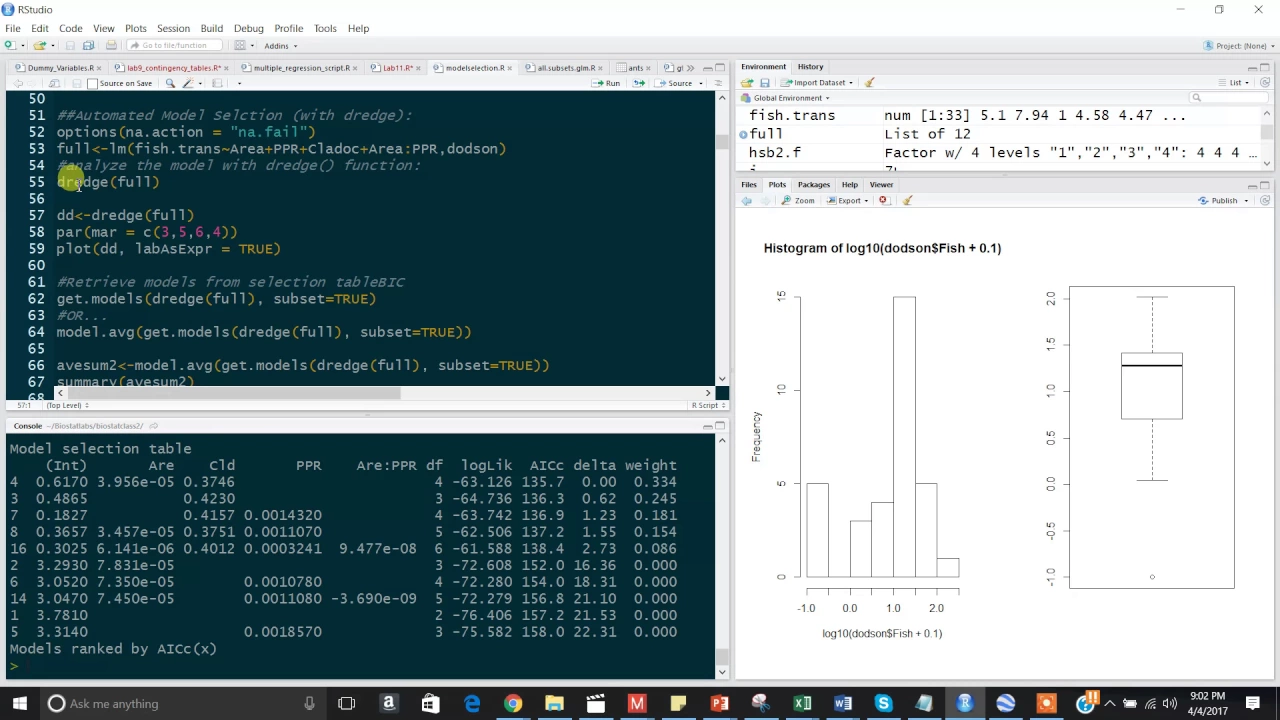
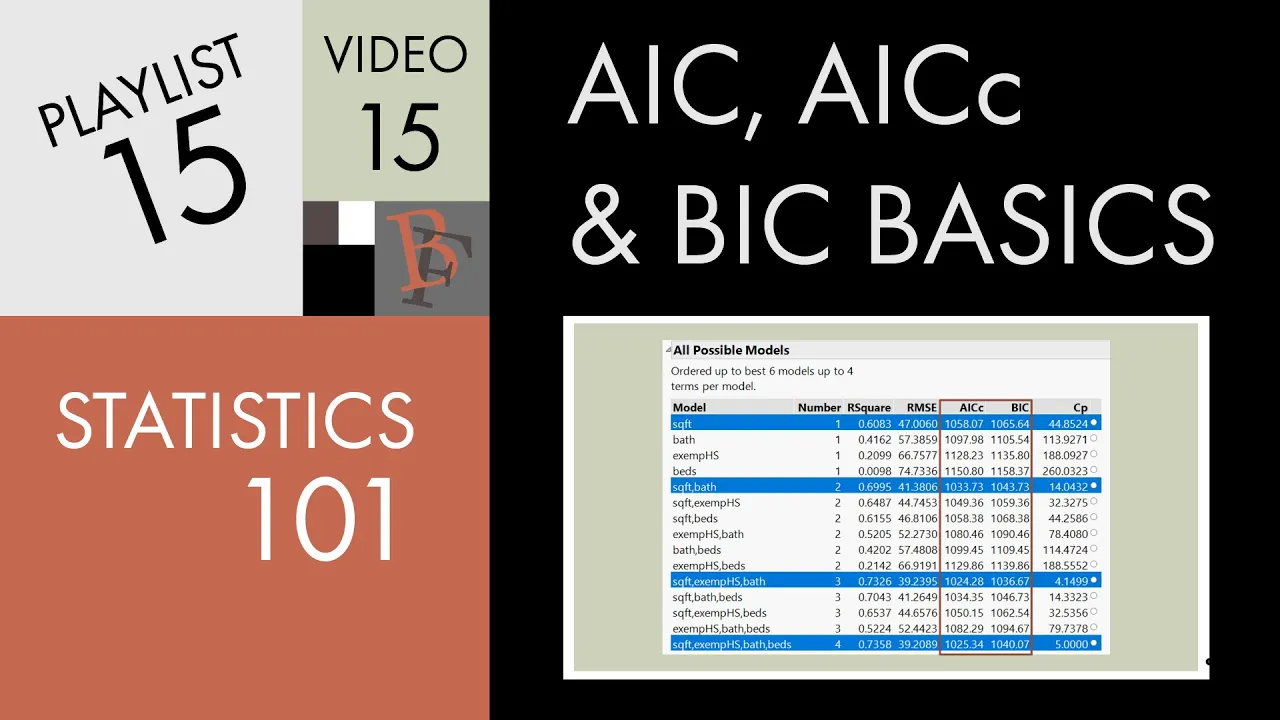
Model selection strategies, including Stepwise Regression, AIC (Akaike Information Criterion), and BIC (Bayesian Information Criterion) for finding the optimal subset of predictors.
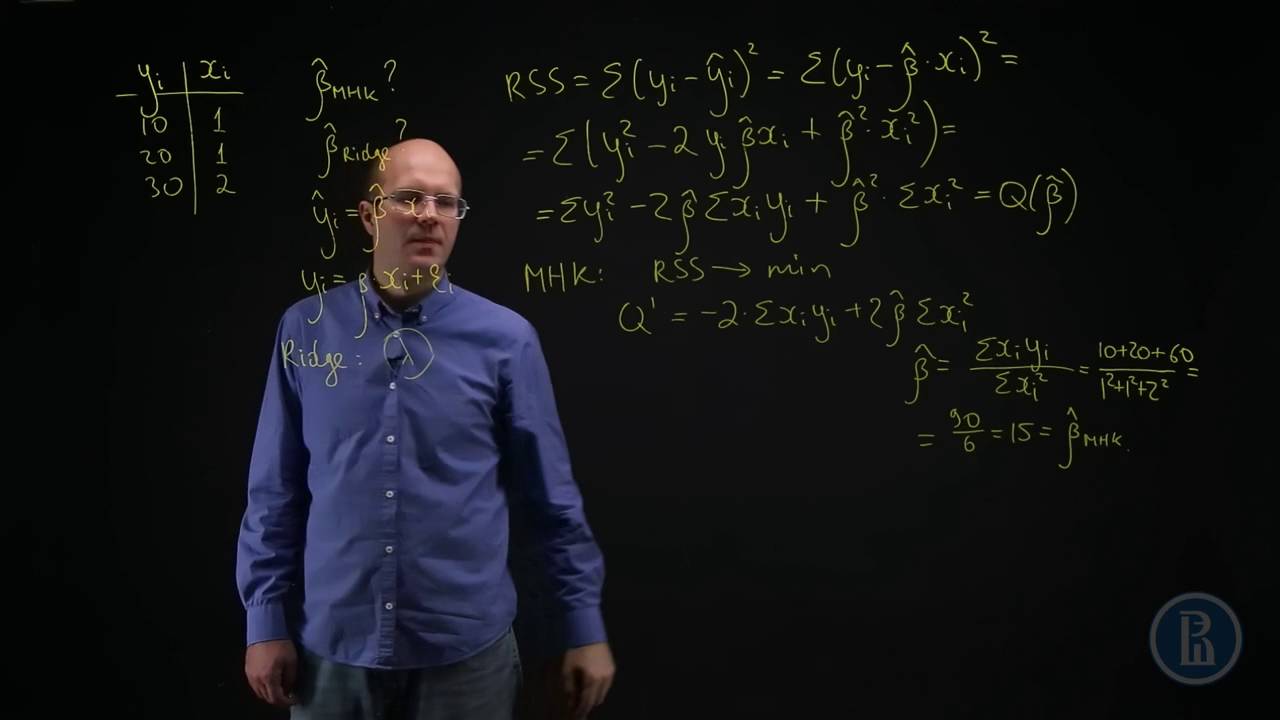
Regularization techniques such as Ridge (L2) and Lasso (L1) regression to handle multicollinearity and prevent overfitting.
Transitioning to Generalized Linear Models (GLMs), starting with Logistic Regression for binary classification outcomes.
633.6K views7.1Klikes5:25Original Release: 2017-10-30
StatQuest, StatQuest, StatQuest, StatQuest! Yeah!
StatQuest!
Hello, I'm Josh Stommer and welcome to Stat Quest. StatQuest is brought to you by the friendly folks in the genetics department at the University of North Carolina at Chapel Hill.
Today we're gonna be talking about multiple regression, and it's gonna be clearly explained.
This StatQuest builds on the one for linear regression.
So, if you haven't already seen that one yet, check it out. Alright, now let's get to it!
People who don't understand linear regression tend to make a big deal out of the "differences" between simple and multiple regression.
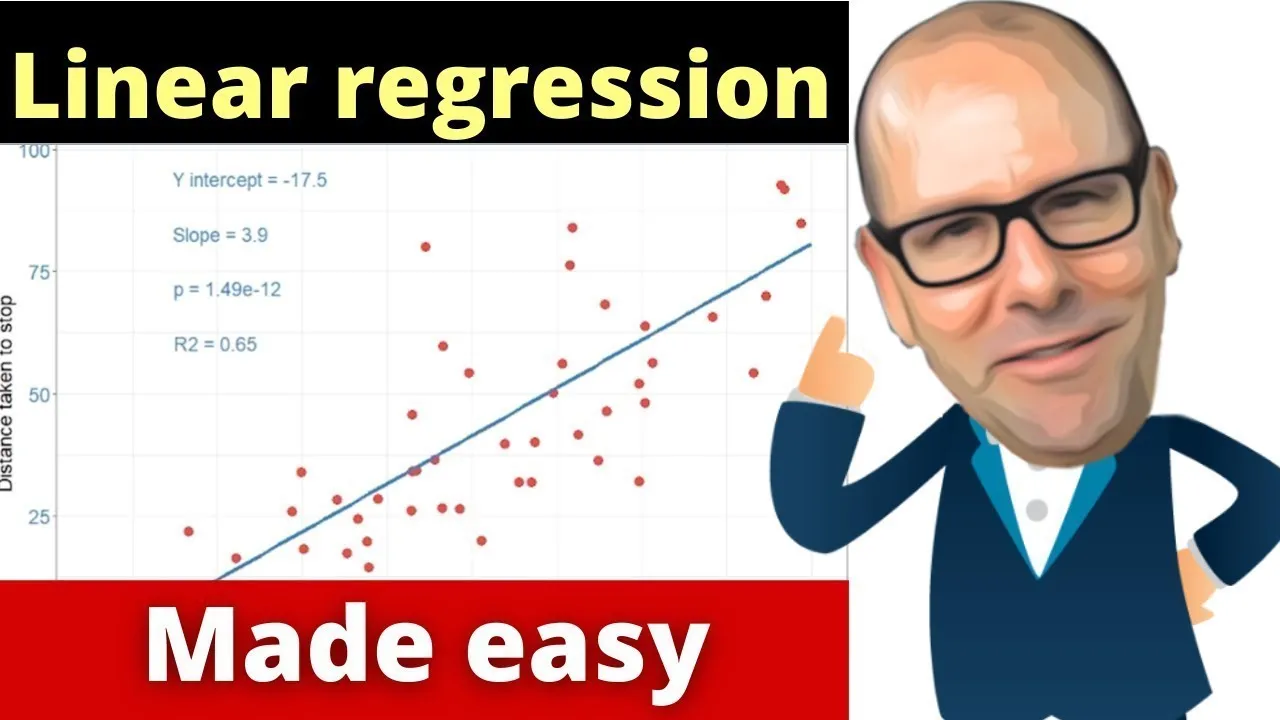
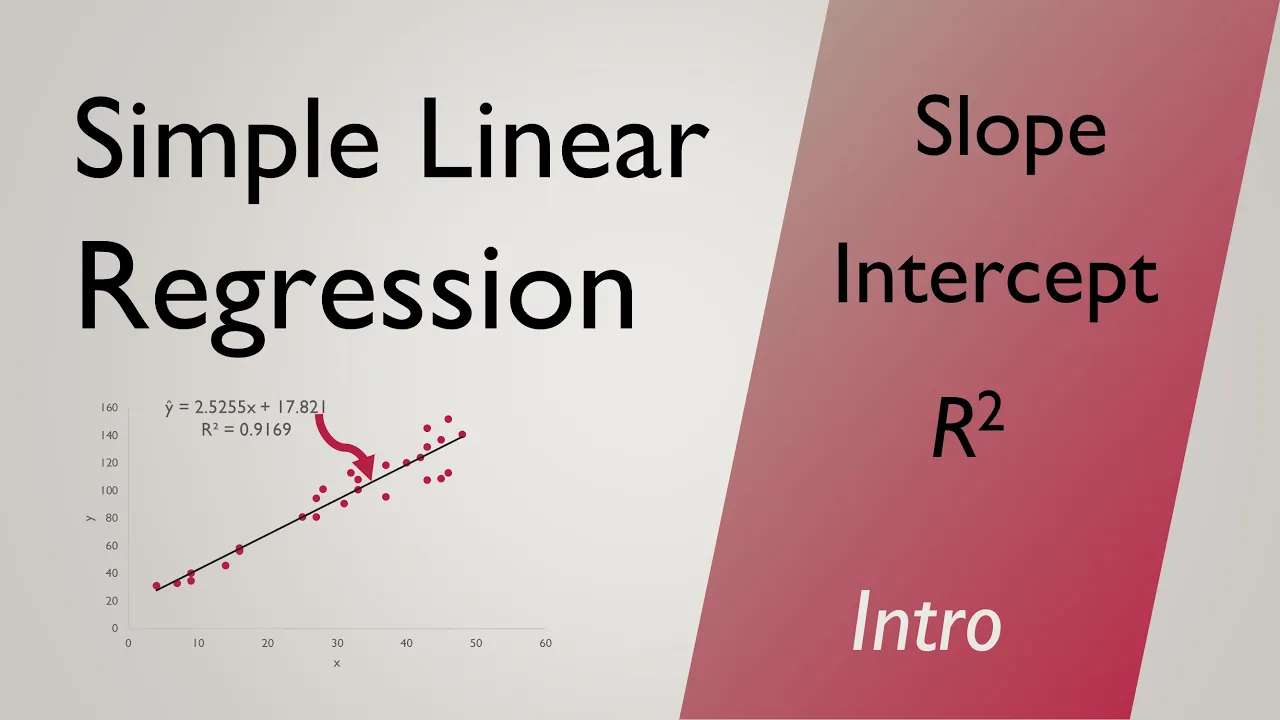
It's not a big deal and a StatQuest on simple linear regression already covered most of the concepts we're going to cover here. You might recall from the StatQuest on the linear regression that simple regression is just fitting a line to data.
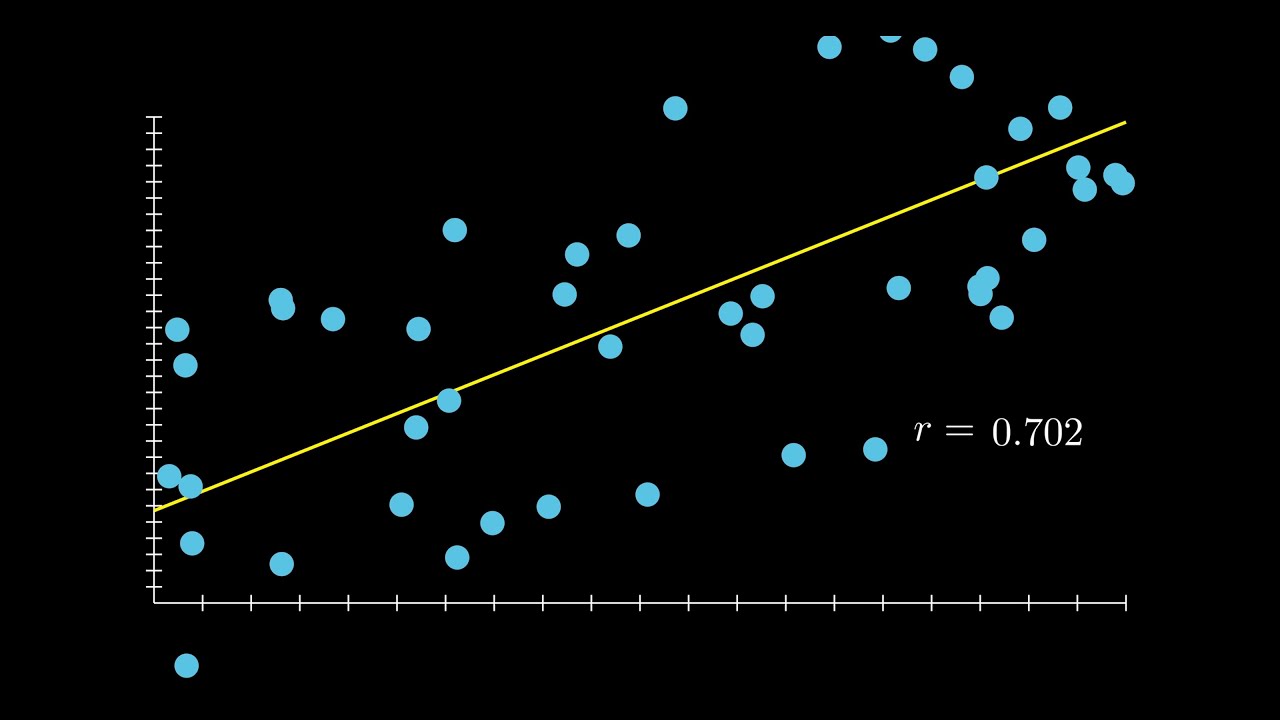
We're interested in the r-squared and the p-value to evaluate how well that line fits the data. In that same stat quest. I also showed you how to fit a plane to data.
Well, that's what multiple regression is. You fit a plane or some higher-dimensional object to your data. A term like higher-dimensional object sounds really fancy and complicated, but it's not. All it means is that we're adding additional data to the model. In the previous example all that meant was that instead of just modeling body length by mouse weight, we modeled body length using mouse weight and tail length. If we added additional factors like the amount of food eaten or the amount of time spent running on a wheel, well those would be considered additional dimensions, but they're really just additional pieces of data that we can add to our fancy equation.
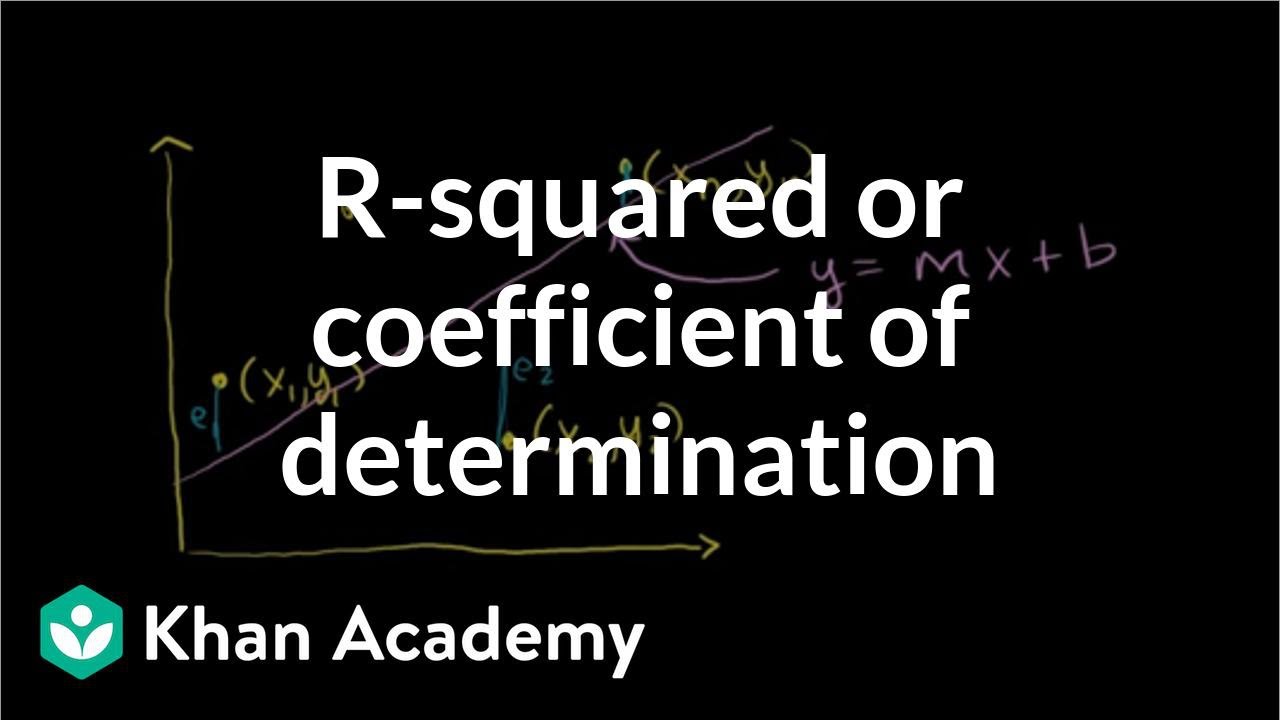
So, from the StatQuest on linear regression you may remember the first thing we did was calculate R squared.
Well, the good news is calculating r squared is the exact same for both simple regression and multiple regression. There's absolutely no difference.
Here's the equation for R squared, and we plug in the values for the sums of squares around the fit and then we plug in the sums of squares around the mean value for the body length.
Regardless of how much additional data we add to our fancy equation, if we're using it to predict body lengths, then we use the sums of squares around the body length.
One caveat is for multiple regression you adjust r-squared to compensate for the additional parameters in the equation.
We covered this in the StatQuest for linear regression, so it's no big deal.
Now we want to calculate a p-value for our r-squared.
Calculating F And the p-value is pretty much the same. You plug in the sums of squares around the fit and then you plug in the sums of squares around the mean.
For simple regression P fit equals 2 because we have two parameters in the equation that least-squares has to estimate. And for this specific example the multiple regression version of P fit equals 3 because least-squares had to estimate three different parameters. If we added additional data to the model for example the amount of time a mouse spins running on a wheel then we have to change P fit to equal the number of parameters in our new equation. And for both simple regression and multiple regression, P mean equals 1 because we only have to estimate the mean value of the body length.
So far we have compared this simple regression to the mean and this multiple regression to the mean, but we can compare them to each other. And this is where multiple regression really starts to shine.
This will tell us if it's worth the time and trouble to collect the tail length data because we will compare a fit without it, the simple regression, to a fit with it, the multiple regression.
Calculating the F value is the exact same as before only this time we replace the mean stuff with the simple regression stuff.
So instead of plugging in the sums of squares around the mean, we plug in the sums of squares around the simple regression. Ane instead of plugging in P Mean we plug in P Simple, which equals the number of parameters in the simple regression.
That's 2. And then we plug in the sums of squares for the multiple regression and we plug in the number of parameters in our multiple regression equation.
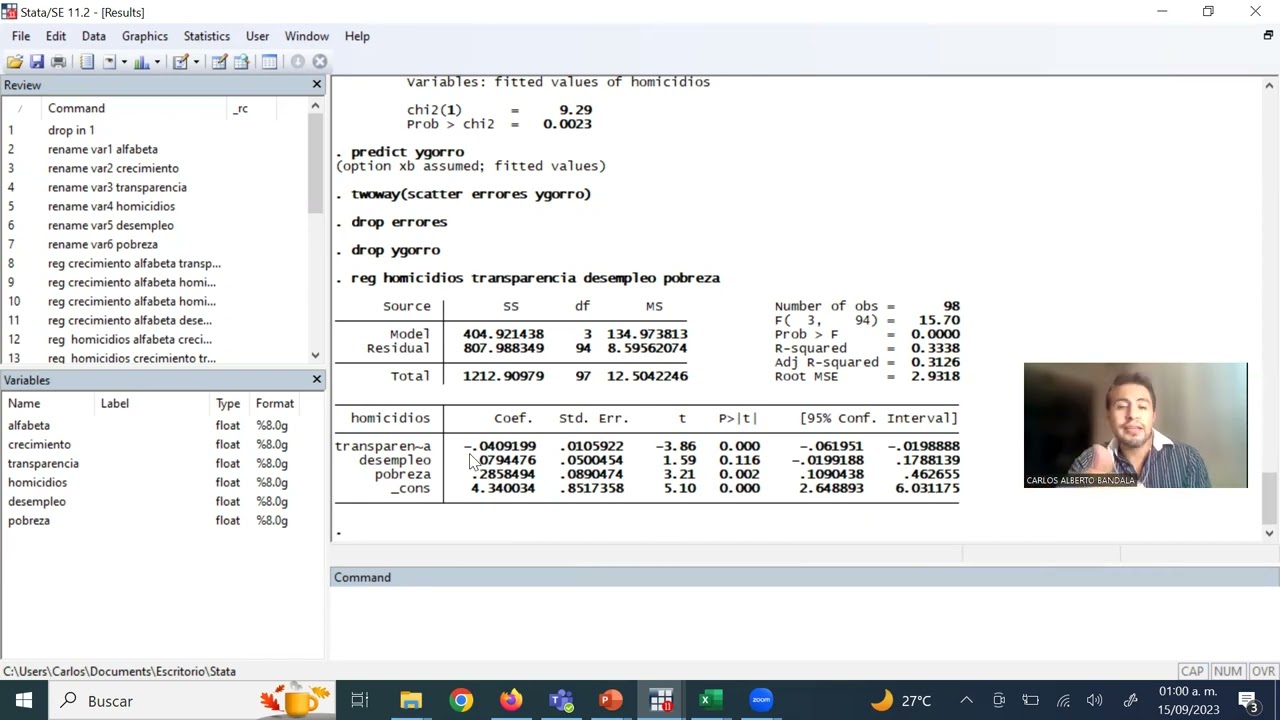
BAM! If the difference in r squared values between the simple and multiple regression is big and the p value is small then adjusting tail length to the model is worth the trouble Hooray, we've made it to the end of another exciting StatQuest! Now for this StatQuest I've made another one that shows you how to do multiple regression in R. It shows all the little details and sort of what's important and what's not important about the output that R gives you.
So, check that one out and don't forget to subscribe!
Ok, until next time, Quest on!
Up Next
27:26
Linear Regression Explained: Least Squares & R-squared
@statquest
553.5K views•2022-11-18

4:43
Elliptic Curve Cryptography Explained: ECC, ECDSA, ECDH
@PracticalNetworking
28.5K views•2024-10-21

16:14
Mutual Information Explained: A Clear Step-by-Step Guide
@statquest
164.6K views•2023-02-06

6:00
The Mathematical Impossibility of Accurate World Maps
@Vox
23.3M views•2016-12-02
Related Study Plans & Knowledge Roadmaps
Structured learning paths in Mathematics
mathematics
Tensor Calculus: Vectors to Riemann Curvature
01Mathematical Foundations: Linear Algebra & Calculus
02Covectors, Dual Spaces, and Tensor Basics
03The Metric Tensor and Index Gymnastics
+ 2 more learning modules
40h5 modules
Explore Roadmap
mathematics
Gödel's Incompleteness: Logic, Proofs & Limits
01Introduction to Formal Systems & Hilbert's Dream
02Set Theory, Cardinality, and Cantor's Diagonal Argument
03Arithmetization and Gödel Numbering
+ 2 more learning modules
14h5 modules
Explore Roadmap
mathematics
Galois Theory: Fields, Groups & Solvability
01Foundations of Abstract Algebra: Groups & Fields
02Polynomials & Field Extensions
03Splitting Fields & Symmetries
+ 2 more learning modules
24h5 modules
Explore Roadmap
mathematics
Non-Euclidean Geometry: Models & Geodesics
01Euclid's Fifth Postulate and the Birth of New Geometries
02Hyperbolic Space and the Poincaré Disk Model
03Geodesics: Defining Straight Lines in Curved Spaces
+ 2 more learning modules
15h5 modules
Explore Roadmap