



















![Cosa è il bang sonico [Weesk 36]](https://i.ytimg.com/vi_webp/FvjXEMREnoo/maxresdefault.webp)

The four forces of flight are lift (upward force generated by air pressure differences over an airfoil), weight (downward gravitational force), drag (backward resistance from air), and thrust (forward propulsion). Lift is created when faster-moving air above a wing creates lower pressure than slower-moving air below, following Bernoulli's principle; weight affects all objects equally at 9.81 m/s² regardless of mass; drag depends on shape with streamlined objects experiencing less resistance; and thrust is produced by propellers, jet engines, or rocket engines that push air backward to move forward.
The Four Forces of Flight Explained | Physics of Airplanes
Added:Newton's Laws of Motion: Understanding how forces interact, specifically action-reaction (Third Law) and the relationship between force, mass, and acceleration (Second Law).
Basic Concept of Gravity and Mass: Knowing how gravitational pull creates weight and how mass resists changes in motion.
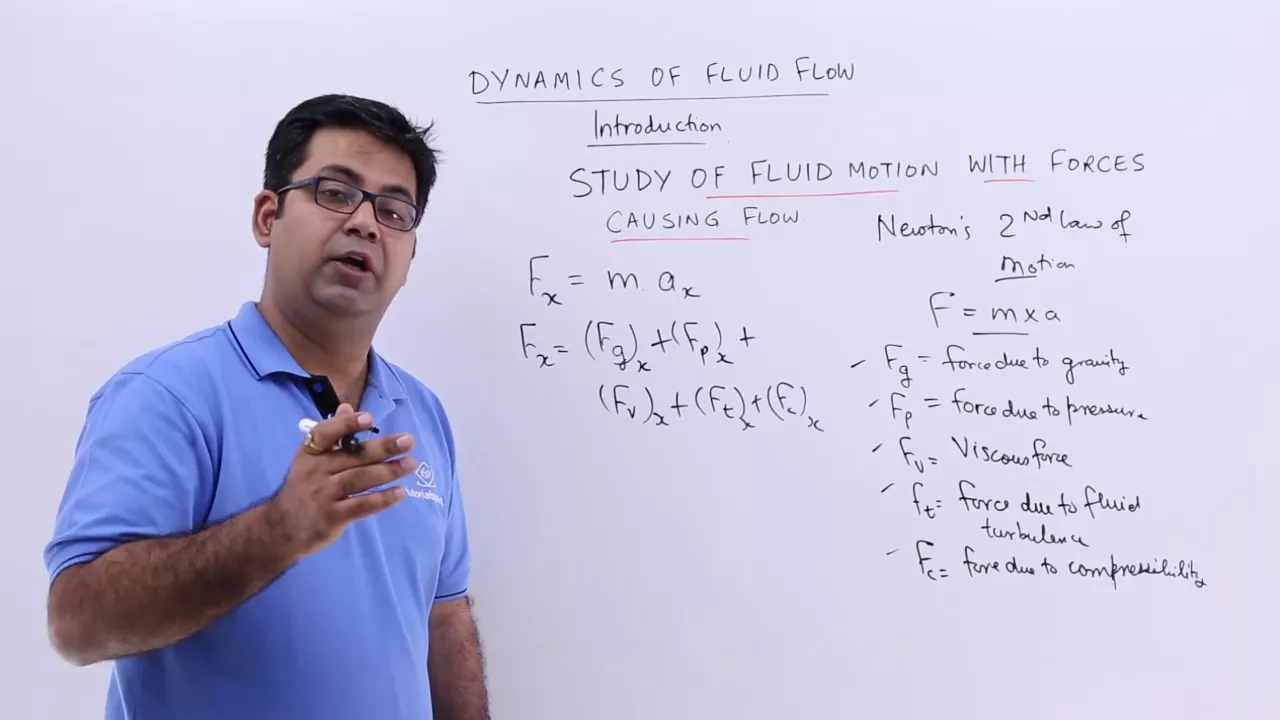
Fluid Dynamics Basics: Comprehending that air behaves as a fluid with mass, density, and pressure that can exert forces on solid objects.
Friction and Resistance: Understanding the general concept of friction as a force that opposes relative motion between surfaces, which is fundamental to grasping drag.
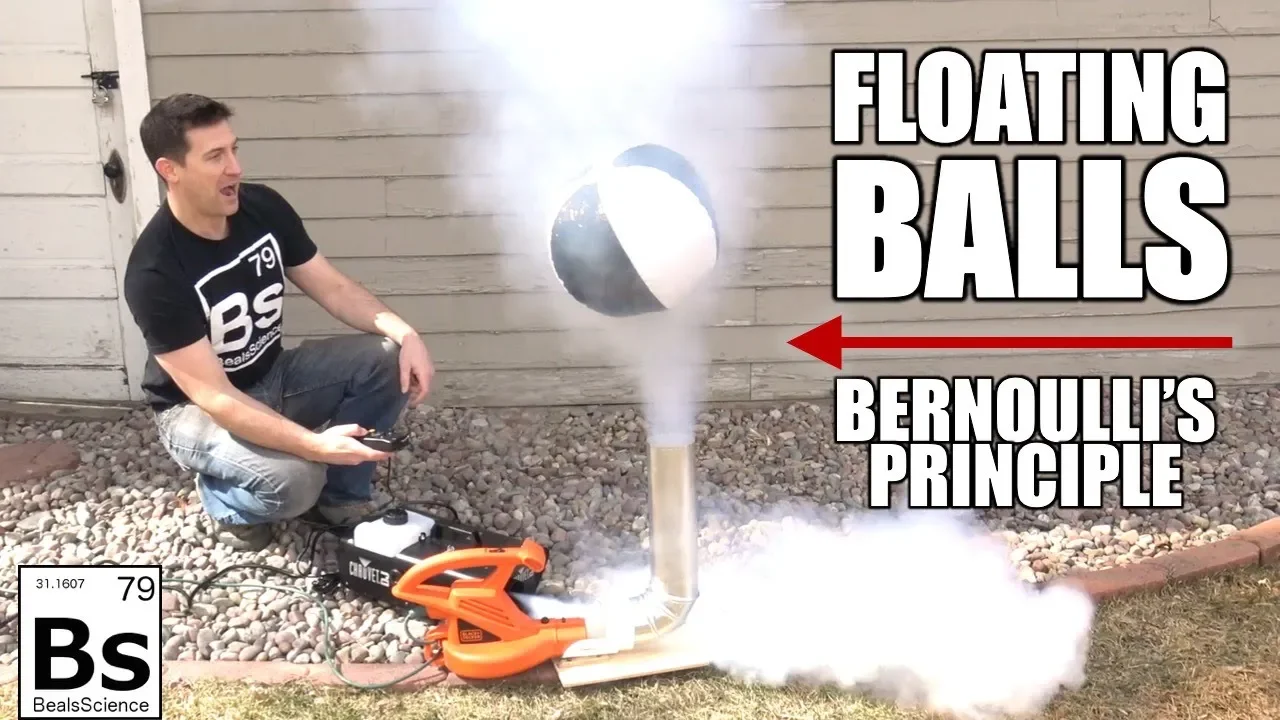
Bernoulli's Principle and the Coandă Effect: Investigating the underlying fluid dynamics theories that explain how pressure differences generate lift on a wing.
Airfoil Design and Angle of Attack: Exploring how the geometric shape of a wing and its angle relative to oncoming air affect lift-to-drag ratios and cause aerodynamic stall.
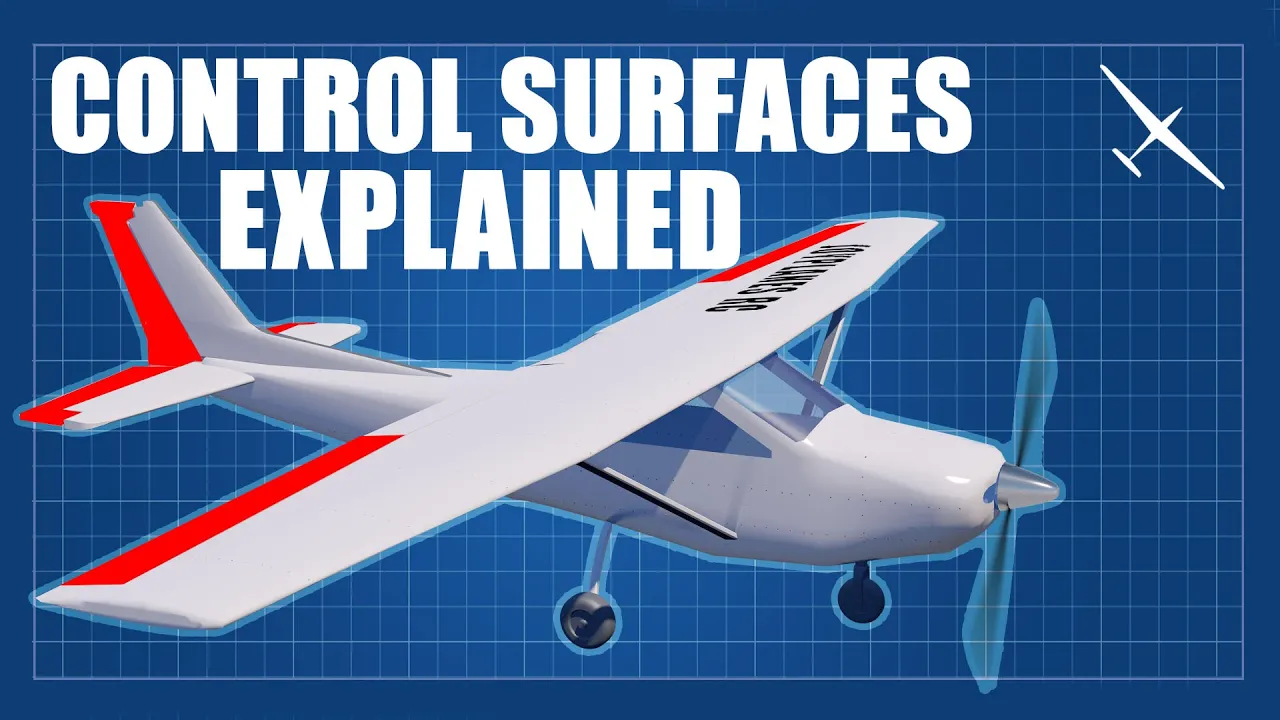
Aircraft Control Surfaces: Learning how pilots manipulate ailerons, elevators, and rudders to control pitch, roll, and yaw by altering the balance of the four forces.
Supersonic Aerodynamics: Studying how the four forces of flight behave differently at and beyond the speed of sound, including the effects of shockwaves and wave drag.
126K views1.1Klikes5:03Original Release: 2020-09-10
- Hi, everybody! My name is Annie and as an Explainer here at the Air and Space Museum, I teach visitors about all sorts of ideas and artifacts that have to do with human flight.
Today I will be sharing with you some experiments, all focused on the four forces of flight.
So first, what is a force?
A force is essentially a push or a pull.
So today we'll be talking about the forces of lift, which pushes things up; weight, which pulls things down; drag, which pulls things back; and thrust, which pushes things forward.
So, let's start with lift.
In order to understand lift, we first need to understand air pressure.
Air is not nothing.
Air is made up of molecules that have mass.
And because air has mass, Earth's gravity attracts it and gives it weight.
And because it has weight, the air all around us exerts a force.
And, in fact, that force at sea level is about 14.7 pounds per square inch.
Now, how does air pressure pushing down help planes go up?
We can investigate using a Bernoulli strip, like this one here.
You can make your own by cutting a piece of paper to about the size of a bookmark When you blow across the top of the piece of paper, you might expect it to go down, but it actually goes up.
If you don't believe me, you can try it for yourself, like so.
[blowing into paper] See? This illustrates Bernoulli's principle-- faster moving air has a lower air pressure, and slower moving air exerts a higher pressure.
So when we blow across the top of the strip, we are creating a faster moving stream of air, which exerts less pressure than the slower moving air below it.
If we want to see how this applies to an airplane, what we need to do is take the wing of an airplane and slice it up like a loaf of bread to see what the shape of the slices would look like.
This shape is called an airfoil.
The shape might look a little familiar, like the top of our Bernoulli strip.
And it works the same way.
When air encounters this shape, the air that moves over the top moves in a faster stream than below allowing the plane to be pushed up into the sky.
This is how we generate lift.
Now, what goes up must come down, which brings us to our second force of flight, weight.
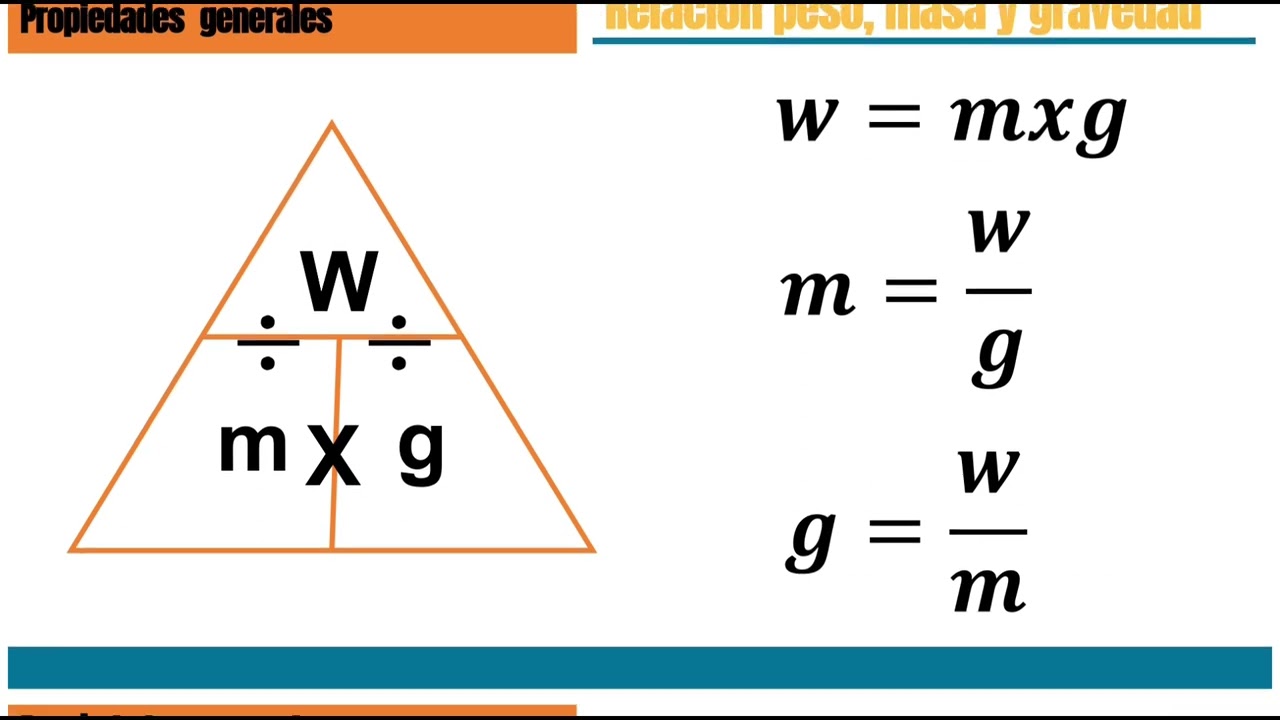
Weight is generated by Earth's gravity, which attracts things with mass and pulls them down towards its surface.
To investigate the rate at which this happens, we are going to use a golf ball and a ping-pong ball.
I am going to drop them at the same time and we are going to see which one hits the ground first-- the dense golf ball or the light and airy ping-pong ball.
Ready?
[balls bounce on table] They actually hit at the same time!
This is because Earth's gravity affects everything at the same rate of 9.81 meters per second squared.
[balls bounce on table] Now, let's try that experiment again, but this time with a golf ball and the Bernoulli strip and see which one hits the ground first. Ready?
[ball bounces on table] Did they hit the ground at the same time? No, they didn't.
And that is because the Bernoulli strip has this flat and wide shape, so it's encountering a lot more air resistance on its way down than this nice round golf ball, which is very aerodynamic.
If I were to make the Bernoulli strip the same shape as the golf ball, now they will fall at the same rate [ball bounces on table] because its shape is no longer causing our third force of flight, drag.
Drag is the force that pulls things backwards.
Aircrafts are generally designed to reduce drag and be as aerodynamic as possible, like our golf ball.
But sometimes aircraft or the people inside them might want to increase drag, such as when landing or when using a parachute. Like so.
So, we've talked about lift, weight, and drag.
So the only force we are missing is the thing that pushes things forward, thrust!
The three most common types of thrust are propellers, jet engines, and rocket engines.
Today, we're going to focus on the propeller.
Propellers are powered by piston engines, which make them spin.
If we look at the shape of the propeller blades, you may recognize our old friend, the airfoil but with a twist, literally.
The spinning propeller creates faster moving air in the front, which exerts less power than the slower moving air behind.
And as we remember from Bernoulli's principle, that is going to push the plane forward.
If we turn it up like a helicopter, it will have the same effect.
With a lower pressure above the propeller and a higher pressure below, and the effect will be pushing the vehicle up.
And with that it is time to conclude our demonstration.
Today we have talked about the four forces of flight, lift, weight, drag, and thrust, and how they help planes fly and land.
So, now we'd like to know, have you ever flown on a plane before and if so, did you notice any of these four forces? Which ones?
Let us know in the comments down below.
And if you like this video, follow STEM in 30 on Facebook and Twitter, and subscribe to the National Air and Space Museum's YouTube channel.
Have a great day, everybody!
Up Next
7:19
Circulation Theory of Lift | Kutta-Joukowski Theorem & Kutta Condition Explained
@Drganguli
1.6K views•2023-08-13

12:53
21cm Hyperfine Transition in Neutral Hydrogen: Radio Astronomy Basics
@AaronRobertParsons
12.4K views•2011-10-13

32:32
NMR Spin Physics I: Zeeman Effect, Resonance Condition & Larmor Frequency
@nptel-indianinstituteofsci8064
2.3K views•2024-01-17

27:14
Entropy and the Second Law of Thermodynamics Explained
@veritasium
27.5M views•2023-07-01
Related Study Plans & Knowledge Roadmaps
Structured learning paths in Physics
physics
Nuclear Physics (Decay, Fission & Reactors)
01Atomic Structure and the Binding Force
02Radioactive Decay and Half-Life
03Nuclear Fission Mechanics and Chain Reactions
+ 2 more learning modules
12h5 modules
Explore Roadmap
physics
Soft Matter (Polymers, Colloids & Rheology)
01Foundations of Soft Matter & Thermal Forces
02Polymer Physics and Macromolecules
03Colloids, Surfactants, and Self-Assembly
+ 2 more learning modules
38h5 modules
Explore Roadmap
physics
Analytical Mechanics: Lagrangian & Hamiltonian
01Mathematical Foundations: Calculus of Variations
02From Newtonian Mechanics to Constraint Dynamics
03The Principle of Least Action & Lagrangian Mechanics
+ 3 more learning modules
28h6 modules
Explore Roadmap
physics
General Relativity (Spacetime & Cosmology)
01Foundations of Relativity: Special Relativity
02The Geometry of Spacetime: Equivalence Principle & Curvature
03Einstein's Field Equations: The Mathematics of Gravity
+ 2 more learning modules
55h5 modules
Explore Roadmap