






![[Aerodynamics: Inviscid] What are potential flows?](https://i.ytimg.com/vi/GnKcdhtKExw/maxresdefault.jpg)





![Thin airfoil theory [Aerodynamics #12]](https://i.ytimg.com/vi_webp/pXLcDYt2YSQ/maxresdefault.webp)


![Lifting line theory [Aerodynamics #16]](https://i.ytimg.com/vi_webp/sAd55IRHNKM/maxresdefault.webp)



![[CURSO GRATUITO] Aerodinâmica - Aula 4](https://i.ytimg.com/vi/QWvHesuebFM/maxresdefault.jpg)


Circulation (γ) is defined as the line integral of velocity along a closed curve around an airfoil, given by γ = ∮C V cos(θ) ds, and according to the Kutta-Joukowski theorem, lift per unit span equals ρVγ, where ρ is fluid density and V is freestream velocity; lift is generated when uniform flow combines with circulatory flow to create higher velocities above and lower velocities below the airfoil, resulting in lower pressure on the upper surface and higher pressure on the lower surface, with the precise circulation strength being determined by the Kutta condition that ensures smooth flow separation at the trailing edge.
Circulation Theory of Lift | Kutta-Joukowski Theorem & Kutta Condition Explained
Added:Basic fluid dynamics principles, specifically Bernoulli's Equation and the relationship between fluid velocity and pressure.
The mathematical concept of vector calculus line integrals and the definition of circulation (Gamma).
Potential flow theory, including the assumptions of inviscid, incompressible, and irrotational flow.
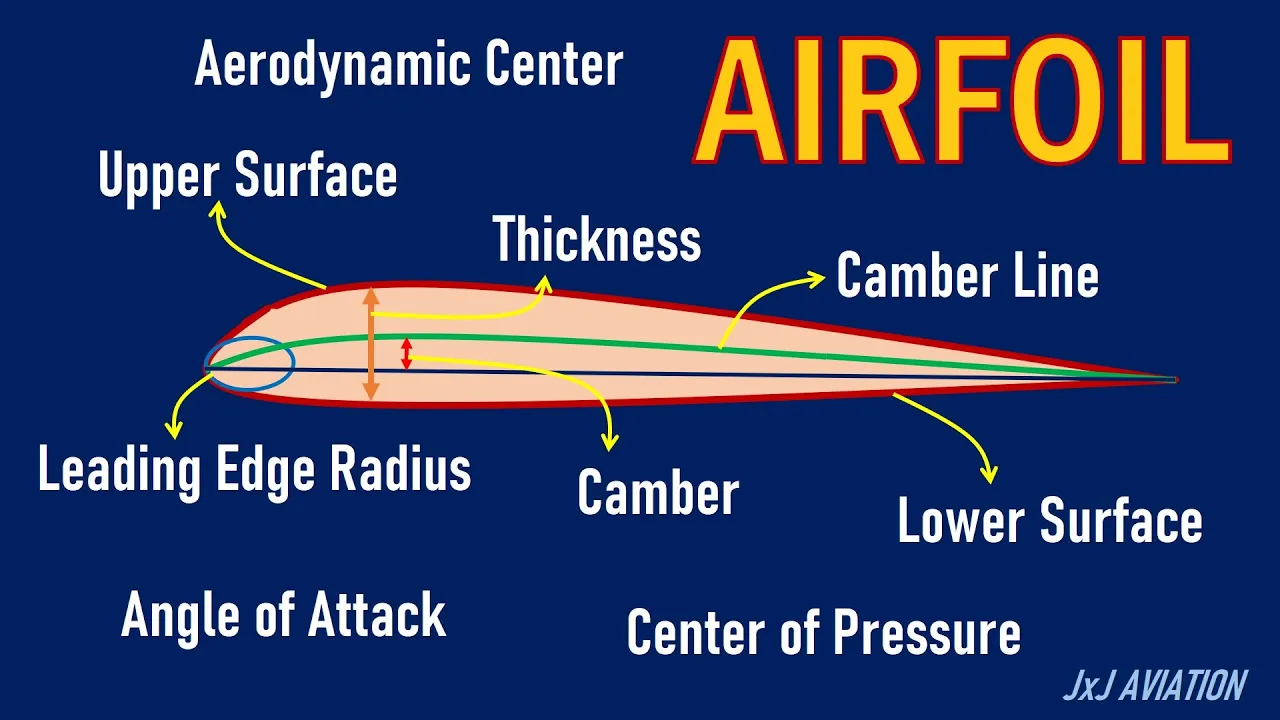
Standard airfoil terminology, such as chord line, camber, leading edge, and trailing edge.
Conformal mapping techniques, specifically the Joukowski Transformation, to mathematically map flow around a cylinder to flow around an airfoil.
Thin Airfoil Theory to analytically calculate the lift coefficient and pitching moments for thin aerodynamic shapes.
Prandtl's Lifting-Line Theory to extend 2D circulation concepts to 3D finite wings, addressing downwash and induced drag.
Boundary layer theory and viscous flow analysis to understand flow separation (stall) where ideal Kutta condition assumptions break down.
1.6K views27likes7:19Original Release: 2023-08-13
foreign so today we are going to discuss the lecture 8 on our basic aerodynamics course and we are going to discuss particularly the concept of circulation which is important for figuring out how lift is generated and also we are going to look at the quota condition which is required to calculate circulation around an airfoil so these two important Concepts will be there in today's lecture now let us look at the circulation theory of lift so for example we have an air file here and this is placed in flow so now if we consider this region around this flow here in this region we can essentially Define a circulation and this is essentially given by this symbol gamma here and this is the integral on this curve c v cos Theta d s where V is the velocity d s is the tangent here and Theta is the angle between them so essentially that's the mathematical definition of circulation and if we are able to calculate this quantity then according to quota jokowsky theorem we can calculate the lift per unit span as rho V into circulation so this important theorem is there which is relating the lift per unit span to circulation and interestingly you can calculate circulation also from this year if you know the lift the density and the velocity now these particular equations these are all derived from incompressible flow Theory which is there in most aerodynamic textbooks and this deals with the method to calculate circulation now the circulation theory is compatible with the true physical nature of flow on the airfoil and to see that let us visualize the true flow over the airfoil as a superposition of uniform flow and circulatory flow and I'm going to explain this in the next slide so right now let's think that this is what is happening so the circulatory flow is clockwise and when we add the circulatory flow to the uniform flow what we get is the higher velocity above the airfoil and lower velocity below the airfoil which is actually what we see whenever we do any internal experiments so this is what we essentially mentioned in the previous Slide the uniform flow plus the circulation is equal to a generation of lift here and this is in the clockwise Direction so what will happen is that this is going to cause a lower pressure on the higher surface than a higher pressure on the lower surface so this is the typical result of this combination of uniform flow and pure circulation and this is going to create a lift in the upward Direction so this is what we see in an airfall section when it is placed in flow now how much is this circulation so the strength of the circulation is the precise value which when we add it to uniform flow makes the actual flow on the airfoil leave the trailing Edge smoothly so this is how you calculate the circulation there is going to be a certain value of circulation which when you add it to the uniform flow is going to enforce the Cuda condition or in Reverse if you enforce the Cuda condition then essentially you can calculate the value of circulation which is there in the airfoil so now these concepts are very useful some of them are coming from potential flow Theory lot of complex analysis is used in the kuta jokowsky methods and so on and this is a large component of the traditional aerodynamics which yields nice clothes from solutions to many problem now this is important because the generation of lift actually occurs because of circulation and therefore the circulation theory of lift gives you a good insight into what's happening on the real airfoil system there is a uniform flow which is coming and there is a circulation which is getting created so that the quota condition is satisfied and that is essentially going to result in the generation of lift on the airfoil which is your primary objective as far as flying the aircraft is concerned so these were some important Concepts now this is very important even in computational fluid dynamics you have to enforce quota condition and so on so it will always be there as far as the aerodynamic and numerical methods for solving aerodynamic problems are concerned so with this I am going to end this very simple lecture series which was the introduction to aerodynamics and the purpose of this was essentially to give people in first year college and even in class 11 and 12 of the high school system an idea about how airplanes fly and some of the very basic things now many of the things I have tried to explain in very simple terms so the conversions and cornea shanties on fluid dynamics may not be very pleased with them but it's pretty useful for actual design purpose and to know physically as to how the aircraft fly and how aircraft can be designed because there are a lot of people nowadays designing small aircraft designing drones designing microwave Vehicles who need a basic idea about aerodynamics they need some basic knowledge about the different equations and particularly they need to know what is clcmcd what is the leaf generated by the airfoil section and the drag and how to use the drag to essentially calculate the engine or power plant required for the aircraft and also how much lift is required for the aircraft to take off so these two concepts are very important if you do not have lift the aircraft will not take off and if you do not surmount drag using some form of engine then you cannot move forward so that is why lift and drag calculation is the Cornerstone of the aerodynamics science so I will end this lecture here and I will see you in a video sometime soon if you have any issues about this course or you would like further material on these topics please leave it in the comment sections below and I will address them in future videos so I will see you soon and thank you very much for being part of this course
Up Next
16:43
Aerodynamic Drag Explained: Pressure, Shear & Flow Separation
@TheEfficientEngineer
1.1M views•2021-01-12

12:53
21cm Hyperfine Transition in Neutral Hydrogen: Radio Astronomy Basics
@AaronRobertParsons
12.4K views•2011-10-13

32:32
NMR Spin Physics I: Zeeman Effect, Resonance Condition & Larmor Frequency
@nptel-indianinstituteofsci8064
2.3K views•2024-01-17

27:14
Entropy and the Second Law of Thermodynamics Explained
@veritasium
27.5M views•2023-07-01
Related Study Plans & Knowledge Roadmaps
Structured learning paths in Physics
physics
Nuclear Physics (Decay, Fission & Reactors)
01Atomic Structure and the Binding Force
02Radioactive Decay and Half-Life
03Nuclear Fission Mechanics and Chain Reactions
+ 2 more learning modules
12h5 modules
Explore Roadmap
physics
Soft Matter (Polymers, Colloids & Rheology)
01Foundations of Soft Matter & Thermal Forces
02Polymer Physics and Macromolecules
03Colloids, Surfactants, and Self-Assembly
+ 2 more learning modules
38h5 modules
Explore Roadmap
physics
Analytical Mechanics: Lagrangian & Hamiltonian
01Mathematical Foundations: Calculus of Variations
02From Newtonian Mechanics to Constraint Dynamics
03The Principle of Least Action & Lagrangian Mechanics
+ 3 more learning modules
28h6 modules
Explore Roadmap
physics
General Relativity (Spacetime & Cosmology)
01Foundations of Relativity: Special Relativity
02The Geometry of Spacetime: Equivalence Principle & Curvature
03Einstein's Field Equations: The Mathematics of Gravity
+ 2 more learning modules
55h5 modules
Explore Roadmap