




![Physiologie animal en Arabe, Transport membranaire [Actif et Passif].](https://i.ytimg.com/vi_webp/Rd5WCnrSbgs/maxresdefault.webp)






![REPLAY BIO[K+] SOX B2 | Cadena respiratoria, estrés oxidativo y vía de las pentosas](https://i.ytimg.com/vi/-B1zjQ6Q5rY/hqdefault.jpg)


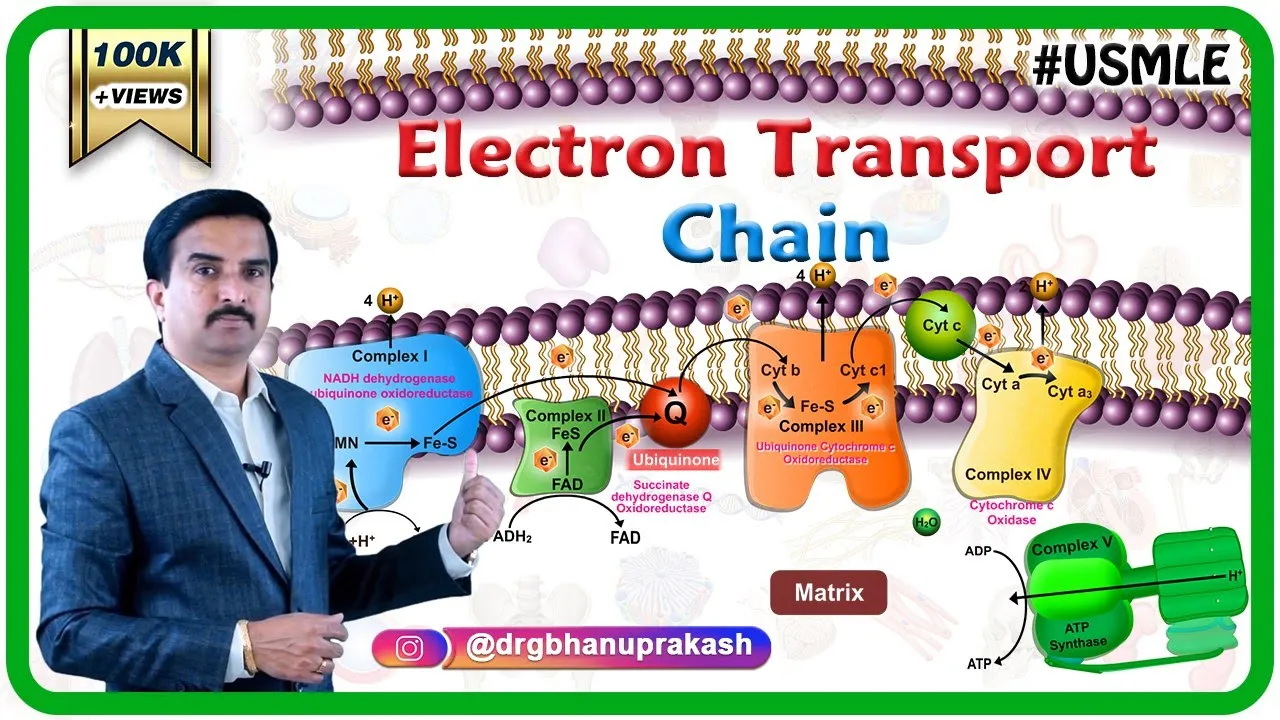



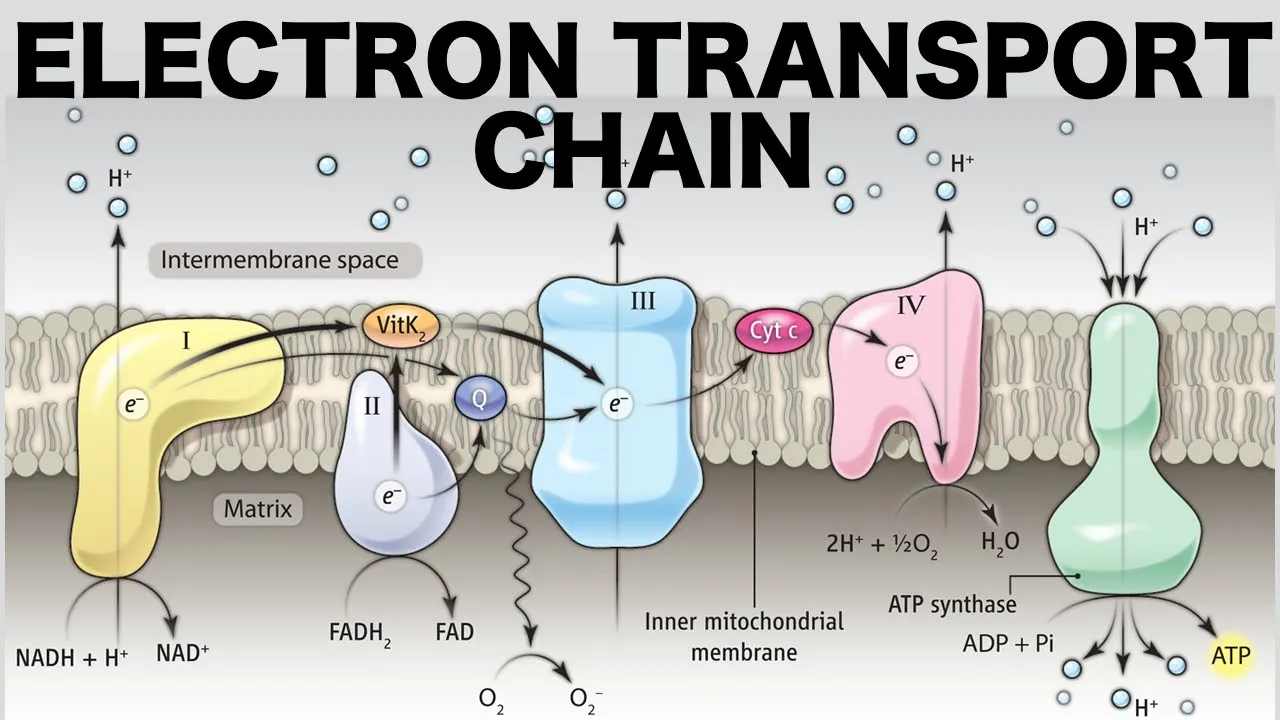
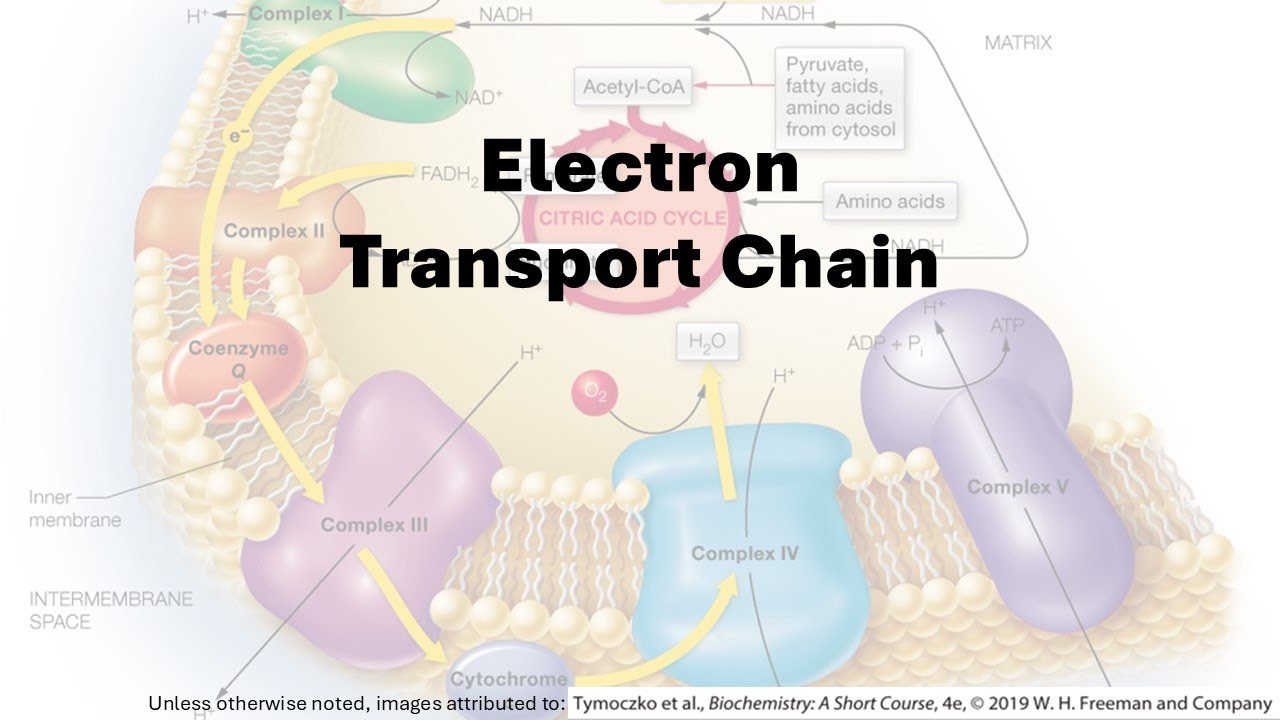
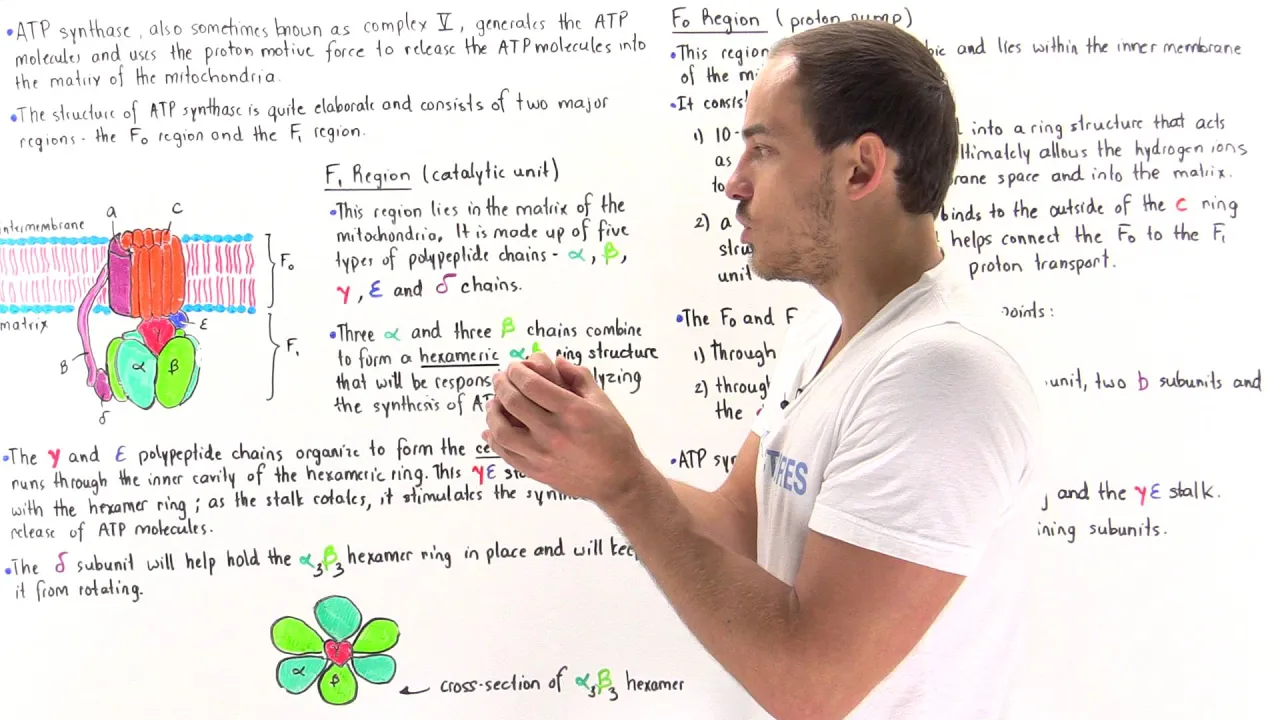
The chemiosmotic hypothesis, proposed by Peter Mitchell in 1961, explains that ATP synthesis in mitochondria and chloroplasts occurs through a proton gradient: in chloroplasts, light energy drives electrons from PS2 to PS1, causing H+ ions to diffuse from the stroma into the thylakoid lumen and increasing H+ concentration there; in mitochondria, electron transport moves H+ from the matrix to the intermembrane space; the resulting proton gradient creates a pH difference that drives H+ ions back through the F0 ion channel of ATP synthase, releasing energy that activates the F1 component to catalyze ADP + inorganic phosphate → ATP.
Chemiosmotic Hypothesis Explained: ATP Synthesis Step-by-Step
Added:Basic structure and compartmentalization of mitochondria (matrix, inner membrane, intermembrane space) and chloroplasts (stroma, thylakoid membrane).
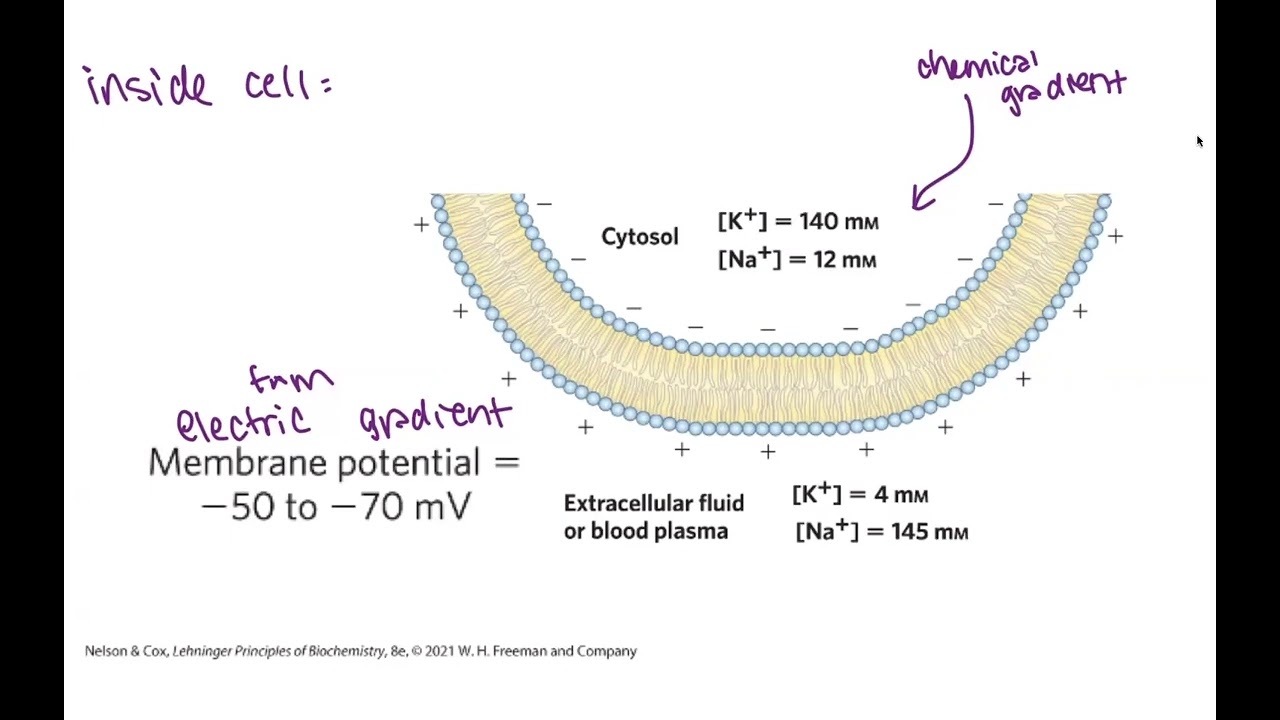
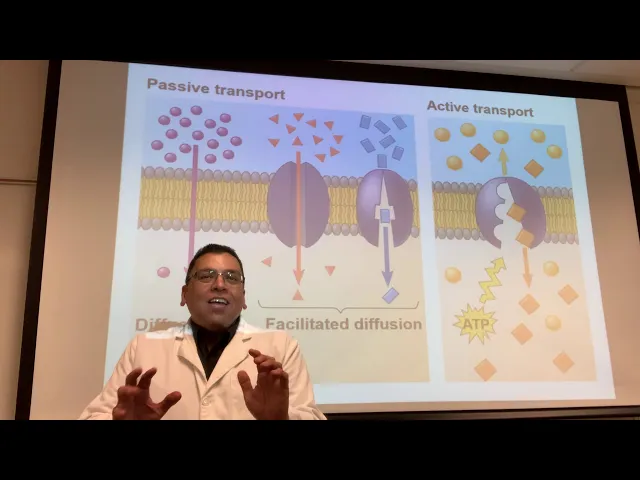
The concept of electrochemical gradients, diffusion, and passive versus active transport across biological membranes.
The fundamental role of the Electron Transport Chain (ETC) in transferring electrons to generate proton gradients.
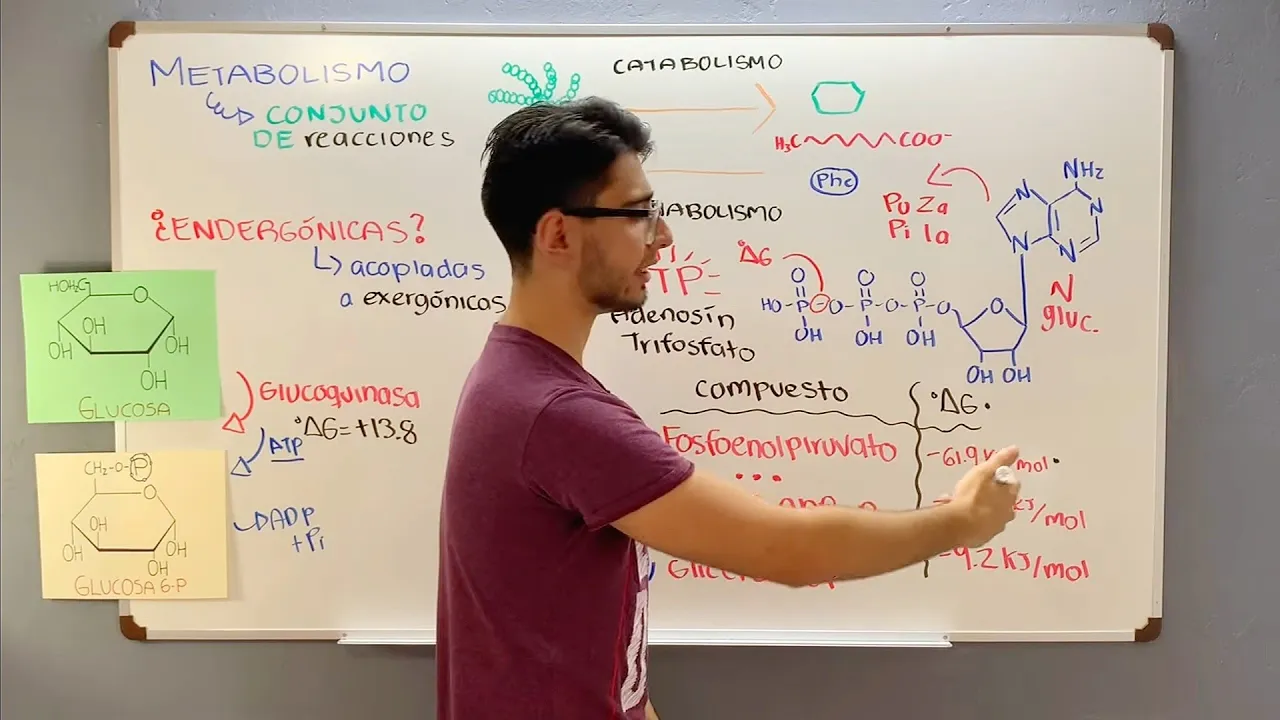
The chemical structure of ATP (Adenosine Triphosphate) and its function as the universal energy currency in biological systems.
The detailed structural mechanism of the ATP Synthase enzyme, specifically the rotational catalysis of the F0 and F1 subunits.
The biological effects of mitochondrial uncouplers (like 2,4-Dinitrophenol) and electron transport inhibitors (like cyanide or oligomycin).
Quantitative stoichiometry of oxidative phosphorylation, specifically the proton-to-ATP ratio (P/O ratio) in cellular respiration.
The evolutionary implications of chemiosmotic coupling as a universal mechanism of energy transduction across all domains of life.
6.4K views208likes12:31Original Release: 2018-05-01
myself social Mike welcome you in the Renuka Institute of Nate today in biology we'll talk about chemo osmotic hypothesis the very important topic regarding all the competitive exams chemo osmotic hypothesis explain us the process of ATP synthesis which occur in mitochondria and chloroplasts friends Mitchell was the scientist who explained chemo osmotic hypothesis in 1961 in the term chemo osmotic means here we are talking about the movement of chemicals mainly protons H+ ions and that's why it is called chemo osmotic theory here the proton gradient play a significant role for the process of ATP synthesis how it carried out if we talk about the chloroplast in the internal structure we can observe the pine of Falak oil called as an Greenham this Falak oil is double membranous pouch like structure if we observe the thylakoid from the upper view from here if we observe it from the Perseid this structure appears like this it's oval shape double membranous structure visa outer and the inner membrane of thylakoids this is Taliban membrane in the membrane the different kind of pigment systems are present here it is ps2 it is ps1 and here the different kind of cytochromes are present when the light emits or incident on the ps2 the electron get released from it which passes towards primary electron acceptor from the primary electron acceptor it moved towards the cytochrome remember that cytochrome is electron acceptor but its main function is its act as an hydrogen carrier be a proton carer we can say when electron passes from ps2 to said prom it induces opening off hydrogen carrier molecule and so from the stroma that is outside the thylakoid the two x plus protons diffuses inside the lumen of thylakoid so electron movement is mainly responsible for the action of hydrogen carrier molecules to Express from the stroma enter into the lumen of thylakoid this electrons then passes towards PS one that is photo pigment system one when electron passes towards PS one it activates an DP which reactivate to explore to form na DP its to inside the stroma of the chloroplast so there are two main processes occur here due to weights from the stroma to H+ are used up or enter into the lumen as a result of that - H+ that is protons goes on decreasing in the stroma region now in the lumen another process that is photolysis of water due to which again H+ and OH H - forms - h+ undergo ionization that is called photolysis of water and 2 h plus or the H+ that is proton increases in the lumen so due to photolysis H+ increase in the lumen and due to reduction of nad p and diffusion of H+ into the lumen in the stroma - h plus goes on decreasing so now the gradiated generates inside of the lumen that plus goes on increasing inside the stroma h plus goes on decreasing so this way a gradient develops between the stroma and the lumen we can say that in the lumen h plus goes on increasing in the stroma h plus goes on decreasing and this way it generates a proton ingredient this proton gradient is nothing but difference in the H+ concentration in the lumen and the stroma of the chloroplast remember that the proton gradient is mainly responsible for ATP synthesis how we can say that when H+ increase in the lumen the pH in the lumen decreases and H+ produced in the stroma pH in the stroma increases when the pH in the lumen decreases and sufficient amount at the sufficient level as well the ions channel that is fzero ion channel a nephron part present in the stroma induces opening now how the proton gradient breaks when H+ ions increase in the lumen the pH in the lumen decreases and H+ that is proton reduced in the stroma pH of the stroma increases now the F 0 this is protons ion channel embedded in between the thylakoid membrane the other part of this is that one both the structure are part of ATP which is enzyme but it's a protein embedded inside the thylakoid membrane this ATP is also called as CF 0 CF 1 particle it is also called as an elementary particles and this structure is now mainly responsible for the ATP synthesis when F 0 proton ion channel open due to the reduction in the pH of the lumen this H+ ions come outside into the stroma region of the chloroplast this rapid or the fast movement of the H+ these are the proton from lumen to the stroma is facilitated by the F 0 ion channel and this is breaking of proton gradient when protons diffuses out through the F 0 it releases certain amount of energy with the help of energy the configuration of the f1 which is protruding towards the stroma region changes it become active and facilitate reaction between ADP and inorganic phosphate to form ATP so here we can say that the break of proton gradient is mainly responsible for ATP synthesis and H+ or the proton rapidly come outside from the lumen to stroma releases energy activate F weren't so ADP and inorganic phosphate joined to form ATP and this way ATP synthesis occur inside the chloroplast now we talked about how the ATP synthesis occur in the mitochondria in mitochondria ATP synthesis is carried out again with a proton gradient in the mitochondria within outer and the inner membrane there is the inter membranous space is there here large number of protons are accumulated due to electron transport system when electron passes from ETS electron transport system the H+ from the matrix region enter or diffuses towards the inter membrane space now in the intermembrane space H+ increases as well in the matrix the gentleman of mitochondria h+ decreases again gradient of protons in the intermembrane space h+ are more in the matrix h+ are less and again a gradient developed between the lumen or we can submit an interval in space and the matrix what happens now again due to proton gradient h+ ions move towards the matrix by opening of f-zero ion channel we already discuss f-zero is an proton ion channel decrease in the pH of the intermembrane space induced opening of f-zero ion channel and as soon as f-zero ion channel open proton from the intermembrane space diffuses rapidly towards the matrix again the energy released by this rapid diffusion of the proton f1 has a configurational change it become active and act as an ATPase so adp is again phosphorylated with the inorganic phosphate to form ATP in this way ATP synthesis occur inside the matrix of mitochondria now students in both the cases of chloroplasts and mitochondria the breaking of proton grenade is mainly responsible for the ATP synthesis and this theory is now called as an chemo osmotic theory as H+ are the chemicals so the ions and it's rapid diffusion it's a kind of osmotic process and that's why this theory scheme or osmotic hypothesis thank you very much this is creme osmotic theory in the next session we'll discuss about certain questions regarding the chemos mattock hypothesis even though if you have any doubt you can write you'll and we will definitely take all these queries in the next lecture thank you very much
Up Next

15:31
ATP Synthase Mechanism: Binding Change Explained
@AKLECTURES
260.5K views•2015-06-10
50:12
Bacterial Communication: Quorum Sensing and Biofilm Formation Explained
@JHUAAP
12.6K views•2011-06-28

5:35
Enteric Nervous System Explained: The Gut's Brain | Neurobiology Lecture
@alumniu6029
438 views•2018-09-12
7:08
Bacteriophages: Earth's Deadliest Killers and Future Antibiotics
@kurzgesagt
34.6M views•2018-05-13
Related Study Plans & Knowledge Roadmaps
Structured learning paths in Biology
biology
RNAi: Biogenesis, RISC & Gene Silencing
01Molecular Biology Foundations: DNA to Protein
02Introduction to RNA Interference (RNAi)
03Molecular Biogenesis of miRNA and siRNA
+ 2 more learning modules
10h5 modules
Explore Roadmap
biology
Mycorrhizae: Signaling, Biophysics & Ecology
01Foundations of Mycorrhizal Symbiosis
02Molecular Signaling and Root Colonization
03Biophysics and Bioenergetics of Nutrient Exchange
+ 1 more learning modules
11h4 modules
Explore Roadmap
biology
Circadian Clocks: TTFL, SCN & Periphery
01Foundations of Molecular Biology & Gene Expression
02Introduction to Chronobiology and Actograms
03The Core TTFL: Molecular Architecture of the Clock
+ 3 more learning modules
14h6 modules
Explore Roadmap
biology
Population Genetics: Math, Drift & Selection
01Genetic & Probability Foundations
02The Hardy-Weinberg Principle and Baseline Models
03Mathematical Modeling of Natural Selection
+ 3 more learning modules
18h6 modules
Explore Roadmap