
![[Claudio Padua] Biologia da Conservação: Teoria e Prática (Gravação da Aula Magna)](https://i.ytimg.com/vi_webp/11aqt0_Ri5c/maxresdefault.webp)







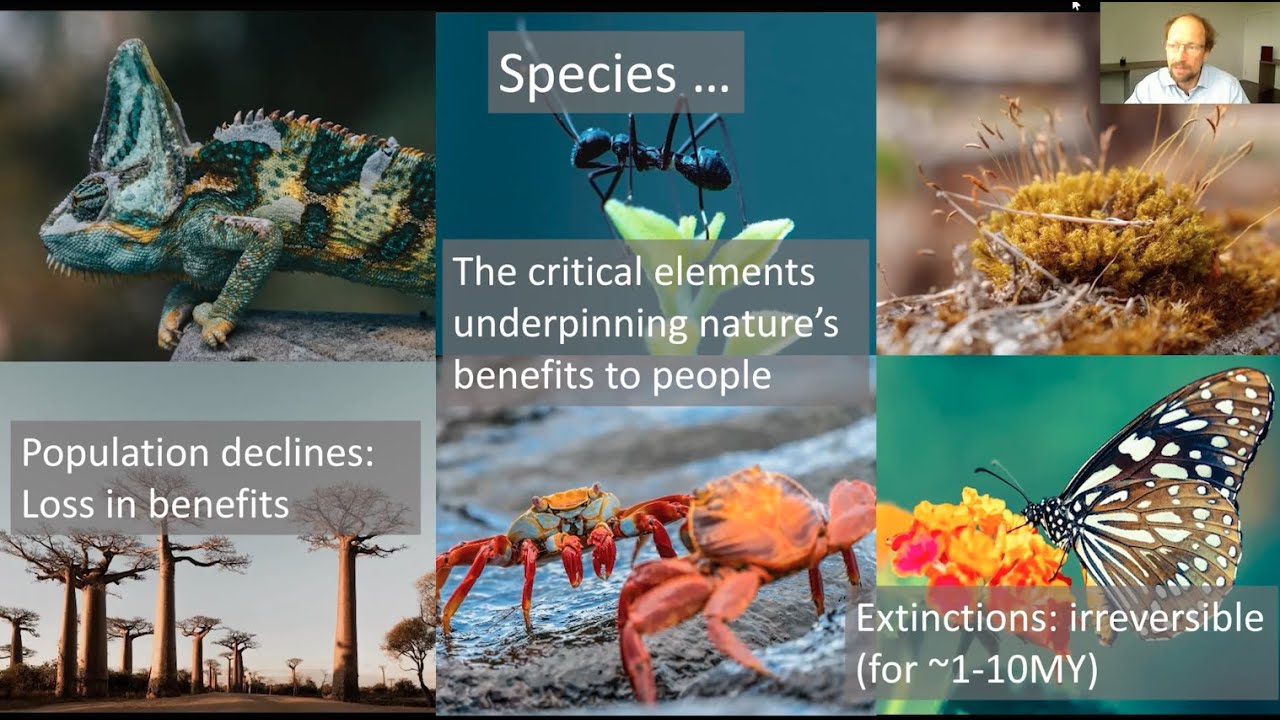





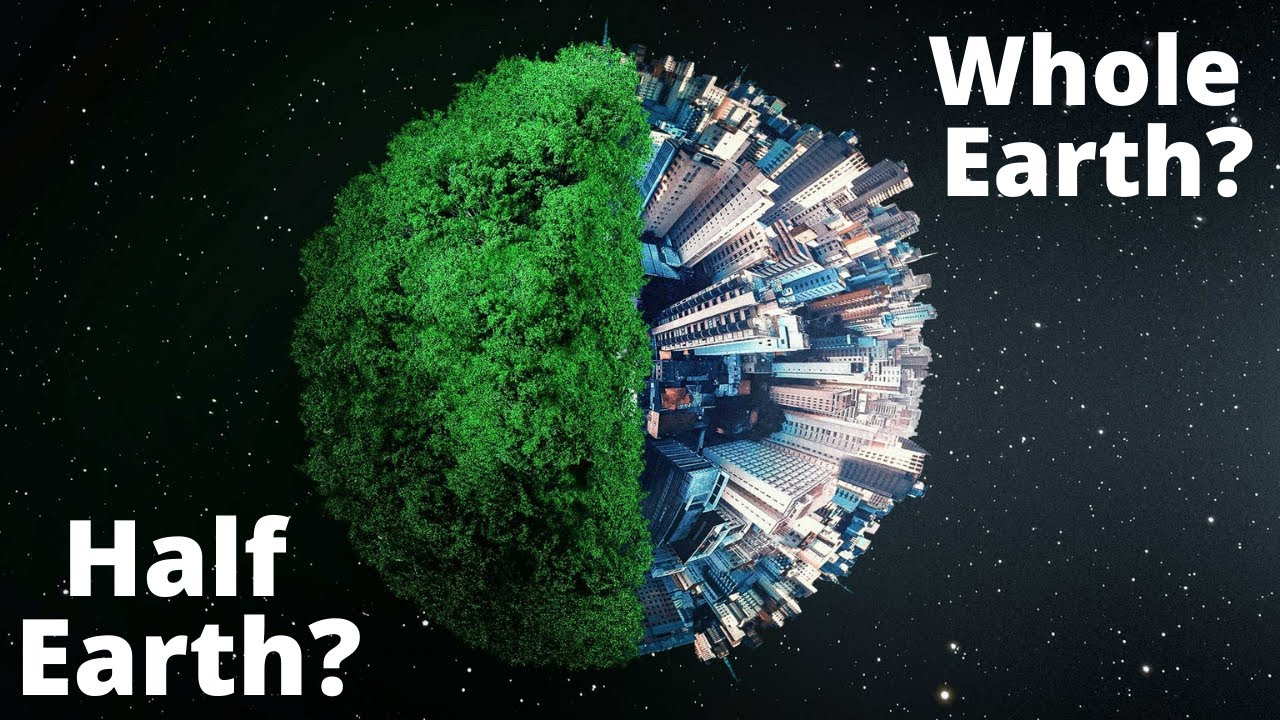





Biodiversity conservation requires protecting approximately 50% of Earth's surface to save about 85% of species, as demonstrated by the Half Earth initiative; this effort involves three interconnected levels of biodiversity (ecosystems, species, and genes), with the key challenge being that humans have only discovered and named about 20% of Earth's estimated 10 million species, necessitating both scientific exploration and community-based conservation approaches to protect the remaining biodiversity.
Conservation Leaders on Biodiversity, Half-Earth, and Geospatial GIS Mapping
Added:Basic principles of conservation biology, including biodiversity, ecosystem stability, and the primary drivers of species extinction.
An introductory understanding of Geographic Information Systems (GIS) and how spatial data is collected, layered, and analyzed.
Familiarity with the foundational work of Jane Goodall in primatology and E.O. Wilson in biodiversity and island biogeography.
The concept of habitat fragmentation and how it disrupts ecosystems and limits gene flow.
In-depth analysis of E.O. Wilson's 'Half-Earth' proposal, including its scientific methodology, spatial feasibility, and potential socio-economic impacts.
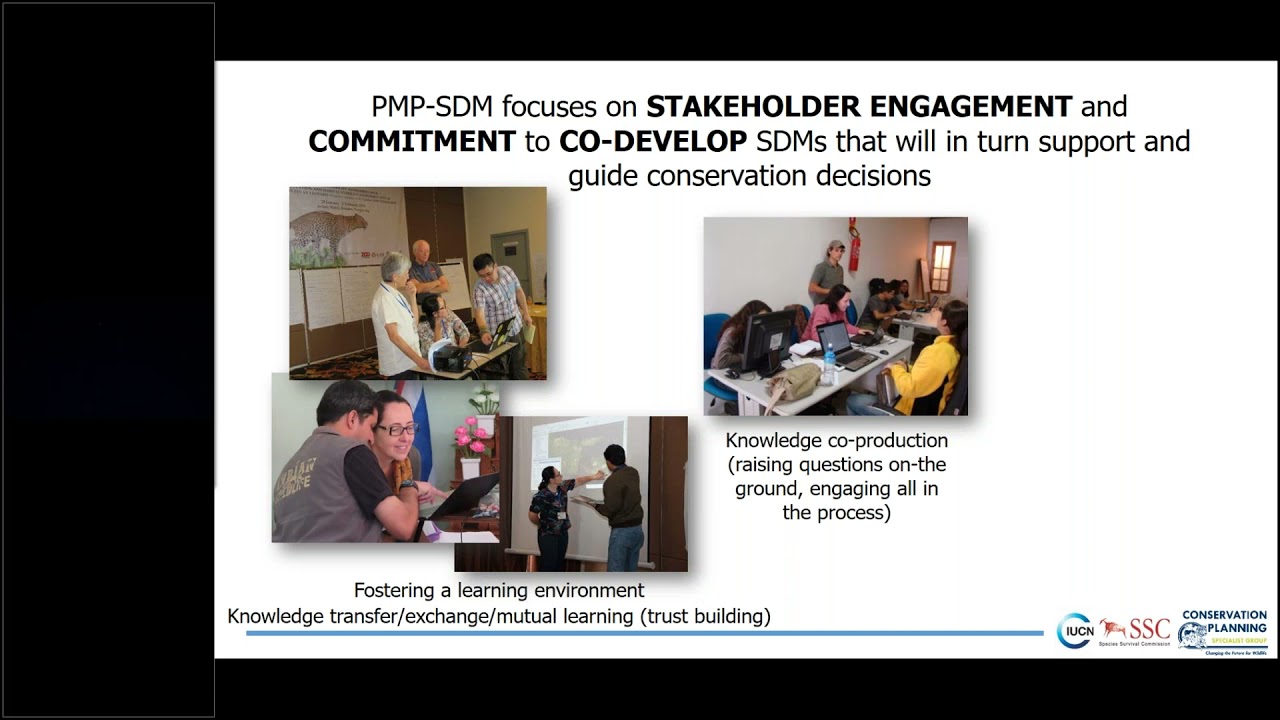
Practical application of geospatial tools in conservation, such as using Species Distribution Modeling (SDM) to design wildlife corridors.
Study of global conservation policies and targets, such as the United Nations '30x30' initiative to protect 30% of land and sea by 2030.
Integration of community-led conservation frameworks and indigenous land management with modern geospatial mapping technologies.
10.6K views143likes57:10Original Release: 2019-07-09
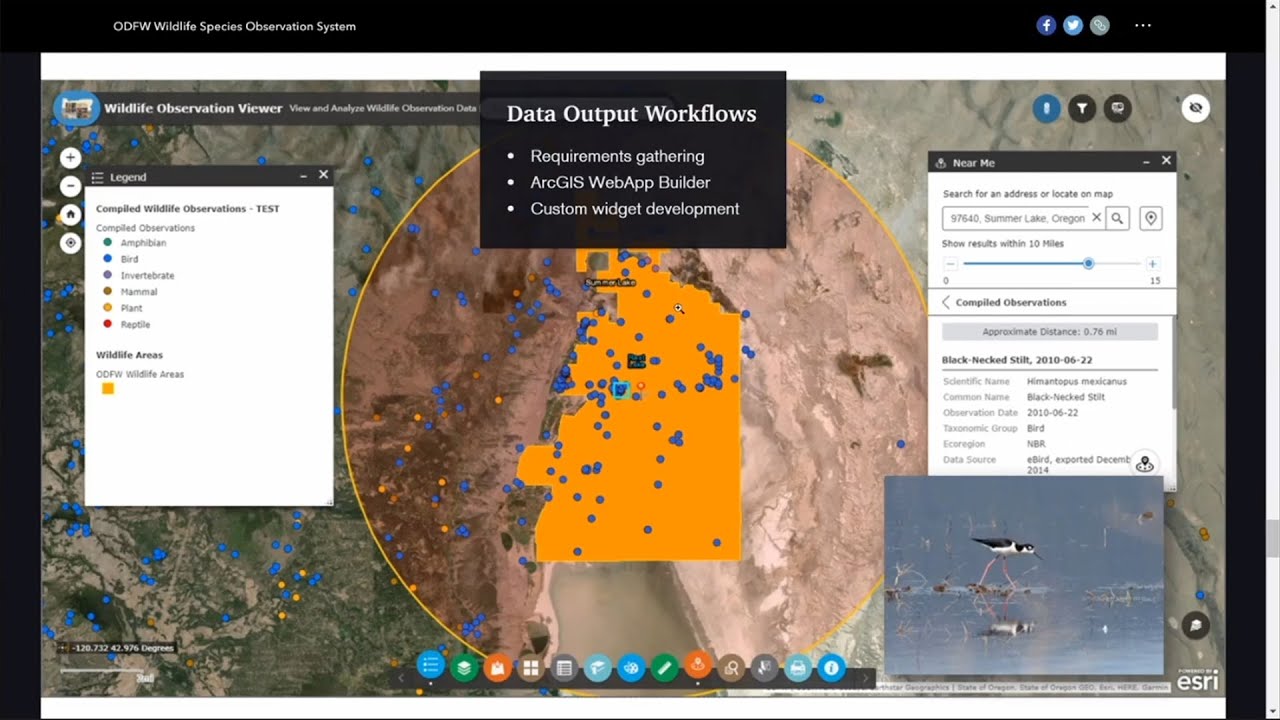
[Music] I've had the privilege to spend time with the next two people that are going to carry out a conversation and the reason why I asked them to come is because I have been enriched by being in their presence ladies and gentlemen welcome Ed Wilson and Jane Goodall [Applause] we get the dream show you get the orange ah okay it's good well welcome to my family [Laughter] we have no agenda this afternoon pre-planned do we not really not really except I think we all have messages to deliver Oh how would I guess that Edie you've watched the day is this what you wanted us to do yes and I think you're doing it so thank you for having me as part of it and thank you for letting me witness it thank you all it's great [Applause] now I suppose that you recognize that both Jane and Edie are coral scientists in the in the service of protecting biodiversity and conservation would you guys agree but you actually also approach the world from different eyes you from in the field in Africa you as a young child growing up studying ants becoming passionate and then a million other things I don't know exactly how to structure this conversation so we'll we'll just sort of play it by ear if that's okay and what do you think about the future and what do you think about your current work of half earth what are you imagining well um you know twenty or thirty years ago if you look at the situation of the living world it was very very grim it still is bad enough I like to think that we have three great environmental crises to go through as a species and the sooner we face them squarely and honestly the more likely we are to do it expeditiously with minimal cost the first one climate change I think we know how to solve that one that has become mostly a political problem the second one I believe is going to be recognized in the environmental era into which we were just now getting started is the shortage of all freshwater this is going to become more and more of a crisis after country we get that one saw in the third that's really up just about upon us following close behind is the collapse of Rico systems through mass extinction of species so these are the problems we face if we can articulate them clearly and let me compliment you and your company for doing magnificently in developing the technology to do just that then we can solve all three one two three oh yeah I like the way things are going now and what is your vision for what you describe as half earth I mean you described a bit to me a year ago where where do you want to take this I want us to create a system of natural reserves or specially managed areas so it's large enough to save indefinitely in natural conditions of a very large percentage of the species on earth some years ago I worked with a young mathematician ecologists from Princeton I was at Harvard then to develop the formulas that relate the area of reserves to the percentage of the species was in the reserve that we could expect to see survive indefinitely and one of the results that comes from that because those of you who love mathematics that would be due to the exponent in the formula relating the number of species that can survive on a reserve to the area of the reserve all the votes of the 0.25 the square root of 0.25 of the number that can be preserved in a of half of the protected the previously perfected area think of that of the whole earth as an area we need to make a protected area or most of it the number if we could go to half on this formula which is pretty close to a natural law of biology is 85 percent approximately so if we can set aside half of the Earth's surface and especially if it includes the beautiful natural areas that we've held on to and we can save a very large percentage of all species on earth indefinitely now this brings with it a court of hope and I'm happy to tell you this 1/2 earth proposal that's become an initiative and I think it's pretty well been accepted the conservation organizations and activists around the world and what what are you doing right now to create a roadmap for what half to protect I think we need to step up the area we put aside and explicitly as reserves in the parts of the earth where it matters the most we could get higher than 85% if we could do that skillfully but in addition we need to launch at this time and now I'm addressing younger people especially who are looking for an entire productive career go into it will be far more effective and we can do even more than what the series seems to allow us is if we find out what the biodiversity is it is a remarkable fact that right now we have identified and given a scientific name to and are beginning to understand a little more than two million species of plants and animals on the world in the world but the estimated number that exists on earth is roughly 10 million in other words we only have discovered and thus have some means through the knowledge of looking after explicitly some 20% of the plant animals on earth so one of the things that we must do much more effectively than we have been is explore the living world to identify to characterize and then love and protect most of the species in the world that in fact we have neglected at this point yes it's a it's a challenge that's we're gonna use the mapping word but it's okay oh well I'd like to do that now it will give me another moment yes okay because I saw its higher what you're doing yes we want to map biodiversity all the way around the world and the key is to discover all the species in the world to go ahead with that there are three levels of biodiversity by law there are levels of biological organization and makeup biodiversity at the top of the ecosystems such as ponds streams the fauna of not holes in trees the micro organisms or in your lower and chest intestine even the little mites have lived in the eyebrows of most people feeding on the oil around your eyes that you don't even know there I don't know about those okay so these are these are the pieces if you'll remind me later after we know that we're not gonna tell you I'll tell you how you can get to see one but anyway ecosystems and the level in between is a critical one the next level was a species that make up the ecosystems and then the basic level are the genes that prescribe the traits that make up the ecosystem species are the key pivotal unit we need to find out all or locate discover characterize all the remaining species on earth and then we can get into what I like to call the next one of the next big things coming in biology and even in science and that's to create a science of ecosystems ago an organization we haven't done it yet we are as ignorant of how ecosystems are created how they evolved as you take species out and put new ones in and how they equilibrate how is it that some ecosystems can reach a balance among that species that can last for geologic periods where others are unstable and soon crumble and have many other species go extinct we don't know that's one of the great remaining problems and now we come to Your Magnificence uniquely effective company this entails a tremendous amount of inspired mapping and analysis of the mapping not only where the biodiversity is because this is crucial for saving it as a whole but also where the species are and in what places they create ecosystems of the certain kind which we can study and figure out how it all works and then eventually we'll have the science we'll have the programs we'll have the ethics the ether of conservation strong enough through our own species to look to a brilliant future I think of thousands of years of peace on this earth living with the millions of other species that formed the birthplace of our species one final question that you've been working with Yale University on developing computer models for mapping and modeling all the different species can you share a little bit more about that yes we have an organization well it's named after me so that means I have to work extra hard call the Wilson biodiversity foundation which is addressing all these problems in different ways and it's serving as a kind of advisory committee which is incorporating all of the science that we can master to focus on the issues that I just described about how ecosystems and species congregations and so on are put together and kept together and we're making good progress of doing the basic science or contributing to it because a lot of organization more and more or entering this effort to establish the scientific and technological foundation of an authentic conservation of the vast majority of species thus the earth is still blessed with so this organization and there are others but I'm particularly pleased with this one 1/2 personal organization or is focused intensely on solving these problems are just indicated in introducing those sub you now you brought a little film along did you want to share that film now perhaps maybe they can roll it in the back showing Walters work oh you mean our scientist Walter eh exactly right here he is Oh Walter I didn't know you were here Evelina advantage remaining untouched lands land-use change is probably the number one threat that biodiversity is facing the half-half project is an initiative to identify and help protect the places where biodiversity is most at threat from extinction species are the elements that are behind a healthy planet the macaw there are beautiful animals as you see them flying over the rainforest canopy the great green macaw is one of the few species that are able to carry large seeds these trees have important economic value to livelihood Stern unfortunately fewer and fear of these birds exist so understanding where that species may be impacted by future land use in the region is absolutely vital the half Earth Map sets out to provide a spatially specific map of conservation priorities we humans want to advance our economies change is not a bad thing necessarily what would be a bad thing if we are not smart about how and where we are changing often it's just been the information that's been lacking here at Yale another project map of life provides science supporting the half of project and in particular species by species spatial information it's bringing together students from Yale scientists and a whole set of collaborators to develop information that feeds the half earth project [Music] as you go on the half map website you'll be able to look at biodiversity priority patterns existing reserves and human pressures you'll be able to see the global scale the 3d globe as well as all the way down to the local scale at the landscape level then as highest spatial detail as possible for example hummingbirds you'll get to appreciate both the larger global geography of this group it's obviously restricted to the Americas you can go in here and then really different sate the places just a few kilometers apart that may support twenty or fifty species of hummingbirds and then perhaps just one a few locations over we're really excited to work with Israel in the half project it's through that detailed and engaging visualizations that we are able to get biodiversity into the decision-making if you'd like to help the half of project and I encourage you to engage you may be able to vitally contribute through mapping that you're doing so that you directly can support better conservation decision-making [Music] it's great [Applause] synoptic holders modeling modeling the ecosystems that's all the words that I'm picking up from your conversation it's I believe that what we're forming right now and really brilliant young scientists like the one you've just heard in our organization and and some of the key activities that you've undertaken thank you for doing it will result in a technology that becomes more and more powerful sophisticated and applicable to the real problems I'm very hopeful about the final outcome of this James what do I ask you jack first of all you know I've spent so long studying chimpanzees yeah well first I want to say then I'm very grateful that you've invited me here and to be sharing this platform but just a little bit of chip behavior when chimpanzees really kind of like each other they they help keep each other clean so if I were a chimpanzee I'd now be very worried that my friend has mites in his eyebrows [Applause] [Music] [Laughter] [Applause] do they say anything we do this well Jack you know that my message is hope you know that I go around the world talking about reason the hope you know that I've written many books and hope is and the title of all of them and you also know that I'm passionate about conserving nature and the future of our planet and our children but I'm travelling 300-year days a year all around the world and there are certain things today that a really bothersome and we have to face up to them we can't ignore them and first of all there's a very worrying swing to the far right in our political systems in so many countries with levels of corruption that are very very hard to fight and secondly it's now predicted that by 2050 there will be nine point seven billion people on this planet we are already using up more Natural Resources in some areas than Mother Nature can restore and if we carry on with business as usual the best plans that we make however much of the planet we want to save we shall be fighting a tide of humanity that will be like a tsunami and so climate change climate crisis is another one that's happening it's not something in the future it after all is not a Chinese hoax it's real and I was [Applause] [Music] [Applause] so I was talking with you earlier about you know as we could do a great map showing how the climate crisis is forcing species to move from their range those that don't become extinct those that can adapt and you know so those are the things that we've got to map reasons for hope we've got to consider them we can't ignore them would you agree I agree you agree we have to we have to face up to those things and I'll just just say very quickly and we can talk about them later what are my reasons for hope against all of this first of all it's the young people who already had examples today these young people from Ireland I mean wasn't that amazing yes you know and you've helped a lot for me to develop our Jane Goodall Roots & Shoots program it's now in 60 countries it's young people from Kindergarten University and everything in between and they roll up their sleeves they choose their projects to make the world a better place and I see their shining eyes everywhere and then those will have exemplified here and with both of you and everybody out there this intellect of ours studying the chimps as I did helping science to come out of its reductionist way of thinking where we humans who isolated we were different in kind from the rest of the animal kingdom but the chimps are so like us biologically as well as behaviorally that science was forced to start thinking differently they were part of the animal kingdom and not separated from it and it enables us because they're so close ninety eight point six percent of our DNA we share with them so then we stand back and say yeah that's they're more like us than any other living creature but we're different look at us here we're different and that's to me makes development of the intellect so that's one of the reasons for hope we haven't been very wise but when you think of everything that we've seen today when you think of the brilliant minds out there when you think we've sent a rocket up to Mars the little robot that crept off taking photographs I don't think we want to live on Mars having seen those photographs we've just got this one blue and green planet so how is it that the most intellectual species on the planet is destroying its only home but at the same time and again demonstrated here today we do have the intellect if we get together now but we don't have that much time we forgotten - we've got to just find ways of dealing with these terrible crisis that were in and then another thing Illustrated already but the resilience of nature give nature a chance and life can come back where we have destroyed it before even if it's not exactly the same and then finally the indomitable human spirit the people who say no I won't let this species go extinct I'm going to give it another chance and lo and behold we have example after example of animals that were on the brink of extinction that we've given another chance and you know people who cope with seemingly impossible tasks and not just I'm not just talking about science I mean the reason I carry mr. H just because people are probably wondering why this little old lady is carrying around a stuffed monkey he was given to me by a man called Gary Horne 29 years ago Gary went blind when he was 21 in the US Marines decided to become a magician everyone said but Gary you're blind you can't be a magician and he works with kids they don't know he's blind and at the end here say tell them but if things go wrong in your life you must never give up there's always a way forward and he does cross-country skiing and sky-bird and scuba diving and skydiving and he's taught himself to paint which is incredible so he gave me mr. H thinking he was giving me a chimpanzee and I said Gary I know you can't see but what's that and he said her mind taking where you go and you know I'm with you in spirit yes Jack you got it right he's got a tail you know we've got to face the doom and the gloom and the darkness but then we've got to because if we lose hope then we may as well all give up none of this is useful if we think there's no way forward and that we doomed as many scientists tell us then eat drink and be merry for tomorrow we're going to die we mustn't let it happen and I think this gathering that you you pull together this extraordinary group of people if we all get together we can somehow get out of it we must elect the right politicians as well [Music] [Applause] so so Jane I know two programs that you do one of them is roots and shoots which is growing the next generation the second program is something you call takari you want to explain what that is yes the reason I'm no longer living in my paradise at Gumby which of the best days of my life without any question it's because in 1986 there was a conference not as big as this but we brought together in 1986 the world I think it was seven different field sites studying chimps and we brought them together to see mostly you know about chim behavior how it adapted to different environments and so on but we had a session on conservation and it was a total shock like everywhere across Africa that forests were being cut down chimpanzee numbers were decreasing the beginning of the bushmeat trade and there are all sorts of other problems and I went to that conference I had my PhD by then although I started without one and I left as a as an activist it wasn't a conscious decision it just was something that clicked in my brain and but I didn't know what to do so I managed to get a little bit of money together it was the National Geographic that provided that and they provided large posters of chimpanzee behavior and managed to get oddly enough you know who gave me the help to manage to get around seven different countries with some James Baker than Secretary of State James Baker he yes he apparently he's passionate about climate change now anyway he telex that's what we did in those days he telex the different embassies of those countries and said help Jane that's what they did anyhow well I was learning more about chimpanzee behavior I was also learning about the plight of the people living in and around so many of these habitats the crippling poverty the lack of good health and education and the degradation of the environment and it came to a head when I flew over gone become B is a tiny National Park the smallest in Tanzania and when I began in 1960 it was part of that equatorial forest belt that stretched from Western East Africa right across to the west coast by 1990 it was a tiny island of forest surrounded by completely bare hills and there were clearly more people living there than the land could support and they were struggling to survive that land was overused and infertile and that's when it hit me if we don't do something to improve the lives of these people then we can't even try to save the children who were isolated in this tiny National Park and so we began to Cory and I think what made it different certainly back then we didn't go into these twelve villages around Gumby it was arrogant white people saying well you've made a mess of things and this is what we're going to do to help you it was a carefully selected team of local Tanzanians who went into the villages and sat down and listened and asked them what can we do to help you grow more food we restored fertility to the overused farmland without chemicals I may say we then they said they wanted better health and education so we worked with the local Tanzanian government it should have been doing it anyway now we could introduce water management programs microcredit for women and helping girls to stay in school during and through puberty because it's been shown that as women's education improves and women are empowered family size tends to drop yes and we have actually seen in the beginning of that happening you brought a film along with you as well to show this work of takari yes engaged okay can we can we show that right now yes and that's thanks that Lillian Pinter who is here somewhere who works with you and so it's thanks to Lydia and and ESRI that this film was produced let's look at it now [Music] I became passionate about remote sensing and satellite imagery how beautiful the earth is from space but gives you this opportunity to see the interconnectedness and that put me on this journey to bridge that gap between technology communities and actually conservation practice [Music] it started to with Jane of course she started this conservation project called takari around 1984 Jane flew over gamba and suddenly she realized that gamba became a habitat island surrounded by this ocean of deforestation Jane realized that there is no way we can protect biodiversity without engaging local communities takari tries all the time to achieve conservation by empowering and facilitating local communities to do it themselves indigenous communities are stewards of 80% of biodiversity Jane started with building awareness to make people and governments and decision-makers aware chimpanzees are representing the larger biodiversity and it's actually about healthy forests it is absolutely essential to integrate traditional knowledge with conservation planning the local community have this unique knowledge of the landscapes of plants and animals so the community forest monitors are using survey 1 2 3 hub installed on the mobile device the app has a protocol which actually community has been developing themselves it's not about us collecting science data it's about information which they think is important he has an inny tablet and boy who and a 2 million market in Nepal India Pauline who we Fukui Nevada melissa who phone wanted 20 would be once back in town where they have access to the Internet they press a button this information goes into rjs online cloud and then our staff have access to data they can print maps visualize them in dashboards and communicate this information to the forest monitors and back to the village government so they can see the result of they work jajaja is still facilitating access to those maps but the information on those maps is owned by those communities it allows them not only to map the knowledge it also allows them to connect to the amazing resources in USA for example developing weekly deforestation alerts were government policymakers and our salaam who are developing a chimpanzee conservation action plan but it also gives them the opportunity to decide how much they want to contribute to the process maha bua mitsubishi upon who yoga no para o EK no kahuna yoga Nikita Buddha's upon Treo nepata Martinez yamuna familia y OU la nación sana potentially college age a little demo he terrified the city manager guna india yuki yuki Ambani Atacama Zahira American is Zynga mass David nabbit are no society to educate entertain a potato cannon anemic committed by kana see what upon a soma it's incredible to see that some villages were able in the last 15 years to start recovering some of the tree cover the same thing we did with Akari we have to do it at the planetary scale it gives me hope because one of Jane's reasons for Hope is the resilience of nature [Music] so Jack you know it's so exciting collaborating JDI and esri and dakari and that through your technology which we are testing out in the field we can scale up to carry and you should know that we began with 12 villages it's now 104 because most of the chimpanzees in Tanzania they're not protected they're not in any of their parks or reserves they're just in village forest reserves where they're not protected at all and so these village forest monitors that were in that film though they're volunteers and they're so proud of what they do you know they're indicating an illegally country and and the young people roots and shoots us in all of these villages and they're learning you know yes it's important to preserve be in the environment and the forests because it helps us to it they're not just doing it for the chimps and so we've also got similar programs in in Uganda DRC the Republic of Congo Senegal Mali Burundi and we're hoping to go into Kabul and on our own yes yeah your approach is sort of in some ways I'm thinking a top-down approach modeling all the ecology and Jains is they sort of bottom-up you called it once boots on the ground or what did you say boots boots on the ground was that was the phrase that you used actually doing conservation bottom-up so in a way your own little talks here this afternoon are totally complimentary science and action I didn't even start scientists when I went to Columbia I didn't hadn't be into college yes I mean it was Leakey who made me go and do a PhD and I was really those men yes can you imagine when you haven't been to college and you go to Cambridge University the English one and and I'm told that I've done everything wrong I shouldn't have given their chimpanzees names that wasn't at all scientific they should have had numbers I couldn't talk about personality mind or emotion because those were unique to us and so to me it's really exciting there because the chimpanzees were so like us that's all change and now a lot of students are studying emotion personality and of course animal intellect is just the top thing we know about intellect in octopus and bumblebees been taught to roll little marbles and if they drop it out in a hole they get nectar so you know we've got this is wide open - and it's kind of slightly different to this technology and yet technology comes into it comes into it but it's nowhere near as rich and beautiful as the natural world gather they complement each other beginning to add what are your thoughts well I'd like to add a note of support and pay a little attention to what I call the little things that run the world we are of course being human being big mammals are focused on the creatures most like ourselves which is entirely appropriate if we can save them but can't save anything but at the same time we're going to have to develop a lot of science that reaches down into the smaller organisms of the world to the millions of species of insects of creatures that most people have never heard of that are nonetheless fundamental in maintaining these ecosystems all the way up the court to the cornfields and the cacao plantation here's the names of just several of them to give you a sense that swarmed around the earth that only partly been studied partly understood many are undoubtedly going extinct or chained or ovary or overproducing and we need to know so much more about this major major part of biodiversity we need to know more about his omens these are little spider like things that warm everywhere we don't even know in most cases what they eat or what eats them we need to know about orab acid mites which are among the dominant organisms these little mite that eat decaying leaves and in the bacteria and they nematodes of the of the soil I once had to do I was doing experiments I had to get oral battered mites identified and I found out there are only two people in the United States who have the ability to tell one from another we also need a specialist to become experts on springtails another word for these little insect-like creatures that swarm everywhere and are part of the foundation of ecosystems everywhere on the land and in the parts of the sea kalimba lence there's another name intimal Bryl morphe kalimba ones among the dominant animals of the world how many people are expert to tell us what's happening to them they're scarcely any people even though I was astonished myself to find out that among the last creatures to be found as youth ascend Mount Everest right at the peak are intimal brow morph kalimba lence and bless my soul you know feeding on the the in this little ecosystem and the platform around the platform where our Everest climbers climb and die our our little creatures spiders salsa jumping spiders they feed on the column balance and they maintain a little ecosystem up their column balloons have been found in the first water brought up when the Russians drills through Lake Vostok to viola Lake Vostok through the great ice play a plate over it in the Antarctica so heaven sakes the same things that are ons are at least similar things on Everest the peak of Everest or down there in Lake bastok we're just finding about all of this and we're just beginning to understand that as we set out with science and technology and understanding and practical applications of our best methods of cultivation and land protection that we must bring in all the little things too and know them well and not let them perish and you will notice in passing now that I have thought once mentioned dance and I'm gonna slide by because I think I can make my point with cool emblems and or abetted might and eyebrow my took you away you both free up eyebrow mites yes I'm not gonna sleep well that night anymore well what do you think we should do now what should these people do I think you know one of the things I'm always say it's the main sort of fundamental underpinning of Roots & Shoots is that every single one of us makes some impact on the planet every single day and some people make huge impacts you know people up CEOs of huge corporations people in power in government can make a difference by signing a check or something like that and I think this this community using all this GIS and so on is making a huge difference every day but just an ordinary person yes you know the choices we make what do we buy what do we eat what we wear where did it come from how many miles is it travelled did it harm the environment was it cruel to animals is it cheap because of Charles slave labor and all this is interconnected and it may seem I mean a lot of people they understand the problems but they do nothing because they feel helpless yes and you know this saying think globally act locally it's the wrong way around because if you think globally you're so depressed if don't want to do anything but if you say here in my little community I can clean up this dream if I get people to help me but I can do community action like - Corey exactly I mean it's not about doing it in Gumby yes it is about doing it a gummy but it's about doing it in Redlands might do it in London doing it in Ireland just doing your bit and then knowing millions of other people doing their bit is going to make a huge difference it's also about participating in science last year ed you mentioned that you wanted to recruit everybody to get them collecting data young kids going out on the forest doing surveys like we saw like we saw in the previous presentation citizen science and you said something extraordinary was about I forget what you said do you remember it was something about something about it was something about boots on the ground you wanted every kid doing it you know participating locally and also contributing to science and I realize that I'm beginning to sound like more like a Marine recruiter than that but you know we are entering an era when a radically new view of nature an actual world is not only inevitable by the advances in science and the concern people have about their personal environment but also by is the amazing things awaiting discovery as we began to work through these millions of species that remain unexplored and I would like to see a society in which to do this kind of exploration to find out something about every one of the species large and small that allows them to maintain their existence has allowed it for millions of years enough so that they can live on for millions of years into the future and in so doing gain a mastery of our own environment after all we live in a living environment we don't live on the moon we're not ready to go to Mars unless you volunteer oh yeah we live on what may be I think almost certainly is the only life bearing planet in the solar system so we better stop destroying it and there so we have a certain advantage of ceasing what we're doing now which is destroying a very large part of it it's a I think to explore the world yay verily down to the smallest most inconspicuous might and kalimba land nematode and protozoan to explore it all to understand where it all fits in to include the study and the affection for and and the maintenance of all of life on earth in addition to those that have already won our hearts is the way humanity will move safely into a new era [Applause] Jane well I was just going to say that it's again you know your perspective looking at all these species these amazing species all the ones that live under in the earth that we know nothing about at all and see I came at it from such a different perspective for me it's the individual animal and that's why you know working in hot spots saving what's there but I wanted to save every one of them I want to look at the chimps in Mali who spent time in caves I want to learn more about the chimps in Senegal who foraging the moonlight because it's so hot in the day in Uganda where they've learned to forage in moonlight because they want to raid crops because they're being pressed further and further into the forest and had less and less food and these individuals you know that we're finding individuality and so many animals and they're sentient and they're sapiens and we're treating them and you know I mentioned earlier than the nine point seven billion people by 2050 and what about our livestock what about our lives of the fact we're growing more grain to feed animals than people today and there are people starving and as people eat more and more meat you know first of all is the cruelty and the factory farms secondly areas destroyed to grow the grain the fossil fuel used to take the grain for the animals to the abattoir to the table the fact they're producing methane in their digestion like everybody does but cows do a lot and you mentioned water the huge amount of water that's wasted changing vegetable to animal protein and knowing Sylvia is out in the audience fish to a Zambian beings and they too have feelings the blue stuff the blue stuff and all the stuff in the bush but they're individuals as well and I was telling you at lunch time what I think really surprised you this this couple who had a they had a lab golden lab but they had a fish pond with carp and the largest carp was cool Homa and every single day the dog would go to the pond go over the edge put his nose down and homer would come and they'd commune for 10 minutes every day and that's a fish and we don't think about now we're beginning to understand that fish have feelings too so it's we've kind of lost wisdom haven't we wisdom where you make a decision based on how will this help future generations and you hear this saying all the time we haven't inherited this planet from our parents we've borrowed it from our children but we've been stealing it and we're still stealing that future and we have to get get this is what it's all about it's about finding ways to study the world to study the species to make maps to know what's going on but at the same time working to give the children hope and helping them to to really make this a better world and tackle these problems that seem impossible and that's why this indomitable human spirit we can do it so at the end of every one of our meetings in Tanzania where roots and shoots began the children were saying together we can in other words we can save the planet and I said yes together we can but will we so now at the end of every single session it's together we can together we will and we see Muslims and shall we get them all to do it can we do it together together we can together we will see well it's my great honor to share you with these people it's been a great day and now a lot of people want to meet you face to face don't you I think so yes well that'll be impossible but you both want to be overwhelmed but they both of them are going to be up in the exhibit area in a few minutes and they would like to say hello to you take some photos get a sense of your spirit I think they got a sense of your spirit you don't give up this is what I know about you you're always positive both of you and your inspiration to both of us all of us both of you are I think we might add you into this little summary oh you guys inspired me inspired me both of you ladies and gentlemen thank you very much we're now going to go upstairs thank you you you
Up Next

110:10
NASA ARSET: Mapping Mangrove Extent with Google Earth Engine | Part 2/3 | Remote Sensing Training
@NASAgovVideo
14.7K views•2020-11-13

12:54
Triumph of Orthodoxy Icon: Byzantine Art & History Explained
@BenCallan
2.1K views•2024-08-06

9:49
FastAPI vs Flask vs Django: Choosing the Right Python Web Framework
@TechWithTim
302.5K views•2024-05-26

1:42
Game of Thrones Opening Credits: A Cinematic Analysis
@gameofthrones
46.3M views•2011-04-18
Related Study Plans & Knowledge Roadmaps
Structured learning paths in General & Interdisciplinary Studies
general-studies
Elevator Engineering: History, Physics & Cities
01From Hoists to Safety Brakes: The Dawn of Vertical Lift
02Hydraulic vs. Traction: The Engineering Physics of Elevators
03Modern Speed, Safety, and Algorithms
+ 2 more learning modules
12h5 modules
Explore Roadmap
general-studies
Rubber: Material Science, History & Geopolitics
01Origins of Natural Rubber & Mesoamerican History
02The Chemistry of Natural Rubber & Vulcanization
03The Geopolitics of the Rubber Boom & Colonization
+ 2 more learning modules
12h5 modules
Explore Roadmap
general-studies
Containerization: Evolution, Logistics & Trade
01Ancient Trade & Bulk Cargo: Amphorae to Barrels
02The Industrial Revolution & Cardboard Packaging
03The Containerization Revolution: Malcom McLean
+ 2 more learning modules
12h5 modules
Explore Roadmap
general-studies
Textile Tech: Evolution, Labor & Global Impact
01Pre-Industrial Textiles: Handloom & Cottage Industry
02Mechanization: The Spinning Jenny to the Power Loom
03The Factory System & Global Labor Transformation
+ 2 more learning modules
10h5 modules
Explore Roadmap