





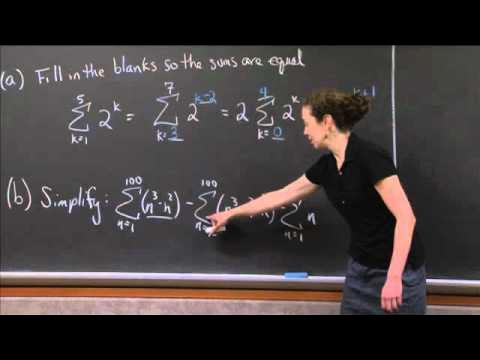


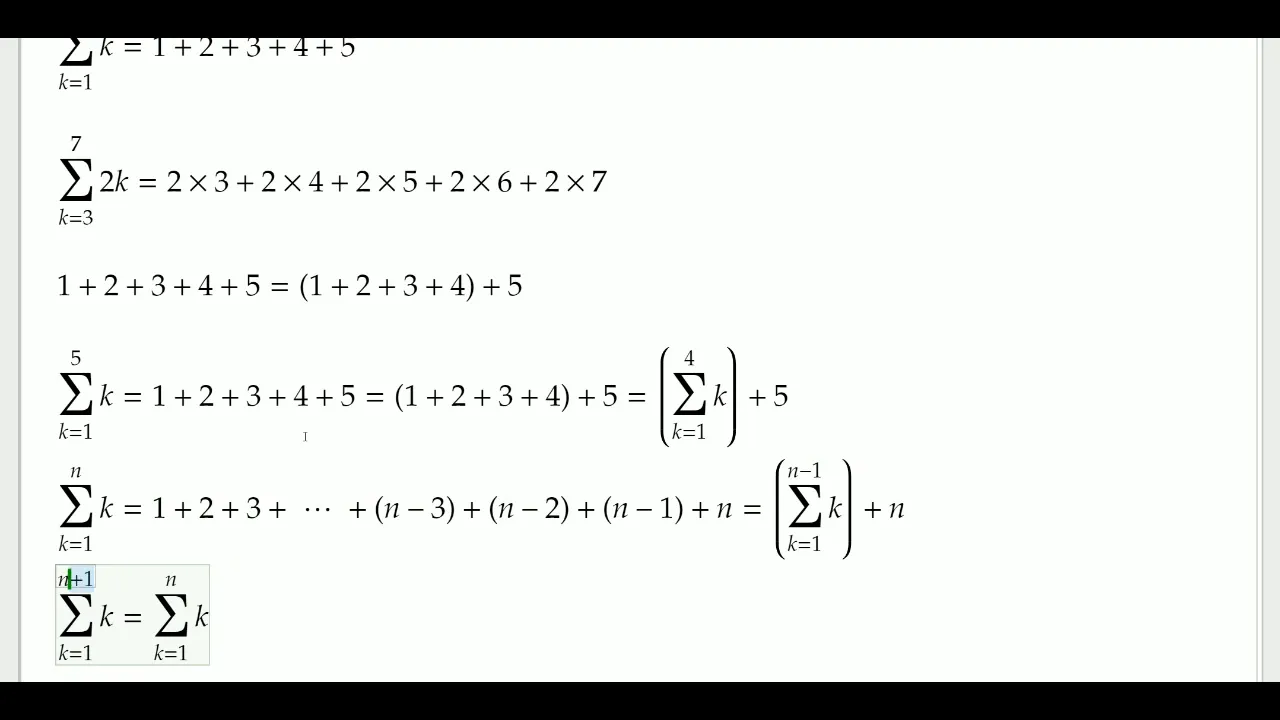
![数学B 数列3.和の記号Σ[1]Σの使い方](https://i.ytimg.com/vi/qIdT45112x8/maxresdefault.jpg)

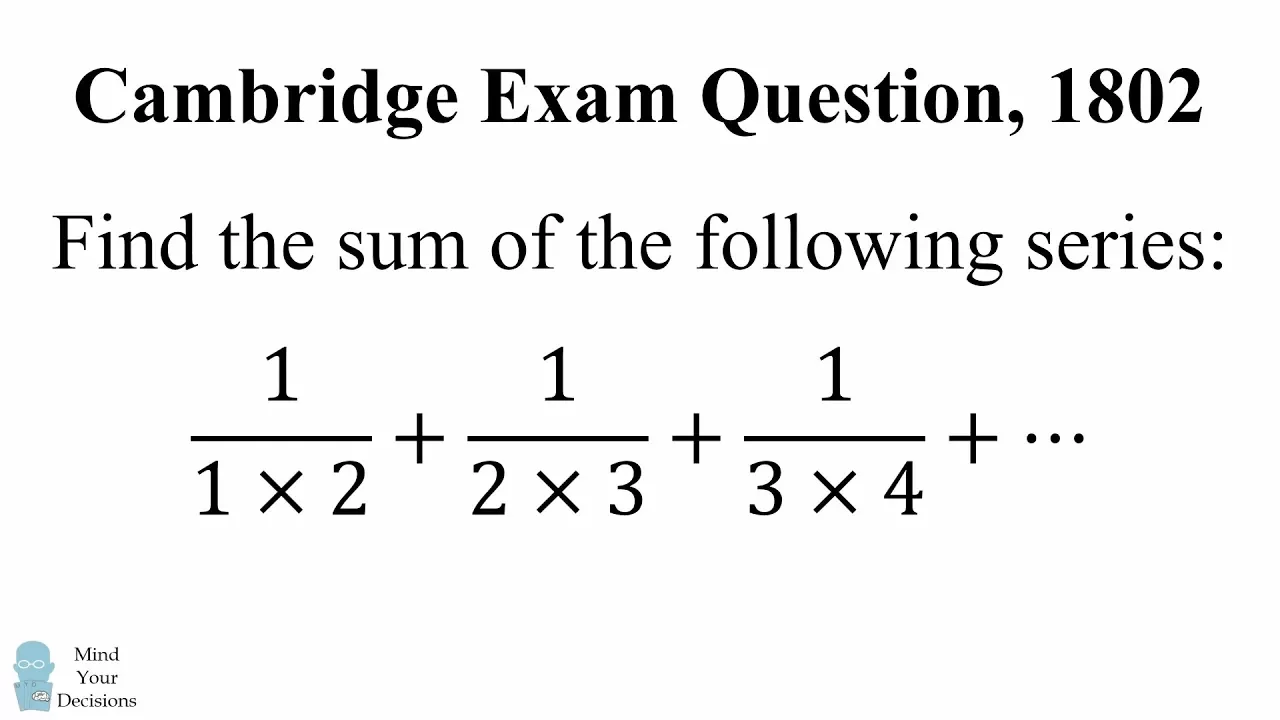



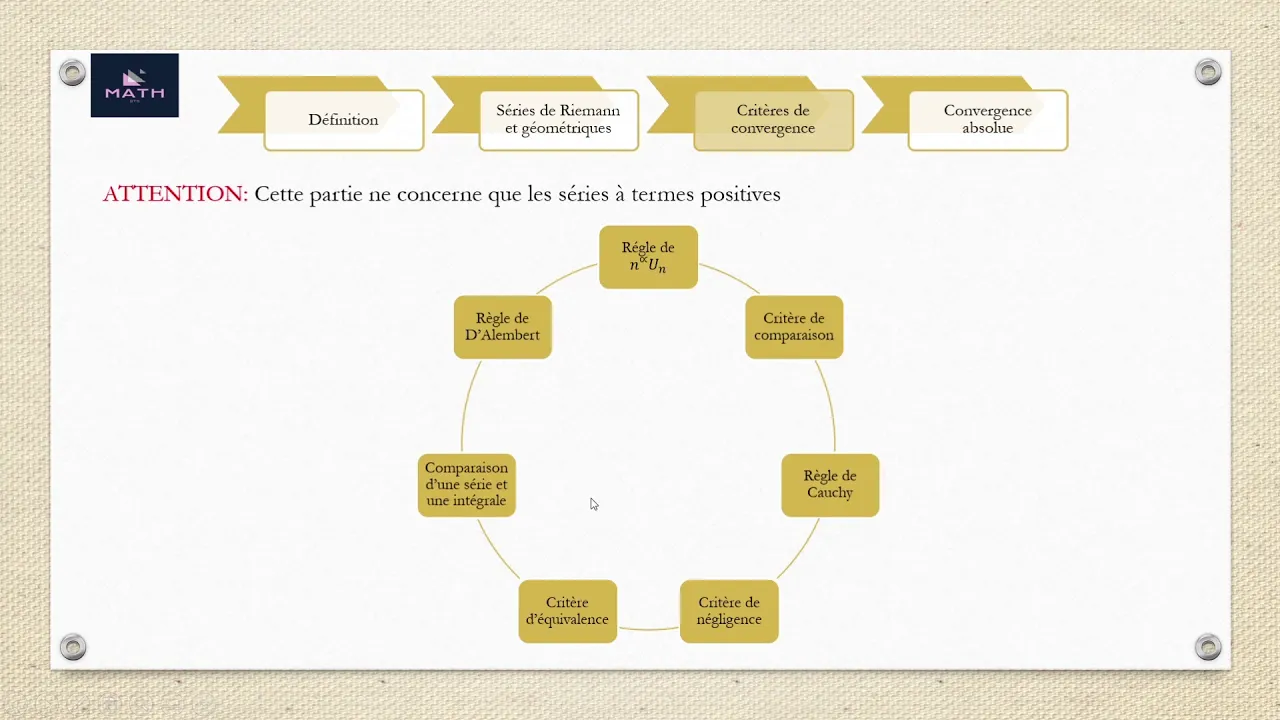








An infinite series converges if the limit of its partial sums exists as a finite number, and diverges if the limit equals infinity or does not exist; the divergence test states that if the limit of the sequence aₙ as n approaches infinity does not equal zero, then the series must diverge, though if the limit equals zero, the series may either converge or diverge and requires additional tests to determine.
Convergence and Divergence of Series: Calculus 2 Tutorial
Added:Understanding the concept of sequences and how to find the limit of a sequence as n approaches infinity.
Proficiency with limit laws, including evaluating indeterminate forms and applying L'Hôpital's Rule.
Familiarity with sigma (summation) notation and rewriting algebraic expressions.
Basic knowledge of algebraic techniques such as partial fraction decomposition, which is essential for analyzing telescoping series.
Advanced convergence tests, including the Integral Test, Direct/Limit Comparison Tests, Ratio Test, and Root Test.
The study of alternating series and distinguishing between absolute and conditional convergence.
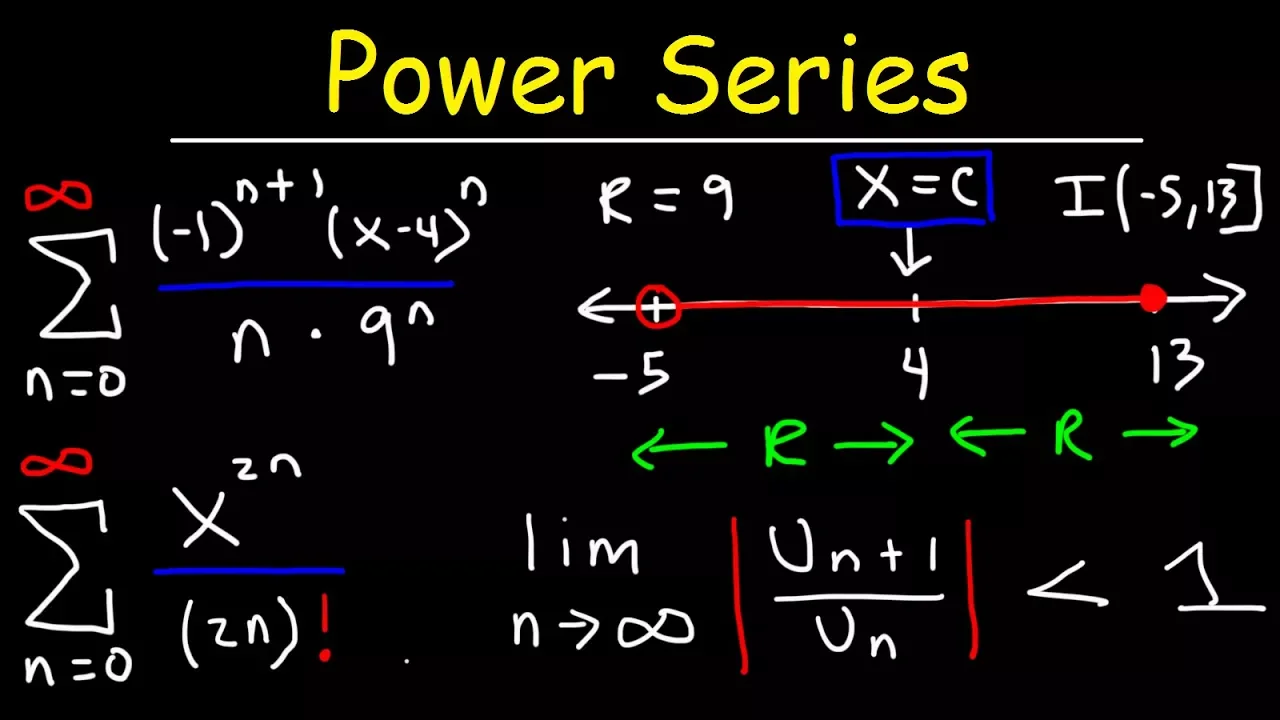
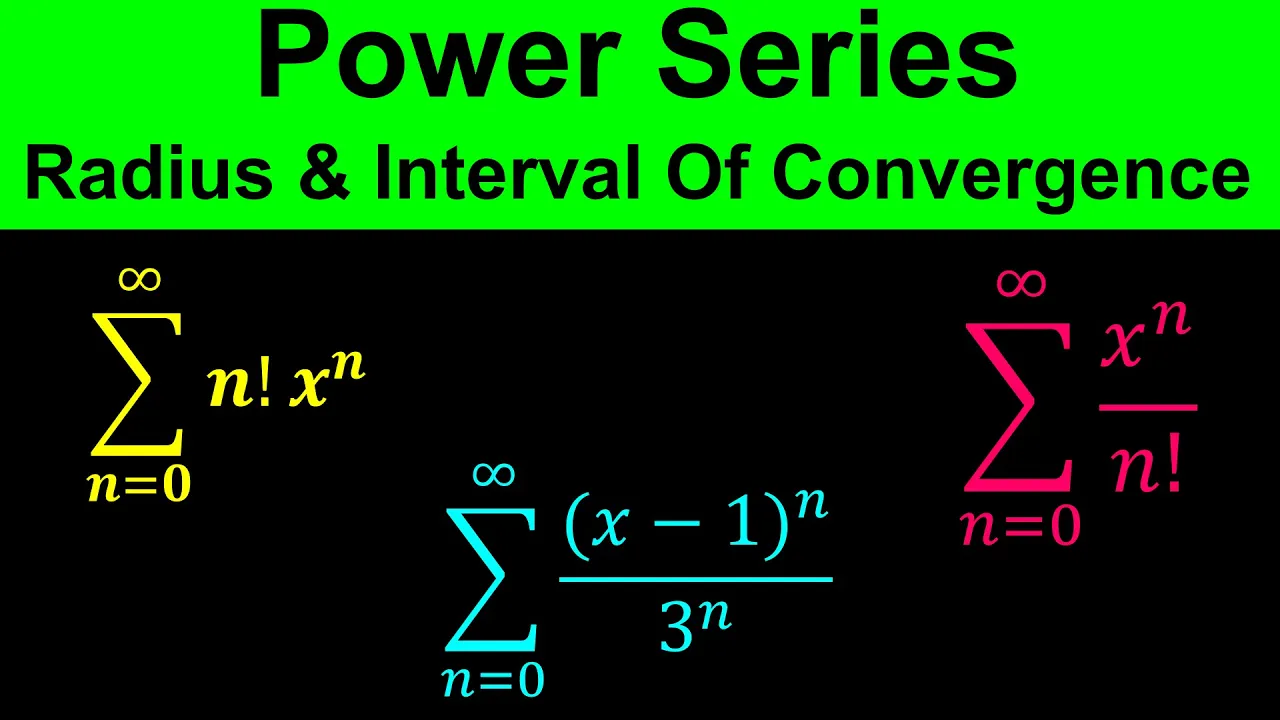
Introduction to Power Series, including finding the radius and interval of convergence.
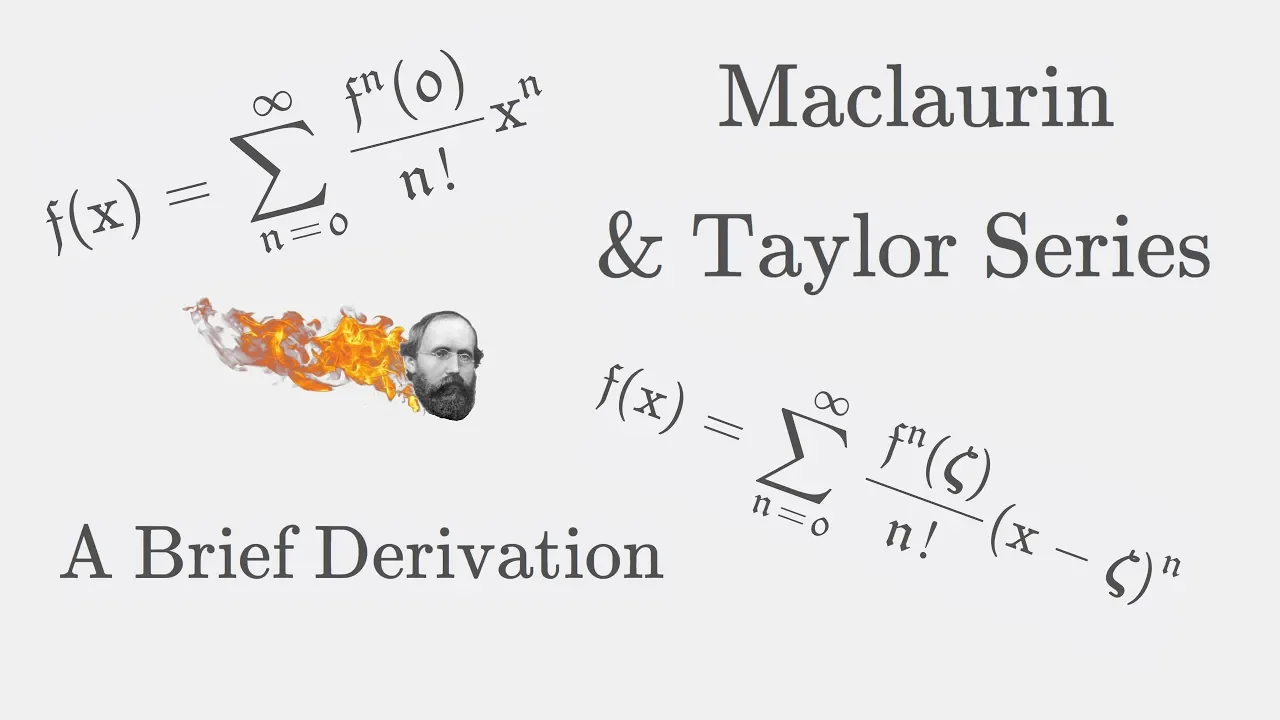
Taylor and Maclaurin series for approximating transcendental functions as infinite polynomials.
Practical applications of infinite series, such as solving differential equations and signal processing (Fourier series).
1.7M views23.3Klikes16:18Original Release: 2021-01-20
in this video we're going to talk about how to determine if a series will converge or diverge so here's an example let's say if we have the infinite series of 2n will this series converge or diverge what would you say now before we get into it you need to know the difference between a sequence and a series so in this example the sequence a sub n is 2n so if you list out the terms of the sequence the first term a sub 1 is going to be 2 the second term a sub 2 is going to be 2 times 2 which is 4.
the third is going to be 2 times 3 which is 6 and then 8 and so forth and so here we have a sequence of terms now s sub n relates to the partial sum so for example s sub 1 is just a 1 which is 2.
s sub 2 is the partial sum of the first two terms so that's a sub 1 plus a sub 2 which is equal to 6. s sub 3 is the sum of the first three terms which is 12 and s sub 4 is the sum of the first four terms which is going to be 12 plus 8 or 20.
so if we want to we can write out a sequence of partial sums so sub n we can say s sub 1 is 2 s sub 2 is 6 s sub 3 is 12 s sub 4 is 20 and if the sequence goes into infinity this will keep on going forever and so this is termed an infinite series so this is equal to s sub infinity is the sum of the first infinite terms now how can we tell if it's going to converge or if it's going to diverge how can we find the answer a more accurate way to describe this is to say that this is equal to the limit as n approaches infinity of s sub n which you could think of it as s sub infinity but that might not be the most appropriate way to write it so this means we're looking for the sum of an infinite number of terms now in order to determine if the series converge you need to know if the sum exists now let's go back to sequences if you want to determine if the sequence is convergent or not we need to do is take the limit as n approaches infinity of the sequence a sub n and if it's equal to a constant then we say that the sequence a sub n converges now if the limit increases or decreases without bound or if it doesn't exist then we say that the sequence a sub n it diverges now the same is true for a series meaning the same concept is true now let's say if the infinite series or simply series let's use a general sequence a sub n is equal to an actual number which we'll call s so that's the sum of the infinite series then the series is convergent it converges but now let's say if you can't determine the sum let's say if the sum goes to infinity or something positive or negative infinity then you can't really get a specific number there so therefore the series diverges so how can we determine the sum s how can we know if it exists or not because if we can determine it then we can determine if the series is going to converge or diverge so what you need to do is find a general equation for the partial sums sub n and it can vary depending on what situation you have once you have that then you need to take the limit as n approaches infinity for s sub n this is equal to the infinite series the sum of the infinite series and so if you can actually get a number for this value and prove that it doesn't equal infinity or it doesn't exist if you can get a finite value as n approaches infinity for some general formula for s of n then you can show that the series converges so let's start with this example determine if the infinite series converges or diverges so this particular series does it equal infinity or does it equal a number like eight if it equals a specific number it's going to converge if it equals infinity it's going to diverge now let's think about what this means so we know that a sub n is 2n and so if we list out the terms the first term is going to be 2 the second term is 4 the third term is 6 and then 8 and then 10 now we have a summation notation so we're adding these terms and this will keep on increasing all the way to infinity so just by looking at it we know that the sum the infinite sum is infinity just by looking at it intuitively so that tells us that this series diverges let's see if we can confirm that answer another way now we need to determine a formula s sub n for this particular series let's say if we wish to determine the partial sum of the series up to some value n how can we write a general formula for that well you need to know what type of sequence you're dealing with so here we're dealing with an arithmetic sequence and to find the partial sums of an arithmetic sequence you could use this formula it's a sub 1 plus a sub n divided by 2 times the number of terms now a sub 1 is the first term which is 2.
a sub n well we have it here it depends on what n is so we're just going to write 2n and then there's an n out front so 2 plus 2 n divided by 2 that simply becomes 1 plus n or n plus one so our general formula for the partial sums is n times n plus one now let's take the limit as n approaches infinity for the partial sums s of n so that's the limit as n approaches infinity of n n plus one so what does that equal so if you have infinity times infinity plus 1 what will you get a large number times a large number will give you an even larger number so this is going to equal infinity and so we could say that the infinite series that we have here let's use the general formula a sub n that's equal to the limit as n approaches infinity for the partial sums s of n and we found that it's equal to infinity so it doesn't equal a finite number so because it equals infinity that tells us that the series original series diverges and so that's a more systematic way of determining if the series is going to converge or diverge find the sum if the sum is infinity it diverges if it's equal to a finite number it converges another test that is very useful that can help you to quickly tell if a series diverges is called the divergence test and here's what it states so let's say if we have some sequence a sub n if the limit as n approaches infinity of the sequence a sub n if it does not equal zero then the series the infinite series diverges so what about if it equals zero so if the limit as n approaches infinity for the sequence a sub n let's say if it's equal to zero then the series it may diverge or it may converge we don't know so we have to use other tests to figure it out but the divergence test is a quick way to tell if it's going to diverge for sure or not if it does equal 0 then you need to use another test to see if it's going to converge or diverge but if it doesn't equal zero then automatically you know that it diverges so let's go back to the first problem that we started with go ahead and use the divergence test to show that this series is divergent now the first thing you need to do is determine a sub n and so as you know a sub n in this problem is simply 2n next take the limit as n approaches infinity of a sub n so the limit as n approaches infinity for 2n does that equal 0 it does not two times infinity is equal to infinity so since the limit as n approaches infinity for a sub n because it does not equal zero then we can say that the series diverges and so as you can see it's a quick way to tell if it's going to diverge if it did equal zero then it may converge or diverge here's an example that you could try determine if the series converges or diverges so the first thing i'm going to do is start with the divergence test so we could see that a sub n is equal to 5n plus 3 over 7 n minus 4.
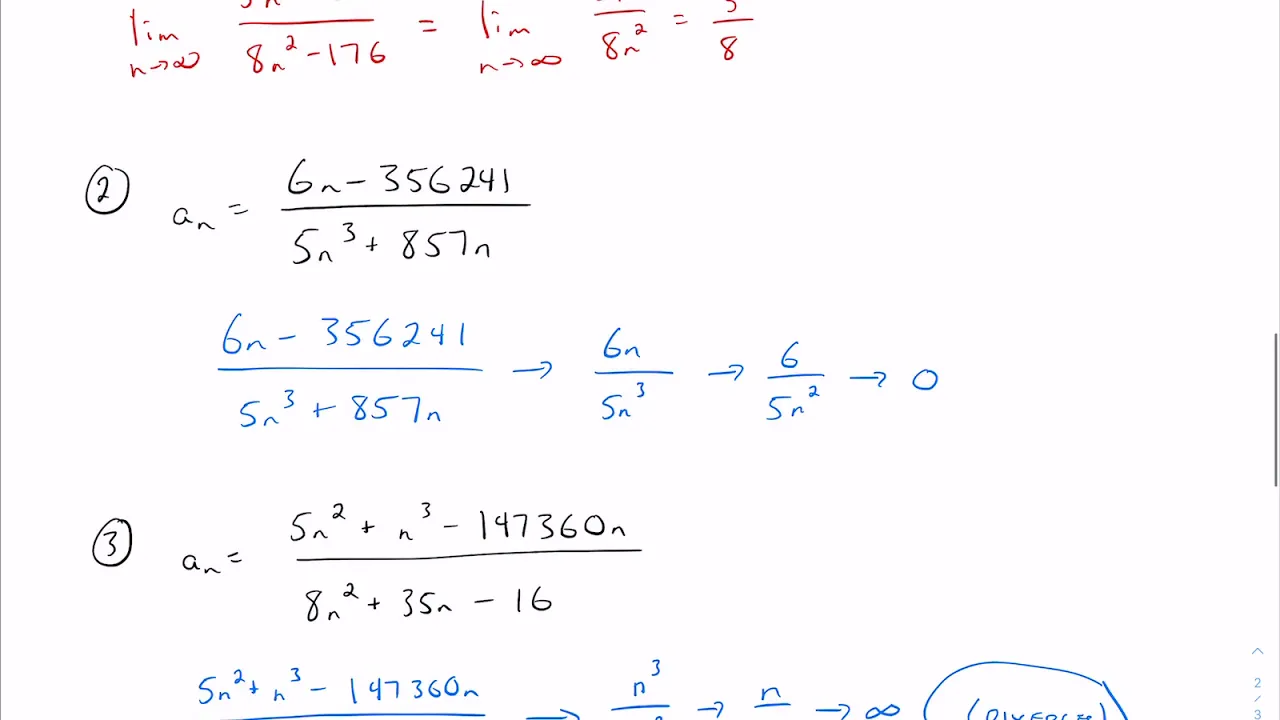
so what is the limit as n approaches infinity for a sub n what answer will you get so let's begin by multiplying the top and bottom by one over n so we're going to have the limit as n approaches infinity and this is going to be 5 plus 3 times 1 over n divided by seven minus four times one over n now keep in mind the limit as n approaches infinity for one over n will always be zero and one divided by a large number will equal a small number so this becomes five plus three times zero divided by seven minus four times zero so this is equal to five over seven which does not equal zero so therefore because the limit as n approaches infinity for a sub n it does not equal zero then we could say that the series it diverges according to the divergence test now let's think about what this means as n approaches infinity the sequence a sub n converges to 5 over 7. the sequence converges because the limit exists but the series diverges because the sum at an infinity it doesn't equal a specific number so in this problem just keep in mind the sequence is convergent but the series is divergent so if we think about what this really means as we approach an infinite number of terms we're going to keep adding 5 over 7 as n increases and so if you keep adding 5 over 7 when n is very large the sum will continue to change it's going to get higher and higher and higher so it doesn't stay at a specific value so anytime the limit as n approaches infinity of a of n if it doesn't equal zero the sum at infinity will keep going higher and higher and higher the only way for the sum to stay at a finite value is to add zero let's say the finite value is a hundred let me use an example so let's say s of one thousand is 200 and let's say the limit as n approaches infinity for the sequence is 5.
so let's say that a of one thousand it's also approximately five so s of one thousand and one will be two o five approximately s one thousand and two would be two ten and so the sum will continue to go up as n increases so therefore this will never stop at a specific value now let's say let me get rid of this stuff let's say if the limit as n approaches infinity for a sub n did equal to zero then and let's say a of 1000 is approximately zero it might be like point zero zero one but let's say it's close to zero then s of one thousand and one is going to approximately be two hundred s of one thousand and two will still be two hundred because if you keep adding a small number to this that keeps getting closer and closer to zero it's going to stay at approximately 200. in that case the sum converges and so that's why in order for the series to converge the limit as n approaches infinity for a sub n so when you have a very high term it has to be close to zero otherwise the sum will continue to increase so if you want the sun to stay at a finite value you have to keep adding zero to it so in order for the series to converge this must be equal to zero but if it doesn't equal zero then it has to diverge if it does equal zero keep in mind it may converge or it may diverge this series doesn't have to converge but it may converge or the series may diverge
Up Next

44:03
Introduction to Number Theory Lecture 1 | Math 115
@richarde.borcherds7998
261.2K views•2022-01-13
4:43
Elliptic Curve Cryptography Explained: ECC, ECDSA, ECDH
@PracticalNetworking
28.5K views•2024-10-21
12:11
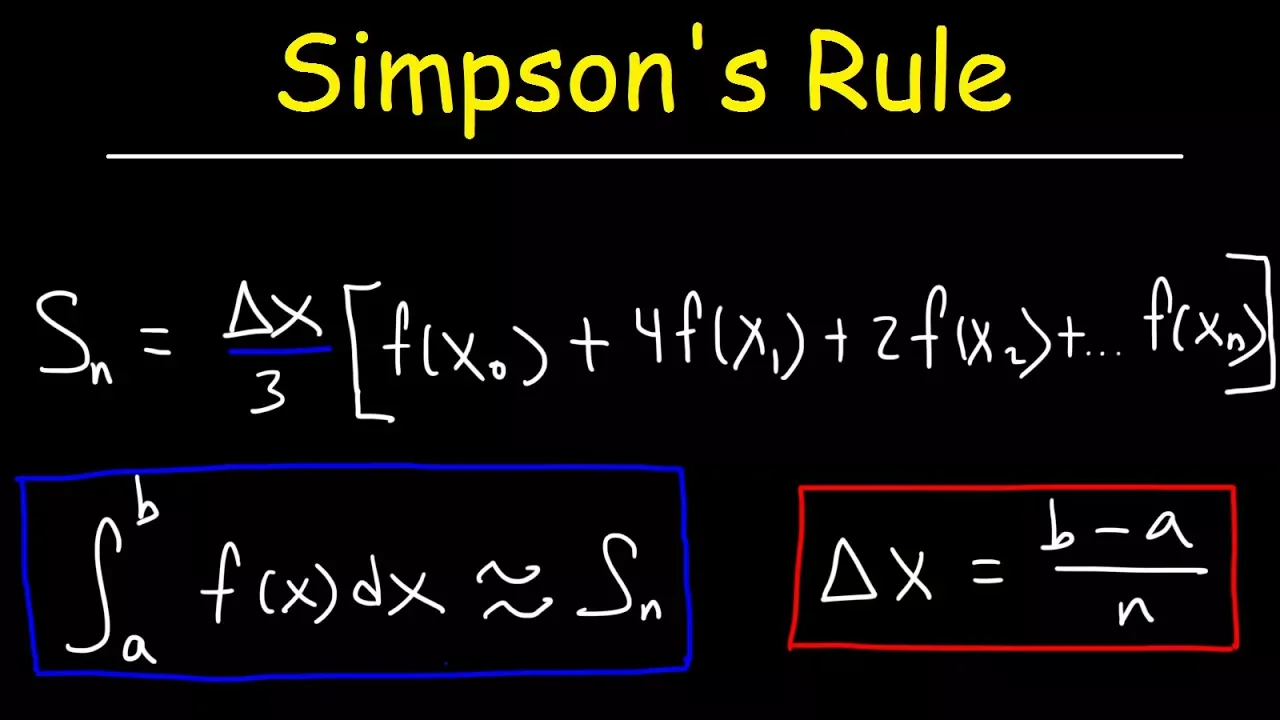
Simpson's Rule & Numerical Integration | Calculus Tutorial
@TheOrganicChemistryTutor
812.9K views•2018-03-13

6:00
The Mathematical Impossibility of Accurate World Maps
@Vox
23.3M views•2016-12-02
Related Study Plans & Knowledge Roadmaps
Structured learning paths in Mathematics
mathematics
Tensor Calculus: Vectors to Riemann Curvature
01Mathematical Foundations: Linear Algebra & Calculus
02Covectors, Dual Spaces, and Tensor Basics
03The Metric Tensor and Index Gymnastics
+ 2 more learning modules
40h5 modules
Explore Roadmap
mathematics
Gödel's Incompleteness: Logic, Proofs & Limits
01Introduction to Formal Systems & Hilbert's Dream
02Set Theory, Cardinality, and Cantor's Diagonal Argument
03Arithmetization and Gödel Numbering
+ 2 more learning modules
14h5 modules
Explore Roadmap
mathematics
Galois Theory: Fields, Groups & Solvability
01Foundations of Abstract Algebra: Groups & Fields
02Polynomials & Field Extensions
03Splitting Fields & Symmetries
+ 2 more learning modules
24h5 modules
Explore Roadmap
mathematics
Non-Euclidean Geometry: Models & Geodesics
01Euclid's Fifth Postulate and the Birth of New Geometries
02Hyperbolic Space and the Poincaré Disk Model
03Geodesics: Defining Straight Lines in Curved Spaces
+ 2 more learning modules
15h5 modules
Explore Roadmap