








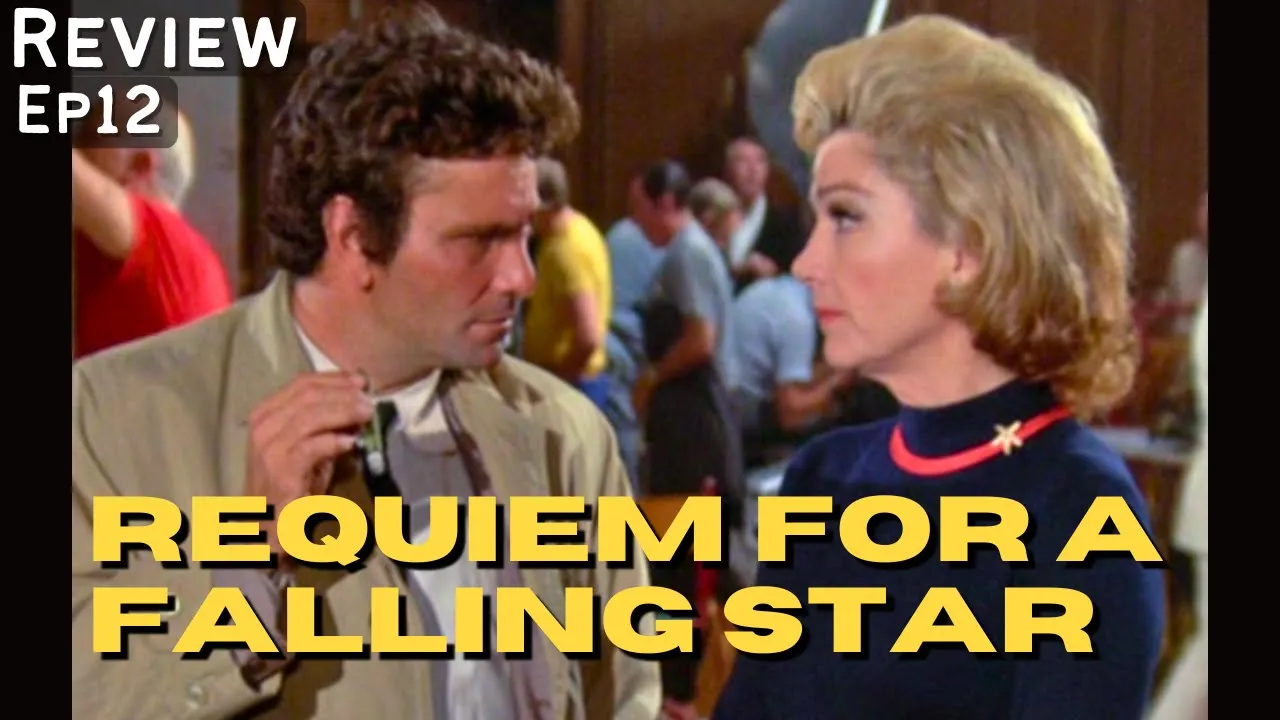


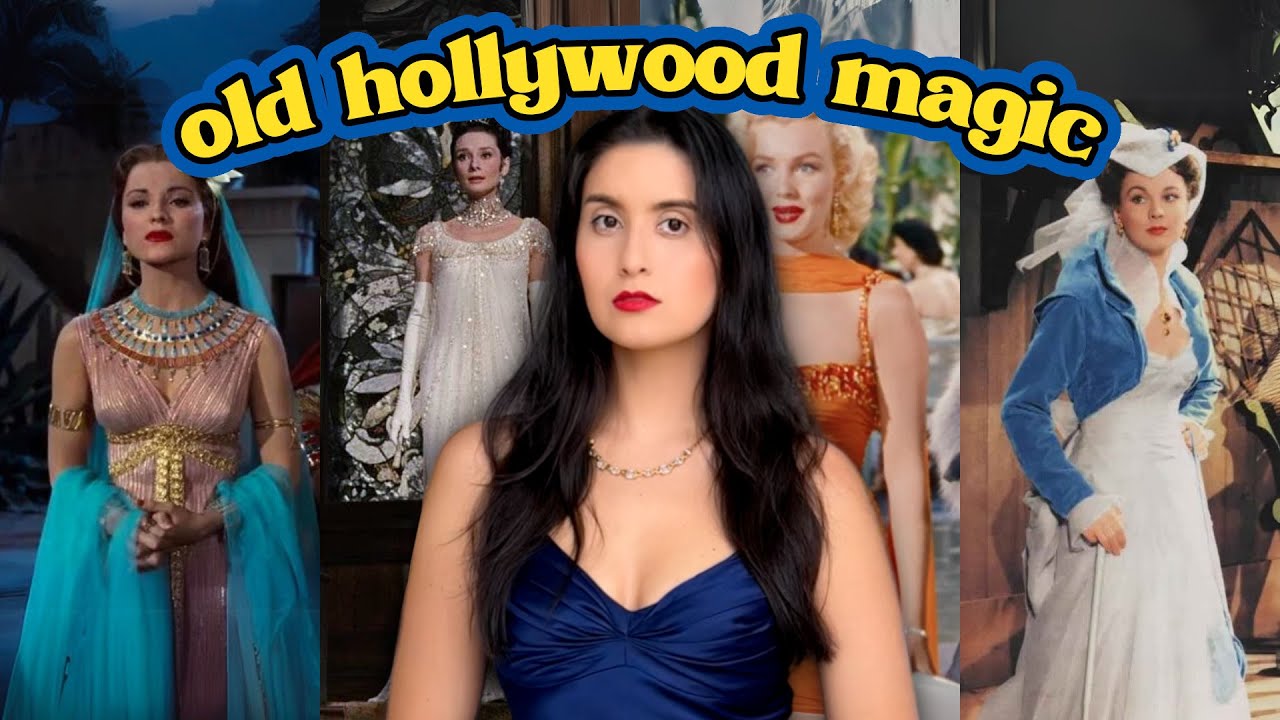





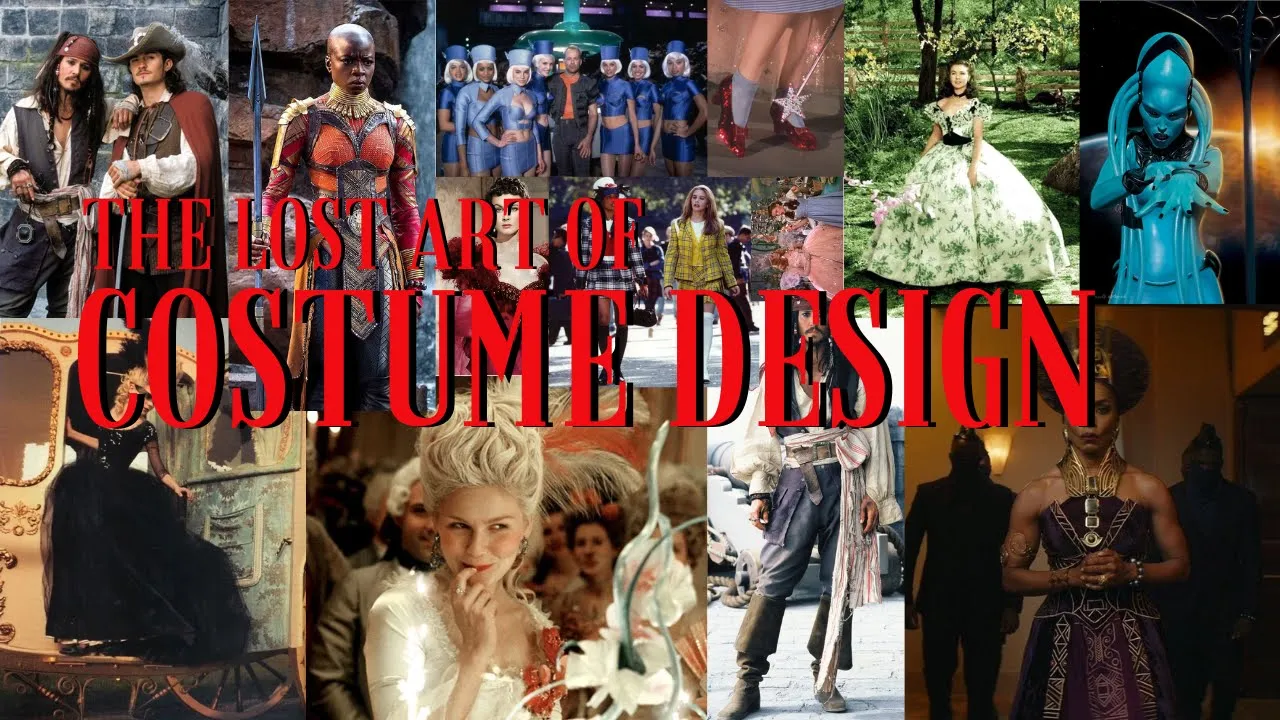





Costume design serves as a critical narrative tool in filmmaking, where designers translate screenplay analysis into visual character representation by creating costumes that are most appropriate for each character in any given scene, thereby enhancing the story and helping audiences suspend disbelief; this process involves extensive script analysis, attention to historical and contextual accuracy, and collaboration with directors and actors to bring written characters to life through clothing choices.
Adam Savage Explores Hollywood Costume Design Exhibition
Added:The fundamental role of visual storytelling and mise-en-scène in cinema, specifically how visual elements establish character and theme.
The distinction between fashion design (creating apparel for consumers) and costume design (creating garments that serve a narrative and character).
Basic color theory and psychology, and how color palettes in costume design evoke specific emotional responses or signal character alignment.
An overview of Hollywood history, particularly the evolution of the studio system and the historical significance of costume departments.
Advanced study of legendary costume designers (e.g., Edith Head, Colleen Atwood, Sandy Powell) and their specific contributions to cinematic history.
The technical art of 'costume breakdown' (dyeing, distressing, and aging fabrics) to achieve realism and support character backstory on camera.
The impact of technological advancements on modern costume design, including 3D printing, smart textiles, and integration with CGI/motion-capture elements.
The curation, conservation, and preservation practices of historical film textiles and artifacts in museum settings.
Practical application: Conducting a formal film analysis focusing on how a character's arc is visually communicated through costume changes.
301.4K views6.4Klikes30:06Original Release: 2015-01-29
[Music] Hey everybody. If you know me, you know that I am obsessed with costumes. And if you are even remotely interested in costumes, a once in a-lifetime event is happening in Los Angeles at the Academy of Motion Picture Arts and Sciences. And it is an incredible costume exhibition curated by my friend Deborah Nadulman Landis, a master costumeumer. And I'm about to go on a tour of this exhibit with Deborah. She's going to walk me through truly an unbelievable array of costumes from the entire history. 100red years of cinema costumes are in here.
And we're about to take a look. I can barely wait.
[Music] Good morning. What an unbelievable thing this is.
I'm just my jaws dropped.
Good coming through with this writer, the screenwriter. And John said, you know, I how do you get the general public, the audience from script to screen in as few steps as possible? And Custom designers are always encountering this uh frustration and confusion about fashion. You hear this fashion and film, but that well not only are the commodities so different, they're selling clothes, we're selling movies, so that's completely different. There's a long list of differences, but really the primary differences, we start with a screenplay.
So everything about a movie, and we think of movies as being so are visually based, but they're not. They're storybased, right? And we have a screenplay. We have literature. We're readers.
We're script analyzers. And all of our friends are too. All of our colleagues are too. So we start with a screenplay.
And that screenplay is the Google map, the template of telling us what we're doing.
So this is what I did. Yeah. I I have these incredible uh animators in London, Splint Opera, and I I pulled the I read the scripts. I pulled the scenes from the screenplay, and then I highlighted them for what would jump out to a costume designer that would give us clues to the people.
Right.
Right. Right. Right. Exactly. What your brain would be doing as you were reading.
Exactly. So we're reading the script and if you were doing props or if you were the set decorator or if you're the special effects person you would be highlighting it in a different way and writing different marginalia. Right.
Right. Right.
So what they did is they took my highlights and they animated my highlights in a clever way.
So every single one is animated according to my highlights.
Everyone was tiny by the way. Every costume I'm looking at is like they were tiny.
They're very small.
Did you have trouble finding mannequins of the right sizes?
Oh, every mannequin is customade. No.
And then created a mannequin for every costume. And you'll see as we go through the exhibition that they're not just standing in store poses.
They're all in Yes.
very animated.
Very animated. And I I tried, one of my biggest challenges was how do I bring the clothes to life?
Right. Right.
How do I I didn't want to disappoint anyone. I didn't want to disappoint us.
We're such fans. We love our people. We love these stories. And I I wanted them to I wanted them to come alive in the room. I wanted to make a cinematic experience for for fans and and make it work for scholars too.
Costume exists in two worlds, right?
First, it's all about the story. Who who are these people? Second part, they have to fit into the world that was created.
So, I picked Jeff Bridges as the dude designed by Mary Zafries, who works for the Cohen brothers. And I took the dude in his natural habitat, right? He was designed to be there. And and then I put him in Saving Private Ryan. I I put him at a wedding.
And this notion that costumes have to be appropriate, right? That's the definition of good costumeuming. Yeah. That it's the most appropriate.
That's the most appropriate thing for the character to be wearing in any scene.
You know, something can be really beautiful and be really wrong for a scene and that's not such a good costume.
Yeah. Yeah.
Did you notice that the Gap t-shirt is backwards?
Oh, no.
That's a Jaclyn West design for David Fincher's movie Social Network. It's Jesse Eisenberg. So, it's it's backwards because Social Network was shot entirely on stages in Culver City for Cambridge for Harvard University, right?
And the the two weeks that they shot on location was in John's Hopkins. Harvard said no.
So, Fincher, David Fincher shot the entire exterior in a mirror.
How come?
I'm just going to say that again. So he shot it he shot it all through a mirror because in John Johns Hopkins the quadrangle was smaller or different proportion than Harvard. And so everything when Jesse Eisenberg crosses the green was shot through a mirror. So all the vans, all the trucks, all the windows of all the shops, he walks into a uh pub, everything was mirror writing, including his gap teacher.
That's crazy.
It's I mean, I knew about that story from Titanic, the left side and right side. I had no idea. That's right. We have There are two Titanic dresses. One closes on the left, one closes on the right. And we have one of them here. It's the same story, but that's why that t-shirt's backwards. and the stories in the label.
How long did you think about this before the the the flow of the exhibition started to take form in your head?
That's a great question. Uh this this exhibition is built from my teaching PowerPoint.
Okay.
So, I have a teaching keynote because I had to figure out nobody understands what costume designers do. They don't understand our contribution, right? It's just all about this Halloween stuff.
And so, you know, when your greatest work is stuff that you never notice when when your highest compliment is, I love the movie. What did you think of the costumes?
[Laughter] I'm so sorry. I love the movie. When I go see it again this weekend, I'll not You're right. So the greatest work to be a virtuoso is that you don't notice anything. How do you how do you make that clear what that contribution is? You know, we did a thing on tested where I bought a samurai costume from Prop Store of London from 47 Ronin.
Of course you did.
They gave me a deal on it cuz the movie tanked.
Of course, and the the armor is really easy to wear, of course, because it's, you know, meant to be worn all day. And we got a ton of response on the website from it.
So we wanted to do this again. So, I bought a pair of uh World War II costumes from the TV show Pacific. Okay.
And I thought, I wonder how much response this is going to get cuz these are just military uniforms. Same level of response. People were astonished to see the wear and tear worn in the acrylic paint on the so it was so exciting to see all the comments come in from people.
Yeah. Well, that's the good news. That's the good news. Well, when I started teaching, I didn't teach costume designers. When I started teaching about 12 years ago, I wanted to teach directors and with the directors and the directors are mostly guys and and I would have directors, young directors come into my come into my classroom and say, "Professor Landis, I don't know how to sew. Can I be excused?"
And I and my response was, "Do you know how to read?"
Yeah.
Yeah. And so I said, "Look, have you written a screenplay?" And every young director's written a screenplay.
How do we make the people in the screenplay come to life? That's what I'm here to help you do. Forget about fashion. Forget about that. Your girlfriend likes to shop, right?
That's not what this is.
Is there is there anything in here as you were gathering it that opened up a new way of looking costume for you? What do you think?
Well, I had to figure out a way to unpick, unpack, explain to the general audience. I mean, I really wanted this to be mostly about contemporary and modern movies. And what you're looking at in these two plants are really modern movies, modern movies of their time.
I I'm I I want this to stay up for years.
You know, our I my designer Roger Man in London said, "You when we walked out, when we opened the exhibition, we walked out and he said, "You know what we've done? We've created a permanent exhibition for a temporary show."
Yes. Yes, you totally have.
Yeah.
So, where where do these mannequins all end up after this? Like, who knows?
eBay, like everything else. Yeah. Oh, one of the hard parts about um having a conversation in these galleries Yeah.
is that after we finished designing the show, I thought um I had this feeling that something was really missing because as I said, I wanted it to be a cinematic experience, an emotional experience. And then I woke up in the middle of the night and I thought, "Oh, I need film scores, right?" And this is really all internal. I'm thinking about this and thinking, how am I going to put Gone with the Wind over Darth Vader, right?
How am I going to put uh Indiana Jones over Chaplain or Mildred Pierce? Doesn't make any sense.
And then I had to fight to commission a new score. So, what you're hearing is 60 minutes of composed music just for this exhibit. Oh my gosh. Cuz it's reminiscent of movie after movie after movie.
So, my husband took a group of journalist around the show in London.
And uh one of these journalists said, um, is this John Williams? And John said, "No, it was composed for the exhibition." And the journalist said, "Oh, oh, okay. What movie is it from?"
So, right. So, it feels like a movie.
And so, what I'd like you to know is that all the media in this exhibition is is synchronized on a click track to the music.
Wow.
And it was inspired by Disney's Electrical Parade.
Wow. Wow. I think that's why people say it feel it's interactive because your your just like your eye is guided through a Renaissance painting by the artist's expertise. The same is happening here.
But it's more than your eye. It's your eyes and your ears. And Adam, if I could have put you in a boat, you would we would be in a boat right now going through the exhibition. And so the score greets you as you come in and then takes you through the three acts and then with a big finale out to the gift shop. Right. So let's keep on going through. I love seeing Tyler Fight Club.
All of these clothes, all of these clothes are manufactured.
Okay. Designed and manufactured. Why fight club? So many fights, right?
You could not just buy a piece. You had to have doubles, triples, quadruples. Right?
This is the thing most people also don't realize is that the clothes don't deteriorate through the course of making a movie. Every scene in which they're deteriorated is a separate piece, right? And then think about Tyler Deran.
He's a dumpster diver, right? Complete dumpster diver. So this is what Michael Taplan did. You see this red jacket?
This is a key piece of costume from Fight Club. He had to make a million of them or like five, right?
Yeah. Then, so he found old leather. He aged them. Then he want wait. Then he wanted them to look like they came from a thrift store. So then he took manila tags, stapled the manila tags with the sizes on the on the hem of this jacket. Ripped off ripped off the manila tag. So just the little pieces were left. Right.
That's the level of this dress.
Whatever I think of the movie, that dress is one of the most astonishing things.
And that was designed by Anthony Powell for Temple of Doom.
Absolutely gorgeous dress. I mean, no wonder Steven fell in love with uh Kate.
Yeah, with Kate Capshaw. No, it was a sensational dress. Three of Indy's girlfriends from three consecutive movies.
Well, and this is this is Marion is my favorite character in movies. This is my earliest like that's the kind of girl I want to marry. And I did. I totally did.
Great.
A friend of mine said, "The girl you want to marry is a girl you can throw the gun to."
Okay.
I'll remember that.
Isn't that nice?
Yeah. Yeah. That's great. Not the girl who would stop the bullet for you.
No. No.
No.
No. And these are all loaned and Indie and Han Solo and Darth Vader in the next room. They're all loaned personally from George Lucas. And I went up to Skywalker and I I think I'm the only costume designer to have visited Skywalker. And it's true. You had to have the mother.
Right. Well, so this is now Yeah.
Like this is one of my favorite costumes in history.
You were telling me Lucasfilm wasn't sure which was the original.
Oh, they didn't know. No, they had no idea. Well, why would they know?
There's like 50 of them up there.
Oh. Oh, 250. No, because for every con conse consecutive raiders they made 40 more and 40 stunt men.
Yeah. And con and units, you know, they have concurrent unit shooting for a second, third unit and doubles and Yeah. And they didn't know.
And and Adam, I I was 27 years old when I designed that. So, I spent uh hours going through jackets and I and I I had to say to my my assistant Natasha and to Leila up at Lucasfilm, "How am I going to remember?" And then I did. And here here's the deal.
For Raiders of the Lost Ark, the jacket has brass zippers.
And I want you to see on the side of the jacket, it's a D-ring. D for Deborah.
Yeah, this closure is a brass D-ring. On the other films, uh on the waist tab, it's it's a long narrow rectangle with with two little teeth, right, that hold the belt tab. But no, this is the one of one jacket. One of one jacket, one of one hat.
And this jacket I read, you aged this jacket the night before the shoot with Yeah, because I had a I had a huge problem. I had Tom Celic, remember? So, right. And he's giant. Yeah, if he's 65, uh, girls would say a hunk of burning love and then then anyway, killer smile.
Gorgeous. And I had made a complete prototype of this costume for him. So, you know, Harrison was he had left for Magnum PI.
Yeah.
And I had Han Solo and I didn't He's almost exactly my He's like 5'10.
No. No. 6'2.
6'2. Yeah. But no Tom Celic. No. No. No.
Yeah. Harrison. No. and Tom Cell, right?
We were so disappointed.
Oh.
And and so I I had no choice but to make the jackets in London. So I had designed the costume for Tom Cull and then I continued working with Harrison and designing the costume at Burmans and Nathans and we made the entire costume at Burmans and Nathans in London. So only one jacket was ready for the first day of shooting. And the first day of shooting it was Lar Roelle France and I carried it in my own luggage and it was brand new right from Burman's and so I didn't have any alternative. So Harrison bought me a glass of wine. I sat with Harrison. It's a true story. I mean he's my backup on this. And and I had brought I brought sandpaper. I brought mineral oil. I brought shoe shoe polish. I had a suede brush. I had Harrison. Harrison's a carpenter. He always carries used to be able to carry a big Swiss Army knife.
And so with those things, I aged it for the following day so it was ready for 4:30.
You put it on him and had him bend his elbows and stuff like that to get the weather.
We really worked on it. Great.
Yeah. And I sat in the hat and and aged the hat myself. Everything was brand new. We had one jacket and one hat and one complete costume for the first day of shooting at Lower Show.
Wow.
Yeah. And and actually uh I did publish this in the catalog, but Steve knew exactly I had to make an archetype come to life.
So finally I had a I had drawing paper and he was talking talking. Finally I just gave him the sheet and I said, "Draw it for me."
Right.
And then I loved it so much I had him sign it and date it. So the original the original is in Max's Max's room.
Right.
Yeah. Max's legacy.
Right. Now to almost the polar opposite.
Yeah.
Of one.
Aren't these boring? I mean, they're so boring. I mean, this is what you hear Hollywood costume and this is what everybody give the public what they want. They're gorgeous. They're gorgeous. But probably the easiest genre to design is period.
Really?
Yeah. Of course, because you have expectations and you can meet them. And the costume designer is considered to be the expert.
Right. Right.
And and um everybody expects them to look something like this. These are particularly gorgeous examples. And really the the key here is it's four different Queen Elizabeth IS. So it's Quinton Crisp in drag.
Yes.
Elizabeth the Golden Age, Kate Blanchett, Betty Davis as Elizabeth in the Virgin Queen and the Red. and then Judy Dench, Shakespeare and Love as Elizabeth the First.
So, we talk a little bit about period movies, but period movies were never going to be the subject of this exhibition. You can tell because this exhibition really in a lot of ways it's misnamed Hollywood costume. Now, what does that mean? Um, it's really about the contribution of the designer of the costume designer. It's not so much about the clothes. clothes are here to represent those designers and they're about the story and they're about the story and the people we love in the story.
You know, it's funny at ILM, one of the things we would do as model makers, as I've said, a good model maker knows the story behind every grieving you put on a spaceship. There has to be a reason, of course, and there are different reasons in the Star Trek universe than there are in the Star Wars universe. You need to know the difference. And one of the things I've watched happen with CG over the 15 years that I've been in the business, 20 years, is the digital modelers have gotten better at understanding that point. And it's a lot of it because they took physical model makers and turned them into digital model makers who then understand, no, that container can't just look like a container. It's got to have wear and rust that's real and has a story about where it came from.
Yes. But it all comes down to the same thing. Belief.
Yeah.
Because really what we want is our audience to believe believe the movie and even be in the movie. And even that whole notion of suspension of belief where you know we pay our ticket sit in the dark and to go on a ride.
Yeah.
Right. We don't want to remember our lives. We want to be focused. And in fact, Jerry Brookheimimer, the producer, said that we're in the transportation business. And when you when you talk about when you talk about model making and believing that every single thing on a spaceship has a purpose, that's no different from making those Na'vi necklaces look like they were woven by Na'Vi people. That first we had to weave it before they became CGR.
Somebody said to me the other day, they were in here and they stood just about here and they said, "Wait, there's uh Spider-Man." Okay, that's Sony and then, oh, and then we you've got X-Men and uh Star Trek and Iron Man and Captain America and Superman and Batman. You have DC and Marvel.
How do you have DC and Marvel on one plane? And the answer is it's the Academy of Motion Picture Arts and Sciences. They get to do that.
They get to do that. Everybody says yes.
It's the Oscars. Everybody says yes. So, everybody's here. And of course, it's divine for me.
This is inspired. The idea of a whole plinth of Merryill Street.
Well, Merryill, she can do anything, right?
Yeah.
I assume as a costume designer that what an actor wants to do is inhabit dozens of people in their career.
Yeah. that and they're ciphers.
And so I thought, who's the great American actor?
Yeah.
If I had one person, if I could pick one person.
Yeah. I read a lovely interview with Paul Thomas Anderson about There Will Be Blood.
Yes.
And somebody said, the interviewer said, "Is it really true that that Daniel D.
Lewis never takes off the costumes and wears them for two months?" And Anderson said, "Let me put it to you this way.
If you could do that, wouldn't you Like what a great thing to be able to do.
That's right.
That's right. And Daniel, my understanding is Daniel kind of does.
Yeah.
Yeah. A lot of actors just like Well, like Dairo and their Moore ask for their shoes early.
Really?
Yeah. Weeks and weeks and weeks early.
Yeah. They ask for their shoes. So they start walking and and look with costumes. You talked about Russell Russell Crowe in the in the heel. Your gate as an actor also changes. The way you carry yourself. You're you're becoming someone new.
It's a little creepy, but um but that's what they do. We don't have to do it, but they do it.
So, this is the finale.
Yes.
And it's amazing to me how contemporary costumes just seem totally at place with these 50, 60y old costumes.
Well, there's a reason for that. When I when I was designing this room into particular, I wanted it to feel like you were coming into the greatest cocktail party that you could ever imagine.
Oh wow.
Right. Dead or alive. And this section was all called Vamps and Vixens. And then just just coming around and just having these these are fabulous clothes and fabulous moments. And and then the the the slight amount of animation in their faces which takes a minute to register that it's happening.
Yes. Well, we rotoscoped the face of the actor from the time the moment they were wearing this exact costume in the movie.
So, it was thoughtfully done.
Amazing.
And I love Jared Leto's dress.
Dallas called best supporting actor.
I watched that movie late and I could not believe what I was seeing. He is just a revelation.
It's a wonderful movie. You can't get better than these performances. Why wouldn't I have his costume as Rayon in the exhibition? And why wouldn't he be between these two great I totally agree. I totally It's a fantasy for him.
Here you have Dietrich from Morocco lighting Sharon Stone cigarette.
I can't imagine. The scope is so overwhelming, Deborah. I Every piece comes in a box. Every piece comes has to be touched and put on these figures.
Oh yeah. I had a huge crew. I mean, not only did I have the animators, the editors, the composer, the the exhibition designers, but I had all the textile conservators and the dressers and the preparators. This was a crew of about a hundred people it took to create this exhibition. This is a $5 million, five-year project. Amazing.
[Music] Also, I love that. I mean, I'm looking at the back of some of these costumes and Katniss is beautiful from the back.
Yeah. I I really tried to treat every single every single person as if they were alive.
Yeah.
Didn't matter if you were on the back.
It's a voyage of discovery, the journey.
I love that you feature the bottom of Uma's shoes from Kill Bill because I knew about that detail, but it's very hard to spot.
Yes. And I And I lit it.
That's great.
Yes. And and actually Uma's costume was in Quenton Tarantino's garage.
Really?
Yeah. That's where it lives. So when it comes off display, we will very neatly fold it and bring it back to his garage.
Wow.
Yeah. He he he's the lender. Quinton's the lender. are afraid.
So every firearm that you see and all of the swords are exact replicas. So the guns are correct. And the Victorian Albert Museum insisted that none of the guns could actually come out of the hand. So we had a prop store in London actually create the guns in the hands.
Wow.
Yeah. All the correct firearms, but all cast replicas.
That's great. Yeah. I love Rocky boxing with John Clay.
Close proximity, fighting, trying to create an ensemble or a misan sad trying to create life. It's hard to do.
And then you finish with with Dorothy. Yeah. I mean, I I would like to say Auntie M made this dress, right? Because Adrien, who was one of the greatest designers in Hollywood ever, ever and could design anything and really design movies for Greta Garbo, Joe Crawford, Jean Harlo, that's what he's known for. Also designed the Wizard of Oz, which was his favorite movie as a little boy. And he had when he started designing this film, he had all of his notebooks because he had designed the book the movie. He had designed the the movie when he was 15, 12. Oh yes. He loved it.
He loved this book.
So when he got to make it I I have I have an invented story about this dress.
Can I tell you the invented stories?
Okay. So, my invented story because this dress is so real.
Yeah.
I think that Adrian, okay, imagine MGM in 1939, the greatest couture costume shop in the world.
Yeah.
He says to someone, a seamstress or a shopper, he says, "Go find me the cheapest dust bowl gingham that you can find. I don't want you to pay more than a nickel a yard."
Right? Then I want you to wash it on a washboard. And then I want you to wash it again on a washboard. And then I want you to put it through a ringer. And then I want you to put it through a ringer again. And then I want you to take wooden clothes pins and hang it on a line. Right? Then I want you to find someone who has a treddle machine. Do you have a treddle machine? Okay. You have a treddle machine. You be nm.
Because Adam, this pinn is so badly made.
It could only have been made by Auntie M.
in a farmhouse in Kansas. It's the real deal. And you know how real Judy Garland was?
Yeah.
And you know how real she is every time we see that movie?
This is also real. It's a performance that is supported by quality and great designs.
Yeah, quality and great design.
So much for taking us.
Thank you. Thank you.
Such a [Music]
Up Next

10:07
Webots Robotics Simulation: Beginner Installation & First Steps Tutorial
@KajalGada
133.1K views•2020-10-30

12:54
Triumph of Orthodoxy Icon: Byzantine Art & History Explained
@BenCallan
2.1K views•2024-08-06
7:52
Hollywood Costume Design: Behind the Scenes of Ironhead Stud
@tested
219.6K views•2017-04-15

1:42
Game of Thrones Opening Credits: A Cinematic Analysis
@gameofthrones
46.3M views•2011-04-18
Related Study Plans & Knowledge Roadmaps
Structured learning paths in General & Interdisciplinary Studies
general-studies
Elevator Engineering: History, Physics & Cities
01From Hoists to Safety Brakes: The Dawn of Vertical Lift
02Hydraulic vs. Traction: The Engineering Physics of Elevators
03Modern Speed, Safety, and Algorithms
+ 2 more learning modules
12h5 modules
Explore Roadmap
general-studies
Rubber: Material Science, History & Geopolitics
01Origins of Natural Rubber & Mesoamerican History
02The Chemistry of Natural Rubber & Vulcanization
03The Geopolitics of the Rubber Boom & Colonization
+ 2 more learning modules
12h5 modules
Explore Roadmap
general-studies
Containerization: Evolution, Logistics & Trade
01Ancient Trade & Bulk Cargo: Amphorae to Barrels
02The Industrial Revolution & Cardboard Packaging
03The Containerization Revolution: Malcom McLean
+ 2 more learning modules
12h5 modules
Explore Roadmap
general-studies
Textile Tech: Evolution, Labor & Global Impact
01Pre-Industrial Textiles: Handloom & Cottage Industry
02Mechanization: The Spinning Jenny to the Power Loom
03The Factory System & Global Labor Transformation
+ 2 more learning modules
10h5 modules
Explore Roadmap