

![वैश्वीकरण और भारतीय अर्थव्यवस्था [Full Chapter] : कक्षा 10 अर्थशास्त्र अध्याय 4 | class 10 Economics](https://i.ytimg.com/vi_webp/s_bGgamn5_0/maxresdefault.webp)



![[김김 국경 17] 국제경제학 (제8판) -제3장 리카도의 무역모형(1) ; 제1절 리카도의 비교우위론(1) - 비교우위의 법칙(리카도모형의 가정) (P.53-54)](https://i.ytimg.com/vi/-BhY7Ir62zo/maxresdefault.jpg)








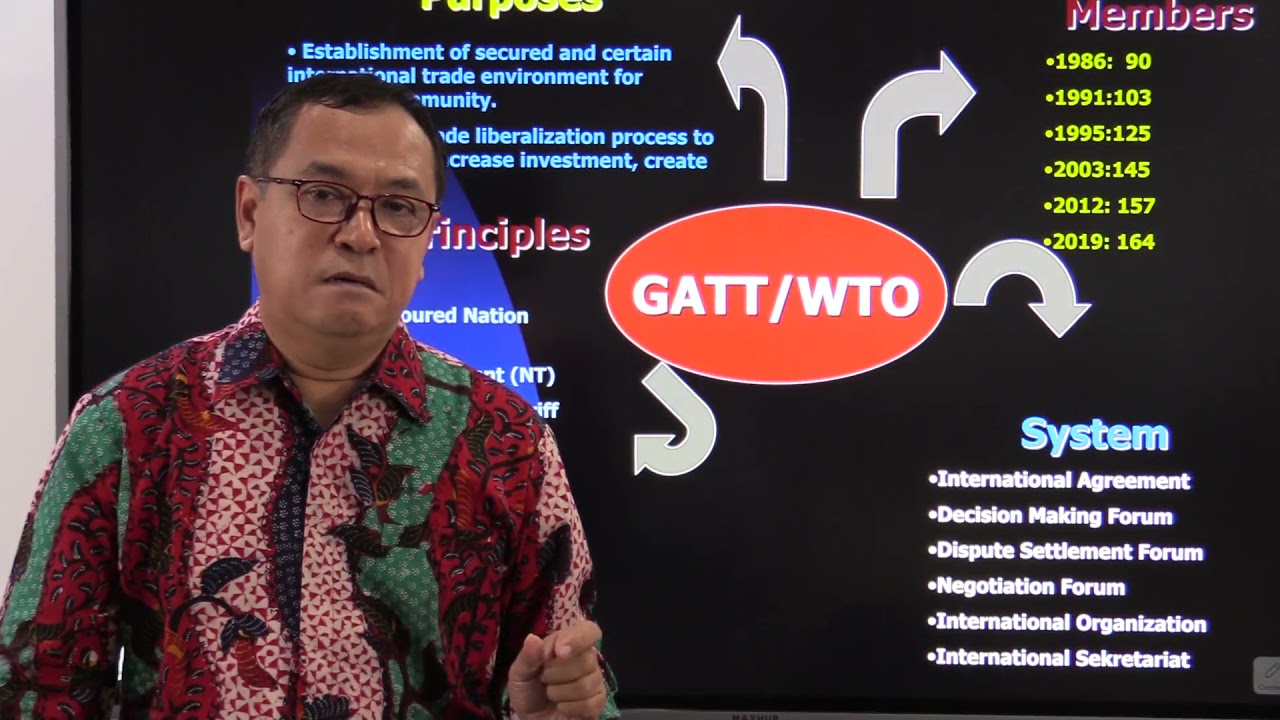





The General Agreement on Tariffs and Trade (GATT), established in 1947 at the Bretton Woods conference, evolved from a provisional tariff-reduction agreement into the World Trade Organization (WTO) through successive negotiation rounds, with the Uruguay Round (1986-1994) being the most significant transformation that expanded the trading system to include services, intellectual property, and dispute resolution mechanisms, thereby establishing a comprehensive multilateral framework for global commerce.
From GATT to WTO: Evolution of Global Trade Law
Added:Basic economic concepts of international trade, including tariffs, non-tariff barriers, protectionism, and the benefits of trade liberalization.
The historical context of the post-World War II global economy, specifically the Bretton Woods Conference and the creation of the IMF and World Bank.
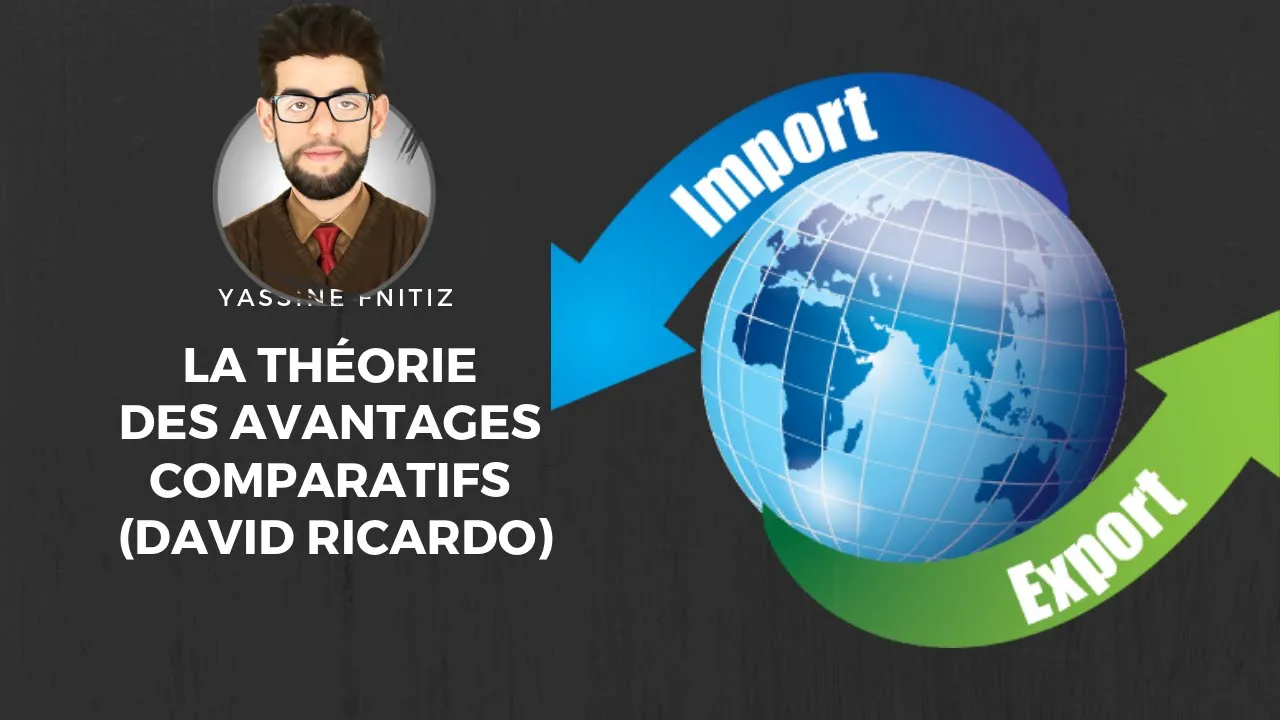
The fundamental theory of Comparative Advantage, which explains the economic rationale for international trade.
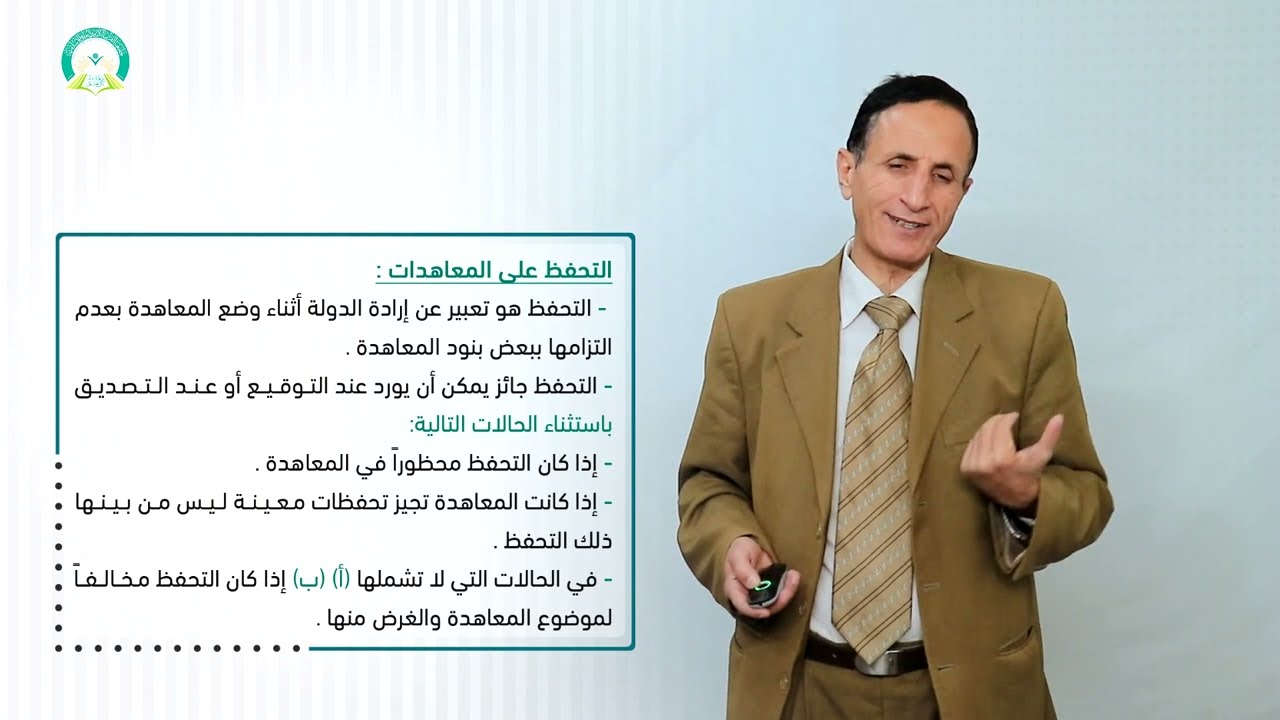
Basic principles of international law, including how multilateral treaties are formed, ratified, and enforced among sovereign states.
The structure and legal authority of the WTO Dispute Settlement Mechanism (DSM) and how trade conflicts are adjudicated.
Core WTO legal principles in detail, specifically the Most-Favoured-Nation (MFN) clause and the National Treatment principle.
The proliferation of Regional Trade Agreements (RTAs) and bilateral treaties, and how they coexist with multilateral WTO rules.
Contemporary challenges facing modern global trade, such as the deadlock of the Doha Development Round, digital trade regulation, and the dispute settlement crisis.
11.2K views108likes34:21Original Release: 2015-10-16
you my name is Lakshmi nila Contin and today I will be dealing with module 3 module 3 deals with journey from gas to the WTO the objectives of module 3 are justifications of the international trade system the origins and scope of GATT the provisional application of GATT the guiding principles of GATT subsequent negotiating grounds and expansion of the GATT agenda evaluation and impact of the GATT on the current international trade regime launch of the Uruguay Round negotiating areas and stances in the uruguay round an establishment of the WTO for module 3 you need prior knowledge relating to the following the historical background of the two world wars and the prevailing economic conditions a brief understanding of the scope of present-day WTO the economic principles of international trade and developments in the run-up to the away round in brief first we begin with the Bretton Woods conference the general agreement on tariffs and trade hereinafter referred to as the GATT began in 1947 with 23 members and was a forerunner to the present-day World Trade Organization hereinafter referred to as the WTO which which has 160 members comprising approximately 96.4% of world trade with the potential to increase to 99.95% the GATT had its origins in the 1944 Bretton Woods conference towards the end of World War two the Bretton Woods conference had been set up primarily to remedy the failings of World War once the Treaty of Versailles and to support the creation of a new international monetary system that would facilitate post-war reconstruction economic stability and peace the Bretton Woods conference produced two of the most important international economic institutions of the post-war period the International Monetary Fund and the International Bank for Reconstruction and Development also known as the World Bank the Bretton Woods conference while establishing the IMF and the World Bank also recognized the need for an international institution which would address growing trade concerns it was also intended to be a forum for the negotiation of reciprocal reduction of tariffs on trade in goods between wartime allies and the behest of the United States of America now we will deal with a protocol of provisional application of the GATT the intention for the establishment of a multilateral trade institution was fortified by way of resolution adopted by the newly established United Nations Economic and Social Council in 1946 calling for the drafting of a charter for the International Trade Organization this resolution was followed by the establishment of a Preparatory Committee in February 1946 which met in October 1946 to work on a charter for an international organization for trade on the basis of a proposal made by the United States subsequently the work was shifted from London to Geneva where it worked from April to October 1947 the Geneva 1947 meeting was an important step in the creation of GATT and the world Trading order Professor John Jackson describes the 1947 Geneva meeting as an elaborate conference divided in three parts dealing with the following areas the first dealt with the preparation of a charter for an international trade institution that is the International Trade Organization or the IPO the second dealt with the negotiation of a multilateral agreement to reduce tariffs on a reciprocal basis the third dealt with the drafting of general clauses of obligations relating to tariffs obligations the second and third items of the agenda eventually constituted the GAT which was developed to include a variety of provisions curtailing the imposition of trade impeding measures by various nations while these clauses were negotiated and completed by 1948 the negotiations on the ITU Charter proved more difficult and towards the end of 1947 Geneva meeting it was determined that the ITU Charter would realistically not be implemented along with the gap there were two reasons for the same first with the possibility of the trade concessions being known before the implementation of GATT there was a strong possibility of disruption of world trade patterns second the US negotiators were working under the authority of the 1945 act which expired in mid 1948 and there was thus a vested interest in implementing GATT as early as possible however the implementation of GATT and the ITU Charter in two distinct stages led to the provisional application of GATT while discussing the need to pass domestic legislation for the implementation of both GATT and the idea Charter it was felt by certain countries that the political capital needed to ratify the GATT may first jet first may jeopardize the political capital that may be required to pass the idea Charter in the later years therefore in order to resolve this problem on 30th October 1947 eight of the 23 countries that had negotiated the GATT 1947 decided to apply the GATT provisionally and sign the protocol of provisional application of the general agreement on tariffs and trade and eventually the other 15 countries also agreed to the same at one of the GATT 1947 contained the MFN obligation and the obligation regarding tariff concessions and part three contained procedural provisions the PPA resulted in the nascent international trade order developing some feet which may be described in the following manner as per the terms of the PPA parties undertook to apply parts 1 & 3 of the GATT 1947 in full and part 2 to the fullest extent not inconsistent with existing legislation as part 2 contain the maximum number of substantive provisions and would have neccessity the maximum involvement of the domestic legislature the PPA also allowed for the creation of existing legislation exception or grandfather rights due to his feature that a GATT contracting party was entitled to maintain any provision of its legislation which was inconsistent with a part 2 obligation at the time it provided for the establishment of ITU as well as certain rules and procedures for international trade the aim was to create the IQ at a UN conference on trade and employment in Havana in Cuba in 1947 the Havana conference began on Nova 21st November 1947 less than a month after the GATT was saying the idea Charter was completed in March 1948 in Havana however due to the lack of congressional approval in the United States and which President Truman eventually abandoned in 1951 the idea charter never entered into force the idea quickly became an unattractive venture once the u.s. who was a leading trading nation had abandoned its intention in pursuing it the reasons behind implementing the GATT separately divorced from the IPO cap charter highlighted the influence of the political forces which had been instrumental in creating the global trading order the GATT is a key institution that has shaped current the current international trade regime and is responsible for many rules present in the WTO covered agreements the practices of the GATT are still considerably relevant in guiding the practices of the WTO as a form by article 16 one of the your agreement which states that the WTO shall be guided by the decisions procedures and customary practices followed by the contracting parties to get 1947 and the bodies established in the framework of GATT 1947 next we move on to the guiding principles of GATT the first guiding principle of GATT is the non-discrimination principle this is reflected in the most favored nation obligation or the MFN obligation the MFM principle states that each contracting party to the GATT was required to provide all other contracting parties with the same conditions of trade as the most favorable terms that it had extended that is each contracting party was required to treat all contracting parties in the same way that it treats its most favored nation the second guiding principle of GATT is reciprocity the principle of reciprocity mandates that the benefits of any bilateral agreements between contracting parties regarding tariff reductions and market access should be extended simultaneously to all other contracting parties the principle of reciprocity is closely associated with the MFN principle the third guiding principle of GATT is tariff reduction the reciprocal reduction of tariffs was a strong principle reflected in the GATT protectionism at the time mainly consisted of tariffs and negotiations were also naturally focused on the same the text of the 1947 GATT lays out the obligations of the contracting parties in this regard the gag treaty did not provide for a formal institution but a small GATT Secretariat with a limited institutional apparatus which was eventually headquartered in Geneva to administer various problems and complaints that might arise among members the nature of GATT 1947 was that it was viewed as an agreement aimed at addressing most rape concerns of his members although it was a long way off from becoming an international institution for trade it must be noted that there were very few institutional features in the GATT 1947 however during its subsequent negotiations the GATT ventured into rulemaking on non-tariff barriers which leant it a more institutional and expansive character and ultimately it became a de facto institution now we will deal with expansion of the GATT agenda the GATT agenda was subsequently expanded as a result of further rounds of negotiations in later years there were multiple trade rounds of negotiations from 1947 to 1994 which are listed below in 1947 negotiations took place in Geneva the main subject covered in this round of negotiations was tariffs and 23 countries participated subsequently in 1949 the negotiations took place in Annecy and again the main subject of negotiation was tariffs but number of countries had reduced to 13 in 1940 in 1951 the round of negotiation took place in talk--we the subject of negotiation was tariffs and there were 38 countries participating in 1956 the negotiation rounds again took place in Geneva where the subject of negotiations was tariffs and twenty-six countries participated in 1962 61 the Dillion ground took place in Geneva with the subject of negotiations being tariffs and number of countries participating being 26 it is only now we see an expansion of the GATT agenda 1964 to 67 the Kennedy round took place in Geneva and it dealt with tariffs and anti-dumping measures with 62 countries participating in the Kennedy round in 1973 to 1979 the Tokyo round took place in Geneva the subject of negotiations being tariffs non-tariff measures and framework agreements with the number of countries having increased 202 subsequently the Uruguay Round took place from 1986 to 1994 where the subjects of negotiations were tariffs non-tariff measures rules services intellectual property disputes ailment textiles agriculture creation of WTO and the number of countries was 123 the Kennedy round took place from 1964 to 1967 during the Kennedy down it which was named after President John F Kennedy of the US The ministers agreed on three negotiating objectives the first was set the measures for the expansion of trade of developing countries as a means for furthering their economic development second was the reduction or elimination of tariffs and other barriers to trade and the third was measures of act for access to markets for agricultural and other primary products in the end the result was an average 35 percent reduction in tariffs except for textiles chemicals steel and other sensitive products plus a 15 to 18 percent reduction in tariffs for agricultural and food products in addition the negotiations on chemicals led to a provisional agreement on the abolition of the American selling price or the ASP the next important round is the Tokyo round which took place from 1973 to 1979 turning the Tokyo down a hundred and two countries participated in negotiations both from the point of view of participation and the breadth of the negotiating agenda this was the biggest round up to that time the Tokyo round was launched on 14 September 1973 at a ministerial meeting in Tokyo but the negotiations were largely conducted in Geneva the ministerial declaration for the Tokyo aimed at the following first was tariff negotiations using the formula method second using or eliminating non-tariff measures third examining the possibility or reduce of reducing or eliminating all barriers in selected sectors fourth examining the adequacy of the multilateral safeguard system fifth negotiations in agriculture taking into account the special characteristics and problems in this sector and the last treating tropical products as a special and priority sector the developing countries were drawn into the negotiating process much more in the Tokyo room than during the Kennedy round the Tokyo round expanded the scope of the gat 1947 and led to the formulation of rules on non-tariff barriers it later discussions among members on how to adequately address trade concerns apart from reduction of draft tariffs the rules agreed upon during the Tokyo Ron were usually accepted only by a relatively small number of parties mainly industrialized nations and were often called codes these rules dealt with many substantive areas of rulemaking which were later finalised as agreements in the uruguay round the following codes were concluded in the tokyo not the substance codes on subsidies and countervailing measures technical barriers to trade of the standards code import licensing procedures government procurement customs valuation anti-dumping bovine meat arrangement international dairy arrangement and trade and civil aircraft the Tokyo round achieved an average 1/3 cut in customs duties in the world's nine major industrial markets bringing the average tariff on industrial products down to 4.7 percent it was an encouraging beginning but it had mixed results it fell short of delivering an agreement on safeguards or emergency import measures several codes were eventually amended in the uruguay round and turned into multilateral commitments accepted by all WTO members some of the agreements remain plurilateral those on government procurement bovine meat civil aircraft and dairy products in 1997 WTO members agreed to terminate the bovine meat and dairy arrangements leaving on the government procurement and civil aircraft it is important to mention a significant achievement of the Tokyo round this was the finalization of the differential and more favorable treatment reciprocity and fuller participation of developing countries more commonly referred to as enabling clause this decision by signatories to the GATT during the Tokyo round in 1979 allows delegation to the emission treatment in favour of developing countries in particular paragraph 2 C permits preferential arrangements among developing countries in trade and goods the enabling clause has continued to apply as a part of GATT 1994 under the WTO as a negotiating ground which resulted in the finalization of many important agreements concerning non-tariff barriers the Tokyo round is an important milestone in the expansion of the GATT agenda now we will deal with justifications for the world trading regime presently WTO is a result of a long process of negotiations all of which began with cat apart from understanding the historical beginnings of get it is necessary to examine the economic and political justifications of cat these justifications have their basis in multiple schools of thought which are listed below the first is called the terms of trade school this school of thought focuses on economic incentives the proponents of this school of thought argue that large countries which are capable of influencing world prices are focused on increasing their terms of trade by reducing import prices and thus improve national welfare however by applying this principle it is also possible that if all nations impose such an optimal tariff most gains of trade are neutralized all countries may be worse off compared to a situation without tariffs in response to the above the proponents of this school of thought argue that though the exchange of reciprocal concessions through the exchange of reciprocal concessions countries geography from the so called beggar-thy-neighbor policies making everyone worse off and instead reciprocal comment commitments to liberalize trade forces countries to take account of the harm they caused to others in this vein GATT was justified as a viable proposal the second is a theory of political incentivization this school of thought focuses on political incentives to restrict trade and relies on public choice and constitutional theories twisting explain the creation of GATT they argue that due to collective action problems the supporters of free trade such as consumers have less incentive to lobby for changes and as a result protectionist groups may wield more political power as a result governments may face pressure to introduce trade restrictive policies an international coordination could be the solution to the disproportionate impact of ex protectionist groups the third popper theory is the theory of existing bilateral and discriminatory trade policies this school of thought focus on the discriminant discriminatory nature of pre GATT trade relations determined by colonial preferences and bilateral trade agreements for instance between 1934 and 1945 the United States negotiated and accepted 32 reciprocal trade agreements this view emerged to deal with the establishment of GATT as a response to existing bilateral and discriminatory trade policies now we will deal with the launch of the Uruguay Round the Uruguay Round is arguably the most complex and far-reaching round of trade negotiations it led to the establishment of the World Trade Organization and has permanently changed the global trading system launched on 22nd September 1986 the Uruguay Round has been described as the most complex an ambitious program of negotiations ever undertaken by GATT the key dates for the Uruguay Round are in September 1986 the launch of the negotiations took place in December 1988 and Montreal there was a ministerial midterm review in April 1989 in Geneva the midterm review was completed in December 1990 in Brussels the closing ministerial meeting ended in a deadlock in December 1991 in Geneva the first after the final act was completed in November 1992 in Washington the US and EU achieved the Blair House breakthrough on agriculture in July 1993 in Tokyo the market access was achieved in a breakthrough at the g7 summit in December 1993 at Geneva the most most most of the negotiations were completed and in April 1994 in Marrakech the agreements were signed and on 1st January 1995 the WTO was created and the agreements took effect now we deal with the areas of negotiation in the ORAC way around here we trace the negotiating east history of certain subjects at significant subject matters in the uruguay round under the WTO particular attention is being paid to the major areas of negotiation in the uruguay round and the stance of developing countries and other major trading bloc's on the scene the first major topic is agriculture agricultural negotiations could be divided into three major areas first was domestic subsidies the second was a reduction of non-tariff barriers and the third was the reduction of export subsidies we took out two domestic subsidies it can miss it must be noted that in the 1970s and 80s there was an escalation of agricultural subsidies by the developed countries which caused disruptions in the international trading regime therefore the first plan of action was to reduce domestic subsidies this reform target measures were targeting farmers which had discernible trade affects like direct or indirect income transfers that affected prices of production decisions one of the proposals was relating to the calculation of an aggregate measure of support or AMS which would provide a benchmark for measuring and reducing the level of domestic support some notable negotiating positions on AMS include the following the EZ proposed that global support had to be calculated a goal for reduction had to be agreed upon and countries could achieve their goals by balancing increases against decreases the u.s. proposed a phased reduction in aggregate levels by use of produc producer subsidy equivalence of P SES the Keynes group endorsed the use of PS es and net food importers took no formal position that regard is a reduction of non-tariff barriers the important areas which were covered under this world the reduction of quotas import licensing programs and straight state trading monopolies the main task was to figure out a way to identify and reduce these barriers one proposal was tariffs ocation which required the conversion of non-tariff barriers to a tariff equivalent which could be bound and reduced with time one notable set of measures which could potentially act as a non-tariff barrier was rules pertaining to sanitary and phytosanitary regulations all SPS measures affecting agriculture countries impose a range of kuan times inspections to limit illness and oftentimes it is a developed countries which tend to have more elaborate SPS measures and the burden usually falls on imports from developing countries to comply with these requirements some notable negotiating positions on SP s measures include the following easy-easy proposed that there should be a focus on guidelines by international organizations for standards implementation of a notification framework and stringent national guidelines which should be recognized for countries which have achieved a high health status the u.s. proposed that international organizations should assist in the development of guidelines and parties can make their own regulations objecting parties could request consultations but must have met importing countries requirements first the Kanes group had the same proposal as us and ICI but also stated that the burden of risk justification must be placed on the importing country net food importers argued that harmonization of guidelines developed by international organizations should be carried out with special allowances for developing countries ultimately the u.s. ec agreement of 1992 did not address SB s measures and Duncker doffed implemented the draft agreement with regard to reduction of export subsidies which was the most critical issue from the standpoint of developing countries there were a lot of controversial positions that were adopted export subsidies are basically direct payments intended to make agricultural exports competitive with lower priced commodities produced by other countries they are prone to causing trade distortions and hit developing countries directly which do not have the resources to match the export subsidies granted by developed nations some notable negotiating positions on export subsidies include ICI which proposed that export subsidies should be reduced by varying levels for individual products the US which proposed that all export subsidies should be phased out over a 10-year period the Keynes group which proposed that a priority basis should be given to those that heavily distort trade implement interim freeze during negotiations and then proposed a phase-out and net for importers which proposed that export subsidies should be eliminated with regard to the second item of negotiation during the Uruguay Round which is tariffs there were a number of positions that were adopted by various country after the GAT Jones tariffs on industrial goods into developed countries fell from 40 percent in 1947 to around 5 percent during the uruguay round the most important issue which was supposed to be discussed in the Uruguayan was how the reductions could be achieved the developed countries led by the u.s. advocated a formula approach the major issue for the developing countries was the recognition within the GATT off a unilateral tariff liberalisation that had been undertaken by them since the beginning of the uruguay round since these measures had been taken unilaterally developing countries were worried that they would not receive credit for these measures and that they might be required to release tariffs even more in the future with regard to the other topics of negotiations in uruguay rounds the same are detailed in the module available on the website of epod shala the last topic that we will deal with today in module 3 is the establishment of WTO according to the 1986 Punta del Este ministerial declaration the or agüero negotiations would cover inter area trade in goods including agricultural products in Texas as well as trade in services this was the first time in history the trade in services was recognized as an area in which rules could be made however the Uruguay Round was not originally intended as a negotiating loan which would work towards creating a new International Organization for trade on the contrary the prospect of continuing with the gap I'll be it with structural modifications was the initial objective of the Uruguay Round this is reflected in the text of the Punta del Este ministerial declaration in February 1990 then Trade Minister of Italy Renato rugaru suggested the idea of setting up a new International Organization for trade this proposal was presented again in April 1990 by Canada who formally suggested that an organization called the World Trade Organization may be set up to administer the different multilateral agreements relating to trade a similar proposal was submitted by the EU in July 1990 the the genesis of the World Trade Organization the proposals by different countries to establish a WTO was met with in unenthusiastic reactions by USA and most developing countries the main concerns were the fear of supranational ISM the reluctance of major trading nations to give into voting equality and the ever-present worry of reduction and serenity and policy space this state of affairs persisted till 1990 when the December 1990 Brussels draft final act did not contain an agreement with regard to a new International Trade Organization however in April 1991 talks resumed and in November 1991 new Canada and Mexico put forth a joint proposal for the creation of a new International Trade Organization this was used as a base for further negotiations and resulted in the draft agreement establishing the multilateral trade organization in December 1991 however the United States a key player in the setting of the WTO remained opposed to its establishment and campaigned against the idea throughout all of 1992 the however USS position on this issue changed because most of the countries had agreed to the idea of setting up a multilateral trade organization subsequently the u.s. consented to the establishment of a new multilateral trade organization on 15 December 1993 but the u.s. also demanded a change of name as a condition for giving its consent therefore the name with her which had been proposed at the time which was multilateral trade organization was changed to the World Trade Organization has as had originally been proposed by Canada the name World Trade Organization was thus agreed on the agreement establishing the World Trade Organization commonly referred to as the WTO agreement was signed in Marrakesh in April 1994 and entered into force on 1st January 1995 a summary of the topics dealt with today are first the genesis of the GATT the political relationships between countries that led to the establishment of the cat the details of the Bretton Woods conference the provisional application of GATT the guiding principles of gat the subsequent negotiating rounds an expansion of the gat a gender the evaluation and impact of the gat on the current international trade regime the launch of the Uruguay Round the negotiating areas undertaken in Uruguay around and the establishment of the WTO thank you
Up Next

2:12
WTO Dispute Settlement Process Explained: DSB & Retaliation for UPSC
@NittyGrittyIAS
13.9K views•2022-03-04

12:54
Triumph of Orthodoxy Icon: Byzantine Art & History Explained
@BenCallan
2.1K views•2024-08-06

32:09
Forensic Archaeology: Principles & Excavation Methods (FSC) | Forensic Anthropology
@Vidyamitra
640 views•2016-03-29

1:42
Game of Thrones Opening Credits: A Cinematic Analysis
@gameofthrones
46.3M views•2011-04-18
Related Study Plans & Knowledge Roadmaps
Structured learning paths in General & Interdisciplinary Studies
general-studies
Elevator Engineering: History, Physics & Cities
01From Hoists to Safety Brakes: The Dawn of Vertical Lift
02Hydraulic vs. Traction: The Engineering Physics of Elevators
03Modern Speed, Safety, and Algorithms
+ 2 more learning modules
12h5 modules
Explore Roadmap
general-studies
Rubber: Material Science, History & Geopolitics
01Origins of Natural Rubber & Mesoamerican History
02The Chemistry of Natural Rubber & Vulcanization
03The Geopolitics of the Rubber Boom & Colonization
+ 2 more learning modules
12h5 modules
Explore Roadmap
general-studies
Containerization: Evolution, Logistics & Trade
01Ancient Trade & Bulk Cargo: Amphorae to Barrels
02The Industrial Revolution & Cardboard Packaging
03The Containerization Revolution: Malcom McLean
+ 2 more learning modules
12h5 modules
Explore Roadmap
general-studies
Textile Tech: Evolution, Labor & Global Impact
01Pre-Industrial Textiles: Handloom & Cottage Industry
02Mechanization: The Spinning Jenny to the Power Loom
03The Factory System & Global Labor Transformation
+ 2 more learning modules
10h5 modules
Explore Roadmap