The WTO dispute settlement process involves bilateral consultations between the complainant and responding countries; if unresolved within 60 days, a panel adjudicates the case, with appeals possible through the appellate body, though the WTO lacks enforcement powers and relies on cross-retaliatory measures as a compliance mechanism.
WTO Dispute Settlement Process Explained: DSB & Retaliation for UPSC
Added:Deep Dive
Basic understanding of the World Trade Organization (WTO), its origins from GATT, and its primary role in regulating global trade.
WTO (and GATT) Explained
93.3K
The World Trade Organization (WTO), established in 1995 through the Uruguay Round negotiations, evolved from the General Agreement on Tariffs and Trade (GATT) signed in 1947 by 23 countries; unlike GATT which required unanimous consent for dispute resolutions, the WTO features a binding appellate body for dispute settlement and allows all agreements to be multilateral and binding, while also implementing a self-reporting system for country classifications that has sparked controversy regarding developing versus developed nation status.
Click to watch →
WTO - World Trade organisation - History, Members, Functioning, Role of India
291.8K
The World Trade Organization (WTO) was established in 1995 to replace the General Agreement on Tariffs and Trade (GATT), which had governed international trade since 1947. The transition from GATT to WTO was driven by several key factors: GATT only covered merchandise goods and excluded agriculture and textiles; it lacked institutional structure and enforcement mechanisms; and it was subject to the voluntary compliance of member countries. The WTO addresses these limitations by covering services and intellectual property rights, having a permanent institutional framework with an independent secretariat, and possessing stronger dispute resolution authority. The organization operates on core principles including Most-Favored-Nation treatment, National Treatment, and Reciprocity, with decision-making through Ministerial Conferences held every two years.
Click to watch →
#21 - O QUE É OMC?
25.5K
The World Trade Organization (WTO), established in 1995 as the successor to the General Agreement on Tariffs and Trade (GATT), is the international body responsible for regulating global trade by managing commercial agreements between countries, regulating worldwide commerce, mediating trade disputes, and investigating unfair trade practices among member nations.
Click to watch →
How the World Trade Organization Works: Explained with Maps (History & Impact)
273.1K
The World Trade Organization (WTO), headquartered in Geneva with 160 member states representing over 95% of global trade, regulates international commerce through principles like the Most Favored Nation rule, which requires equal trade treatment among members, while allowing regional free trade zones such as NAFTA, Mercosur, EU, and ASEAN; since its establishment in 1995 replacing GATT, global average tariffs have fallen dramatically from 40% to 2.2%, though agricultural trade remains a contentious issue with developing nations advocating for fairer terms through initiatives like the Doha Development Round.
Click to watch →
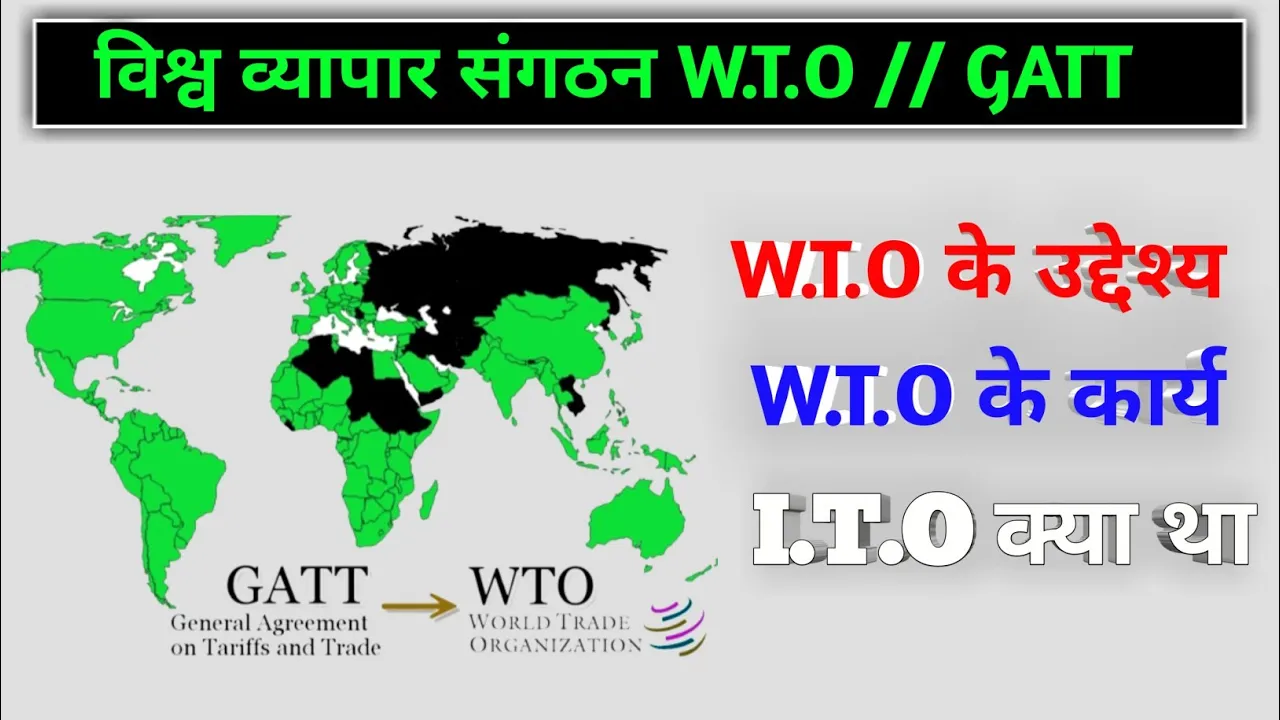
WTO किसे कहते हैं || विश्व व्यापार संगठन ||WTO के उद्देश्य और कार्य || GATT गैट और ITO क्या है
117.3K
The global trade governance system evolved significantly after World War II. In 1947, 20 countries established GATT (General Agreement on Tariffs and Trade) to rebuild economies and reduce trade barriers. Originally called ITO, it was renamed GATT in 1948. GATT served as a temporary arrangement without formal institutional structure. In 1995, GATT was replaced by the World Trade Organization (WTO), a permanent international organization with a formal institutional framework. The WTO currently has 164 member countries and sets rules for international trade between nations.
Click to watch →
Deep Dive
Core WTO trade principles of non-discrimination, specifically the Most-Favoured-Nation (MFN) clause and the National Treatment principle.

Principles of World Trade Organisation (WTO) - Know everything about MFN, GATS & NTP for all exams
90.5K
The World Trade Organization operates on two foundational principles: Most Favored Nation (MFN) and National Treatment. The MFN principle mandates equal treatment among all WTO members—if a country grants special trade benefits to one member, it must extend identical benefits to all others. Three exceptions exist: preferential trade agreements with specific partners, special market access for developing/least developed countries, and anti-dumping measures against unfairly traded goods. The National Treatment principle requires that foreign goods and services receive no less favorable treatment than domestic ones once they enter the market. The India-US solar panel dispute illustrates these principles in action, where India's domestic procurement policy favoring local manufacturers was challenged at the WTO Dispute Settlement Body.
Click to watch →

Economy Current Affairs 2026 🔥| Weekly Economy Current Affairs for UPSC | Class 24 | Rishi Jain Sir
7.9K
Three core WTO principles: Most Favored Nation (MFN) requires equal treatment for all members - preferential treatment to one member must extend to all. National Treatment requires foreign goods to be treated no less favorably than domestic goods after entering the market. Special and Differential Treatment (SDT) provides developing countries with preferential treatment, longer implementation periods, and flexibilities. China has announced it will no longer claim SDT benefits.
Click to watch →
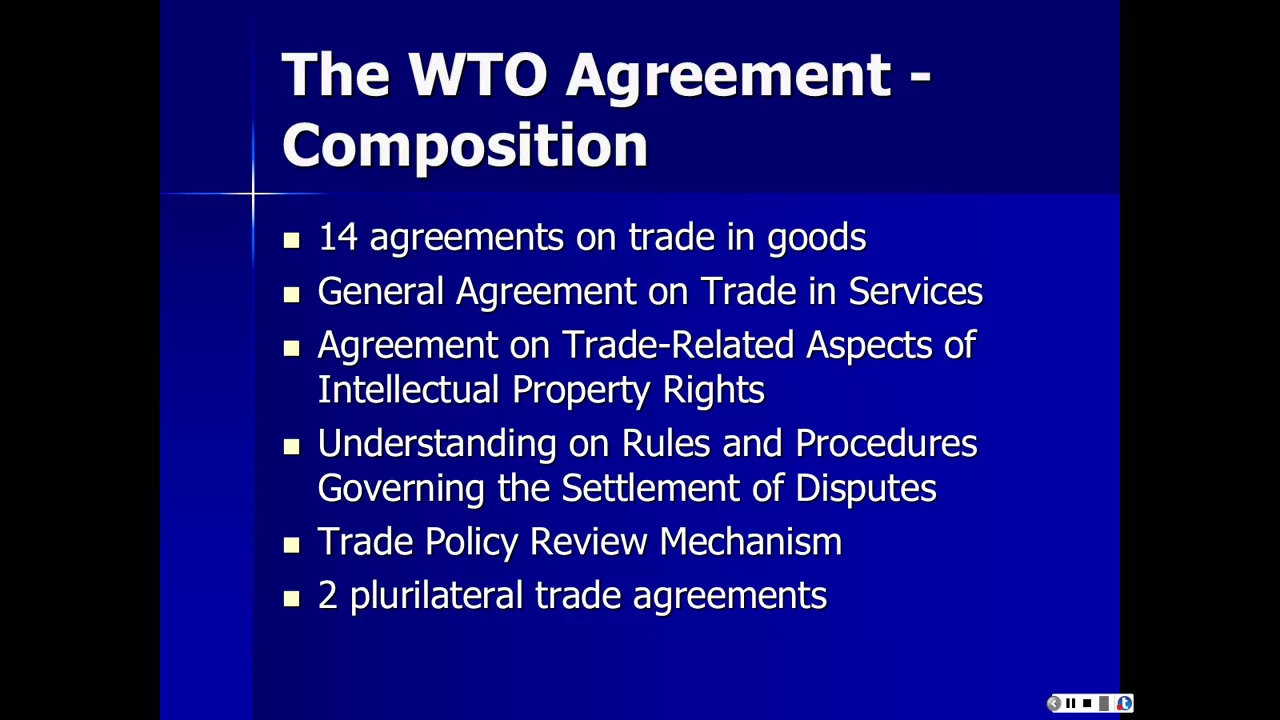
INTERNATIONAL TRADE LAW
35.1K
The non-discrimination principle is the most fundamental principle of GATT, requiring that international trade be conducted without discrimination. This principle rests on two sub-principles: (1) The Most Favored Nation (MFN) rule, also called Normal Trade Relations (NTR), which requires that any trade advantage granted by one WTO member to another member's goods must be extended to all WTO members equally; and (2) The National Treatment rule, which requires that once imported goods enter a member state, they must be treated no less favorably than domestic goods. Exceptions include anti-dumping measures, customs unions, free trade areas, and special provisions for developing countries.
Click to watch →
CLASS - 38 | International Economics (Part 3): Economy Foundation Module for UPSC by Dr. Shivin
168
The WTO operates on five core principles: (1) Trade without discrimination through Most-Favored-Nation (MFN) status requiring equal treatment for all trading partners, and (2) National Treatment requiring equal treatment of imported goods once they enter domestic territory. These principles ensure non-discriminatory trade. The US has 16.5% voting power while India has only 2.6%, and for major policy changes requiring 85% votes, the US can effectively veto any change.
Click to watch →
BARTI - MPSC Mains - International Trade and International Capital Part : III By Prof. Anil Aralikar
2.3K
The Most-Favored-Nation (MFN) treatment principle requires that any advantage, favor, privilege, or immunity granted by a WTO member to any product originating in or destined for any other country shall be accorded immediately and unconditionally to the like product originating in or destined for the territories of all other WTO members. The National Treatment principle requires that imported products be treated no less favorably than domestically produced products once they have entered the domestic market. These principles ensure non-discrimination in international trade and prevent preferential treatment among trading partners.
Click to watch →
Deep Dive
Fundamental concepts of international trade policy, including tariffs, non-tariff barriers, quotas, and subsidies.

International Economics 06 International Trade Policy; Tariff and Non-Tariff Barriers to Trade
846
International trade policies include tariffs (taxes on imports), import quotas (volume limits), export subsidies, local content requirements, and non-tariff barriers like red tape; tariffs raise domestic prices, creating efficiency losses through production and consumption distortions while potentially improving terms of trade, whereas quotas generate quota rents that may transfer to foreign exporters or domestic license holders, with the overall welfare effects depending on whether the country can influence world prices.
Click to watch →
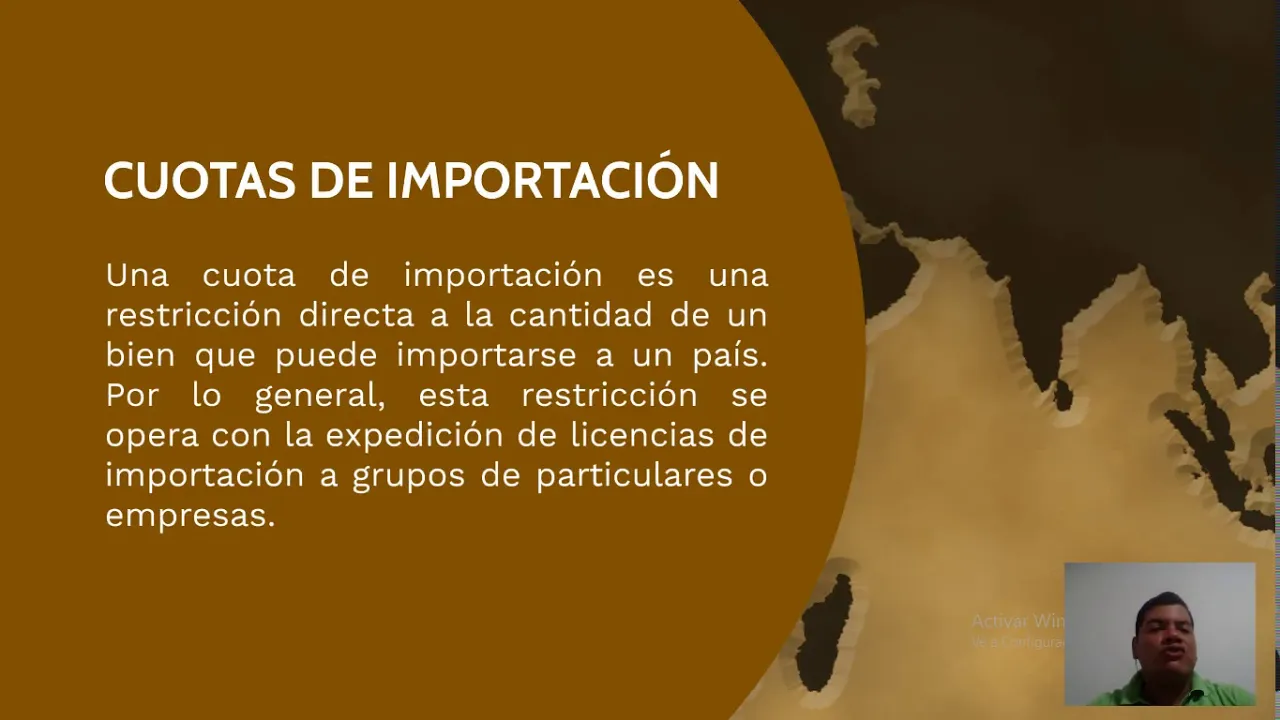
Política Comercial
12.8K
Trade policy instruments aim to ensure international exchanges contribute to economic development and compensate for imbalances harming certain regions or sectors. The five most used instruments are: (1) Tariffs - taxes on foreign products to raise their domestic price, protecting national products from cheaper competition; they increase prices, reduce imports, and increase domestic production. In small countries, tariffs cannot reduce world prices, so import prices increase by the tariff amount. (2) Subsidies - government payments to national producers (cash, tax facilities, public capital participation) that reduce production costs, enabling competition with imports and export market gains. (3) Import quotas - direct restrictions on import quantities, typically operated through import licenses. (4) Voluntary export restraints - trade quotas imposed by exporting countries at importing countries' request, accepted by foreign producers to avoid more damaging measures.
Click to watch →

UGC NET Commerce Classes 2026 | International Business UGC NET Commerce By Niharika Mam #2
590
Two key concepts govern international trade barriers: tariffication and actionable subsidies. Tariffication replaces non-tariff barriers (quotas, embargoes, import bans) with tariffs, increasing transparency under WTO rules. Actionable subsidies are government supports that cause serious prejudice to domestic industries in other countries, allowing affected nations to take retaliatory action. These mechanisms shape global trade dynamics and competitive landscapes.
Click to watch →
Trade Policy Instruments (Tariffs, Subsidies, Quotas etc.) MCM -506 : Unit-5
1.1K
Trade policy instruments are government tools used to regulate international trade, including tariffs (taxes on imports that increase government revenue and protect domestic industries), subsidies (government financial support to domestic producers through low-interest loans, tax breaks, and input supplies), import quotas (direct restrictions on import quantities), voluntary export restraints (export limits agreed upon by exporting countries), local content requirements (mandates for domestic production components), administrative policies (bureaucratic rules that make imports difficult), and anti-dumping duties (tariffs on goods sold below production cost to protect domestic producers from unfair competition).
Click to watch →

UKSSSC Assistant Accountant 2026 || BUSINESS ORGANIZATON , MANAGEMENT AND TRADE || Class - 10
121
This comprehensive section covers international trade barriers and protectionist policies: Interport involves importing goods from one country and exporting them to another. Reciprocal demand describes mutual trade relationships. Tariffs are expressed as specific rates (per unit) or ad valorem rates (percentage of value), with compound tariffs combining both. Countervailing duties offset government subsidies to restore fair competition. Non-tariff barriers include quotas, import licenses, and local content requirements. Quotas reduce domestic consumption and social welfare. Protectionist policies use tariffs, quotas, and subsidies to prevent dumping. The foreign trade multiplier (ΔY/ΔM) measures how trade changes affect national income. Voluntary export restraints are negotiated agreements where exporting countries limit exports to avoid punitive tariffs.
Click to watch →
Deep Dive
An introductory grasp of how international agreements are structured and the concept of state sovereignty in multilateral treaties.
CLASE 1 II PARCIAL| Derecho de los Tratados 09/09/22
131
International treaties are conventions or agreements concluded by states to regulate interests in bilateral or multilateral form. The Vienna Convention of 1969, entered into force in 1980, regulates international treaties and is one of the most important international treaties. Treaties can be denominated as treaties, conventions, protocols, charters, statutes, or agreements. Treaties are classified by number of parties (bilateral or multilateral), by content (peace, extradition, cultural, economic, consular), and by legal effect (treaty-laws or treaty-contracts). Treaties must be in writing for legal certainty. The structure consists of three parts: the preamble (establishing objectives and principles), the dispositive part (substantive provisions), and final clauses (duration, application, modification procedures). All three parts are legally binding.
Click to watch →

Judge Aimé Muyoboke Karimunda - Rwanda and the Singapore Convention on Mediation
455
When a state engages in an international treaty, it surrenders part of its sovereignty regarding the content of that treaty. States must evaluate what they are losing and what they are gaining. No single state today can operate in isolation; they are mutually interconnected and need each other. The concept of sovereignty from the beginning of the 20th century is no longer the same as today because mutual interest has grown. Every state engaging in international treaties is ready to surrender part of something, starting by accepting the jurisdiction of a foreign state on its own territory.
Click to watch →

Hora da Verdade CNU Blocos de 1 a 7: Desafios do Estado de Direito - Prof. Ale Lopes
17.6K
International cooperation and treaties do not diminish a state's sovereignty. When states enter into international relations, they engage in cooperation among nations, not submission to other nations. Treaties are multilateral agreements where multiple nations make commitments together (such as commitments to combat trafficking or torture). This cooperation does not affect the sovereign condition of the country, as each nation maintains its independent decision-making power within its territory.
Click to watch →

GRANDE CLAUDIO BORGHI, UMILIATI CONTE, PD E M5S
19.2K
International treaties are agreements that exist above and beyond national laws, meaning they take precedence over domestic legislation. Once ratified, these treaties cannot be easily amended or changed, creating a permanent legal obligation for the state. This creates a significant risk for national sovereignty, as accepting such treaties means committing to terms that may conflict with national interests or political decisions.
Click to watch →

QCE Legal Studies 3&4 July Lecture
489
Treaties are categorized as multilateral or bilateral. Multilateral treaties involve more than two nation states forming an agreement (from 'multi' meaning multiple). Bilateral treaties are formal agreements entered into by exactly two nation states (from 'bi' meaning two). Understanding this distinction is important for understanding how international agreements are structured.
Click to watch →
Prerequisite Knowledge
- Concept 01Basic understanding of the World Trade Organization (WTO), its origins from GATT, and its primary role in regulating global trade.
- Concept 02Core WTO trade principles of non-discrimination, specifically the Most-Favoured-Nation (MFN) clause and the National Treatment principle.
- Concept 03Fundamental concepts of international trade policy, including tariffs, non-tariff barriers, quotas, and subsidies.
- Concept 04An introductory grasp of how international agreements are structured and the concept of state sovereignty in multilateral treaties.
Subsequent Learning
- Step 01Analysis of the ongoing institutional crisis of the WTO Appellate Body, including the blockage of judge appointments and its impact on global trade.
- Step 02Study of alternative interim dispute resolution mechanisms, such as the Multi-Party Interim Appeal Arbitration Arrangement (MPIA).
- Step 03Detailed examination of landmark WTO dispute case studies, particularly those involving India, such as disputes over agricultural subsidies, solar panels, and export promotion schemes.
- Step 04Evaluation of WTO reform proposals discussed in recent Ministerial Conferences (MC12/MC13) regarding the dispute settlement mechanism.
- Step 05Exploration of 'Special and Differential Treatment' (S&DT) provisions and how they influence dispute outcomes for developing versus developed nations.
Dispute Process
Dispute Process
0:01Playing Section
- 1
WTO initiates bilateral negotiations for trade conflicts.
- 2
Panel adjudication follows failed 60-day consultations.
- 3
Final appeals can lead to authorized retaliation.
The Crisis of Appellate Body Paralysis and Power Asymmetries
While the WTO's Dispute Settlement Body (DSB) is designed as a neutral, rules-based mechanism, critics highlight severe structural and operational failures. The most critical challenge is the ongoing paralysis of the Appellate Body, caused by the United States blocking the appointment of new judges since 2019. This has effectively allowed countries to appeal panel rulings 'into the void,' rendering the dispute process non-binding. Furthermore, developing nations argue the system exhibits inherent power asymmetries. The ultimate remedy of 'retaliation' (tariffs) is practically useless for smaller economies, as blocking imports from a major trading partner hurts the developing nation's own economy far more than it damages the developed country. Consequently, critics argue the DSB favors powerful economies and fails to ensure equitable enforcement of international trade laws.
Deep Dive
Analysis of the ongoing institutional crisis of the WTO Appellate Body, including the blockage of judge appointments and its impact on global trade.
【半導体 対中輸出規制】『米国 中国 WTO』
89.3K
The WTO Appellate Body, functioning as the highest court for trade disputes, has been non-functional since 2019 because major powers like the US and Europe refused to appoint new judges. This means even if panels rule against the US, appeals cannot be heard. This systemic dysfunction means the US can ignore WTO rulings without consequence. The video argues this represents the collapse of the post-WWII multilateral trade governance system that many countries, including Japan, relied upon.
Click to watch →
In Depth : WTO – Impact & Relevance
38.7K
The World Trade Organization (WTO), established on January 1, 1995, as the successor to GATT and representing the largest reform in international trade since WWII, faces its most severe crisis when the United States blocked the functioning of the Appellate Body—the WTO's highest adjudicating body—leaving only one judge of the required seven, thereby paralyzing the global dispute resolution mechanism that has handled over 500 cases since 1995 and threatening the very foundation of rules-based multilateral trade governance.
Click to watch →
PDN 331 - DEMANDA NARCOPOLÍTICOS A MAS DE 50 POLÍTICOS MEXICANOS
25.9K
The WTO's Appellate Body, the highest court in the global trading system, has been technically non-functional since December 2019 because the United States, under both Trump and Biden administrations, blocked the appointment of new judges. Without a second level of appeal, disputes remain at the initial panel level. This means the fourth pillar of the global trading system—the dispute settlement mechanism—has been closed for over six years. The pressure on the WTO system began before the second Trump administration.
Click to watch →
«Смерть мозга» поразила и ВТО. Аминь
21K
The World Trade Organization's Appellate Body, which resolved trade disputes among its 164 member states, has effectively collapsed due to the United States blocking new judge appointments for two years, reducing the body from ten to one member and rendering it unable to issue binding decisions. This institutional failure has forced nations like France and China to resolve trade disputes bilaterally, with France threatening 100% tariffs on French goods and China banning foreign computer equipment in government institutions. The collapse of this global trade governance mechanism threatens to destabilize international commerce and may benefit Russia's Eurasian Economic Union as an alternative trade framework.
Click to watch →
Crisis in World Trade Organisation, Structure & evolution of WTO explained, Current Affairs 2019
17.1K
The recent crisis in the WTO concerns the United States blocking the appointment of judges to the WTO Appellate Body mechanism. Currently, there are only four working members out of the total seven positions. If no new appointments are made, the Appellate Body will be destroyed by December 2019. The US agenda for establishing the WTO was based on commercial interests, and the US has historically proven isolationist, not truly embracing the idea of a multilateral system. The US has systematically blocked the appointment of new Appellate Body members because it is unwilling to be judged by an independent multilateral quasi-judicial institution. This unwillingness has paved the way for the dispute settlement crisis in the WTO, which many analysts describe as an existential crisis highlighted in the G20 summit.
Click to watch →
Deep Dive
Study of alternative interim dispute resolution mechanisms, such as the Multi-Party Interim Appeal Arbitration Arrangement (MPIA).

EU klem tussen VS en China, in het oog van de handelsstorm
117
The Multiparty Interim Appeal Arbitration Arrangement (MPIA) represents a significant alternative to the paralyzed WTO dispute resolution system. This arrangement includes 57 WTO members representing approximately 58% of world trade, including the EU, UK, Brazil, Canada, Mexico, Norway, Philippines, Switzerland, and China. Notably, the US is the only major trading nation not participating. The European Commission described this as a 'mini WTO' that could maintain the multilateral trading system without the US. This arrangement was created because the US blocked the appointment of new WTO judges, effectively paralyzing the appellate process. The MPIA allows countries to appeal WTO rulings through an interim mechanism, preserving the ability to enforce trade disputes even without the full WTO system.
Click to watch →

The WTO dispute settlement mechanism & the future of world & agricultural trade | LIVE STREAM
1.8K
The MPIA is an alternative appeal mechanism using Article 25 of the DSU to replace the defunct appellate body. It evolved from bilateral EU proposals into a plurilateral arrangement with 24 parties (EU counted as one) effective July 31, 2020. The arrangement establishes procedures for arbitration appeals, though it lacks formal adoption mechanisms. Key parties like Japan, Korea, India, Russia, and Turkey are not members, limiting coverage to only about 4 of 44 ongoing panels. The standing pool of 10 arbitrators includes experienced WTO practitioners who may address U.S. concerns about factual reconsideration and judicial overreach.
Click to watch →
Prof. Holger Hestermeyer: Replacing the Appellate Body?
825
The World Trade Organization's Appellate Body, often described as the organization's 'crown jewel,' became defunct in December 2019 when the United States blocked all new appointments, leaving no members to hear appeals; this created a situation where losing parties could appeal panel reports into void, effectively nullifying them, prompting the creation of the Multi-Party Interim Appeal Arbitration Arrangement (MPIA) by 51 WTO members including the EU, China, and Brazil as a plurilateral alternative dispute resolution mechanism that replicates appellate body procedures through arbitration under Article 25 of the DSU.
Click to watch →
The MPIA Explained by Prof. Joost Pauwelynn
1.8K
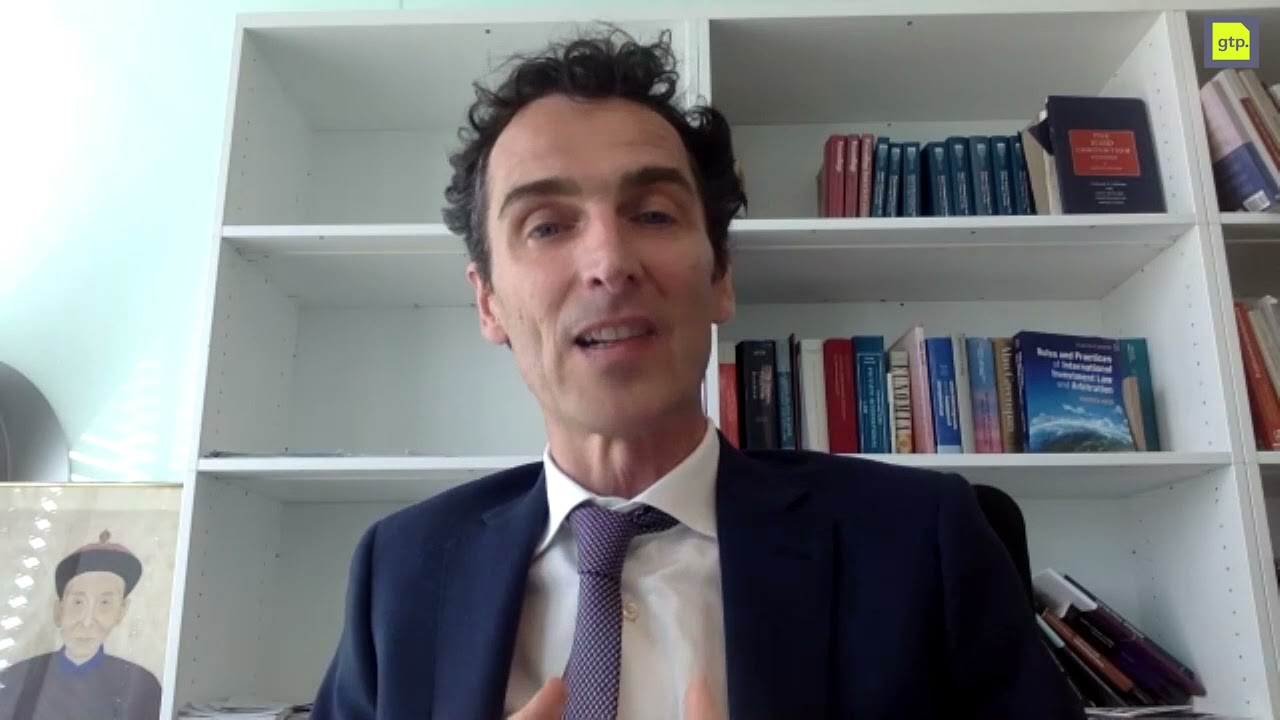
The MPIA is an interim arbitration mechanism created in April 2020 under Article 25 of the WTO Dispute Settlement Understanding to address the dysfunction of the Appellate Body since December 2019; it allows WTO disputes to proceed to an appellate stage through a four-stage process (consultations, panel suspension, MPIA arbitrator review, and award issuance) for parties that have signed up, but does not function for disputes involving non-participants, making it a pluralateral mechanism operating under the multilateral WTO framework.
Click to watch →

The Role of International Organizations in International Law (Part 2 )
111
The WTO dispute settlement system collapsed in late 2019 when the US blocked Appellate Body judge nominations, leaving only one member functional. This paralysis triggered exploration of alternatives: the Multiparty Interim Appeal Arbitration Arrangement (MPIA) emerged as a provisional solution, attracting major trading partners despite US opposition. Parallel developments showed increased use of non-judicial mechanisms like Trade Concerns Committees for mediation. Over 145 members proposed interest-based mediation approaches. Meanwhile, regional trade agreements contain dispute settlement mechanisms, though empirical evidence shows no direct correlation between WTO decline and regional increase.
Click to watch →
Deep Dive
Detailed examination of landmark WTO dispute case studies, particularly those involving India, such as disputes over agricultural subsidies, solar panels, and export promotion schemes.

In Depth - WTO & INDIA
37.6K
Since its inception in 1995, the WTO dispute settlement system has resolved over 500 trade-related disputes between member states. India has been an active participant as a complainant in 21 cases and as a respondent in 22 cases. Key cases include the India Wool Shirts and Blouses case where India won against U.S. quotas, and the quantitative restrictions case where India was required to open its market to imports by 2001. In June 2019, India won a major dispute against the U.S. regarding subsidies and local content requirements in eight American states' renewable energy programs. India's ongoing disputes include DS-430 (import restrictions on agricultural products), DS-456 (domestic content requirements in solar mission), and DS-436 (countervailing duties on steel products). India has joined as a third party in over 90 of the 480 total cases.
Click to watch →

UPSC Mains 2023 || Economics Paper Discussion || Rameshwar Sir #upsc #khanglobalstudies
58.4K
India faces WTO disputes over agricultural subsidies. Agreement on Agriculture allows 10% of agricultural GDP for developing countries, but India is breaching this limit due to food grain public stockholding subsidies. India has invoked Peace Clause and Special Safeguard Mechanism, arguing food security requires building public stockholding. Developed countries have not provided permanent solutions, leading to ongoing disputes at WTO Ministerial Conference.
Click to watch →
Make in India Shakes China | WTO Dispute Explained in Hindi by Ankit Avasthi Sir
184.3K
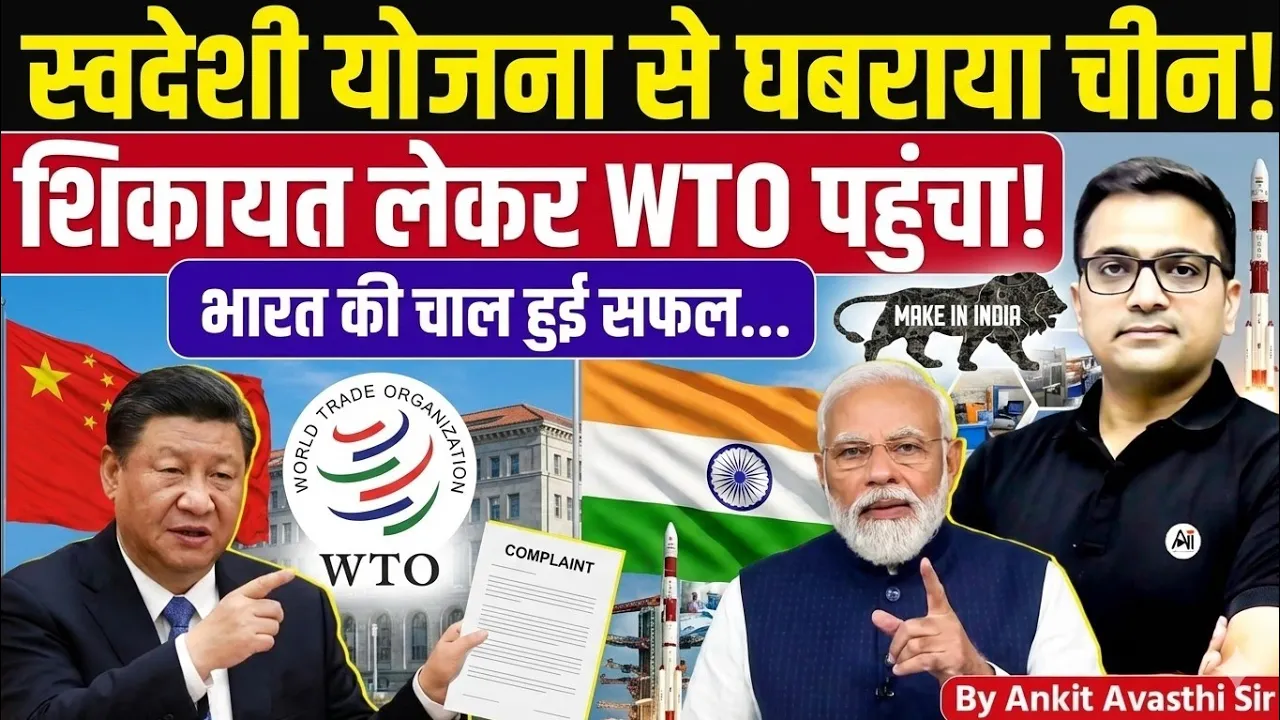
China filed a WTO complaint against India, alleging that India's Production Linked Incentive (PLI) scheme for solar cells and semiconductors provides unfair subsidies to domestic manufacturers, making their products artificially cheaper and threatening Chinese exports; however, India successfully defended its policy framework by demonstrating that the PLI scheme has generated significant economic benefits including 16.5 lakh crore in sales and 12 lakh jobs, while also advancing India's renewable energy targets of achieving 500 GW of renewable electricity generation by 2030.
Click to watch →
In Depth : WTO – Impact & Relevance
38.7K
India has been actively engaged in WTO dispute settlement since 1995, participating as complainant in 21 cases and respondent in 22, with 14 ongoing disputes. Major cases include export subsidies (where India lost but appealed), renewable energy local content requirements (India won), and agricultural import restrictions. India has also participated as third party in over 90 cases. The current crisis disadvantages India, creating uncertainty over dispute settlement and complicating compliance with panel rulings without appellate recourse.
Click to watch →
Gravitas | Canada: A vocal challenger to India's Farm Subsidies
40.6K
In 2018, the United States filed a case against India at the WTO regarding export subsidies worth more than seven billion dollars. These subsidies benefited various manufacturers including steel products, pharmaceuticals, chemicals, information technology products, and textiles. The US argued India violated WTO norms. Canada participated in this case as a third party. The WTO panel ruled against India in this trade dispute.
Click to watch →
Deep Dive
Evaluation of WTO reform proposals discussed in recent Ministerial Conferences (MC12/MC13) regarding the dispute settlement mechanism.
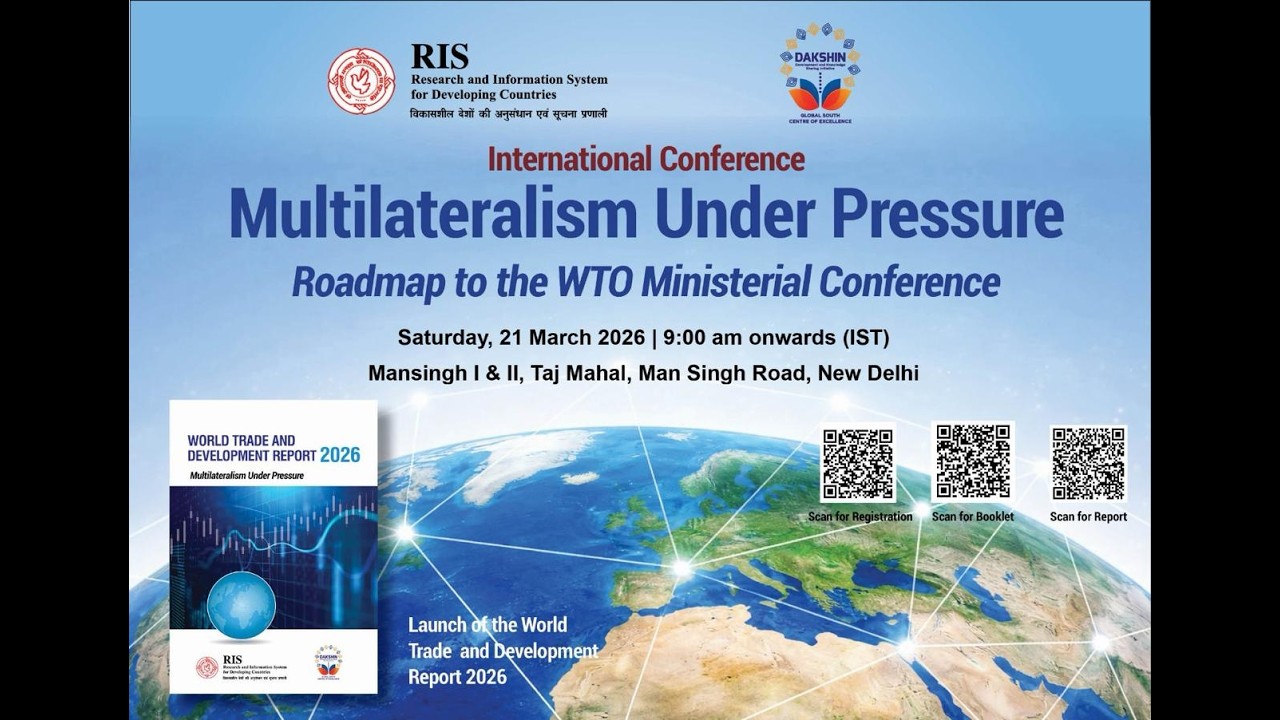
International Conference: Multilateralism Under Pressure Roadmap to the WTO Ministerial Conference
404
The dispute settlement mechanism became dysfunctional in December 2019 when less than three Appellate Body members existed, unable to constitute a division to take on appeals. This targeted the security and predictability of the multilateral trading system. The WTO reform process now recognizes that deeper institutional reforms will have limited value without a functional dispute settlement system. The Chair of the General Council has stated that a reformed WTO is a WTO with a reformed dispute settlement mechanism. The US proposed interest-based conversations on dispute settlement reform rather than position-based conversations, resulting in over 300 proposals and 70 interests identified.
Click to watch →

22 June 2026: Daily Current Affairs Analysis |The Hindu |Indian Express ~Dr Purushottam Meghwal
126
The WTO operates on consensus-based decision-making requiring 100% agreement from all members. This has made the organization extremely slow and inefficient. The 14th WTO Ministerial Conference in March 2026 demonstrated this problem, where even a routine ministerial declaration could not be agreed upon. The reform fault lines include: whether every decision requires all members to agree, how to restore the dispute settlement mechanism, and how much special treatment developing countries should receive. The US blocking judge appointments and imposing 100-150% tariffs despite WTO rules has further undermined the system's credibility.
Click to watch →
Centering Workers’ Rights in U S Trade Policy: A Conversation with Ambassador Katherine Tai
101
The WTO dispute settlement system faces significant challenges despite its importance for international trade governance. Reform proposals aim to ensure the system actually settles disputes effectively rather than becoming merely a litigation forum that generates revenue for lawyers while worsening trading partner relationships. The goal is not to return to the status quo ante but to modernize the system so it better serves the interests of member states, particularly in addressing contemporary trade challenges that the original framework did not anticipate.
Click to watch →
WATCH LIVE: Agreement on Canada-EU trade co-operation signed
1.7K
The upcoming WTO ministerial conference in Cameroon represents an opportunity to establish a new approach to international trade governance. Rather than viewing ministerial meetings as conclusions, participants aim to see them as starting points for more intensive processes. The goal is to move away from waiting two years between ministerial conferences toward a more hands-on approach involving political leadership to create momentum for reforming the WTO into a more effective, efficient institution that helps global trade, respects international norms, and improves dispute settlement mechanisms.
Click to watch →

JT 20h de ORTM1 du 08 avril 2026.
4.6K
The 14th WTO Ministerial Conference held in Yaoundé, Cameroon in March 2026 examined trade reform issues necessitated by rising unilateralism and protectionism threatening multilateralism. The conference addressed challenges to several commercial agreements and dispute resolution mechanisms. Despite failing to adopt a work plan for WTO reform, the conference adopted agreements on fishing subsidies, work program for small economies, special and differential treatment implementation, and agreements on technical barriers to trade and sanitary and phytosanitary measures.
Click to watch →
Deep Dive
Exploration of 'Special and Differential Treatment' (S&DT) provisions and how they influence dispute outcomes for developing versus developed nations.

SEAFDEC Webinar Series: WTO Fisheries Subsidies Draft Consolidated Text (Negotiating Group on Rules)
603
Many developing countries view special and differential treatment provisions as too narrow and rigid, advocating for broader carve-outs without time or geographic limitations. Some countries argue there should be no links between S&D provisions and transparency requirements. However, some developing countries consider some S&D provisions too broad and do not support any in IUU and overfished stock pillars. The Philippines has strong opposition to provisions allowing IUU determination to be deemed out of thin air during territorial disputes, proposing that cases addressed by international court should not be considered disputed, and those still disputing should demonstrate arguments based on international law procedures.
Click to watch →

Webinar | The Future of Special and Differential Treatment for Developing Countries in the WTO
292
The WTO framework allows each member to self-designate as a developing country, entitling them to approximately 155 special differential treatment provisions. Critical analysis reveals these provisions provide only minor to negligible benefits, with most being best-effort or transitional in nature. Only about 24% of regulatory provisions allow unilateral action by developing countries. In the Subsidies Agreement, developing countries with significant export capability have been graduated out of exemptions. In Agriculture, major developed countries have secured major derogations, raising concerns about 'reverse' S&D. Swiss formula modalities for tariff reductions require greater effort from developing countries than developed ones. The historical evolution from Article 18 (1948) through the Enabling Clause (1979) to the Doha Development Agenda (1991) reflects developing countries' ongoing quest for responsive integration. Discourse around S&D has shifted from effectiveness to contestation of rights themselves, with the 2018 US delegation document explicitly challenging self-declaration practices. A significant trend is focusing S&D only on Least Developed Countries (LDCs), which account for only 1% of global trade, making special rights less controversial.
Click to watch →

5th Workshop on New Developmentalism: Theory and Policy for Developing Countries | Day 1 - Part 2
591
Special and differential treatment (SDT) is a fundamental principle allowing developing countries reduced liberalization commitments, greater flexibilities, and longer implementation times compared to advanced countries. The BIC coalition fought to apply SDT to themselves (Brazil, India, China) rather than limiting it only to low-income countries. This became the glue holding the coalition together despite internal differences, as each member wanted preferential treatment for themselves.
Click to watch →

SIEL Conversations April 2021: Special and Differential Treatment under the WTO
771
This comprehensive segment provides a foundational examination of Special and Differential Treatment (S&D) in WTO agreements, tracing its origins from GATT's initial lack of distinction between developed and developing members through the introduction of non-reciprocity in 1955. The discussion analyzes the US 2019 proposal introducing four objective criteria for eligibility, challenging the self-declaration system. Legal typology reveals that few S&D provisions actually provide enforceable differential treatment, with most offering limited-time or partial exemptions. Empirical evidence challenges claims that the world has fundamentally changed to warrant ending S&D, demonstrating persistent poverty in fast-growing economies, widening GNI per capita gaps, and HDI scores remaining below OECD averages from decades ago. The WTO lacks capacity to objectively define development status, and self-declaration has helped build developing country confidence since 1995 when membership grew by 50% to 164 members.
Click to watch →
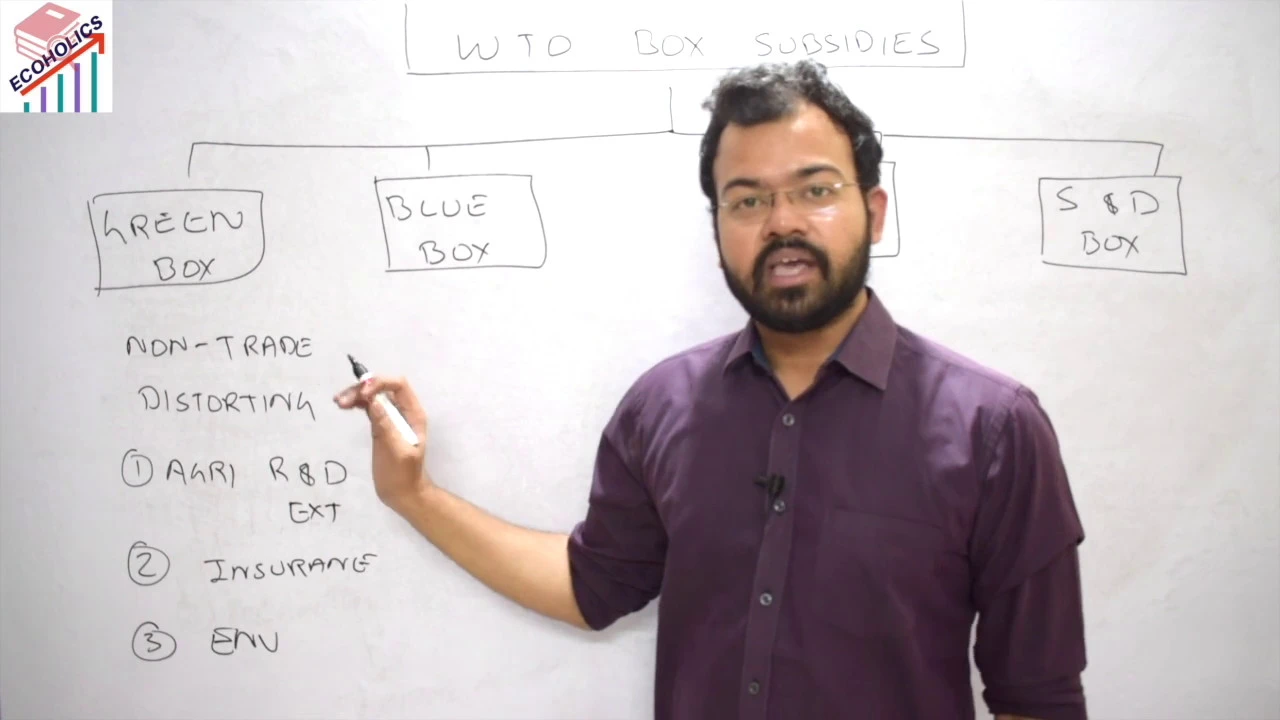
WTO's Box Subsidies By SANAT SHRIVASTAVA | UPSC IAS | CIVIL SERVICES | Economics
55.9K
The Special Differential Treatment Box (also called S&D box or developmental country's box) provides certain cushions specifically for developing countries, led by India. This facility recognizes that developed countries are far ahead in the development process, so developing countries need additional support to achieve their development goals. The S&D box offers special provisions and flexibility to help developing nations participate more effectively in global trade while catching up with developed economies.
Click to watch →
Dispute Process
Dispute Process
0:01- 1
WTO initiates bilateral negotiations for trade conflicts.
- 2
Panel adjudication follows failed 60-day consultations.
- 3
Final appeals can lead to authorized retaliation.
The Crisis of Appellate Body Paralysis and Power Asymmetries
While the WTO's Dispute Settlement Body (DSB) is designed as a neutral, rules-based mechanism, critics highlight severe structural and operational failures. The most critical challenge is the ongoing paralysis of the Appellate Body, caused by the United States blocking the appointment of new judges since 2019. This has effectively allowed countries to appeal panel rulings 'into the void,' rendering the dispute process non-binding. Furthermore, developing nations argue the system exhibits inherent power asymmetries. The ultimate remedy of 'retaliation' (tariffs) is practically useless for smaller economies, as blocking imports from a major trading partner hurts the developing nation's own economy far more than it damages the developed country. Consequently, critics argue the DSB favors powerful economies and fails to ensure equitable enforcement of international trade laws.
Basic understanding of the World Trade Organization (WTO), its origins from GATT, and its primary role in regulating global trade.
Core WTO trade principles of non-discrimination, specifically the Most-Favoured-Nation (MFN) clause and the National Treatment principle.
Fundamental concepts of international trade policy, including tariffs, non-tariff barriers, quotas, and subsidies.
An introductory grasp of how international agreements are structured and the concept of state sovereignty in multilateral treaties.
Analysis of the ongoing institutional crisis of the WTO Appellate Body, including the blockage of judge appointments and its impact on global trade.
Study of alternative interim dispute resolution mechanisms, such as the Multi-Party Interim Appeal Arbitration Arrangement (MPIA).
Detailed examination of landmark WTO dispute case studies, particularly those involving India, such as disputes over agricultural subsidies, solar panels, and export promotion schemes.
Evaluation of WTO reform proposals discussed in recent Ministerial Conferences (MC12/MC13) regarding the dispute settlement mechanism.
Exploration of 'Special and Differential Treatment' (S&DT) provisions and how they influence dispute outcomes for developing versus developed nations.
13.9K views179likes2:12@NittyGrittyIASOriginal Release: 2022-03-04
all right guys let's talk about the dispute settlement process at the wto the general council of the wto seated at geneva functions as the dispute settlement body wto sets rules for smooth functioning of trade among the member countries but some countries break rules for their own benefit and other countries suffer the country which breaks rules is called as the airing country and the agreed country which approaches the wto for resolution is called as the complainant country suppose a country makes its trade policies which are in violation of the wto rules then the first step taken by the agreed country is to request for consultation at the wto this initiates the dispute settlement process at the wto the first stage of dispute resolution is bilateral consultation so wdo asks both the airing and complainant parties to hold formal negotiations and resolve the disputes on their own the parties are expected to discuss the matters and arrive at a satisfactory solution that is acceptable to both the sites but if the bilateral consultations fail to find a solution within 60 days then the complainant country can request for adjudication by a panel of the dispute settlement body the dsb upon hearing representations by both sides delivers a verdict this verdict can be further challenged in the appellate body after the final verdict of the appellate body the airing nation is directed to make changes in its laws and comply with the wto rules within a reasonable time but the important thing to note here is that wto has no enforcement powers so the airing country may or may not make changes to its laws so how is this problem solved in case if the airing country fails to comply with wto rules then the complainant country is allowed by the wto to take cross retaliatory measures you
Up Next
7:14
MPIA Explained: WTO Appellate Arbitration by Professor Pauwelynn
@genevatradeplatform
1.8K views•2021-06-24

12:54
Triumph of Orthodoxy Icon: Byzantine Art & History Explained
@BenCallan
2.1K views•2024-08-06

9:49
FastAPI vs Flask vs Django: Choosing the Right Python Web Framework
@TechWithTim
302.5K views•2024-05-26

1:42
Game of Thrones Opening Credits: A Cinematic Analysis
@gameofthrones
46.3M views•2011-04-18
Related Study Plans & Knowledge Roadmaps
Structured learning paths in General & Interdisciplinary Studies
general-studies
Elevator Engineering: History, Physics & Cities
01From Hoists to Safety Brakes: The Dawn of Vertical Lift
02Hydraulic vs. Traction: The Engineering Physics of Elevators
03Modern Speed, Safety, and Algorithms
+ 2 more learning modules
12h5 modules
Explore Roadmap
general-studies
Rubber: Material Science, History & Geopolitics
01Origins of Natural Rubber & Mesoamerican History
02The Chemistry of Natural Rubber & Vulcanization
03The Geopolitics of the Rubber Boom & Colonization
+ 2 more learning modules
12h5 modules
Explore Roadmap
general-studies
Containerization: Evolution, Logistics & Trade
01Ancient Trade & Bulk Cargo: Amphorae to Barrels
02The Industrial Revolution & Cardboard Packaging
03The Containerization Revolution: Malcom McLean
+ 2 more learning modules
12h5 modules
Explore Roadmap
general-studies
Textile Tech: Evolution, Labor & Global Impact
01Pre-Industrial Textiles: Handloom & Cottage Industry
02Mechanization: The Spinning Jenny to the Power Loom
03The Factory System & Global Labor Transformation
+ 2 more learning modules
10h5 modules
Explore Roadmap