













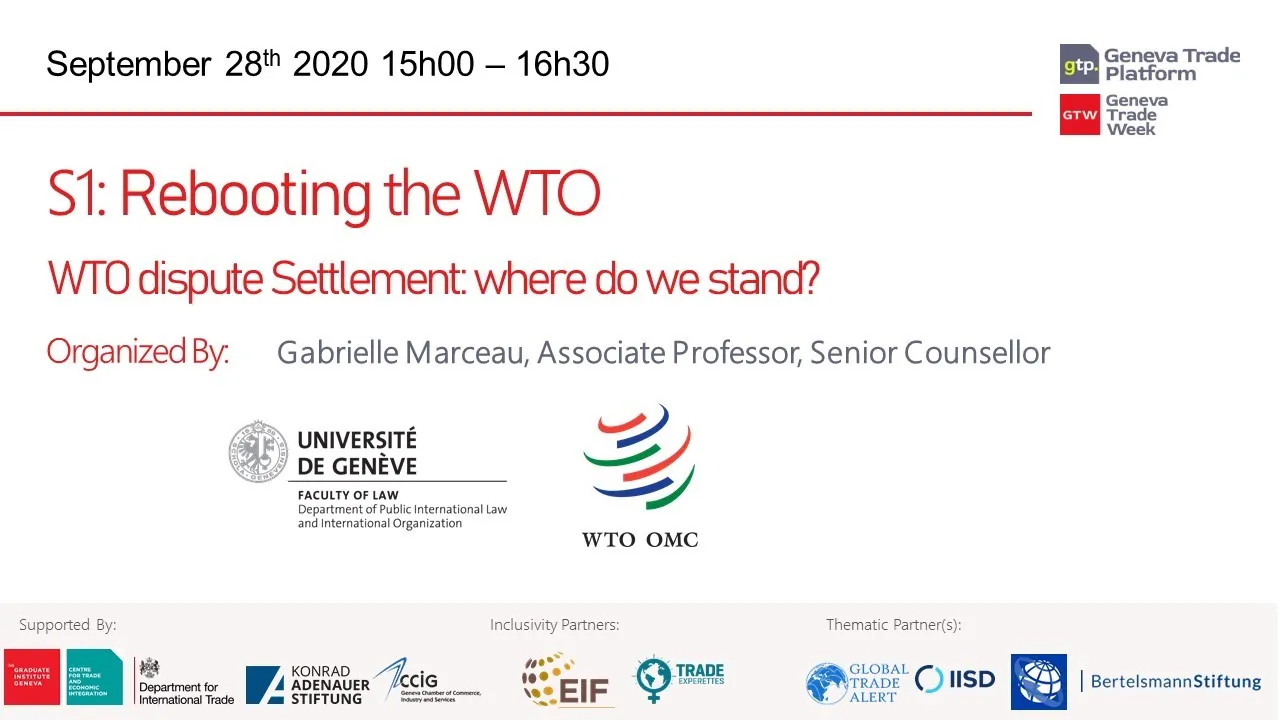
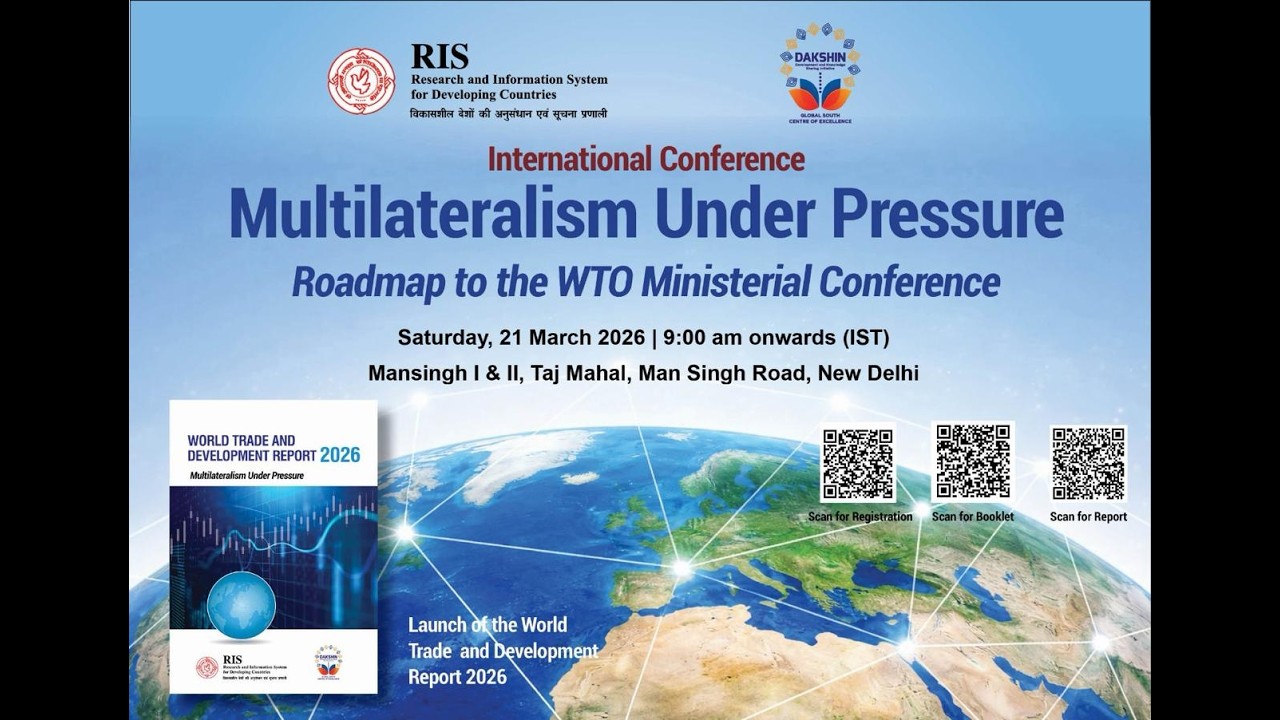
The MPIA is an interim arbitration mechanism created in April 2020 under Article 25 of the WTO Dispute Settlement Understanding to address the dysfunction of the Appellate Body since December 2019; it allows WTO disputes to proceed to an appellate stage through a four-stage process (consultations, panel suspension, MPIA arbitrator review, and award issuance) for parties that have signed up, but does not function for disputes involving non-participants, making it a pluralateral mechanism operating under the multilateral WTO framework.
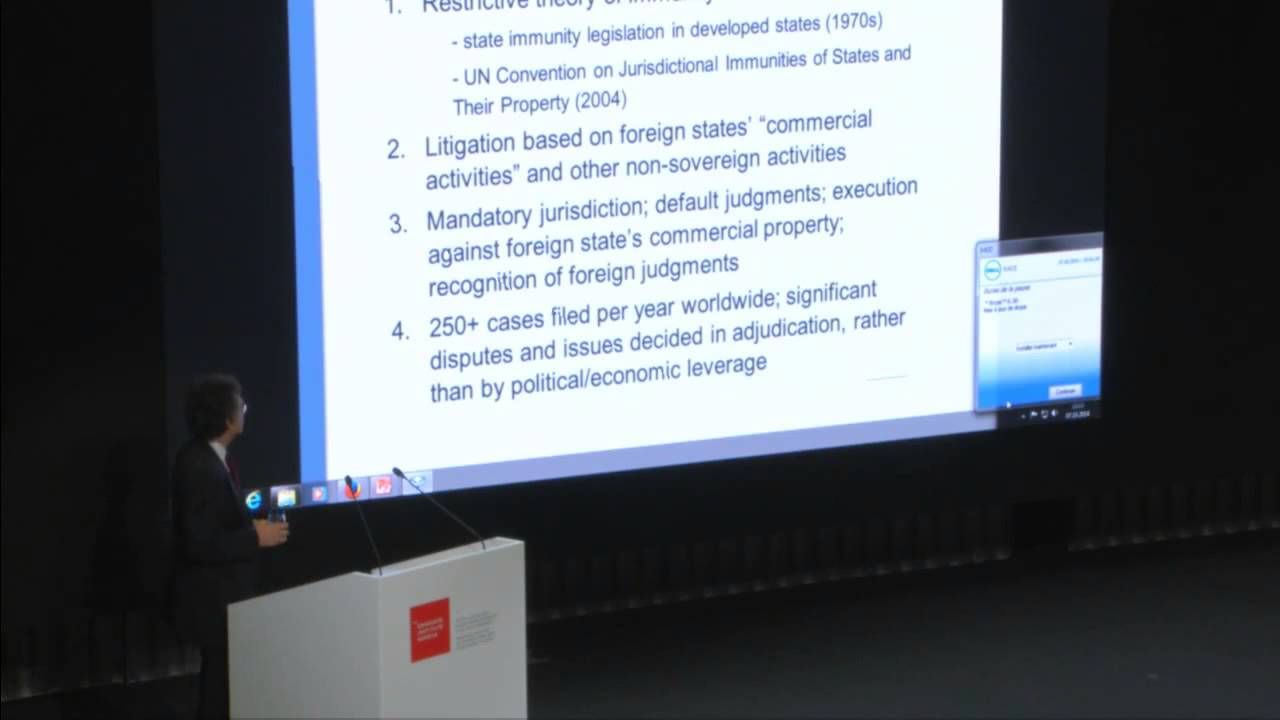
MPIA Explained: WTO Appellate Arbitration by Professor Pauwelynn
Added:Structure and function of the WTO Dispute Settlement Mechanism (DSM), including the roles of panels and the Dispute Settlement Understanding (DSU).
The historical role, composition, and legal authority of the WTO Appellate Body prior to its paralysis.
The origins and political context of the WTO Appellate Body crisis, specifically the blockages on judicial appointments.
The conceptual distinction between institutionalized international adjudication and voluntary international arbitration (specifically DSU Article 25).
Analysis of landmark MPIA rulings and how they shape contemporary international trade jurisprudence.
A comparative assessment of MPIA procedural innovations (such as strict page limits and expedited timelines) versus traditional Appellate Body procedures.
Strategies and institutional proposals for the comprehensive reform of the WTO dispute settlement system by 2024 and beyond.
The systemic implications of plurilateral arrangements (like the MPIA) on the unity and fragmentation of multilateral international economic law.
1.8K views24likes7:14Original Release: 2021-06-24
my name is joel spolin i'm a professor of international law here at the graduate institute of international and development studies in geneva i'm also the head of the international law department here and the co-director of the institute's center for trade and economic integration and one of my other occupations pastimes is i'm one of the 10 arbitrators on the mpia so the mpia is an abbreviation for multi-party interim appeal arbitration arrangement it's a mouthful but it's essentially a procedure that allows for wto disputes to move to an appellate stage and it's a procedure an arbitration procedure provided for under the original wto treaty article 25 of the dispute settlement understanding so the mpia was created in april 2020 because there'd been a blockage on the appointment of appellate body members which in december 2019 led to the appellate body becoming dysfunctional so to avoid that disputes when brought to the wto could be blocked by appealing a subset of wto members created the mpia to look into wto disputes at the appellate stage but it is very importantly an interim arrangement so the mpia is only there for as long as there's not a sufficient amount of appellate body members in place and when there is again sufficient number of appellate body members the mpia will disappear so think of an mpia dispute in terms of four stages the the first stage is exactly the same as under regular wto dispute settlement so you have consultations you then have a panel looking into the case all the way up to its final report so that's stage one stage two is when either party wants to appeal what happens then is the panel will not circulate its final report instead it will suspend the panel proceedings so panel suspension is step number two step number three is the mpia or three mpia arbitrators randomly selected looking into an appeal could be a cross appeal submissions will be exchanged hearings will be held that is step three step 4 is the mpia award the appellate arbitration award will be issued and it will include the panel report to the extent panel report findings are not reversed that report doesn't need to be adopted by the dispute settlement body its mere issuance makes it binding on the disputing parties and very importantly this mpia arbitration report will be implemented subject to the regular compliance procedures including suspension of concessions in the phase of non-compliance the exact same procedures as would have applied to a panel or a pallet body report so it's important to the system because for disputes between wto members that have signed on to the mpia the dispute can run its regular course so appeals can be looked at and no blockage can occur so imagine a dispute between china and australia both participants to the mpia a regular procedure can be filed a panel report can be issued an appeal can be lodged and such an appeal wouldn't block the procedure the mpia would be there to hear it now if on the other hand you're a trader from the uk or the united states uk and the us are not parties to the mbia if disputes at the wto involve such non-parties there is an option to appeal but such appeal will be before an appellate body that is no longer there so that will block the process so in essence it means that as between parties wto members that haven't signed on to the mpia the wto dispute settlement system no longer functions as it was supposed to so for traders interest groups from countries not party to the mpia this can be a real problem now for those who come from mbia participants this top cap solution allows for wto dispute settlement to function so the mpia is an interim solution and it has only been adopted by a subset of wto members so in that sense you could think of it as a floral lateral mechanism it's a multi-party arrangement but not all wto members have signed on to it actually as we speak there's 52 wto members who are participants to the mpia and i'm counting now the eus 28 27 eu member states and the eu as a separate wto member so in that sense it can be looked upon as a plural lateral on the other hand what is really important is that it's not a plurilateral in a different sense because the mpia mechanism operates under the multilateral wto treaty it's actually arbitration as explicitly provided for in the original wto treaty article 25 of the dispute settlement understanding so in that sense it operates under the umbrella of the multilateral wto and will be supported if cases come up by the wto secretariat the multilateral wto setting
Up Next
9:36
Understanding the World's Only Four-Nation Border Quadripoint
@BrightTripTravel
294.7K views•2021-08-10

12:54
Triumph of Orthodoxy Icon: Byzantine Art & History Explained
@BenCallan
2.1K views•2024-08-06

9:49
FastAPI vs Flask vs Django: Choosing the Right Python Web Framework
@TechWithTim
302.5K views•2024-05-26

1:42
Game of Thrones Opening Credits: A Cinematic Analysis
@gameofthrones
46.3M views•2011-04-18
Related Study Plans & Knowledge Roadmaps
Structured learning paths in General & Interdisciplinary Studies
general-studies
Elevator Engineering: History, Physics & Cities
01From Hoists to Safety Brakes: The Dawn of Vertical Lift
02Hydraulic vs. Traction: The Engineering Physics of Elevators
03Modern Speed, Safety, and Algorithms
+ 2 more learning modules
12h5 modules
Explore Roadmap
general-studies
Rubber: Material Science, History & Geopolitics
01Origins of Natural Rubber & Mesoamerican History
02The Chemistry of Natural Rubber & Vulcanization
03The Geopolitics of the Rubber Boom & Colonization
+ 2 more learning modules
12h5 modules
Explore Roadmap
general-studies
Containerization: Evolution, Logistics & Trade
01Ancient Trade & Bulk Cargo: Amphorae to Barrels
02The Industrial Revolution & Cardboard Packaging
03The Containerization Revolution: Malcom McLean
+ 2 more learning modules
12h5 modules
Explore Roadmap
general-studies
Textile Tech: Evolution, Labor & Global Impact
01Pre-Industrial Textiles: Handloom & Cottage Industry
02Mechanization: The Spinning Jenny to the Power Loom
03The Factory System & Global Labor Transformation
+ 2 more learning modules
10h5 modules
Explore Roadmap