







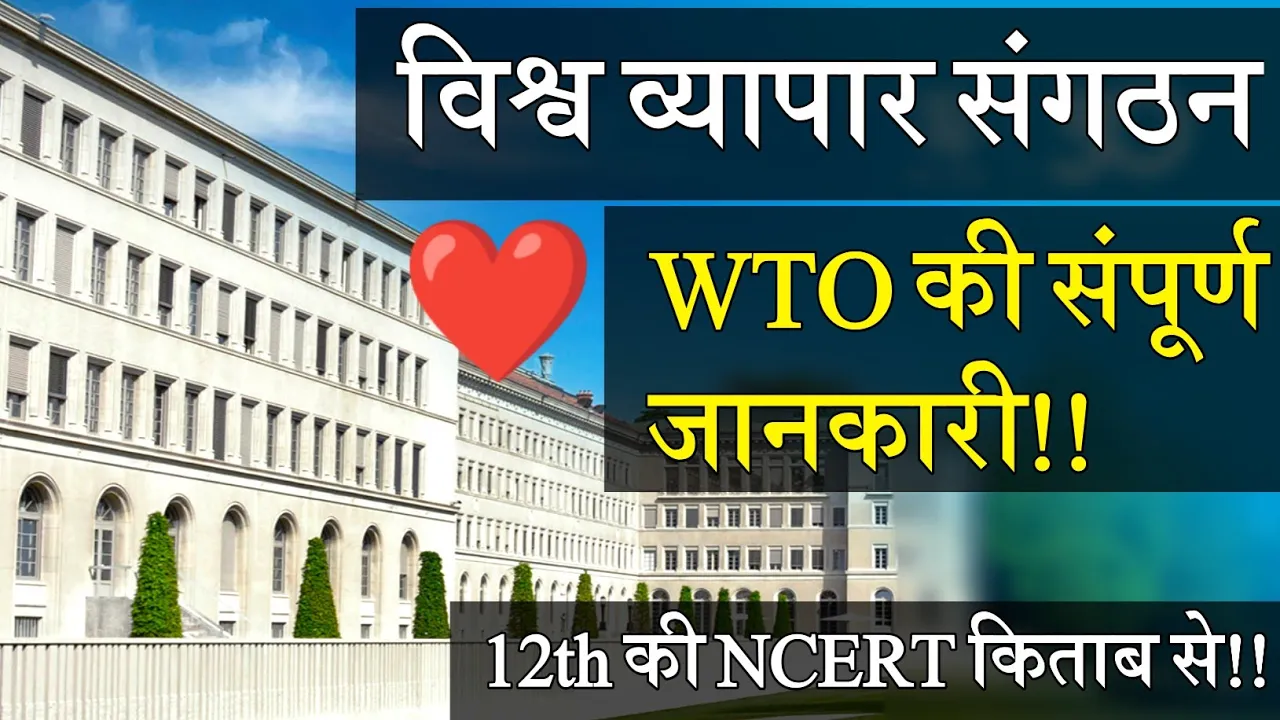









The World Trade Organization (WTO), headquartered in Geneva with 160 member states representing over 95% of global trade, regulates international commerce through principles like the Most Favored Nation rule, which requires equal trade treatment among members, while allowing regional free trade zones such as NAFTA, Mercosur, EU, and ASEAN; since its establishment in 1995 replacing GATT, global average tariffs have fallen dramatically from 40% to 2.2%, though agricultural trade remains a contentious issue with developing nations advocating for fairer terms through initiatives like the Doha Development Round.
How the World Trade Organization Works: Explained with Maps (History & Impact)
Added:Basic principles of international trade, including comparative advantage and the benefits of global exchange.
The distinction between protectionism (tariffs, quotas, subsidies) and free trade policies.
The historical context of the post-WWII economic order and the General Agreement on Tariffs and Trade (GATT).
Fundamental macroeconomic concepts, such as trade deficits, balance of payments, and currency exchange rates.
The current crisis of the WTO Appellate Body and the geopolitical tensions surrounding its dispute settlement mechanism.
Deep dive into the TRIPS Agreement (Trade-Related Aspects of Intellectual Property Rights) and its impact on global public health and technology transfer.
A comparison between multilateral trade agreements (like the WTO) and regional or bilateral trade agreements (e.g., USMCA, CPTPP).
Case studies of prominent trade disputes, such as the Boeing-Airbus subsidy conflict or agricultural disputes between developing and developed nations.
273.1K views1.5Klikes5:50Original Release: 2015-01-25
Today we have a look at the World Trade Organization (WTO).
Firstly we mark the member states of the World Trade Organization, altogether are there 160 member states.
Its headquarters is in Geneva (Switzerland).
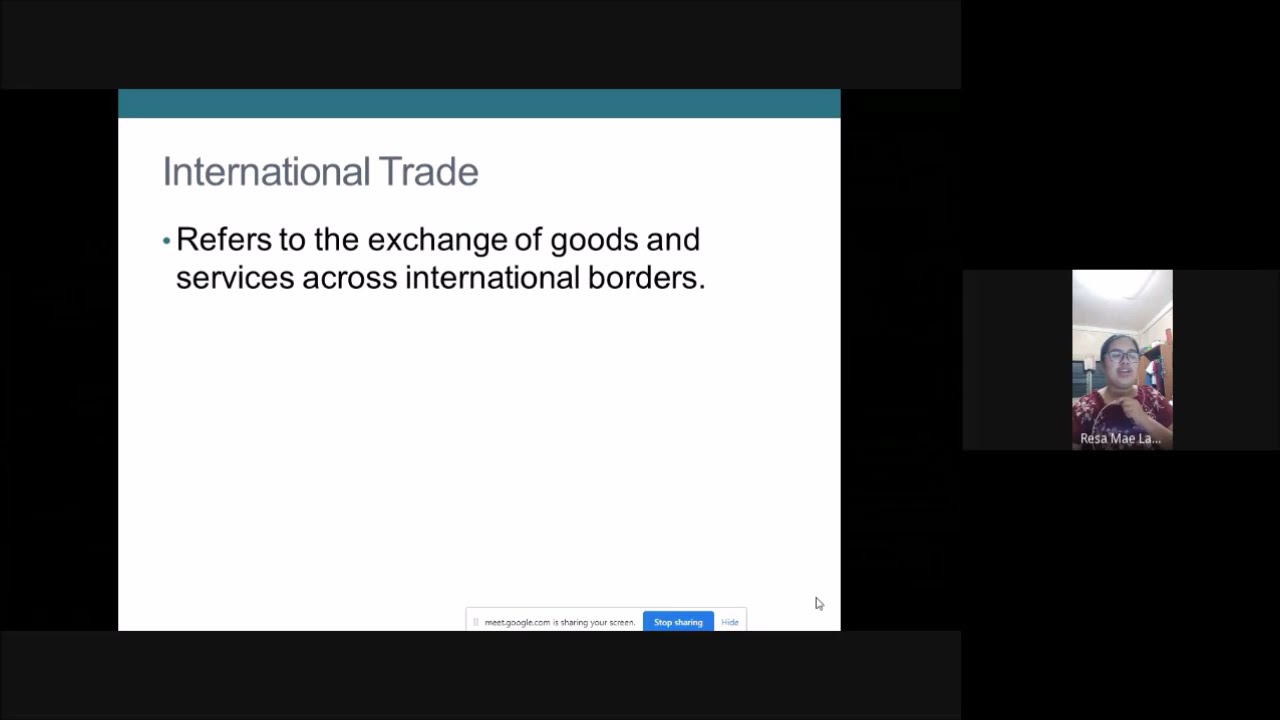
The main purpose of the World Trade Organization is to regulate and liberalize world trade.
Since more than 95% of the trade is processed between member states, is the WTO very important.
The idea to establish an organization, which regulates the international trade, arose after the Second World War, just like the idea to found the United Nations (UN), the International Monetary Fund (IMF), and the World Bank. The idea based on the free trade theories of Adam Smith and David Ricardo, but was also boosted by the Great Depression in the 1930s, because the return to economic protectionism was considered as a reason for the Second World War.
Therefore thought one, that economic agreements could protect peace between the countries.
In the year 1947 were the international trade relations regulated by the General Agreementon Tariffs and Trade (GATT).
23 countries signed this agreement in 1948, but three of them didn't ratify it. (Lebanon, Syria and China) To the GATT belonged 128 countries in 1994 and it was replaced at the beginning of 1995 by the World Trade Organization.
Today are 160 countries member states of the WTO and 24 governments have observer status.
Since 1950 increased the world trade volume twentyfold.
Here can you see all trade routes, inclusive sea, internet and air.
Most of them are between the industry nations, but the trade with countries in Asia increases fast, many products because they export many productsto North America and Europe.
How does the World Trade Organization work?
Every member of the WTO has to comply with the "most favoured nation" (MFN) principle. That means when one member state grants for example trade benefits to another member state, it has to grant the same trade benefits to every other nation in the organization.
But there is an exception to the "most favoured nation" principle: free trade zones.
Here can you see the four most important free trade zones: To the North American Free Trade Agreement(NAFTA) belongs Mexico, Canada and the United States.
To the Mercado Común del Sur (Mercosur) belong five South American countries, plus five additional associated nations.
The European Union (EU), which has nearly no customs barriers.
And the Association of Southeast Asian Nations (ASEAN), which has ten member states.
Reason for this exception is the idea, that regional integration is the first step to global integration.
Global duties decreased on average almost completely since 1945.
So decreased duties on average from 40% of the product value to 2.2% today.
The Budget of the World Trade Organization is also used for the so called Dispute Settlement Body (DSB), which handles trade disputes. Such a dispute existed for example between the Unites States and the European Union.
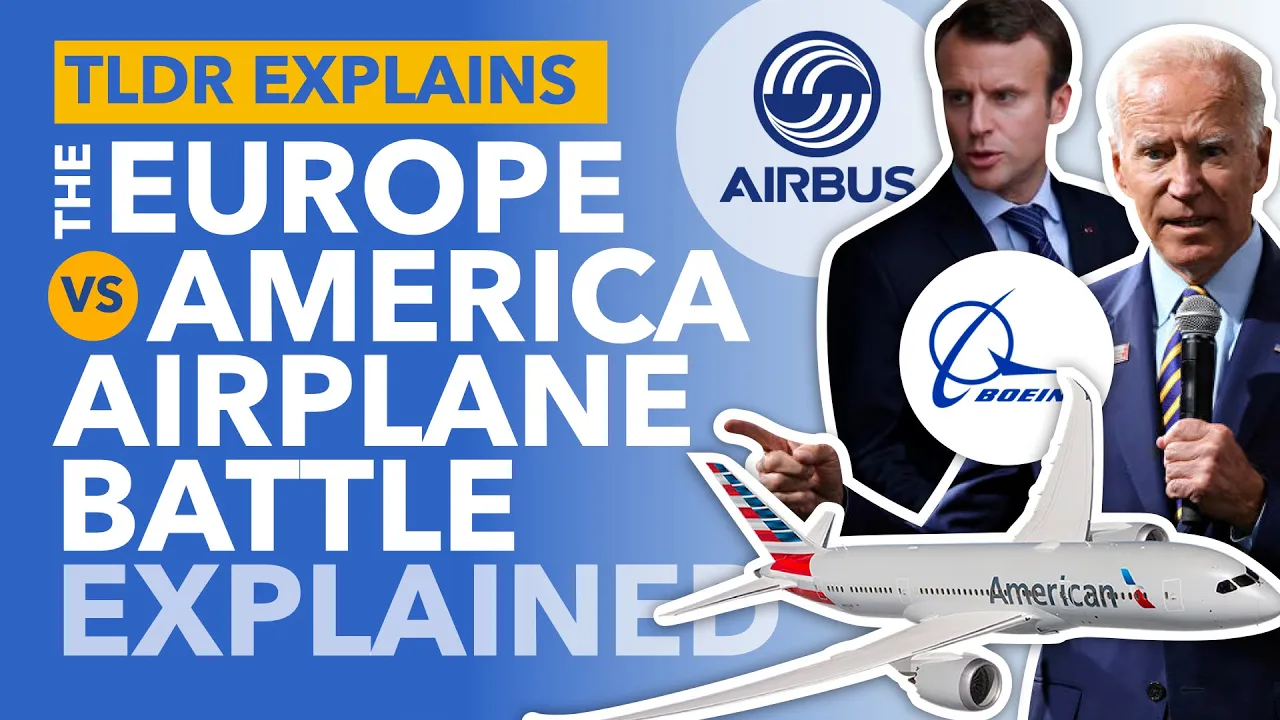
The European Union complained about the U.S. subsidies for the aircraft company Boeing.
In January 2011 declared the World Trade Organization those subsidies illegal and allowed the EU to react with reasonable trade sanctions.
Another problem area in the WTO is agriculture, one of the last economic sectors which isn't completely liberalized.
Here can you see the development of the grain prices. They are related to the increasing demand for animal food, to price speculations, but also to conflicts and changes in weather.
Because of those factors increased the grain prices and that resulted in food riots in many member states of the World Trade Organization in the year 2008.
Within them: Mexico, Egypt and Indonesia. Agriculture is still an important topic in the WTO, especially because of the differences between the north and south countries.
The emerging markets in the south make the majority in the World Trade Organization, but they suffer under the industry nations, which support their agriculture with subsidies.
Because of this tried the WTO to establish a new basis of trust with the so called "Doha Development Round", but unfortunately couldn't they make any agreements until today.
I hope you enjoyed our trip to the World Trade Organization, but there's still a question left: What do you think?
Up Next

11:32
WTO Dispute Settlement System Explained | International Trade Law
@momoore1957
54.5K views•2013-12-14

24:30
BRICS Pay and de-dollarization: A New Financial Order Emerges? | 55 chars
@DannyHaiphongYT
164.6K views•2024-10-22
7:33
Government Surveillance Methods: 10 Ways You May Be Watched
@BeAmazed
1.6M views•2017-04-09
10:19
Explaining the Saudi-Iranian Proxy Conflict in the Middle East
@Vox
18.2M views•2017-07-17
Related Study Plans & Knowledge Roadmaps
Structured learning paths in Political Science
political-science
Economic Statecraft: Sanctions & Chokepoints
01Foundations of Geoeconomics and Economic Statecraft
02The Mechanics of Weaponized Interdependence
03International Sanctions: Types, Implementation, and Efficacy
+ 2 more learning modules
12h5 modules
Explore Roadmap
political-science
Central Bank Independence: Politics & Policy
01Foundations of Central Banking and Monetary Policy
02The Time Inconsistency Problem & Inflation Bias
03The Delegation Model and Designing Independence
+ 2 more learning modules
12h5 modules
Explore Roadmap
political-science
Consociationalism: Power-Sharing & Stability
01Democratic Dilemmas in Divided Societies
02Introduction to Consociational Democracy
03The Four Pillars of Consociational Design
+ 2 more learning modules
12h5 modules
Explore Roadmap
political-science
Rebel Governance: Legitimacy, Economy & State
01Foundations of Rebel Governance and Statehood
02Establishing Political Legitimacy and the Rebel Social Contract
03Wartime Economies and Rebel Resource Management
+ 2 more learning modules
14h5 modules
Explore Roadmap