Building Cosmos Appchains: SDK & Ignite CLI
Learning Goal: Developing Interoperable Appchains: Building Custom Sovereign Blockchains with the Cosmos SDK and Ignite CLI. By the end of this curriculum, you will understand the architectural philosophy of application-specific blockchains (Appchains), master the essentials of the Go programming language, scaffold and design customized state machines using the Ignite CLI and Cosmos SDK, establish cross-chain communication protocols using IBC, and deploy high-performance validator configurations.
- Prerequisites: Basic knowledge of command-line interfaces (CLI), general programming concepts (variables, functions, control loops), and basic networking/cryptography concepts (public/private keys, hashing).
- Estimated Total Study Time: 30 Hours
Module 1: Blockchain Basics & Go Programming Foundation
This module establishes a baseline conceptual understanding of blockchain systems—including distributed ledgers, peer-to-peer verification, and cryptographic consensus. Following this, you will transition into a deep technical dive into Go (Golang), the native language of the Cosmos SDK. You will master variables, packages, control flows, and structural composition using structs and interfaces, which are vital for writing state machine code in later modules.
Video Resources

- Why this video is valuable: This high-level, visual overview establishes the core concepts of decentralization, cryptographic verification, and distributed ledgers. It provides the initial mental model for how transactions are propagated and permanently recorded without a central intermediary.
- Why this video is valuable: As a comprehensive, long-form masterclass, this video is your primary technical foundation for Go. It meticulously covers variables, static typing, arrays, slices, map structures, pointers, and custom structs. Mastering these Go programming primitives is an absolute prerequisite to understanding Cosmos SDK codebase directories, state structures, and runtime logs.
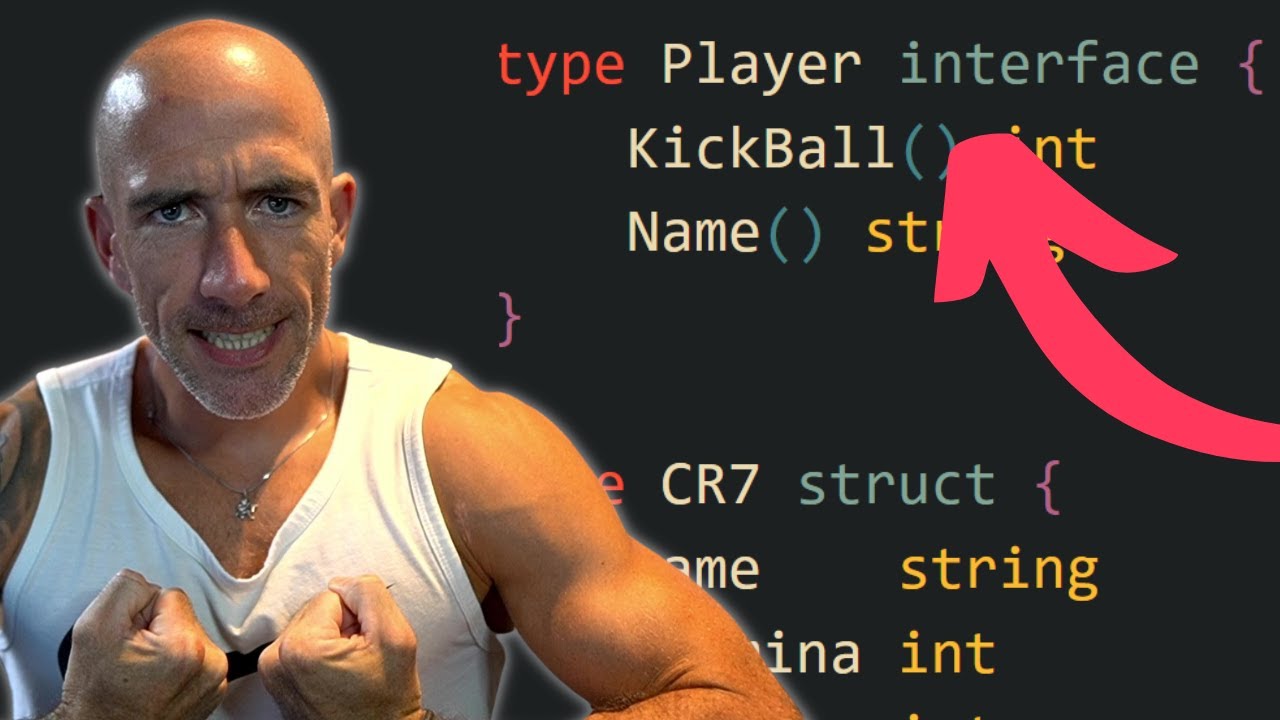
- Why this video is valuable: Go does not implement traditional class-based inheritance; instead, it utilizes implicit interfaces to model polymorphism. This short but highly focused video clarifies the "contracts" defined by interfaces. Understanding this is critical because the Cosmos SDK relies heavily on interface routing (such as implementing the
AppModuleorMsginterfaces) to connect modules to the core state machine.
Knowledge Checkpoint
- Can you explain how a decentralized ledger prevents double-spending via cryptographic verification?
- Do you understand the performance and memory differences between passing a variable by value vs. passing by pointer in Go?
- Can you define a custom
structin Go and write a method with a pointer receiver? - Do you understand how a Go type implicitly satisfies an interface contract without using an explicit
implementskeyword?
Module 2: Cosmos Ecosystem & The Appchain Thesis
This module explores the philosophical and technical architectural differences between general-purpose virtual machine chains (like Ethereum) and application-specific blockchains (Appchains). You will examine the three main layers of a blockchain: consensus, networking, and application. Additionally, you will study how the CometBFT (formerly Tendermint) engine abstracts networking and consensus using the Application Blockchain Interface (ABCI).
Video Resources
- Why this video is valuable: This resource introduces the "Appchain Thesis"—the foundational theory that sovereign dApps deserve their own customized, application-specific blockchain stack. It contrasts the scalability, governance, gas economics, and structural sovereignty of Cosmos chains with the shared security paradigms of monolithic systems.
- Why this video is valuable: Led by protocol expert Sunny Aggarwal, this lecture breaks down Tendermint's Byzantine Fault Tolerance (BFT) consensus logic. It clarifies how its rotating leader-selection process, two-phase voting protocol, and active validator caps improve scalability and ensure instant finality compared to traditional proof-of-work protocols.

- Why this video is valuable: This video uses the analogy of platform-application separation (like Web Servers vs. Web Apps) to explain the Application Blockchain Interface (ABCI/TMSP). It shows how CometBFT (Tendermint) serves as the consensus and network engine, while passing transaction payloads through sockets/gRPC to the state machine application written in Cosmos SDK.
- Why this video is valuable: This tutorial bridges the gap between raw consensus engines and modular application building blocks. It explains how Cosmos SDK acts as an organized framework that structures modules, routes transactions via handlers, and abstracts underlying state storage systems to accelerate development.
Knowledge Checkpoint
- Why does an appchain have better control over fee customizability and resource isolation than an EVM-based smart contract?
- What are the three core architectural layers of a blockchain, and which components of the Cosmos stack handle them?
- How does CometBFT use the ABCI (such as
DeliverTx,CheckTx, andCommitmethods) to communicate with your custom Go application? - Why does the CometBFT consensus engine guarantee "instant finality" without the risk of block reorganizations?
Module 3: Scaffolding Blockchains with Ignite CLI
In this module, you will set up your development environment and install the Ignite CLI (formerly Starport). You will explore how to scaffold a new blockchain project with a single command, examine the resulting directory structures, and run your first local development node.
Video Resources

- Why this video is valuable: Denis Fadeev, a core contributor to Ignite, provides an official step-by-step walk-through of the tool. You will learn how to scaffold a sovereign blockchain, declare modules, generate boilerplate code, and utilize the built-in hot-reloading state engine (
ignite chain serve) to iterate rapidly on your code.

- Why this video is valuable: This video covers the structural transition from a scaffolded baseline project into an interactive application. It explains the generated file architecture—such as where types are declared, where the Protobuf files live, and how client-side query structures map to internal application logic.
Knowledge Checkpoint
- What command initializes a new standard Cosmos SDK appchain project using Ignite CLI?
- In a scaffolded project, what are the primary differences and roles of the
proto/,x/, andapp/directories? - How does
ignite chain servemanage automated code recompilation, configuration loads, and local validator block production? - What is the role of protocol buffer (
.proto) files in defining the messages and query interfaces of your chain?
Module 4: Cosmos SDK State Machines, Messages & Keepers
This module goes deep into writing the custom state logic of your appchain. We bridge the Go programming principles learned in Module 1 with the structured architecture of the Cosmos SDK module system. You will learn how user commands trigger transitions via Messages and MsgServer, how Keepers write strictly typed data to the Key-Value (KV) store, and how QueryServer fetches state.
Video Resources
- Why this video is valuable: A quick visual orientation on how existing, production-grade projects inside Cosmos leverage the SDK’s pre-built modularity (e.g., auth, bank, staking modules) to construct complex application logic while focusing purely on their unique custom modules.
- Why this video is valuable: Explains AutoCLI and scaffolding workflows that map RPC and CLI commands straight to code. It demonstrates how standard state machine interactions translate to command execution on client terminals.
Structural Bridging: From Go Basics to Cosmos Architecture
In Module 1, you learned that Go uses struct composition (embedding) instead of class inheritance. In Cosmos SDK, this design pattern is crucial:
- The Keeper Struct: Every module has a
Keeperstruct that wraps access to key-value stores. It embeds store keys and other module keepers (e.g., BankKeeper to perform coin transfers) using structural composition. - Message Servers: Your transaction execution routes use standard Go interfaces. When a user submits a transaction, the SDK matches the unmarshaled Protobuf
sdk.Msgtype with its designated method signature registered on the module'sMsgServerinterface.
Explicit Knowledge & Coverage Gaps
While the included videos show high-level structures, they do not feature granular step-by-step code writing for standard Keepers or custom QueryServers. To master this module, independently research and experiment with the following:
- The Keeper pattern: How to use prefix stores (
storecoop.NewPrefixStore) and perform basic CRUD operations (store.Set,store.Get,store.Delete). - Protobuf compilation: How running
ignite generate proto-goor standard makefiles compiles.protofiles into Go structs (tx.pb.goandquery.pb.go). - Recommended Search Queries for Independent Study:
Cosmos SDK keepers and state store architecture tutorialHow to write MsgServer and QueryServer in Cosmos SDK
Knowledge Checkpoint
- What is the role of the
Keeperin a Cosmos module, and why does it need references to other modules' Keepers? - Can you trace the execution flow of a transaction from a client CLI message submission, through the
MsgServerinterface, to state modification inside the store? - How does Cosmos SDK use Protobuf definitions to generate RPC query methods and CLI entry points automatically?
- How do prefix keys prevent namespace collisions when multiple data types are written to the same underlying module KV store?
Module 5: Interoperability with the Inter-Blockchain Communication (IBC) Protocol
This module covers the Inter-Blockchain Communication (IBC) protocol, which allows independent blockchains to exchange data packets and tokens trustlessly. You will explore connections, client-verification states, channel handshakes, port bindings, and how relayer software routes packets across different chains.
Video Resources

- Why this video is valuable: This comprehensive lecture from an Interchain GmbH contributor details the deep architecture of the IBC protocol. It walks through light-client state updates, the four-step channel handshake (Init, Try, Ack, Confirm), and how individual appchains bind to ports to exchange custom payloads securely.
- Why this video is valuable: This technical demonstration covers "Local-Interchain"—a streamlined development environment that makes running local multi-chain networks and IBC relayer configurations straightforward. This setup allows you to test token transfers and custom packet flows on your local machine.
Explicit Knowledge & Coverage Gaps
The provided videos offer excellent theory on light clients and show you how to run automated testing scripts, but they do not walk through writing a custom IBC application module (such as implementing the IBCModule callbacks manually in Go).
- To bridge this gap, explore how standard Cosmos SDK chains implement the
OnChanOpenInit,OnChanOpenTry,OnRecvPacket, andOnAcknowledgementPacketcallbacks to parse incoming payloads and trigger internal state transitions. - Recommended Search Queries for Independent Study:
Deep dive into Cosmos IBC channels packet lifecycle and relayer setupCosmos SDK IBCModule callback implementation guide
Knowledge Checkpoint
- What is the structural hierarchy of IBC transport components? (Explain the relationship between Clients, Connections, Channels, and Ports).
- What happens step-by-step during a standard four-way channel handshake between two distinct sovereign appchains?
- What is the role of an off-chain Relayer program, and why doesn't an appchain have to trust a relayer's integrity?
- How does an appchain process an incoming token transfer packet via its light client state to verify transaction inclusion on the source chain?
Module 6: Genesis Configuration & Validator Node Deployment
This module covers preparing your custom appchain for staging and production launches. You will learn to customize initial blockchain parameters (balances, denom parameters, validator sets) in the genesis.json configuration file, run validator nodes in secure setups, and coordinate genesis block production.
Video Resources

- Why this video is valuable: A deep, production-grade guide on setting up, configuring, and maintaining a validator node. It covers the economics of Proof-of-Stake delegation, sentry node architecture to mitigate DDoS risks, and structural key management with hardware security modules (HSMs).

- Why this video is valuable: Although presented in Tamil and focused on basic Geth configurations, this video clearly demonstrates the structural properties of Genesis files. It covers how a raw JSON configuration maps starting token balances, custom network identifiers (
chain-id), and genesis accounts to initialize a private, multi-node testing network.
Conceptual Translation: Geth Genesis vs. Cosmos Genesis
While the introductory video on genesis files (Orkblockchain) uses Ethereum (Geth) JSON files, the configuration principles translate directly to the Cosmos SDK:
- In Geth, you configure fields like
alloc(allocations) andconfig.chainId. - In Cosmos SDK, the
genesis.json(located in~/.appchain/config/genesis.json) defines structural configurations for every active SDK module. For example,app_state.bank.balancesassigns initial coin allocations, andapp_state.genutil.gentxsregisters starting validator nodes before the network runs its first block.
Explicit Knowledge & Coverage Gaps
Setting up a manual, multi-node local testnet (without the automated wrappers of Ignite or local-interchain) requires distinct steps. To master this independently, research the following steps:
- Initialize separate node directories using
appchaind init <monicker> --chain-id <id>. - Generate genesis transactions using
appchaind gentx <key_name> <staking_amount>. - Collect gentxs into a shared genesis file using
appchaind collect-gentxs. - Peer the nodes together using the
persistent_peersandseedsfields insideconfig.toml.
- Recommended Search Query for Independent Study:
Cosmos SDK customize genesis json and run local multi node testnet
Knowledge Checkpoint
- What is the role of
genesis.jsonin starting a new chain, and what are its most critical parameters (e.g.,chain_id,genesis_time,app_state)? - What are the steps to register a starting validator node inside the genesis file using a
gentxtransaction? - How does a production Cosmos validator use a sentry node architecture to protect its private signing node from direct internet exposure?
- How do you resolve peer-to-peer discovery issues in a private multi-node network using seeds and persistent peers?
Course Map
This map outlines the recommended learning order and structural dependencies of each module.
Key People Index
- Denis Fadeev: Core contributor at Ignite (formerly Tendermint/Starport) and primary developer educator. His lectures and walkthroughs guide developers through the Ignite CLI scaffolding process.
- Sunny Aggarwal: Co-founder of Osmosis and prominent early researcher in the Cosmos ecosystem. He is well-known for explaining Tendermint BFT consensus, ABCI architecture, and proof-of-stake economics.
- Thomas Dekeyser: Technology contributor and developer relations lead at Interchain GmbH, specializing in deep architectural breakdowns of the Inter-Blockchain Communication (IBC) protocol.
- Robert Griesemer / Robert Pike / Ken Thompson: The original designers of the Go programming language at Google. Their decisions to omit inheritance in favor of interfaces and structure composition directly shaped the Cosmos SDK framework.
Final Self-Assessment
Complete this comprehensive self-assessment checklist before deploying your sovereign application to production:
- Go Basics: Can you write clean Go programs, declare typed structures, and implement custom logic interfaces without referencing external documentation?
- The Cosmos Model: Can you explain how Cosmos SDK appchains differ from EVM smart contracts regarding state execution, fee allocation, and protocol sovereignty?
- ABCI Mechanics: Do you understand the physical loop of CometBFT consensus and how the ABCI socket interface processes messages inside your Go application?
- Ignite CLI Mastery: Can you scaffold a brand-new chain with custom modules and generate correct CLI commands using
ignite scaffoldtools? - Keeper Composition: Can you write custom Keeper code in Go to safely read, modify, and delete structural data entries in your module's Key-Value store?
- Message Handlers: Have you implemented custom
MsgServerandQueryServerinterfaces to process user transactions and handle state queries? - IBC Architecture: Do you understand the packet lifecycles and light client verification models that protect inter-chain assets?
- Multi-chain Staging: Can you spin up a local multi-chain environment with an active, running relayer to coordinate custom token transfers?
- Genesis Optimization: Can you manually configure genesis files, modify starting account configurations, and register validator sets?
- Secure Operations: Do you understand how to deploy a production-grade validator node with sentry setups, double-sign protection, and secure backup procedures?