Parsing with CFGs: NLP Syntax & Ambiguity
Learning Goal: Construct Context-Free Grammars (CFGs) to parse syntactic structures and resolve semantic ambiguities in natural language processing (NLP) systems.
- Prerequisites: Basic knowledge of programming (preferably Python) and core linguistics concepts (such as Parts of Speech).
- Estimated Study Time: 14 Hours
Module 1: Introduction to NLP & Syntax Trees
In this module, you will learn the fundamental structural rules of natural language. You will examine Parts of Speech (POS) tagging and understand how sentences are parsed and visually mapped using syntax tree diagrams.
Recommended Videos

Why this video
This animated crash course offers a concise, highly engaging introduction to syntax trees. It clarifies how linguists use branching tree diagrams with nodes to map the hierarchical relationships between constituents in a sentence, establishing a firm mental model for syntax representation.
Knowledge Checkpoint
- Understand the definition of a node and a branch in a syntactic tree.
- Explain how tree diagrams show structural hierarchy compared to linear sentences.
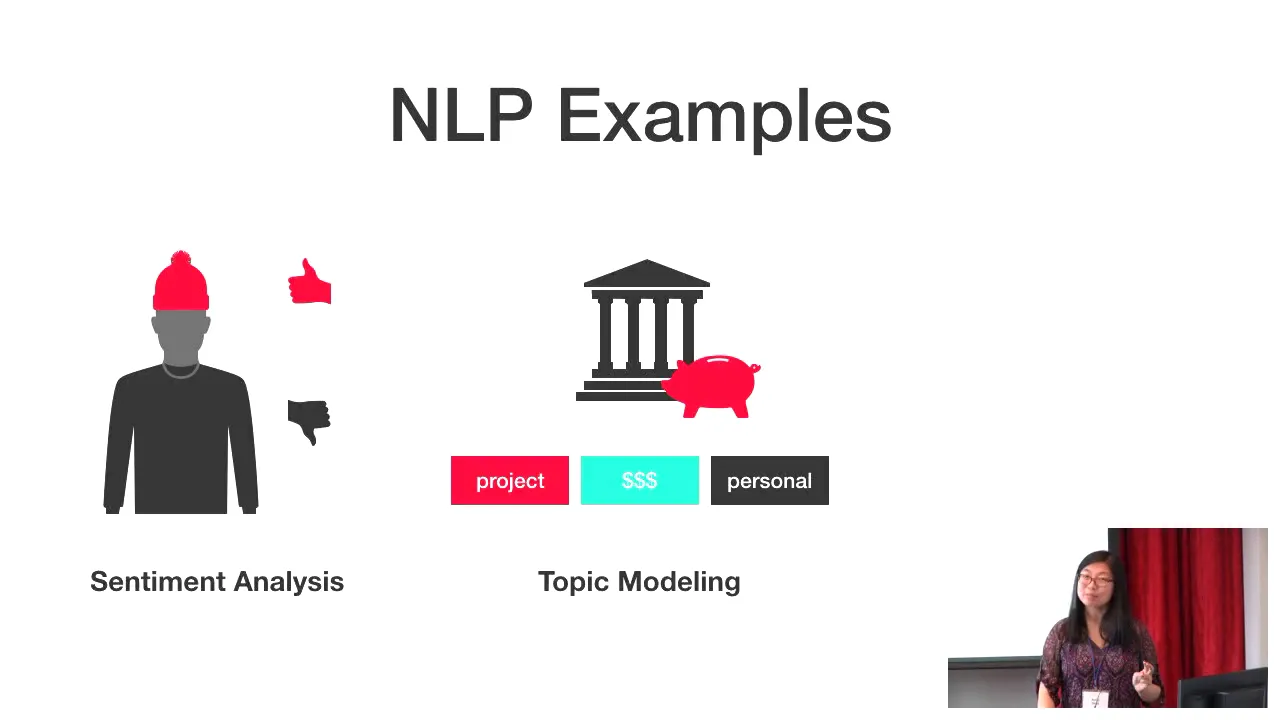
Why this video
This video transitions the theoretical concept of lexical categories into computational practice. It demonstrates how Part-of-Speech (POS) tagging categorizes words (nouns, verbs, adjectives) automatically using Python libraries, demonstrating the crucial first layer of syntactic analysis.
Knowledge Checkpoint
- List the primary syntactic tags used in POS tagging (e.g., 'NN' for noun, 'VB' for verb).
- Understand how POS taggers determine the grammatical roles of words in computational pipelines.

Why this video
An essential step-by-step breakdown of how a basic syntactic tree is constructed from scratch. You will watch how individual words map to phrases (such as Noun Phrases and Verb Phrases) and eventually converge on the root sentence level (S).
Knowledge Checkpoint
- Draw a basic tree structure for simple subject-verb-object English sentences.
- Identify constituent phrases (NP, VP) within a tree representation.

Why this video
This tutorial presents syntax analysis from an NLP systems engineering perspective. It connects linguistic theory directly with the practical goals of natural language analysis, showing how parsing helps downstream algorithms extract sentence meanings.
Knowledge Checkpoint
- Define "syntax" and "parsing" in the context of computer science.
- Differentiate between purely lexical processing (tokenization) and structural processing (parsing).
Module 2: Context-Free Grammars (CFG) Basics
Here you will learn the formal, mathematical definitions of Context-Free Grammars (CFGs). This includes understanding production rules, terminals, non-terminals, and the derivation steps that construct sentences according to Chomsky's formal language models.
Recommended Videos

Why this video
This formal computer science lecture details the mathematical structure of CFGs. It breaks down the 4-tuple components (, , , ) representing non-terminals, terminals, production rules, and the start symbol, making the transition from informal grammar to formal systems straightforward.
Knowledge Checkpoint
- Define the formal 4-tuple parameters of a CFG.
- Distinguish between terminal symbols (words) and non-terminal symbols (syntactic categories like NP, VP).
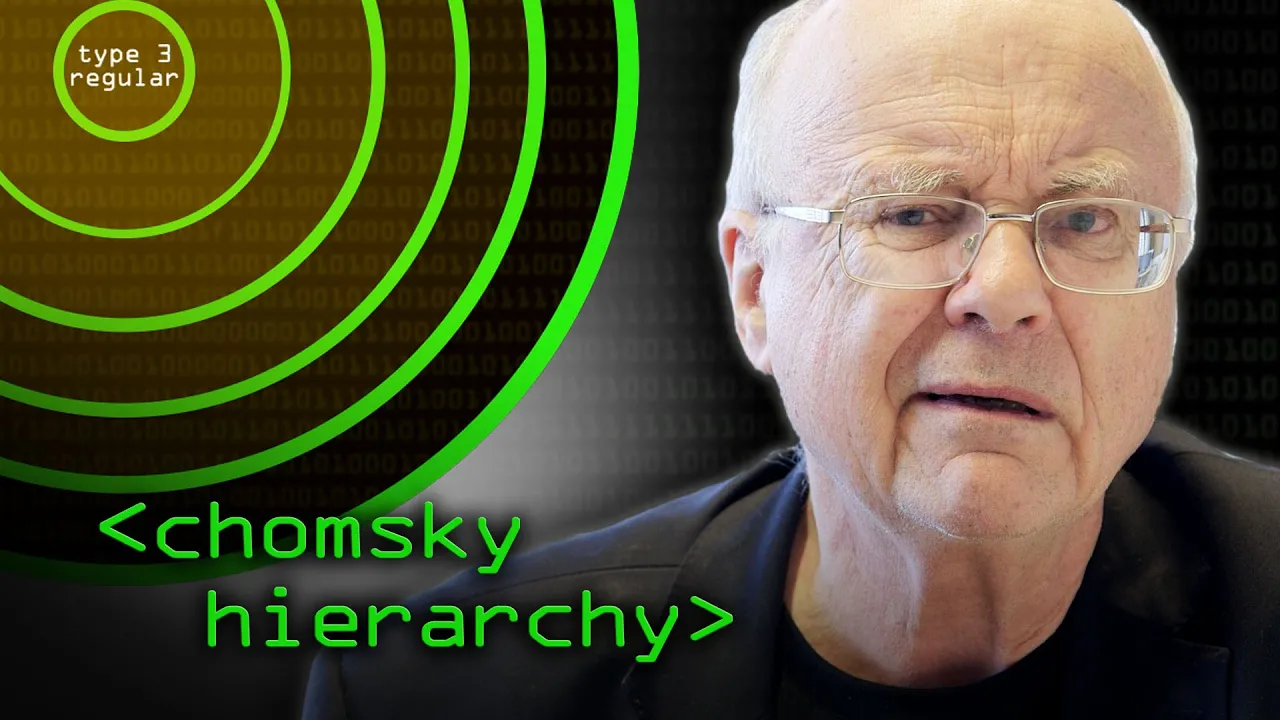
Why this video
This video explains Noam Chomsky's 1959 language classification hierarchy. It highlights where Context-Free Grammars (Type 2) reside compared to Regular Grammars (Type 3) and Context-Sensitive Grammars (Type 1), highlighting why CFGs represent the sweet spot for parsing natural language syntax.
Knowledge Checkpoint
- List the four levels of the Chomsky Hierarchy.
- Explain why context-free languages require more computational power than regular expressions.

Why this video
A step-by-step tutorial on drafting CFG production rules (). You will learn how grammar expansion operates mathematically to yield structured string languages, preparing you to write custom rules for NLP engines.
Knowledge Checkpoint
- Draft a production rule where a single non-terminal expands to multiple terminals/non-terminals.
- Demonstrate how recursive rules can generate strings of infinite length.

Why this video
This segment grounds CFG theory inside natural language structures. It walks through derivation processes (such as how the start symbol recursively expands to generate a complete English sentence) in an explicit NLP framing.
Knowledge Checkpoint
- Trace a sentence derivation from the top-level symbol down to terminal lexical strings.
- Explain the difference between leftmost and rightmost derivations.
Module 3: Syntactic Parsing Algorithms
In this module, you will master the computational algorithms used to construct syntax trees from CFGs. You will learn top-down, bottom-up, and dynamic programming approaches—specifically the CKY (Cocke-Younger-Kasami) and Earley parsing algorithms.
Correction Note: In NLP, parsing focuses heavily on handling structural ambiguity found in natural human language, often generating multiple candidate paths. This is distinct from compiler-centric parsing (such as LL, LR, or SLR parsers), which is designed for deterministic, unambiguous programming languages. Our focus here remains squarely on NLP chart parsing.
Recommended Videos

Why this video
A premier tutorial on the Cocke-Younger-Kasami (CKY) algorithm. It details why Chomsky Normal Form (CNF) is a strict prerequisite for CKY parsing, and shows how the dynamic programming algorithm populates a triangular table to find valid syntactic parse trees.
Knowledge Checkpoint
- State the formal formatting constraints of Chomsky Normal Form (CNF).
- Explain how CKY uses subproblem solutions in its triangular lookup grid.

Why this video
This numerical walkthrough demonstrates the manual calculation steps of CKY execution. It guides you cell-by-cell through the dynamic programming matrix, explaining how terminal words are combined into larger phrase components.
Knowledge Checkpoint
- Populates a triangular table manually for a five-word sentence using a simple CNF grammar.
- Reconstruct a final parse tree from pointers saved in a completed CKY matrix.

Why this video
This video explains the Earley parsing algorithm. Unlike CKY, the Earley parser is a chart-parsing algorithm that works left-to-right without requiring the input grammar to be converted to Chomsky Normal Form. It breaks down the three core operations: Predictor, Scanner, and Completer.
Knowledge Checkpoint
- Contrast CKY and Earley parsing regarding their grammar structure prerequisites.
- Describe the computational roles of the Predictor, Scanner, and Completer steps in chart state transitions.
Module 4: Resolving Ambiguity with Probabilistic CFGs (PCFGs)
Human language is inherently ambiguous. In this module, you will explore structural ambiguity (such as prepositional phrase attachment) and learn how Probabilistic Context-Free Grammars (PCFGs) resolve these conflicts by assigning statistical likelihoods to production rules.
Recommended Videos

Why this video
An essential introduction to PCFGs. The video shows how assigning probability values to rule expansions transforms a standard CFG into a statistical tool. It explains the core requirement that all probabilities for rules with the same left-hand side must sum to 1.
Knowledge Checkpoint
- Explain how a Probabilistic Context-Free Grammar differs mathematically from a standard CFG.
- State the rule-sum restriction for any left-hand side non-terminal category.
Why this video
Focusing directly on parsing ambiguity, this video outlines how natural language constructs—such as "I saw the man with the telescope"—generate multiple valid parse trees. It explains how PCFG parsing selects the structurally correct tree by calculating the product of the rule probabilities used.
Knowledge Checkpoint
- Calculate the total probability of a derived parse tree given individual rule probabilities.
- Explain how PCFGs select the most likely parse from several syntactically valid candidates.
Why this video
A deep, advanced lecture tackling sentence probability calculation. It details the Inside-Outside algorithm—a dynamic programming technique that calculates parameters for PCFGs, similar to the Forward-Backward algorithm in Hidden Markov Models.
Knowledge Checkpoint
- Define what "Inside Probability" and "Outside Probability" measure in a sentence structure.
- Understand how these probabilities are calculated recursively to train and refine PCFG parsing parameters.
Curriculum Gap Alert: Detailed step-by-step mathematical walk-throughs of manual PCFG tree calculations are brief in standard video catalogs. To reinforce your learning, we highly recommend researching the following query independently:
PCFG probability calculation example NLP
Module 5: Building Practical CFG Parsers in Python
In this final module, you will apply your knowledge programmatically. You will use Python and the Natural Language Toolkit (NLTK) to define custom CFGs, parse real English sentences, and generate syntax trees.
Recommended Videos
Why this video
Taken from Harvard's CS50 AI series, this video demonstrates how NLTK converts a text-based grammar specification into interactive visual trees. It shows the pipeline from sentence string input to final structural output.
Knowledge Checkpoint
- Define CFG rules inside a Python script using NLTK syntax format.
- Generate a visual syntax tree window from an NLTK parse object.

Why this video
A direct, no-nonsense setup guide showing how to write the Python code required to run an NLTK chart parser. It covers the imports, grammar definition strings, parser initialization, and loop execution over generated trees.
Knowledge Checkpoint
- Instantiate an NLTK parser using
nltk.ChartParser(). - Output parsed trees to the terminal console as formatted parenthesized string representations.
Why this video
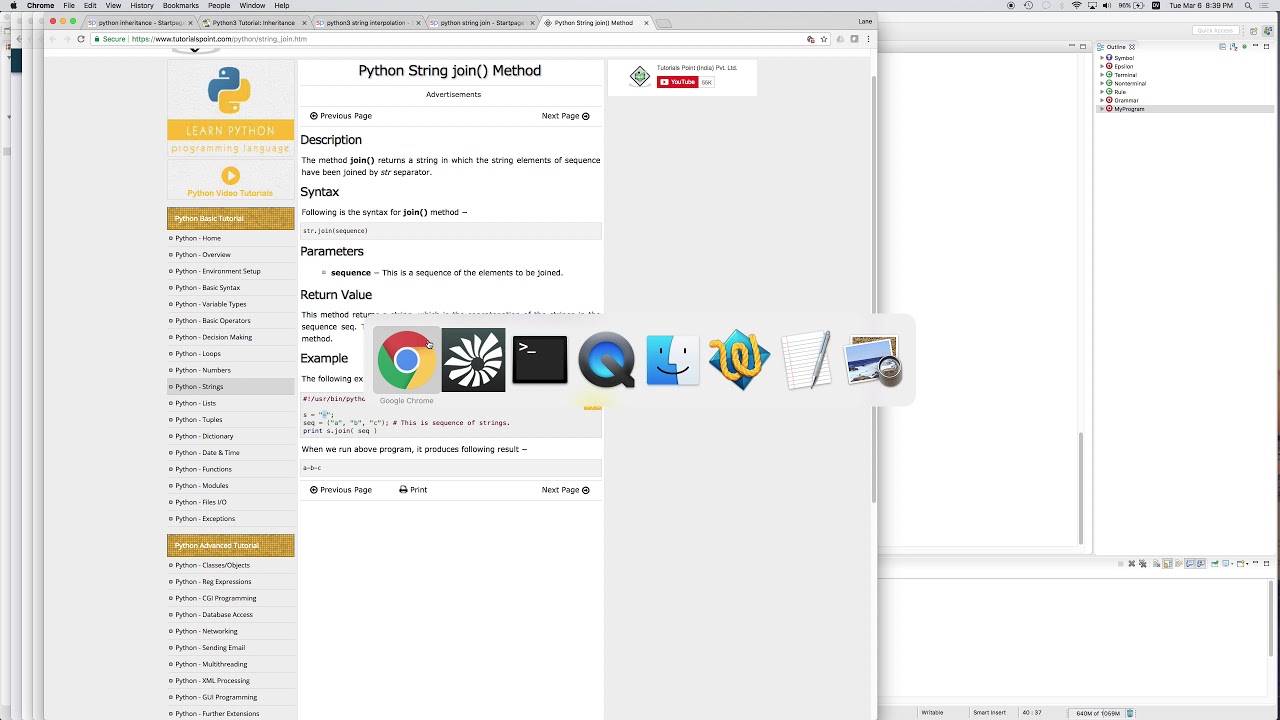
For developers looking to understand the inner workings of these tools, this advanced segment walks through implementing a context-free grammar system from scratch in Python. It details building classes for terminals, non-terminals, and handling Chomsky Normal Form conversions without relying on third-party parser packages.
Knowledge Checkpoint
- Conceptualize a Symbol class hierarchy (Terminal, Non-Terminal, Epsilon) in object-oriented code.
- Trace how custom Python code can parse rules and structures natively.
Curriculum Gap Alert: Specialized video tutorials demonstrating how to build probabilistic parsers (like PCFGs) from scratch in Python are limited. To bridge this gap, we suggest seeking out text-based tutorials or writing code with these queries:
Python NLTK CFG parser tutorialCoding CKY parser in Python NLP
Course Map
This flowchart maps the dependency paths and recommended learning order for this curriculum:
Key People Index
- Noam Chomsky: Renowned cognitive scientist and linguist who introduced the Chomsky Hierarchy in 1959, establishing the formal mathematical foundations of generative grammar and CFGs.
- Jay Earley: Computer scientist who designed the Earley parsing algorithm in 1970, a seminal chart-parsing method that processes all context-free grammars efficiently in time.
- John Cocke, Daniel Younger, and Tadao Kasami: Independently co-developed the CKY dynamic programming algorithm, providing a highly structured method for parsing CNF grammars.
Final Self-Assessment
Review this checklist once you have completed all five modules. You should be able to check off every item before applying these skills to production NLP engines:
- Identify and define terminal and non-terminal symbols within any given grammar rule set.
- Explain why standard regular expressions are insufficient for capturing the nested structural dependencies of human language.
- Convert a simple, ambiguous Context-Free Grammar into Chomsky Normal Form (CNF) manually.
- Demonstrate how to construct a triangular CKY parsing chart step-by-step for a short sentence.
- Explain the role of the Predictor, Scanner, and Completer states in an Earley chart parser.
- Describe the difference between lexical ambiguity and structural syntactic ambiguity.
- Compute the overall probability of a given syntax tree using a set of PCFG production rules.
- Programmatically load a custom context-free grammar string into Python's NLTK package.
- Code a script that takes raw natural language strings, tokens them, parses them against a CFG, and renders the visual tree diagrams.