





























Constitutional courts in Europe must balance the principle of social justice with democratic governance by applying the principle of proportionality, ensuring that while social rights are constitutionally protected, courts cannot directly restrict fundamental rights or substitute their own policy judgments for parliamentary decisions, thereby preserving the separation of powers and democratic accountability in social policy implementation.
Social Justice in European Constitutional Courts | Jasna Omejec
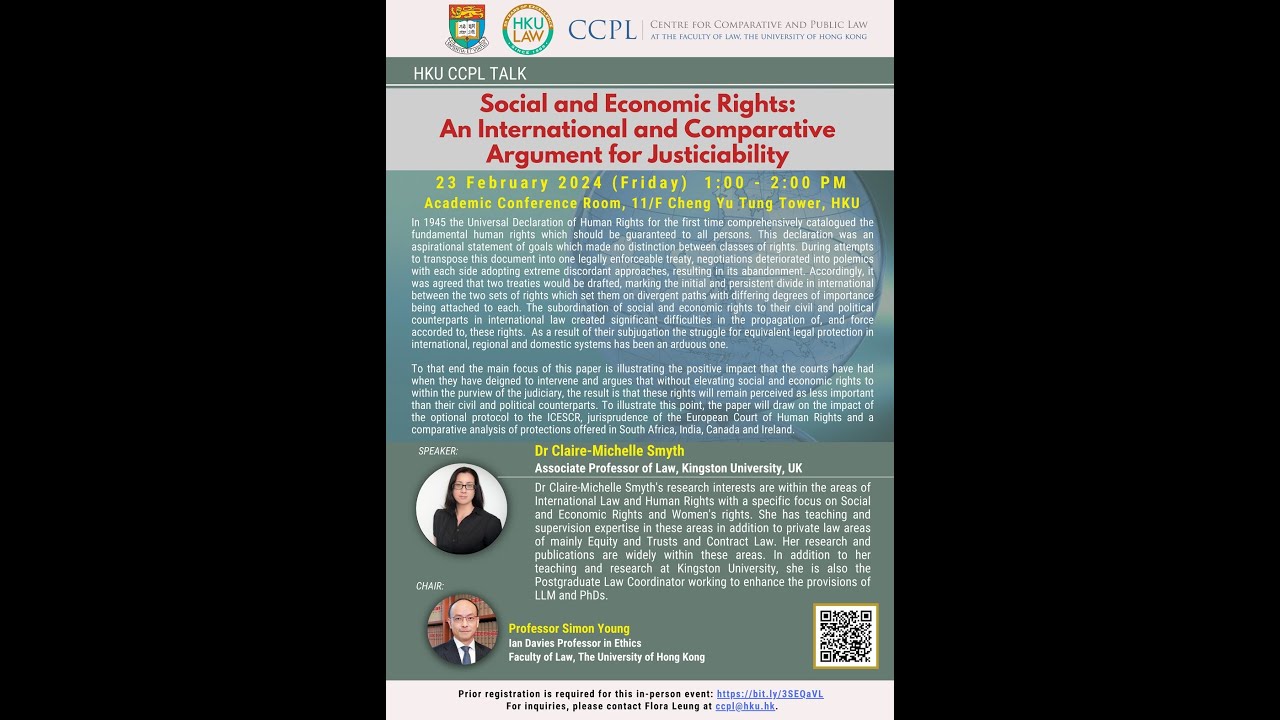
Added:The distinction between first-generation (civil and political) and second-generation (economic, social, and cultural) human rights.
The European model of constitutional review (Kelsenian model) and how constitutional courts operate independently of ordinary courts.
The concept of 'human dignity' as a foundational legal principle in post-WWII European constitutionalism.
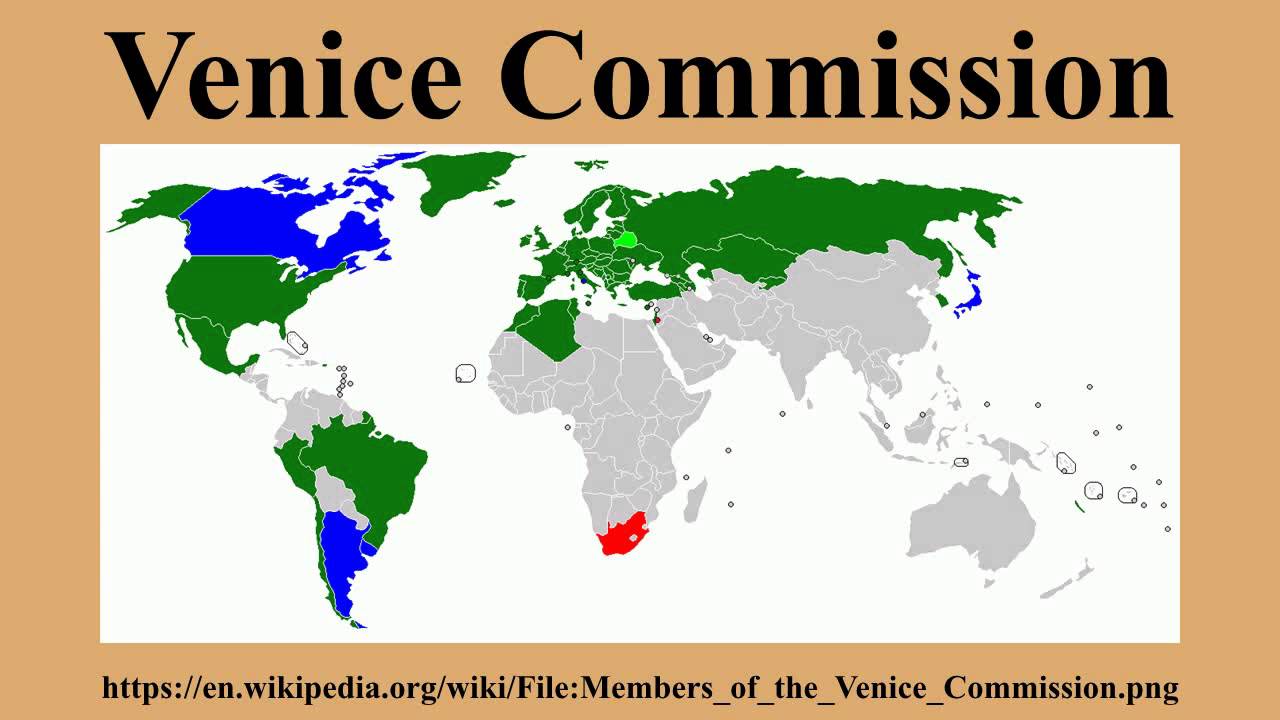
The role and advisory function of the Venice Commission (the Council of Europe's advisory body on constitutional matters).
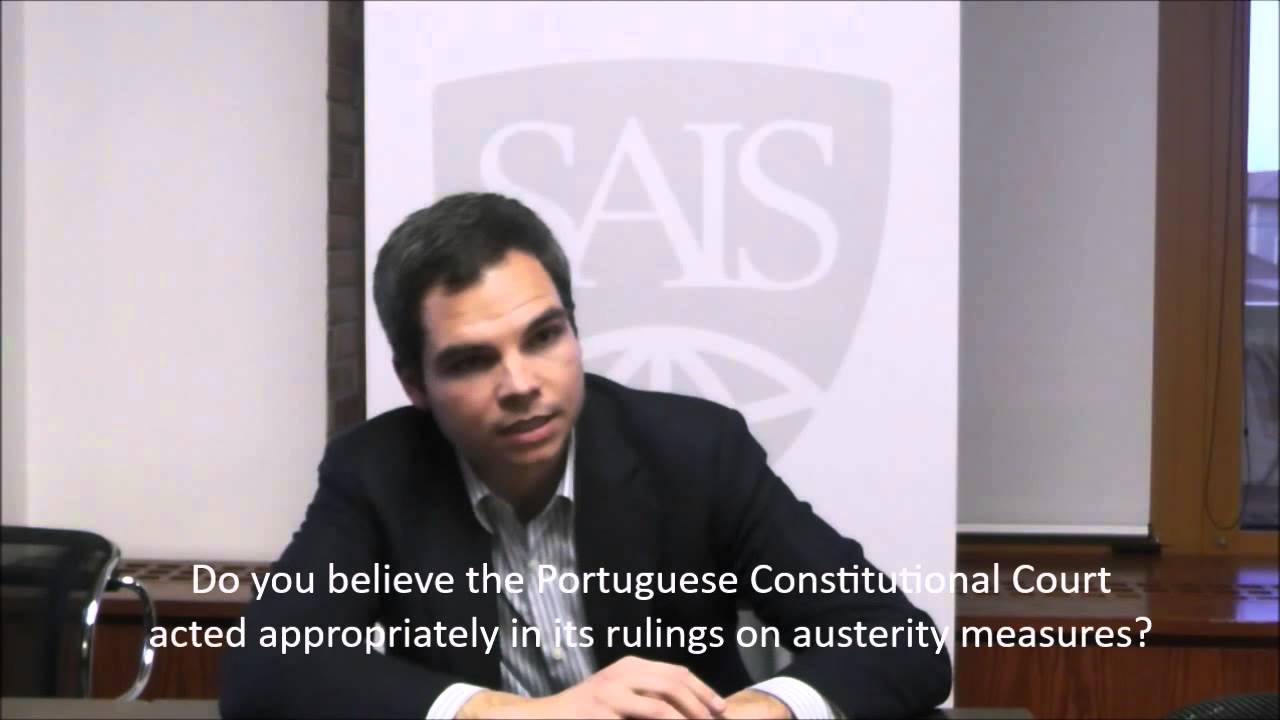
Analyzing landmark case law on austerity measures and social rights from courts like the Portuguese Constitutional Court or the German Federal Constitutional Court.
Comparative study of socio-economic rights adjudication between European courts and non-European systems (e.g., the Constitutional Court of South Africa).
The debate over judicial activism versus judicial restraint regarding budgetary decisions and social policy distribution.
Exploring the relationship between the European Social Charter, the European Court of Human Rights (ECtHR), and national constitutional jurisdictions.
180 views1likes15:57Original Release: 2016-02-20
uh mercifula ladies and gentlemen dear colleagues once again it is an honor to be among you today here in rabbit although I speak in English I have decided to make a presentation to you in French and Arabic I hope you will find it interesting it's a handmade presentation the country I come from is a typical European State founded on common values which are promoted by the Council of Europe and the and the European Union Croatia may serve as a good example of how Europe deals with social justice issues accordingly I would like to begin by saying just a few words about my country it arose from Tito's communist Yugoslavia within which Croatia was one of six Federal units the dissolution of the former Yugoslavia began in 1990 and it was followed by an extremely cruel War where Croatia fought heavily for its territory and its independence which it gained in 1991 although the war ended only four years later Croatia is partly a Mediterranean state bordering on the Adriatic Sea and its main features are presented on the screen until 2000 we had a presidential system of government and today Croatia has the main features of a parliamentary democracy and although Croatia is mostly a Catholic country we are very proud to celebrate this year do you want 100th anniversary of the recognition of Islam as official religion in Croatia the Constitutional Judiciary was introduced in 1964 during Tito's uh Yugoslavia the Croatia constitutional court is today a very very powerful body since 1991 it has been organized along the lines of what is known as the Kelvin or the European Continental model of constitutional review accordingly the court May repeal laws enacted by the Croatian Parliament as well as regulations passed by the executive branch of power and public administration if it finds them unconstitutional Croatia has also recognized The Institute of constitutional complaint and Paro complained in Spain the Constitutional Court May quash judgments of the courts if it finds that they have violated individual rights the principle of social justice is embodied in the Croatian Constitution as you can see social justice is promulgated in Croatia is the highest value of the Constitutional order and the ground for the interpretation of the Constitution moreover in the first article Croatia is defined as a social state a Bill of Rights included in the Constitution contains an extensive list of social rights of the individual thus the Croatian Constitution belongs to the group of so-called socially conscious constitutions this means that Croatia has accepted the common European constitutional heritage where a social state is considered as one of the cornerstones of European identity John Marks away vice president of the French Council of State gave an illustrative description of what this European Heritage means stated that Europe has its sign and its tradition Which Europeans must defend this is European humanism based on the idea of the rights and human dignity of the person individual and on the idea of the obligations and rights of the community indeed Europeans share a deep common two-sided conception of the person's human dignity and public interest on the other hand so they further stated that the experiences gained by the European continent through two totalitarian regimes in the 20th century give it the pressing obligation to defend this European tradition which has a pronounced legal dimension so the question is what is the most important legal means to defend this European tradition the answer is the constant balancing of these two ideas with the aim to bring them in balance in harmony domain legal principle for achieving this balance is the principle of proportionality the Croatian Constitution expressly recognizes this principle you can see it on the screen together with the primary obligations of the courts which derive from this principle I am not going to speak today about how government contributes to social justice as a component of the social state instead I would like to show how European constitutional courts deal with it namely the notion of social State and the principle of social justice hinge on the following problem on constitutional Judiciary or Justice namely how to determine the borderline at which the constitutionalization of social rights clashes with democracy the standards for determining that borderline formulated by the German federal constitutional Court are today considered the ruling guidelines for the jurisprit of jurisprudence of other European constitutional courts so the German quote First pointed out that the notion of the social state places obligations before the state but without giving details as to how they should be fulfilled further constitutional Norms which recognize many different social rights are not self-executing and cannot be applied directly for them to be applied they must first be elaborate in a law and very often they must be further specified in subordinate legislation in other words the key is in the hands of Parliament the Constitution has left it to the legislature to elaborate the social domain of the state and to regulate in detail constitutionally guaranteed social rights by of course its laws consequently on issues concerning social policies Parliament has a wide margin of appreciation that is a large domain of decision making based on free political build write otherwise the notion of the social state would contradict the principle of democracy this means that the Democratic order of a free political decision-making process would be fundamentally restricted and deprived of its Essence if parliament in which political will it formulated is formulated is obliged by the Constitution itself to accept only one solution in regulating a particular social issue the two main consequences which are relevant for the Constitutional Justice or constitutional Court jurisdiction derived from this German legal concept widely accepted in Europe the first one is related to the protection of individual rights guaranteed by the Constitution the notion social state and the principle of social justice cannot directly impose boundaries or restrictions on fundamental rights this means that no one is authorized to justify interference with fundamental rights by referring only and directly to the notion of social State or the principle of social justice regardless of whether the legislator has permitted the Restriction by law and how the legislature has specified this permitted restriction the second consequence relates to the control of the constitutionality of laws passed by the parliament namely this external borderline is the ultimate line up to which Constitutional courts May control the laws from the aspect of the social state state and the social justice it means that the Constitutional Court may not take on the role of legislative power and it may not judge whether it would have been better or more appropriate if Parliament has told had Chosen and accepted some other solution instead of the ones they did provided the accepted Solutions do not override this external border of the Constitutional frame constitutional courts review of social policy issues or measures is always based on a few components first every state intervention in socio-economic matters must be prescribed by law and must not be discriminatory furthermore the legislature's Judgment as to what is necessary in a Democratic Society to achieve the objectives of social policies in securing social justice and public benefit must not be without an objective and reasonable Foundation that is the measure employed must not be manifestly disproportionate to the legitimate Aid pursued and must not impose an excessive burden of the individual to conclude the colleagues constitutional courts in Europe must not engage in political regulation but in legal discernment using legal methods constitutional courts must always base their findings exclusively on constitutional norms and not of what might be politically socially or economically appropriate regarding values such as the social stage or social justice which has which have a prominent political Dimension and which may cause great social turbulence I consider that the main role of the Constitutional courts in Europe in this field is to determine functional guidelines in binding constitutional standards for legislative administrative and judicial decision making by building a constitutional framework within which policy may be developed the Constitutional court is actually the ultimate sensor of the reasonableness and non-arbitraredness of governmental actions more on these Viewpoint dear friend can be found in the decision of the creation constitutional Court which is available to you in English esteemed colleagues I came I came to this great country to introduce to you the role of constitutional Justice in protecting and promoting social justice in Europe I hope that I have given you a general idea of what we are and what we do thank you very much for your hospitality and thank you for your attention
Up Next

68:40
Judicial Independence in Pakistan: A Supreme Court Perspective
@WoodrowWilsonCenter
265 views•2017-10-13

6:55
Understanding Copyright and Fair Use in the Digital Age
@techquickie
144.1K views•2016-07-22

5:27
Forensic Phonetics: Speaker Identification in Legal Cases
@nptel-nociitm9240
539 views•2025-03-19

24:42
Police Interrogation Tactics: False Confessions & Legal Reform
@LastWeekTonight
7M views•2022-04-18
Related Study Plans & Knowledge Roadmaps
Structured learning paths in Law
law
Analyzing Mergers: Clayton Act & FTC Rules
01Introduction to Antitrust Law and Market Competition
02Corporate Mergers and Section 7 of the Clayton Act
03Defining Markets and Measuring Concentration (HHI)
+ 2 more learning modules
10h5 modules
Explore Roadmap
law
Self-Defense Law: Imminence & Castle Doctrine
01Foundations of Self-Defense Law
02Imminent Threat & Reasonable Belief
03The Principle of Proportionality
+ 3 more learning modules
12h6 modules
Explore Roadmap
law
Defamation Law: First Amendment & Actual Malice
01Introduction to civil torts and the First Amendment
02Elements of Defamation: Libel and Slander
03Public Figures vs. Private Individuals
+ 2 more learning modules
8h5 modules
Explore Roadmap
law
Hearsay Rule: Trial Evidence & Exceptions
01Introduction to Trial Evidence & Courtroom Basics
02Demystifying Hearsay: The Core Definition
03Non-Hearsay: Exclusions Under FRE 801(d)
+ 3 more learning modules
14h6 modules
Explore Roadmap