
















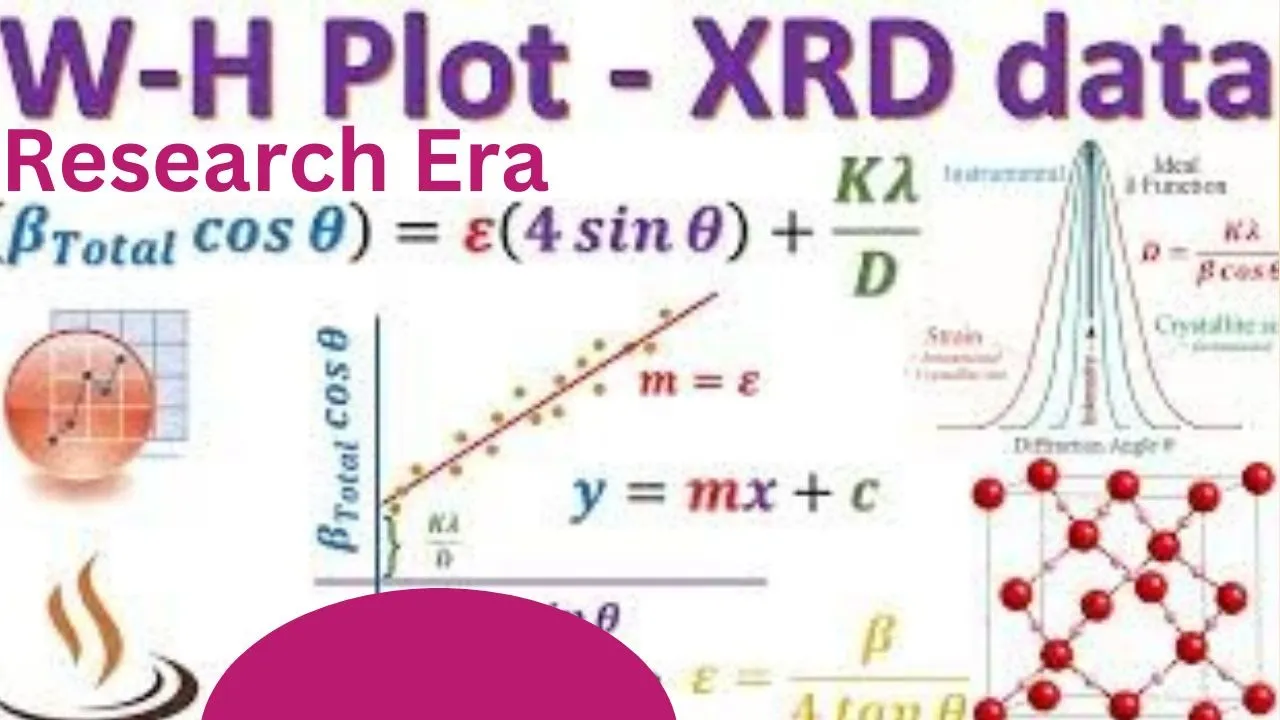
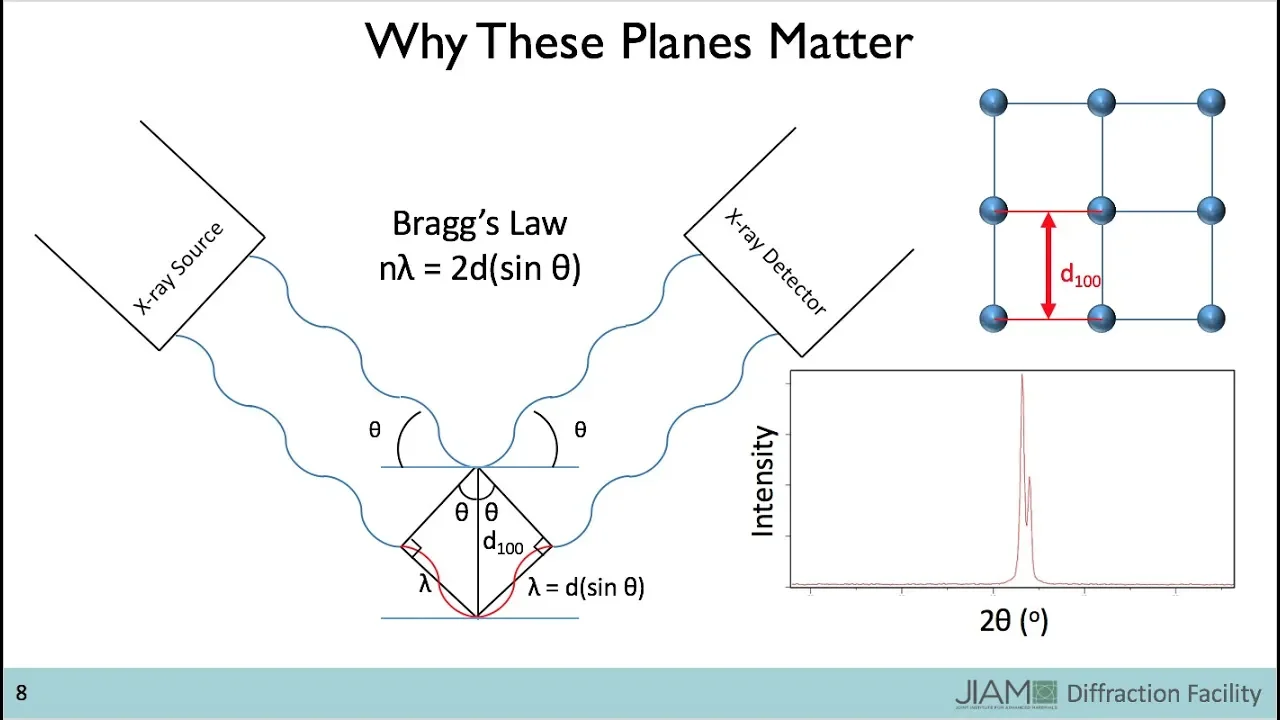


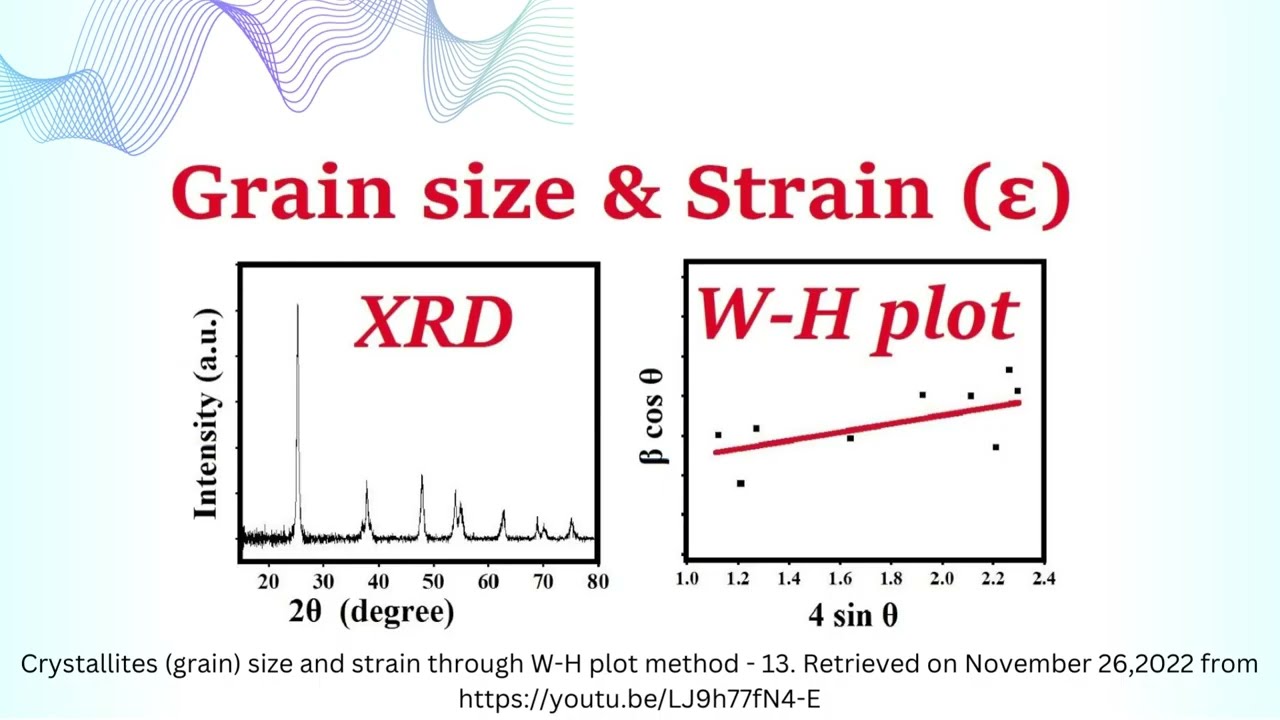







X-ray diffraction (XRD) is a characterization technique that analyzes material structural properties by measuring how X-rays diffract off crystalline materials according to Bragg's Law (2D sinθ = nλ), where D is interplanar spacing, θ is the glancing angle, and λ is the X-ray wavelength; it can determine crystallite size using the Scherrer formula (D = 0.9λ/βcosθ), measure strain, and identify crystal structures by analyzing diffraction peak positions and widths, but cannot provide information about material morphology.
XRD Characterization Technique for Nanomaterials | X-Ray Diffraction Explained
Added:Fundamentals of crystallography, including crystal lattices, unit cells, and Miller indices.
The physics of waves, specifically constructive and destructive interference and the concept of diffraction.
Properties of the electromagnetic spectrum, particularly the wavelength scale and generation of X-rays.
Basic concepts of nanotechnology, distinguishing how nanomaterial properties differ from bulk materials.
The Scherrer equation and Williamson-Hall plot analysis for precise calculation of crystallite size and lattice strain.
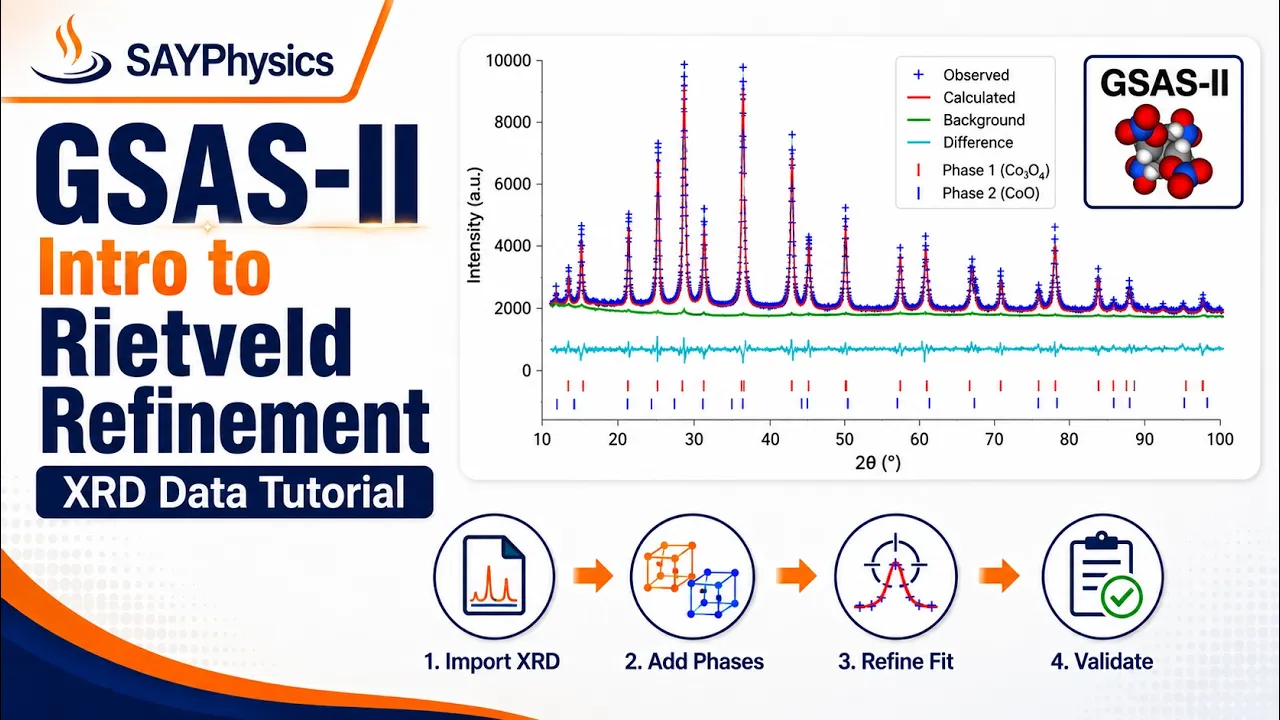
Rietveld refinement techniques for quantitative phase analysis and resolving complex crystal structures.
Advanced diffraction methodologies such as Grazing Incidence XRD (GIXRD) for analyzing thin films and coatings.
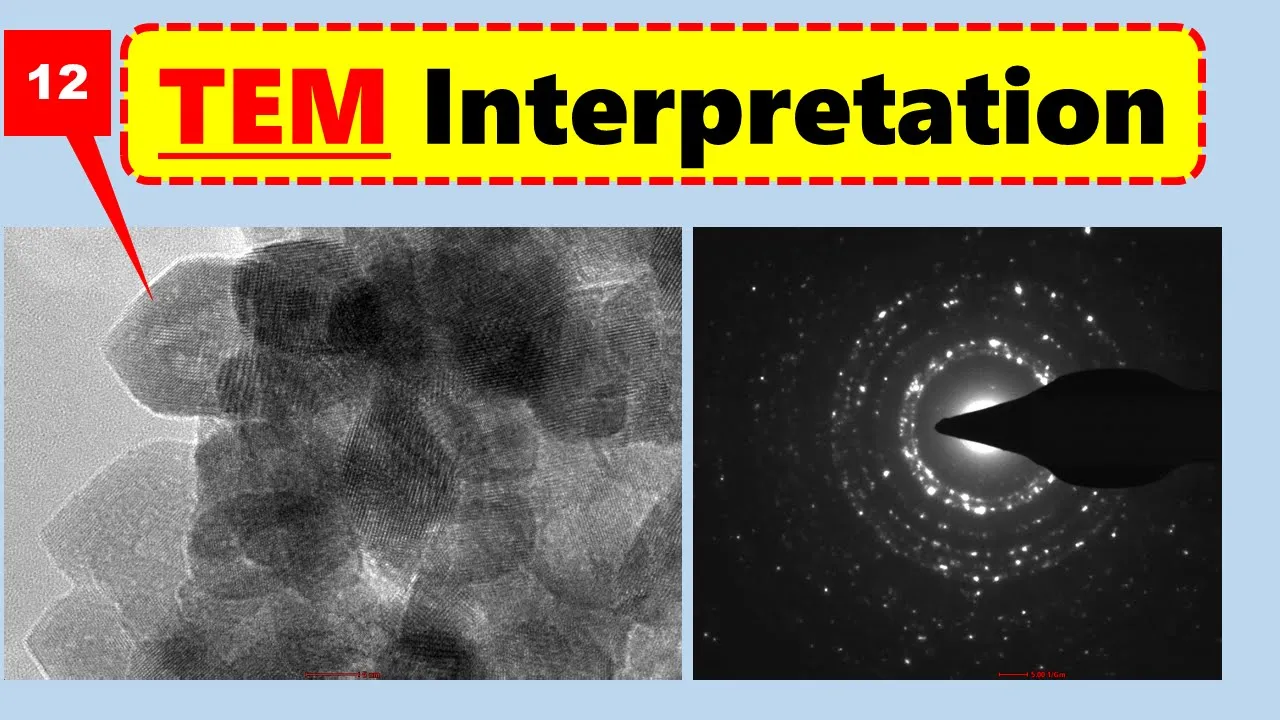
Complementary nanomaterial characterization tools like Transmission Electron Microscopy (TEM) and Selected Area Electron Diffraction (SAED).
6.9K views94likes12:24Original Release: 2024-12-16
hello everyone welcome to the session uh in this session I'm going to discuss about the exam version related to the X-ray defraction technique so in exam examiner may ask you write the brief details about the X-ray defraction techniques in characterizing the Matos in that particular situation this session will help you to write the exam without any difficulty so first thing the question is like XR the question is like xrd then obviously the abbreviation xrd is nothing but xray defraction so one sentence you have to write the xrd is nothing but xray defraction technique the short form is named it as exort second the this is a characterization technique or the tool to characterize the materials characterization techniques to characterize the mators this is the second point you should write then it is characteriz related to the structural properties it discuss about the structural properties that it mean that the structure related things whether it is cubic or hexagonal whether tetragonal so all these information can give related to the particular material how the atoms are distributed that part also we can discuss by using the X-ray defraction technique But but so it is impossible to get the nature related to the material nature related to the morphology to morphology so which is not possible structural properties we can measure but morphology related information we can't get from the X-ray defraction technique again xrd is the the full form is xray defraction and the short one is xrd it is a characterization technique to characterize the material structural properties but it won't give information about the morphology then coming to the working point of view it works works based on the BR law it works breaks based on the BR law that formula is 2D sin Theta equival to n into Lambda here here D is nothing but inter plan or spacing here the distance between the two planes is take it as the interplan of spacing this is take it as the D and Theta is nothing but glancing angle here Theta is nothing but glancing angle you may get the doubt just we heard about the either incident angle what is the meaning of glancing angle so this is the plane this is a plane this is a normal for example if the ray strikes the or meet the normal at this particular location this one is take it as the incident angle but this one is related to the glancing angle the Ray makes angle with the plane is take it as the glancing angle and Lambda is the weight wavelength of the source wavelength of xray here if the condition like 2D sin Theta equal to n Lambda is matched then we'll get the defraction pattern is possible defraction is possible but what happened if the Brax is not matched it is impossible to get the defraction condition the the peak Ma Maxima is not possible for example in case of bra La so in case this can be applicable next one this can be x-ray defraction can be applicable for crystalline materials that is it can differentiate the crystalline and mrus mators that is first we should understand what is the meaning for the crystalline and what is the meaning of Mr for metors in case of crystalline the regular arrangement of atoms are possible the periodic arrangement of atoms are possible while in case of mrus irregular pattern so because of the irregular pattern it is impossible to observe the bra La condition whereas in case of crystalline meteors there is a possibility to observe the braa so here this is take it as the inter plan of spacing and this is nothing but glancing angle if in this particular situation if it match the condition like 2D sin Theta equal to Lambda for that particular Theta and for the particular D value we'll get the defraction maximum whereas this is not possible in case of mrus so the intensity changes is possible for crystalline materials and that is not possible for mrus material based on this information xrd defraction pattern is possible for crystalline but it is impossible for Mr first there is no sharp defraction pattern can be possible in case of the diagrammatic representation that mean the diagrammatic difference between the crystalline and mrus metos is like this for example this pattern is related to the crystalline matus and whereas in case of mrus so the broad there is no defraction pattern can be possible so based on this kind of Spectras we can decide one is related to the crystalline and another is related to the mrfs medor our question is what kind of information we can get by using this kind of pattern by using this kind of pattern what kind of information we can get how we can interpret the X-ray defraction pattern so for this here I'll show you one xrd pattern which is related to the one particular Crystal so this is the xrd pattern here this the the Maxima intensity of this particular Peak and this is represent the full width broadness of the peak this is represent the broadness of the peak if the broadness is more that is size of the crystallites is less size of the crystallite is less so the broadness is inversely proportional to the size of the crystalite and it also gives about the crystallinity if the sharp Peaks are obtained then then we can say that the crystallinity of the defraction pattern related to the particular material is more as compared to the others for this I just taken the comparison between the two mators see here [Music] the defraction pattern related to this material and this material the defraction pattern related to the above is the broad and below is the sharp see the comparison between the defraction pattern of the same medal one is related to the sharp and the width is less as compared to this here it represent the it has the crystallite size value Val less or the Nano it is called relate to the bulk media that is crystallite size is more crystallite size is less So based on the peak width there is a possibility to understand the size of the crystallites present in that particular meteor and the positions of these Peaks is decided by the the condition like 2D sin Theta equal to n into Lambda for different set of planes we are having the different D values and Theta is related to the glancing angle n is related to the order of defraction Lambda is the source and coming to the structural parameters point of view there is a possibility to measure the crystallite size crystallite size can be measurable by using the DB sh formula D equivalents to 0.9 into Lambda by Beta cos Theta here the beta is nothing but to full width of Maximum for example this peak this width is related to the for total width full width of Maxima is take it as the beta theta is the corresponding angle and Lambda is the source and 0.9 is the shape Factor this formula is obtained by Deb relation so by using the Deb formula there is a possibility to measure the crystallite size and second one strain that is deformation within the material can also be possible to measure e equal to Beta by 4 tan Theta by using the same beta value and Theta value there is a possibility to measure the strain parameter and in addition there is also possible to measure the inter planal spacing D value by using the condition like 2D sin Theta equivalence to sorry 2 D sin Theta equal to n into Lambda by knowing the Theta and Lambda and N there is a POS possibility to measure the D value by obtaining all these values there is also possibility to measure the D value is equalent to 1 by < TK of h² by a² + k s by b² + L S by c² by using this relation there is also possible to measure the ltis parameters a comma B comma C for in case of cubic Crystal a equal to a equal to D equal a equal to D into squ otk of h² + k s + L S as a equal to b equal to C which is possible in case of cubic material that's what in the place of a square B square + C Square we are using a square then we'll take it to the upward then a equal to D into otk of x + K square + L S so this is about the X-ray defraction pattern importance in characterizing the materials this is the short revision especially for the exam point of view if you want to go in deep manner there are different structural properties can be measurable by using the X-ray defraction technique thank you
Up Next

11:06
Arduino PID Control Implementation on Mega: A Step-by-Step Guide
@MrGenexxa
32.9K views•2016-04-12

48:00
Clean Water, Green Concrete & Nickel from Plants: Sustainable Inventions Explained
@business
94.3K views•2025-11-06

54:16
Polymer Environmental Degradation: Mechanisms & Stabilization
@iit
1.8K views•2012-07-10

33:39
How a Student's Question Saved a NYC Skyscraper from Collapse
@veritasium
22.8M views•2025-04-26
Related Study Plans & Knowledge Roadmaps
Structured learning paths in Engineering
engineering
Building Acoustic Levitators: Physics & Arduino
01The Physics of Sound and Standing Waves
02Piezoelectric Transducers and H-Bridge Drivers
03Arduino Programming: Generating 40 kHz Signals
+ 2 more learning modules
14h5 modules
Explore Roadmap
engineering
Building Peltier Cloud Chambers: Particle Tracks
01Cosmic Rays & Cloud Chamber Physics
02Thermoelectric Cooling (TEC) Fundamentals
03Custom Liquid-Cooling Loop Design
+ 2 more learning modules
18h5 modules
Explore Roadmap
engineering
Yagi-Uda Antennas: Modeling, Build & VNA Test
01Introduction to RF and Antenna Fundamentals
02Yagi-Uda Antenna Design Principles
03Antenna Modeling and Simulation in 4NEC2
+ 2 more learning modules
18h5 modules
Explore Roadmap
engineering
ECG Monitor Design: Op-Amps, Filters & Noise
01Electronics & Breadboard Basics
02Op-Amps and Instrumentation Amplifiers
03Bioelectricity and ECG Fundamentals
+ 2 more learning modules
18h5 modules
Explore Roadmap