










![[WEBINAR] - Carbon Capture, Utilization, and Storage (CCUS)](https://i.ytimg.com/vi_webp/A8jC4QfbHbY/maxresdefault.webp)
![Why is carbon capture and storage a game changer for the energy sector? [Clean Energy Pod #10]](https://i.ytimg.com/vi/S_BSTpH2XjA/maxresdefault.jpg)






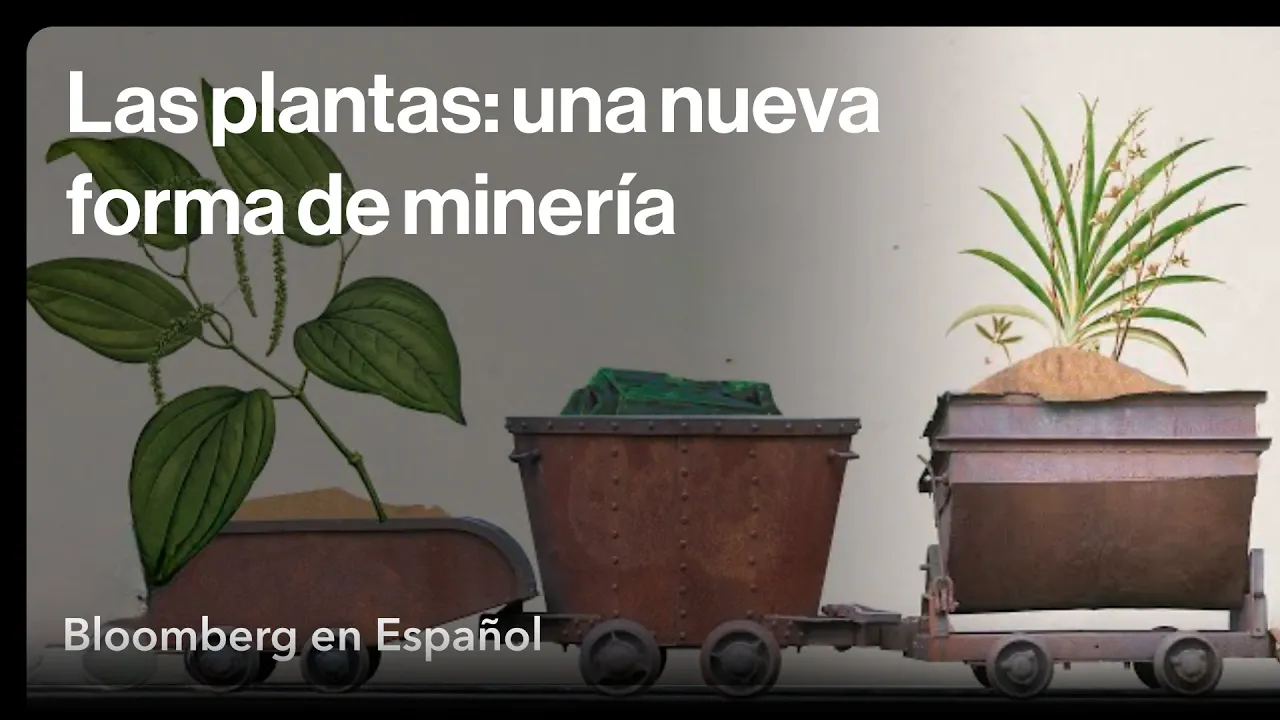
Human innovation can address environmental challenges through technologies like micro-bubble water purification systems, carbon-absorbing concrete made from olivine mineralization, and genetically enhanced hyperaccumulating plants that extract metals from polluted soil, demonstrating that technological advancement can work with nature rather than against it to create sustainable solutions.
Clean Water, Green Concrete & Nickel from Plants: Sustainable Inventions Explained
Added:Understanding the carbon footprint of traditional concrete production and the global impact of construction materials on climate change.
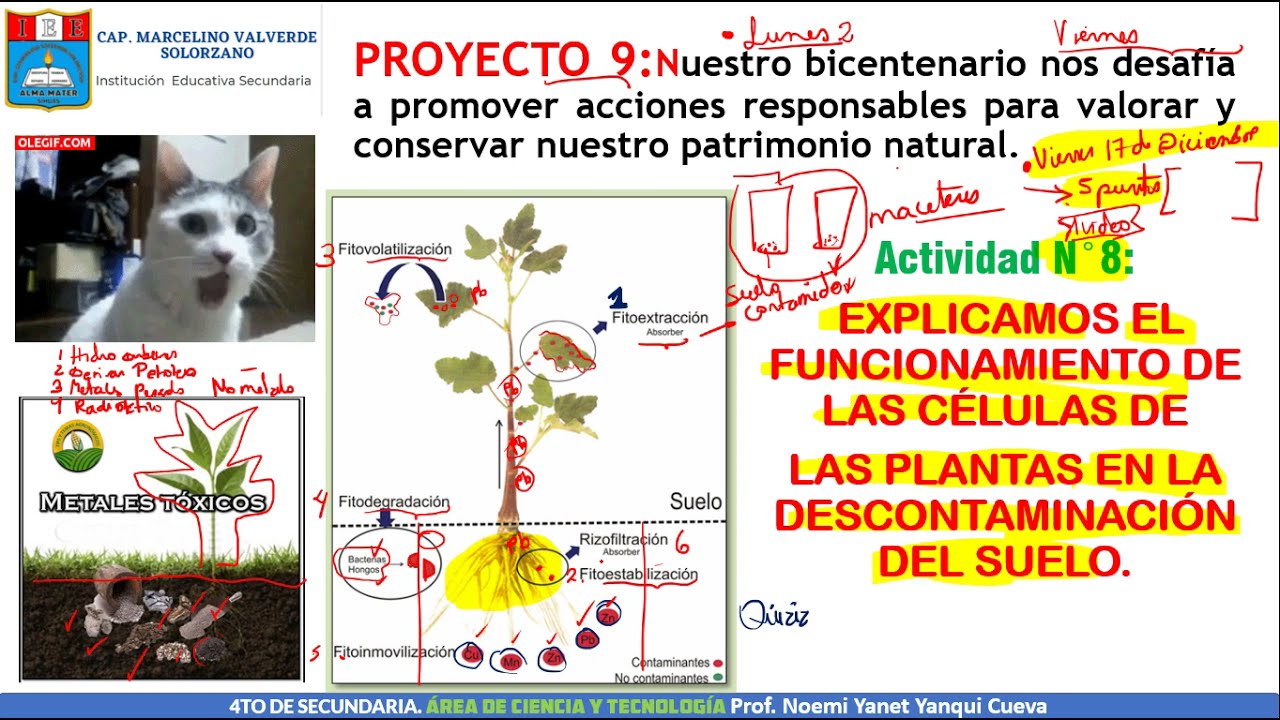
The basics of phytoremediation, specifically how plants interact with soil minerals and heavy metals through their root systems.
The causes and ecological consequences of eutrophication and harmful algal blooms in freshwater ecosystems.
Basic principles of nanotechnology, particularly how the physical properties of substances change at the nanoscale, such as nanobubbles.
The science of phytomining, exploring how hyperaccumulating plants can be harvested and processed to extract commercial-grade metals.
Advanced carbon capture, utilization, and storage (CCUS) technologies integrated into civil engineering and building materials.
Scalability and regulatory challenges in environmental biotechnology, specifically regarding the deployment of nanomaterials in open ecosystems.
Lifecycle assessment (LCA) methodologies to measure the net-positive environmental impact of green technologies compared to traditional methods.
94.3K views1.6Klikes48:00Original Release: 2025-11-06
- It kind of looks like we're going to a rave - I'm a father to two beautiful daughters.
I'm also a husband, a son, a cyclist, a citizen.
Okay. Thank you so much. It's gonna look amazing.
Alright, let's go.
Our inventions have built the world as we know it.
- Concrete is the second most used material in the world.
- Unfortunately, some of them come with an environmental price tag.
- They do a lot of illegal mining on that river.
- But I believe that our drive to innovate can meet the moment.
- Inventors are the key, not only for the environment, but also for the humanity.
- We're genetically enhancing plants to absorb metal in the soil.
- The moment that you actually have CO2 stored is a very happy moment. The - People and science will see us through.
- This is very nice.
I'm Nikolaj Coster-Waldau and this is an optimist guide to the planet.
To be human is to innovate.
That is a basic human quality.
Always finding ways to make things for, we see that over and over again.
Our inventions have given us both wonders of the modern world and threats to our very existence.
Innovation and science is also what gives you hope and reason for optimism because there's always someone who's gonna, who's able to, to find a solution to crack a problem.
One huge challenge here in Lima is that water is too scarce to waste, yet often too polluted to drink.
We always assume that water's in this, the whatever pollution goes into, it's just a drop in the ocean.
That classic saying. Right?
But what do you do once it's really polluted?
How do you then reverse that?
We're meeting inventors who are taking on the challenge of water pollution.
And the best thing, my wife Nukâka's with me.
She makes the show better. She makes my life better - Anyway.
Yeah. At least I try to. No, it's on camera. Yeah.
- Yeah. I know.
Marino?
Hi Nikolaj And Yoshi?
Nice to meet you.
It's a pleasure to meet you, Yoshi. You okay? Okay.
So what's wrong with this? Yo, this is beautiful.
Yes. You have green water. Yeah.
- I mean it's beautiful right now, but once we explain it, what is the problem?
You'll be shocked that green is not good.
- So this place, what is unique about it?
- So we are here in, in, - And it's one of the most important wetlands in our country.
Since ancient times Pre-Inca and Inca times.
It is the major source of water here in Lima.
Not only for human consumption, but also for agricultural aspects.
- So is there a problem here in this water? - Yeah, Mhm - What is the problem?
It's affecting not only this wetland, but all the wetlands around.
You don't have big wastewater treatments centers here.
The wastewater treatment plants in Peru are built to only treat five to 10% of the waste water.
I have to ask you, what is this relationship?
- Oh, family, family. Uncle and nephew. Yeah.
- How long have you guys worked together?
- From 2010. - Yes - So you were very young when you started.
- Yeah, - 15 years ago. As a young teenager? As as a - Kid.
As a kid, yes. Yeah. For him it was like, I'm his nephew, but also kind of like his son.
Since my mom separated from my dad at a very young age, the only father figure I had was my uncle.
He used to carry me to the wetlands so I can learn from nature and to respect it and evaluate as the same way he learned from his father, my grandfather.
- So you lived here and then you went to to Japan and studied.
- Yeah. - What were you studying?
- Nanotechnology.
I understand that it's, it's very small things.
- Any kind of molecule or component that is 10,000 times smaller than the normal bubble that we see in the, soda cans, why he started working with that is because it's very easy to work with the visible parts, the visible pollutants.
But what happens? That one that we cannot see on the naked eye.
But today we'll be focusing on the produce technologies we have.
- Okay. - Which is the micro bubble system.
- How can we see it? I'm so curious. So - Actually we need to go to the testing field.
It looks nasty. - It it, it is.
- Yeah. - The introduction of polluted water from the wastewater generates micronutrients and that micronutrients will contribute to more algae formation.
And because there is more algae formation and more bacterial formation, it will take out all the oxygen in the water.
- Is there any way to measure how polluted this is?
Of course - If you want, you can help Marino.
- Well, I would love to help.
It looks like lemonade.
- Yeah. Or Urine - Yeah. You probably won't like the flavor if you drink it.
- I, I can already smell it.
- Whenever we talk a healthy level for the biodiversity, it must be above 10 milligrams per liter.
Per liter. Alright, let's try it.
So if you see on the screen, it's around seven and that means that it's low on oxygen.
- How do you clean that? It's not an easy thing to do, is it?
- Don't wanna brag about it. But actually for us, it's very easy.
- I mean, that is a humble brag if ever there was one.
- Yeah. - People say, I don't wanna brag, you know, you're about to brag - But I want to see - Could you help me?
Yes, of course. Can I touch it?
- Yes, of course. So this actually is our secret formula of organic compound.
It's called PM, which is a powder that we develop with only plants.
- Okay. It's a little heavy. It's - Just easier with, okay, - So this is a secret ingredient you told your nephew, right?
- No.
- So how many, how many people know this?
- It's just a little tease. Oh, that's, that's perfect.
- You're seeing the bigger particles right there.
All the disperse algae are getting gather up, - Getting thicker and thick.
Huh?
- The algae we trapped are the algae that are capturing all the oxygen, which is lethal to the aquatic life.
- It's - Full of nutrients.
- Yes, it's full of nutrients. - And then you have all this stuff floating on the surface and you can just scoop it up. Yes. Like - This.
Yeah. Look at that. Like this? Yeah. You can just grab it - For me.
Yeah.
- Spit. - No - Smell.
Yeah. Different.
- And now it's much clearer.
But what happens to the invisible components?
Virus, bacteria, microorganisms that still lives in this water.
That one will attack with the micro nano bubble system.
Would you like to know what a micro bubble is?
- I would very much like to know what a micro nano bubble is.
- It involves getting into the water.
- Yes. Yes. Would you - Like it?
- Yes, of course. Great. Okay, let's get in the water. Okay.
I'm a little too tall for this. Thank you.
This is very nice. This is great. Oh, it's fine.
It's perfect. Let's go. Okay, let's go. Oh, about first - The - Machine. Yeah.
- Yeah. - Machine. My god.
- So when we develop any kind of technology, we always think that this must not disrupt the natural healing process.
It must boost it. It must not threaten the good microorganisms, but kill or eliminate the bad microorganisms.
- Okay, let's go to the - One. Okay. Wow. Yeah.
This is you sink in. Woo. Okay. And the - Smell. Yeah.
- Yeah. Oh yeah. Okay.
- I'm not gonna dance with you right now. - Come on.
- Oh God. Be careful.
- Yeah. Yes.
- Here, you can submerge your hand right there.
- When the bubbles rise to the surface, the sun's UV rays destroy the attached contaminants.
- Also, those bubbles, the nano bubbles will help oxygen.
All the lake here, - Yeah, yeah, - Yeah.
- All over. - Yeah.
- So how long has this been here now? 10 minutes?
- Yes. Yeah.
- The powder. - Yes. The magic powder.
- Don't you try truck. Okay, there you go. Oh my god.
- It's empty. Full fuel.
- Look at that. - It's everywhere. Now with the foam, - Those floating things, the foam are the organic particles that are gutter up.
- How long will it take for you to clean this whole thing up and then you have to scoop up.
- Yeah. - That's a big job though.
- Yeah.
This magic powder, you put it in the water with the cool gone and then you clean it.
- I love the idea that this will work - And I love the energy of these guys.
- Amazing energy. - Everything is possible.
- He has a depth of knowledge. - Yeah.
- And enthusiasm, which is just - Over need. Very optimistic.
- Yeah. - And next time they're gonna have maybe your size, - That would be great. But we, - And then Michael call this an Alford.
- Oh, a wedge. Exactly. Yeah. They gave me a wedge.
How proud are you of this machine?
- So, - And we're up to 70% close to develop that technology.
- Oh. So what do you think you'll, you'll have - That we'll call you.
- We have already cleaned with our technology 25 wetlands.
For us, it is important to treat it because it's the greatest gift we can give to the biodiversity here.
The birds, the fishes, the land creatures and, lastly, for us, for the next generation.
- For communities without the infrastructure or resources for water treatment plants, Marino's invention, if scaled up could potentially be transformative.
But true change can't stop at the water's edge.
Over the last century, the number of people living in cities has increased dramatically by 4 - 500%.
As more of us crowd into urban spaces, how we live and build matters more than ever.
Rotterdam is known for its bold, modern architecture all built in the last 80 years because the city was almost completely destroyed in World War II.
Hey Gaia, I'm here in Rotterdam and there's this event happening.
- It looks like the commemoration of the Rotterdam Blitz When German bombers destroyed much of the city during World War II. Tens of thousands of people lost their homes.
It's a significant day as people remember that tragic event and how the city rebuilt itself.
- This town and so many towns were completely rebuilt, which speaks to the incredible spirit of humans.
Right? Like we, you know, knock us down will come right back up.
Now what we know is we need so much more construction globally.
The problem of course is that it's one of the biggest polluters when it comes to CO2.
Construction drives 36% of global CO2 emissions and concrete alone makes up 8%.
Now a startup says it can flip that by reinventing concrete.
Now this is very exciting.
Marta.
- Oh hi. - Sorry. I'm sorry. Hi. Hi, I'm Nikolaj - Hi I'm Marta. Nice to - Meet you. Nice to meet you.
- Welcome to Pebble. - Just like a pebble on the beach.
- That's right. Just like a pebble on the beach. Welcome.
Safety first.
- Safety first. Oh, I need one of these.
It's gonna look amazing.
- And here is a safety jacket.
This is fireproof and also kind of fashionable.
- What a nutshell. What do you do? What do pebble do?
- We turn concrete into a material that can store CO2 forever.
And concrete is, I dunno if you know this, but it's the second most used material in the world. We use a lot. - We use a lot of it.
- And we need to use a lot more in the future.
- That's right. So the more we build, the more we'll pollute.
Unless we can turn it into a carbon sink and therefore do do good by building more in concrete.
You have three main solid ingredients.
- Yeah. - You have cement. Yeah. Which is the big polluter.
You have fine sand and you have gravel.
- Yeah. - And what we do is that we've invented a way to trap CO2 in a substitute for traditional cement.
So what we do here, we harness a process that happens in nature already.
Certain rocks like olivin absorb CO2 from the atmosphere.
We just accelerated by about 10 million times.
- 10 million times. Yeah. Wow. But it all starts in there.
- It all starts in here. Yes.
This is our mineralization lab.
- Do you know what this reminds me of?
What skin products, when they do campaigns like a commercial, there's always people in in white lab coats and you know, they're actors.
Are they, are they actors or are they real?
- I'm pretty sure that they're employed by us.
Yes. Luiz. - Hi, how are you doing?
- Nice to meet you. - I'm Nikolaj.
- Nice to meet you. - Yeah, very nice to meet you.
So you're not an actor? - No, - I'm not an actor. No, no, no.
- They didn't pay me to me before. So this, this is all real.
Yeah, this is all your thing.
- How long have you been here? - I've been here for one and a half year already.
- Was lucky to find Pebble and that Pebble was looking for a researcher.
And what I do here is try to work on the accelerated mineralization process that we are doing here.
- Is that whole thing she, Marta was talking about like - Yeah - You have been able to accelerate nature's, you know, the normal thing that happened in nature but by a million times.
- Exactly. That's it - But how did you do that?
- So shall we walk to the next route? - Yes, let's go.
Let's go. So everything starts with this.
This is a rock that contains olivine in it and which naturally absorbs CO2 from atmosphere.
Oh. We have engineered a way to inject a lot of CO2 into olivine really fast.
So it's locked away for good. You wanna see how it's done?
Yes. I wanna see how it's done.
So first we have our prototype reactors, which we call coffee cup reactors.
- Alright, what is going on here?
So right now I'm filling up the coffee cup reactor.
That's very finely ground olivine.
I'm gonna put in the secret additives.
- You're not gonna tell me what it's, I'm not, I'm not gonna tell you.
No, no, no. So this is our olivine with the chemicals.
- Yeah.
Then I'm injecting CO2 and with the help of the secret additives, it reacts with the olivine.
We are gonna increase the pressure and temperature.
All of that olivine will be transformed into new minerals.
And then what happens after an hour and a half, this stuff turns up, it's like this gray slurry.
- If we want to make concrete out of our product, we have to convert it back to a powdered form.
- Alright. So now we create a vacuum.
So the whole slurry is gonna get pushed through.
- Do you have some of this after it's gone through?
- Yes. - Okay.
- So this is what we're looking at.
This is the final product, which is, you can see it's a bit more fluffy.
Okay. And this is what stores CO2.
This is the material that already contains CO2. Yeah.
And this is the material that replaces traditional cement.
It's a lightweight powder that can be used to produce concrete.
And I think this can have a deep impact in society with construction materials in general.
Why did you study concrete in the first place?
That's a good question. Well, concrete, as I told you, if you look around, everything's made of concrete.
I know. So concrete's a very important piece for our lives.
I come from Brazil, I think last year we had floodings that have never been seen before.
This can have an immediate impact for my nieces, my nephews, my children in the future.
Yeah. So it's a, it's a very fulfilling thing to do.
The moments that you actually have CO2 stored, it's just a very happy moment.
It's not just the research, it's not just for fun.
We're not just playing around.
We are really, really doing this.
You've gotta have your hat on. -There you go.
So now we're gonna move from a coffee cup scale to a big reaction.
- Bruce Diego and our amazing - Operations team.
- Hi. - Hi. Nice to meet you.
- Nice to meet you. I'm, I'm very excited.
But now I wanna see this is the big coffee machine.
- Exactly. - Let's go to the reactive - Part.
- Where are you from by the way?
- I'm from Columbia. So I've got Brazil, Holland? Yes.
Columbia. Like 50 nationalities in this small office.
I would say. Wow, that's incredible.
No one in the world has this kind of technology.
We have a partner that are bringing our CO2 here and we inject the CO2 that you see behind that.
And in the future we want to scale up end-to-end solution.
That means that we're gonna have system capturing the CO2 from the atmosphere.
So how much do you produce in 24 hours?
In a day, We are producing three tons.
We are scaling up to 10 tons.
So in here still? - Yeah.
And in the future we are scaling up even bigger.
- That is incredible. Where does it come out?
I will show you.
A bit noisy. Be careful.
- Can I touch it?
- Yeah you can take it. That is almost right.
That is 76% dried.
- This is what you then put into the concrete?
- Correct. Our back of this is is one ton. - One ton. One ton.
So how much CO2 is captured here?
So we are capturing around 250 kilos per ton - So one quarter of this is CO2 capture - Correct. - I'm just applauding. Yeah.
We have a lot of potential just to grow up everywhere we change the world. Yes.
- Hello again. Hello again.
So this is where we make sure that the product that is done over there performs in concrete.
- Now we are gonna measure the strength of this material.
- We're starting to work hard now.
Nice. Okay.
After all the tests you do, your stuff is as good as anything - Yes. That's we are, we are trying to prove to our customers and that's what we are observing.
- And you have the added benefit. - Yes.
This piece here has CO2 that was in the air stored inside it.
- And that will be stored - permanently.
It's a little souvenir.
Pebbles technology could permanently trap hundreds of millions of tons of CO2 inside the buildings we live and work in.
The potential is obvious.
We're so deep into climate change that we are seeing - Yeah.
- The effects right? That's right. Negative effects.
You think that we are acting in time? Are we all too late?
- I actually believe that given that it's taken us five decades to make the mess roughly five, six decades let's say.
- Yeah. - I think we can actually get rid of the mess in half the time.
- Wow. I hope you're right. - I think, I think it's feasible and I think it's just about how many brains we put to the task.
Working hard towards that.
Thank you I look at cities at urban jungles and I get a lot of anxiety of you know, what is the environmental footprint that our decisions have brought about but also very hopeful.
I mean technology if built for the right reasons and in the right ways is there to help us thrive.
I'd like to see society move from a place of survival to place of thriving.
And not just for a select few percent but actually for a much bigger part of the world.
Like what do you think? I wanna make the world better.
- It's one of the biggest challenges of our time and a profound change in mindset.
From putting technology first, no matter the cost to inventions that reverse the damage we have done.
It is a race against time.
We need to make sure innovation benefits everyone, everywhere.
We are on our way to meet an inventor who has a plan to save the rainforest ground zero for the climate crisis.
But the weather's not cooperating. So we need to improvise.
The weather's getting bad and sometimes the unplanned moments turn out to be the most meaningful ones.
Okay, thank you so much. You're welcome.
I don't know what the plan is but I know there's a reason they called it the rainforest.
- You see this is all forest.
I don't know if you actually managed to see a little bit of a river. Them there? - Sure.
- These rivers are a source of life for all the local communities.
Water, fishing.
- They do a lot of illegal mining on that river.
- Is it gold they're after mainly? Or is it - Of this river?
Yeah, they going for gold. - Okay.
Considering it's illegal, you would think it's much more head in hand secret and nobody would know about it but it was just happening.
- Yes. Yes. - We all know about it.
- As everybody knows, corruption is so big.
That is like common.
People like us is very little that we could do.
It's putting ourselves in risk.
if we did something.
there is a spot to ahead that would probably be able to stop and have a look, if you are interested.
- Let's hope the rain stops so we can get the drone out.
- I brought you here because this is a safe location for us to try to fly the drone and you can see from above.
- Okay. - The extent of the damage.
It has been raining so I don't know how how it will be, but we can try it.
- Sure.
- Can I talk to her for a second?
- Is that okay?
- My name is Nikolaj. What's your name?
- Jeaneth Is this your place? - No. No.
- Your window is snacks. - Oh, you sell snacks.
- Snacks. - Those are your snacks?
- She makes chips out of potato, plantain, yuca.
- Alright, maybe you can, can you show me?
'cause we are show seeing this.
Can you explain what I'm seeing here?
Scott don't get shot down. What is, what is this?
history repeating itself again and again?
The Spanish came for the gold. That's correct.
Now you're coming for the gold constant. Yeah.
It never benefits the people.
- This is not the only place in Ecuador.
This is happening many places?
- Many places in Ecuador.
very strong Ecuador.
The mining we come across in Ecuador is an age old problem.
We're sacrificing the environment for the sake of extracting resources.
But what if we could invent a way to flip that equation, extract resources and benefit the environment.
Our chance in count in Ecuador takes us to France where a team of scientists are working on doing just that.
I think optimism is not giving up.
That's what what I refuse to do.
The idea that we should just like be complacent and go, oh well it's all pretty bad.
So there's nothing we can, we can. No.
Am I going too early is the wrong turn?
See now this could really give me cost for Ah, but I'm still optimistic that we will make our final destination.
We'll just be a little delayed.
We are in an electric car.
We had this massive shift towards electric cars.
One thing that we need, of course batteries and a big component of batteries is nickel.
We need to mine a lot of nickel and mining is dirty, but we need to mine, we need to do that.
Which is of course the big paradox around the world.
We mine millions of tons of metal every year.
3.7 million tons of that are nickel.
It's only gonna skyrocket from here. It's interesting.
Then of course if you can do it in a way that's not invasive or you don't have to dig up mountains.
Geno Genomines? Fabien? Hi - How are you doing? - I'm good.
- So - Why is it called Genomines?
- Well it's a word play between genomes and mining because we're genetically enhancing plants.
- Okay, okay. - To absorb metal in the soil.
- It's a tricky thing 'cause we need it. Yeah.
We need all these metals and minerals. - Yeah.
But we would love if we could do it without the mining bit.
- Absolutely. You're completely correct.
So how did you discover this?
- When I was working in mining, there were plants growing on top and around - Around the mine.
- Yeah. I met with my co-founder, Dali, she's doctor in plant biotechnology.
- Ah. - And she told me, oh actually I worked on this plants, I worked on this phenomena, this genetic phenomena of hyper accumulation.
- Hyper accumulation.
- Hyper accumulation. Exactly.
The fact that some plants can absorb this metal but store it as well.
And at the beginning we were very skeptical because we thought it, it sounds a bit like sci-fi.
Yeah. Yeah. It's probably like sci.
- Can we go through the and look at something?
- Yeah, absolutely. - After you.
Well I don't know where I'm going this way.
Yeah, so that this way. Oh, that way. - Sorry.
- Have you been here before?
- Sorry - you've been here before, right?
- Hey guys. Oh yeah. Dali here you. Hi.
- Pleasure to meet you - Nice to meet you.
What was your first thought when you met him?
- I thought this individual is equally as crazy as I am.
- That's exactly. - And we actually, wow. Wow.
And we can actually make this work.
We realized very early on that each of us brings a different aspect to the story and it's very complimentary.
It's very rare that you get a plant scientist and a mining engineer to sit at the same table and basically bridge both of the sectors.
- Fabien was telling me the whole story. And now - The science.
- Now the science. So what kind of plant is this?
- Yeah.
So basically the first step, for us, because this plant, no one cared about.
- That's not true. I think - It's sad, but it's not a crop.
It's a weed. So basically science did not really care about this plant?
No. So when we started with this project, we started from scratch.
No one actually looked inside the plant to understand why genetically does it do that.
It's a very special phenomenon. Oh no.
This plant we genetically enhanced already.
So what you're saying is an actual mutant.
- It's a mutant. - Yeah. We isolated the genes that were responding when there is nickel in the soil.
And then we started basically... This is where the genetic manipulation starts.
- So you did the genetic manipulation.
- Yes. You've now gone to a point where you can, you've, you've boosted it and you might be able to boost it even more.
- We're trying to make it more efficient and faster.
So the function already is there.
We're trying to enhance it.
- And is this something that will continue to enhance?
- You can - Or is there a natural limit?
- I'll tell you something that is very funny.
We, for the past three years, we have been trying to kill this plant with nickel concentration. We never managed.
- Oh wow.
- We have already increased the plant's performance.
Three to four folds from what it originally was doing.
We actually look forward to further optimize our plants.
So that's where the science keeps going.
So here is the step where we are multiplying the plants.
This is where you scale up the propagation to make more and more copies of those genetically enhanced lines.
- What's your name? - Boney - Boney? Yeah.
Nice to meet you.
What are you working on? - Well we take the stem cuttings of a plant which grows in our greenhouse.
We grow them into making more plants out of each of these cuttings.
- Actually, if you want you can try. So, but - This is, this is like - What can I try? - Doing this - Yes, please. - Okay.
- Can I, should I wear our lab coat just to look a little more? Yeah, - It's, this is too small.
It's too small.
- Try this one.
- Yep. Yeah, - It works.
This is two sides. This is perfect.
- Okay. - Alright. So what do I do?
- You hold the plant with one clamp. - Oh? -Yes. Yeah.
And you have to cut on the node.
- Okay. - You hold it with one hand and you cut with the other.
- Well this is, yeah, - You can put force.
- Yeah. I don't want to kill this plant.
- Well, it's fine. - And - Then yeah, you can to stick it a bit in the gel.
- What is this gel? - This gel that we are putting the plant on, it - Has different, it has different hormones.
- Get in there - And that's it.
If you look there, this combination in the gel is asking the plant to form a shoot.
So we're capable of propagating it a lot.
So we can go from one plant to a hundred million in a year and we're gonna go put them somewhere where they can grow - Go plant.
- Not yet. - Oh, Okay.
- I am gonna give you another - Another lab coat?
Kind of looks like we're going to a rave or something.
- So you have the sticky mat, and this is just to remove anything from the bottom of our feet.
- Okay. - So that we don't bring anything inside.
And then you'll have rooms that look like this, which are growth chamber rooms.
Basically this is where we give them the right light signals to trigger the growth so they become green and strong and all of that.
Just put them - anywhere? - Wherever you want. Anywhere, yeah.
- How much nickel can you produce? Now?
- We're capable of extracting up to 2.5 tons of nickel per hectare per year.
2.5 tons of nickel is enough to produce 60 to 80 electric vehicle batteries with far less land disruption, waste, and carbon emission than the traditional mines. Oh - Wow.
- Yeah. - The numbers are mind boggling.
- Yeah. There, there are a lot.
- Are there any negative impacts on the fields where you're planting them?
- We plant on soils that are naturally polluted in nickel.
They are too contaminated for agriculture.
So basically agriculture cannot work there and they are too diluted for mining to work there.
So basically this is our sweet spot and we're taking these sources that are polluted, that are causing an issue and turning them into something valuable.
- After sprouting in the lab, the plants are moved to Genomine's greenhouse.
Yes. Your chariot waits you sir - Let's go.
- We need to produce this in a very cheap way. - Yeah.
- Access to cheaper nickel would potentially impact the price of cars.
It could be cheaper and much better for the environment.
This is what we're trying to prove.
So here the greenhouse and we have Danish somewhere.
Hey Danish how are you?. - Ah. Hello. Hello.
- Hello. - Hi. Hi. And this is, these are the plants.
Yeah - These are the plants.
Exactly. Here we just executed a new experiment with some gamma rays bombardment.
We increased the uptake of heavy metals.
These look quite big.
- Yeah. Compared to the one I saw in the other.
- In nature. It's like below more than 12 feet, 16 feet, like so tall.
Oh wow. They go up to three meters.
Yeah. Isn't it? It's very big.
It's bigger than this greenhouse.
- Have you always liked plants?
- Yeah, basically like I have a masters in plant breeding and horticulture.
Where's that passion from? I belong from Pakistan.
And in Pakistan I was living in a countryside.
We have a huge fields.
I was going to the fields with my grandfather and after that I joined this as a passion and field and now I am here.
- And now you're a scientist in plants. Yeah. What is this?
Basically like if I want to test the nickel concentration to know about like what are the uptake?
So I use this one. You have a strip like pH paper?
- Yeah. - You can see this one. You can just break this.
- Yeah. - Leave. And then you have to put here like this.
You can see. Yeah. Approximately like 200.
So this is really good.
- That's what you're saying. - You saw the plants with VIP.
They have more than thousand.
- Did you say VIP? Yeah. - Very important plants - So now we're gonna call Sylvia, Director of Operation, which is based in Johannesburg. and there's all field there.
So she's gonna show you basically the actual operations.
- Hello? Yeah. - Hi, my name is Nikolaj. Nice to meet you.
- Nice to meet you too.
- In a nursery - Yeah.
- I I would love to see. Yes, please.
Okay, so - All the seedlings - Opening up a mine takes enormous amount of time.
12 to 15 years on average.
When you operate with plants, you don't need to build a huge infrastructure that are very complex.
Because of that, you can operationalize the field in one to two years.
When it comes to places where we could do that, we estimate that there's 30 to 40 million hectares that are very high potential.
- Would you like to see the finished product?
Oh my god. I was gonna ask you about this.
Is this nickel? - Yes. It's nickel and sulfate.
- Nickel sulfate. So how do you get this out of the plants?
- You process it biomass, like burning the biomass? Yeah.
Okay. Okay. You have an ash.
In this ash you have very high level of concentration of nickel, which is around 18 to 20%.
Okay. And then after you sell this concentrate - Yes.
- To smelters - Basically the infrastructure that's already in place for mines.
- Exactly - Right. Yeah. So from there on, it's the same - Process. - Yeah.
- And then this is what comes out of this after the smelting.
- Yes, exactly. It's a crystal of nickel.
- Yes. - That is used directly in batteries, in lithium ion batteries - So this is nickel sulfate which we get from the market.
So you can see they're almost same.
- So this is if you, if I wanted to buy this.
Yeah, yeah, yeah. It's the same.
How exciting was it the first time you received this?
- So the moment that we managed to get this, we were all shouting, et cetera.
We're so excited because when you can do it once, it means like it's possible.
- Yeah. It's all about the plants.
- Yeah, exactly.
- By 2030, Genomines aims to produce 150,000 tons of nickel a year.
Enough for 2 million electric vehicle batteries.
- We're trying to change the way people think about mining.
So when they think about where is this nickel coming from, they have in their mind fields that are green and it's beautiful.
And you say, okay, this is mining rather than a mountain being destroyed.
- When I have these stories, you wanna share this, you meet people that have a passion, that do something that they believe in.
And that is exciting. That inspires you.
- So trust these people. Have hope humans can do everything.
- We're trying to leave the world better than what we found it in.
And I think this is our duty, not only as scientists, but also as human beings.
- And that's a wrap. Oh, goodbye.
Up Next

13:42
Lead Contamination in Soil: A Scientific Analysis of a Boat Keel Pour
@AcornToArabella
124.2K views•2018-03-30

97:24
Debugging Embedded Devices with GDB: Lessons Learned
@LinuxfoundationOrg
18.3K views•2020-09-11

24:02
Decarbonizing Shipping: New Marine Technologies Explained
@business
138.8K views•2024-11-08
33:39
How a Student's Question Saved a NYC Skyscraper from Collapse
@veritasium
22.8M views•2025-04-26
Related Study Plans & Knowledge Roadmaps
Structured learning paths in Engineering
engineering
Building Acoustic Levitators: Physics & Arduino
01The Physics of Sound and Standing Waves
02Piezoelectric Transducers and H-Bridge Drivers
03Arduino Programming: Generating 40 kHz Signals
+ 2 more learning modules
14h5 modules
Explore Roadmap
engineering
Building Peltier Cloud Chambers: Particle Tracks
01Cosmic Rays & Cloud Chamber Physics
02Thermoelectric Cooling (TEC) Fundamentals
03Custom Liquid-Cooling Loop Design
+ 2 more learning modules
18h5 modules
Explore Roadmap
engineering
Yagi-Uda Antennas: Modeling, Build & VNA Test
01Introduction to RF and Antenna Fundamentals
02Yagi-Uda Antenna Design Principles
03Antenna Modeling and Simulation in 4NEC2
+ 2 more learning modules
18h5 modules
Explore Roadmap
engineering
ECG Monitor Design: Op-Amps, Filters & Noise
01Electronics & Breadboard Basics
02Op-Amps and Instrumentation Amplifiers
03Bioelectricity and ECG Fundamentals
+ 2 more learning modules
18h5 modules
Explore Roadmap