The Neolithic Revolution, which began approximately 12,000 years ago, marked humanity's transition from nomadic hunting and gathering to settled agriculture, fundamentally transforming human society by enabling permanent villages, food surplus, population growth, and the emergence of specialized professions like blacksmiths, builders, and artists, which ultimately laid the foundation for all subsequent human civilization including cities, writing, empires, and modern technology.
How the Neolithic Revolution Changed Humanity Forever
Added:Deep Dive
The Paleolithic Era: Understanding the nomadic, hunter-gatherer lifestyle and human survival strategies prior to agriculture.
![[#관광통역안내사] 설민석_관광국사_개념완성_1강 선사시대](https://i.ytimg.com/vi/pwxXtV_k0c0/maxresdefault.jpg)
[#관광통역안내사] 설민석_관광국사_개념완성_1강 선사시대
528.9K
The Paleolithic era (구석기 시대) began approximately 700,000 years ago, characterized by chipped stone tools (댄석기) made by striking rocks to create flint flakes (격지). People lived as hunter-gatherers, wearing animal skins for warmth during ice ages and practicing nomadic lifestyles, constantly moving to follow game and find shelter, often living in caves. Society was egalitarian with no formal hierarchy, though leadership existed. Key artifacts include the Acheulean hand axe (아슐리안형 주먹도끼), discovered in Korea at Yeoncheon Jeongong-ri in the 1970s, representing the first Acheulean hand axe in Asia. The Gongju Seokjang-ri site contains 12 layers of human occupation spanning tens of thousands of years, while Heungsu-ai child remains from Cheongwon Durubong Cave provide evidence of Paleolithic human life.
Click to watch →

Палеолит (рассказывает археолог Владислав Житенёв)
159.6K
The Paleolithic era, spanning approximately 3 million years to 10,000 BCE, represents humanity's longest historical period. Beginning around 3 million years ago, this epoch features the earliest stone tool use and hunter-gatherer lifestyles. The Upper Paleolithic (40,000-10,000 BCE) coincides with the last glacial maximum and features sophisticated cultural developments. Humans during this period exhibited mixed physical characteristics rather than distinct racial categories, representing transitional forms before modern racial differentiation occurred.
Click to watch →
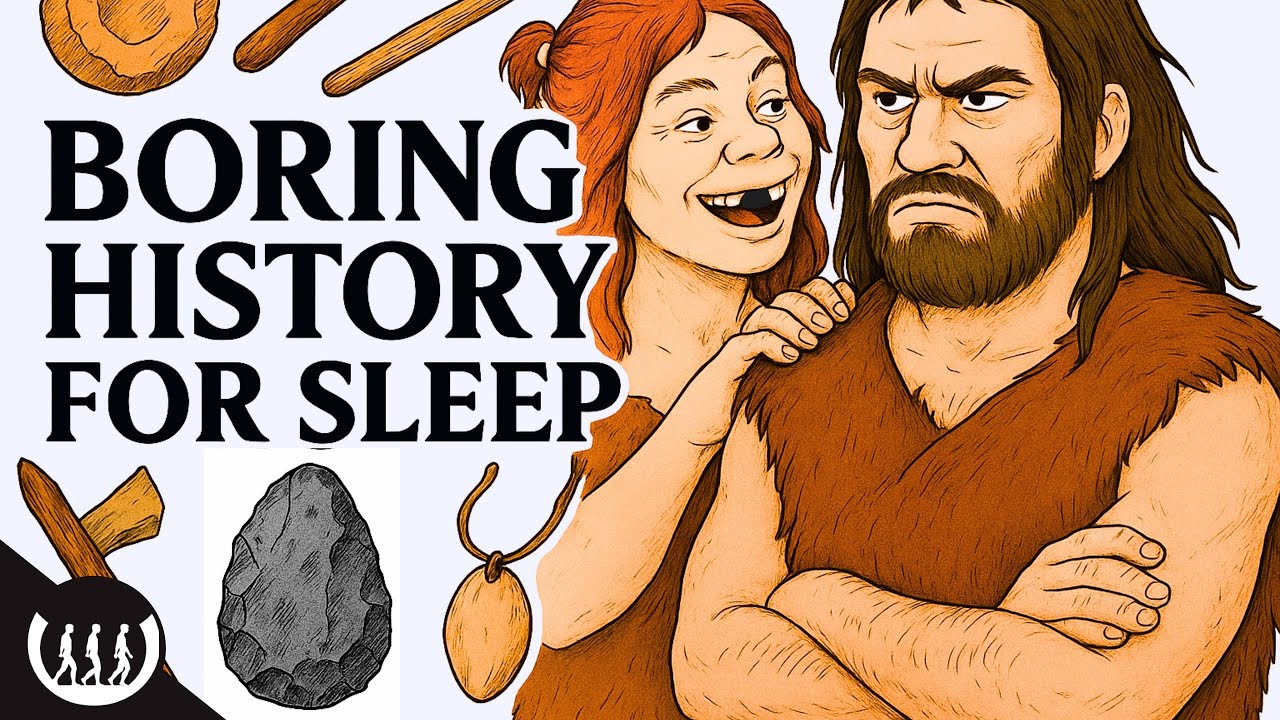
Boring History For Sleep | What Did Cavemen Actually Do All Day and more
321.3K
Paleolithic humans lived busy lives centered around survival. Their days began at dawn with fire maintenance, tool checking, and preparation for hunting or gathering. They slept in tight groups near fires for warmth and protection. Personal hygiene was practical rather than aesthetic, with cleaning occurring when it interfered with survival. Food came from foraging for seasonal plants and hunting small animals, with leftovers from previous hunts being prized. Tool making was essential, with flint and obsidian chipped to create hand axes, scrapers, and spearheads. Hunting was a full team operation involving every able-bodied member, with large animals like mammoths worth the risk of feeding the entire group. Foraging was essential and more successful than hunting most of the time, with women, older adults, and children covering ground searching for edible plants, berries, nuts, and roots. Fire was essential for cooking, warmth, predator protection, and visibility after sunset, with someone always on fire duty. Shelter construction used wood, bones, mud, grass, and whatever else was available, with frameworks lashed together with sinew and covered with hides, bark, or packed dirt.
Click to watch →
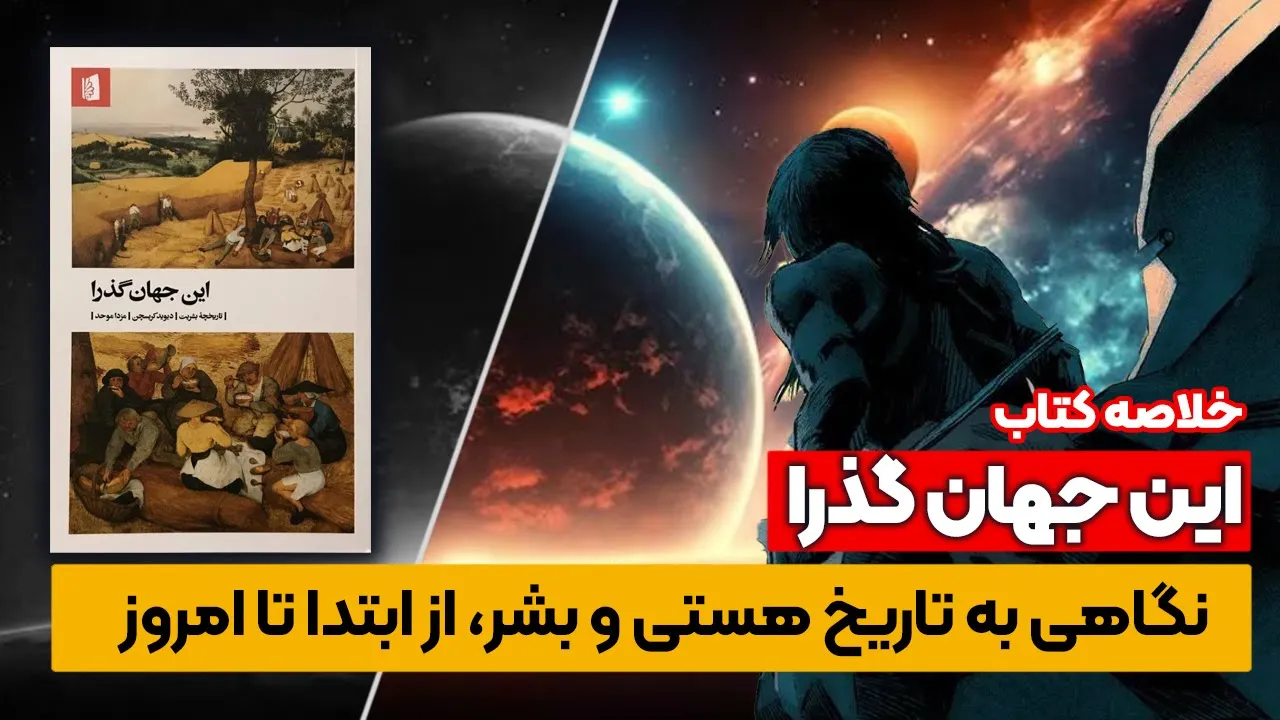
خلاصه کتاب : این جهان گذرا
64.6K
The first period of human history is called the Paleolithic or Hunter-Gatherer Era, lasting from about 250,000 years ago to 10,000 years ago. During this time, all human societies survived by hunting and gathering food. Homo sapiens evolved in Africa and remained there for most of this period before migrating to other continents. This era was by far the longest in human history. What distinguished humans from other species was our ability to walk on two legs, use tools, hunt cooperatively, and have uniquely large brains. However, the fundamental difference is that humans are the only species capable of symbolic language communication. This ability allowed humans to collect and share detailed knowledge precisely, discuss things that didn't exist (spirits, dreams), and transmit experiences across generations. Unlike other species whose behavior changes only through genetic mutations over millions of years, humans could make significant behavioral changes through collective learning without genetic changes. Hunter-gatherer societies had low food production standards—people hunted and ate their catch within one to several days, then hunted again. Population growth was limited through practices like extended breastfeeding, contraception, abortion, and sometimes killing excess children or abandoning the elderly. Hunter-gatherers typically lived in small groups of closely related individuals with extensive communication between neighboring groups. Most societies encouraged marriage outside close family circles, creating kinship networks. Men and women had different specialized roles, but relationships were individual and personal rather than hierarchical.
Click to watch →

اختبار الفصل الأول في مادة التاريخ و الجغرافيا للسنة الأولى متوسط 1AM جديد 2023| تحصل على 20/20🔥
58.4K
The Paleolithic Era extends from the appearance of humans on Earth until the invention of writing in 32 BC. During this period, humans lived in caves and grottos, survived by hunting animals, discovered and used fire for warmth, and several civilizations emerged including the Aterian civilization in Algeria and the Capsian civilization in Tunisia.
Click to watch →
Deep Dive
The impact of the Last Glacial Maximum: How the warming global climate at the end of the Ice Age created ecological niches favorable for farming.

26,000 Years Ago Europe Was Hell On Earth
1.8M
The last glacial maximum occurred approximately 26,000 years ago, marking the period when ice sheets reached their greatest extent worldwide. Europe was one of the most heavily impacted regions, with massive ice sheets spanning areas larger than modern countries and extending as far south as Germany. These glaciers were nearly 2 meters to 3 kilometers thick at their deepest points, making traversal essentially impossible. The average temperature was 9°C lower than today, rendering many areas uninhabitable for humans. Additionally, the coldness introduced immense aridity, transforming spared areas into a mammoth steppe—a harsh biome characterized by lack of features, undiverse flora, and unforgiving weather.
Click to watch →

Et Si la Période Glaciaire ne s'était Jamais Terminée?
227.4K
During the Last Glacial Maximum (approximately 20,000 years ago), the Earth was in its last ice age maximum. The glaciers never melted, and the Earth remained frozen in its last glacial maximum state. This period radically modified the environment we know today, with 30% of the planet's surface covered in ice. The climate was extremely cold, with average global temperatures around 8°C compared to today's 14°C. The atmosphere contained higher levels of dust, winds were more violent, vegetation was rarer, and sea levels were 125 meters lower than today.
Click to watch →

What Happened When Ice Ages ENDED 12,000 Years Ago | HISTORY FOR SLEEP
104.7K
The Last Glacial Maximum (LGM) occurred approximately 26,500-19,000 years ago when ice sheets covered about 30% of Earth's land surface, compared to only 10% today. Global sea levels were 400 feet lower because massive water was locked in glaciers, creating vast landscapes now underwater: the Bering Land Bridge connecting Asia to North America, Doggerland connecting Britain to continental Europe, and Southeast Asia's Sundaland connecting modern-day Thailand, Vietnam, Malaysia, Indonesia, and the Philippines into one enormous land mass. Serbian mathematician Milutin Milankovich discovered that Earth's orbital variations control ice ages through three interconnected cycles: precession (26,000-year wobble of Earth's axis changing summer sunlight distribution), obliquity (41,000-year variation in axial tilt affecting seasonal intensity), and eccentricity (100,000-year shift in orbital shape affecting solar distance variation). Around 18,000 years ago, these cycles aligned to maximize summer solar radiation in the northern hemisphere where most ice sheets were located. The initial warming was glacial—fractions of a degree per century—barely noticeable to people living through it. However, this tiny warming triggered powerful feedback loops: albedo feedback (melting ice exposes dark ground absorbing more heat), CO2 release from thawing permafrost and oceans, and disruption of ocean circulation. These interactions turned gentle warming into catastrophic ice sheet collapse, demonstrating how small astronomical changes can trigger massive planetary transformations through complex system interactions.
Click to watch →

A História Completa Do Último Máximo Glacial — Como A Humanidade Sobreviveu Em Um Mundo De Gelo
2.2K
During the Last Glacial Maximum, the climate was not only colder but also significantly drier than today. With so much water trapped in ice, there was less evaporation from oceans and therefore less precipitation in the form of rain or snow in most regions. Regions near ice sheet edges experienced particularly hostile conditions with strong, constant winds from the frozen interior, creating vast arid tundra areas. Far from the ice, where temperate forests exist today, there were mainly cold steppes and prairies. Tropical regions, while still warmer than temperate zones, were significantly colder and drier than today, with tropical forests shrinking dramatically and fragmenting into isolated refugia surrounded by savannas and prairies. The global average temperature was 4-7°C lower than pre-industrial modern temperatures, with some mid-latitude areas experiencing temperatures up to 15°C lower than today. Vegetation was dramatically different from today. The massive ice sheets were completely sterile. Around ice sheet edges extended tundra, a treeless landscape dominated by mosses, lichens, grasses, and dwarf shrubs. Further south, where temperate and boreal forests exist today, there were vast steppes and prairies - the Pleistocene grasslands. These open ecosystems supported surprisingly high densities of large mammals. Trees were relatively rare in these regions, confined mainly to river valleys and other protected areas with sufficient moisture.
Click to watch →

We're Entering an Ice Age Termination Event - The Proof is Here
105.6K
The Last Glacial Maximum occurred around 20,000 years ago when ice sheets covered much of North America, Europe, and Asia. During this period, large portions of the world's land masses were covered in ice, dramatically altering landscapes and species distributions. The massive ice sheets caused significant lowering of global sea levels, exposing land bridges that allowed species migration between continents. As the climate warmed at the end of this period, ice sheets melted, causing sea levels to rise and forming the coastlines we see today.
Click to watch →
Deep Dive
Basic principles of domestication: The initial processes of selectively breeding wild plants and taming wild animals.

Can we domesticate anything? | BBC Earth Explore
115.5K
Animal domestication requires specific traits including a varied diet, rapid maturation, willingness to breed in captivity, calm temperament, and flexible social hierarchies; while humans have successfully domesticated eight major species (cows, sheep, goats, pigs, chickens, horses, cats, and dogs), attempts to domesticate other species like zebras have failed due to these fundamental biological and behavioral constraints.
Click to watch →

LAS MEJORES VENGANZAS VOL.1 | La Venganza Será Terrible | BLENDER
63.1K
Animal domestication is an evolutionary process spanning approximately 11,000 years where humans selectively breed certain species across generations. For successful domestication, species must meet specific biological requirements including tameness, social tolerance, and adaptability to human care environments. Not all species can be domesticated regardless of human desire. The ranking of domestication difficulty considers factors such as aggression levels, social complexity, and ability to form bonds with humans.
Click to watch →

ELE ME FEZ RELEMBRAR OS VELHOS TEMPOS!
180.2K
This segment explains animal domestication principles through the example of a young bull. The presenter describes how regular human contact maintains docile behavior, while lack of interaction causes animals to become more wild. The segment covers the decision to leave horns on the animal as a permanent choice made when young, as horn removal is not possible later. The presenter also discusses the importance of introducing new animals gradually to existing groups, noting that social integration requires patience and careful management.
Click to watch →

No tiene la COCINA IDEAL, pero siempre hace con amor las cosas.
40.1K
Animals by nature are not friendly and can defend themselves or attack. However, through domestication and training, they become obedient to human commands. This requires ongoing work and reminders to maintain their training and prevent them from forgetting what they have learned. The video demonstrates this through a horse that is released to graze and then called back to work, showing the balance between freedom and discipline in animal training.
Click to watch →

RISPOSTA a 8 Frutti Prima Che li Addomesticassero di INFINITO
688.7K
Plant domestication involves humans selecting for desirable traits over generations. Maize evolved from teosinte through native American selection. Eggplants were brought to Europe by Arab merchants, with bitterness reduction being the key domestication trait. Wild plants contain chemical defenses (bitter compounds) that humans selectively bred out. These same compounds often provide desirable aromas in spices. The domestication process transforms wild plants into edible crops by removing defensive compounds and enhancing preferred characteristics like sweetness and size.
Click to watch →
Deep Dive
The concept of carrying capacity: How natural resource availability limits population sizes of mobile bands.

Organisms and Populations | जीव और समष्टियाँ | समष्टियाँ | NEET 2022 | L - 5 | Biology NEET
66.8K
Carrying capacity is the maximum number of individuals that an environment can sustain indefinitely. Every habitat has a finite amount of resources and space, which limits population growth. When a population reaches carrying capacity, it cannot grow further because resources become insufficient to support additional individuals. This concept explains why populations cannot grow indefinitely.
Click to watch →

William E. Rees: "The Fundamental Issue - Overshoot" | The Great Simplification #53
133.7K
Carrying capacity, in ecological terms, is the average maximum number of individuals of a given species that can live in a habitat without wrecking that habitat. When applied to human populations, it represents the maximum number of people that can be supported at current average material standards without depleting the ecosystem's productivity. Studies have shown that regions like the Lower Mainland of British Columbia could only support about one-tenth of their existing population at current consumption levels.
Click to watch →

સજીવો અને વસ્તી | Organisms and Populations in Gujarati | Class 12th/GUJCET/NEET
53.8K
Carrying capacity is the maximum population size that an environment can sustain indefinitely given the available resources. When a population reaches carrying capacity, growth slows and stabilizes. This concept is fundamental to understanding population ecology and resource management. Understanding carrying capacity helps ecologists predict population limits and plan conservation strategies.
Click to watch →

الدرس التاني جغرافيا تانية ثانوي |الجزء التاني {الرعي والثروة الحيوانية}بكل أفكاره 2026
5.9K
Carrying capacity (حمولة رعوية) is the maximum number of animals that a pasture can support for a specific period of time. For example, a pasture might support 50 animals for 6 hours. Overgrazing (الرعي الجائر) occurs when more animals are allowed to graze than the pasture can sustainably support. When animals consume all the vegetation and then begin eating roots, the pasture becomes degraded and loses its ability to support future grazing. Understanding carrying capacity is essential for sustainable pastoral management.
Click to watch →

CHINA: THE KEY TO THE NEW WORLD ORDER -- James Corbett
104.3K
The concept of Earth's carrying capacity is fundamentally flawed and serves eugenicist purposes. The idea that population growth exceeds sustainable levels ignores that food scarcity results not from insufficient production but from oligarchical control of resources. Historical figures like Thomas Malthus promoted population control theories that justify reducing human numbers. This propaganda has been internalized by many who genuinely believe environmental destruction requires population reduction. The real problem is concentrated wealth and power, not absolute population size, making carrying capacity arguments tools for social engineering rather than scientific analysis.
Click to watch →
Prerequisite Knowledge
- Concept 01The Paleolithic Era: Understanding the nomadic, hunter-gatherer lifestyle and human survival strategies prior to agriculture.
- Concept 02The impact of the Last Glacial Maximum: How the warming global climate at the end of the Ice Age created ecological niches favorable for farming.
- Concept 03Basic principles of domestication: The initial processes of selectively breeding wild plants and taming wild animals.
- Concept 04The concept of carrying capacity: How natural resource availability limits population sizes of mobile bands.
Subsequent Learning
- Step 01The rise of first-generation river valley civilizations, such as Mesopotamia, Ancient Egypt, and the Indus Valley.
- Step 02Social stratification and the division of labor: How agricultural surpluses allowed for specialized roles, political hierarchies, and standing armies.
- Step 03The emergence of writing and early record-keeping systems (like cuneiform) driven by the need to track grain stores and trade.
- Step 04The epidemiology of settled life: Exploring how permanent settlements and close proximity to domesticated animals led to the spread of infectious zoonotic diseases.
Nomadic Past
Farming Shift
New Settlements
Specialized Roles
Modern Foundation
Nomadic Past
0:00Playing Section
- 1
Early humans lived as nomads for most of history.
- 2
They constantly moved and hunted for survival.
- 3
Life before farming was fundamentally different.
The Revisionist View of the Agricultural Transition
While the traditional narrative views the Neolithic Revolution as a monumental leap forward, a prominent counterpoint—popularized by scholars like Jared Diamond and James C. Scott—argues that the shift to farming was actually detrimental to human well-being. This revisionist perspective suggests that agricultural life led to a decline in nutrition, physical stature, and overall health, as sedentary living and animal domestication facilitated the rapid spread of infectious diseases. Furthermore, instead of liberating humanity, farming required longer, more grueling labor hours than foraging. Most significantly, the food surpluses generated by agriculture enabled the emergence of social stratification, deep inequality, patriarchy, and coercive state hierarchies, contrasting sharply with the relatively egalitarian and leisure-rich lifestyles of hunter-gatherer societies.
Deep Dive
The rise of first-generation river valley civilizations, such as Mesopotamia, Ancient Egypt, and the Indus Valley.

وتائقي للنوم: رحلة عبر تاريخ العالم: التاريخ الكامل للحضارات الإنسانية من العصور القديمة إلى الحديثة
1.2K
Humanity settled near rivers providing permanent food and water. Rivers were the lifeblood attracting people, as riverbanks offered fertile land, available water, and opportunities for agriculture. From these conditions emerged the first great civilizations: Mesopotamia between the Tigris and Euphrates, Egypt along the Nile, the Indus Valley in South Asia, and China along the Yellow River. Mesopotamia invented cuneiform writing and the wheel. Egypt built pyramids and developed hieroglyphs. The Indus Valley created planned cities with advanced sewage systems. China developed agriculture and silk production. These civilizations learned that stability and cooperation were keys to prosperity.
Click to watch →

Civilizaciones a lo largo de los ríos: Mesopotamia, Egipto, China e India Historia sexto grado
2.5K
The first civilizations emerged near the great rivers of Asia and the Nile in Africa because these areas had the most fertile land for agriculture. Agriculture was one of humanity's greatest events, allowing ancestors to become sedentary. Between the Tigris and Euphrates rivers, Mesopotamia was founded, meaning 'land between two rivers.' The Egyptian civilization settled along the Nile, one of the world's longest rivers. The Indian civilization developed along the Indus River, and the Chinese civilization developed around the Yellow River. The fertile agricultural production along these rivers supported population growth and the development of complex societies.
Click to watch →

The Global Tapestry
230
The First Wave Era lasted from approximately 3500 BCE to 600 BCE and is characterized by the emergence of larger, advanced civilizations. These civilizations almost always began near river valleys because fresh water is essential for growing food and sustaining human populations. The most well-known civilizations of this era include Mesopotamia (near the Tigris and Euphrates River, also called the Fertile Crescent), the Nile River civilization in Egypt, the Indus River civilization in present-day Pakistan, and the Yellow River (Huang He River) civilization in China.
Click to watch →

الغرب والاسلام فى نهائى كاس الحضارات (١)
779
The first generation of civilizations emerged along riverbanks, including Egyptian civilization along the Nile River, Mesopotamian civilization along the Tigris and Euphrates rivers, Indian civilization along the Ganges River, and Chinese civilization along the Yellow River. These civilizations were characterized by their dependence on river systems for agriculture and sustenance.
Click to watch →
Early Human History and Bees
334
The first recognizable civilizations appeared around 3200 BCE in Mesopotamia (modern Iraq), when populations reached tens of thousands in cities. This pattern repeated across Asia, the Middle East, and Central America. Fertile river valleys enabled productive farming, specialization, priests, landlords, and complex socioeconomic structures. Writing and coinage emerged, allowing historical continuity.
Click to watch →
Deep Dive
Social stratification and the division of labor: How agricultural surpluses allowed for specialized roles, political hierarchies, and standing armies.

Social Structure and Political Power || POL.SCI. || Indian government and politics 2nd sem. COLLEGE
1.1K
Social stratification establishes a system where individuals are ranked based on social status, wealth, or power, creating different social layers. This system affects everyone's life chances and opportunities. Division of labor refers to allocating specific tasks to different individuals or groups based on their skills, abilities, and social position. In traditional societies like India's caste system, different castes had specific occupations. Modern societies also have division of labor, though more flexible. This concept is essential for understanding how societies function efficiently and how social organization determines individual roles and responsibilities.
Click to watch →

Sociologia: Estratificação Social: classes sociais, estamentos e castas / Mobilidade Social.
400
Social stratification is the division of society into layers based on shared characteristics. It originated from the division of labor, including sexual, age-based, and ethnic divisions. This division created power relationships tied to property ownership and control over means of production. Those with more resources command authority, while those with less must obey. This fundamental relationship has existed throughout human history and forms the basis of social hierarchy in complex societies.
Click to watch →

FT-PENGANTAR SOSIOLOGI(1)
223
Social stratification occurs because society develops and division of labor creates differences in wealth, power, and prestige. Stratification is necessary for society's survival as it allows for specialization and efficient organization of social activities.
Click to watch →

2021 | 1ª Série | História | Aula 03 - O Surgimento do Homem e do Estado - Parte 3
4.1K
Urban nuclei required greater organization in task division. Each individual had an important role to fulfill within society. Work became specialized: some people understood house construction, others understood wheat planting, and others understood animal care. This specialization of tasks led to social stratification and hierarchies. Social stratification is the classification of individuals or groups based on their political and socioeconomic conditions. As some tasks required more specialized knowledge, those who performed them received greater social importance. Some people organized the work of others who executed and obeyed orders. The first element of social stratification was the division of professional activities. After dividing tasks, communities needed organization, leading to the creation of codes, laws, and rules. Initially, rules came from custom and habit, then evolved into written laws.
Click to watch →

Intro to sociology: Division of Labor: Fuctionalism
2.4K
Division of labor can create forced stratification where societies crystallize into specific types of people doing specific jobs. This can include gender-based divisions (women in nursing and social work, men in truck driving and politics) or other forms of social separation. Such forced divisions can split communities apart rather than bringing them together, representing a dysfunction of the division of labor system.
Click to watch →
Deep Dive
The emergence of writing and early record-keeping systems (like cuneiform) driven by the need to track grain stores and trade.

James Burke Legend Connections 1 The Trigger Effect
374.4K
The need to store surplus grain led to the invention of writing. As grain quantities grew too large for simple pots, storage required faster and more durable containers, leading to the potter's wheel. To track ownership and contents of stored grain, early writing systems emerged using symbols to represent names and quantities. This administrative necessity transformed human communication and record-keeping.
Click to watch →
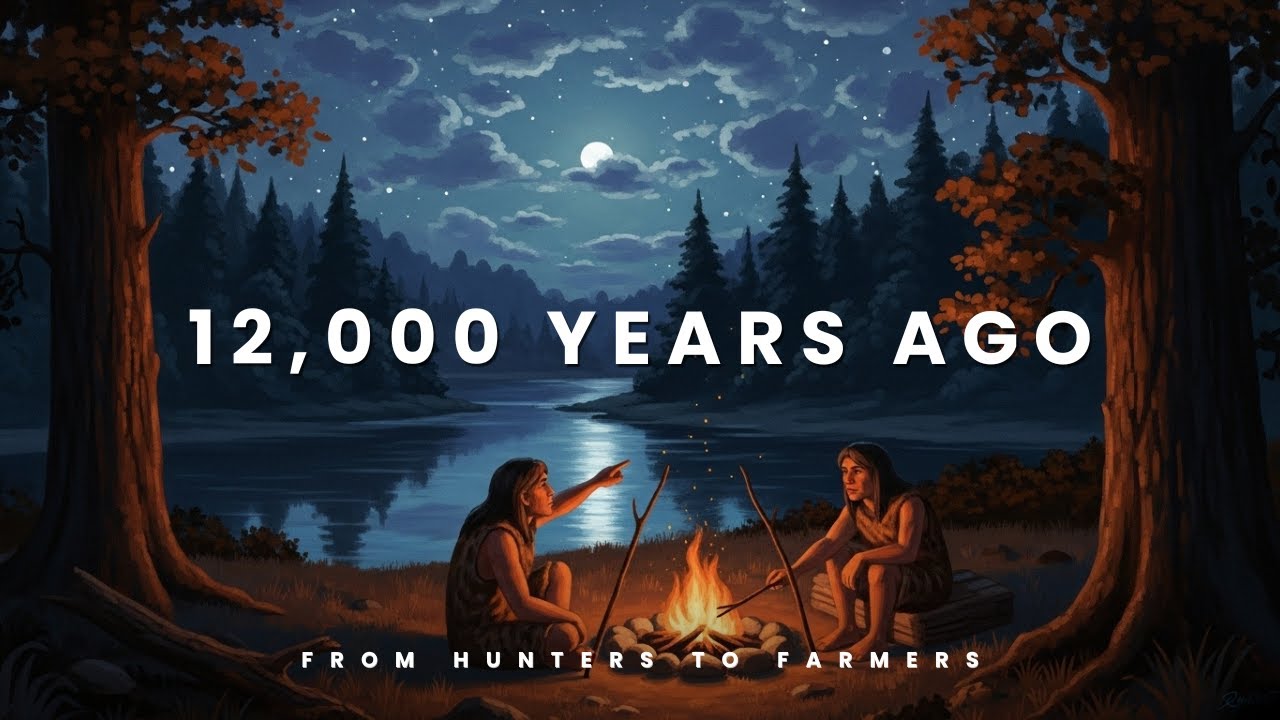
Fall Asleep to the ENTIRE Story of the Agricultural Revolution | The Historian’s Tome
200
The demands of farming gave rise to new tools—sickles for cutting grain, grinding stones for flour, and eventually plows pulled by animals. As tools specialized, so did labor—potters, weavers, and toolmakers emerged. Trade networks expanded, exchanging obsidian, shells, salt, and textiles across long distances. With increasing complexity came the need to keep track—Who owed what? How much grain was stored? In Mesopotamia, tally sticks and clay tokens evolved into writing systems. The first written words were not poems but records of debts, shipments, and inventories. Writing was born from the need to remember what had been traded, harvested, or promised—not from a desire to tell stories.
Click to watch →
The ENTIRE Story of Ancient Mesopotamia Boring History For Sleep
610
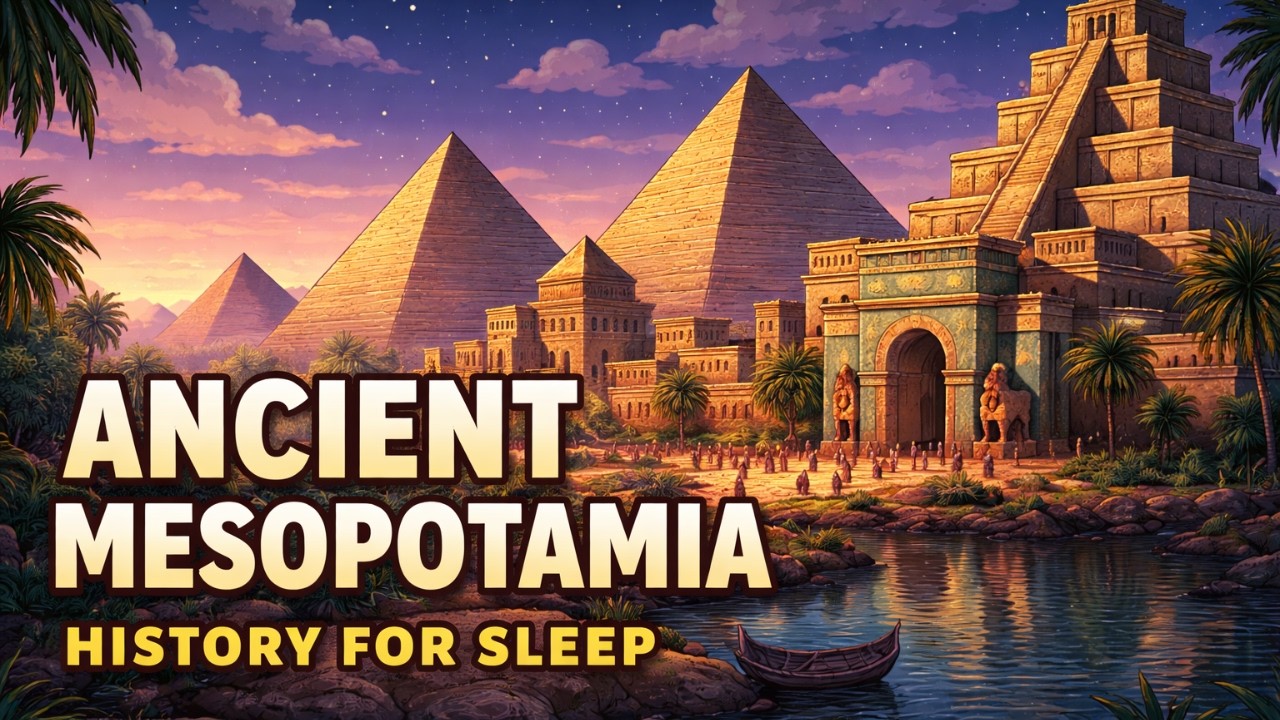
By around 3,300 BC, the cities of southern Mesopotamia had grown so large and their economies so complex that spoken agreements and memory were no longer enough to keep track of transactions. Temples received goods from across the land, grain, oil, wool, livestock, and they had to be recorded. Workers received rations in payment for their labor. Land was measured and divided. Taxes were collected in kind. Each of these activities produced records, and with increasing frequency, the need to make those records permanent led to the development of a new kind of system. At first, it was based on tokens, small clay objects shaped like spheres, cones, or discs. Each one representing a quantity of goods. These tokens were stored in sealed envelopes and impressed with signs to show what they contained. Eventually, the scribes dispensed with the tokens and began making the marks directly on clay tablets. These marks were originally pictographic, simple drawings that represented objects or quantities. A stylized barley stalk stood for barley. A jar meant oil. Over time, as the system expanded to include more abstract ideas and sounds, the characters became more simplified and symbolic. The stylus, typically made of reed, was pressed into the clay to make wedge-shaped impressions. These wedges gave the script its name, Cuneiform, from the Latin cuneus meaning wedge. What began as a simple accounting tool had become a fully developed system of writing.
Click to watch →

Plus One History | Chapters 1, 2 & 3 | Public Exam | Eduport Humanities
45.6K
Mesopotamian writing system, called cuneiform, consisted of pictures and signs rather than letters. Writing emerged when society needed to record transactions. Scribes had to learn hundreds of signs to write on clay tablets. This system was used for recording transactions, announcing royal changes, storing information, and sending messages, representing one of humanity's earliest written communication methods.
Click to watch →

What Accidental Discovery Built Every Civilization?
148
Recent cross-cultural research supports links among grain agriculture, taxation, writing, and state formation. Although none of those factors alone explains every state, this encouraged systems for recording obligation. Early writing in Mesopotamia developed partly from accounting practices used to track commodities, labor, animals, and distributions. Marks and tokens became tools for managing quantities too large and relationships too impersonal for memory alone. Writing did not begin because someone wanted to compose poetry. It began partly because somebody owed barley. The poem arrived after the receipt. Calendars became more important for timing planting, floods, harvests, and ritual. Mathematics served measurement, storage, land division, and exchange.
Click to watch →
Deep Dive
The epidemiology of settled life: Exploring how permanent settlements and close proximity to domesticated animals led to the spread of infectious zoonotic diseases.

Origins of Settled Life | Ian Hodder | Talks at Google
387.7K
Archaeological evidence from Göbekli Tepe (9,000 BC) and Çatalhöyük (7,000 BC) in Turkey demonstrates that ritual and social symbolism, not economic factors like plant and animal domestication, were the primary drivers of the transition from mobile hunter-gatherer lifestyles to settled agricultural communities. At Göbekli Tepe, hunter-gatherers constructed massive stone monoliths with animal imagery requiring collective labor, which then attracted permanent settlement around these ritual centers. At Çatalhöyük, approximately 8,000 people lived in tightly packed houses without streets, maintaining an egalitarian society through shared rituals involving wild animal teasing, baiting, and feasting, along with ancestor veneration practices including headless bodies and plastered skulls. These findings challenge the traditional Marxist theory that economic surplus drove the Neolithic Revolution, instead showing that ritual gatherings and social cohesion created the organizational framework necessary for long-term agricultural settlement.
Click to watch →

Life Set Hai! - Yashika Behl | Hindi | Tape A Tale
69K
Life is fundamentally unpredictable and cannot be 'set' or settled. The speaker shares her journey from believing her mother's lies that 'after school, life is set' to discovering that life remains challenging at every stage. She lost her grandfather, which transformed her dream into stubbornness. Despite preparing intensely for NEET, her family contracted COVID a week before the exam, preventing her from taking it. This experience taught that without trying, one cannot get a reality check, and that feeling like one is the best in something is often an illusion. The speaker emphasizes that dreams are always big and should continue to grow, making settling unnecessary.
Click to watch →

İnsanlık Tarihindeki En Büyük Dönüşüm - Nevzat Kaya | Mitoloji - Flu Akademi
364.6K
Friedrich Nietzsche's concept of the Apollonian and Dionysian represents two opposing forces in human culture: the Apollonian represents order, reason, structure, and idealized beauty, while the Dionysian represents chaos, instinct, emotion, and the raw reality of existence. True cultural achievement requires integrating both forces. Sigmund Freud's concept of 'cultural unhappiness' describes how civilization creates psychological tension by requiring individuals to suppress natural instincts, creating internal conflict and distress. In nomadic hunter-gatherer societies, the institution of fatherhood did not exist because there was no connection between sexual activity and childbirth. Kinship relationships were organized matrilineally, with the most important male relative being the 'dayi' (maternal uncle). The concept of romantic love as understood in modern culture did not exist in nomadic societies; romantic love is a cultural invention that emerged with settled agriculture and the development of private property. Jealousy is also a cultural invention that emerged with settled agriculture and the development of private property. The transition from nomadic to settled life created significant psychological consequences, including the loss of mobility and the emergence of warfare as groups began to compete for resources and territory.
Click to watch →

ADVANCED ENGLISH STORY 🏡 The Cottage 🏡 Level 4 / 5 / B2 / C1 | British English Story with Subtitles
1.7M
This segment follows Rita's journey from extended global travel to seeking stability. After two years exploring the world, she desired to settle down, find a stable job, and establish roots. Living out of backpacks and sharing rooms with strangers had made her crave privacy and personal space. Financially, she saved substantially while working in New Zealand, budgeting carefully by hiring a van and staying at free campsites. Her diverse work experience across marketing, care work, teaching, and hospitality made her adaptable. She created detailed Pinterest boards envisioning her dream British cottage in a homely village with specific amenities. As a first-time buyer with a decent deposit, she felt positioned well despite lacking immediate employment. When offered an interview at a prestigious London corporation, she accepted pragmatically, knowing 'beggars can't be choosers' and having no other options at that moment.
Click to watch →

NCERT History Class 6: Our Past-I (हमारे अतीत-I) | Full Revision with questions with Manju Mam
131.1K
Early humans (Aakhir) were originally food gatherers who moved from place to place. They migrated due to food depletion, following game animals, seasonal changes, and water availability. The transition to settled life occurred when humans learned agriculture and animal husbandry, which required staying in one place to cultivate crops and raise livestock.
Click to watch →
Nomadic Past
Farming Shift
New Settlements
Specialized Roles
Modern Foundation
Nomadic Past
0:00- 1
Early humans lived as nomads for most of history.
- 2
They constantly moved and hunted for survival.
- 3
Life before farming was fundamentally different.
The Revisionist View of the Agricultural Transition
While the traditional narrative views the Neolithic Revolution as a monumental leap forward, a prominent counterpoint—popularized by scholars like Jared Diamond and James C. Scott—argues that the shift to farming was actually detrimental to human well-being. This revisionist perspective suggests that agricultural life led to a decline in nutrition, physical stature, and overall health, as sedentary living and animal domestication facilitated the rapid spread of infectious diseases. Furthermore, instead of liberating humanity, farming required longer, more grueling labor hours than foraging. Most significantly, the food surpluses generated by agriculture enabled the emergence of social stratification, deep inequality, patriarchy, and coercive state hierarchies, contrasting sharply with the relatively egalitarian and leisure-rich lifestyles of hunter-gatherer societies.
The Paleolithic Era: Understanding the nomadic, hunter-gatherer lifestyle and human survival strategies prior to agriculture.
The impact of the Last Glacial Maximum: How the warming global climate at the end of the Ice Age created ecological niches favorable for farming.
Basic principles of domestication: The initial processes of selectively breeding wild plants and taming wild animals.
The concept of carrying capacity: How natural resource availability limits population sizes of mobile bands.
The rise of first-generation river valley civilizations, such as Mesopotamia, Ancient Egypt, and the Indus Valley.
Social stratification and the division of labor: How agricultural surpluses allowed for specialized roles, political hierarchies, and standing armies.
The emergence of writing and early record-keeping systems (like cuneiform) driven by the need to track grain stores and trade.
The epidemiology of settled life: Exploring how permanent settlements and close proximity to domesticated animals led to the spread of infectious zoonotic diseases.
953 views26likes0:58@SANDIP-yt-channel01Original Release: 2026-05-19
Thousands of years ago human life looked nothing like [music] today. For 99% of human history, that was exactly what they did. They were nomads, constantly moving, constantly hunting just to survive. But about 12,000 years ago, someone planted a seed and everything changed. Literally everything.
>> [music] >> This was the Neolithic Revolution. Once they figured out how to grow crops and >> [music] >> domesticate animals, have to pack up and move anymore.
They built the first permanent villages.
Suddenly there was a surplus of food which triggered a massive population boom.
And because not everyone had to spend all day looking for food, people could finally focus on other things.
They became blacksmiths, builders, and artists.
Without that very first harvest, there are no cities, no writing, no empires, and >> [music] >> definitely no internet.
Farming didn't just change their diets.
It completely rewired human destiny and built the modern world.
Up Next
0:23
Sugar's Dark History: From Slavery to Industry (Documentary) | 2025
@aljazeeraenglish
125 views•2026-04-15

33:02
The Great Schism of 1054: Causes and Consequences
@SacredCathedrals
113.5K views•2026-02-19

91:57
The Geopolitics of the Ukraine War and the Rise of Global Autocracy
@JordanHarbingerShow
468K views•2025-04-19

17:05
Understanding the Cold War: Superpower Conflicts and the Road to Détente
@OverSimplified
46.1M views•2019-01-24
Related Study Plans & Knowledge Roadmaps
Structured learning paths in History
history
Byzantine Iconoclasm: Theology, Art & Politics
01Foundations of Byzantium and Early Christian Images
02The First Iconoclasm: Leo III and the Crisis of Images
03Empress Irene, Nicaea II, and the Second Iconoclasm
+ 2 more learning modules
9h5 modules
Explore Roadmap
history
Iranian Revolution (Causes, Events & Legacy)
01The Pahlavi Dynasty and the Roots of Discontent
02The Spark of Rebellion and the Rise of Khomeini
031979: The Fall of the Shah and the Climax of the Revolution
+ 2 more learning modules
8h5 modules
Explore Roadmap
history
Mali Empire: Mansa Musa, Trade & Timbuktu
01Foundations of the Mali Empire
02The Trans-Saharan Gold and Salt Trade
03The Reign and Pilgrimage of Mansa Musa
+ 1 more learning modules
6h4 modules
Explore Roadmap
history
1947 Partition: Politics, Borders & Legacies
01Foundations of British India and the Divide
02The Political Negotiations and the Mountbatten Plan
03Drawing the Boundary: The Radcliffe Line
+ 2 more learning modules
8h5 modules
Explore Roadmap