










![Carbon Markets and Neoliberal Capitalism - Romain Felli [3/3]](https://i.ytimg.com/vi/QiCYvh46kQM/hqdefault.jpg)






![[FULL] Pernyataan Komnas HAM soal Konflik Proyek Pulau Rempang](https://i.ytimg.com/vi/yLlhRNPoSP0/maxresdefault.jpg)

Political ecology is an interdisciplinary field rooted in geography, anthropology, and development studies that examines how human-environment relationships are shaped by power structures, particularly capitalism, rather than environmental determinism; it employs a relational ontology and hatchet-and-seed approach to expose power geometries while advocating for transformative change, drawing on Marxist political economy, peasant studies, feminist perspectives, post-colonial theory, and actor-network theory to address issues of degradation, marginalization, conservation, and environmental conflict.
Political Ecology Explained: Nature, Power, and Capitalism
Added:Basic principles of capitalism and political economy, including how markets allocate resources and generate wealth.
An understanding of foundational human-environment geography, particularly the concept that nature and society are deeply interconnected.
The concept of social power dynamics, specifically how states, corporations, and social classes exercise power over marginalized populations.
A general familiarity with traditional environmentalism and conservation history, as a point of contrast for political ecology's critique.
The study of Environmental Justice, focusing on the unequal distribution of environmental benefits and burdens along lines of race, class, and gender.
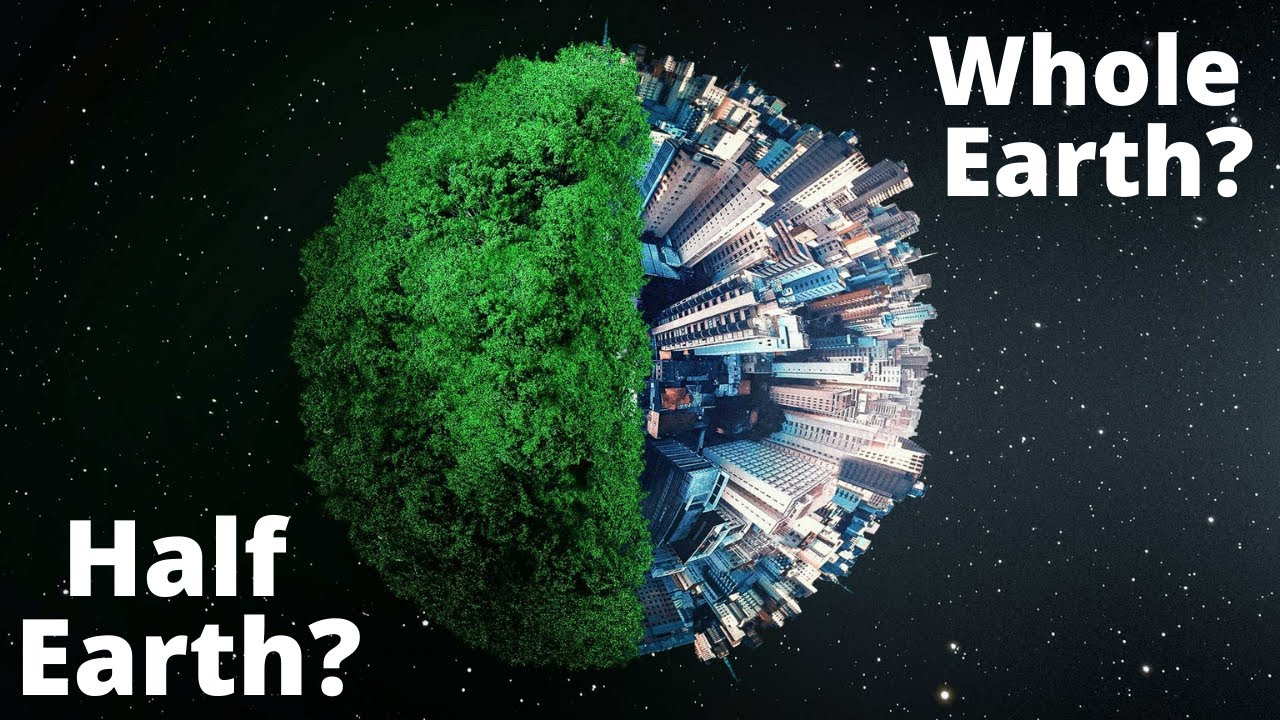
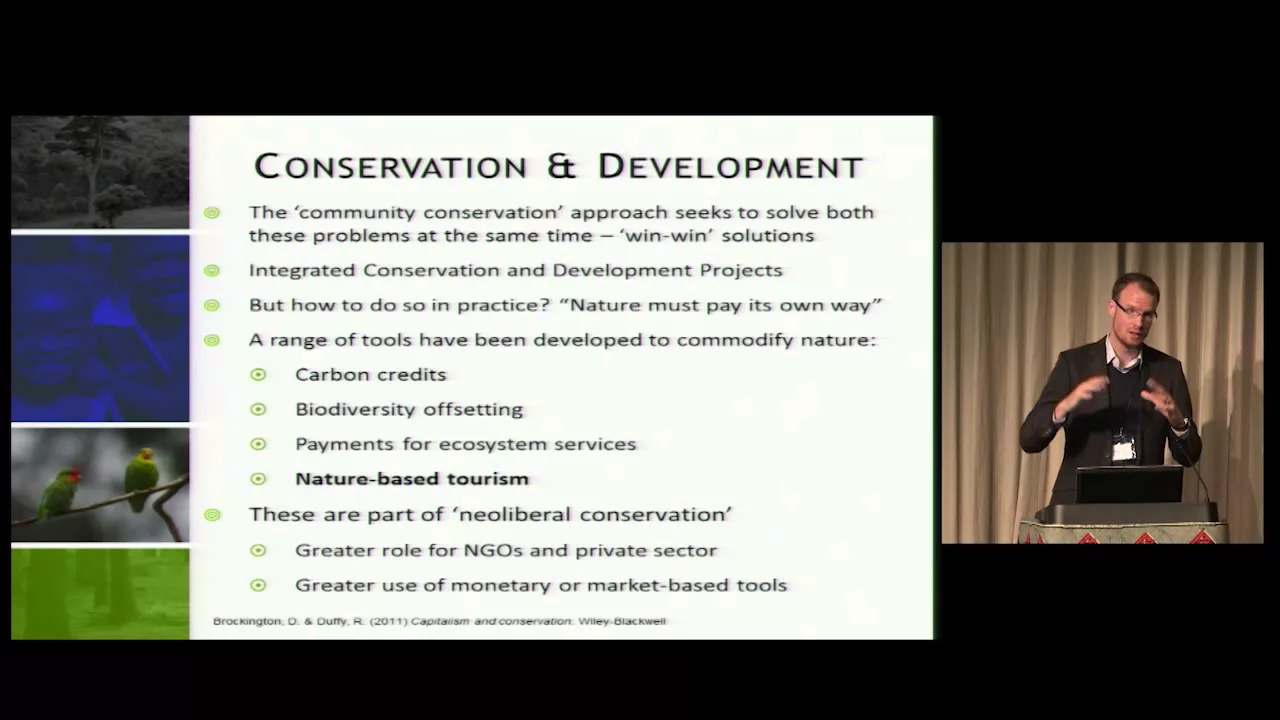
Neoliberal Conservation and 'Green Capitalism', examining how market-based mechanisms like carbon trading and ecotourism affect local communities.
The global 'Degrowth' movement and alternative ecological-economic models that challenge the paradigm of perpetual GDP growth.
Empirical case studies in Agrarian Political Ecology, such as land grabbing, resource extraction conflicts, and the impacts of corporate agriculture in the Global South.
3.7K views0likes25:38Original Release: 2024-01-28
hello and welcome my name is Dr Gerard tol I'm a professor at Virginia Tech School of Public and international Affairs in the greater Washington area and this is a brief lecture on um political ecology and um so I'm going to use a Paul robins's book political ecology a critical introduction to help explain what the concept is is what it does H I'm very fond of this book H it is in its Third Edition 2020 previously there was the second edition 2012 and I believe the first edition was a 2005 off this book now who is a Paul um Robbins well Paul Robbins is the dean of the Nelson Institute for Environmental Studies at the University of Wisconsin and and he is someone who is uh a trained as a geographer he's a masters and a PhD in geography but interestingly he has an undergraduate degree in um in anthropology now um political ecology so the concept of political ecology is one that has merged over the last three four decades uh it is one that is multidisiplinary but I guess it's anchored most closely or it's most closely associated with the discipline of geography and anthropology um and development studies um IT addresses the politics of the use of nature um geographers are concerned with human environment relations and uh are working in that tradition uh and there's lots of different h conceptualizations of how humans have used the environment um so political ecology is a reaction to previous conceptualizations as I'll explain but um what makes political ecology distinctive is that it is an emphasis on how the relationship that humans have with the environment is shaped by power it's shaped by culture it's shaped by the particular structures that humans have established uh across the planet and the major structure H that political ecologists address is capitalism H now capitalism is simple to say but actually what that means in practice in particular places has to be H determined it has to be do documented has to be empirically investigated um as uh Paul notes in the book a political ecology is not a method or a theory or even a single perspective it's sort of gather a Gathering Place for um various types of what do you call texts and this these are uh academic studies but they also can be reports they can also be videos and a more activist a types of engagements but it is an urgent argument so there is uh a definite self recognized politics to the particular activity in as much as there a the a particular people that are involved in political ecology are seeking to make an argument and an argument which they consider urgent uh so it's an urgent a a argument that examines a winners and losers in other words it looks at Power structures um and in particular it's looking at the unevenness of human vulnerability the hidden cost the differential power geometries that are at work when we study how humans are using the environment and how the ways in which humans use the environment the particular structures that shape that H are damaging to the environment and also to humans so it it is a particular a perspective or particular disposition not a single perspective a which narrates this um this particular problematic this particular subject area using dialectics so it begins and ends with the understandings of contradictions and this sometimes can be difficult to grasp but essentially they are a political ecologies is defined by a relational ontology so it doesn't see things in an atomistic ways it doesn't think in sort of mechanical causality it rather looks at the ways in which there uh things are connected H to each other and in ways that are challenging to map um but one of the things that u a lot of political ecologists are looking for is the particular instabilities the particular tensions that characterize the power relations and the biggest of these of course is the relationship between humans and the environment and the ways in which humans have altered the environment in ways that are now rebounding uh in very dramatic ways against humans against human society and against um the particular formations the terror formations the infrastructures that humans have built the society ities uh that humans have built uh over the last 2,000 plus years um so political ecology perspective researches uh the objective material status of nature so there is a commitment to science and hard science and and material H um documenting the material uh but it's also attentive to particular narratives and culture and symbols and stories about nature and human environment relations because the objective n the the objective H features of the world like the fact that we are now in a world that is going above 1.5° Celsius surface temperature for the first time ever in human history that H is a function of the stories that humans have told about the environment and their relationship to the environment so the material world around us is impacted by the ways in which cultures power structures tell stories conceptualize uh nature and conceptualize the relationships of human beings to that uh nature it takes a hatchet and Seed approach a hatchet in the sense of this is It's critique it's the H seeking to uncover H and expose the power structures that shape particular out comes H but there's also the seed of the making the arguments that things could be different that things do not necessarily need to be the way that they are that these are structures which are created by humans and can be undone by humans uh even though we're now in a world which is very much shaped by past actions and the legacy of those past actions so it is a a recognition that politics is inevitably ecological as and also that ecology is in apparently political so that's why the emphasis is on the on the political why the word political there I do not take it as uh it NE necessarily means therefore people have an ax to grind no they're seeking to make an argument and this is a social science H now there are activist Dimensions to it but it is in its best form a social science Making sets of arguments which are a which are better than the alternative arguments it is a community of practice United around a certain kind of text as he a he argues so that's a a way in which you can conceptualize it now what are the things that it's reacting against well it's reacting against a political ecology um but the it's an apolitical ecology that didn't see itself as political but in actual practice was um the first reaction is against the deterministic tradition of conceptualizing the relationship between humans and the environment um and so for example we have a book here I have this book Ellsworth Huntington's book civilization and climate um which H was um it went through multiple editions first published in 19 195 and then again in 1922 by Yale University press um and it essentially makes a racial environmental arguments about a how climate shapes the degree to which people are energetic or not how temperature like hot temperatures makes people Lazy H and the relationship of a work to weather and so on so forth this was a form of scientific racism um and it was not it was in our culture not too long ago and there still uh res res residual aspects of this in our culture residues of it all over the place so political ecology is an argument against the deterministic arguments that characterized geography and environmental science the beginning of the 20th century and and the racism that accompanied that um now there was a reaction in the 1920s and 1930s against that Human Society uh um research which emphasize possibilism at the same environment it can lead to very different human ecologies and you had early scientific geography and he discusses this in the book H going back to the 18th century H which was actually more Progressive in lots of ways than what came in the end of the 19th century um which was shaped by Darwinism and shaped by social Darwinism a sort of very RAC racist conceptualization of Darwin's work um but there is also an anarchist tradition within a geography which is much more uh Progressive in its conceptualizations of how humans um a are in the environment because it's attentive to human variety and it's based upon actual Empirical research humble recu kotkin Wallace H and others going actually out into the uh world and doing research H then there's the discussion of uh how in the 1950s and the 1960s you had the development uh of Hazards research and Urban Ecology as well as cultural ecology which comes out of the work of call s who is uh a very famous geographer H that was established in Berkeley and he really focused in on the landscape and the morphology of the landscape and the ways in which humans shape the landscape h on the basis of their kind of cultural backgrounds and how they used it they're the emphasis in in that a cultural geography and then also ecological anthropology was very much on function adaptation was energy flow analysis within a a ecological anthropology within cultural geography and cultural ecology there was an emphasis on sort of visual forms and H on sort of the documentation of the landscape without too much ATT tentativeness attentiveness to the empirics of power and how power really shape this um but there are limits to this sort of progressive uh contextualization H and it was in a kind of response to um the late Cold War uh and to um postc Colonial moment from the 1960s onwards that you had the development of a political ecology now political ecology H draws upon on a series of different uh um Traditions so it's a kind of coming together of um first of all a concern with the common property Theory the ways in which uh there is a an understanding of how humans er um exploit the Earth H there are limits to that there's a sort of Mal neom malthusian moment in the 1970s on the limits to growth which emphasizes the fact that there's overpopulation or alleged overpopulation within the world H and there's a tragedy of the commons and and so on so forth that proved to be extremely inadequate because it didn't ask well actually um there are massive asymmetries in terms of who is actually uh using the resources H and so one American is using uh as many resources as 100,000 Indians H so therefore does that uh is that a problem of overpopulation what does it mean to say there's a problem of overpopulation because it seemed that particular rhetoric was always one which invented or at least conceptualized overpopulation as a problem out there in the third world rather than a problem H which really had to do with the distribution ution of resources a the political ecology is very much shaped by Marxist political economy historical materialism the emphasis on extractivism um it also is emphasis on a dependency accumulation and degradation uh and in particular I want to draw attention to a metabolic Rift Theory which has developed over the last uh number of years years uh and this is a particular uh argument which is made by John Bellamy Foster in this book which is a reading of KL Marx and his a conceptualization of capitalism and how capitalism a exploits not simply workers H but it actually is based first and foremost on the um exploitation of the Earth H and so he argues that Marx theorized a particular rupture in the metabolic interaction when when they say metabolic it's has to do with energy flows it has to do with where we get food where we get that which uh sustains us um and so he uh uses the term metabolic Rift in which you have H A significant jump in the forms of ER extraction and uh energy uh regimes in the uh Industrial Revolution onwards and that is then theorized by other people like Andrea mom the rise of steam power and the roots of global warming um so all of these um issues are uh taken up by sociologists and writers this book here seeks to uh look at the ways in which you have extractivism as and colonialism is really Central to the origins of the environmental crisis that we face right now so Marx's political economy is really fundamental to political ecology but it's not only Marxist and some instances some versions of it because it's a heterogeneous field are not necessarily Marxist at all um there there's an also a drawing upon peasant studies and this emphasis on a sort of history from below and a conceptualization not of peasants as uh people who are uh sort of backward H and who are H the opposite of modernizers but instead an understanding of them as cautious rational producers a there's also studies from James Scott EP Thompson's work on moral economy and how there was um a a relationship between H indigenous communities and peasants a and how they used the land and that was mediated by by religious cosmologies but also ways of doing things habits understandings as to what was appropriate what was not appropriate and those moral economies are extremely important to understand and grasp and us from the modernizing World H have done a poor job of of conceptualizing that so part of what the Anthropologist geographer does is to kind of go back into that and be extremely attentive to those kind of habits of conceptualization and understanding um there a um political ecologies been formed by feminist political ecology which emphasizes the gendered work regimes that are found uh in how humans use the environment uh and the ways in which there are particular gender divisions of labor and how they work themselves out and then there's also a greater emphasis on performativity and intersectionality which has to do with the particular H emergence of those issues within our increasingly diverse H and open Society um while uh feminists have also brought an emphasis onto the everyday rather than looking at a simply major uh firms uh and looking at a sort of top down conceptualization of political ecology which is important to do I mean they don't get me wrong that's also important but the there is a sort of bottomup quality to political ecology that's very very important fifthly postc Colonial studies uh which which has an emphasis on um ecological imperialism and here I should mention the book by [Music] um by Alfred Crosby ecological imperialism which was a it's a a study of the Colombian encounter and the ways in which Europe a simply didn't colonize with people uh the new world it also colonized it with plants and with animals uh and with disease as well and so there's an emphasis on the ecological dimensions of imperialism as well as the ways in which imperialism was an ecological project to sort of seize land and completely transform it to serve the interests of um of Europe um so that's a a a particular inspiration Fuko and his emphasis on governmentalities sort of ways in which uh government structures then lead to habits of doing things ways of thinking about the world Wells of conceptualizing the of Nature and the environment as as sort of a set of resources in a very instrumentalized shortterm way and conceptualizing the Earth As Dead As merely stuff that is part of what is study to Timothy Mitchell's work on Colonial governance in Egypt and then on oil is important here the classificatory systems that are used the the work of Cronin on Chicago H as a particular sort of network of feeding this particular City H and uh um the the book Nature's Metropolis the ways in which the city is this organism of sorts the the particular when you think of the metabolic the metaphor of the organism is one that is that comes to mind but it has negative or it has essentially qualities that can lead to abuse so we need to be very H careful about how we use that particular metaphor um then lastly actor networks and new materialism which uh comes from the work of Bruno lur H and then Jen Bennett and those associated with new materialism where there's an emphasis on objects and then on the agency of the of nature itself how nature does things how nature a sort of creates constraints creates a ways in which you can enroll and not enroll in particular political economies and then of course creates these blockages and resistances uh and uh undo some of the particular challenges Alles that uh that economies uh face and that societies face and are playing themselves out right now um then uh let me end by talking about the five big questions in political uh ecology so the apolitical ecology that he seeks to uh distance himself from that that political ecology seeks to distance itself from are this limits to growth this idea of EOS scarcity and then this idea of ecological modernization that simply we can continue to modernize continue to grow uh the economy without any H check uh that they're simply um going to be an inexhaustible uh Earth available for us um an emphasis on power geometries an emphasis on scale and scaler relationships between Global markets and local reality ities an emphasis on winners and losers things that are seen and unseen in the economy and pollution is often unseen uh because it is hard to measure H and it it only erupts in the forms of sicknesses uh much later so there's a varied temporalities here uh there's a costing for example a commodity is costed in a certain way but then the real costs of that commodity and its production and and it's then eventually conversion into waste is not taken into consideration so we don't have real cost economics so that's again a question of visibilities and invisibilities interacting with temporalities here so the five big themes that he discusses in the different chapters degradation and marginalization conservation and control environment conflict and exclusion H and then subjectivities and identity associated with environmental conflicts H and then lastly political objects and actors um this is a very rich book this whole domain is extremely rich uh and so I hope you enjoy working your way through this book and beginning to get into a political ecology uh because I think it's a very productive way of thinking about um the world around us and the particular crisis that we Face uh in the world right now most especially the uh climate crisis okay thank you
Up Next
6:33
Co-Management of Wildlife & Fisheries in Nunatsiavut: Roles & Activities Explained
@acerconsulting9454
417 views•2017-12-21

24:30
BRICS Pay and de-dollarization: A New Financial Order Emerges? | 55 chars
@DannyHaiphongYT
164.6K views•2024-10-22

7:33
Government Surveillance Methods: 10 Ways You May Be Watched
@BeAmazed
1.6M views•2017-04-09
10:19
Explaining the Saudi-Iranian Proxy Conflict in the Middle East
@Vox
18.2M views•2017-07-17
Related Study Plans & Knowledge Roadmaps
Structured learning paths in Political Science
political-science
Economic Statecraft: Sanctions & Chokepoints
01Foundations of Geoeconomics and Economic Statecraft
02The Mechanics of Weaponized Interdependence
03International Sanctions: Types, Implementation, and Efficacy
+ 2 more learning modules
12h5 modules
Explore Roadmap
political-science
Central Bank Independence: Politics & Policy
01Foundations of Central Banking and Monetary Policy
02The Time Inconsistency Problem & Inflation Bias
03The Delegation Model and Designing Independence
+ 2 more learning modules
12h5 modules
Explore Roadmap
political-science
Consociationalism: Power-Sharing & Stability
01Democratic Dilemmas in Divided Societies
02Introduction to Consociational Democracy
03The Four Pillars of Consociational Design
+ 2 more learning modules
12h5 modules
Explore Roadmap
political-science
Rebel Governance: Legitimacy, Economy & State
01Foundations of Rebel Governance and Statehood
02Establishing Political Legitimacy and the Rebel Social Contract
03Wartime Economies and Rebel Resource Management
+ 2 more learning modules
14h5 modules
Explore Roadmap