












![Rapid deep ocean changes with long-lasting results [ 2020 Deep Sea Biology Symposium]](https://i.ytimg.com/vi/D5xxyMGWJ3w/maxresdefault.jpg)



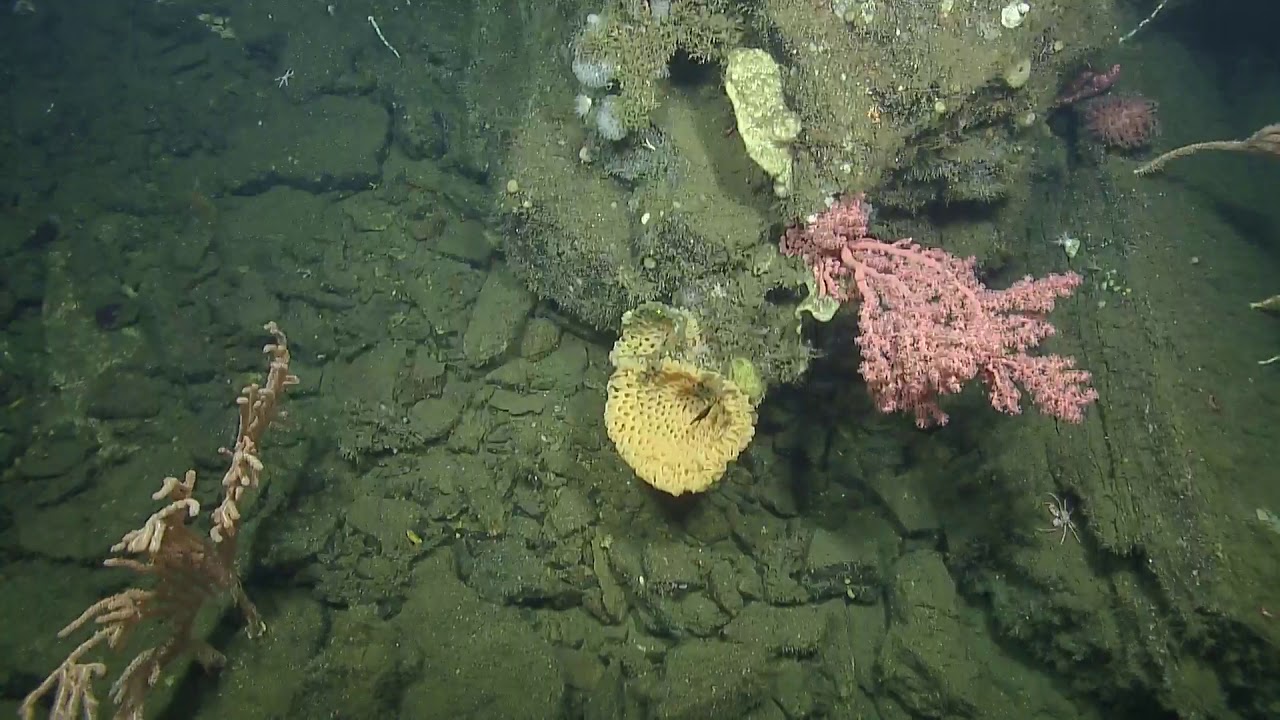
The Olympic Coast National Marine Sanctuary encompasses nearly 3,200 square miles of coastal and ocean habitats along Washington State's wild, remote coastline, containing deep submarine canyons extending over 1,500 meters that harbor unique biological communities including deep-sea corals, sponges, and fish species, many of which remain undocumented; these ecosystems are shaped by geological features like methane seeps and the Cascadia subduction zone, and are protected through collaborative management involving NOAA, tribal nations like the Quinault Indian Nation, and educational outreach programs that engage students in marine science and technology.
Deep-Sea Coral, Sponge & Methane Seep Exploration | Nautilus Live
Added:The distinction between chemosynthesis and photosynthesis as primary energy production mechanisms in marine ecosystems.
Basic ocean zonation, specifically the physical conditions of the aphotic zone, such as high pressure, low temperatures, and the absence of sunlight.
The fundamental biology of deep-sea corals and sponges, including how they differ from their shallow-water, symbiotic counterparts that rely on zooxanthellae.
An understanding of marine geology, specifically how underwater canyons and cold seeps are formed along continental margins.
The biochemical pathways of methanotrophy and how specialized microbes form the foundation of trophic webs around cold seeps.
The engineering principles and challenges behind deep-sea exploration technologies, such as Remotely Operated Vehicles (ROVs), autonomous underwater vehicles (AUVs), and telepresence systems.
The ecological impact of anthropogenic threats, such as bottom trawling, ocean acidification, and deep-sea mining, on slow-growing benthic communities.
Astrobiological implications: how studying Earth's extreme deep-sea ecosystems informs the search for life on ocean worlds like Europa and Enceladus.
9.8K views322likes50:40Original Release: 2020-09-22
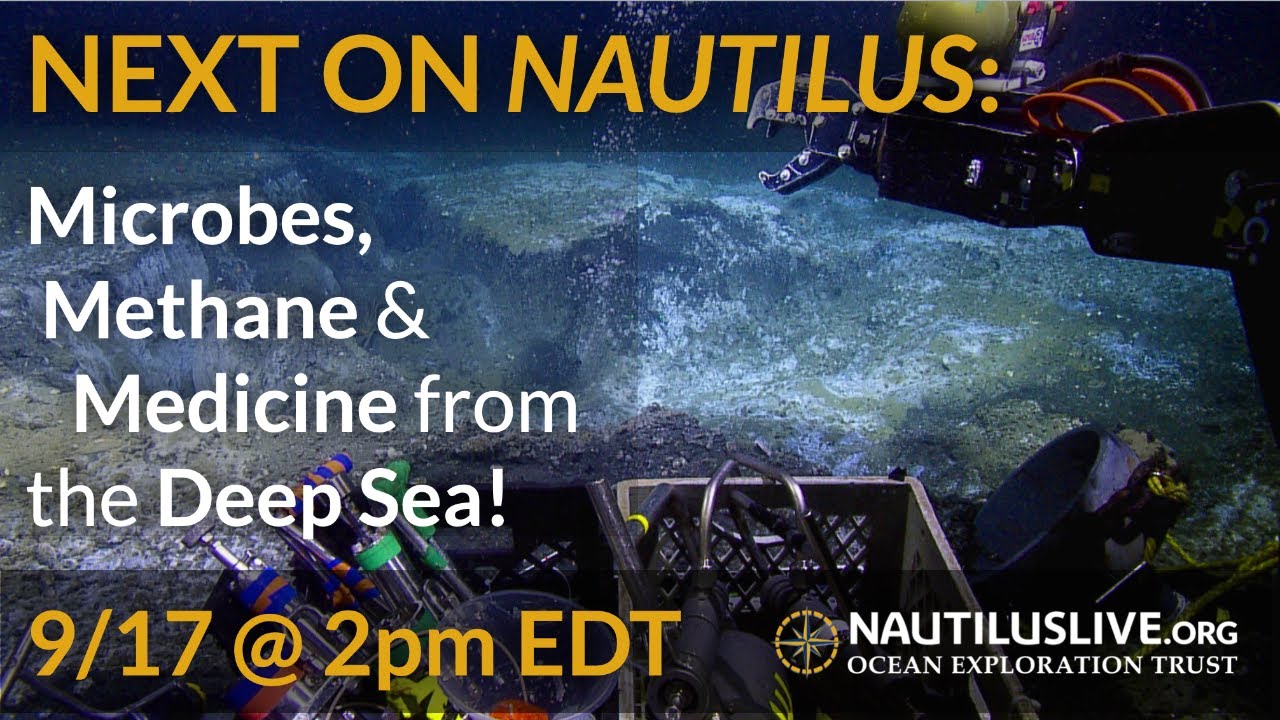
next on nautilus one of three live event series taking place during the 2020 expedition season where you can learn more about each expedition as we move through our four month season which is happening now through early december reminder that you can tune into the expedition anytime at nautiluslive.org we've been diving for the last several weeks and we are currently exploring queen alt canyon which we'll be learning more about during this session but first my name is madison dapsovich and i am a member of the core of exploration we are so glad to have you joining us via facebook and youtube throughout this event remember that you can ask questions of our explorers by adding comments and questions through the platform that you're watching from we'd love to know where in the world you're joining us from so please take a moment to share where you are and now we're gearing up for almost two weeks of exploration in two submarine canyons located off the coast of washington state one of which has never been dovern before and here we'll be utilizing the capabilities of rov herculis to explore and investigate and sample biological communities in and around the deep canyon features of this area this includes deep sea corals sponge and fish communities as well as biological communities associated with more than 2 000 methane seeps that have been discovered here in the last uh decade it's pretty fascinating and like many of you watching from home the nautilus live team is also adapting to life during covet 19 which means we will be introducing you to our very special guests from our crew while streaming from our own homes here with us to talk more about our upcoming cruise season our research coordinator with noaa's olympic coast national marine sanctuary jenny waddell onshore scientist and education and outreach specialist with the sanctuary nicole harris and joe schumacher who is a marine resources scientist with the quinault indian nation department of fisheries jenny thank you so much for joining us we'll just start right off the bat what are you doing and what is your work evolve here in the in the sanctuary thanks maddie we're really excited to be working with nautilus again here in the deep canyons we're going to be diving in quinault canyon and grey's canyon and surrounding areas we're working in olympic coast national marine sanctuary as well looking at methane seeps and a meteorite dive as a matter of fact and with that i'd love to introduce nicole harris who is a colleague of mine at the sanctuary thanks hey everyone i'm nicole harris and i'm the education and outreach specialist with noaa's olympic coast national marine sanctuary i get to work with jenny and i think i have one of the best jobs because i get to take this amazing marine science all the stuff that we already know and the stuff that we're still learning and share it with k-12 students and larger audiences and joe let's uh kick it over to you now hello all good morning good afternoon good evening wherever you are um i'm joe schumacher i'm the marine resources scientist with the quinault indian nation out here on the olympic peninsula and working for this tribe had the pleasure of working for them for 22 years now so become very familiar with this coast and yet there's still so much we need to learn out here and uh something is a platform as able as the nautilus coming out here investigating forest just helps us out so much so we're looking forward to uh the future of this mission and uh what's been done to date and for that i'll kick it back to our host awesome yeah we have so many amazing things that we're getting gearing up to explore and i can't wait to learn more about these endeavors with you guys we know that the sanctuary mostly encompasses continental shelf habitats those are primarily found in water depths that are less than about 200 meters but there are several deeper submarine canyons that extend to depths of over 1500 meters that's about a 5 000 feet um and then the deepest of that is queen elk canyon we're visiting other areas jenny as you mentioned grey's canyon in the south tell us about these steep hard bottom habitats and what makes life unique here well we're super excited to be exploring some of these places that very little is known about them haven't been visited before with this type of technology and all of the suite of environmental sensors that we're able to bring to talk about what may be structuring these deep sea environments lots of really fascinating creatures here corals and sponges some of which have yet to be described and may in fact be new to science so in in particular we're looking for concentrations of animals generally found on hard bottom habitats including con aggregations where we actually can collect imagery to make a photo mosaic so that we can monitor how these environments are doing over time at least in a few places that is so exciting and do we have a few target species that we're really looking towards finding and identifying um you know how do you how do you set sort of priorities to which species you're really looking for well fortunately we work with a very collaborative group of scientists along the west coast and we have all been working very closely together to develop a list of the species that we would like to sample so this includes coral and sponge seep sponges as well as invertebrates and we have very specific collection targets based on the previous work that we've done here as well as some species that we think we might find you see some images here taken from previous nautilus missions that give you a glimpse of some of the species that we are looking to find and potentially sample again some of these are new to science and are currently being described so it's really very exciting that every time we go down and look at these places we're finding things that we don't really know what it is yet so very it's amazing and exciting as a scientist it's it's rare that we get to do this sort of thing absolutely and it's so much fun for our viewers from home as well i mean i'm watching from home uh to help identify and find those species as well so please students and and help our scientists both on ship and onshore identify them and and be sure to send us your questions as it's happening we do have one uh viewer question and they want to know how often do you pick up these samples well we do try to keep the collecting within the sanctuary limited because we want to make sure and preserve those habitats when we're outside the sanctuary we're a little bit more free to collect but we also are very careful not to over collect not to collect too many of each thing and to not take the first or only specimen that we see we want to make sure that those especially rare organisms continue to flourish so we're very careful and we are very efficient in our collection so that many scientists can share the same samples absolutely and that is something that is really unique and exciting with nautilus as well as those samples become available to scientists around the world to explore and identify and do future research with so it's a great reminder that the science really extends beyond the ship one thing that i'm really interested in learning more about is something that we know very little and those are uh does aries that have been designated as essential fish habitats in queen alt canyon and what exactly is an essential fish habitat and what are we trying to learn from this that's a great question so essential fish habitat are areas of the sea floor that have been set aside by the pacific fishery management council fisheries management is largely run in federal waters by these regional fishery management councils and they have set up specific spatial management areas called essential fish habitat that are really important for thriving fish communities um i would love to bring joe into the conversation because the quinault indian nation is one of four coastal treaty tribes that have special reserve treaty rights to fishery and other marine resources in these areas so joe and his comrades at the coastal treaty tribe work very closely with pacific fisheries management council to to guide fisheries management in our region joe could you explain a little bit more about quinault indian nation role in fishery management and why this is of interest to your community yeah thanks jenny yeah this is a unique area within the world and certainly within the united states it's very unique um this is the only place within the united states with the exception of the great lakes where tribes have rights to the resources in the waters around them this area that means that the treaty tribes of the olympic peninsula four of these tribes from an old indian nation in the south to the hoh tribe to the quillia tribe to the maca tribe in the north all of these tribes have rights in the ocean and that's unique and when you know many indigenous peoples may you know have historic rights of some sort but these are codified with treaties with the united states government so that makes the tribes here co-managers of these resources in the areas it's extremely unique in that regard so we participate fully within all of the management regimes including the pacific fisheries management council that you referred to jenny part of that process involves the various um groupings of fish that the council manages including ground fish and under the magnuson stevens fisheries conservation act which you can abbreviate easier uh it's that you must identify areas of essential fish habitat that protect and can support these species groups so ground fish offense essential fish habitat became very important uh as ground fish species on the west coast began to suffer from decreases in population from whatever the cause may have been fishing in most cases so with that these designations came about and so this area here in the quinault canyon that we're looking at today uh for instance and some others you're going to be looking at biogenic 2 um those are in the areas for supporting these stocks of fish and not just to the to uh to the to non-tribal folks out there but to the tribes on the coast as well absolutely and when we're looking at the central fish habitat areas i'm wondering what sort of things are not is nautilus looking for specifically is it just to get a better idea of maybe what this habitat looks like is it to maybe take stock of different species that call this area home you know what what exactly are you looking for so i'm not sure if you're asking that question to me yeah take it away okay well for for us you know it's it's very intriguing because a lot of these essential fish habitats were done kind of in a vacuum in other words they were done with limited information and they looked at the bathymetry of the area to try to determine if there was good hard hard substrate that biogenic habitat could grow on that would be corals sponges things of that nature and potentially boulders as well and other other geologic formations that these fish as you're seeing on your screen right now like to congregate around and act as habitat for them so yeah you know you can do this from the surface only so far it's better to get down there on the bottom and really try to identify what these areas actually are comprised of absolutely and you know but as we mentioned earlier queen alton and gray's canyon are two areas that we're looking at we have a viewer question who wants to know a little bit more maybe about the geological aspect of this area is it located on the north american plate and you know how far away or near is it to the trenches anyone yeah this is a really geologically complex area there are many plates that come together as part of the cascadia subduction zone there's going to be a cruise next summer to explore that a lot more but i do believe that we are on the north american plate um it's it's really hard to say right here there are many different fractures and fault lines and where we're diving now is just it's off the shelf and west of where i think the plate boundary is but the cascadia subduction zone is a bit further offshore it's what is so the the pacific plate and the juan de fuca plate are subducting under the north american plate it's more complicated than that but generally that's what's happening and that's why all of cascadia is a little bit on pins and needles because that subduction zone is what generates some big earthquakes that have the potential to cause tsunamis so um you know here's some deep sea habitat video showing some uh looks like probably methane coming up bubbling up from the seafloor it's very tectonically active zone which also helps to structure some of the biology in fact this dive that we're doing right now is taking an interesting line around this escarpment that makes a hard dog leg and we're not quite sure why but we think it's related to the movement of the plates that is so fascinating and we did have a great conversation last week with thurber lab and kerry mcphail about methane seeds and the microbes that live there um so i encourage anyone who is curious about learning a little bit more in depth about those features head on over to nautiluslive.org education speaking of education nicole and joe you guys do a lot of work sort of reaching out to the community and and accessing you know different stories and perspectives and making sure that all those voices are heard i'm really curious to know a little bit more nicole about your role um as an education outreach specialist and what it is that you do thanks madison so um yeah i you know you you've heard it from joe and jenny and we've seen it there's so much we don't know about the largest habitat on our planet and as we've been able to enjoy technology and the way technology is moving it gives us an opportunity to really understand and so that's where it becomes this critical opportunity to engage students we want to build a workforce of this next generation that's comfortable in marine technology and comfortable in the processes of our environments and this is what i love about especially the mate program the marine advanced technology and education this is um really engaging students in stem so science technology engineering and math and art because they get to create these amazing vehicles which are really mini rovs and they're conducting real world scenarios as a product demonstration inside a pool and these students have to learn how to have teamwork how to build on each other's skills how to give and take they also have to learn how to communicate their science and what they're doing to judges and they also get the opportunity to interact with professionals that are in this world right now so they create these posters like you can see here where they really tell the story of their team and how the decisions they made to build this vehicle and how it's going to help solve these problems phenomena that they've been tasked with to um solve and then they get to work with these professionals who kind of interview them and can also give them some tips and really break down those walls of feeling um you know it's inspiring instead of making them shrink away from these people they get to interact with them on one to one and really feel confident in this environmental world right and it is so crazy to me that you know it is the largest habitat on our planet and we are still learning so much about it and what an amazing opportunity to invite the youth to kind of participate in this and wow i mean it's inspiring joe how does this expedition and maybe other efforts inspire queen all indian nation youth and to explore and protect the ocean resources especially because it is something that's so close to home um there we go still i was muted a little bit um ol and her crew have been wonderful you noted uh in those photos of the of the rovs these are put together with pvc pipe and three motors and with props on them and then a nice little um box and so they're able to bring all of the control box they're able to bring all of this and bring this to the students and show them this type of technology and get their brains thinking that in that direction with these very simple and what we're really lacking out here on the coast in so many ways are these type of educational opportunities to really get students excited about the ocean the environment in general because um we're at a very rural area and it's difficult to get good um good teachers to stay out here it really is we're we're not anywhere near seattle folks we're here on the outer coast of the washington state and it's um it's really something that's needed badly and so we really thank the sanctuary system uh and of course the olympic coast national marine sanctuary staff for coming down here and doing this type of outreach for our students as you can see on the photo there we get them out in the tide pools as well and these types of things get their get everybody's brains thinking more about the environment around them and what they can potentially do to interact better with it understand it better and of course maybe do better preserve it for future generations which is the most important thing for tribes absolutely and joe we chatted a little bit yesterday about um your favorite fried food we have what does razor clam digging um you know how you spoke a lot about how that's a really unique thing and it's very culturally significant and we just saw the tide pooling photo can you tell us a little bit more about that yeah i'm happy to uh so the um the razor clams are important to the all of the tribes on the outer coast out here but in particular the quinault indian nation um as i noted earlier the quinault reservation is on the southern end of this of the four tribes uh that i described and that that happens to be a geologic break point where these wide sandy beaches exist and that's where the razor clam hangs out and what you're seeing here in this video are tribal members from the quinault nation commercially harvesting razor clams out there in the sand and you dig these with a long um a long bladed shovel that goes into the sand behind the clam and your hand goes in behind it and it brings the clam out if you're a good digger yes then put those into a bag and uh if you uh if you get a lot of them you can actually make a pretty darn good supplemental income uh commercially harvesting these clamps it's not only and there's a nice size one by the way i'm holding that for that's a really nice razor clamp we're not only are these important for the tribal community out here but also for the non-tribal uh washington state sport community it's huge uh economic it's a huge economic boon to the outer coast when the washington department of fish and wildlife opens up razor clam digs and i don't know if you got a minute you want to see what a clam looks like i would love to i'm sure well i just happen to have my national marine sanctuary uh program lunch bag so let's see what we got in here oh there we go so these are some clams that i dug recently out on the the beach right across the street from my little place here and uh when you clean them out you saw them in the shell in the video but when you clean them out you end up with something like this this is not a fried clam that's a clam body and these are what people come from hundreds of miles away to go and harvest out here so this has been cleaned out the gills and the and the gut tissue in the middle are removed and there's a little digger foot that goes at the bottom uh that the clam digs with so these are active digging clams which is also really neat most people that dig clams in the world scrape them out of the gravel somewhere or in the mud and they just stay there no no these clams can use this little foot that i've laid open here like this and it goes down in the sand and digs and chases down into the sand they can dig about a meter deep in seconds and so they actually have a fair chance of getting away from you it's really a fun little harvest if you will and when you fry them up you end up with these right here let's see oh yeah here we go this that's a fried razor clam a little breading coming off of it here right now but that that's i was taught how to fry these properly by the members of the quinault nation and they uh they told me exactly how to bread them and fry them up the right way and that's when and uh they're awful good and tasty i don't know about you all but it's right around lunchtime here for me and my mouth just watered looking at that looking glam i got admits yeah thank you so much for sharing and what a cool story and connection with the land it's really really inspiring to see and it looks like we also have a lot of folks from the noaa sanctuary joining in and and tuning in with us and i just wanted to give them a shout out and say hello and please do send us your questions um you know it's really what drives this conversation here including all of you so thank you for watching i do have a question to each of you and this is a kind of a funky one but i know that we've been in the sanctuary before and i'm curious what are your favorite critters that we've seen there nicole maybe i'll start with you can you not to put you on the spot but what is sort of one of the most memorable or or interesting animals that you've seen while diving in the area well i have been fortunate enough to be on two watches since we launched the rov at midnight and i have to say i saw some of the most beautiful paragorgia bubble gum coral it was um to quote our watch lead the floofiest bubble gum coral you could possibly see every polyp was out and loud and proud it was really stunning and then just being able to see all of the habitat that those corals build um and because i'm a big fan of nudibranchs and i the intertidal's one of my most favorite places and i can find those guys there um but we were able to see some tritonia nudibranchs last night too which um was an extra treat for me absolutely jenny have you seen anything cool or exciting so far yeah i was just having a hard time choosing um favorites but i'm really super uh excited about the sponges right now um we are finding sponges that look different that are really pretty pretty exciting and and every time i get on the chat or hear what meredith's talking about or what abby's talking about you know some of these glass sponges are just so unique and they look like dr seuss creatures so please uh stay tuned for some of those we're going to be trying to visit a glass sponge aggregation in gray's canyon a little bit later and this is a photo from a nautilus expedition to that area um na072 so um really excited to see some more of those cool sponges joe what about you well i'm a fish biologist by trade so i got to stick to fish and we've seen a couple of a really important species in the work that's been done so far in this mission the pacific halibut out here on this coast and sable fish and both of those species are extremely important to the tribes out here as an economic boon for them and as a cultural and subsistence resource for them as well so um we we really like to see those out there we were very um interested in what habitats they frequent and what habitats are most important for those species yeah and did you see those dungeness crab waiting on the meteorite dive they kept hanging out around there we were disturbing enough sediment that all the dungeness crabs were clustering around it was pretty fun to see i did i did i thought they were just i thought they were you know interested in nasa stuff but no i'm sure you just mentioned like three of my favorite foods in one sentence i grew up in alaska so i'm like dungeness crab halibut i'm in for it we're all hungry you can tell and that is a great segue we also recently wrapped up an eight-hour dive at the meteorite debris field which is located in the sanctuary um for a little bit of background for those of you who are maybe just joining this conversation natalia's first recovered meteorite fragments in 2018 after ebolide which is a very bright meteorite uh was spotted off the pacific northwest coast and and it seems that we may have potentially found some exciting new features before or endeavors about this jenny do you want to dive into that a little bit more sure this was a little bit off the charts a couple of years ago i was contacted by nasa's cosmic dust curator because he had been monitoring noaa's nexrad rev weather radar data and had identified a really unusual event of a meteorite splashing down into olympic coast national marine sanctuary it's about 14 miles west of the village of tahola which is on the quinault indian nation and we teamed up and talked with nautilus about this very unusual event and managed to get a day of dive time back in july of 2018 to make our first attempt on that meteorite we had a huge debris field from this massive bolide and were able to spend some time trying to figure out how we were going to recover meteorite fragments from the seafloor because it hadn't been done before so this trip we were able to make one final pass at that meteorite site and use some new types of tools to try and recover the fragments what you see now are some rare earth magnets that we mounted to a wand turns out the sea floor here is has a lot of metallic hematite and so the magnets tended to get clogged up pretty quickly so we have devised a few additional tools and had hands off to the rov pilots and engineering team that they have been able to come up with an exhaust system that flows through with a magnet system to try and capture some meteorite fragments we also have a switchable magnet that you can turn on and off to actuate which i didn't even really know that was a thing but it's just been so fascinating and so much fun to work with nasa on this this effort that is well off of the normal things that we do here in sanctuaries right it's such a unique opportunity and we are so excited to dive into that a little bit more later this week on thursday at 11 a.m pacific time you all can join us with the explore at home meteorite event which we'll be discussing these processes in much greater detail and i i just can't wait what an awesome opportunity joe do you have something to say about that yeah yeah just real quick you know that meteorite was really something it's technically a bowl light if you want to look that up in your dictionary but um basically when this thing came across uh the skies out here um it it it got people's attention bright light in the sky and a big booming explosion um i didn't see the flash because i turned my back to the north i was barbecuing on my porch out here but my whole house shook like somebody was driving 30 trucks right beside my house there the windows began to shake and i i didn't have any idea what it was at the time until the next day and a lot of folks do some security cameras on their homes photographed the flash as well out here or videoed it wow what a cool experience to see we have another viewer question that i would love to turn to um you know you all have touched on these education resources and opportunities that are so special for students that are interested emma wants to know what recommendations you might have for a high school student who wants to study or pursue a career in marine biology well maybe i'll start and just say that first i think it's great to know what you're interested in that's a huge step right there and um so i would say you know study the sciences unfortunately math is very important so you don't want to skip the math while you're doing this and then outside of studying i would recommend taking opportunities volunteering where you can i'm just going out and exploring and asking questions um that just to get familiar with those environments that you are interested in um and noah and nautilus i think are great examples of opportunities for students to kind of get their hands into this real world science and a mix with these professionals to create this professional learning community absolutely and nicole you also mentioned earlier the mate program we had a question uh from a viewer as well how long does it take students to complete it so the make program it's it's this really great program it kind of scaffolds on itself so students can join early in late elementary or early junior high as scout every year we complete a cycle so students will build a vehicle and compete at the competition and then their scout and navigator they start by driving their vehicle from the pool edge and then at navigator they turn their back to the pool and start driving using a camera to kind of emulate what a little bit more that real world and then you can get up into upper high school and even college where you go into ranger and explorer um categories where you're potentially moving on to international competitions every year so you can spend years in the mate program as you scaffold up through all of the potential opportunities sounds like an awesome program and just as a reminder for all of you joining us at home you can also explore our suite of education resources from your computer just head to nautiluslive.org education joe how what are some of the programs and initiatives that you're involved in and how are you getting people excited about the deep sea and and the science that it involves so uh my uh my computer just froze at the beginning of that question can you read it yeah absolutely what are some of the big projects that you're working on to get people excited um about exploring the deep ocean specifically you know students we work well students in particular we've collaborated with the with the local school into hola that jenny referred to earlier um that's just north of me here it's uh where the seat of government is for the quinault indian nation and where the school is located it's a k-12 school so we have all the grade levels right there and we've gotten students from sixth grade on up involved with uh studying hypoxia in particular out here and helping me with doing some research on this coast uh plan doing some uh center readings for us um in the surf zones and in the river mouths right there at tohola and uh trying to get them to understand more about this issue of low oxygen that seems to occur right now seasonally just about every summer we're now getting these low oxygen events here that are that really we haven't seen prior to 20 2006 um that anybody can remember because these are manifesting in dead fish washing up on the beaches that's how bad these events occur so we've gotten the students involved in it we want them to understand more about the what causes this to occur we believe it's something that's occurred in the past as well but it's just new to quinoa in this regard and hitting right on these shores so we want them to get involved with that we also launch a sea glider from our fishing vessel and we've had these sea gliders out running off of our coast out here again to map the water column better and let us understand more about what's going on with that and we ask our students to take a look at that data and help us interpret it absolutely and and we have a question from josh as well who wants to know how vulnerable is this location to climate change and you know you're saying that some of these processes are relatively new or never been seen before um you know what can can people do to maybe keep the ecosystem safe so um so cut your carbon i mean honestly you know we're dealing with the big ocean here folks it's the world um you know the the world as a whole has to cut back on its carbon and um uh the the amount of carbon in the atmosphere is just growing exponentially and so is the heat and with that um the ocean's warming up and that warming ocean is causing ramifications throughout not just here on our coast but everywhere so in reality that's it we're kind of at the mercy of the world in this regard and that's a really fearful thing for the tribes out here on the coast it not only affects the temperature of the water but it also leads to a carbon getting into the water caught into the water chemistry which can lead to low ph and those ocean acidification issues absolutely and just to kind of touch on the animals that call this system home we've been here before we've seen it there's we have great footage jenny can you tell us a little bit about one of my all-time favorite is the cockatoo squid video that we we caught can you tell us about this animal and and maybe what makes it unique oh yeah i i remember back in 2017 when this cockatoo squid just came and posed for us in front of the camera in front of the vehicle for maybe a minute and a half it's just this really interesting animal that is mostly clear it has a cigar shaped digestive organ in the middle that some of them actually have a light on the bottom of it so that when a predator is looking at it from below it can't see anything to eat it but i i think you can see it here it's got this wonderful headdress of tentacles that it can move around it's why i think it's called the cockatoo squid um but you can also see the little dots on its uh body it can change its shape and flash its chromatophores and it was just such a special opportunity to see this interesting squid species that's awesome we also have a couple of other amazing videos that we've captured over the years what about the siphonophores can you tell us a little bit about that yeah these this is a really neat animal that we found um it actually is a colony and each of the individuals it combines to create uh this feather boa looking organism it looks like a purple feather boa and each of the individuals will differentiate itself to have the specific function that it needs to have but we we came across this on a dive and spent quite a bit of time oohing and eyeing because it was just so beautiful and so unusual it's absolutely beautiful and it's always surprising just to see what what kind of organisms call the deep ocean home and and you know it can be a relatively seemingly inhospitable part of the world but here we see just constant life and it's it's always a surprise and joe we also have some really cool footage uh maybe this is a question for you a viperfish can you tell us a little bit about what in the world that is well i think actually i think uh others have seen it i can tell you but i didn't see the footage so i i can only tell you what i know to be a deep sea fish an elongate body with a mouth full of teeth that go like that you can correct me if i'm wrong i'm not a fisheries biologist so i will not correct you but it looks like we do have some footage of a viperfish here so is that sort of what you're talking about that that longer teeth area yeah just uh they usually have a mouth full of just really needle-like teeth that kind of mesh together um there and they're meant for they look environment so when they grab a hold of something they got to hold on to it oh wow yeah and it's always fascinating to me too just to sort of talk about the different adaptations that animals in the deep ocean have i mean what are some of the most common features that we see like bigger eyes obviously cockatoo squid is translucent so what sort of what makes an organism successful in an area like the olympic coast national marine sanctuary well it really does depend on the habitat that you're in you know these deep sea ecosystems are so distinct from the ecosystems we see on the shelf and near shore you know it really the diversity and the assemblage and the the composition of the ecosystem can be really really different this is a beautiful image that we're seeing uh it looks like there's a lot of microbial matte there absolutely and what exactly is a microbial mat it's it's a bunch of different bacteria and one location is sort of my understanding yes um and you know i'm excited for you to all talk with andrew and and dr carrie mcphail and dr andrew thurber who are our co-collaborators on this mission because they study microbial mats and they can tell you all about it whereas i could really just skim the surface if i was trying to talk about it absolutely we had a fascinating conversation with the thurber lab and carrie mcphail last week and if you're curious to learn more about microbial maps head on over to nautiluslive.org and you can view that whole conversation it was absolutely fascinating i just got a ping from our team it sounds like there's a rock fish on the livestream at the moment i don't know if we want to tune it over there and and kind of explore the dive in real time because i don't know about you all but i desperately miss spl the science party line yeah we're pretty deep for for most rock fish the the long spine and short spine thorny head tend to be in deep habitats like this but generally we don't see rockfish at depths of less than about 600 meters so i'm eager to know i'm a little bit distracted looking at the live stream to see what i'm seeing down here yeah it would seem a bit a bit deep for that as well you know i just wanted to remark on you're asking about the adaptations that deep sea animals have out here one of the real interesting things for me is their sensory apparatus their ability to sniff out food from long distances and this is common for all of them because you know food down here can be um can be scarce sometimes and hard to come upon or bonanzas can suddenly pop up like a whale dying and falling to the bottom those kind of things and animals will come from far and wide you know lured in by those organic scents and it could be numerous all kinds of species have these different adaptations to find this that these food sources in the dark i think it's really fascinating the other thing i was going to mention is a lot of this flocculant mud that you see in our live streams and a lot that you're going to be seeing a lot of if you watch this uh is is a factor of the productivity of our coast out here and jenny can really expect yeah and jenny you were talking a little bit about that too just how you know we can be seeing so much mud and just sedimentation and then nowhere there will be you know maybe a coral garden or a field of sponges and you know can you talk a little bit just about how those abrupt changes occur i mean why why are we looking at mud here and then maybe you know at some point in time we'll just see this dramatic feature of coral or sponges yeah that's been one of the really interesting things about exploring these lesser-studied habitats we're kind of trying to figure out what's structuring the ecosystem because you're right it's very patchy and you can go along for quite some time without many features to explore and visit and then you'll come across a boulder or even just a ledge that's big enough to that organisms can attach to and then once you start to have organisms growing it tends to be a positive feedback loop that you'll get okay so you have a coral growing and then you'll see that there's a sponge or an anemone growing near its base and then there are um lots of things starting to hang off it whether it is a cat shark or skate packages or sorry egg cases or whether it's brittle stars or other sea stars it's just so amazingly diverse and then you'll get 20 meters away and it'll be back to sand and mud so um really we're thinking the things that may be helping to structure the environment are obviously depth but also the aspect or orientation of the cliff and then the current flow because many of these organisms are filter feeders and so having a steady supply of food delivered through currents is really important to their long-term well-being absolutely and with such a dramatically different seascape from place to place how is it that nautilus determines where to dive do we you know how do we go about our scientists figuring out what might be an area of interest and then what is sort of the process behind starting that whole dive well this comes back to the importance of having good maps and good information we're really fortunate because nautilus has the capacity to gather information about the depth the bathymetry the side scan information that gives us an idea of roughness or what is on the sea floor and then they also have the ability to look a little bit into the sediment using a sub-bottom profiler the seafloor mapping information is incredibly important to us and we use that actively to help plan our dives um it's it's really hard to know where to go sometimes and and often you're looking for those places that have high slope because those tend to be the places where you find ledges and hard bottom that's not covered by lots of mud the mucklicious mud that we have here it's great alliteration and then we have uh you know we're kind of coming up on the end of our 45 minutes it always astounds me how quickly these go by because i still have dozens of questions left to ask you for all of you it's it's absolutely fascinating to learn about your research and this upcoming cruise and what we can expect we have one question from a viewer we talked about um you know how high school or or younger kids can get involved with the science but for somebody who might be coming out of college how what is the best way for them to get into uh the science field persistence determination and stick with it-ness those are definitely things that you need to have to make it in this sort of career there are many many opportunities i encourage you to look at noaa's website in addition to the educational and internship opportunities offered by oet there are a lot of ways you can get involved even people who have art who are artists there are often artists who are invited to join expeditions and help to interpret and create products for public distribution noaa has just an entire web page full of maybe two dozen different opportunities that include everything from hauling scholarships for undergraduates to graduate level programs there are pathways career programs as well um so there are many many opportunities also don't be shy if you um are interested in a particular sanctuary or particular area please reach out to us we're very busy people but i am very tuned in to students and always try and get back and answer those questions and set up phone calls so that people can have opportunities you know a lot of people helped me in my career and i'm always looking to help people in you know as they're coming up through the ranks as well i know that joe and nicole are both also very tuned into students and creating opportunities for youth and for recent graduates as well there aren't that many jobs out there but you know stick with it and you'll find yourself an opportunity joe well i just wanted to put in my plug for working for tribes um the feds the state agencies all of those good folks out there but tribes have have active departments of natural resources and work in the marine sciences in this area and other tribes do as well so don't forget tribes and your other agencies places you can really make a difference yeah absolutely there's so many opportunities and like you all said you're very busy and we so appreciate you taking the time today to share a little bit more about your mission and and your expedition goals um i know we're all anxiously awaiting to get back to the live stream so everybody at home just remember that if you like today's event you can tell all your friends to join in with you next time and check out upcoming events on the education page at nautiluslive.org of course we have the live stream going right now so that's where i'm headed after this i don't know about you all and as we mentioned we also have the explore at home event home event on thursday september 24th that's at 11 a.m pacific time 2 p.m eastern where we're gonna talk a little bit more about the meteorite that we dove on earlier this week jenny thank you for introducing us to that as well and for everyone at home thank you so much for joining us it was a pleasure to answer your questions and to see viewers from all around the world and we'll see you next time bye everybody you
Up Next
11:16
3D Printing Large-Scale Molds for Silicone Casting
@tested
164.1K views•2017-07-13

12:54
Triumph of Orthodoxy Icon: Byzantine Art & History Explained
@BenCallan
2.1K views•2024-08-06

9:49
FastAPI vs Flask vs Django: Choosing the Right Python Web Framework
@TechWithTim
302.5K views•2024-05-26

1:42
Game of Thrones Opening Credits: A Cinematic Analysis
@gameofthrones
46.3M views•2011-04-18
Related Study Plans & Knowledge Roadmaps
Structured learning paths in General & Interdisciplinary Studies
general-studies
Elevator Engineering: History, Physics & Cities
01From Hoists to Safety Brakes: The Dawn of Vertical Lift
02Hydraulic vs. Traction: The Engineering Physics of Elevators
03Modern Speed, Safety, and Algorithms
+ 2 more learning modules
12h5 modules
Explore Roadmap
general-studies
Rubber: Material Science, History & Geopolitics
01Origins of Natural Rubber & Mesoamerican History
02The Chemistry of Natural Rubber & Vulcanization
03The Geopolitics of the Rubber Boom & Colonization
+ 2 more learning modules
12h5 modules
Explore Roadmap
general-studies
Containerization: Evolution, Logistics & Trade
01Ancient Trade & Bulk Cargo: Amphorae to Barrels
02The Industrial Revolution & Cardboard Packaging
03The Containerization Revolution: Malcom McLean
+ 2 more learning modules
12h5 modules
Explore Roadmap
general-studies
Textile Tech: Evolution, Labor & Global Impact
01Pre-Industrial Textiles: Handloom & Cottage Industry
02Mechanization: The Spinning Jenny to the Power Loom
03The Factory System & Global Labor Transformation
+ 2 more learning modules
10h5 modules
Explore Roadmap