















Large-format 3D printers can create molds for casting silicone masks and other objects, eliminating the need for traditional fiberglass mold-making by directly printing the negative mold from a digital 3D model, with considerations for print orientation, layer height, and material release agents to achieve hyperrealistic results.
3D Printing Large-Scale Molds for Silicone Casting
Added:Basic principles of Fused Deposition Modeling (FDM) 3D printing, including slicing parameters, infill density, and shell thickness.
Fundamentals of mold-making concepts, such as parting lines, draft angles, and the relationship between positive models and negative molds.
An understanding of material properties, specifically the differences between common 3D printing filaments (like PLA or PETG) and casting silicones.
The concept of cure inhibition, particularly how certain 3D printing resins or filaments can negatively react with and prevent silicone from curing.
Advanced multi-part mold design, including the implementation of alignment keys, escape vents, and pour spouts for large-scale pours.
Print optimization strategies for large-format 3D printers, such as utilizing larger nozzle sizes (1.0mm+), volumetric flow limits, and mechanical warp prevention.
Techniques for designing and constructing rigid support shells (mother molds or jackets) to prevent large silicone molds from deforming under pressure.
Post-processing workflows for massive prints, including joint welding, chemical smoothing, and industrial priming to eliminate 3D printed layer lines before casting.
164.1K views2.8Klikes11:16Original Release: 2017-07-13
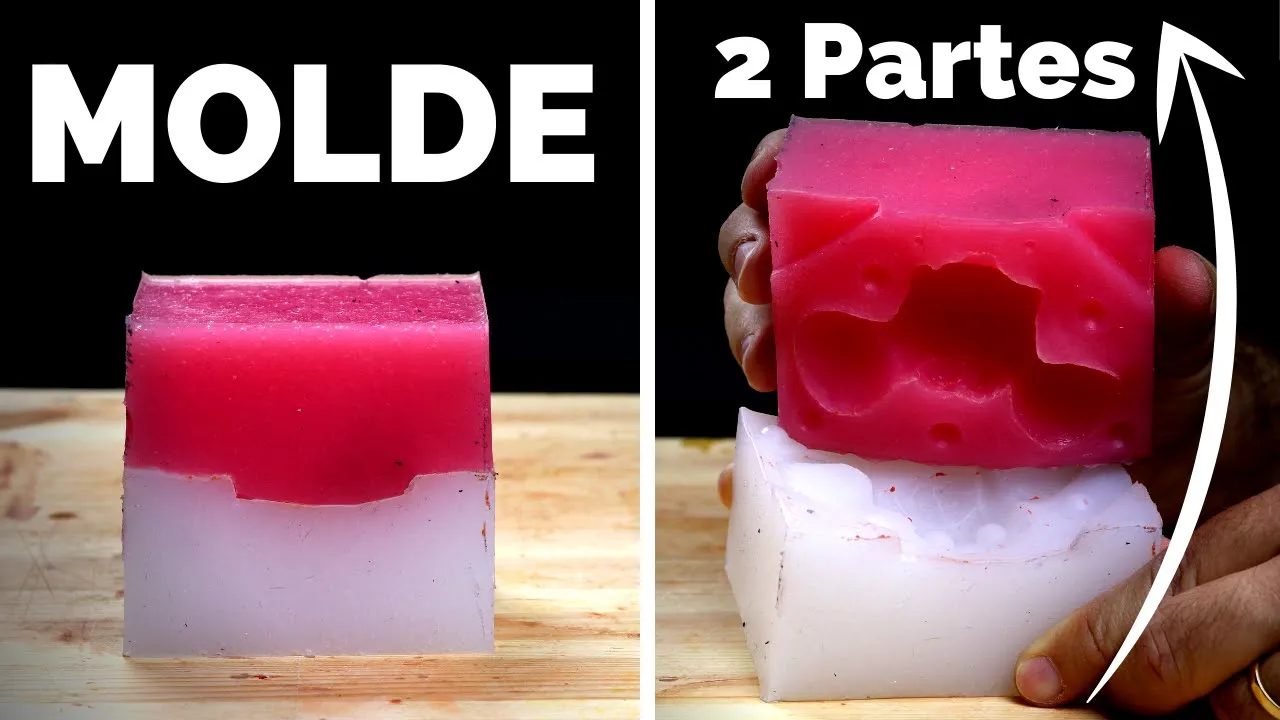
hey everybody it's Norm from tested and Frank from tested Frank we are in this is not your shop this is Shop number two this is our second shop you got expansion yes we have we have another expansion pack on the shop and this is the clean shop there's no dust there's no dirt there's no painting this is 3D printers this is computers this is some foam fabrication but this is all the clean stuff very cool and today we're going to talk about 3D printers because this machine here uh we first tease you had it back at the RPF party yes it's a from 3dp 3D platform and as you guys can see it's a massive 3d printer yes meter by meter by half meter build volume that's an incredible build volume yes holy smokes yeah everyone ask always talks about when they get their first 3 printer like building when they went on build costumes or props they got to slice up their models you don't have to do that anymore with something like this well you still have to know how to slice it up and how to orient it this is not a whole lot different than any other 3D printer that's out there has the same uh nuances that any other 3D printer is going to have it's just larger right right so you always have to still have to worry about bed leveling um you have to worry about your power your temp your ambient temperature um it's all the same things um but you can also scale up your ideas yes right so for example you're showing me something like this this is a single piece yes that you printed and I would never be able to print some something like this at home on a home 3D printer well you'd have to print it in smaller sections and then put it together um this was just like kind of a quick prototype run for something we were building for um our buddies at mechanics Weare so how happy are you printing something this big and and how big of a time commitment is it well surprisingly when we did print the full size one it was only about 3 days only 3 days I guess people run printers overnight and we're talking about scaling it up yeah so this Gantry system has to move pretty quickly though it it can move it can move really fast like you could change the layer height and all kinds of the settings to make this thing like really spit out filament um or you could slow it down and get some nicer uh resolution it's it's like again it's like every other printer you just got to tweak with it you got to tell it what you want it to do you want it to move real fast resolution is going to drop you want it to be real nice resolution it's going to move a little slower and this is a pla yes um I've almost only been playing with pla just cuz it's kind of easy right um so something like this is printting out do you then do a finish pass on this uh or do you print out your finish like your finished products well when we did the final one of this we ended up just coating it with uh XTC uh the the smooth it's like an epoxy um and then painting it and then it was done like we really didn't have to do anything else beyond that um so that that was really nice um it didn't need to be a super high fidelity High detailed like little model nothing was like super polished and you know fine uh smooth surfaces and stuff like that so it was easy and something like this is an example of a really big volume really pretty high Z height yes model um but you because your your bed is also a meter by a meter you can also print things that are just big surface area don't necessarily have to be big volume for example what's that you have on on the bed right there these are um the pieces from the Lich King sword that we did for blizzard yeah uh the other couple months ago um so this is this is the the sword we printed the blade all in one and then they just get put together god um this one has a Cod of XTC on it and then this one has a cat of XTC and then primer so you could see it's not it's not a ton a ton of cleanup that's needed even on this but it's like again there's no way that you would be able to print this on a home printer you'd have to print in a bunch of sections and this is so nice that it's all one piece did you have any warping problems with this uh no we there there was a little bit of a learning curve in keeping the ambient temperature um you know kind of Walling It Off from any breezes and uh adjusting the uh bed temperature and stuff like that but as long as you get the bed level across that whole surface there wasn't really any warping at all and that big piece I showed earlier that's got to be more than your typical one kilogram like I use one kilg spools at home yeah so what what are you printing with well luckily places like matter hackers have these bigger like 10lb spools um so the reason that one didn't finish all the way up at the top is cuz we didn't start with a brand new spool ah um spool management is comes a big thing if you're printing for like 3 to 5 days but you can start and stop and and you can yeah we have another mold over there that we we were getting to a point and we were like wait the spool is almost done so we we changed the spool and finished out with another color and so you could see that that is so cool now we bared the lead bit lead a little bit because we're actually talking not just about printing big things but new things that you've been Printing and like this is a mold that you would typically make this a fiberglass mold you sculpt something sculpture do a fiberglass mold then you can do castings out of that right we've talked about that and it's a tried and true process but with new technologies you can also think of things differently like when I think of you printing out a big form and then You' then put that in a silicone mold again build up fire blast or you've now also been printing M printing the molds yes back at monster paloa I was talking to Landon miror who does hyper flesh all those like cool uh like kind of hyper realistic masks of like celebrities and stuff like that that and I found out that he uh 3D sculpts his masks and then prints the molds right so you use zbrush yeah you're going to you have your your positive but because it's a digital file you you can do a couple settings invert that and you get everything but that that is it's like a Boolean operation okay and then you get something like well for example this is a a two-part mold yes and it has a piece on the inside that ends up being well a familiar thing for test viewers it's a shoe from maybe a spacit the Martian spacit yeah and you have your registration built in yes very cool like that's that saves you a lot how good of a mold is this compared to like a silicone mold we haven't cast Parts out of this yet um I have cast Parts out of three 3D printed molds before and they work fine like for this I'm going to end up hitting it with some catalyzed primer before I use it and then I'm going to probably um wax it like Wax the hell out of it so it's going to relase smooth it oh okay um and then and then that should be fine we're going to rotocast some rubber in it for the soles of the shoes got it because right right if you're making a silicone mold you can kind of put any kind of material you want it won't stick to the silicone but because this is just pla plastic you can put silicone in this that'll be fine but if you do want Ure things then you need to coat it and yeah you have to you have to put a release on there so we're going to seal it up really nice we're going to put a good release on there and then hopefully these things will work I mean like I said we haven't tried them yet now like the same lessons apply when using this uh and printing this at this size as you would printing small size so how happy you with like the fine details here well when you whenever you're dealing with the Z height you're going to end up getting this like topography um that the resolution just isn't as good in the Z as it is in the X and the Y right so this was printed flat on the bed like this and the detailed Parts down on the bottom of the shoe which are kind of the fun details yeah aren't as good as I wanted them to be so we've been goofing around with orienting the molds in different positions um we thought about doing it this way but then the whole heel and the toe are going to be problems and then we have to have support all the way through it so we ended up oh printing another one grab this and this these parts we printed at an angle right um so that way we kind of had the best of both worlds and the the problem is areas are just in the the bottom of the toes and like uh just a couple little spots in here so place where you care about the details specifically this logo in the center that's going to be clean I mean you're still going to be doing cleanup on whatever you cast out of it but again you're you're being more efficient about how you take advantage of a 3D model or and and not having to create the positive then the negative you're getting just the negative yeah well it's you know learning how to set things up to optimize it for what you want it to be very very cool well I want to take a look at this big face mold cuz this idea of printing the molds you said was inspired by Landon near monster pla Mass and this is a massive 3D printed mol two colors because because we were getting low on the gray we stopped it restarted it with the red cuz that's we didn't have another gray spool at the time and that was just right on on there it wasn't print two separate printed pieces and glued together yeah just went right in from one to the other are you guys ready for this look at that that's a face right there you can immediately recognize that as a face you're negative and did this require any clean up on the inside here no we haven't done any cleanup on this um Eddie that works for me Eddie helco um he Z brushed this and then we printed this as kind of an experiment but then Eddie also cast a silicone piece out of this mold all right and that is this guy whoa yeah so this what Eddie did is he cast all these layers of all these different colors on here are different layers of silicone so you could you know put in the fleshy bits and then some Reds and then some Browns and blues and then once you have this then you do a light wash of paint and it'll tie everything together so kind of intrinsically painting things so that's kind of what we're experimenting with is intrinsically painting things I mean I I get it that if you look really up close to this you can see in the silicone some of the the print lines this the same thing with Landon's right yeah but you know if you're wearing this and you're walking down the street that looks perfect yeah and because it's just a 3D model uh you can do whatever variations um and this is just silicone you're saving a lot of material it's material one way or the other yeah I mean it's mat Mar's time but it's I mean this is all being done um for experimentation right now we're just you know trying to learn the ins and outs of all this stuff so that as uh you know other projects come up and these problems arise we're like we've already figured that out we want to we want to figure it out now when we don't have that project so that when the project comes up yeah we get so many questions out there from people wondering you know what's the application for 3D printing at scale is it just printing Yoda heads or trinkets at home but you're running an effect shop and this is how you know you and other companies would create swords and masks for Productions that's so cool you've been happy with this the 3 yeah no this thing's awesome we're I mean we've been running it a lot lately like I just ran this it's another negative mold like this but I ran it all in white pla so I can see the layers oh okay um so we'll have to do another video on doing that intrinsic paint job awesome you're making great use of the anx already this is very cool thanks for having us here we'll have more visits to Frank shop of course where we're going to go more in depth with these processes you can find of course projects on test.com with this old effect shop a show that frck and I do where we do how-tos um but thanks for watching like this video and we'll see you next time
Up Next

48:35
Designing an Injection Mold for Soft Plastic Fishing Lures in Fusion 360
@kazierkreations9382
22K views•2021-04-06

12:54
Triumph of Orthodoxy Icon: Byzantine Art & History Explained
@BenCallan
2.1K views•2024-08-06
30:06
Adam Savage Explores Hollywood Costume Design Exhibition
@tested
301.4K views•2015-01-29

1:42
Game of Thrones Opening Credits: A Cinematic Analysis
@gameofthrones
46.3M views•2011-04-18
Related Study Plans & Knowledge Roadmaps
Structured learning paths in General & Interdisciplinary Studies
general-studies
Elevator Engineering: History, Physics & Cities
01From Hoists to Safety Brakes: The Dawn of Vertical Lift
02Hydraulic vs. Traction: The Engineering Physics of Elevators
03Modern Speed, Safety, and Algorithms
+ 2 more learning modules
12h5 modules
Explore Roadmap
general-studies
Rubber: Material Science, History & Geopolitics
01Origins of Natural Rubber & Mesoamerican History
02The Chemistry of Natural Rubber & Vulcanization
03The Geopolitics of the Rubber Boom & Colonization
+ 2 more learning modules
12h5 modules
Explore Roadmap
general-studies
Containerization: Evolution, Logistics & Trade
01Ancient Trade & Bulk Cargo: Amphorae to Barrels
02The Industrial Revolution & Cardboard Packaging
03The Containerization Revolution: Malcom McLean
+ 2 more learning modules
12h5 modules
Explore Roadmap
general-studies
Textile Tech: Evolution, Labor & Global Impact
01Pre-Industrial Textiles: Handloom & Cottage Industry
02Mechanization: The Spinning Jenny to the Power Loom
03The Factory System & Global Labor Transformation
+ 2 more learning modules
10h5 modules
Explore Roadmap