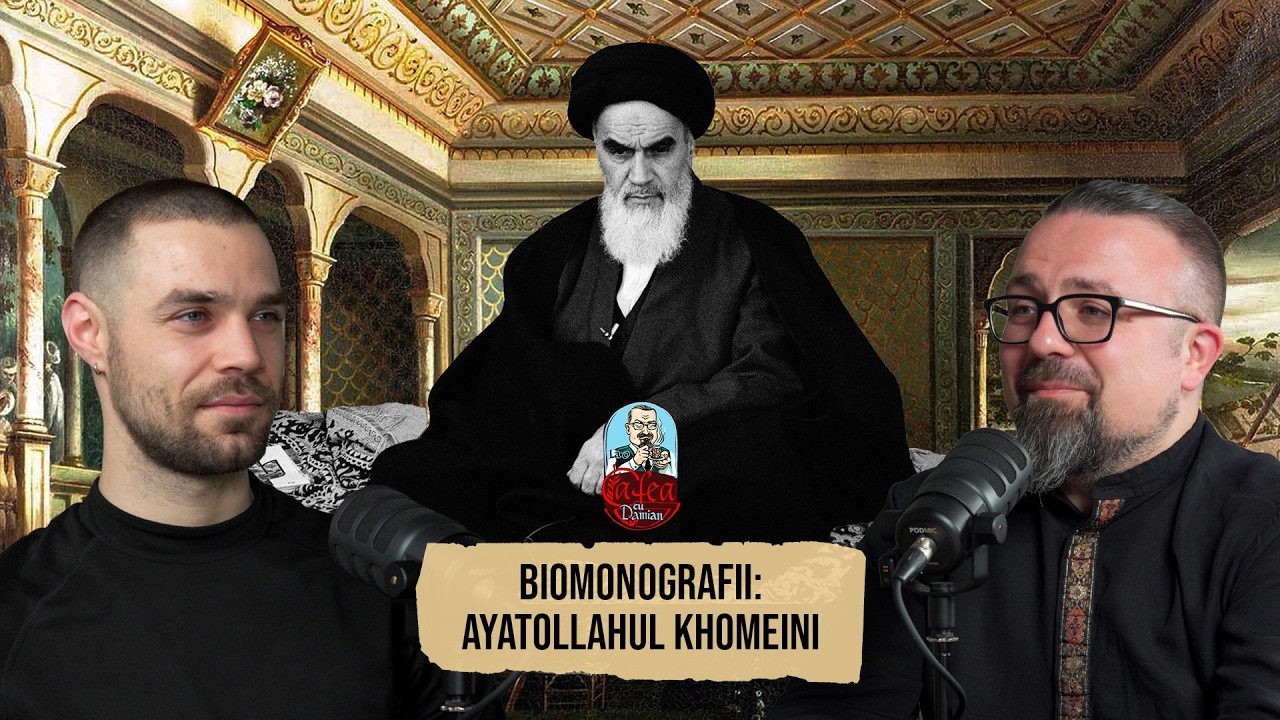



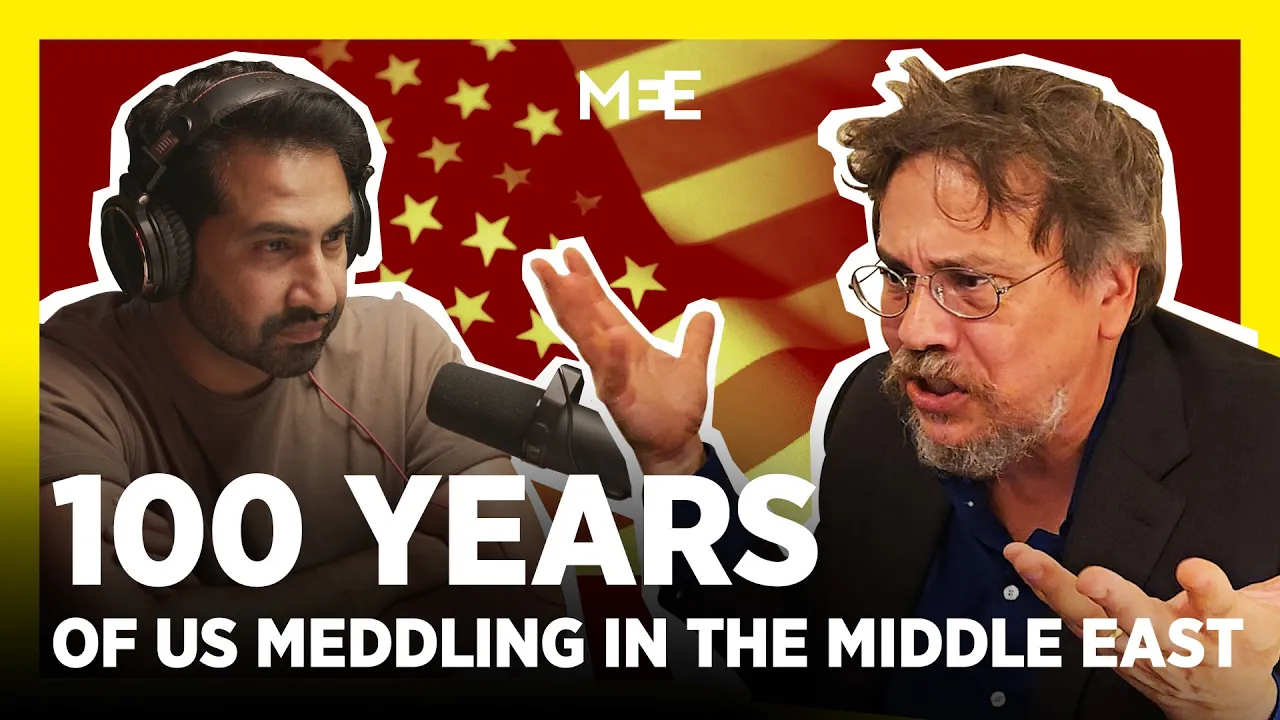


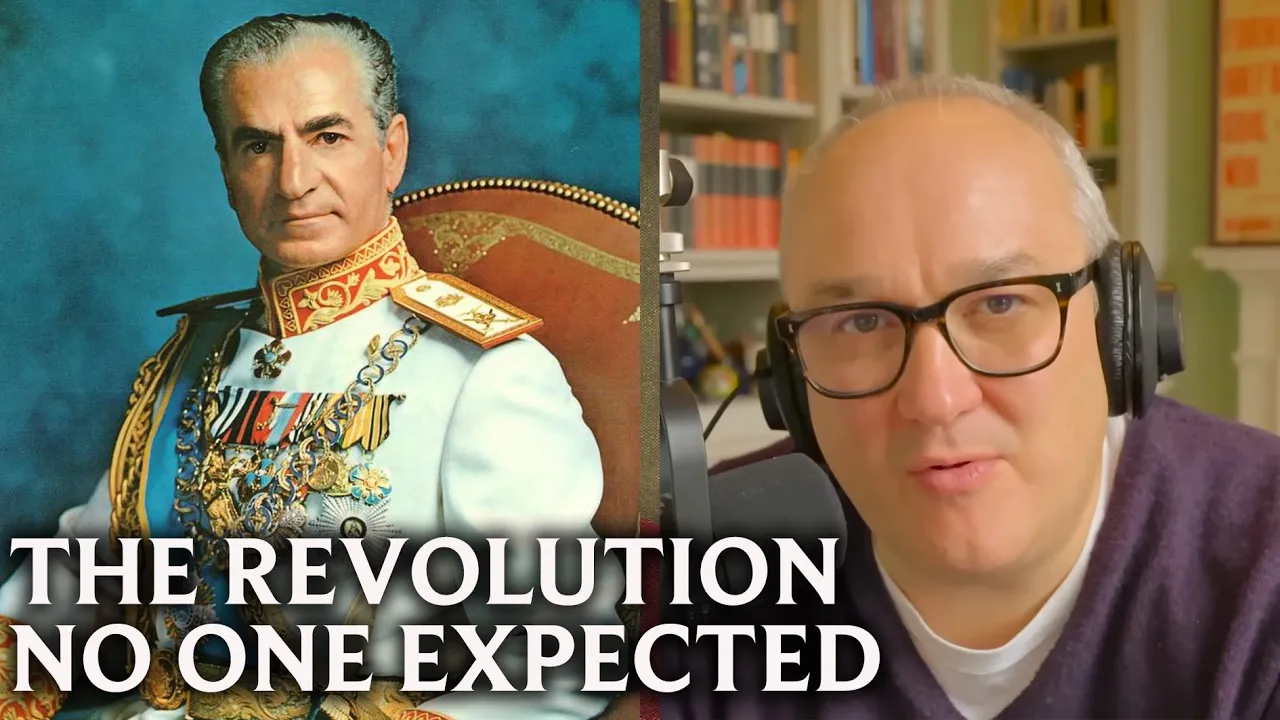



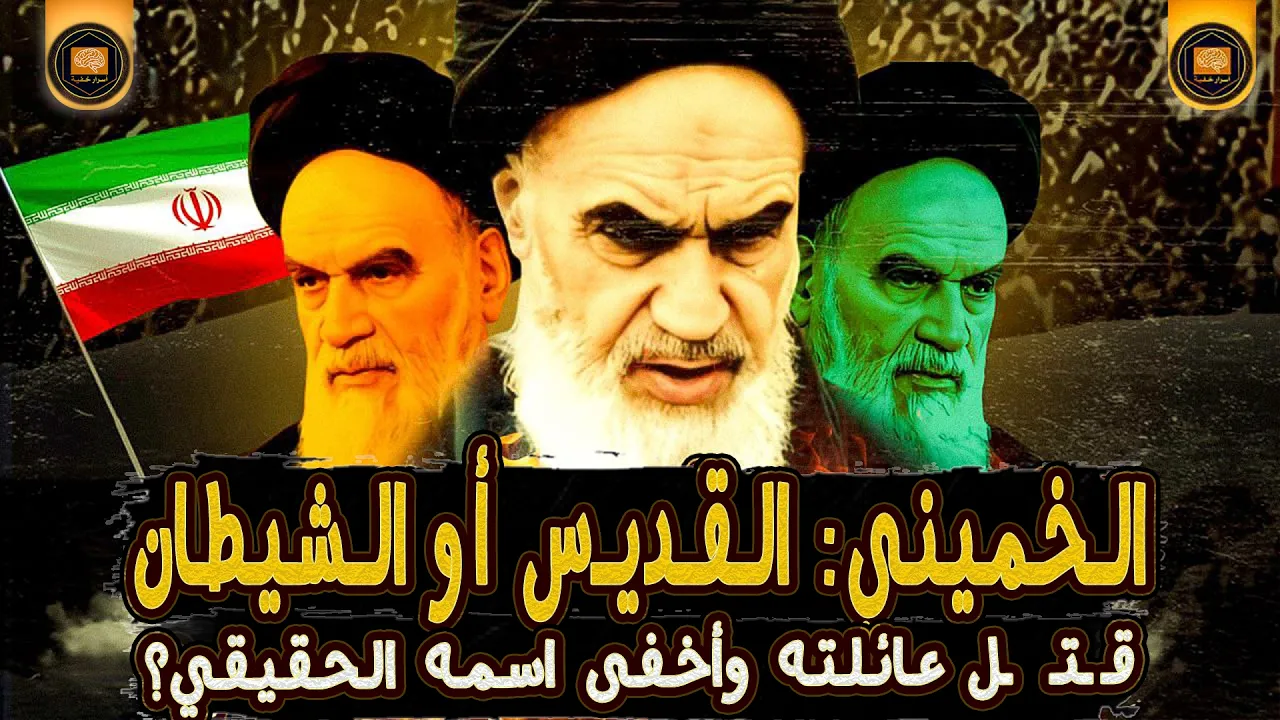
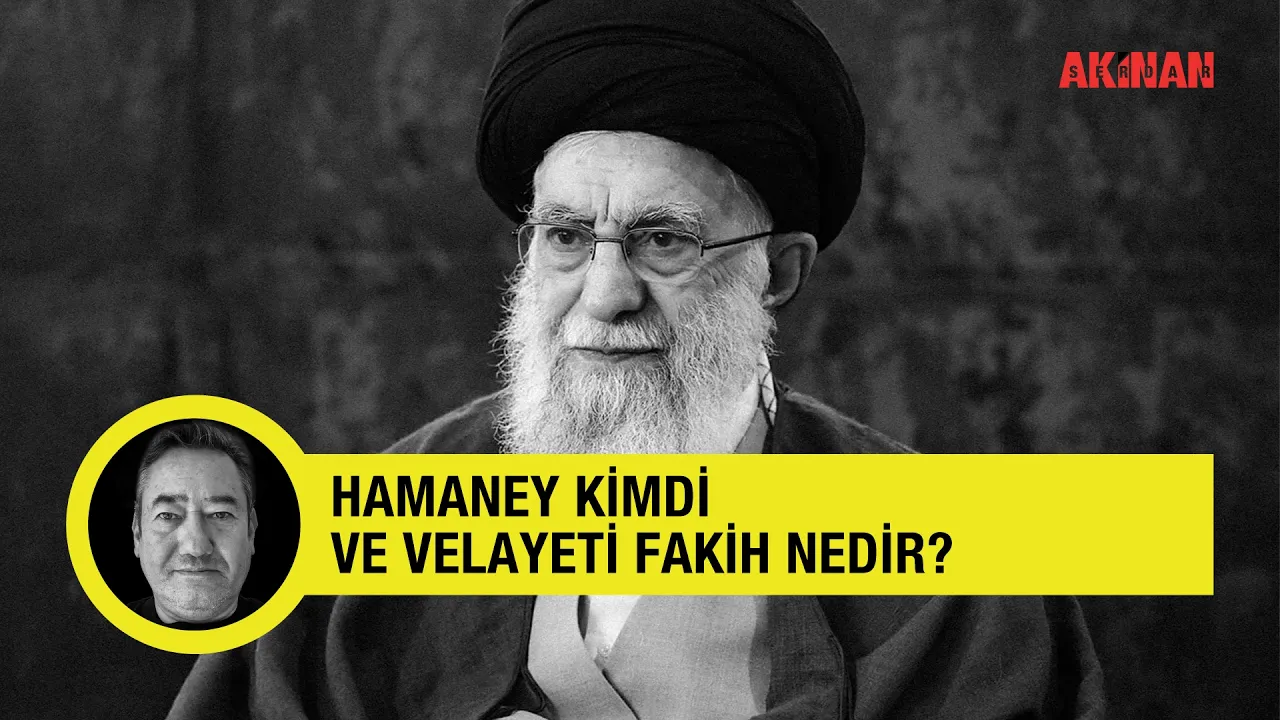









Ayatollah Ruhollah Khomeini (1900-1989) was an Iranian Shia cleric who led the 1979 Iranian Revolution against the Shah's monarchy, establishing the Islamic Republic of Iran as a theocratic state where religious scholars hold supreme authority; his rise to power stemmed from opposition to the Shah's pro-Western secular reforms during the White Revolution, which he criticized as illegitimate and un-Islamic, ultimately transforming Iran from a modernizing monarchy into a theocracy governed by religious principles.
Ayatollah Khomeini: Rise to Supreme Leader of Iran | Documentary Analysis
Added:The rule of the Pahlavi Dynasty (the Shah) and the socio-economic impacts of his rapid secularization and modernization policies known as the White Revolution.
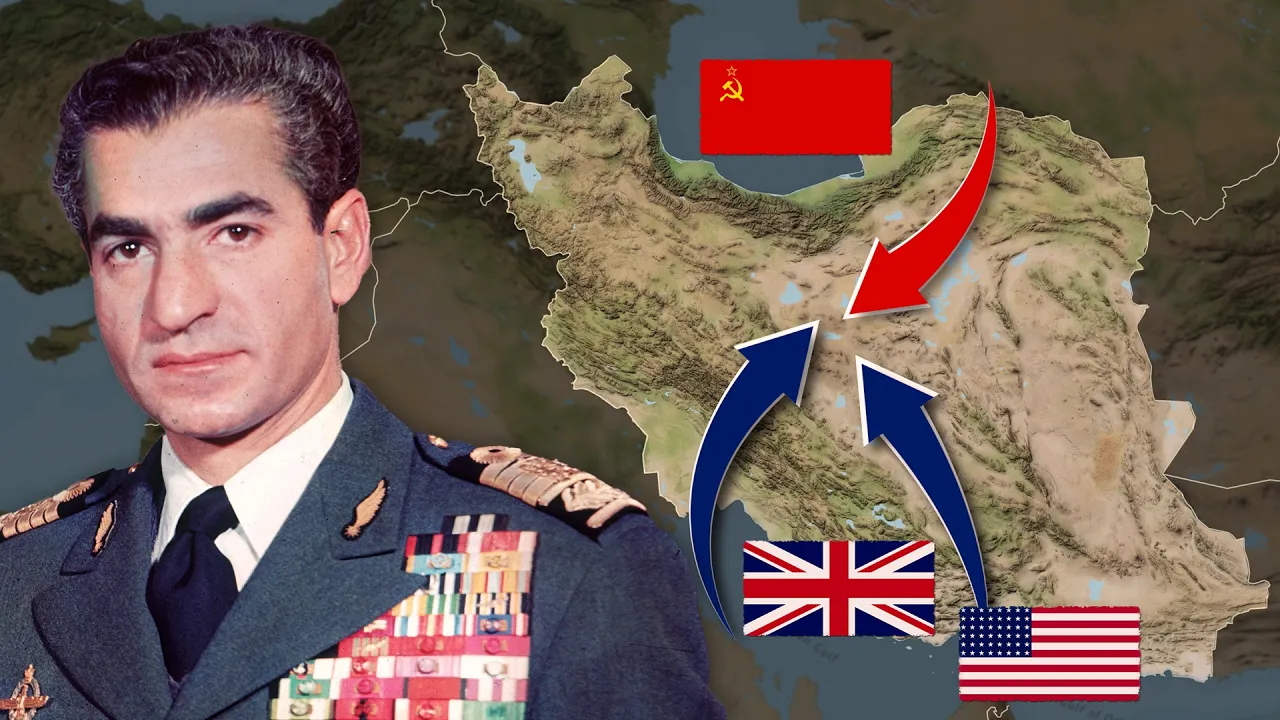
The history of foreign intervention in Iran, particularly the 1953 Anglo-American coup d'état (Operation Ajax) that overthrew the democratically elected Prime Minister Mohammad Mossadegh.
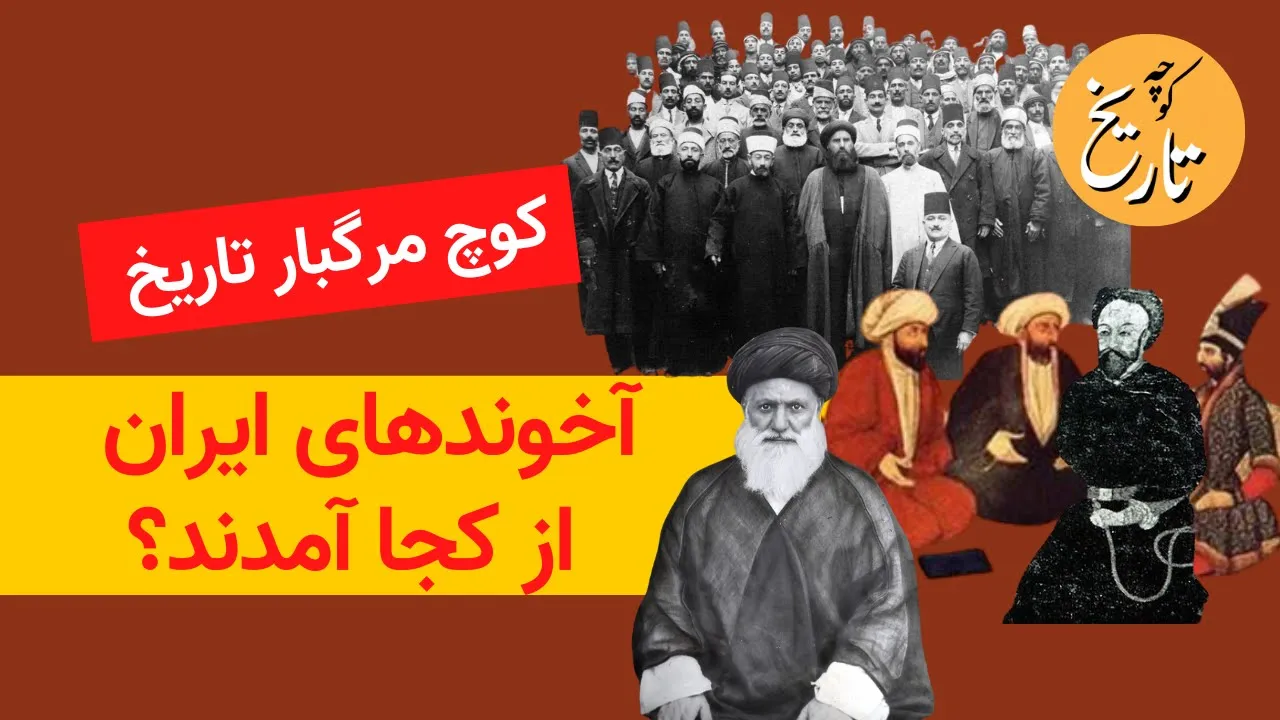
The core tenets of Shia Islam, especially the historical role of the Shia clergy (ulama) in Iranian political dissent and social mobilization.
The distinction between secular nationalism, Marxism, and Islamist political ideologies which vied for influence in mid-20th century Iran.
The theoretical framework of 'Velayat-e Faqih' (Guardianship of the Islamic Jurist) and how it structure's Iran's unique system of government.
The immediate regional consequences of the 1979 Revolution, specifically the Iran-Iraq War (1980–1988) and the rise of Iranian-backed proxy groups in the Middle East.
The evolution of Iran's foreign policy and its transition from a Western ally to an anti-Western, theocratic regional power, highlighted by the 1979 Hostage Crisis.
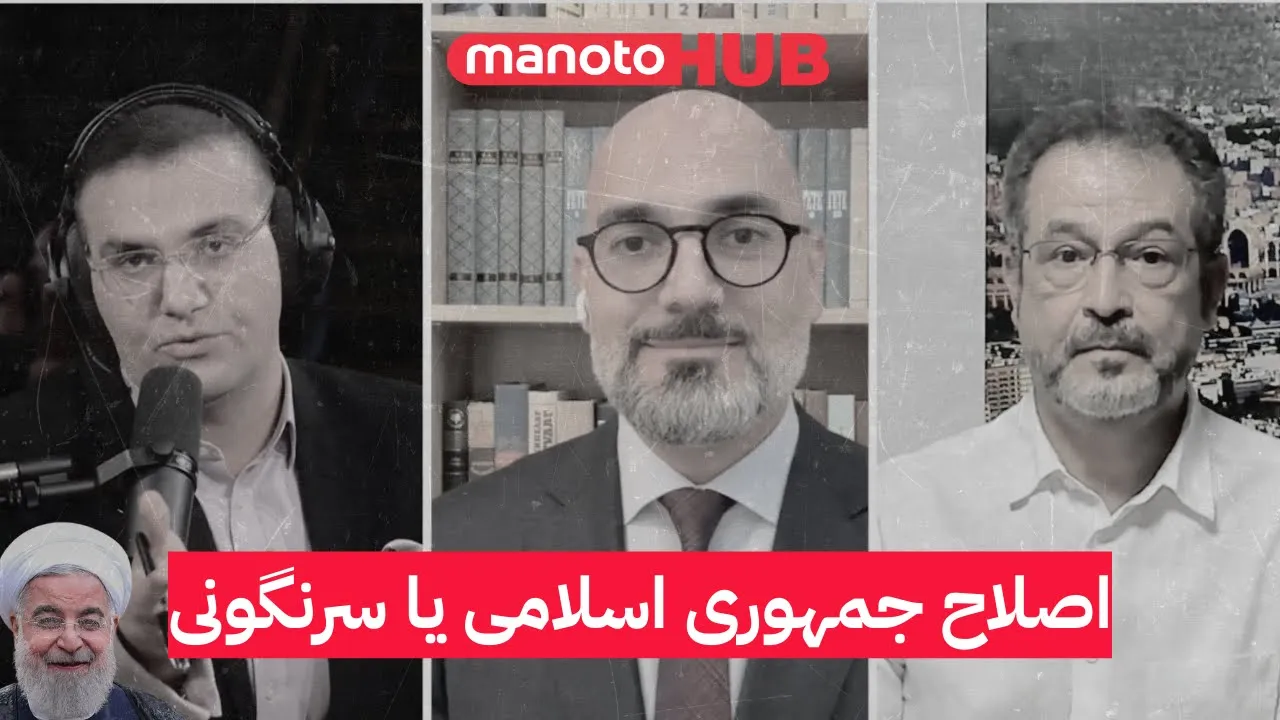
The domestic challenges and civil movements in contemporary Iran, analyzing the ongoing tensions between the ruling clerical establishment and reform-minded citizens.
380.1K views4.2Klikes1:03:33Original Release: 2024-10-12
The man known to history as Ayatollah Ruhollah Khomeini was born as Ruhollah Musavi Khomeini on the 17th of May 1900 in the town of Khomeyn in Iran, to the northwest of Isfahan. Ruhollah means ‘spirit of Allah’ or ‘the spirit of god’. His father was Mustafa Musawi, a Muslim cleric born in 1862. His father, Ruhollah’s grandfather, a man by the name of Ahmad Hindi, had been an alim or ulama, a Muslim scholar of law and religious doctrine. Ahmad had hailed from Kintoor in India, a region which he reputedly left to escape the tightening British control over that country in the nineteenth century, migrating first to Mesopotamia and then settling at Khomeyn in Iran. Given this, Ruhollah was born into a family of well-established Muslim clerics and religious scholars. His mother was Agha Khanum. Ruhollah was the third child of her marriage to Mustafa, two other sons, Morteza and Nur al-Din, meaning ‘the light of faith’, having been born in the late 1890s. When Ruhollah was just three years old, in 1903, his father was killed during violence which erupted owing to Mustafa’s opposition to the inequities of the Iranian landholding system, leaving him and his siblings to be raised by their mother and an aunt by the name of Sahebeth.
Khomeini was born into a country that was one of the very few nations in Asia and Africa that was not a colony of the western powers at the start of the twentieth century. This was a product of its long and proud history as a centre of major civilizations and regional powers. Iran is a more modern name and for much of its history the region has been known as Persia internationally after a Greek term for the area. As early as the third millennium BC this was an important region adjacent to both the civilizations of Mesopotamia to the west and the Indus Valley civilization to the east. In the sixth century BC the Persian Empire emerged as the largest empire in the world, controlling lands from the Aegean Sea and Egypt eastwards to modern-day Afghanistan and Pakistan. During the era of the Roman Republic and Empire, the Parthian Empire, based out of Persia and Mesopotamia, was the only major power that remained a perennial problem for the Romans. In medieval times it became a key part of the Muslim Caliphate ruled from Baghdad.
In the aftermath of the Mongol conquests, native dynasties emerged in Persia that would eventually carve out the Safavid Empire in the sixteenth century. This was one of the few powers that resisted the expansion of the Ottoman Empire in the sixteenth and seventeenth centuries.
While Persia lost an extensive amount of territory in the Caucasus and Central Asia to an expanding Russian Empire in the nineteenth century and became embroiled in the ‘Great Game’ for dominance in Central Asia between Russia to the north and Britain to the east in India, it retained its independence under the Qajar Dynasty that ruled from 1789 onwards. This made it one of less than ten countries in Asia and Africa, like Japan, China, Siam and Abyssinia, that managed to remain independent at the height of the European Age of Imperialism. All of these countries that retained their independence did so by trying to modernise along western lines, with varying degrees of success. In Persia’s case the long-reigning Naser al-Din Shah Qajar introduced many reforms during his reign from 1848 to 1896. As such, when Khomeini was born it was into a country which was attempting to take its place amongst the modern nations of the world. What impacted the country most as Khomeini was growing up in the 1900s and 1910s was the discovery of vast oil reserves here and the British intervention in the Middle East as it began transitioning the Royal Navy away from coal-powered engines to oil-powered. The Anglo-Persian Agreement of 1919 virtually turned Persia into a British vassal state and was deeply criticised by the United States government as an archaic form of imperial overreach. In 1921, a coup brought Reza Shah Pahlavi to power. Four years later, as Khomeini was heading into his mid-twenties, Reza Shah dispensed altogether with the Qajar Dynasty and became the new Shah of Iran. He and his son would rule the country almost continuously down to the late 1970s. Their rule was the necessary precursor to the rise of Khomeini becoming the Supreme Leader of Iran. From a young age Ruhollah was educated to follow in the footsteps of his grandfather and father and become a religious scholar. By the time he was six and seven he was studying the Qur’an and other religious texts of the Arabic Golden Age between the eighth and twelfth centuries AD, as well as literature that was more native to Iran, specifically the Persian poets of centuries gone by. This would inform his lifelong view that Persian poetry and literature was an exalted form of culture, in contrast to music, which was frowned upon by Khomeini. By the late 1900s he was attending a more formal school and continued there into the 1910s. Elements of his education and religious upbringing were overseen as well by male family members, notably his cousins on his mother’s side. All of this was only somewhat impacted by the First World War between 1914 and 1918, when parts of Persia were variously invaded and occupied by the British, Russians and Ottoman Turks. Once the war ended, Ruhollah, who had shown considerable promise as a religious scholar, was sent to a seminary school in the city of Isfahan. Before long he would be drawn, in the early 1920s, to the city of Qom, a holy city for Shia Muslims and the largest centre of Shia scholarship anywhere in the world today, a status it has obtained owing to it being the site of a shrine to Fatimah bint Musa, a daughter and sister of the seventh and eighth imams of Twelver Shia Islam.
Before exploring Khomeini’s scholarly career in the 1920s and 1930s, it is worth briefly exploring the branch of Islam to which he adhered. This was Twelver Shia Islam. The division within Islam between Sunni and Shia Muslims goes back to the seventh century and some of the earliest days of the religion, as Sunnis supported certain candidates to succeed the Prophet Muhammad as head of the Caliphate which was emerging, and Shias supported other candidates. The first such dispute emerged in 632 AD when Muhammad himself died. However, while there were disagreements early on, the major split came in 680 AD when Yazid ibn Mu’awiya succeeded his father as the second Caliph of the Umayyad Caliphate. This looked to transform the Caliphate into a hereditary monarchy and some Muslims were opposed to this, instead favouring the succession of Husayn ibn Ali, a grandson of the Prophet Muhammad. Sunni Islam stems from those who supported Yazid and who would go on to rule most of the Muslim world from Baghdad for centuries to come, while Husayn’s supporters were the first Shiite Muslims. Twelver Shiites are a dominant branch of Shia Islam who contend that there were twelve legitimate imams or heads of the religion who followed from Muhammad, the first being the Prophet’s son-in-law, Ali, with Husayn being the third imam, and the twelfth and final being Hujjat Allah ibn-al Hasan, who lived in the late ninth and early tenth centuries AD. According to Twelver Shia theology, Hujjat is Muhammad al-Mahdi, a figure who never died and instead was occulted or concealed, waiting to return at the end of time, a belief system which closely mirrors elements of Christian eschatology such as the Second Coming of Christ.
In the course of the 1920s and 1930s, Ruhollah emerged as an important Twelver Shia cleric and scholar. Much of his work was based on an eclectic mix of interpretations, much of it coming from writers of the Arab Golden Age, notably Avicenna, a Persian scholar of the eleventh century widely perceived as the greatest philosopher of the time. He also incorporated elements of Aristotle and other ancient Greek philosophers, perspectives which the Arab world had incorporated extensively into their belief systems between the seventh and thirteenth centuries AD. Beyond this, Ruhollah composed an extensive body of poetry during these years, most of it on religious and philosophical themes. As a result of his wide-ranging work, he garnered a reputation as one of the leading scholars, amongst a great many, at Qom in the interwar period, while also travelling to other religious and educational sites around the Middle East, notably Najaf in Iraq. This earned him the distinction of being an Ayatollah, a term in the Islamic world equivalent to a Doctor of Theology in the western tradition. Though he would not compose a full book-length text until he was well into his forties, he did publish several treatises and commentaries in the 1920s and 1930s. He did not perform any overt political role during these years.
The 1920s and 1930s was also a formative time in Khomeini’s personal life. In 1929 he married Khadijeh Saqafi. She was the daughter of a well-respected cleric from Tehran. Saqafi was probably only around 14 or 15 years of age at the time that she married 29-year old Ruhollah. She would be the Ayatollah’s only wife and he never married again despite the Muslim tolerance of polygamy. They would have seven children in all. Two died in infancy. Of the five who survived, two were sons, Mostafa and Ahmad, and three were daughters, Zahra, Sadiqeh and Farideh. Khomeini’s marriage, despite the major age disparity at the time of their union in 1929, was an amicable one. While on the Hajj, the pilgrimage to Mecca required of all Muslims capable of performing it, in the mid-1930s, he wrote affectionately to his wife, stating that he missed her presence while visiting Beirut and other cities in the Levant before heading to western Arabia.
All of their children would go on to become religious scholars of one kind or another.
By the 1930s Khomeini had become known for his asceticism and ritualistic existence.
Of a slim build and with a penetrating, even intimidating, visage, he wore a thick beard his entire adult life. Known for being scrupulously punctual and methodical in how he worked and went about his day, he was also incredibly precise in his adherence to Muslim strictures, notably Islamic provisions around ritual purification and the avoidance of anything which is deemed to be ‘impure’, a major concept in Islam. Whatever one may think of the Iranian state today or his religious views, there is no denying that Khomeini was a man of firm beliefs that were unswervingly adhered to and was incorruptible in these. He ate, dressed, and acted plainly.
Unlike the vast majority of revolutionary leaders of the twentieth century, who nearly all without fail became corrupt millionaires and billionaires when given the opportunity, Khomeini would continue to live in a modest apartment in a modest way even when he became the leader of Iran many decades later. He maintained this discipline over the course of a long life.
Although it was thousands of kilometres away from the main centres of conflict in Europe, Iran would soon be drawn into the Second World War, interrupting the lives of Khomeini and many other Iranians. The Shah had developed close ties with Nazi Germany in the 1930s, with nearly half of Iranian imports and exports going to and from Germany. Plots were afoot within Iran by pro-Nazi elements to overthrow the regime in 1940 and 1941 and ally more firmly with Berlin in anticipation of a German move into the Middle East after conquering the Caucasus region from the Soviet Union. That never occurred, but in any event the Soviets and the British decided to pre-emptively invade Iran in August 1941 in order to secure the oil fields there and allow passage of supplies from British India through the country to the Soviet Union. Reza Shah abdicated in favour of his son, Mohammad Reza Shah, two weeks after the Soviet-British occupation. He would rule for nearly forty years. Meanwhile, the Allies remained an occupying power for the rest of the war, even holding one of the major summits of the Allied leaders in Tehran in the final days of November 1943. After the war ended, the British and Soviets gradually withdrew from Iran, leaving the new Shah in power with strong western backing. Khomeini only gradually emerged as anything more than a respected religious scholar in Iran. During the war, and in some ways motivated by the Allied occupation of the country, Khomeini began working on his first book. This was entitled Kashf al-Asrar, which translates approximately as Secrets Unveiled. Published in 1944, it argued in favour of reversing the overt westernisation and secularisation of Iranian society that had been seen under the rule of the Shahs. Much of the text was densely theological in its approach, though it foreshadowed a lot of the ideas which Khomeini would expand upon in the 1960s and 1970s. Other than this, there was no major indication in the 1940s and 1950s that he would emerge one day as the head of the Iranian resistance to the Shah’s government.
What launched him to a position of prominence was the death in 1961 of the Grand Ayatollah, Sayyid Hossein Ali Tabatabaei Borujerdi, a revered religious figure in Iran said to be able to trace his lineage back to the line of the Prophet Muhammad himself. When Borujerdi died in 1961, Khomeini was viewed as one of his successors at a time when a stark shift in Iran’s politics and society was about to occur. While Khomeini had garnered a considerable amount of attention owing to his scholarship, asceticism and political views in the post-war era, his emergence as a major figure in Iranian society and politics really only came about owing to the White Revolution. This is the name which has been given to a program of major reforms which the Shah and his government commenced in 1963 and which would be carried out to one degree or another for the next decade and a half. The goal of these reforms was to modernise Iran, break up the old feudal elements of Iranian society and overhaul the economy. Huge efforts were made to increase literacy levels, while a major focus was put on redistributing land in order to create a wider middle class of farmers and businesspeople. It was a successful programme, one that was facilitated by the revenue from oil exports, and living standards and wages increased markedly in the 1960s and 1970s, laying the foundations for the emergence of Iran as one of the twenty wealthiest countries in the world today if the metric of Purchasing Power Parity is applied. However, the White Revolution was enormously controversial at the same time, as it sought to reduce the power of the elites that had dominated Iranian society for centuries, namely the Islamic clerics and the old aristocrats of the Persian tribal system. Khomeini soon emerged as a leading opponent of the reforms of the White Revolution, particularly the seemingly pro-western, secular bent of them.
He began organising a clerical boycott of the intended reforms and made several public speeches denouncing the Shah, beginning in January 1963 and continuing for months thereafter. During these he also called for a boycott of the referendum which the Shah had scheduled on the proposed reforms.
These attacks culminated on the 3rd of June when he gave a major public speech in which he compared the Shah to the Caliph Yazid, the divisive figure whose succession as Caliph back in the seventh century AD had contributed hugely to the split between Sunnis and Shiites. The inference of Khomeini’s statement was clear. The Shah was an illegitimate ruler who had only attained to his position through being his father’s son. Two days later, on the 5th of June, the 15th day of Khordad, the third month of the Solar Hijri Calendar, Khomeini was arrested and sent to the capital. In response, serious rioting and public disturbances broke out in cities and towns across Iran and in the process of suppressing the unrest an estimated 400 people were killed. This event has been seen as spawning the Movement of 15 Khordad, a political and religious movement opposed to the rule of the Shah. Indeed, in Iran today, many public buildings and places are named for it, such as 15th Khordad Metro Station in the capital Tehran.
Following his arrest in June 1963, Khomeini was kept under house arrest for over two months before being released. The government had hoped that he might end his resistance as a result of this clear indication that it would detain him if he continued his opposition to the White Revolution, but alas there was no such development. Khomeini continued to voice his displeasure in late 1963 and into 1964, leading once again to his arrest after he denounced the plans of the Shah’s government to offer new liberties to US diplomats in Iran. On this occasion he was interrogated and even physically struck by the Prime Minister, Hassan Ali Mansur, something which may have contributed to Mansur’s assassination in Tehran by Shia extremists in January 1965. Then, convinced that the Ayatollah would continue his vocal opposition, SAVAK, the Shah’s secret police, placed him on a flight on the 4th of November 1964 and sent him to Turkey. It was the beginning of over 14 years in exile. He remained in the city of Bursa here to begin with, where he was soon joined by his son Mostafa. Initially the Turkish government restricted his movements and communications, though the embargo was quickly lifted and he moved for a brief time to Istanbul. Ultimately, in September 1965, he relocated to the city of Najaf in Iraq. This ensured he was closer to Iran and also living in one of the holiest cities in Shia Islam, Najaf being considered the burial place of the Prophet Muhammad’s son-in-law.
Khomeini became a major spiritual leader of the Iranian resistance movement against the Shah’s regime during his years in exile. Much of this time was spent creating an ideological basis for resistance and theorising how an Iranian state should be shaped once the Shah was removed from power. This was disseminated through two books he wrote during these years, widely considered his most important texts. He began writing Tahrir al-Wasilah, transliterating as Exegesis of the Means of Salvation, while in Turkey in 1964 and 1965 and finished it in Iraq. It essentially presents answers to thousands of questions on a wide range of religious and societal issues, with everything from ritual purification to taxes and the respective powers between Muslim clerics and civil governments being broached. It would later form the basis for much of how the Islamic Republic of Iran would be structured. It was followed in 1970 by Islamic Government, a book which explored further how an Islamic theocratic state could be structured in an age when secularism had otherwise gripped many Arab states across the Middle East. Though a relatively slim volume, it would go on to have an immense bearing on the structure of Iranian society and politics from the late 1970s onwards, arguing as a fundamental start that the Shah needed to be removed from power and a Shia theocracy established.
During his many years living in Iraq through the second half of the 1960s and for much of the 1970s, Khomeini had considerable support from the government there and was allowed to both teach at Najaf and to operate a radio station which promoted resistance to the Shah’s government.
It could be picked up inside Iran. His wife and other son also joined him after a time in Iraq.
His cause and that of clericalism in Iran more generally was aided by the growing dislike of the Shah’s regime at home, in large part owing to its often brutally repressive policies. Central to this was SAVAK, the secret police that had placed Khomeini on a plane and shipped him off to Turkey in 1964. The Ayatollah’s treatment had been rather benign. In other instances, SAVAK were responsible for secretly detaining tens of thousands of people between its foundation in 1957 and its termination in 1979. Many were tortured, often using electrical cables attached to the extremities and other nefarious methods. How many Iranians died at the hands of SAVAK remains a hugely contested issue. There is no doubt that their victims were in the hundreds, yet some analysts argue that thousands of people were killed at the hands of the Shah’s police force in the 1960s and 1970s.
This, as well as the elitist, aloof nature of the regime, and its pro-western stances, saw the Shah’s popularity decline precipitously in the 1970s even as Khomeini continued to gain more and more supporters in exile. Khomeini’s long period in exile in Iraq came to an end in 1978. His position within the country had become more precarious over the years. In 1968 the secular Ba’athist Party had seized power in the country through the 17 July Revolution.
They began to promote the position of the Sunni minority within Iraq, though it was only from the mid-1970s as Saddam Hussein began to emerge as the de-facto power within the Ba’ath Party in Iraq that Khomeini’s position became difficult. Three developments brought matters to a head. Firstly, on the 23rd of October 1977, Khomeini’s son Mostafa died of a heart attack in Najaf. He was 46 years of age and his death has always been perceived as suspicious. Whether SAVAK agents were responsible for poisoning him is open to debate. What is not is that the public perception back in Iran was that the Shah’s government had been responsible for killing the Ayatollah’s son.
This was a significant contributory cause in the first stirrings of the Iranian Revolution at the beginning of 1978, the second step in Khomeini’s position becoming untenable in Iraq.
Finally, in the course of 1978 the Shah’s government intensified negotiations with Hussein’s government that had been underway for years about expelling Khomeini from the country.
Thus, in September 1978, Khomeini was ordered to leave Iraq. After considering moving to one of upwards of a dozen other Muslim countries, the Ayatollah and his supporters eventually resolved to head for France, a country with a tradition of tolerating far-left and revolutionary movements in the post-war era, even while being aligned with the US in the Cold War. Khomeini was living in the suburbs of Paris by the end of October 1978.
By the time Khomeini was expelled from Iraq and relocated to France, the Iranian Revolution was already well underway back home. Indeed, his expulsion had largely come about owing to the domestic unrest in his homeland. After years of simmering tensions within Iran, more direct opposition to the Shah’s government began to make itself felt in the final months of 1977 as news of the death of Khomeini’s son Mostafa in Iraq reached Iran. Large public protests against the government began in Tehran and other cities in January 1978, marking the beginning of the Iranian Revolution. The situation was serious, though not terminal, in these early months, and the Shah might well have survived had it not been for the events of August and September 1978. On the 19th of August a fire at the Cinema Rex in the city of Abadan killed nearly 500 people. Although it was probably started by Islamic extremists, public sentiment was that the government was to blame, leading to an intensification of the protests. This in turn led to a heavy-handed crackdown by the Shah and his ministers in September, culminating in the declaration of martial law and the Jaleh Square Massacre on the 8th of September 1978, in which hundreds of protestors were either killed or badly injured in Tehran. Far from snuffing out the insurrection, the actions of the Shah radicalised the revolution even further and national strikes and protests followed in the late autumn and early winter. It is important to note that at this early stage of it, the Revolution was not a movement led by a homogenous group of theocratic revolutionaries.
There were some individuals who were radical Islamists involved and some who believed that the revolution was best led by the scholarly and clerical classes, but also a great many who were secularists opposed to the Shah, yet not set on establishing an Islamic state on any level.
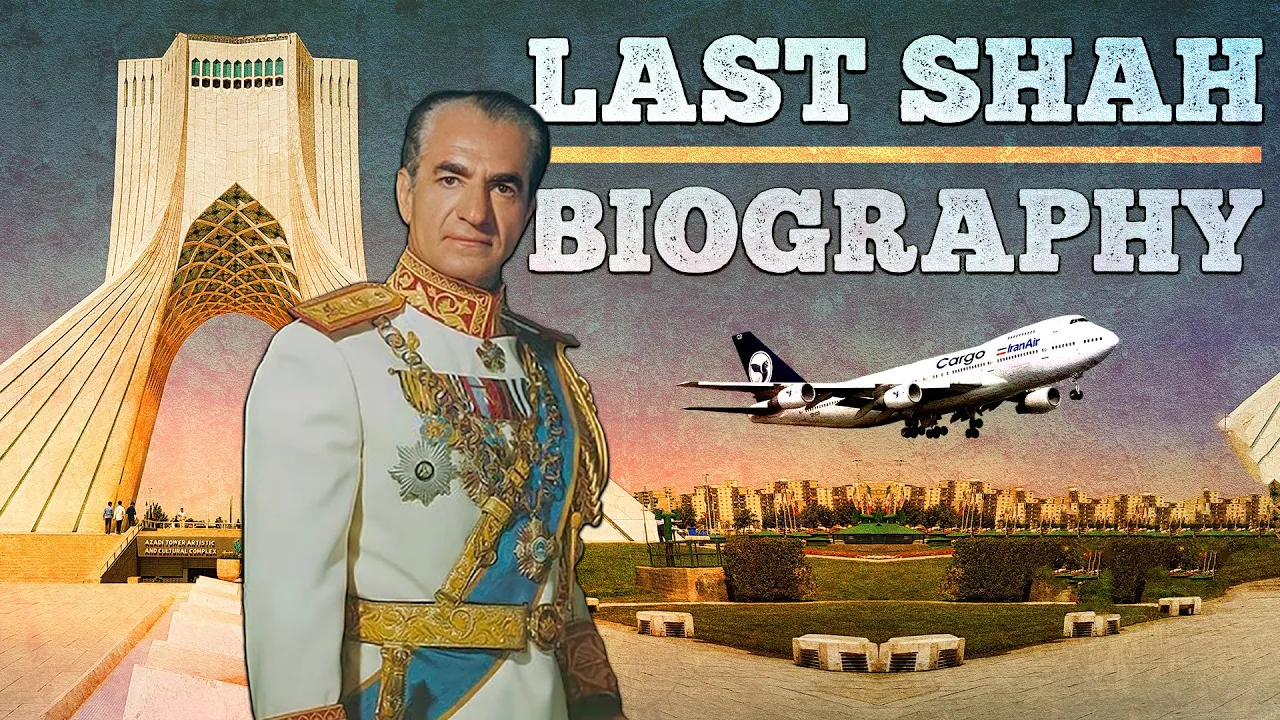
The Revolution was entering its more radical phase right around the time Khomeini was expelled from Iraq and headed for France. Part of the decision to relocate to Paris was that from there the Ayatollah and his followers could take advantage of the efficiencies of the French media and could get messages back home to Iran within hours. Thus, through the winter of 1978 he regularly made declarations concerning events in Iran and was in contact with many different prominent revolutionaries on the ground in Tehran and the other cities. By December things were terminal for the Shah, as it became increasingly evident that large sections of the military and police were unwilling to fight to preserve his rule in the country. It so happened that all of this was also coinciding with a sharp decline in the Shah’s health. He was suffering from gallstones and required complex surgery. In light of both his health and the declining political situation, on the 16th of January 1979, the Shah left Iran. Ostensibly he was leaving for medical reasons, but he would never return. He received treatment in the United States and then asylum in Egypt, dying in Cairo in the summer of 1980. Just over two weeks after he left Iran, Ayatollah Khomeini and his followers touched down on a chartered Boeing 747 in Tehran, returning after just over 14 years in exile. Millions of Iranians took to the streets of the Iranian capital to enthusiastically welcome him home. The Shah was gone and the Ayatollah had come home. Still, the fate of the Iranian Revolution was far from sealed in February 1979. It remained to be seen what kind of state would emerge to take the place of the Shah’s monarchy. In exile for many years and throughout his writings, Khomeini had generally advocated for a mix of a theocracy and a democracy. However, there were a great many different competing ideas in 1979, with some secular revolutionaries who had been involved on the ground in 1978 and early 1979 arguing for a largely secular republic. Conversely, a good many religious clerics wanted a complete theocracy where ayatollahs and other religious figures would run the government. It was also not at all clear, despite his evident popularity, if Khomeini would emerge as the undisputed head of state in the post-Shah era. Thus, throughout 1979 a power struggle was occurring in Tehran between the Shia clerics and the secularists, with many different groups exerting influence and playing different roles. Ultimately the clerics and Khomeini would emerge victorious as the interim Prime Minister, the secularist, Mehdi Bazargan, was convinced to put a draft constitution which had been devised by an ally of Khomeini’s, Hassan Habibi, while they were in Paris in late 1978 and early 1979, forward to the Iranian people as the basis for the new political system. When it was adopted as the official constitution of the new state via referendum in early December 1979, Khomeini immediately ascended as Supreme Leader of Iran and the country became a theocratic republic.
The Islamic Republic of Iran, as it was officially known, that emerged at the end of 1979, did provide for a hybrid theocratic and democratic state.
Hence, while Khomeini became the Supreme Leader of Iran as a religious figure, the constitution also provided for a President who would be elected by universal franchise, with both a council of religious scholars and clerics and a parliament governing the country at various levels. Elements of western-style constitutions were incorporated, while at the same time these had to conform to Islamic strictures. For instance, under Article 20 of the constitution, women were afforded virtually the same political and economic rights as men, but a clause at the end stated that this was when the same was, quote, “in conformity with Islamic criteria.” This was the contradiction that would predominate everywhere in the new constitution, a document which was a curious melding of many western, liberal principles, all of which were then generally qualified at the end of each article with the statement that these would only be upheld where Islam allowed. Therefore, the new state that emerged after the Iranian Revolution aspired to have some elements of a democracy, though always subordinated to Islam and the religious clerics and scholars like Khomeini who now ruled the country. The new regime was almost immediately thrown into a crisis when on the 4th of November 1979 radical Muslim students, who were adherents of the Muslim Student Followers of the Imam Khomeini Line, entered the United States embassy in Tehran and took 53 Americans, embassy staff and diplomats hostage there. A famous hostage crisis ensued, one which lasted an enormous 444 days, only ending on the 20th of January 1981. Those who orchestrated the kidnappings had two goals. First, they aimed to gain leverage over the United States government, believing, with some considerable justification, that Washington had been trying to undermine the Iranian Revolution since it began. Secondly, they hoped to radicalise the Revolution even further and ensure that Khomeini gained ever greater authority at a time when there was still a possibility that a more secularist government could emerge in the aftermath of the Shah’s downfall. After lengthy diplomatic negotiations and clandestine efforts by the US Central Intelligence Agency to rescue the hostages, the Algiers Accords were finally agreed to by both sides in January 1981. The hostages were released and the US government agreed to end its interference in Iran’s domestic affairs. Diplomatic ties between Iran and the US were otherwise severed and have never been formally re-established.
The hostage crisis helped facilitate the rise of Khomeini to become the Supreme Leader of Iran on the 3rd of December 1979. As a result of all this, the Iranian Revolution, his accession as the head of the Iranian state, and the beginning of the hostage crisis with the US, Time magazine named Khomeini as its Person of the Year in 1979. Time, it should be noted, does not always name someone as their Person of the Year based on benign accomplishments, but rather the degree to which they have impacted on the world at large during the year just gone, for better or worse. For instance, Adolf Hitler was the Person of the Year in 1938 after Nazi Germany had annexed both Austria and the Sudetenland that year, while Joseph Stalin was twice named as Person of the Year. In naming Khomeini for 1979, Time stated, quote, “As the leader of Iran’s revolution he gave the 20th century world a frightening lesson in the shattering power of irrationality, of the ease with which terrorism can be adopted as government policy…Khomeini’s importance far transcends the nightmare of the embassy seizure, transcends indeed the overthrow of the Shah of Iran. The revolution that he led to triumph threatens to upset the world balance of power more than any other political event since Hitler’s conquest of Europe.” Time’s projection that the Iranian Revolution was the most seismic event in global affairs since the outbreak of the Second World War looks very alarmist in retrospect, yet it is indicative of how much Khomeini and the developments in Iran which he was both lead actor in and director of gripped the world in 1979.
Given how much the Revolution and the hostage crisis which followed had disrupted Iran’s relations with the United States and other western countries, Khomeini’s first years in power as Supreme Leader witnessed a complete shift in the country’s foreign policy. Since the end of the Second World War, Iran had been firmly on the side of the US throughout the Cold War, something which was compounded by efforts by Stalin’s government to support separatist movements in north-western Iran in 1946 in an effort to create pro-Soviet breakaway republics there. That all changed in 1979. As it split violently from the US, Iran moved towards a much friendlier relationship with the Soviet Union. Leonid Brezhnev’s government in Moscow was the first to diplomatically acknowledge the new Iranian revolutionary government in 1979. Yet, despite this early effort by the Soviets to acquire Iran as a new ally, Khomeini pushed the country more into the Non-Aligned Movement of neutral countries in the Cold War in the early 1980s. More broadly, his overwhelming drive in terms of foreign policy was to promote the idea of a unified Muslim world that could end both western and communist interference in the Middle East, Central Asia and the Maghreb.
While Khomeini had come to power hoping to promote this agenda of Islamic unity, his time as Supreme Leader was almost entirely characterised by war with a fellow Muslim nation. Iran and Iraq share a very long, 1500-kilometre border running all the way from the Persian Gulf north to the border with Turkey. Tensions between the two regions stretched back thousands of years. In the 1970s they had arisen again after Saddam Hussein rose to power as the dictator of Ba’athist Iraq. During these years Saddam had expanded the Iraqi military into the second largest in the Muslim world, behind only Egypt. In 1980 he decided to invade his eastern neighbour, believing that his army’s strength, combined with the diplomatic crisis Iran was mired in with the US over the hostages, and the general instability that prevailed after the Revolution, would mean that the Iranians would offer limited resistance if he tried to seize the oil-rich provinces of western Iran, especially Khuzestan. He was entirely incorrect in his assessment. After over 100,000 Iraqi soldiers invaded Iran on the 22nd of September 1980, they soon ran into concerted resistance.
Although Iraq initially occupied a large chunk of Iran’s territory, Khomeini’s government in Tehran soon began a co-ordinated response. It was the beginning of a bitter conflict. The Iran-Iraq War would last nearly eight years and bookended Khomeini’s time as Supreme Leader of Iran.
While the war with Iraq would overshadow everything that Khomeini’s government engaged in during the 1980s, there were some domestic initiatives that were notable from this time.
In terms of its religious and social policies, the Islamic Republic imposed elements of Islamic Sharia law, with the all-too typical repression of women’s rights. Western fashions, for instance, became clamped down on and clothing shops in Tehran selling western clothes either went out of business or had to adjust considerably. There were contradictions to this however. For instance, female attendance at Iranian universities grew in the 1980s from what is had been in the 1960s and 1970s. When it came to religious minorities, the Iranian government offered a fair degree of toleration, at least on the surface, to Christians, Jews and Zoroastrians, yet in reality conversion was encouraged and laws were in place to both promote conversion and advantage Muslims in all instances over non-Muslims in workplaces and other spheres of society. Outright persecution of proponents of the Bahá’is Faith, a new religious movement which emerged in Iran in the nineteenth century and favoured combining elements of Christianity, Judaism and Islam, were actively persecuted by Khomeini in the 1980s as heretical. Bahá’ist congregations were actively banned and their activities prohibited. The same level of discrimination was applied to ethnic minorities, most notably the Kurds of north-western Iran and the Balochs of the southeast.
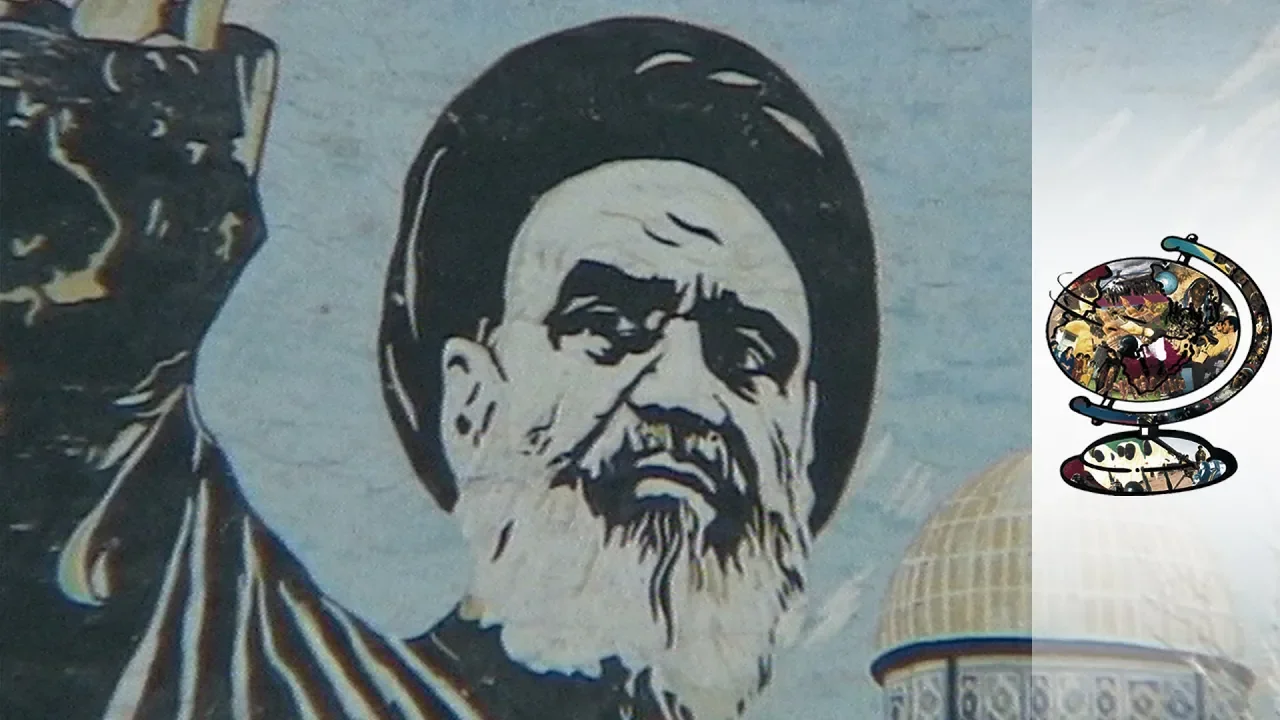
Meanwhile, the Iranian economy, which had experienced good growth in the 1960s and 1970s as a result of the reforms initiated through the White Revolution, suffered a severe decline in 1979 and 1980, followed by a rebound in the early 1980s. It then stagnated for much of the remainder of Khomeini’s time as Supreme Leader. This was owing to foreign trade embargos and the impact of the war with Iraq, though the mass nationalisation of domestic industries may also have played a part. Ultimately the Iranian economy would not surpass the living standards of the pre-Revolutionary era until the 2000s, though whether poor policies under Khomeini can be blamed for this is very much debatable, as the war with Iraq is believed to have cost Iran upwards of half a trillion dollars by the time it ended. These were also years in which a cult of personality was being created around the Ayatollah. This was manifest most clearly in the very adoption of the concept of a ‘Supreme Leader of Iran’. While there would be a President of Iran who was elected as the head of successive governments from February 1980 onwards, the Supreme Leader was the head of state for life. Khomeini was also granted the honorific title of ‘Imam’, a title generally reserved in Twelver Shia Islam, the branch of Shiite Islam favoured in Iran, for the twelve infallible leaders of Islam who followed from the Prophet Muhammad’s time. By designating Khomeini as an Imam, the Islamic Republic was defining him as a semi-prophetic figure in modern times. Daily life in Iran soon reflected this, with images and statues of the Ayatollah emblazoned and standing in public places in Tehran and the country’s other major cities and towns. Although it differed in so far as it was religiously based, ultimately the 1980s saw the emergence of a cult of personality surrounding Khomeini in Iran which was every bit as pervasive as those of Mao Zedong in China in the 1950s, 1960s and 1970s, Fidel Castro in Cuba since the 1960s and many other twentieth-century dictators.
As pervasive as this cult of leadership was, it would never become a hereditary family dictatorship of the kind seen in many other nations between the 1960s and the 1990s.
Khomeini’s eldest son, Mostafa, as we have seen, had died in 1977 while the family was in exile in Iraq. His younger son, Ahmad, was a religious cleric and became a prominent figure within the regime in the 1980s, but it was clear that he would not succeed his father as Supreme Leader of Iran when the Ayatollah died. Instead it seemed for much of the 1980s, that once Khomeini, who we must remember was already in his late seventies when the Iranian Revolution occurred, would be succeeded by another Ayatollah, Hussein-Ali Montazeri, a leading figure in the Revolution and a well-respected Islamic scholar and cleric. However, towards the very end of his life, Khomeini dismissed Montazeri from his positions and promoted one of Montazeri’s own former students, Seyyed Ali Hosseini Khamenei, as his anointed successor. Montazeri would subsequently become one of the most outspoken critics of the Iranian government, though owing to his revered status as an Ayatollah he would only ever be placed under house arrest.
Prior to the Iranian Revolution and the ascent to power of the Ayatollah, Iran had been one of the few nations in the Middle East that was on relatively cordial terms with Israel. This was in sharp contrast to countries like Egypt, Jordan and Syria that had ended up at war with Israel on multiple occasions in the 1950s, 1960s and 1970s. This Iranian relationship changed in 1979, though it was much more complicated than the black and white hostility that exists between Israel and Iran today. For instance, while the success of the Revolution and the end of the Shah’s reign did lead to a sudden decline in Iran-Israeli relations, the outbreak of war between Iran and Iraq in 1980 reversed some of this. Forced to choose between the two sides, Israel perceived Iran as the lesser of two evils and supplied an extensive amount of weapons to Iran during the conflict, while also conducting targeted bombings of Iraqi nuclear facilities.
Elements within Israel were also involved in the Iran-Contra Affair whereby the US government was facilitating arms sales to Iran in the 1980s at the very same time that it was providing support to Iraq as well. Thus, Iran’s relationship with Israel under the Ayatollah was more complicated than it might initially appear. It is only in the early twenty-first century, as Israel’s relationship with some countries that were previously inveterate enemies began to improve, and as Iran has sought to acquire nuclear capabilities and project itself as the dominant power in the Middle East, that Iran has become the bête noire of Israel in the wider region. The Iran-Contra Affair points towards the complexities of the Iran-Iraq War during the 1980s and the shifting international diplomacy around it. When it started in 1980, there is no doubt that the United States was overwhelmingly supportive of Saddam Hussein and Iraq and provided it with extensive military resources during the war, though this was generally clandestinely through third-parties. When the invasion of Iran commenced in the autumn of 1980, the Iran hostage situation was still underway. Over time, though, public sentiment changed in the US. This was owing to the nature of the war itself. After the initial successes in late 1980, Iran launched a counteroffensive which saw it reclaim its own territory in 1982 and then invade Iraq itself. Most of the war would play out here for the next five years. In response to the turn of events against his nation, Saddam Hussein authorised the extensive use of chemical weapons in 1983 and this escalated in 1984, continuing until the end of the war in 1988. It is a well-established fact that the administration of President Ronald Reagan in Washington was indirectly providing some of the chemical agents necessary for these weapons to Iraq, even as the Iran-Contra arms sales were underway to the other side. The rationale was that the greater damage inflicted on both sides the better, though Washington’s strategic imperative was to avoid an Iraqi defeat to Iran. Ultimately that is how things transpired. After years of Iranian offensives inside Iraq in the mid-1980s, a new Iraqi counter-offensive was launched in 1988, one which eventually led to a stalemate and an end to the war in August of that year. Neither side gained any territory in the end. Approximately half a million people had lost their lives, with over a million more suffering injuries of various degrees of severity.
The end of the Iran-Iraq War was one of the final major events of Khomeini’s time as Supreme Leader of Iran. By then his health was already in noticeable decline as he entered his late eighties. The last year or so of his life certainly did not burnish his reputation.
Beginning on the 19th of July 1988 a series of mass executions and massacres commenced in cities and towns across Iran. These were not officially carried out by the government, but were clearly undertaken with the tacit awareness and support of Khomeini and the administration. The targets were a range of left-wing groups and various opponents of the regime. The scale of the atrocities is a matter of considerable debate, with the lower estimates of the death toll being around 2,000 and the higher ones being as high as 30,000. Just a few months later, on the 14th of February 1989, Khomeini issued a fatwa, a legal ruling on an element of Islamic law, against the Indian born British-American author, Salman Rushdie, over his publication of The Satanic Verses the previous year, a book which involves discussion of the life of the Prophet Muhammad. Khomeini’s fatwa has had implications decades later as Rushdie was attacked and lost the sight in one eye during an assassination attempt by an Islamic fundamentalist in August 2022.
The issuance of the fatwa against Rushdie was one of the last acts of Khomeini’s public life.
In May 1989 his health declined again and he experienced several heart attacks towards the end of the month. By the beginning of June it was clear that he was about to die. The end came late on the night of the 3rd of June. He was, if his date of birth was in fact the 17th of May 1900, 89 years of age at the time. To mark the passing of the Supreme Leader, the Iranian government ordered that public institutions such as schools close for five days and that there would be 40 days of official mourning. In a sign of how Iran was less politically isolated in the 1980s than it is today, many nations, including Afghanistan, Pakistan, India, Syria and Lebanon, also declared several days of mourning. Khomeini’s state funeral was held over the 5th and 6th of June 1989 in Tehran. With an upward estimate of ten million mourners turning out for the event, approximately one-sixth of the population of Iran at the time, it was one of the largest funerals ever held. A stampede of individuals at one point led to Khomeini’s coffin being broken open as mourners attempted to touch his body and rip off pieces of his shroud, believing them to constitute holy relics. A steel coffin was then brought in to place his body into and security was increased.
In the aftermath of the funeral, construction of a grand mausoleum to house the Supreme Leader’s remains commenced in Tehran. The Mausoleum of Ruhollah Khomeini has cost the Iranian government an estimated two billion dollars to develop over the years and occupies a sprawling 20 kilometre complex in southern Tehran today, its golden dome and four minarets towering over this part of the Iranian capital. The cult of personality which had already emerged strongly around the Ayatollah in his own lifetime continued in death and his likeness continues to adorn public spaces throughout the Islamic Republic today. The theocratic state that the Ayatollah ushered in the creation of in the late 1970s is still alive and well today three and a half decades after his death. Indeed, it has become more repressive in many senses in terms of its theocratic approach.
While several Islamic states in the Middle East have liberalised to some extent over the last twenty or so years, notably the United Arab Emirates and Jordan, Iran has remained entrenched in the mind-set it developed in the late 1970s and 1980s. Khomeini’s successor, Ayatollah Khamenei, is still in charge, 35 years after he first succeeded as the second Supreme Leader of Iran.
This is symptomatic of the gerontocracy Iran has become, a country ruled over by individuals in their seventies and eighties who are vestiges of the revolutionary era. Meanwhile Iran’s population has expanded from 36 million people in 1978 at the time of Revolution to approximately 90 million today. With the average age being just over 30, most people were not alive when the Iranian Revolution happened and there is a growing movement to reform the country internally, one which has seen widespread protests and a brutal crackdown in recent years, notably following the death of Mahsa Amini after being detained and violently assaulted by the Iranian morality police in September 2022. During the subsequent unrest in Iran, the Ayatollah’s childhood home in Khomeyn was set on fire. Externally, Iran is embroiled in a cold war with Saudi Arabia to become the dominant Muslim power in the Middle East, while nearly half a century after the Revolution and the hostage crisis, the threat of war with the United States or with Israel continues to loom over Iran.
Whether it will emerge in the middle of the twenty-first century as the regional superpower or whether great change lies ahead in Iran is very much open to debate three and a half decades after the death of the Ayatollah. Ayatollah Khomeini was, along with his great adversary, Mohammad Reza Shah, the most important figure in the history of modern Iran. No figure has influenced the lives of Iranians over the last half a century more than he did and the changes which he ushered in remain in effect in the theocratic system that prevails there today. Moreover, he also shaped much of the wider politics of the Middle East during his decade-long tenure as Supreme Leader of Iran. Much of the geo-political landscape of the region, whether it be the civil war in Yemen or the prominence of Hezbollah in the Lebanon, as well as the standoff between the United States and Iran there, is the direct result of policies pursued by the Islamic Republic of Iran from 1979 onwards. Clearly being an important figure in the history of the modern Middle East does not always amount to being a benign one.
What do you think of Ayatollah Khomeini? Was his rise to power and management of the Iranian Revolution legitimate given the brutality of the Shah’s regime in the 1960s and 1970s, or was he ultimately the architect of a brutal Iranian theocracy? Please let us know in the comment section, and in the meantime, thank you very much for watching.
Up Next

10:23
Iranian Revolution 1979: Shah's Departure & Exile
@CBSNews
190.6K views•2023-01-16

12:54
Triumph of Orthodoxy Icon: Byzantine Art & History Explained
@BenCallan
2.1K views•2024-08-06

9:49
FastAPI vs Flask vs Django: Choosing the Right Python Web Framework
@TechWithTim
302.5K views•2024-05-26

1:42
Game of Thrones Opening Credits: A Cinematic Analysis
@gameofthrones
46.3M views•2011-04-18
Related Study Plans & Knowledge Roadmaps
Structured learning paths in General & Interdisciplinary Studies
general-studies
Elevator Engineering: History, Physics & Cities
01From Hoists to Safety Brakes: The Dawn of Vertical Lift
02Hydraulic vs. Traction: The Engineering Physics of Elevators
03Modern Speed, Safety, and Algorithms
+ 2 more learning modules
12h5 modules
Explore Roadmap
general-studies
Rubber: Material Science, History & Geopolitics
01Origins of Natural Rubber & Mesoamerican History
02The Chemistry of Natural Rubber & Vulcanization
03The Geopolitics of the Rubber Boom & Colonization
+ 2 more learning modules
12h5 modules
Explore Roadmap
general-studies
Containerization: Evolution, Logistics & Trade
01Ancient Trade & Bulk Cargo: Amphorae to Barrels
02The Industrial Revolution & Cardboard Packaging
03The Containerization Revolution: Malcom McLean
+ 2 more learning modules
12h5 modules
Explore Roadmap
general-studies
Textile Tech: Evolution, Labor & Global Impact
01Pre-Industrial Textiles: Handloom & Cottage Industry
02Mechanization: The Spinning Jenny to the Power Loom
03The Factory System & Global Labor Transformation
+ 2 more learning modules
10h5 modules
Explore Roadmap