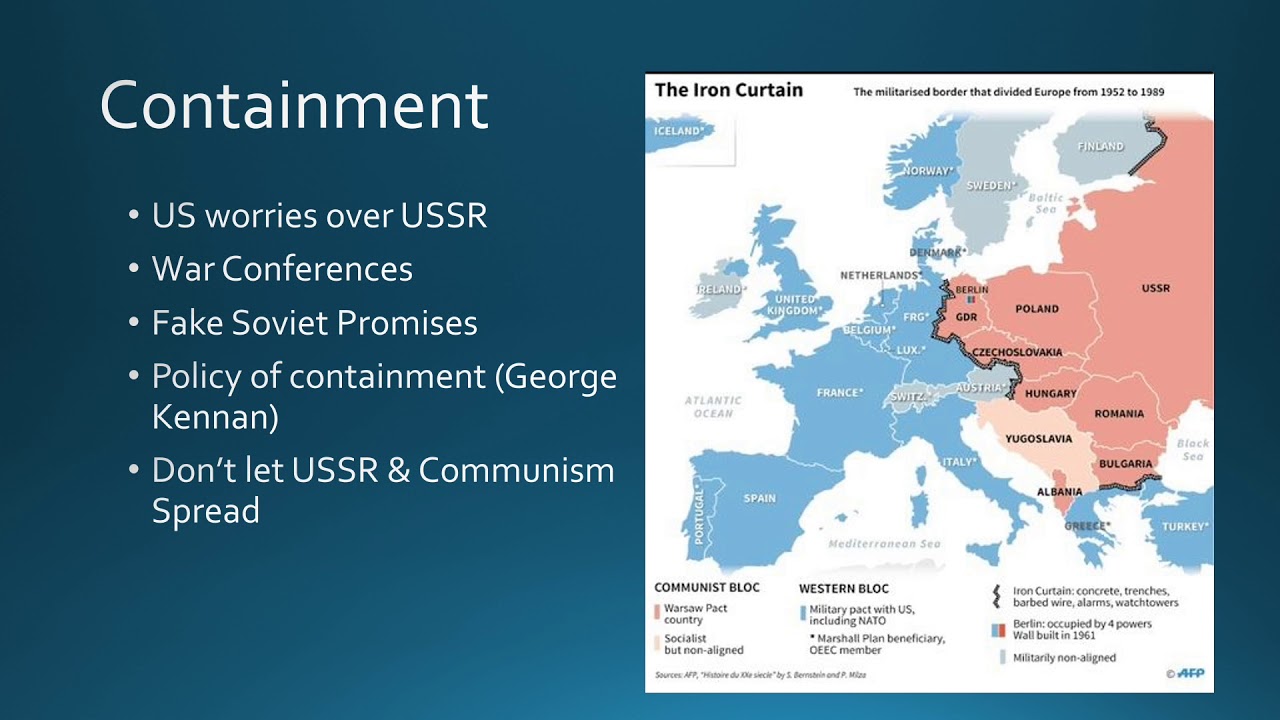



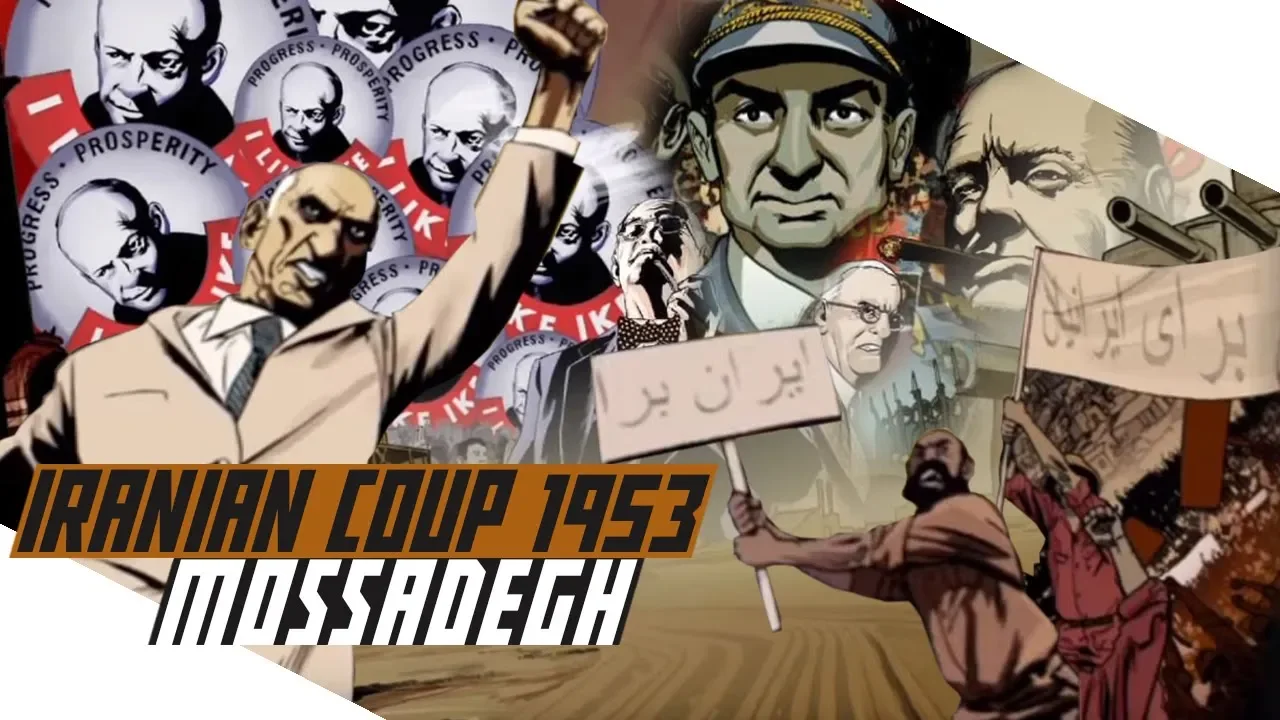





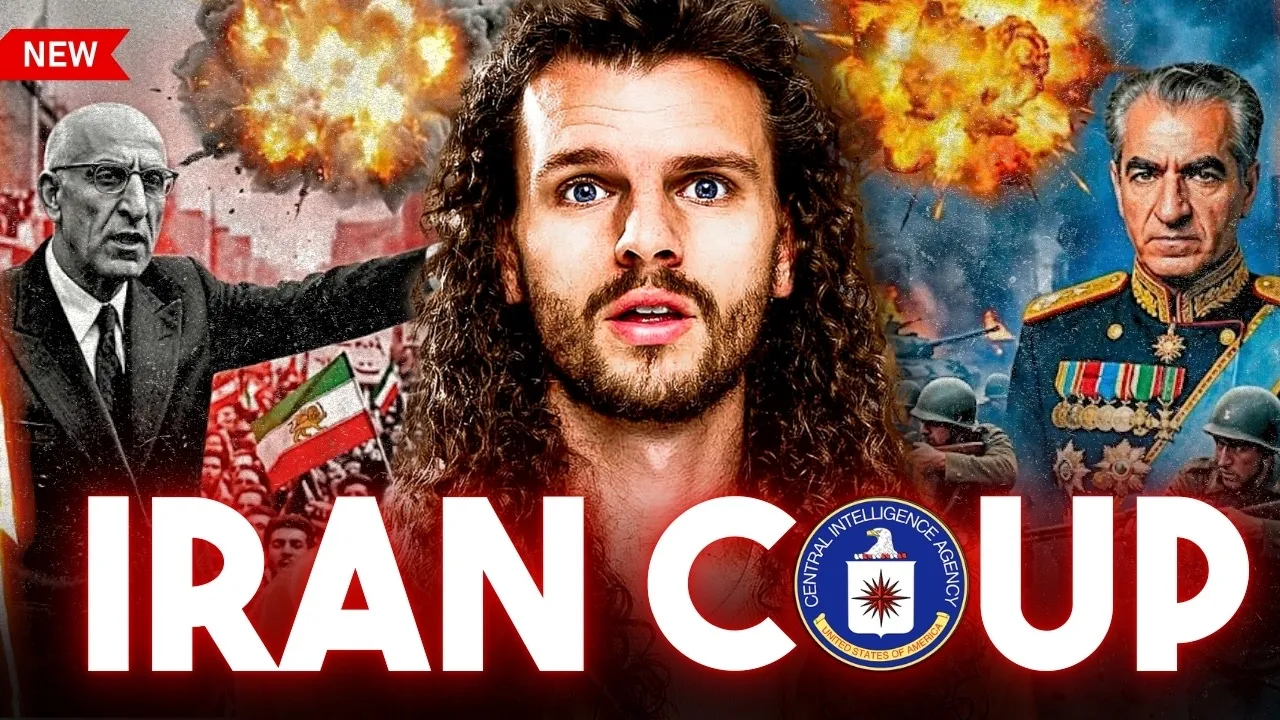






In 1953, the CIA and MI6 orchestrated a covert operation called Operation Ajax to overthrow Iran's democratically elected Prime Minister Mohammad Mossadegh, who had nationalized the country's oil industry; this coup, motivated primarily by Cold War fears of communist expansion rather than direct oil interests, restored the Shah to power and established a US-friendly authoritarian regime that lasted until the 1979 Iranian Revolution, demonstrating how Cold War ideology and strategic interests can lead to foreign intervention in sovereign nations.
The 1953 Iran Coup: How the CIA Overthrew Iran's Democracy
Added:The geopolitical dynamics of the early Cold War, specifically the containment policy of the United States and the intense fear of Soviet expansion into the Middle East.
The history of foreign exploitation of Persian oil, particularly the role of the British-owned Anglo-Iranian Oil Company (AIOC) and its economic impact on Iran.
The political structure of Iran in the early 20th century, including the roles of the Shah (monarch), the Majlis (parliament), and the rising nationalist movement led by Mohammad Mossadegh.
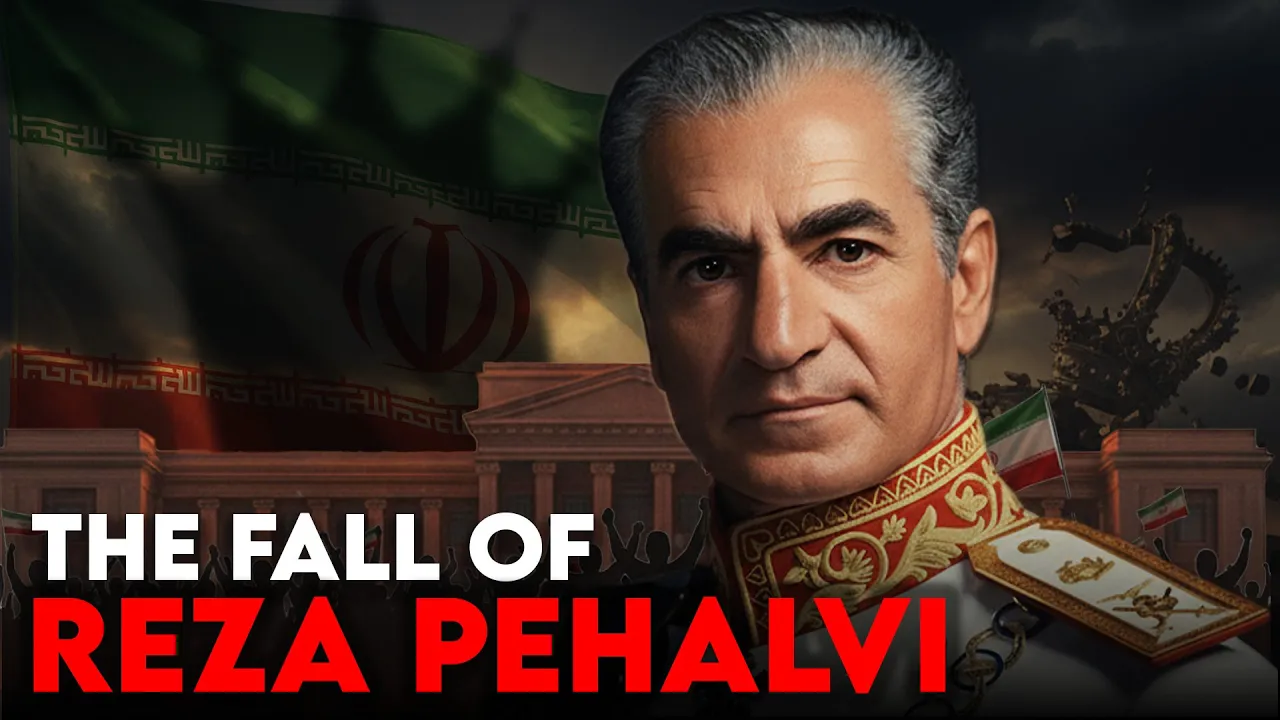
The authoritarian rule of Shah Mohammad Reza Pahlavi post-1953, the modernization efforts of the White Revolution, and the oppressive role of the SAVAK secret police.
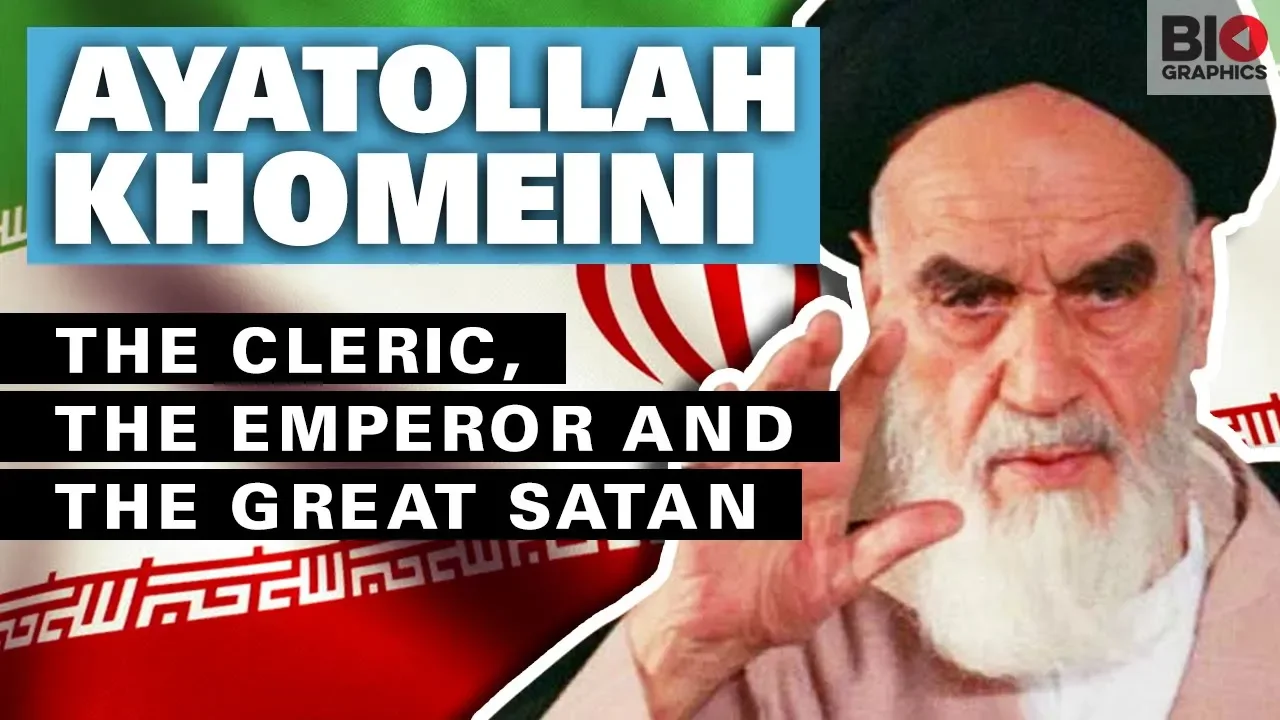
The 1979 Iranian Revolution, the rise of Ayatollah Khomeini, and how the memory of the 1953 coup directly fueled the US Embassy hostage crisis.
The geopolitical concept of 'blowback' and its application to United States foreign policy in the Middle East over the late 20th and early 21st centuries.
A comparative analysis of other Cold War-era CIA covert operations, such as the 1954 coup in Guatemala (Operation PBSUCCESS) and the 1973 coup in Chile.
462.1K views11.6Klikes19:01Original Release: 2024-10-04
In 1953, Iran is at a crossroads. After decades of interference by foreign powers eager to exploit its oil reserves, the government decides it will throw them out and take control of the country’s wealth. But with the super powers’ Cold War paranoia and thirst for oil, it won’t be easy – especially once the CIA gets involved.
By the early 1950s, Iran has experienced decades of upheaval. In 1921 Reza Shah Pahlavi comes to power in a British-supported coup, and begins a program of modernizing and westernizing the country on the Turkish model, while at the same time resisting British and Soviet influence. He also renews agreements with the Anglo-Iranian Oil Company that give the British state-controlled firm preferential access to Iran’s oil for extraction and sale. The Second World War brings dramatic changes: in 1941, British and Soviet troops invade neutral Iran to get control over its oil, prevent German influence, and open a route for military aid to the USSR. They exile Reza Shah and replace him with his son Mohammad-Reza Pahlavi, who takes on the royal title of Shah. The Soviets also try to muscle their way into Iranian oil in 1944, but fail.
Iran’s new ruler faces a host of problems during and after the war. He’s unpopular, not least because he represses nomadic tribes, confiscates privately owned land for himself, and fails to meet citizens’ expectations of a better quality of life. Many Iranians are unhappy with foreign occupation and poverty, and even after the British and Soviet troops leave in 1946, that its oil reserves are controlled by foreign oil companies who don’t share revenue fairly. Many of the Shah’s critics want to use oil revenue to restore Iran’s full sovereignty and modernize the country, and the question of who will control Iranian oil sets the stage for a major crisis in the early 1950s.
Some parties support the Shah’s position, who wants stability and to continue to benefit from the oil deal with the British. The large Communist Tudeh party wants the Soviet Union to have some control. The Islamist terrorist movement Fadaiyan-e Islam opposes foreign control, wants a theocracy, and assassinates several high-ranking politicians. But the most important political force is Mohamad Mossadegh’s National Front, a broad coalition of leftists, centrists, nationalists, and even conservative clergymen like the influential Ayatollah Kashani.
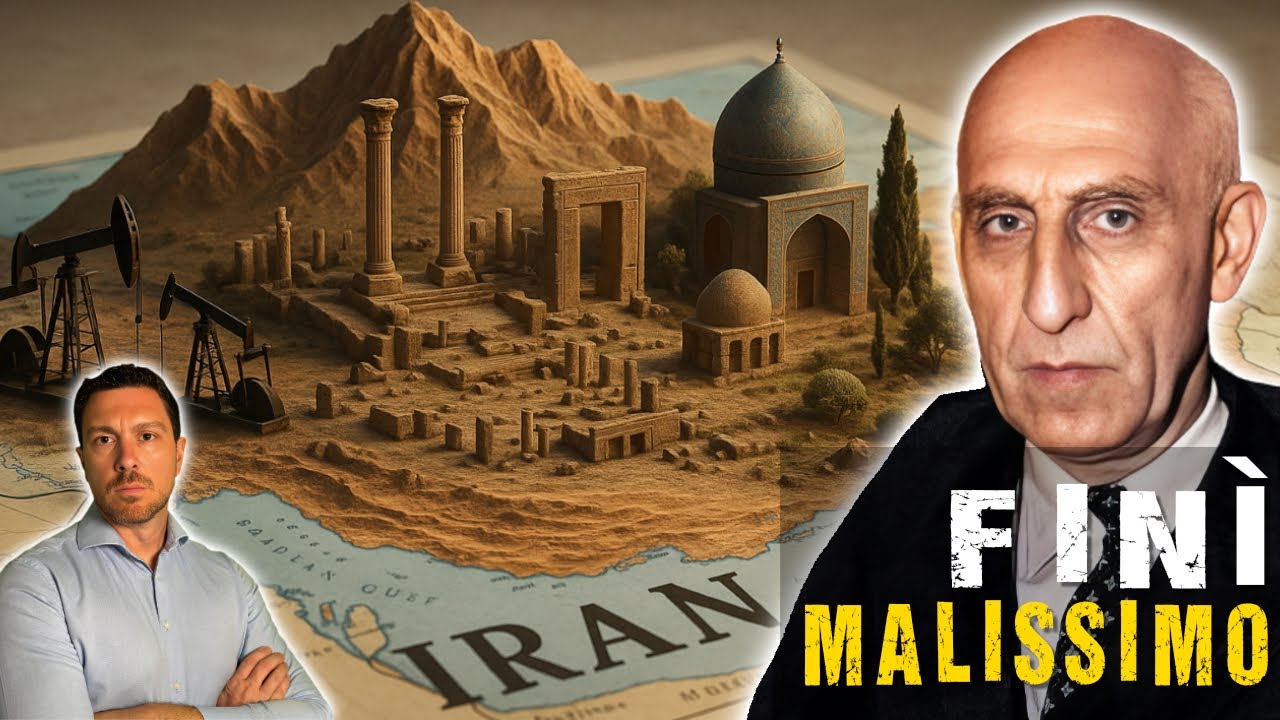
This mixed group is held together by opposition to British influence, the wish to empower parliament at the expense of the Shah, and the desire to bring the oil industry under Iranian state control by nationalizing it. In 1951, the parliament elects Mossadegh prime minister with a large majority. He is a wealthy landowner and monarchist, but introduces sweeping reforms, including more rights for workers, social security, and a tax on landowners. Mossadegh’s priority though, is getting the British out and nationalizing oil.
He demands a better profit-sharing deal and expels some British oil company personnel, but Anglo-Iranian interrupts production. Mossadegh, with the approval of parliament, announces the nationalization of the company in April 1951: “Long years of negotiations with foreign countries have served no purpose. The Iranian state prefers to control its own oil production. Thanks to the nationalization of the British company, we can combat corruption in our country. Our oil profits will enable us to review our entire budget to fight poverty, sickness and underdevelopment. Another important point, we will now be able to preserve our international interest from foreign influence. The British company has nothing more to do in our country, save to return its assets to their true owners.” (Shirali 60-61) Iran’s oil is now under its control, but Mossadegh has made many enemies. The Shah’s supporters, landowners, and religious conservatives feel he is too radical. Tudeh is upset the USSR has not been involved and has the support of many intellectuals and some army officers. The Islamic extremists even try to assassinate Mossadegh, since he won’t introduce sharia law. The economy also suffers, since there are not enough trained Iranians to run the oil wells. Oil production falls from 241 million barrels in 1951 to just 10 million in 1952, with a corresponding and catastrophic drop in state revenue. The British are furious, as they view their oil interests in Iran as a question of state security. London complains to the UN Security Council and the International Court of the Hague, but neither feel the problem is within their jurisdiction. They sanction oil sales, their forces carry out military exercises in the region, and Opposition Leader Winston Churchill even suggests a coup. London does pressure the Shah to get rid of Mossadegh and appoint a more compliant prime minister, and British MI6 agents secretly support anti-government protests – although the Foreign Office sees a danger in half-measures: “Until we [the British] made it perfectly plain that we see no possibility of reaching an agreement with Dr. Mossadegh, the growing opposition [to] him will be unwilling to commit themselves to the point of bringing about his overthrow” (Azimi) Meanwhile, the United States worries that conflict between Britain and Iran might play into the hands of their Cold War rivals, the Soviets - when in reality Moscow has a poor opinion of Mossadegh at this time. In fact the CIA has been quietly trying to limit the Tudeh Party’s growth for several years. So President Truman sends diplomat Averell Harriman to Iran over British objections. Many Iranians, including Mossadegh, see the US as fairer partner than the British, especially because the US has no major economic interests in the country. Harriman does convince the British to re-start talks, but these fail and he blames Mossadegh for being unwilling to compromise. Still, Truman and Secretary of State Dean Acheson are skeptical of British motives, and veto a British plan to occupy the port of Abadan. The Shah, meanwhile, fears Mossadegh’s reforms and the danger of conflict with Britain – he even fears for the monarchy’s very existence: “The worst years of my reign, indeed of my entire life, came when Mossadegh was Prime Minister....Every morning I awoke with the sensation that today might be my last one on the throne.” (Zahrani 94) [MOHAMMAD REZA PAHLAVI] When Mossadegh resigns suddenly in July 1952 after an argument over who should control the military, the Shah appoints Ahmad Qavam in his place. Mossadegh is still popular among the people and now even some of his political rivals are outraged: “Qavam must know that the people will not submit to his colonialist policy. It is not by terrorizing people that he will manage to govern. If need be, I shall call Iranians to a holy war (the jihad) against all foreigners and their mercenaries who want to steal our country’s assets and endanger its independence.” (Shirali 62/63) Most parties support a 5-day uprising following Mossadegh’s dismissal. Dozens are killed in the violence, but the revolt forces the Shah to re-appoint Mossadegh as Prime Minister. Tensions have only increased, and Britain now turns to the US for help since Iran has broken off diplomatic relations.
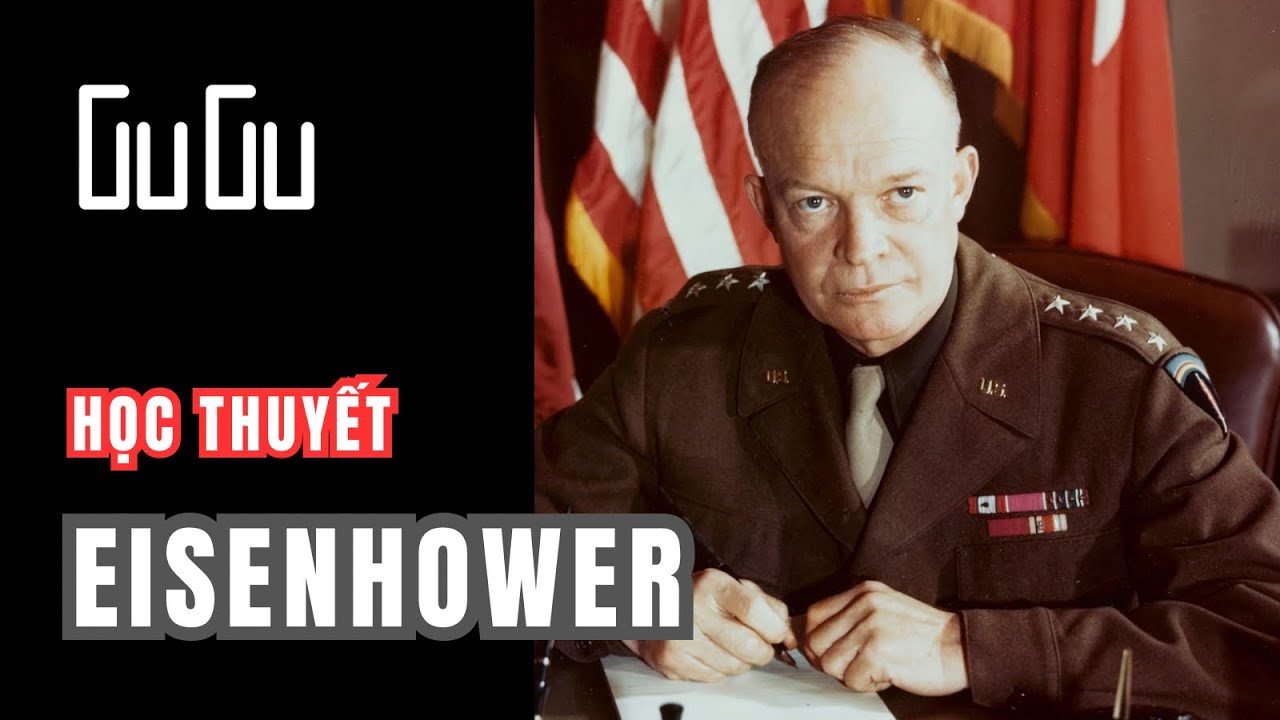
President Eisenhower’s election in late 1952 changes US policy in the Middle East, as his administration adopts a more active “New Look” foreign policy. President Truman had earlier supported Mossadegh, and didn’t want to provoke Soviet intervention by getting involved. Now though, the intensity of the Cold War, including the recent Chinese Communist victory in their civil war and the ongoing conflict in Korea, heightens US fears about communism in Iran. There is some debate about whether US oil interests play a role in the decision to launch the coup, but it’s more likely the worries about Communist spread are the main motivator. Eisenhower will later share his view: “Iran’s downhill course toward Communist-supported dictatorship was picking up momentum. For the Shah, the time had come to check that course[.]” (Balaghi 73) Iranian anti-communist political figures and some in Washington now suspect Mossadegh of authoritarian and communist sympathies. This is how they interpret events when Mossadegh interrupts the 1952 elections before all parliamentary seats are filled, requests emergency powers from parliament, pushes for more centralized power, removes unfriendly army officers, and works with Tudeh in parliament. Several National Front allies, including Ayatollah Kashani, break with Mossadegh in protest, and it’s possible MI6 and CIA agents have contributed to some of this internal discord as well. Meanwhile the British still want to recover their stake in the oil industry, and approach the Americans with a plan for a coup in Iran.
In November and December 1952, CIA ad MI6 agents hold secret talks. British agent “Monty” Woodhouse chooses his words carefully: “Not wishing to be accused of trying to use the Americans to pull British chestnuts out of the fire, I decided to emphasize the Communist threat to Iran rather than the need to recover control of the oil industry. I argued that even if a settlement of the oil dispute could be negotiated with [Mossadegh], which was doubtful, he was still incapable of resisting a coup by the Tudeh Party, if it were backed by Soviet support.
Therefore he must be removed” (Balaghi 86) The US agrees to the plan despite the objections of some CIA officers, and Operation Ajax is born: the CIA, MI6, the Shah (once he is informed), and some anti-Mossadegh Iranians will work together to remove Mossadegh from power. Among these are paid agitators and informants, including journalists, officers, and intellectuals, but some sources claim former Mossadegh ally Ayatollah Kashani is also involved. Retired General Fazlollah Zahedi is to be the new prime minister, and the CIA sets aside 1 million dollars for the plan, about 12 million dollars today. The main organizer is CIA agent Kermit Roosevelt.
In early 1953, anti-National Front propaganda appears in Iran, including several new newspapers – and several major anti-Mossadegh riots take place, especially after he dissolves parliament via a rigged referendum. Agents also target members of parliament and army officers to turn them against the Prime Minister. In August, Operation Ajax goes into action – an episode whose events and interpretations are still controversial.
The Shah is hesitant to move against the popular Mossadegh openly and distrusts the British – he only agrees after reassurances from Roosevelt. On August 15, 1953 Mohammad-Reza Pahlavi dismisses Mossadegh with a CIA-drafted decree and has several ministers arrested. But the Shah’s decree is illegal as parliament has not approved it, and Mossadegh is tipped off, possibly by Tudeh. Police loyal to the Prime Minster arrest the officer of the Shah Imperial Guard who serves him with the decree. Army units are also on the move, some to arrest Mossadegh, and others to protect him. General Hussein Fardust recalls: “Zahedi ordered to execute the plan of coup, but surprisingly, none of the military formations moved from their locations. The Minister of Defense, General Riahi, was being informed of the incident and the military units loyal to Mossadegh disarmed and arrested the three military units of the coup, without a clash.” (Fardust 177) In the aftermath, chaos reigns. Forces loyal to Mossadegh search Tehran for Zahedi, who goes into hiding at a CIA safe house. Angry crowds tear down statues of the Shah, though it’s still debated which political or foreign forces are behind them, and the Shah flees the country, much to the surprise of the Americans and British. Government forces arrest suspected plotters in the military, and there are even reports Mossadegh orders gallows erected on Sepah Square. Large Tudeh protests add to the confusion, especially since they are likely started by Iranian CIA agents as a false flag to discredit Tudeh before actual Tudeh supporters unknowingly join.
Washington believes Operation Ajax has failed, but Roosevelt, Zahedi and their allies try again.
Roosevelt arranges for journalists to interview Zahedi, and the clergy begins a new propaganda effort. US Defense Department official Wilbur Eveland recalls what happens next: “On August 19 loyalist mobs were collected in southern Tehran and were led into the modern quarters, where they swept along soldiers and officers. General Zahedi emerged from hiding to climb into a tank and be taken to the radio station, where he proclaimed the new government.” (Balaghi 91) The crowds are the subject of many allegations – that they are paid by the CIA, organized by Kashani, or egged on by criminal elements. Some police and military units join, and pro-Zahedi forces with 32 Sherman tanks besieges key points in the city. About 300 people are killed, Zahedi’s troops arrest Mossadegh after heavy fighting at his home, and the General proclaims himself prime minister. The Shah returns, and his courts sentence Mossadegh to house arrest in his home village. According to Roosevelt’s later memoir, the monarch credits the CIA agent personally: “I owe my throne to God, to my people, my army—and to you!” (Balaghi 84) There is though, some discussion about who is really responsible for the coup’s success. Most historians, and the CIA and MI6 agents who later write memoirs, attribute the coup’s success to the CIA and MI6. President Eisenhower believes Roosevelt’s version, as he confides to his diary: “Another recent development that we helped bring about was the restoration of the Shah to power in Iran and the elimination of Mossadegh. The things we did were ‘covert.’ If knowledge of them became public, we would not only be embarrassed in that region, but our chances to do anything of like nature in the future would almost totally disappear. […] I listened to [Roosevelt’s] detailed report and it seemed more like a dime novel than an historical fact. […] we can understand exactly how courageous our agent was in staying right on the job and continuing to work until he reversed the entire situation.” (Eisenhower) But some point to US State Department documents that order a halt to the coup after its initial failure, which would place more responsibility on local actors like General Zahedi and the clergy for its success.
Woodhouse even claims the CIA simply exaggerates its role to get a budget increase from congress.
In any case, Iran was now a US-friendly power. The Shah’s government supports US interests, and opposes Soviet ones most of the time – and the Anglo-Iranian Oil Company, soon renamed British Petroleum, resumes the extraction and sale of Iranian oil – now joined by US companies. The success of Operation Ajax helps encourage the US to sponsor other Cold War coup attempts in years to come – including in Guatemala, Egypt, Indonesia, and Cuba.
In Iran, the Shah and Zahedi crack down on internal enemies – the government declares opposition parties illegal, hunt down Islamic groups, sidelines Kashani, and represses Tudeh and the remainder of the National Front. Another step in authoritarian rule is the creation of the Shah’s secret police, the SAVAK, who will soon strike fear into most Iranians. US intervention based on Cold War fears of Communism creates a powder keg in Iran. It will take more than 50 years for future President Barack Obama to admit the US role in the 1953 coup, and by then, Iran will have faced even more dramatic upheavals.
1953 was not just a pivotal year for Iran, but in world history. The death of Stalin marked a turning point in the Soviet Union which wrestled with his legacy under Nikita Khrushchev.
One of the lasting impacts of Stalin was the nuclear program that matured in the last years of his rule. From the tests of Soviet nuclear weapons to the dream of “atomic powered communism”. If you want to know more about this topic, check out our documentary series Red Atoms which chronicles the Soviet nuclear program from its origins in World War 2 to the Chernobyl disaster and beyond. And where can you watch Red Atoms ad-free and in 4K resolution? On Nebula, a streaming service we’re building together with other creators and where we don’t have to worry about the almighty algorithm or advertising guidelines. On Nebula you can watch all our regular videos ad-free and earlier than on YouTube plus exclusive series like Red Atoms or our World War 2 series 16 Days in Berlin and Rhineland 45. If you head over to nebula.tv/realtimehistory you can get an entire year of Nebula for just $36 for an entire year. Nebula is not just available in your browser, but also on smartphones, Apple TV, Roku and more. And for those of you that want to share everything Nebula has to offer with your family and friends, Nebula is now offering Annual Gift Cards. Use the link gift.nebula.tv/realtimehistory to give a year of Nebula to a friend. Whether you enjoy Nebula yourself or gift it to someone, you are directly supporting our work here at Real Time History.
We want to thank Philipp Trzaska for his help with this episode. For more Middle Eastern history, check out our video on the Gulf War. If you are watching this video on Patreon or Nebula, thank you so much for the support, we couldn’t do it without you. My name is Jesse Alexander and this is a production of Real Time History, the only history channel that refuses to pull British chestnuts out of the fire. Kheili mamnoun, khodahafez.
Up Next
43:41
Iran 1979: Anatomy of a Revolution | History Documentary
@aljazeeraenglish
575.5K views•2019-02-04

33:02
The Great Schism of 1054: Causes and Consequences
@SacredCathedrals
113.5K views•2026-02-19
24:56
First Sino-Japanese War 1894-95: Japan's Rise to Power
@realtimehistory
468.2K views•2025-04-18
17:05
Understanding the Cold War: Superpower Conflicts and the Road to Détente
@OverSimplified
46.1M views•2019-01-24
Related Study Plans & Knowledge Roadmaps
Structured learning paths in History
history
Byzantine Iconoclasm: Theology, Art & Politics
01Foundations of Byzantium and Early Christian Images
02The First Iconoclasm: Leo III and the Crisis of Images
03Empress Irene, Nicaea II, and the Second Iconoclasm
+ 2 more learning modules
9h5 modules
Explore Roadmap
history
Iranian Revolution (Causes, Events & Legacy)
01The Pahlavi Dynasty and the Roots of Discontent
02The Spark of Rebellion and the Rise of Khomeini
031979: The Fall of the Shah and the Climax of the Revolution
+ 2 more learning modules
8h5 modules
Explore Roadmap
history
Mali Empire: Mansa Musa, Trade & Timbuktu
01Foundations of the Mali Empire
02The Trans-Saharan Gold and Salt Trade
03The Reign and Pilgrimage of Mansa Musa
+ 1 more learning modules
6h4 modules
Explore Roadmap
history
1947 Partition: Politics, Borders & Legacies
01Foundations of British India and the Divide
02The Political Negotiations and the Mountbatten Plan
03Drawing the Boundary: The Radcliffe Line
+ 2 more learning modules
8h5 modules
Explore Roadmap