


















The liberal paradox refers to the fundamental tension in liberal democracies between economic openness (requiring immigration for labor and growth) and political/cultural closure (requiring citizenship and national identity boundaries). Professor James Hollifield argues that Trump did not resolve this paradox but instead undermined liberal democracy by restricting immigrant rights and asylum protections, demonstrating that economic and demographic demands for immigration cannot be eliminated through political will alone.
Understanding Trump's Immigration Policy and the Liberal Paradox
Added:The concept of 'The Liberal Paradox' in political science, which describes the tension between economic openness (the need for labor) and political closure (the demand for sovereignty) in liberal democracies.
A basic understanding of the US executive branch's authority in shaping immigration policy, including the use of executive orders and border enforcement mechanisms.
Fundamental economic drivers of international migration, such as labor market shortages, wage differentials, and demographic transitions in developed nations.
The core principles of economic globalization, specifically how the free movement of goods, services, and capital contrasts with the highly regulated movement of human labor.
A comparative analysis of how other Western democracies, such as members of the European Union or Canada, navigate the liberal paradox and manage their migration policies.
Deep exploration of Professor James Hollifield's broader theory of 'The Migration State' and how modern states are defined by their capacity to manage migration flows.
An assessment of the long-term macroeconomic and demographic impacts of restrictive border policies on key domestic industries like agriculture, healthcare, and technology.
Analysis of subsequent presidential administrations' immigration agendas to determine if the structural constraints of the liberal paradox persist across different political leaderships.
119 views1likes1:32:09Original Release: 2025-07-09
Okay, everyone welcome.
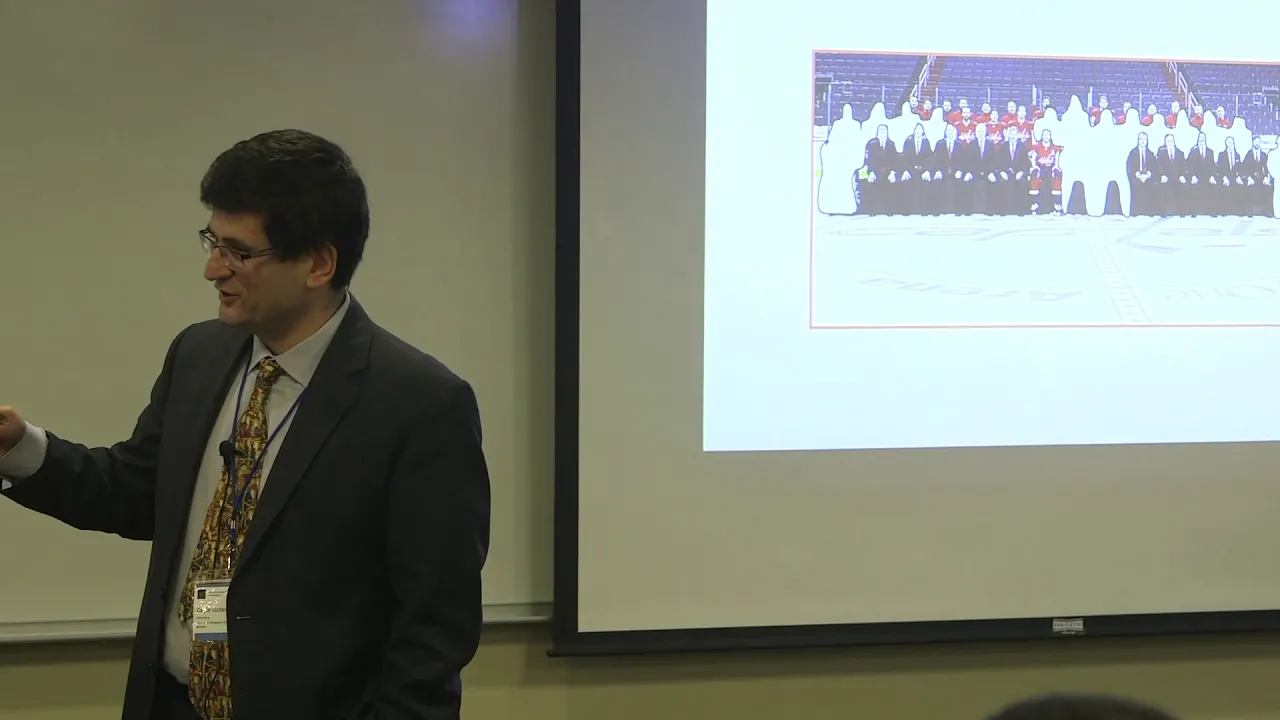
My name is Karin Vaglan. I'm a postoc with the NCCR. On behalf of the organizing committee, I'm honored to present this year's keynote speaker, Professor James Holifffield.
Um, Holyfield is a professor of international political economy in the department of political science at Southern Methodist University in Texas, where he also serves as the director of the Tower Center.
Holyfield's extensive scholarly contributions have um profoundly influenced the field of migration studies. He is known for conceptualizing key ideas such as the migration state and the liberal paradox.
And in addition to his academic achievements, Professor Holiffield has lent his expertise as an adviser to various governments and international organizations.
um in his lecture today he will provide us with valuable context and insights into the historic political and economic backdrop for Trump's migration policies.
So this is a very very timely um lecture. We are also privileged to have with us professor Sandra Lavane a distinguished migration scholar and political scientist from the University of Geneva and she is also a project leader with the NCCR.
Um so Labane is a leading expert on European migration policy and has made substantial contributions to the literature on EU migration governance specifically and following Holyfield's lecture she will offer a comparative perhaps European perspective on recent developments in the US and after both presentations we will open the floor for a Q&A session thus providing you with the opportunity to engage with our esteemed speakers. So without further ado, I welcome Professor Holyfield.
Okay. Um [Music] Uh so I will having said a few things in French I apologize I can't say something similarly in German but that would be uh bad for you and me too.
uh but uh I have to just say a few uh uh things before I start the lecture. First of all, my great friend and colleague Johnny Deato, all of us in this room know Johnny and what he's done. But this with this program uh the NCCR on the move is uh an internationally renowned program and it has done so much to bring people like all of you in this room together so many scholars especially I've been uh on the board of the NCCR I think al since the inception through various phases and uh uh always a great pleasure to see so many young scholars coming together with a few old senior folks like me. Uh, and I also have to really extend a thanks to the staff uh of the NCCR, especially the fabulous Gina Fior.
How many times Gina has bailed me out of, you know, bad train tickets, wrong timing. Uh but um uh I've been on a a bit of a whirlwind tour here. I spent a few weeks in Japan early June. Uh then in Scandinavia uh back in Paris for a couple of glorious weeks, although we were there for Emiscoco last week. And Johnny, it was hot in Paris.
It was hotter in Paris, much hotter than it was in Texas. So that doesn't happen very often. But on this tour, um I have been doing my best to try to explain uh what in the heck is going on in the United States of America. Uh big big big changes in our politics, both domestic politics and our foreign policy.
Uh so here I am in in Nhatel. Also, I'm going to try to enlighten you on some of the things that are happening. Uh, I will be going back to uh to Texas at the end of the week. I'm just hoping I could will be able to get back in the country after all the things I've had to say about Trump, but we'll see. Um, okay. So this is a lecture about the dilemmas of immigration control and specifically zeroing in on this idea of the liberal paradox. I know a lot of you in this room probably have heard of this idea. I think I first advanced this idea uh maybe in the late 1980s, early 1990s.
Uh so it's been around for a while and I did pose a question. Uh has Trump resolved the liberal paradox? That's the question. Um and first of all just a little shameless publicity. Uh some of what I have to say is covered in this book. Again, many of you in the room probably know this book which is now in its fourth edition. Uh there is a brilliant chapter in the book on Switzerland written by some guy named Damato.
Uh so check it out. Uh check out the book. Um I know I won't get through this entire thing, but I'm going to do my best to um uh I guess I better stay in front of the camera here. I'm walking around too much. Hopefully those of you who are online will be able to see and hear me.
But um I will go through this fairly quickly and we're going to leave hopefully a lot of time for questions and for uh my colleague Sandra Lavine's u comments. I think I've known Sandra also for a very long time maybe even since she was a graduate student in Florence. I think we go back that far.
Um so I'm looking forward to her comments. But uh so I want to talk about the dilemmas of immigration control. Um and at least a few of you in the room were in emo. I don't know if Anna is here somewhere but we got into issue of of narratives. So much of what happens in immigration policy revolves around the narratives the myths surrounding immigration control. A lot of symbolic politics. I know there some of you in the room are political scientists and will know what that means. uh then I will talk quickly about the economic dilemma uh the demographic dilemma and if I have time I want to say something about u immigration and the open society. Uh you will know that that expression comes from the uh the great uh Austrian American philosopher Carl Pauper in his book the open society and its enemies.
So dilemas um the liberal paradox um I have advanced this idea that in order for liberal societies to prosper uh they need to be open economically and that means being open to trade investment and migration. Uh Richard Rose CR, you see his name in parenthesis here, wrote a book way back in the 1980s about the trading state. And I since at least 25 years or so, I've been writing about what I call the migration state.
And I'll explain what I mean by that in just a moment. But the problem with liberal societies is they must be they must maintain some degree of closure politically and legally because liberalism liberal democracies depend on the deemos citizenship the institutions of citizenship and nationality. Uh for those of you who've ever read Spheres of Justice by the uh political philosopher Michael Walter, you will know uh what I'm referring to. So this is a paradox.
If you think about it for a moment, it's a paradox. Uh how can societies be both open and closed at the same time? If you want to see a picture of the migration states, you might just write this down.
We can come back to it in the discussion. But I have argued for many years that migration policy is basically a fourdimensional game.
There are four dimensions to the tradeoffs that are involved.
And uh I want to get into some of these trade-offs during the talk here, but I will just say very quickly and all states all states no matter where they are have to face these dilemas and these tradeoffs. Not just liberal democracies uh but also autocracies.
But in normal times we have lots of debates about markets, the economic dilemmas associated with migration.
uh and of course uh something I have written about since the beginning of my career uh we have to talk about the status and the rights of the immigrants.
Um but there are times as we know in history when security security uh issues will overwhelm the issues of markets and rights. And when you look at the perfect storm, uh, culture comes into play. And I know culture is a very big amorphous term.
I'll try to illustrate what I mean by that as I go through this. So if just imagine if you're a politician leading a government, how do you find an equilibrium in this game? It's very, very hard. How do you make those tradeoffs? And we see this constantly.
Now already this is a very difficult game. It's a four-dimensional game. But it's also a game that has to be played on three different levels. So I don't know if there are any chess players in here, but imagine all the trade-offs you have to make, but you have to think of this at least in three dimensions. I mean three levels. Uh obviously immigration is a big issue at the local level. A lot of you in here study cities, towns. Um, obviously it is a an issue that's debated at the national level intensely in every society. Uh, each society is different. I'm going to talk a lot about the US in this lecture.
Uh, and of course, anything that happens at the national level with respect to migration is going to affect the region.
It's going to have international repercussions and foreign policy repercussions. So, it's a four-dimensional game that is played on three different levels. I'm just going to show you some pictures to try to drive home the points that I'm making here. I think um when you think about markets, you know, think about the demand for labor. Um this is a poster group of young Italian men who've arrived in the Munich train station. Uh they look very happy to me. They're going to work. This is 1960. And of course, I'm sure you can read the German. If you just have 60 marks, you can buy yourself an Italian. So just think think about that. And when we think about why so many foreigners came to work in Europe after the second world war, states, the receiving states went and recruited people to come and work. Same thing happened in the United States with the brasero program. A lot of guest worker programs. That's how these migrations really got started. Uh since we're in Switzerland, I thought I would at least mention this famous quote from uh the Swiss author uh playwright Mox.
Uh I think I'm not going to butcher the German here. I'll get we can come back and get you to read the German, but we asked for workers, but human beings, people came instead. For those of you who are not Swiss, maybe you've not heard this before, but we see a big humanitarian turn with respect to migration starting already in the 60s and 70s. Um, this is just a picture of workers in the fields in California. Uh, shouldn't these people have citizenship?
Uh, shouldn't they be given rights? And of course you know the big dilemma in the United States we have 10 12 million people who are living and working in the United States without status uh unauthorized. So that is a huge problem uh in the US debates. Uh just again thinking about the mythology and the symbolism. You know this is a famous selfie with the German chancellor here uh who famously said in 2015 16 bishop and das you know we can we can manage this we can do this. I think she said we solved the euro crisis we can resolve this refugee crisis and she said that Germany would have a new common culture.
Um this is just a picture of me standing in front of a billboard. I think this is in Bulham in the Rugavit. And again you can see the German sentiments here. The greatest disaster is forgetting. But if you're going to be open to migration, open to people who are fleeing as happened in 2015 16, politicians have to be constantly aware of the danger of moral hazard that if you open the doors too widely, maybe too many people will come. Uh too many will risk making the journey. Uh this is a picture of New York 911 2001 uh with the attack on the World Trade Center. Again, culture.
I always like this picture here.
Uh don't I have a right to be different to wear what I choose to wear? U reflecting my my identity, my culture.
Again, pictures driving home the cultural dimension of these debates. Okay, all of you recognize Jean Mari Le Pin. U you recogni everybody know who this guy is.
I often refer to him as Mu Ms. Farage, Nigel Farage. Msu Farage. He's a descendant of French Hugenot refugees who crossed the channel on small boats many centuries ago. So, somewhat of an irony there. And of course, I think you all recognize this guy here uh who has made his political career uh uh running against immigrants, against immigration, and it brought him to the White House once, and it has brought him back to power a second time. Um so, very quickly, I'm going to go through this very fast. Just want to show you a few things. I think most of you are familiar with the with the numbers here, but we have reached uh a historic high again. Um in proportional terms, we're at about 50 million foreignb born people in the United States in terms of the migrant stock.
And that is very close to where it was around uh the turn of the 19th and the 20th century. So again, you can just see where we are in terms of overall immigration, but I want to I want to focus a little bit more on the narrative. And again, going very fast.
I'm sorry to go so fast, but if any of you uh when we come back to the discussion, we can we can get into this, but uh the US is often referred to as a nation of immigrants. Me take a minute to look at this quote here. Can read it for you. The bosom of America is open to receive not only the opulent and respectable stranger, but the oppressed and persecuted of all nations and religions whom we shall welcome to a participation of all our rights and privileges.
Interesting quote. Any idea who said that?
Probably not.
That's the first president of the United States. So this idea of the United States as a land of refuge, a nation of immigrants, you know, this goes back to the founding. Of course, we know that George Washington and the founding fathers, they own slaves. Washington had two or 300 slaves. So the US itself was founded upon this massive contradiction. Again, I probably don't even need to read this, but um where is this immigration sonnet poem? It is inscribed the base of the Statue of Liberty in Washington DC.
I lift my lamp beside the golden door.
Um another quote for you just to get you thinking about the narrative looking back in American history.
Apologies to my Italian friends in the room, but Italians are murderers and bootleggers. Go back to where you belong. Uh, you do not appreciate this country who said this. You might be shocked to find out.
President Herbert Hoover, he said that in a letter uh that he wrote to some guy named Fior Fiorella LaGuardia who was a a congressman, a Republican congressman from New York, the mayor of New York. Uh and think he has an airport named after him. It's actually uh been upgraded. It's a very nice airport now. I think Joe Biden once referred to it as a third world airport, but it's actually quite a nice airport now. if you get a chance. But just think about these kinds of debates. And if you look back in American history, lots and lots of episodes of nivism.
So I'm going to try to stress with you that Trump is taking us back to the future. Uh we have seen this many times before in American history.
uh in the late um 18th century lots of anti-German and anti- French feelings midcentury anti-Irish anti-atholic the know nothing party you probably heard of them 1870s 80s very much an anti-Chinese anti-Asian it's 1882 you have the passage of the Chinese exclusion act which was extended to include clude all Asians especially the Japanese as well.
Fast forward the period of the Russian Revolution, a lot of anti- East European, uh the Red Scare, the fear of communism, bulcheism, and of course that became also very anti-Semitic because it was a period when you have lots of Jewish migration to the US 20s anti-Italian, anti-Polish, anti-Mexican, bordies, anti-Japanese, anti-Mexican, and more recently a lot of Islamophobia.
anti-refugee.
So, there's nothing especially new about this. Trump is taking us back to a virulent form of nivism, nationalism.
Again, just a picture for you to This is a a propaganda poster from the 1920s.
You can see Uncle Sam uh climbing up the mountain uh denouncing immigration, the dangers of all of these people coming from around the world. Couple of more things about the narrative.
Most of you uh probably know who Ben Franklin is. One of the founding fathers um who lived most he was born and grew up in Boston but lived most of his life in Pennsylvania. And uh love this quote.
Why should Pennsylvania, founded by the English, become a colony of German aliens who will never adopt our language or customs any more than they can change acquire our complexion. You know, the Germans are very dark-skinned worthy, dangerous people.
Fast forward to the 2000s, you can see my colleague, I spent about 10 years at Harvard, uh the late Samuel Huntington, who also in one of his last books denounced immigration and Mexicans as being a threat to American identity. Uh Huntington in his book said there were only three waves of immigration in American history.
uh the first wave that he thought the first wave was in the 19th century, the second wave coming at the be end of the 19th, beginning of the 20th century and of course the third wave coming starting in the 1970s and 80s. He did not count the first wave of immigration from the British Isles because he said that was the period of the founding of the country and that the US is fundamentally a Puritan, you know, white Anglo-Saxon Protestant uh country. Um, uh, California is a place which always had a lot of nivism. Ironically, today California is one of the most progressive open states in the country.
But if you look back historically, there were very strong bouts of nativism starting in California. Um, I pro I don't have really have time to get into this, but I'm happy to come back and discuss it. Uh if you look back historically, I think we can see basically four different sort of ideal types of the way Americans thought about migration. Going back to the Massachusetts Bay Colony, which um John Winthrop, who was the governor of the colony, called it a shining city on the hill. Uh these were the Puritans basically saying you can come and live here but you have to be like us, look like us, you have to worship the way we do. Uh so there's not much tolerance. Uh in the Virginia model, the planters, they just want your labor. Um and of course they impress the native peoples, many of whom died from uh from diseases.
Then they began to import African slaves. So only interested in labor and guest workers. Um then the Pennsylvania model, the Quakers who were much more open, they intolerant, you know, you can come live here, work, practice whatever religion you want as long as you accept the basic uh ideals of republican government.
California as I mentioned is a place which has a lot more nativism. Um now again quickly some numbers uh we have seen and of course uh these are a little bit out of date. Uh the combination of Trump and the pandemic really cut legal immigration in half. The flows of legal immigrants into the US have been averaging since the 1990s about 1 million a year. Those dropped to half a million. Of course, Trump is taking them way down again. And uh refugees and asylum seeking also going down. Refugee quotas drastically cretailed. Today, Trump is basically stopping all refugees, stopping all asylum seeking in the US. He's revoking the temporary status for hundreds of thousands, millions of people.
um net immigration to the United States did recover uh under in the Biden years after the pandemic. It it it it came back up to more normal levels as you can see here.
Uh but again, if I projected this out to 2024 25, you would see a very very precipitous fall uh in net immigration.
Uh and here you can see how recent arrivals have boosted the foreignb born population in the United States. Again, recovering to something like more normal flows. Unauthorized immigrant population has been trending down. Uh it reached uh its highest level around 2007 right before the pandemic. I'm sorry, right before the great recession. It has been trending down. It bumped up again somewhat after the pandemic, but uh lots of people have been going home. We've seen a big return migration to Mexico and even some to Central America. Uh I think all of you know about the surge in apprehensions at the southwestern border. Again, I don't have time to go into all of these, but we did see a big spike uh which actually started uh and during the first Trump administration and then soared uh after the pandemic.
Uh this just shows you uh what was going on in terms of this migration, unauthorized migration in particular, thinking about monthly encounters at the southwestern border. Uh and again, you can see how these started trending up.
um uh following the pandemic. Um uh again more on the numbers. The unauthorized population in the US, this is a pretty striking number. Uh the unauthorized population in the US is almost 1/4th of the migrant population.
Um so it is pretty high u by any standards.
Um I'm going to switch now from looking at numbers and flows and stocks. I want to talk about uh specifically about the economic dilemma dilemmas that are associated with migration. And let me just pause here and say when you think about whether Trump has resolved the liberal paradox.
Uh we are still facing in the United States the same economic and demographic realities uh which most countries in the OECD world are facing. So I don't think we're going to be able to escape from this dilemma. And let me see if I can illustrate that. Um, one of the big problems for the United States is, and this is true going back to the 1965, um, uh, law, uh, we admit people primarily on the basis of family connections and kinship.
Only about a quarter of those who are admitted uh, are admitted for employment purposes, obviously refugees and asileles. this diversity category.
That's the famous diversity visa where a lottery is held uh for nationalities that are under reppresented uh in uh in the other categories. Uh so for example, if you were wanting to immigrate to the US and you were Japanese, which very few Japanese are immigrating to the US or Norwegian, you could uh apply for one of these u uh diversity visas.
Uh and you here you can see how the United States um here you can see how the United States is an outlier in terms of the small number of uh the small number of permanent work-based immigrants. We're not much ahead of Korea. Uh Switzerland, you can see uh admits a lot of people uh for work as does Spain.
um Italy, Germany, Australia, the US is very much an outlier. Uh Canada on the other hand, as you know, Canada admits many more people to come and work. So this is just a contrast of the way in which these different countries confront the economic dilemma of such high demand for uh foreign and immigrant labor.
This picture's a little blurry and I apologize for it. Maybe we can turn that off. There we go. Okay. So, um, yeah, that's good. Got it. Um, this picture is showing you how employment in the US is growing. It's surging uh in the 21st century. Uh, immigration is trending uh along behind that. So uh employment is far outstripping immigration. So you can see how how tight the labor market is, how much we need foreign workers, foreign labor. Uh and of course if you look at US um policy, the problem is it's very focused on family, not work. U there's no alternative for people who want to come and work in the US.
uh uh if you were a Mexican or an Indian and you applied to get a work visa to come to the United States through the normal channels, you might have to wait 20 or 30 years to be admitted. So, uh this obviously creates a very large black market for labor. Uh the work-based visa quotas, I'll show you some other numbers, are very much insufficient.
um and um skilled workers face long cues. Country quotas penalize the populous nations. The countries like India that would send far more people to the United States, they are penalized through this quota system. And if you look at the allocation of visas in the United States, it it makes no sense whatsoever. Uh it's a sort of first come first- serve basis almost like a lottery. So the US immigration system is fundamentally broken in this sense. Um this is an interesting chart which I constructed with a colleague at the Dallas Dallas Federal Reserve Bank. Um and it just shows you that there's a pretty close correlation between high levels of employment growth in these different states and the growth in the foreignb born population. So uh those who are coming in they're gravitating to the states and the areas uh where there is tremendous demand where the economy is growing and expanding. Uh so again the immigrants are not stealing jobs from natives. They are uh uh not substitutes for native workers. They are compliments in uh the workforce. Again, I don't have time to get into all of the econometric evidence on this, but here you can see uh how much the correlation is between immigrant foreignb born population growth and the growth of economies in these states. Uh immigrants add tremendously to the high-skilled labor force. You can see the red number of foreignb born. they compensate very much for the lowskilled. So again this just shows you the economic imperatives the economic dilemmas here you can see that uh workers uh immigrant workers are very much over represented the extremes of the educational distribution. Uh they are very important very important at the lowest end of the labor market. There are basically very very few Americans who without a high school degree uh without much education who are willing to fill these jobs at the low end of the labor market. So uh the foreignb born share is very very high.
Uh the same is true at the high end of the labor market. Um those pursuing a doctoral degree uh almost a third of them are foreignb born. Um, again, I think I'll skip over some of these, but just quickly mentioning the fact that u the H2B visas for low-skilled people.
Um, you know, there's a tremendous demand for these visas. Trump has talked about perhaps increasing the number of visas. I haven't seen any move in that direction yet. Uh, but that would be a logical thing to do.
uh STEM health care. You can look at these categories here. Uh I recently had to go visit a very ill friend in a hospital in Paris. And if you look at the people who are working in the hospitals, I mean most of you probably have had this experience. The physicians, the doctors, uh the nurses, the technicians, um are very much it's a very much an immigrant and foreign labor force. So this just shows you how important uh the foreign workers are in each of these sectors. Uh I think I'll skip that one. Foreign students have been much in the news of late. The foreign students are driving the rise in PhDs awarded since 2000. So Trump has said he wants to stop foreign students from coming studying in the United States. This will be as you can imagine devastating of course for students who have planned their careers to come and study in the US and it will be devastating for many universities in the US that admit large numbers of foreign students. Okay, very quickly the demographic dilemmas, the demographic imperative. I think all of you know that we're living in rapidly aging societies.
We need labor. We need people. Um, some of my work has had an impact, believe it or not. It's unusual for to see our work debated in national parliaments, but I was just in Japan for a couple of weeks and my work has started to really catch on in the debates in Japan. Japan of course like Korea, Taiwan, uh these are societies that are facing uh you know basically economic collapse. So the Japanese are debating now. they're beginning to open up and develop an immigration policy. I'd be happy to talk more about Japan. Uh but just to show you the the demographic imperative, uh if you look at net immigration, it is now the thing that's adding more than the natural increase. And I think this will become the new normal. Uh that immigration is the only thing that will be feeding uh population growth in our societies. Here again is a graph that shows you Just look at this. Thinking about immigration and the working age population in the US, you can see how important the US born with immigrant parents, the second generation, the first generations, this is projecting out. Um, and basically the only nearly half of labor force growth since 1995 has been due to immigration.
uh all labor force growth all the growth in the labor force in the next two decades in the US will be from immigrants and their children. Let me repeat that all of so this is a very very strong imperative.
Um this is from the congressional budget office projecting out uh net immigration. You can see in the blue here the native population growth. So again, you can see that if our societies are going to continue to be dynamic and to grow, migration will play an incredibly important role in this. Uh this is just a a quick chart to show you since we're talking about demography here. Uh often you hear the argument that immigrants are coming, they're taking uh the jobs, they're getting on the on the dole, public welfare. uh that this chart shows you if you look at the fiscal impact of immigration uh it's like uh immigrants their children second generation the natives it's very very similar in terms of what their fiscal impact is they use public services when they're young and when they're old so it's very very similar to the natives uh again this is a an interesting chart here which shows you um population growth in France and the USA and it looks quite similar. Uh both societies had a baby boom. Again, we could go in and look at these numbers. Uh but they have become increasingly dependent on immigration, which is the gray area at the top to feed population growth. Contrast this with Germany and Spain, uh where you see, uh much earlier demographic transition, a sort of collapse. Spain very dramatic there. It's immigration that's really sustaining population growth. Germany something very similar.
So again, just looking at these demographic uh charts tells you something. So I'm going to take a few minutes. How are we doing on time? 10 more minutes. Oh, good. Okay. All right.
Now, I'm glad that uh Mateo is here because I want to talk about Carl Pauper a little bit and I want to talk about what I call immigration control, liberal democracy in the open society. So, just bear with me. Uh this is a uh a little bit of an aside uh looking at um uh why immigration control, why is immigration uh such a key issue uh in our democracies today and how it has the debate has been twisted uh and how it is under undermining our democracy and our open society.
Uh again I think all of you if you think about liberalism, liberal democracy, uh immigration, again going back to the liberal paradox, it reveals many contradictions.
Um this is the famous enlightenment idea of natural rights eloquently outlined by Thomas Jefferson. Again, one of the founding fathers, a slave holder. Uh again, I don't need to read this to you, but all men are created equal, etc., etc. That's the Enlightenment idea.
Obviously, this statement makes no mention of race, but we know the framers of the American Constitution, including Jefferson, would cottify race, protect slavery in the US Constitution to plate the interests of the slaveolding southern planters. Hence, the American social contract itself was built upon the idea of racial superiority and it argues for a degree of political and legal legal closure based explicitly on race. So, we the people at the end of the 18th century uh did not include the peoples of other races, the indigenous people or women for that matter. Uh but the other side of liberalism of course is the economic side of liberalism which we find in Adam Smith. His book Wealth of Nations was published in 1776 exactly at the same time as the American Revolution, the Declaration of Independence. Uh Smith optimistically said, "It is not from the benevolence of the butcher, the brewer, or the baker that we expect our dinner, but from their regard to their own self-interest." And of course, he used the metaphor of the invisible hand to argue for less fair, if left alone, individuals pursuing their own self-interest will promote the welfare of society as whole. So you can see here the political side of liberalism, the economic side of liberalism. Uh but neither the framers of the US constitution nor Adam Smith had very much to say about immigration. Uh but it is precisely the movement of individuals as labor across boundaries that pose the biggest dilemma for liberals and it is the working out of these dilemmas and contradictions through a process of political struggle at the domestic and international level that drives much of political development. able democracies uh and I would argue economic and human development in the world as a whole depends very much on migration, the movement of people, the mobility of people. So you begin to see why immigration is a big issue for liberals.
Uh, this might come as a little bit of a shock or a surprise, but I'm going to get to Carl Pauper in just a moment, but um, this is a quote from Minecom uh, which reflected the zeitgeist of the 1920s and this is what Hitler wrote in mine comp. The instinct for the self or the preservation of one's own species is the primary cause that leads to the formation of human communities. So the state according to Hitler is a fundamentally a racial organization. It is not an economic organization.
Uh Hitler saw liberalism, economics uh as a danger uh that would undermine the racial basis of society and the state. This is another quote from mine comp. Uh, sorry I don't have the German up there, but in North America, Hitler wrote, "The Tutonic element, which has kept its racial stock pure and did not mix it with any other racial stock, has come to dominate the American continent and will remain master of it as long as that element does not fall victim to the habit of adulterating his blood." Uh, does that remind you of any quotes from politicians of late? Uh uh this is exactly what Donald Trump said several times that uh immigration leads to the poisoning of the blood, the adulteration of the blood. Uh Hitler would go on to contrast the peoples of North America and the peoples of South America. He said the North Americans are going to be dominant because they're tutonic.
They're Aryan. The South Americans will decline because too much mixing of the races. So again, Hitler feared that economic thinking and economic forces would lead to more individualism. This would undermine his vision of a racial society. Popper, Carl Pauper, Austrian Jewish philosopher who had to flee uh Austria, fled to the United States. when he wrote his book, The Open Society and His Enemies, he was trying to explain responding to the scourge of Nazism. And for those I don't know how many of you in the room have read Popper, sometimes it's assigned in graduate seminars. I had to read it when I was a student. Uh and Popper argued that it is critical rationalism. You might want to think about that. uh constantly probing and testing one's assumption and this of course for the graduate students formulating arguments that are falsifiable.
It doesn't do any good to advance arguments that can't really be tested against the evidence. Uh but this is what Popper said is the best defense against racism uh tyranny and oppression. Of course he was trying to explain and understand what had happened in Germany with the rise of uh Nazism and fascism. Uh this is what I would call the Paparian imperative. So let me just pause for a second here and drive this point home. U politicians are making policy making up numbers uh and saying things that are clearly not true. uh it's up to us as scholars to probe and to test and to push back on this. Uh so that is what I call the poparian imperative. And Pauper said if we are not prepared to defend a tolerant society against the onslaught of the intolerant then the tolerant will be destroyed and tolerance with them. And he quickly added I don't imply that we should always suppress the utterance of intolerant philosophies. This is the key point. As long as we can counter them in keep them in check, counter them by rational argument, keep them in check by public opinion, suppression would certainly be most unwise. So the reason I bring this out so strongly is because the immigration debate has morphed into a debate against science.
uh it is an anti-enlightenment debate, an anti-enlightenment philosophy pushing against this critical rationalism.
So politicians and policy makers increasingly just make things up and they are they are pushing uh policies uh that are not founded uh in facts. Uh to say that immigrants take jobs away from natives when there is a very large body of economic literature that can demonstrate that that's not true. uh then it's incumbent upon us as scholars to say but that wait a minute that is simply not true to say that Haitian refugees in a little town in Ohio are eating the cats and dogs you know that is patently not true you can see that it's not true uh so we have to think about this poparian imperative um and of course we know that liberalism both in its classical and contemporary forms is built upon this paradox. So how can we resolve this paradox? Well, let me let me just I'm almost finished. So if you want to ask me how do societies confront the liberal paradox? How can they be both open and closed at the same time? Uh I will say the key the key to managing migration the key are rights. You have to give rights to people who come and live in your society and work there. If you do not do that, then you end up in the situation of the United States with 10 or 12 million people who are living outside of the social contract uh who are living there without membership and without status.
And of course, that's bad for the migrants. Uh it's bad for uh the society that hosts migrants without these rights, without status.
So if you're going to attack immigration or immigrants, I've often really worried about this throughout my career having brought so much attention to the liberal paradox.
Then you take away the rights, you take away the rights of the migrants and the asylum seekers and that is exactly what the Trump administration is doing. Um so I think I probably should conclude here.
just a few more slides if you'll and they want I'm very curious to hear how Sandra uh reacts to all this. Has Trump resolved the liberal paradox? Uh I would say no. Uh I would say no. And I could give an entire lecture about what's happened to the post-war liberal consensus, the rise of reactionary populism, the anti-immigration uh uh politics that we see across the Western world. That's a different paper.
It's a different talk. But certainly Trump has, as Johnny Deato pointed earlier today in his opening remarks, Trump has undermined this liberal consensus, open to trade, open to investment, open to migration. All of these things go together. Trump has rolled back the rights of immigrants and minorities. So he is trying basically to resolve the paradox by getting rid of liberalism. I never thought that, you know, I would say that. But, you know, one way to resolve the liberal paradox is to get rid of liberalism and to get rid of liberal democracy.
Uh he has restricted the right to asylum. Again, undermining uh international law. Uh but and here's my my caveat. Um Trump he I don't think he can repeal the laws of supply and demand. So the economic dilemmas that I have talked about are still very much with us and the demographic uh dilemmas as well. The demand for foreign labor both skilled and unskilled remains very high and the US has undergone a demographic transition now has an aging society.
However, I would just couple of words of conclusion.
Johnny was saying earlier or last night to me over dinner, we have to keep perspective on this which means understand that the US is still a pluralistic society.
It is still a pluralist democracy. Yes, the US institutions have broken down. I would say there are no institutional checks for the moment on Trump. uh but we have many multiple centers of power in the in the US and I still think we will get through this and that US liberal democracy will survive.
Certainly the liberal paradox is still with us. Uh it is still very much there.
Uh and in Japan they're debating this.
The ideas I know this idea was very popular at one point in Germany. The Germans very cut acutely aware of the liberal paradox. So have we reached the end of the liberal interregnum?
Maybe I'll ask that question to Sandre.
Uh have we reached the end of this post-war liberal order? Uh I think we can say clearly we're we are at a hinge of history here. Um it may be premature to to simply pronounce the death of the liberal order 1945 1925 rest in peace. Certainly the British and the French have not gone down this path at least not yet nor have the Japanese.
So the great game of immigration politics is going to continue. I could talk more more about that. I've got many international lectures I could give but I will conclude with this simple note here that open societies open societies our liberal democratic societies they depend upon good migration governance um and whether we're going to be in a vicious or a virtuous cycle you know will very much depend on how our governments manage migration going forward.
And I congratulate all of you. I congratulate Johnny and others for having such a fantastic research program here to look at all of these questions.
And I think it's incumbent on all of us in this room to think about how our work is informing uh the public debates. And we must be able to engage to stand up and follow the Paparian imperative, advance falsifiable arguments using critical rationalism to push back uh against the illiberal and anti-enlightenment views that have become so prevalent uh at this point in history. So, thank you very much.
My turn to listen.
Thank you. Uh I think I should move a bit here right for the camera. Well, this is not an easy task after such a comprehensive and complex and multifaceted talk. Uh but I will start with the easy part to thank you uh Jim for all your contributions, your significant contributions tonight here to to this audience uh in the 12 years of the NCCR where you were on our advisory board and you inspired uh the research um within the NCCR uh to to a great extent and you were often there at the annual retreats and it was always yeah a privilege for us to to have you among us and to to to follow your advices and your guidance in uh in research. Um and of course thank you for the field of migration studies because as Karen was saying in the beginning your conceptual contributions um are just um fundamental pillars around which um much of the migration research has developed. So in particular um the notion of the um liberal paradox and your four tradeoffs uh that um yeah within which states have to navigate for migration policy and it helps us so much to understand why these things are complicated and why they are never uh perfect and where why there will always be critique. there will always be politicization uh because there are these just fundamental um structural tangents. Uh um and so um your talk was um incredibly rich uh as um a rondu of the American uh immigration policy history uh but more broadly on these uh um fundamental uh challenges and it's yeah it's I cannot do justice um to it and so I will focus um on uh basically one point and then open up for the discussion. Um and um my point goes back to the liberal paradox and um its articulation as demand on the one hand and um uh demand for openness on the one hand and demand for closure on the other hand. And um I I think this these different demands.
The first point I would like to to make to this is that um they may be actually embedded in in um in the liberal uh world order itself because we have a state system which is particularistic and demands for closure. not only politics demand for closure. It's the state itself that demands foreclosure and um and then we have a liberal uh liberal um I don't want to say ideology but liberal aspirations that are universal um and we have the rights the legal system in in liberal democracies is has been framed in liberal terms.
um we can imagine legal systems that are not uh liberal right I don't think the rule of law has to be liberal but uh this was a major achievement of the post world war II order in the west and the liberal democracies that um we have a legal system that um as liberal and this uh liberal legal system has as such an as as as such an an expansive dynamic.
Um so when we have the liberal paradox it's not only the demand for workers it's not only the economy um that demands openness it is also our um fundamental laws uh constitutions and courts um and of course you um develop this uh notion of rights um very forcefully as well um um but I I think maybe um it is important to to bring this up uh after you talk again because you are certainly right that Trump will not um nullify the structural economic demand of aging societies and of yeah capitalism for flexible labor and so on.
uh but what about the capacity of such politicians to invalidate the rights dimension? Yeah, I think the demand will stay but what about the rights and here it's it's a much more longlasting trend that we can observe. Trump is just a caricature of it. But it has started basically in parallel with the with the legalization wi with the codification of migrant rights. We have had practically immediately a counterreaction of uh practices but also policies that circumvent these rights and that um restrict them. And um in the literature we have now more uh of of of such studies that come up that show yes we have had the liber we we have the liberal paradox but and we have had this liberal convergence towards more expansion of rights. Soal, brew baker, um this literature, but we also have something like the market model. Jess and Busher have developed this notion market model of migration, not the liberal model, but really the market model that is based on the guest workers that you showed the preros and they did not go away. Maybe we were too optimistic. We thought yes we have had the diffusion of the rights and the courts being empowered but these practices have not gone away in you have the irregular workers. We and we have always had some temporary types of work that is tied to the employer that is not free to change that has a sponsor. Um and now we have the posted workers in Europe that you know are just sent by an employer to do some cheaper work in another country and hardly enter the uh legal system of that country. Um and at the international level we have it also in the um uh trade in services that also has this notion of posted workers. So um it's it's a continuity um and um in in the field of asylum uh as well we can see as soon as states have introduced national asylum systems and signs the Geneva convention they have introduced notions of states countries visa policies and other filters to reduce their intake of of asylum seekers and refugees.
Perhaps it's um it's a dialectical relationship that we have there. And while uh populists uh may um not be able to fight against the um economic uh demand as long as we are in a liberal capitalist system but liberal in the sense of capitalism. Um maybe maybe uh we are observing something at the level of the rights that is more um sustained and more um yeah really uh at the edge of a transformation.
Um yes and perhaps with this I would uh open up for the discussion.
Jim, I suggest that we we take a few questions from the audience and then you can you can answer.
Yes. Um thank you Jim and also thank you Senator for your both your talks and your uh the exchange of your ideas. I was thinking during listening both of you and I think also Sandra's last sentences were very important to which extent we have to take uh democracy in the formula because populist basically think of an imagined majority which they want to mobilize in order to break the right system but also uh the whole liberal idea of the the rule of law. So the question is obviously um our societies because the state I see the state as a synonym for societies which we are I mean if there are impulses which you explained historically too which are going against the presence of others who are moving yeah what are there the means I mean we cannot preach because you cannot preach it with a scientific argumentation you know alone at least I mean you can show where the errors are but you cannot convince people who don't really are interested in science as we saw also during the pandemic uh that another argumentation is right because for them this is all fake well okay I think this is still on I'll just quickly I don't know if we want to take several questions or should we respond why don't we why don't we take a few questions Johnny I'll come back to your question hi um I have a question about the military complex, the military complexes in which we are at the moment.
Uh, and where you situate that in liberal theory, whether you would say it's more in the market dimensions or c cultural dimension or um, uh, demographic and how can we think together with those dynamics.
Okay, guess keep taking more questions here. I'm trying to take some notes so I can remember the questions. Yeah.
Uh thank you so much for this uh presentation. It was really really interesting to see. Um and I had a question about this comment that that Trump uh can't change the supply and the demand of labor and how that relates to immigration. But my fear is that um with the influence of of specifically tech leaders that there's a belief I don't know if it's a very wellfounded belief but that technology can uh do a significant amount in changing in changing that labor. So I don't know if you've if you've thought about that dynamic and that belief and how that works into the moment we're in. be interested to hear uh yeah if you have a comment on that maybe we should try to answer the these three questions and we take three more questions but no Johnny Johnny I think raises the the difficult thorny question you know it how do you engage with so many people in our societies who have lost all confidence in numbers, facts.
Um, and unfortunately I don't have an easy answer for that question. Uh, but but I do think again looking around this room, it comes back to the fundamentals of education.
Uh, you know, to some extent this is I think a failure of our educational system.
Um, but it also goes back I would try to respond to Johnny by saying go back to the narratives.
Uh, I don't know is there a narrative in Switzerland about immigration? There must be some Swiss idea. You're Swiss, some Swiss myth.
How do you engage with those narratives?
You know, how do you change the narrative? uh because I think that's a huge challenge and that comes back to u politicians, parties, political leaders uh and the ability to some politicians to respond to those who are taking a purely demog demagogic uh approach to get votes. So that would be my attempt to respond uh to Johnny on the military. Let me see you asked this question about the military and security. Um this is not a very good answer but I mentioned that I was in Japan for a couple of weeks. Um, and if you think of security and the military, uh, does immigration play a role at all in this?
Is it does it figure into thinking about security and defense?
I'm just challenging you to try to put your thinking cap on. Did you know in Japan in Japan they don't have soldiers?
They need people to serve in the army and they're thinking, well, if we're going to have soldiers, we may have to have immigrants, foreigners who come in to serve in the military. Uh, I haven't looked at the numbers.
Look and see how many of the American military, how many of the soldiers are immigrants? There are many of them. And one of the ways to get citizenship in the United States more I mean go back to the narratives. I mean you look at the stories in the paper about this so this soldier or that soldier who served bravely brilliantly in wars uh but is now in danger of being deported having their children deported.
I saw a story just today about uh an American soldier with a son who was maybe some Jamaican origin. They're deporting the soldier, deporting the son. So, I don't know if that's a a good response to your question, but uh it is it is a good question. Yeah. You want to respond?
Oh, okay. I'm sorry. I misunderstood your question. Yeah. Yeah. Yeah. Yeah.
Yep. Yeah.
Y right.
Um well again I'm going to give you a very unsatisfactory answer to this question but uh I think Johnny or Asandra alluded to the fact that we we live in a world of nation states and that we cannot I don't think a scholar simply wish away that world and the nation state is based on territory.
It's based on population, control of the population, control of the territory.
So, uh, if if and this I'll hand you the microphone in just one second. If if if the state is seen to lose control, the perception of people is the state is losing control of the border of the territory. You know, that is politically very difficult. uh and certainly uh one of the reasons Donald Trump succeeded in getting reelected was because of the perception that Biden, President Biden had lost control of the border in the territory.
Yeah, I I would like to to add to this that I find the question very um in interesting, intriguing from the perspective of what we understand by liberalism and the liberal paradox. Um and I I Guess we really have to become more differentiated with this notion of liberalism because this industry that uh has been developing uh and financed and uh uh creates a demand for more security and uh offers the supply and and so on.
Um uh it's it's it's big business. It's very liberal in this sense, right? But yeah uh it it is really uh atros uh from the perspective of uh human rights um and um accountability and and and all these principles. So um I mean there are some parallels with big tech with uh you know these uh market players that are taking taking over and um somehow this migration field is also a magnifying glass where you can see tendencies that are wider uh yeah and perhaps express themselves uh first toward the most weak parts of society. Right. the the migrants in this um case and maybe for democracy the same point um uh po postfactual world populists and so on uh social media um the the easiness of of um diffusing wrong information um also artificial intelligence I mean if if if we are positive we can think that people will as humans will get fed up from all this um artificial stuff and and we look more for personal contacts and maybe also the jobs I mean some many things will do be done uh automatically as as the other um you you asked this question right automation and so on yeah I guess this will happen uh so what will people do perhaps they will really look for human uh contact and then um and then maybe things can become better because uh they will have yeah notice that if you know someone who is from somewhere else this is not so different after all.
Yeah. Just quickly on that last question about tech u I mean it's an old debate in the migration field uh and it boils down you know can capital substitute for labor basically so can technology essentially substitute for labor it's a very old debate and it's it's an interesting debate um can we have machines that pick all of the strawberries and the blueberries um and yes there are machines that can do this.
They're not perfectly efficient. Do we have machines that can take care of very old, very elderly and sick people and changing the beds and the diapers and bed pens? The Japanese are working on creating robots, you know, to do this.
But I go back to I think Sandre is right. I mean, just imagine if when you're el you're old and sick and you're or your parents or your grandparents, you want robots taking care of your of your parents. I would just finally add about this tech issue. Uh most if any of you in the room ever heard of a guy a guy named Elon Musk, does that name ring a bell?
uh he got very upset with Trump and his adviserss because they want to cut off access to the highly skilled people, the engineers, this the um scientists Musk himself of course South African who came through the window that I was talking about the H1Bs and he said no but wait a minute my companies depend on those highly skilled foreign labor. You can't restrict that.
You shouldn't cut that off. So, he got into obviously an argument uh about this with with Trump and his adviserss.
So, um and don't forget to go back to the military industrial complex.
Uh Musk of course is reaping great benefits from the work he's doing for the military with satellites and uh and other technology. So uh so you can see how migration plays directly into these debates. More questions.
Yes, thank you very much. So my question would be in relation to the large numbers of undocumented workers as you mentioned um and your conclusion professor Holifford was the system is broken. My question is is the system broken or is it functioning as some intend it to function? And and surely there are large number of particular interest groups that want there to be a a population of people who are not rightless because they they cannot be alienated from their rights but who cannot access their rights. Um I would also be interested from Sandra in the uh European perspective on that because our conclusion of the situation in Europe is that this is the deliberate choice of policy makers because the obvious policy consequences in asylum and migration policy is the creation of everinccreasing numbers of people who are exploitable in this situation. Um so EU asylum reform the um uh the direction of Ukraine policy at the same time recruiting more and more people who are in precarious situation is going to lead to that um tendency. Um on the other hand maybe that's too much of a conspiracy. I mean policy outcomes are often more a question of dysfunction rather than deliberate uh choice.
Let's take a couple more questions. I don't know how much time we have left, but try to get in as many questions as we can. Yeah.
Okay. Robin has got the microphone.
No, thank you. Yeah, I was I was literally just as going to ask the same question and saying like yes, Trump didn't resolve the liberal paradox, but maybe he didn't want to resolve it and play with it and he wants to make doesn't necessarily want to deport all undocumented migrants, but they want he wants to make them vulnerable, exploitable, and disposable. So, is it the end game?
Yeah.
And the rest of my question is basically the same of Yep. Yep. Great question. Yeah. take another question here. Yeah.
Hi, thank you. Thank you for the presentation and but also when I was seeing everything I was thinking these are much more the perspective of the s um the destination countries the perspective of destination countries but I would like to also think about maybe the the source countries of this migrations because so what I was thinking these western countries had they built their wealth based on colonialism to some extent but also migration but now they're also explo exploiting these resources, human resources of other countries. What will be the future will look like?
Yeah, great question. Okay. Well, I think we have three or at least two and a half good questions. Maybe take one more question in the back here before we come back.
Thank you very much. My name is Dr. Peter. I want to ask about the safe third world country agreement between the US and the Canada. How are they be able to resolve it now that we have new president in US another um the new leader in Canada? How will they be able to resolve the issue of safe third world country agreement? Okay, that there was a little bit I had had trouble understanding the last part of the question, but I know it was about US and Canada and perhaps you know the migration dimension of these debates. But let me see if I can quickly uh your your question is I guess I would say the old chestnut in migration uh scholarship and I don't want to give an entire lecture about this but um you know goes back to arguments that um that can be tra certainly traced back to Marx maybe even beyond that you know uh capitalism needs an industrial reserve army to function.
you've got to have a large exploitable labor force. And I actually wrote part of my dissertation about this question. Um and I came to the conclusion that uh it in in liberal societies and liberal democracies um it doesn't really work that way because u migrants are very rational capable people and they often find ways of getting membership and citizenship.
um they they do acquire rights. And when you look at the US immigration system, one of my economic colleagues once described it as an adjustment of status system. If you can get yourself good lawyer and work the system in the bureaucracy, uh you can find a way of of achieving adjustment of status. It's it's slow. It's arduous. And of course in the meantime you're being perhaps exploited. Your family are vulnerable.
U but it's a system that you know has functioned at some level. U but of course the demand the demand for labor is just far outstrips the supply. So the result is a uh is a u a very large black market for labor. uh and what I was trying to stress at the end of my talk is that is what ultimately undermines the support for immigration uh that and the loss of control of borders. So to the extent that politicians want to restrict the rights of um immigrants and especially those who are unauthorized or undocumented uh you know that further undermines the social contract, eats away at the foundations of the liberal state. Now obviously I'm assuming we all are liberals. We'd like to see a more liberal, more open society. I would just conclude by saying go back and if you go back before Rupert Murdoch acquired the Wall Street Journal, the Wall Street Journal was pretty consistent as a capitalist newspaper that we should have open borders. We should let the markets, you know, decide how many migrants should come in. Uh I think we can all agree that's probably politically unrealistic. Uh but uh certainly the Wall Street Journal editorialized for more open borders. The gentleman who asked the question here uh it sounded like a similar question.
So I think I've I've responded to that.
I I didn't quite catch the question about US and Canada, but I I would just say that if you um and I would refer you to some of my other work on what I call migration interdependence uh and also to go back to the sending the question about the sending societies. I think this this is still for all of you scholars in the room here especially the younger scholars. I think the biggest issue in our field is going to be uh how migration affects uh economic and human development. How it is affecting the sending societies, the global south. Um and don't forget, I didn't put this chart up there, but the movement, the mobility of people is growing much faster in the south than it is in the north. um uh up until the Ukraine crisis 85% of the people of concern to UNHCR are within the global south. So migration I would say is is the biggest development issue in the world today. Uh and migration if it is managed appropriately can lead to as I said a more virtuous cycle rather than a vicious cycle. Yes, I know the old arguments about the brain drain, but if we allow people to move more freely, more mobility across borders, uh, migration, the brain drain can become a brain gain as we see with return migration. Look at what's happening now between the US and Mexico, for example. I think the same will happen US and Central America that we'll see more of a virtuous cycle as people are able to circulate more freely. You will see more brain circulation. Again, I could go on and on about this, but but I do think that's that's the big issue.
That's the big question. Trump, we will eventually get through this. I think we'll he'll hopefully he we limit the damage that he does. uh but the the big bigger issue of migration and uh human development. I think we have to focus on the human development dimension of this is is really a very very large issue. US and Canada everything the US does affects Canada.
Uh I think it was the prime minister Elliot Trudeau who said living next to the United States is like sleeping with an elephant. He said, "Every time it twitches, you know, you're afraid you are going to be uh" and of course the famous quote from the Mexican president and Fio Diaz in the 19th century. So so close to the United States, so far from God. Do you remember that quote? Uh so you know the North American region is a it is a single uh economic area and Trump is trying to reverse all of that.
U I don't think he will succeed.
The idea of cutting Mexico off from Texas or the United States is it's far far too late for that in my view.
Um yes I would love to answer to Katherine Ward. It's such a pleasure to see you here. We were studying together in Florence for our PhDs 30 years ago.
We are Are you coming in October? We will celebrate.
Should not say that. All right. No, but um yeah, you you you you um address this issue of um procarity uh being promoted and and the rights uh um diffusion um rolled back. uh and and I I agree with this um observation and um I would like to highlight um what um some thoughts about the dynamics behind that because I think there has really been a sort of a a cat and mouse game between the legal system that has expanded rights and the states that has tried to re control over over this. And um so you said um migrants if if they know if they find the good lawyer they will get it their way. And this happened I mean we had this strategic litigation uh especially also in the field of asylum uh where we have had court judgments um especially then at supra national court the European court of human rights that have um continuously put new constraints on state action. Um so the norm of normmo has been found to apply also extr territorially with the heary judgment. Uh we have had the litigants to um resort to tort law to criminal law to rights of the child to um law of the seas to to try to to fill the gaps that states were using to when moving out of the jurisdiction uh where they could be hold back for human rights abuses and asylum law abuses. Um and and states have learned of this at every step. they have learned to find new leeways and there's now a literature coming up also in legal anthropology that um examines these dynamics um and uh a lady called Greenberg I don't remember her first name uh speaks of counter pedagogy right states learn from the courts how to circumvent again and also the notion of reverse litigation is coming out that uh states and uh conservative actors anti-immigration parties are now entering the game, also seizing the courts and um the last judgment of the European Court of Human Rights regarding Libya that is now no longer cooperating with Italy directly in pushing back migrants in the Mediterranean but is being paid is being basically directed uh by Italy and the European Union in doing this. Um some authors have have uh coined this strategy breaking the legal links from and Müller. They say well the Europeans don't do it themselves physically anymore. They do it indirectly by um getting the Libyan uh militias I would like to say to do it. Um and the case was taken to the European Court of Human Rights as well by litigants uh arguing for a functionalist notion of legal responsibility and what has been the result just of 12th of June I think uh the court said inadmissible we have no juristp prudence it's Libya is not the member states of the European convention of human rights and they acknowledge everything they acknowledge the abuse Yeah. Uh atroc abuse of human rights in Libya in the detention centers. Um they site the UN High Commissioner for Human Rights. They site even the Council of Europe Commissioner for Human Rights and all these reports that have been made.
They acknowledge everything but um it's like a checkmate right in in uh in chess. uh they can't they find they can't uh and but this is I mean I I'm not a lawyer but we know that the court is under attack uh there have been several petitions by member states saying uh please uh be less uh innovative and expansive or we will leave the system and and so the legal system is reacting we have a change in in these dynamics.
I just reminded of a quote from an old right-wing French politician who said, "So, you know, there's a reason why Trump is attacking the courts because clearly the courts are a big constraint on executive action and uh there's a reason why Trump doesn't like Europe.
uh Europe, the European community, the European Union. I think it's the greatest accomplishment really in some ways in the postw World War II era. I mean, think of what's happened in Europe. It's become a great liberal bastion, a liberal area, the four the four freedoms. So, unfortunately, there's a reason why Trump and his vice president don't like you don't like Europe. Uh and I count Switzerland as part of Europe, by the way.
other questions.
Thank you. I I think we will stop here and uh because uh now we can continue the discussion on the liberal paradox but also other topics at the interlope at the reception dinner. But before that I would like to thank you once again uh Jim for this thoughtful lecture uh very engaging lecture. Thank you also to Sandra for the discussion and thanks also to Karen for the organization of this uh this event and thanks to you of course to all of you present and for your engage in the questions. And let's go for
Up Next
63:38
Zero Tolerance: Bannon, Trump & Populism | FRONTLINE
@frontline
704.6K views•2019-10-22

24:30
BRICS Pay and de-dollarization: A New Financial Order Emerges? | 55 chars
@DannyHaiphongYT
164.6K views•2024-10-22
7:33
Government Surveillance Methods: 10 Ways You May Be Watched
@BeAmazed
1.6M views•2017-04-09
10:19
Explaining the Saudi-Iranian Proxy Conflict in the Middle East
@Vox
18.2M views•2017-07-17
Related Study Plans & Knowledge Roadmaps
Structured learning paths in Political Science
political-science
Economic Statecraft: Sanctions & Chokepoints
01Foundations of Geoeconomics and Economic Statecraft
02The Mechanics of Weaponized Interdependence
03International Sanctions: Types, Implementation, and Efficacy
+ 2 more learning modules
12h5 modules
Explore Roadmap
political-science
Central Bank Independence: Politics & Policy
01Foundations of Central Banking and Monetary Policy
02The Time Inconsistency Problem & Inflation Bias
03The Delegation Model and Designing Independence
+ 2 more learning modules
12h5 modules
Explore Roadmap
political-science
Consociationalism: Power-Sharing & Stability
01Democratic Dilemmas in Divided Societies
02Introduction to Consociational Democracy
03The Four Pillars of Consociational Design
+ 2 more learning modules
12h5 modules
Explore Roadmap
political-science
Rebel Governance: Legitimacy, Economy & State
01Foundations of Rebel Governance and Statehood
02Establishing Political Legitimacy and the Rebel Social Contract
03Wartime Economies and Rebel Resource Management
+ 2 more learning modules
14h5 modules
Explore Roadmap