










![FILOSOFÍA - Epistemología [CICLO FREE]](https://i.ytimg.com/vi/O0G1C39cEzo/maxresdefault.jpg)












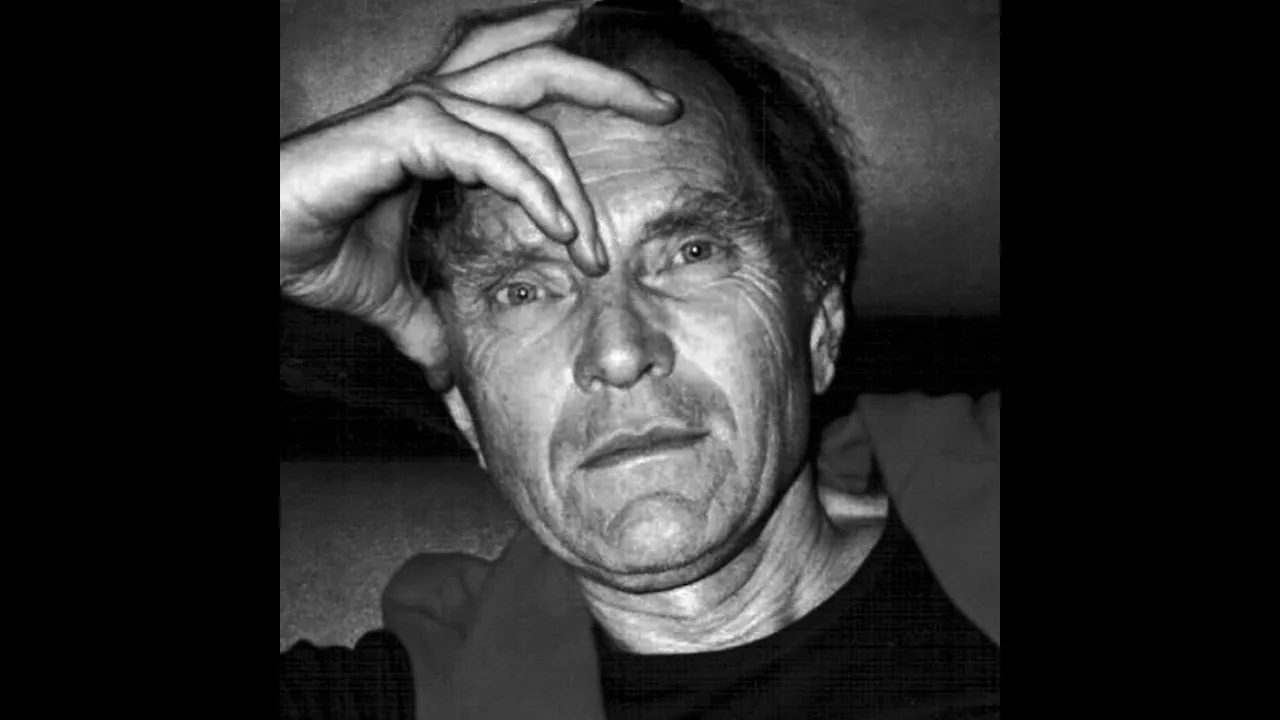
Karl Popper distinguished science from pseudoscience by arguing that genuine scientific theories are characterized by their capacity to be falsified through risky predictions, whereas pseudoscience merely confirms existing beliefs; for Popper, science progresses by actively seeking to disprove hypotheses rather than endlessly confirming them, making falsifiability the essential criterion for determining whether a theory qualifies as scientific knowledge.
Karl Popper's Science vs. Pseudoscience: Crash Course Philosophy #8
Added:The basic structure of the scientific method, including hypothesis formulation and empirical testing.
The concept of epistemology, specifically how philosophers define and evaluate the nature of knowledge and belief.
The distinction between inductive and deductive reasoning, particularly the historical 'problem of induction' raised by David Hume.
The philosophical tradition of logical positivism, which emphasized verificationism as the criterion for meaning.
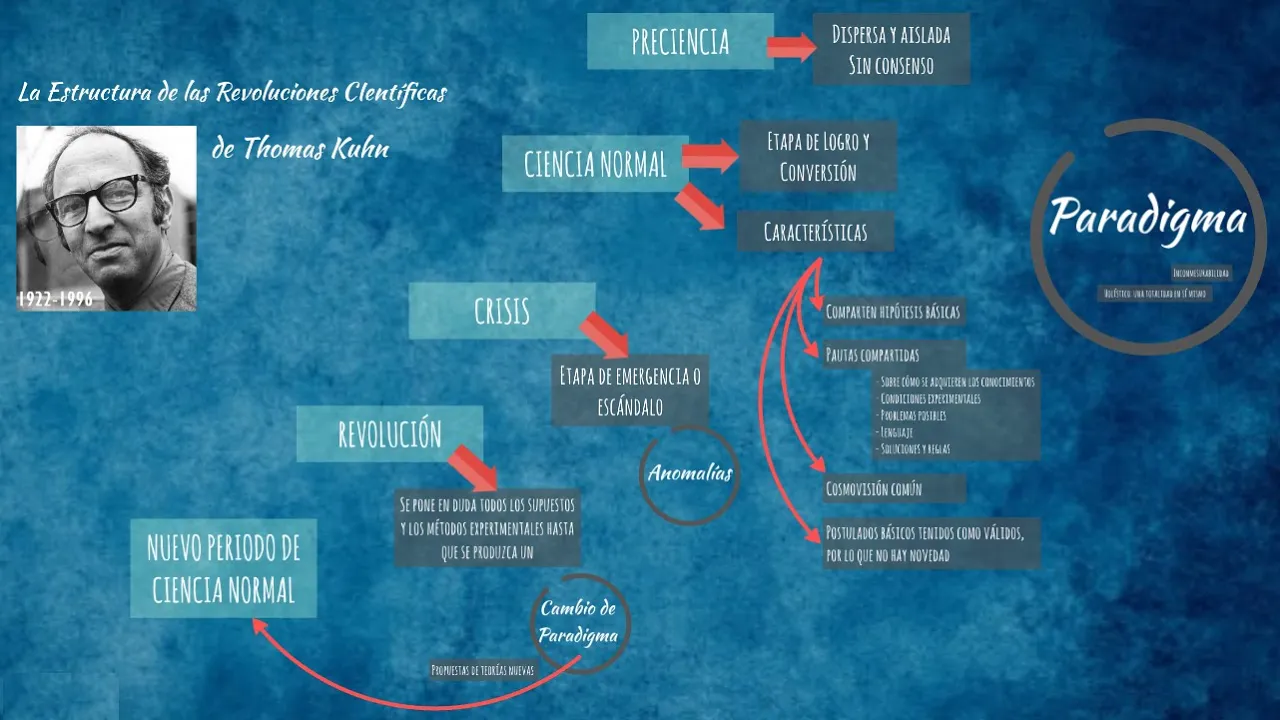
Thomas Kuhn's theory of scientific revolutions and paradigm shifts, which challenges Popper's view of steady scientific progress.
The 'Demarcation Problem' in contemporary philosophy of science and its implications for modern debates on climate change, vaccine efficacy, and alternative medicine.
Imre Lakatos' methodology of scientific research programmes, which attempts to reconcile Popper's falsificationism with Kuhn's historical analysis.
Bayesian confirmation theory, which uses probability to explain how evidence can progressively support a theory, offering an alternative to Popper's binary falsification.
Paul Feyerabend's epistemological anarchism, which argues that there are no useful and exception-free methodological rules governing the progress of science.
2.8M views55.9Klikes8:57Original Release: 2016-03-28
Crash Course Philosophy is brought to you by Squarespace.
Squarespace: share your passion with the world.
Imagine being alive when Albert Einstein was developing his theories of relativity.
Or witnessing the birth of psychology, as Sigmund Freud and psychoanalysis took over the scientific mainstream.
The early 1900s was an amazing time for Western science.
There was another figure on the intellectual scene when these great minds were at work.
Young philosopher Karl Popper was born in Austria -- Freud’s home turf -- but built his career in Britain, giving serious consideration to the new ways that these and other scientists of the time were thinking about the world.
And after looking at different methods that people like Einstein and Freud were using, Popper came to understand that not all scientific achievement was created equal.
He ended up making an important distinction, between science … and what he called pseudo-science.
And in the process of doing this, he taught us volumes about the nature of knowledge itself, and how we can best test it, and challenge it, to bring us closer to the truth.
[Theme Music] Emerging at roughly the same point in history, Freud and Einstein both made predictions that they hoped would help us better understand our world.
Freud, concerned with the individual psyche, predicted that our childhood experiences would have a heavy bearing on who we grew up to be.
Meanwhile, Einstein waited patiently for a solar eclipse that could disprove his entire general theory of relativity, depending on what it would reveal about how light travels through space.
And then there was Karl Popper, born in 1902, who grew up to observe these predictions with keen interest. As a young scholar, he learned about the psychoanalytic theories of Freud, and attended lectures given by Einstein himself about the rules of the universe.
And he noticed that these great thinkers used different methods.
For example, Popper observed that Freud was able to make just about any data point work in service of his theory. Freud could explain a person’s intimacy issues both in terms of not being hugged enough as a child, or in terms of having been hugged too much. Meanwhile, almost any behavior on the part of a female could be explained in terms of penis envy.
Evidence to support Freud’s theories seemed to be everywhere!
But Popper saw that Einstein was making a different type of prediction.
Instead of looking backward, and using past data to “predict” the present, he was looking ahead, and predicting future states of affairs. Einstein’s theory was truly risky, Popper realized. Because, if the future didn’t match his predictions, then his theory would be conclusively disproven. If the results of the solar eclipse in 1919 had been different, general relativity would have been finished.
Freud, on the other hand, could always just read the past differently, so as to maintain some kind of confirmation of his theory.
Suddenly, Popper understood the difference between the science that Einstein was doing, and what Freud was doing, which Popper rather snootily referred to as pseudo-science.
Now, whether psychology today is considered a hard science or a social science or some other kind might be debatable. But you won’t find many mainstream thinkers who consider it pseudoscience. But still, nearly a hundred years ago, when Popper was reaching these conclusions, no modern philosopher had really characterized what “science” truly meant -- and what the implications were for the pursuit of knowledge.
The traditional understanding of the scientific method, going all the way back to the ancient Greeks, relied on the belief that, to look at the world with a scientific eye is to observe with no preconceived notions.
You simply look, see what you see, and then develop hypotheses based on those observations.
So, you look at a swan, and you notice it’s white. You look at another swan; it’s white too.
You look at enough white swans, and eventually you form the hypothesis that all swans are white.
This is what Freud said he was doing: Observing relationships -- but instead of it being between the relationship swans and colors, it was between particular human phenomena and human behavior.
But Popper argued that everyone has preconceived notions of some kind. We all start out with a hunch, whether we admit it or not.
After all, what you decide to observe is determined by what you already care about enough to observe in the first place and the fact that you care about it so much also means that you already have some beliefs about it.
So, what does that tell us about Freud?
Popper became convinced that methods like his that only served to confirm beliefs were pseudo-science.
And they could be used to prove anything.
Consider the existence of Santa Claus. If I try to find evidence of Santa’s existence, I’m going to find it, easily. The world is filthy with evidence of Santa Claus! There are presents under the tree on Christmas morning. There’s the guy at the mall. And then there are all those songs, and stories, and tv shows, and movies – they combine to confirm your belief in Santa.
But Popper would argue that it’s only by seeking to disprove Santa’s existence that you can demonstrate his unreality.
So the question is, when we begin to test a theory, are we looking to confirm it, or disconfirm it?
This is the key point, for Popper – science disconfirms, while pseudoscience confirms.
He elaborated on this insight by establishing a series of distinct conclusions about science and knowledge.
First, he said, it’s easy to find confirmation of a theory if you’re looking for it.
Remember the presents under the tree? If you’re looking for proof that Santa exists, you’re not likely to keep searching for contradictory evidence after that.
Second, confirmation should only count if it comes from risky predictions – ones that could actually destroy your theory. Because, Popper observed that every good scientific theory is prohibitive – it rules things out.
This might sound strange, because no one wants to be wrong, but Popper says that every false belief we discover is actually good, because that gets us that much closer to believing only true things.
Next, Popper argued that the only genuine test of a theory is one that’s attempting to falsify it.
So, if you were to test for Santa’s reality, your method would require you to try to prove that he doesn’t exist, rather than proving that he does. So, you stay up all night, waiting to catch him delivering his presents.
This is risky, because if the person who actually shows up to put presents under the tree is your Dad, then you’ve destroyed the Santa hypothesis.
On a very similar note, Popper also pointed out that irrefutable theories are not scientific.
If it can’t be tested, then your theory doesn’t have much value.
Like, you can only confirm that Santa is real by doing everything in your power to prove that he’s imaginary, and then failing to do so. So you need to be tugging on Santa beards at the mall. You need to investigate reports of Santa sightings, and other weirdoes caught breaking into peoples’ houses through their chimneys. If you want to be able to really trust in your belief in Santa, in a genuinely scientific way, you need to put your belief to the test, in every way you can imagine.
This is where Popper says that you have earned the right to call a theory scientific.
And finally, once you’ve disproven your theory, Popper said, you need to be willing to give it up.
I mean, you can still cling to the Santa myth, even after catching your Dad putting gifts under the tree, by accepting his lie that Santa had dropped the gifts off earlier, and that he was just “helping.” But, if you’re a scientist, you’re gonna have to be willing to let your beliefs go.
Accept the evidence. Move on.
And this is the modern scientific thinking that we accept today: Testable, refutable, falsifiable.
You don’t seek to prove scientific hypotheses right, you only prove them wrong.
A lot of this might seem so obvious that maybe you’re wonder why we’re talking about it.
But that’s how right Popper was – he was one of those rare philosophers who actually managed to hit on an idea so right that we don’t even really argue about it anymore.
So, it sounds like I’ve been talking mainly about science all this time. But Popper and his insights actually tell us a lot about knowledge, in the philosophical sense.
For Popper, knowledge was about probability and contingency. We are justified in believing whatever seems most probable given our current data. And we should always be willing to revise our beliefs in the light of new evidence. In other words, our belief should be contingent on the data themselves.
This wouldn’t have satisfied Descartes, who was always concerned about certainty.
But Popper never thought that certainty was possible in the first place. If anything, he thought being certain of something causes you to close your mind, and that’s not what we want. Always remaining open to the idea that your current beliefs might be wrong is the best way to get ever closer to truth.
So where does this leave us?
Remember, we started out trying to prove that we know the things we thought we knew. But you have to be open to the idea that your beliefs might be false -- because that’s the only way that holding onto them can really mean anything. Otherwise, we’re all just believing whatever we want, with no grounds for adjudicating between beliefs.
You should keep that in mind, because that’s the name of the game for the rest of this course.
You only get to believe the things you have reasons for, and we’re going to start with the area that is hardest for most people – God. Hope to see you there.
Today you learned about Karl Popper, and his insights into science, pseudoscience, and knowledge -- which might best be summarized as science disconfirms, while pseudoscience confirms.
This episode of Crash Course Philosophy is made possible by Squarespace. Squarespace is a way to create a website, blog or online store for you and your ideas. Squarespace features a user-friendly interface, custom templates and 24/7 customer support. Try Squarespace at squarespace.com/crashcourse for a special offer.
Crash Course Philosophy is produced in association with PBS Digital Studios. You can head over to their channel to check out amazing shows like Artrageous, The Good Stuff, and Blank on Blank.
This episode of Crash Course was filmed in the Doctor Cheryl C. Kinney Crash Course Studio with the help of these awesome people and our equally fantastic graphics team is Thought Cafe.
Up Next

65:30
Philosophy of Science: What Makes Scientific Knowledge Distinctive
@PHoyningen
110.9K views•2013-09-06

164:01
John of Damascus on Holy Images: A Theological Defense
@BannedBooks
139 views•2026-04-25
9:20
How Can We Talk About Nonexistent Objects? | Philosophy
@crashcourse
872.8K views•2016-09-27
4:57
The Myth of Sisyphus: A Greek Legend of Eternal Punishment
@TEDEd
8.6M views•2018-11-13
Related Study Plans & Knowledge Roadmaps
Structured learning paths in Philosophy
philosophy
Frankfurt School: Critical Theory & Culture
01Foundations of the Frankfurt School and Critical Theory
02Horkheimer & Adorno: The Critique of Instrumental Reason
03The Culture Industry and Mass Deception
+ 2 more learning modules
12h5 modules
Explore Roadmap
philosophy
Philosophy of Language: From Frege to Austin
01The Linguistic Turn: An Introduction to Language in Philosophy
02Gottlob Frege: Sense and Reference
03Early Wittgenstein: The Picture Theory of Meaning
+ 3 more learning modules
15h6 modules
Explore Roadmap
philosophy
Feminist Epistemology: Standpoint & Injustice
01Introduction to Epistemology and Feminist Critiques
02Sandra Harding and Standpoint Theory
03Donna Haraway and Situated Knowledges
+ 2 more learning modules
12h5 modules
Explore Roadmap
philosophy
Environmental Philosophy: Ethics & Deep Ecology
01Foundations of Environmental Ethics & Anthropocentrism
02Biocentric Individualism and Animal Liberation
03Ecocentric Holism and Deep Ecology
+ 1 more learning modules
10h4 modules
Explore Roadmap