
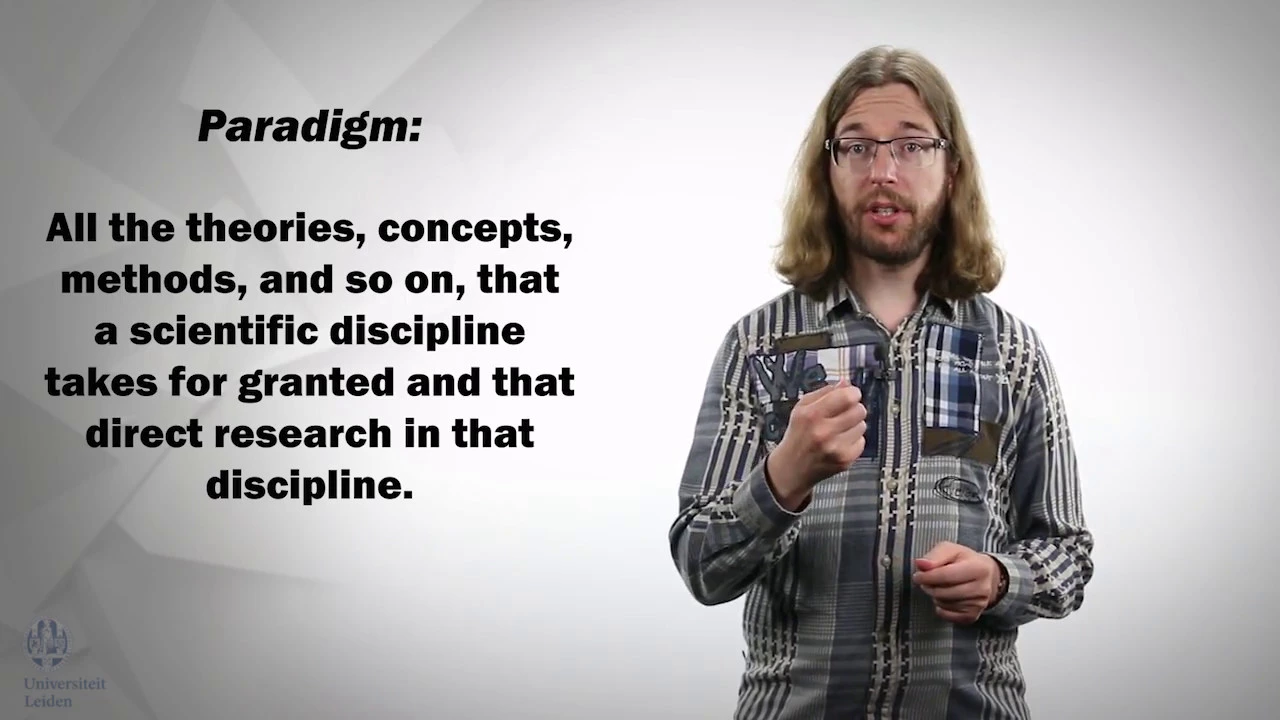




















Thomas Kuhn's theory proposes that scientific progress follows a cyclical pattern of 'normal science' (where scientists solve puzzles within an established paradigm), accumulation of anomalies, crisis, and paradigm shift, rather than being a steady linear accumulation of knowledge; this model challenges the traditional Enlightenment view of science and suggests that paradigm shifts are more like religious or political conversions than rational processes of evidence-based persuasion.
Kuhn's Scientific Revolutions: Paradigm Shifts Explained
Added:The traditional cumulative view of scientific progress, which posits that science advances through a steady, linear accumulation of facts and discoveries.
Basic principles of epistemology and the philosophy of science, particularly the distinction between objective truth and subjective interpretation.
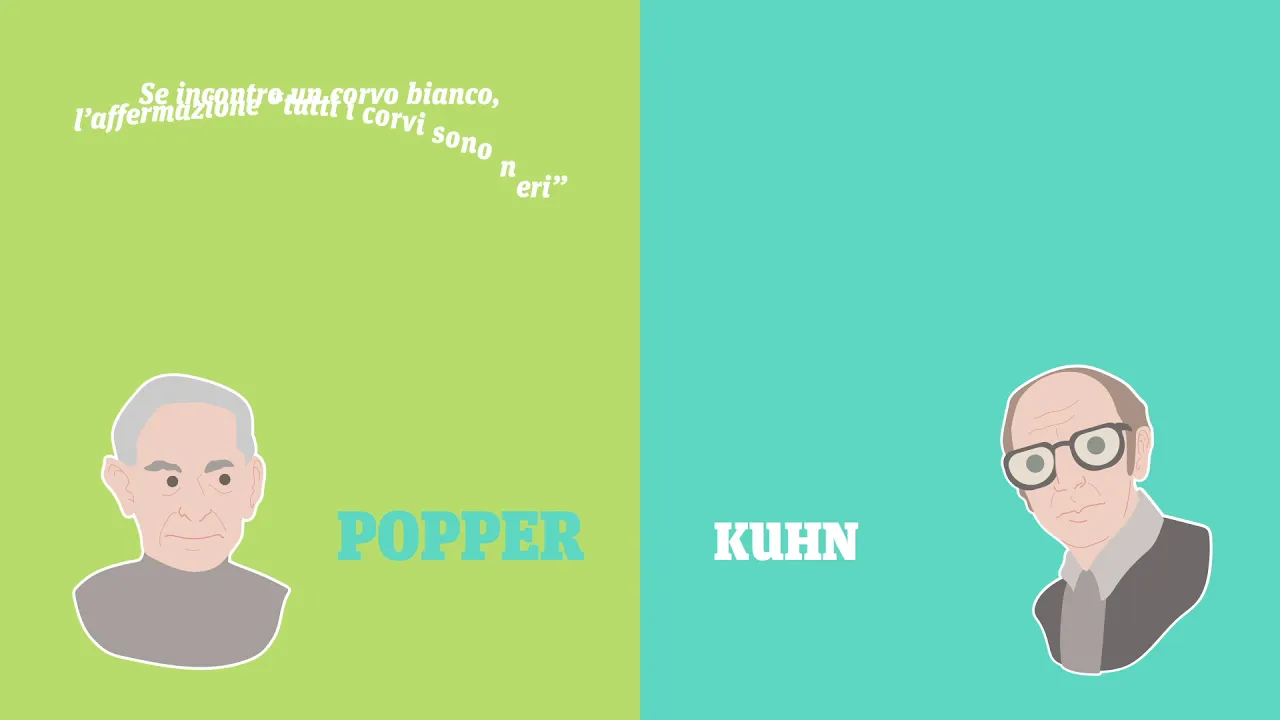
Karl Popper's concept of falsificationism, which argues that scientific theories can never be proven true, only falsified, serving as a primary contrast to Kuhn's views.
The foundational structure of the scientific method, including the roles of hypotheses, empirical observation, and theory formulation.
The concept of 'incommensurability', which is Kuhn's assertion that competing scientific paradigms are so fundamentally different that they cannot be directly compared.
Imre Lakatos' Methodology of Scientific Research Programmes, which attempted to synthesize Popper's falsificationism with Kuhn's historical insights.
Paul Feyerabend's epistemological anarchism ('Against Method'), which argues that there are no useful and exception-free methodological rules governing the progress of science.
The Sociology of Scientific Knowledge (SSK) and Science and Technology Studies (STS), which examine how social, political, and cultural factors influence scientific consensus.
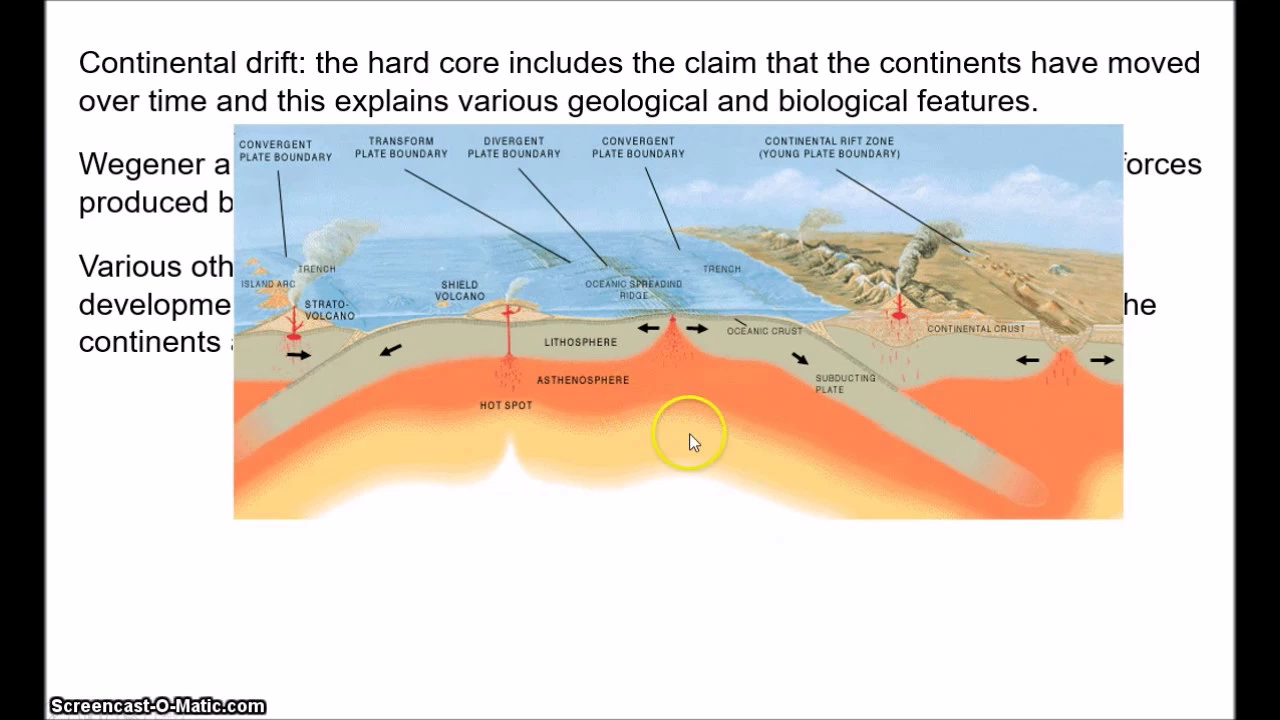
Analysis of historical case studies of paradigm shifts, such as the transition from Classical Mechanics to Quantum Physics, or the acceptance of Plate Tectonics in geology.
30.8K views415likes17:47Original Release: 2013-10-09
so this is the new picture of scientific revolutions as understands it you start over here in a state of normal science again that's just scientists going into the lab doing their thing and of course over the course of time anomalies will develop the they they're tend to be discarded they they they're explained away and then other anomalies develop and they start to accumulate and once the anomalies accumulate too much so they can't be ignored we shift into the state of Crisis science the crisis sticks around for a year or however long it takes for a new paradigm to come up with and then once that happens the Paradigm Shift occurs and that process can take a while itself too can take years or even decades and then once the paradigm shift is complete and all practicing scientists in the field accept the new paradigm you go back into a state of normal science and this is hence the structure of scientific revolutions you can see why it calls at that because he says it sort of goes around in a cycle like this it's a it's it's it's a fairly predictable cycle he thinks and it's a cycle that he says explains for perhaps not every single major scientific change in the history of science but at the very least the vast majority of them such as shifting away from luminiferous ether uh and towards the einsteinian view or for that matter shifting away from the Newtonian physics and in einsteinian physics or shifting away from Aristotelian biology uh into darwinian biology these these General Cycles seem to describe these historical periods fairly accurately or at least much more accurately than the the old picture which just prog suggested science was linear in its accumulation okay this flowchart version is perhaps a little bit more detailed um uh and a little bit more accurate in that respect again it's not quite revolutionary you don't quite see the cycle but it it it gives the steps in more more particular details so we start off again obviously before we have any real scientific Paradigm we're sort of in an immature or pre Paradigm science where we sort of really are just sort of stumbling around in the dark trying to find anything we can sort of uh uh hang on to and then gradually a paradigm develops and that Paradigm starts sort of focusing the the careers of the scientists and some normal science develops and then over time anomalies develop and then you sort of split into a fork either the anomalies get explained away and within the current Paradigm in which case you just go back to the beg to to the Second Step there and you go back to doing normal science or the anomalies are just sort of ignored and disregarded and relegated to other disciplines and then the anomalies begin to accumulate and confidence in the current Paradigm weakens we shift into a crisis state which then moves us into a paradigm shift and then after the Paradigm Shift normal science starts up again so so again this is a couple different ways of visualizing the same basic idea but hopefully the the various stages in this process are are clear to you now as far as historians and philosophers as science go pretty much everything I've said thus far isn't terribly controversial I mean it's a drastic departure from the previous enlightenment idea um and actually one of the things that's kind of gratified me over time uh since I first studied uh in in the mid90s is to see how it it seems that the way Science Education actually has been transforming uh over the last 20 years or so um you know when I took science I still sort of was getting that kind of Enlightenment picture of of gradual accumulation of knowledge over time that's the way I was taught you know the brief histories of physics and chemistry and biology in high school and I sort of assumed that it was going to be that way for quite some time but as I talk to my students today I find that a lot of them actually are kind of surprised to hear that Enlightenment picture because it seems that for that for a lot of uh newer textbooks and newer Educators when they talk about science especially the history of science something more like aunan pictures nowadays being presented more in the textbooks so that is reassuring so if you are if you are younger than than me then it's possible that you might be puzzled as to where this Enlightenment picture came from because if that's not how you would have learned about how science works in your your classrooms and if so well congratulate Thomas because he's the person who's responsible for for that shift and that understanding so it's it's generally accepted now that scientific progress is not steady it's not constant you know there there's blips and starts it looks sort of more like a revolution or at a minimum more like a stock market where you go up and you go down and you go back and you go forward sometimes now despite the fact that is the first person to really challenge the enlightenment picture no one really stands up for the enlightenment picture I mean Enlightenment picture sticks around as long as it does at least again at least until the mid 90s when I was studying history of science um it's it was more out of laziness and just inertia than anything else it wasn't that people insisted that the enlightenment picture must be right it it did seem that anyone who actually bothered to look at the history of science recognized that that was by and large right I mean some you can criticize some of the details you can say well it's not entirely clear that this particular instance in the history of s Fitz Coon's model and stuff like that but that's generally kind of nitpicking most people seem to agree Coon's picture is superior and vastly superior to the old Enlightenment picture now what makes a controversial figure is where he goes next what he says is that is that contrary to the the common understanding there is no rational reason to choose one Paradigm over another reason and evidence do not dictate why it is that one Paradigm survives and the other does not he says a paradigm shift is more like a religious conversion or a political conversion than it is like a process of rational persuasion in which evidence and argument dominates over all I'm going to look at those more uh uh radical claims from in the next lecture um so if if if that seems enticing to you be sure to stick around for when I I go into those those radical pictures but for now I I want to sort of close out with a couple of sort of clarifying questions um one thing that's worth asking about here is Coon's project descriptive in nature is he talking is merely saying look I'm just I'm being a journalist here I'm telling you how scientists in fact behave or is he being normative is he trying to say how scientists should behave I mean because poer can might agree with that indeed scientists do often engage in this sort of dogmatic normal science where they just go in without questioning but popper would say that when scientists do that they're doing bad science that scientists should not behave like that they should go in trying to falsify their Paradigm trying to falsify their ideas that's what good science looks like this sort of dogmatic normal science uh that's that's bad science in Popper's mind so if Coon's project here is merely descriptive in nature then poer doesn't isn't going to have that much of a problem with it but if it's prescriptive if it's normative then they're going to have a real uh problem now Coon's response to this because and popper were were contemporaries they they they they they talked and they exchanged ideas and Coon's response to this question from popper was to say that really there's no point in making this distinction between the the normative and the descriptive when it comes to science if you want to know what good science is says then let's just look at what good scientists do science is what scientists do that's sort of Coon's solution to the problem of demarcation you want to know what it what qualifies as real science real science is whatever real scientists are doing and again that can seem kind of question beging how do we know who counts as a real scientist if we don't know what real science is but thinks that this is they're a fairly straightforward pragmatic ways to go about solving this and I I'll address some of those pragmatic ways uh uh in in the next lecture but the the the point though is that again for for a paradigm is going to provide you the standards for what counts as good science and what counts as bad science trying to do Arista tilian biology today is definitely bad science but in Aristotle's day and for many years after that it wasn't bad science it was perfectly good science so you cannot sit back and sort of say AB absent any Paradigm to guide you what's going to count as good science and what's going to count as bad science but within a paradigm much normal science is going to be properly governed by that Paradigm so much normal science will be perfectly good science even though that means it is in a certain sense dogmatic even though that means that they're not trying to falsify the Paradigm in the way popper says they should so this leads to some really big disagreements between popper and on how science should work according to popper a good scientist is a person who combines two attributes first off they are creative they are constantly trying to come up with new ideas and new ways to falsify their ideas and B they need to be open to criticism they need to accept the idea that the ideas are only tentative and and we have to be willing to throw them out uh the moment we get evidence that contradicts them now has no problem with the notion of creativity he thinks creativity is great and fantastic and awesome but he rejects the idea that good scientists have to be open to criticism in fact during a period of normal science according to scientists are quite close-minded they're they're sort of blinded by the Paradigm the Paradigm sort of acts as a pair of blinders that allows them to Focus their attention on what's right in front of them and that means they can only see the data in terms of their dominant Paradigm and according to moreover this is a good thing it would be actually be a terrible thing if scientists were in fact as open-minded as popper suggests they should if they were that open-minded they actually couldn't do science at all there would be too many options to consider too many possibilities too many new things to think about um according to to to scientists relies on the notion of cooperation and consensus and in order for cooperation and consensus to happen there must be closing off of debate about fundamentals so think about Evolution and intelligent design and that whole debate if biologists had to take seriously all these different prospects from the intelligent design folks about about what about this couldn't this possibly falsify Evolution couldn't this they would be spending all of their time trying to disprove these suggestions from creationist rather actually doing real research you know and many practicing biologists complain like hell that they have to spend any time at all dealing with these Fanatics and these fundamentalists but again if if we were good paparian open-minded scientists we we should be spending a ridiculous amount of our time with that because they come up with some really Creative Solutions and an awful lot of criticism of of darwinian evolution now again much of the time they're just regurgitating points that have been falsified before to be true but they do come up with new ideas in particular the more intelligent ones and the more creative ones so if if science was about being open-minded and open to criticism then it would be styed by trying to deal with all this instead we have we most of the time biologists need to just stop debating that stuff we're we're just going to accept the the darwinian Paradigm for granted so we can make more progress within the Paradigm so we can focus our efforts and our attention on refining things that we don't fully understand within the darwinian paradigm rather than constantly having to go back to to to debate the fundamentals of the theory so you this is not to say that they shouldn't be open at all they shouldn't be completely closed-minded of course you have to have a certain degree of open-mindedness to recognize when the anomalies start to develop but in the day-to-day process of normal science you need to close your mind to certain outside questions and so you can focus on making progress on the particular research project that you are working on in that particular moment so this respect says accepting a paradigm requires a kind of faith and I realize that's a very loaded term to use given I was just talking about Evolution and intelligent design I would hate to think that some intelligent design proponent would jump all over this and say aha see science requires just as much Faith as religion that's not at all what means don't don't don't get confused by that uh what he means is is to suggest that that science that you know normal science means that you don't go back and check every single experiment that your experiment relies on on you have to sort of trust that the other scientists who did the basic research that came before you knew what the hell they were doing and the people who checked their experiments were good and responsible no individual scientist can go back and check every single experiment and every single Paper to reproduce those results you have to just sort of accept again so so trust would probably be a better word here than Faith to trust that that the the institutions of science have done their job without that trust you couldn't get any anywhere in science you'd constantly be checking stuff that had been done before so a good scientific education is a kind of brainwashing it's kind of indoctrination into a paradigm that sort of that that allows you to accept that that this framework is well established and well tested and you can then focus on a particular problem within that rather than having to wonder about all whether or not every single piece of the Paradigm is in fact completely verified and completely well supported um in fact most of it probably isn't there's there's going to be parts that aren't supported and that's what allows you to do to do some research you pick one part of the Paradigm which has not been fully articulated and you focus on that and that's where your research comes in and you would just sort of trust that the other parts the other questions will be solved by other people if they haven't already been and you just haven't come across that research we have here two very competing pictures about what makes science work popper says that it's that humei and open-mindedness it's it's that resistance to dogmatic thinking when we when we constantly reassure ourselves that we might be wrong that everything we thought up to this point might be mistaken in fact maybe the sun won't even rise tomorrow that's what immunizes us from dogmatic thinking and that's what uh prevents us from falling into these sort of self-fulfilling prophecies where we find evidence that supports our Theory just because we're mindlessly committed to the theory now now that there is a real concern there of course because people you know me popper is certainly right that people do have a tendency to fall into dogmatic thinking and when that happens that can blind them to real problems and real alternative ideas but Co actually wants to say that at least a little bit of close-mindedness is necessary for science because we don't have the time to constantly debate the fundamentals if we were constantly sitting around going well I don't really know that the sun's going to rise tomorrow I don't really know that the next time I eat food it's going to to to satiate me I don't really know that this this microscope is actually working because I I've only tested it a couple of times we would be spending all our time just trying to get the basics down we would not be able to do any Cutting Edge research at all so says that science works because of the balance that it strikes between open-mindedness and close-mindedness science should be stable but it should never stand still it should not be so open-minded that it falls apart into instability but it should not be so closed-minded that it ends up stagnating and not moving forward so striking that balance is obviously a very difficult thing to do and it's not something that's sort of dictated clearly by evidence or or even by the Paradigm it's something that requires a certain amount of judgment if you will to find exactly where the good balance between open-mindedness and closed-mindedness is now contrary to what the logical positives and people like popper were trying to do you cannot automate that balance with a logic of scientific discovery that's not something that that you can formalize that you could write a computer program to do this is something that requires a very very good Training in science it requires experience it requires an understanding of the history of science it requires understanding Fields other than your own see how they dealt with similar kinds of problems it requires in other sort of a broad general education in science and history and philosophy and without all those tools you're not going to be very likely to strike that balance between open-mindedness and closed-mindedness terribly well for poer scientific change occurs through this process of conjecture and refutation you know you put forward ideas and then you try to refute them and if they survive being refuted then they sort of move into a certain sort of status of scientific respectability and if they don't well then they're falsified and thrown away thinks that scientific change is more complicated than that for there's at least two different kinds of scientific change first off there's change within a paradigm and then there is revolutionary Science Now within a paradigm you might be able to find the kind of things that the the positives were looking for and and and it works more or less kind of like like what poer suggested perhaps uh you know there there's going to be clear standards for what counts as progress what counts as a justification uh uh there going to be standards that say that no this idea is is unacceptable because it's been falsified but revolutionary science by contrast has no such standards revolutionary science is anarchic there are no laws there are no rules things are very very chaotic and it it it ends up being very very complicated to when you're living in the middle of Crisis science to know how it is to go about doing science that's why it's crisis science because there's no clear rules again he Compares it to a political revolution you know when there's a a Revolution going on it's not clear who the legitimate Authority is is it the old government is it the sort of the insurgents are trying to create the new government who has the political Authority it's not entirely clear likewise in the middle of a scientific revolution in the middle of Crisis science it's not clear whether the old Paradigm or the or the the new paradigm is going to really be the the ultimate Victor here and so some scientists will kick in with the the the new paradigm some will kick in with the old Paradigm and is quick to not that usually it's the young scientists that go with the new paradigm and the old scientists that stick around to the to the old Paradigm uh again which largely suggests that it's not entirely a rational uh process here this is people being sort of dictated by by their politics their economics by their investments in their own careers and so forth by the prospect of career advancement for the younger scientists um these are all things that I will explore in more detail in the next lecture but recognize that right now that again this is this is just to sort of tease what's going to come up next this leads a lot of people to saying that Thomas is actually a Rel relist about truth that there is no absolute objective scientific truth that truth is always relative to a paradigm what's true for one Paradigm will be false for another and that's something that obviously a lot of scientists and more than a few philosophers are going to be very very uncomfortable with so we'll explore that in more detail in the next lecture
Up Next

10:30
Values in Science: Should Science Be Value-Free? (Philosophy)
@yzzjaclynmartina5772
3.8K views•2020-11-09

164:01
John of Damascus on Holy Images: A Theological Defense
@BannedBooks
139 views•2026-04-25

68:32
Should We Destroy the Machines? Big Tech Surveillance Critique
@TheStoriesWeTell303
167.9K views•2025-11-30
4:57
The Myth of Sisyphus: A Greek Legend of Eternal Punishment
@TEDEd
8.6M views•2018-11-13
Related Study Plans & Knowledge Roadmaps
Structured learning paths in Philosophy
philosophy
Frankfurt School: Critical Theory & Culture
01Foundations of the Frankfurt School and Critical Theory
02Horkheimer & Adorno: The Critique of Instrumental Reason
03The Culture Industry and Mass Deception
+ 2 more learning modules
12h5 modules
Explore Roadmap
philosophy
Philosophy of Language: From Frege to Austin
01The Linguistic Turn: An Introduction to Language in Philosophy
02Gottlob Frege: Sense and Reference
03Early Wittgenstein: The Picture Theory of Meaning
+ 3 more learning modules
15h6 modules
Explore Roadmap
philosophy
Feminist Epistemology: Standpoint & Injustice
01Introduction to Epistemology and Feminist Critiques
02Sandra Harding and Standpoint Theory
03Donna Haraway and Situated Knowledges
+ 2 more learning modules
12h5 modules
Explore Roadmap
philosophy
Environmental Philosophy: Ethics & Deep Ecology
01Foundations of Environmental Ethics & Anthropocentrism
02Biocentric Individualism and Animal Liberation
03Ecocentric Holism and Deep Ecology
+ 1 more learning modules
10h4 modules
Explore Roadmap