


















![20 heures le journal : [émission du 9 Décembre 2003]](https://i.ytimg.com/vi/k1wfC4Q40Ak/hqdefault.jpg)


The traditional philosophical view holds that science should be value-free, meaning scientists should let facts determine their conclusions without being influenced by personal or societal values; however, philosophers like Helen Longino challenge this ideal by arguing that scientific practice inherently involves value-laden judgments, such as preferring simpler explanations or unified theories, which can affect how scientists interpret data and draw conclusions, suggesting that complete separation of facts and values in science is neither possible nor desirable.
Values in Science: Should Science Be Value-Free? (Philosophy)
Added:The Fact-Value Distinction: Understanding the philosophical difference between descriptive claims (what 'is') and normative claims (what 'ought' to be).
Scientific Objectivity and Empiricism: Familiarity with the traditional view that scientific inquiry relies on sensory experience, evidence, and neutrality, free from personal bias.
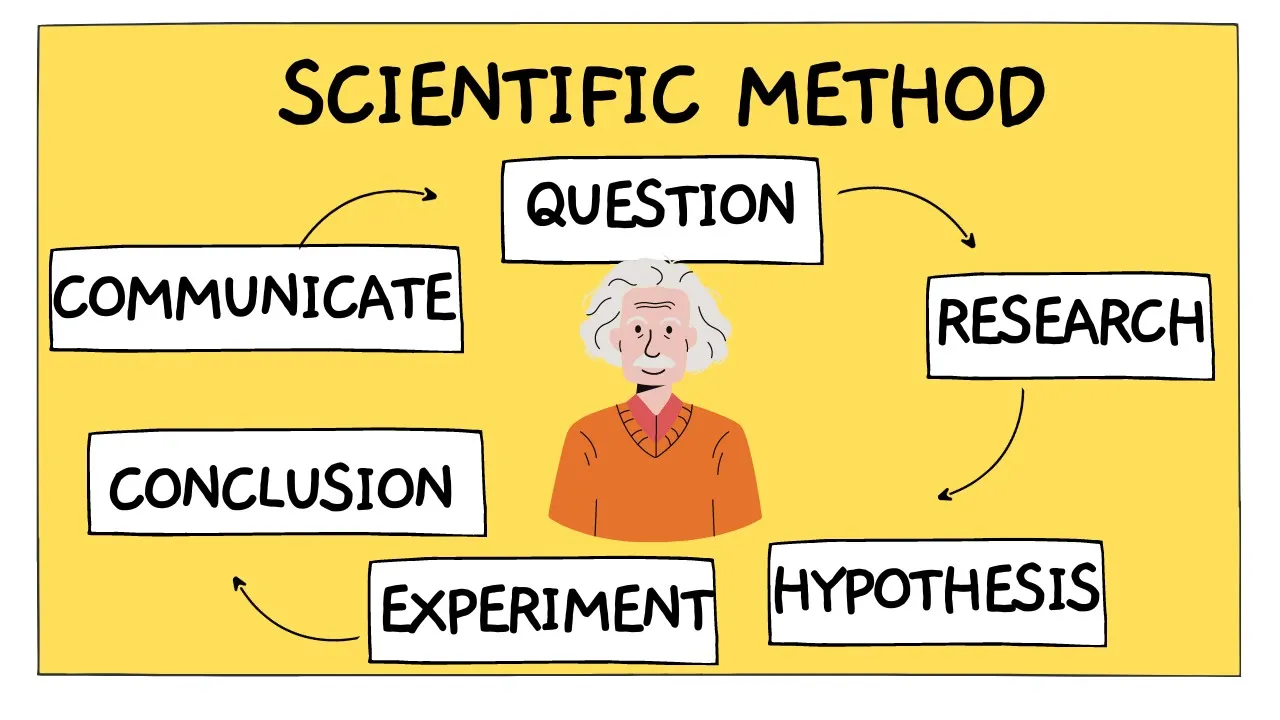
The Scientific Method: A basic grasp of how scientific hypotheses are formulated, tested, and accepted or rejected within the scientific community.
Introduction to Epistemology: Understanding the philosophical study of knowledge, particularly what justifies a belief as 'scientific' or 'objective'.
The Argument from Inductive Risk: Exploring how scientists manage the ethical consequences of error (e.g., false positives vs. false negatives in medical testing).
Feminist Epistemology and Social Epistemology: Investigating how social structures, gender, and power dynamics actively shape scientific paradigms and knowledge production.
The Duhem-Quine Underdetermination Thesis: Analyzing how scientific evidence can be insufficient to choose between competing theories, requiring non-epistemic values to break the tie.
Science Policy and Bioethics: Applying the value-free debate to real-world issues like funding allocation, climate change modeling, gene editing (CRISPR), and artificial intelligence regulation.
3.8K views73likes10:30Original Release: 2020-11-09
to begin looking more seriously at the role of values in science I want to introduce a traditional philosophical distinction the distinction between facts and values in our discussions about objectivity I said that facts are what is actually the case in the world and that true beliefs are beliefs about facts we have true beliefs when we grasp the way that the world actually is now value is what philosophers call a normative term it describes a judgment about how something ought to be when we're talking about values in this context we are typically talking about judgments about what is good and bad so it's a fact that the climate is warming rapidly due to greenhouse gas emissions but it's a value judgment that this is a bad thing when a politician argues that regulatory decisions including where we should get our energy should be made on scientific grounds that's also a value judgment now some might judge science to be our best means to a good future but others might judge and in fact do judge otherwise those Marching for science do think that science should guide our regulatory decisions they think that not only should science be free of political meddling but that it should play a central role in making decisions about how to run our country when Clinton said I believe in science what she implied is that we shouldn't use our Judgment of political expediency to challenge the findings of science instead we should have our policies Guided by science now Clinton is clearly making a value judgment and this value judgment wasn't derived from science she was stating her belief that a rational Society lets its policies be guided by science societal values should be guided by by science the question for us to consider this week is the opposite of what Clinton was talking about should scientists ever be guided by values should what they consider to be good just or even expedient be a factor in the experiments they perform the conclusions they draw or the theories that they endorse there's a traditional view that emphatically says no science and values are entirely separate domains and science should keep itself independent of values philosophers have called this view the value-free ideal now proponents of the value-free ideal reason like this they say that science is about finding out what the world is like independently of what you me or anyone else thinks about it we ask questions and the world answers those questions while there can be disagreement about what the world is saying as we conduct our observations our simulations and our experiments ultimately there is a right answer to be found and the right answer is settled by what the world is like alone but what scientists think is good is of course a different Beast we can all be perfectly well with the same facts yet have different ideas about what is good this is because in our personal value systems or our culture or religious systems we put different weights on different values it can be perfectly reasonable to disagree about what is good science is different true beliefs about facts are settled by what the world is like science shouldn't have the property that different people could rationally have different true beliefs we can be uncertain or we can be wrong but there's ultimately a single correct answer moreover the argument goes if we want science to help guide our decisions we want the outputs of science to be value-free figuring out the best action to take requires combining what scientists tell us about the world with what we want to happen and we're better able to bring about what we want to happen the more we know what the world is like so the value free ideal is the traditional view but is it the correct view several philosophers have thought not they argue that when you look closely at scientific practice you will see the judgments about facts and judgments about value intertwine sometimes this is overt but other times it's very subtle it's easiest to illustrate this challenge when we consider very extreme cases of values including terrible ones influencing science so let me give you an example of just such a terrible case Philadelphia physician and physical Anthropologist Samuel Morton was a major scientific figure in the 19th century among his more notorious achievements was the publication of a series of works that claim to demonstrate the superiority of Europeans on the basis of measurements of cranial capacity a proxy for brain size his work had tragic repercussions it was used as a scientific basis for the southern American Jim Crow laws which entrenched racial segregation in the late 19th and early 20th centuries but for our purposes the central issue is one of value Morton was clearly racially Prejudiced and most of the commentators on his work say that these value judgments influenced His science for example the biologist Steven J G argued that Morton's racism subtly influenced both his measurements and his analysis of those measurements his belief that Europeans were Superior to Africans led him to subtle errors of measurement and calculation that aligned with these prejudices now it's easy to look at this case and say here is an example of bad science a scientist took his everyday biases and let them infect his research in fact G put it this way science has long recognized the tyranny of Prior preference but the only pations I know of are vigilance and scrutiny in other words G thinks that it's hard to avoid letting your prior values or preferences subtly influencing your work but that the scientific Community should be vigilant and subject all work to scrutiny in order to address it now Gold's acknowledging the challenge to the idea that science is completely value-free but he still holds out hope that these values or preferences can be addressed and this has been a very common kind of response to the observation that real scientific practice seems not to be value-free the response is that we should take the value-free ideal to literally be an ideal it's something that we strive for when we fall short of it we try to do better the next time now there's a lot to be said for this argument and much of the time I find myself agreeing with it but I want to talk about a very interesting challenge to it that comes from the work of Helen Leno lanino is a contemporary philosopher of Science and a past president of the philosophy of science Association and she argues as follows no matter how much data scientists collect there will always be more than one explanation compatible with what they have observed in practice scientists deal with this by using guiding principles such as choose the simpler explanation or choose the one most consistent with other explanations or choose the explanation that is tightly connected to our grand theories like evolutionary theory or general relativity these guiding principles are more like rules of thumb than they are like rules of logic their justification comes from their usefulness they're not guaranteed to get us to the truth sometimes the answer does turn out to be more complicated sometimes other theories point us in the wrong direction and so forth once we've acknowledged that these guiding principles are more rules of thumb than rules of logic says l no we can see that these principles are really value judgments why do scientists assume that the simpler explanations are the right ones sure it makes their lives easier but when applied in the social sciences it could lead to ignoring important differences between groups sometimes complex phenomena might require complicated explanations not simple ones similarly sometimes an entirely novel unexpected explanation is the right one so why follow a rule of thumb that says unified explanations are better than diverse ones the reason individual scientists generally adopt these positions LNO argues is because they form part of a value system adopted by the scientific Community as a whole this value system explicitly prefers simpler more unified explanations whenever possible it says that these are better explanations because scientific theories are preferable when they're unified unless we knew for sure that the world was simple and unified then this has to be a value judgment but there's more or since they're values not facts other competing values could be substituted in some contexts is it better to have a value system that emphasizes what is unique what is complex and what is disunified and if so when Lino thinks that we should explicitly consider the effect that a particular set of values has on the explanations they produce does a preference for Simplicity in sociological explanations for example inevitably cause scientists to miss critical differences between how we might explain men's and women's choices in the labor force and if so their explanations might be harming one or both of these groups by not taking the nuances of their differences into account ecologist and philosopher of biology Richard Levens goes even further he once wrote when they encountered an unfamiliar animal in a picture book my children would ask what does it do to children although philosophers go through great contortions to separate questions of reality from questions of Ethics the historical process unites them any theory of society has to undergo the test what does it do to children so according to philosophers like Lino and biologists like Levens even if we can State the difference between facts and values in the actual practice of science they are united and this gives us room for serious value-based critique to enter to the practice of science okay so you might now say sure in practice it's very hard to eliminate values from science but isn't it still a good goal if social scientists provide bad explanations because they oversimplified men's and women's experiences isn't that just science gone wrong not paying sufficient attention to the way the world actually is why do we need a different value why not as a goal no values at all even if we often fall short of this goal this dispute between philosophers who think that science should maintain the goal of being value-free and those that think this is an impossible or naive goal is very much a live one both sides acknowledge that in practice values enter scientific judgments but they disagree about whether this is ultimately a good thing in the 2018 ipcc report titled global warming of 1.5 degrees Centigrade the authors recommended that the best way to meet the greenhouse gas reduction goals is to impose a carbon tax in a case like this one it's easy to see why issues of fact and issues of value are so intertwined scientists take themselves to be stating a simple empirical fact the carbon tax mechanism is the one that is most likely to keep emissions down and keeping emissions down is our only chance of meeting the Global temperature goal but for the argument to be fully persuasive they also have to assume that everyone values keeping the global mean temperature down more than they value businesses having lower taxes and similar assumptions have to be made throughout research that considers future climate scenarios when there's uncertainty should one be conservative or cautious about the future climate or should one be optimistic this has to come from judgments about what would be more bad or less bad in the future
Up Next
15:01
Popper vs Kuhn: Understanding the Scientific Debate for Researchers
@davidpiggott126
109.7K views•2014-06-10

164:01
John of Damascus on Holy Images: A Theological Defense
@BannedBooks
139 views•2026-04-25

68:32
Should We Destroy the Machines? Big Tech Surveillance Critique
@TheStoriesWeTell303
167.9K views•2025-11-30
4:57
The Myth of Sisyphus: A Greek Legend of Eternal Punishment
@TEDEd
8.6M views•2018-11-13
Related Study Plans & Knowledge Roadmaps
Structured learning paths in Philosophy
philosophy
Frankfurt School: Critical Theory & Culture
01Foundations of the Frankfurt School and Critical Theory
02Horkheimer & Adorno: The Critique of Instrumental Reason
03The Culture Industry and Mass Deception
+ 2 more learning modules
12h5 modules
Explore Roadmap
philosophy
Philosophy of Language: From Frege to Austin
01The Linguistic Turn: An Introduction to Language in Philosophy
02Gottlob Frege: Sense and Reference
03Early Wittgenstein: The Picture Theory of Meaning
+ 3 more learning modules
15h6 modules
Explore Roadmap
philosophy
Feminist Epistemology: Standpoint & Injustice
01Introduction to Epistemology and Feminist Critiques
02Sandra Harding and Standpoint Theory
03Donna Haraway and Situated Knowledges
+ 2 more learning modules
12h5 modules
Explore Roadmap
philosophy
Environmental Philosophy: Ethics & Deep Ecology
01Foundations of Environmental Ethics & Anthropocentrism
02Biocentric Individualism and Animal Liberation
03Ecocentric Holism and Deep Ecology
+ 1 more learning modules
10h4 modules
Explore Roadmap