


























Acoustic ecology is the study of sounds in our environment, where 'soundscape' refers to the total acoustic environment including natural sounds, human-made sounds, and cultural sounds. The field emerged in the 1960s when composer Raymond Murray Schafer, while teaching at Simon Fraser University, coined the term 'soundscape' to describe the acoustic environment. Schafer proposed that humans are responsible for 'tuning the world'—creating acoustic environments that enhance rather than destroy beautiful sounds. The World Forum for Acoustic Ecology was later formed to bring together researchers worldwide to study and design sounds for various environments, from airports to locomotives, with the goal of creating more harmonious acoustic spaces.
The Soundscape: Raymond Murray Schafer on Acoustic Ecology
Added:[Music] I had studied composition music composition of course and I regarded myself as a composer but I was teaching in a new University in Vancouver um and it was a communication Department that I'd been hired to teach in and and uh I didn't really know very much about Communications although I had been quite uh close to Marshall mclan who did a lot of work and research in Communications as everybody knows in particular I wanted to study acoustic Communications and all kinds of acoustic Communications just personal talking uh between people The Sounds around us the sounds made by the environment the sounds from the past the sounds of the future and so forth and um creating that kind of a uh subject was was very difficult actually because we didn't have a word to describe what I was talking about and if you don't have a word to describe clearly what it is that everyone can understand then it doesn't exist and I think that's the reason that we paid very little attention to sound in our lives up to that period and so if we' done anything with the work in uh the uh acoustic environment and the soundscape which is a word I had to create um then uh then we I think managed to give that subject a a real um [Music] expression I think the work that was done then at Simon Fraser University was very important um worldwide and the book uh which I called originally the tuning of the world which was then translated into French as Le sonor the tuning of the world is more accurate because what I really was thinking was that we we are responsible for tuning the world it's like tuning an instrument you know you tune your violin um so that you can play beautifully well you can tune the sounds of the world too so that we have the kind of acoustic environment that is and not full of noises and uh other things that eliminate that Crush sounds that destroy beautiful [Music] sounds I think at that time 1965 was about the most um noisiest time in the Western World the reason for that is that I would say that um jet aircraft were just coming in commercial jet aircraft in the early 1960s that meant that the noise profile around airports was much large much larger than it had ever been that uh people were uh complaining about the noise um also um the in North America uh the car manufacturers began to produce what they called muscle cars muscle cars were noisy cars you know so there's another area you know that was of complaint there there there were just too many and the Concord of course was they were going to introduce the Concord uh fortunately that didn't work out but I mean there were many new noises in the 1960s and so people were becoming I know because of the surveys we did people were becoming much more concerned about the deterioration of the acoustic environment [Music] little by little I think it has had an influence on our thinking um the question for instance of where are the disappearing sounds who's collecting them now there are many people who are collecting disappearing sounds and and working with them and creating musical compositions from them uh one person by the way I should mention this who influenced me a great deal was uh Pierre shaer uh Pierre shaer was the first person to to record uh sounds any any sounds and then manipulate them and turn them into compositions so um it was he was he was a a very big influence at that time I think and his books influenced us all uh so it was much later that we began to meet people in other countries that were interested in similar kinds of problems and it was only when we began to to travel and meet together and have conferences is that we were able to form the world forum for acoustic ecology that exists and we have meetings every year and it you'd be surprised at the the the um the the the area that uh these researchers now are exploring and coming from different uh different traditions and different countries and the research that's going on is really quite amazing so we've done a lot in the last four decades well noise is is any unwanted sound and uh of course you know uh you could have a very quiet noise too I mean it can be something that just a a small hum that is bothering you and you can't go to sleep you know listening to this sound uh and uh so it's noise noise is not necessarily a loud sound it's a sound that um is the opposite in a way of of the p i mean it's it's what you don't want what you want to eliminate and um it uh and those noises change you know what is considered a noise in one Society is not considered a noise in in in another Society so um we tend to be trying to escape uh Noises by going inside houses people people in the past spent a lot more time outside as we know I think the soundscape today is much quieter than it was in the 60s and 70s now that may surprise a lot of people um and it's very hard to go back and actually do measurements uh in 1960 although you know some measurements were were done um but uh I think there's no doubt that the the technologies have have reduced some of their noise emission and uh so that we're in a somewhat quieter world than we were at that time however in the world of entertainment for instance there has been no reduction of noise in pop music uh rock concerts still have 110 DB or more um and people listen to it and destroy themselves by doing [Music] so I think that what we are entering now is the beginning of an area of soundscape design in which uh many of the people that have become interested in our work in different countries I mentioned the world forum for acoustic ecology in many different countries there are people that are now beginning to design sounds to design design the sounds of locomotives that you know the whistles on trains to design The Sounds in airports for instance so you don't have you know voices screaming at you all the time flight 471 for you know um there's other ways of getting the information to people without interrupting you know the uh their their thinking and so forth and leaving them in peace when they have to spend two or three hours or more in an airport waiting so uh I think there's a lot more thinking about acoustic design uh for for the future and uh and that's the way the the the world seems to want it at the moment I think the uh I think the L that you have in France is amazing and wonderful and I hope it continues because you've done something that no other country has yet been able to do and that is you brought all the sound makers together to at least meet each other and talk and see that there is a relationship between their their work and I think that's very important and I I have nothing but praise for Christian yug and his team uh for what they've accomplished and uh now it's beginning to catch on in other countries too so uh that will be something really interesting if we do have um you know weeks of sound in different if we had 52 countries that celebrated their l indu s we could do nothing but go from one conference to another wonderful [Applause] [Music] [Music] eh
Up Next
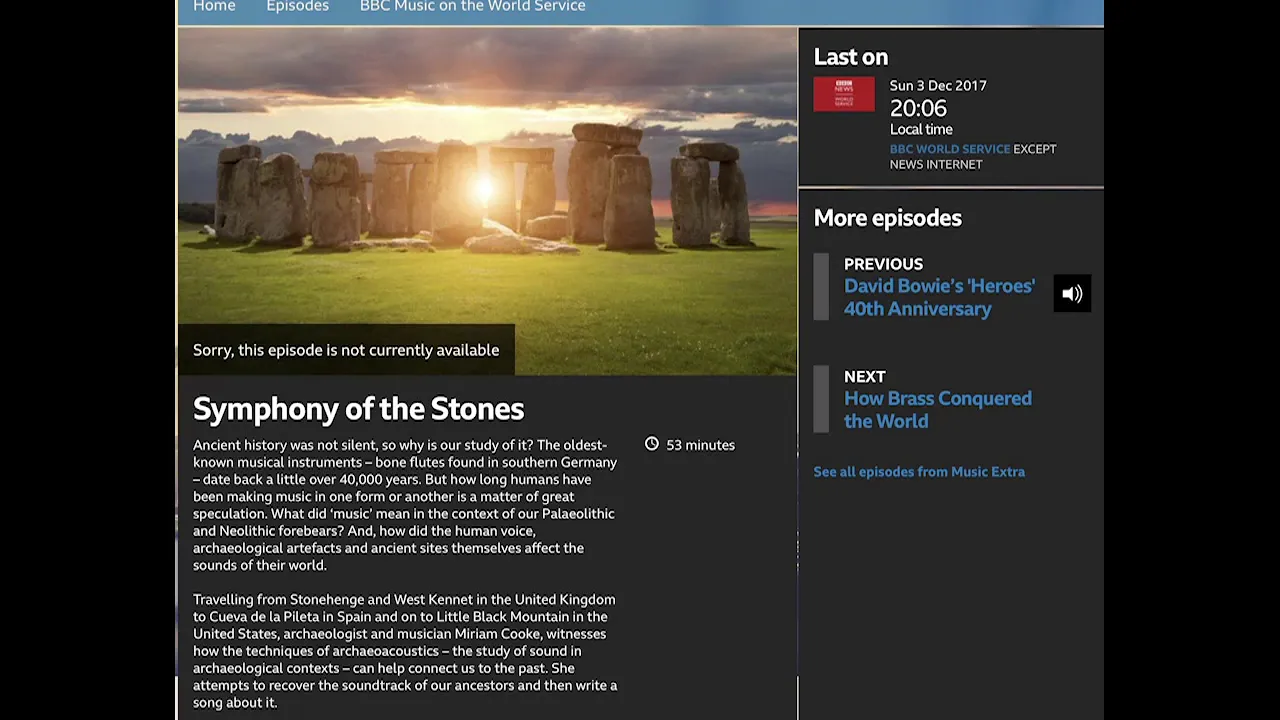
Acoustics of Ancient Cultures: Symphony of the Stones Documentary
@ruperttill
247 views•2019-08-29

Whole Brain Architecture: First International Workshop 2024
@thewholebrainarchitecturei9784
640 views•2024-07-22

FastAPI vs Flask vs Django: Choosing the Right Python Web Framework
@TechWithTim
302.5K views•2024-05-26

Game of Thrones Opening Credits: A Cinematic Analysis
@gameofthrones
46.3M views•2011-04-18
Related Study Plans & Knowledge Roadmaps
Structured learning paths in General & Interdisciplinary Studies