



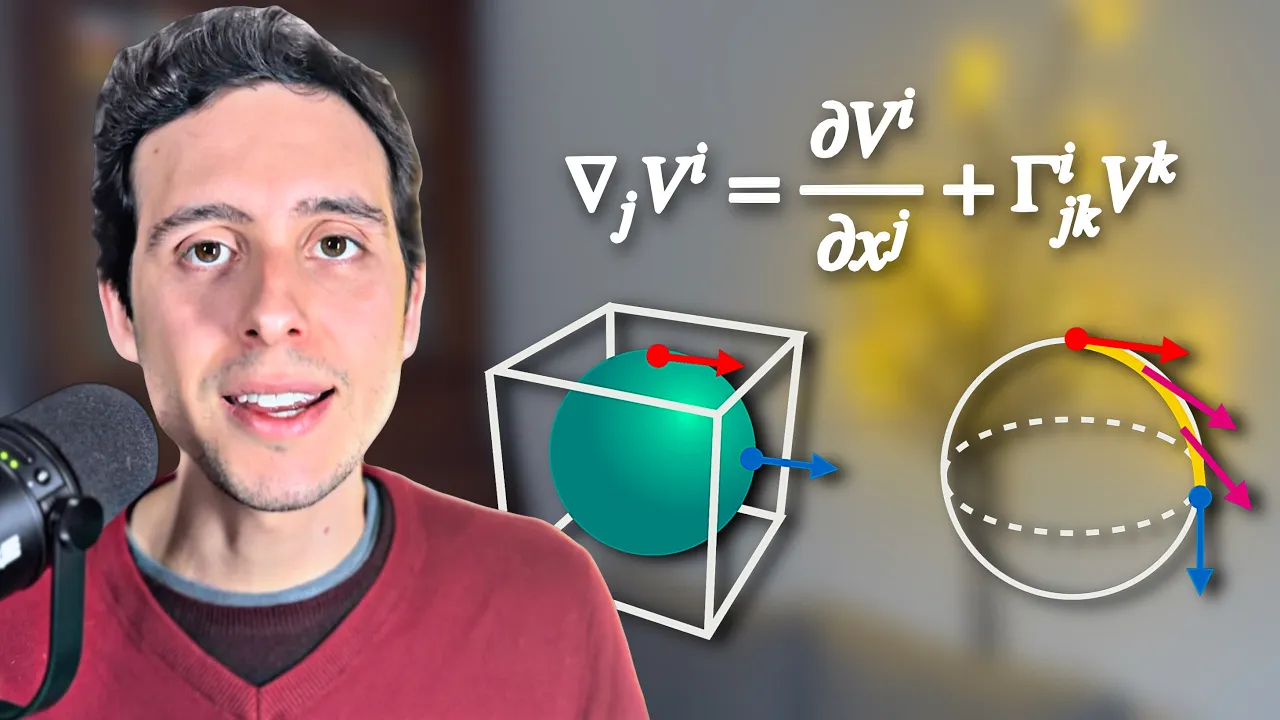


![[다변수 미적분 심화 스터디] Connection에서 Riemannian curvature tensor로](https://i.ytimg.com/vi/snNrsEnaURA/maxresdefault.jpg)

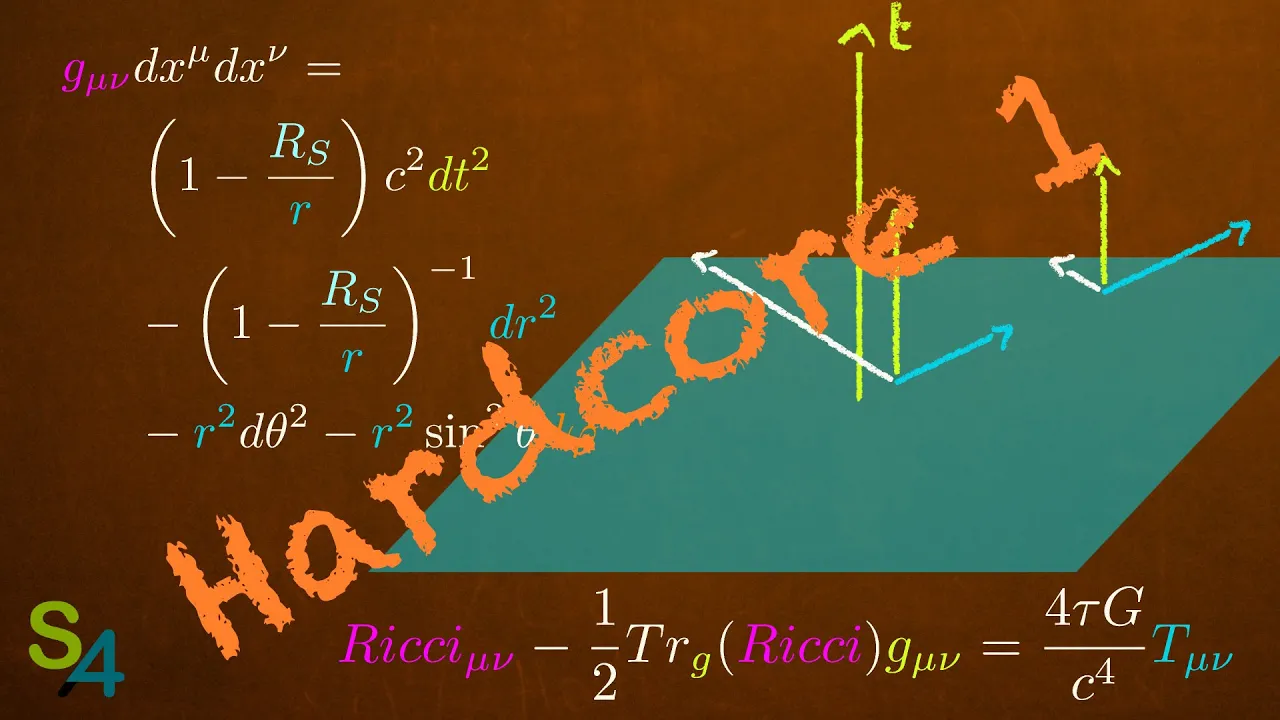
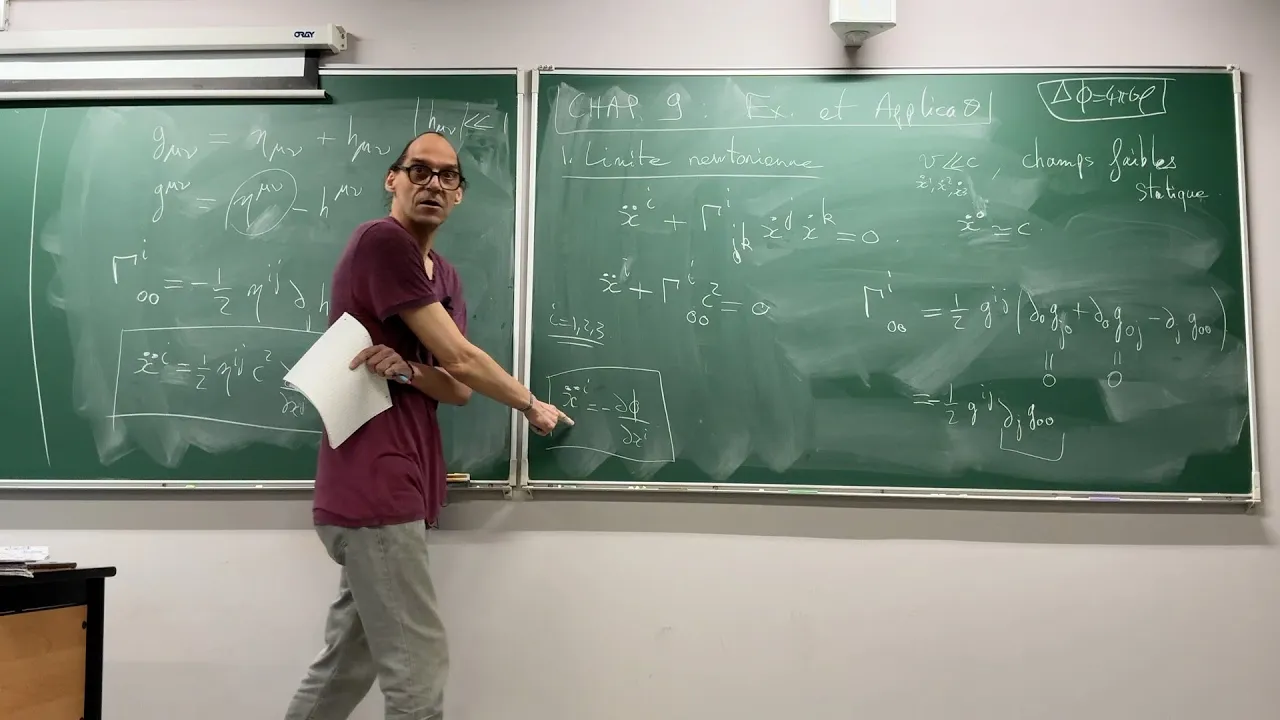














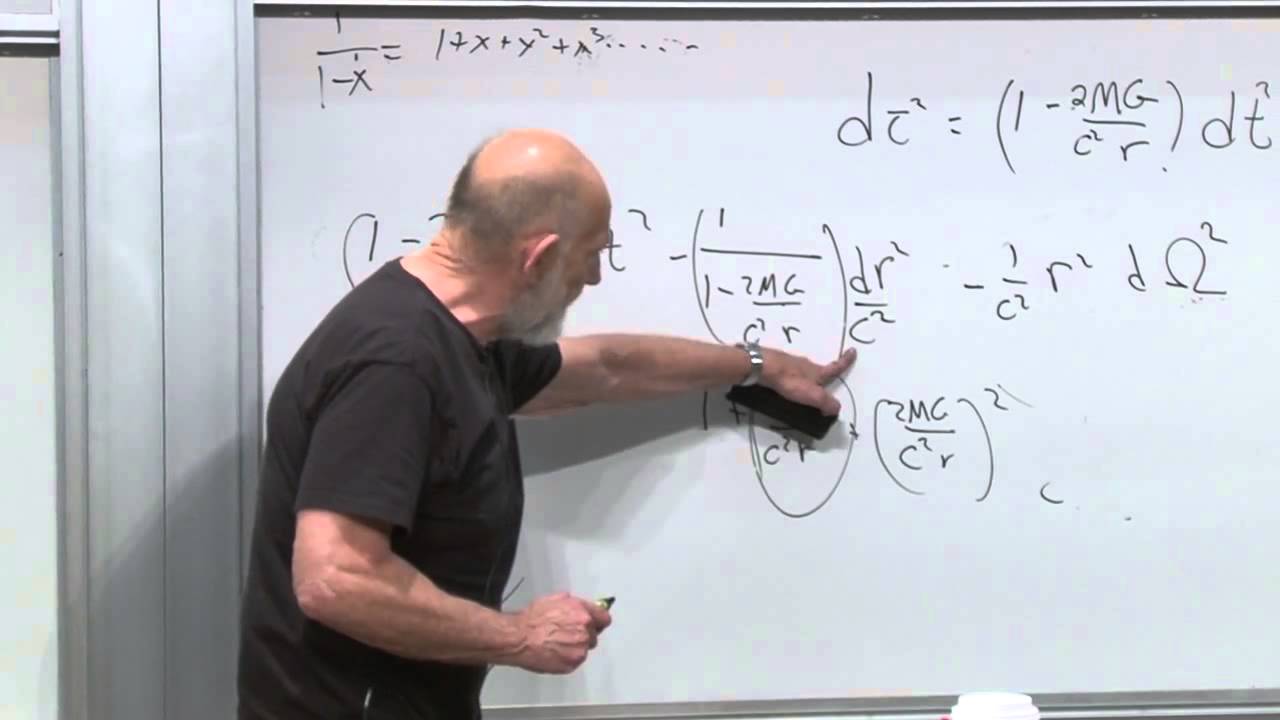
The Schwarzschild metric, describing a spherically symmetric, non-rotating black hole, is derived by solving the Einstein field equations under vacuum conditions (zero stress-energy tensor) with the Schwarzschild assumptions: spherical symmetry, static nature, and no vacuum energy. By assuming a specific metric form with only radial dependence in the time and radial components, the vacuum field equations reduce to a single differential equation whose solution yields the famous Schwarzschild metric, where the constant of integration is determined by requiring consistency with Newton's law of gravitation in the non-relativistic limit.
Deriving the Schwarzschild Metric from the Einstein Equations
Added:Einstein's Field Equations: Familiarity with the structure and physical meaning of the field equations, including the Einstein tensor and the stress-energy tensor.
Tensor Calculus and Differential Geometry: Understanding of metric tensors, covariant derivatives, and coordinate transformations in curved spacetime.
Christoffel Symbols and Curvature Tensors: Knowledge of how to mathematically define and compute Christoffel symbols, the Riemann curvature tensor, and the Ricci tensor.
Spherically Symmetric Spacetimes: Conceptual understanding of spherical symmetry and static spacetimes, which form the basis of the Schwarzschild ansatz.
Physics of Schwarzschild Black Holes: Exploring the physical implications of the metric, including the event horizon, coordinate vs. physical singularities, and Kruskal-Szekeres coordinates.
Geodesic Equations and Classical Tests of GR: Applying the Schwarzschild metric to calculate gravitational lensing, gravitational redshift, and the perihelion precession of Mercury.
The Interior Schwarzschild Solution: Deriving the metric for the interior of a static, spherically symmetric body of constant density, leading to the Tolman-Oppenheimer-Volkoff (TOV) limit.
The Kerr Metric: Advancing to the study of rotating, axially symmetric black holes and phenomena like frame-dragging and the ergosphere.
23K views614likes1:23:58Original Release: 2018-05-07
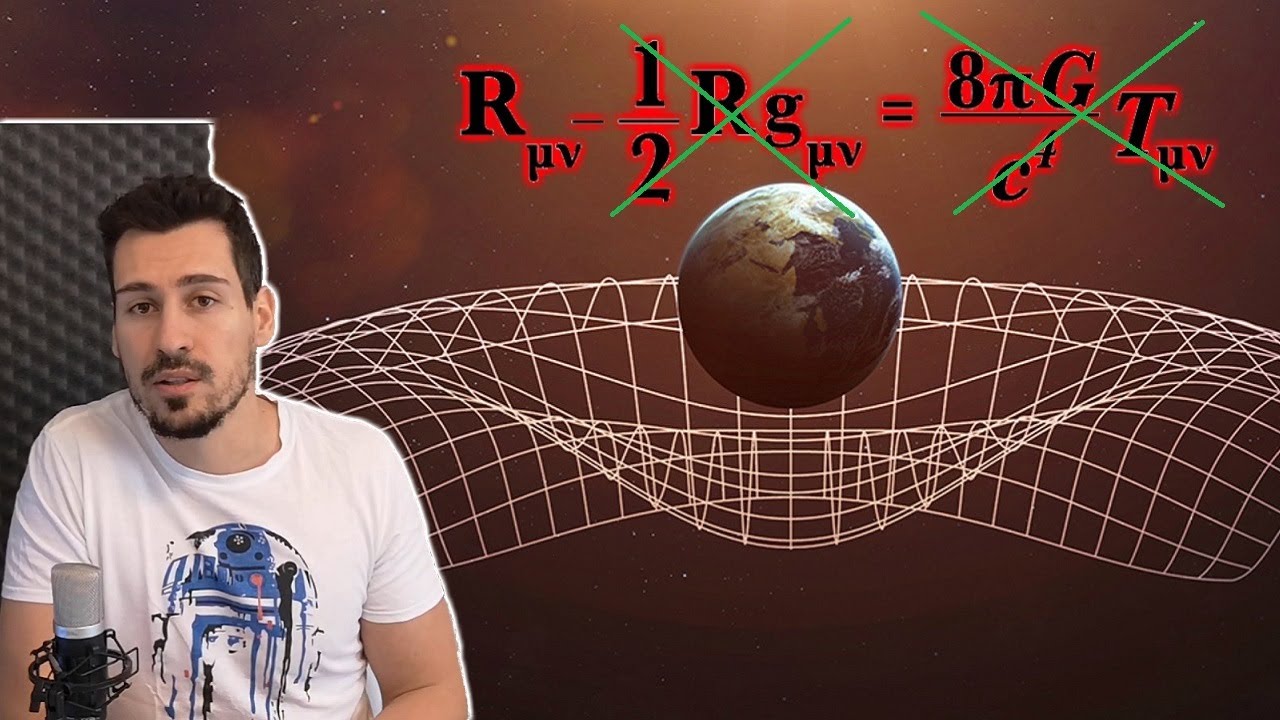
the Einstein field equations are a set of ten independent highly coupled nonlinear hyperbolic elliptic second-order partial differential equations to fit into one 4d symmetric tensor field equation the Einstein field equations relate the metric tensor to the stress energy momentum tensor through curvature tensors that are ultimately derived from the Riemann curvature tensor this is the mathematical implementation of the statement that matter and energy curves space-time to yield gravitational effects now anyone who is not hopelessly out of touch with pop culture will know that the Einstein field equations are the Ricci curvature tensor minus 1/2 the scalar curvature times the metric plus the cosmological constant times the metric set equal to 8 pi G over C to the fourth times the stress energy momentum tensor where the scalar curvature is given by the fully contracted region curvature tensor the Ricci curvature tensor is given in terms of the Christoffel symbols by this formula the Christoffel symbols are given in terms of the metric by this formula and the stress energy momentum tensor is given by this formula which is just a Hilbert stress energy tensor so a rather horrendous fact has come to my attention it appears that there are no videos on YouTube that show viewers how to solve the Einstein field equations for even the Schwarzschild metric the simplest non-trivial solution I was horrified and I noticed this as I imagine you can understand and I felt an immediate need to fix the problem thankfully I've got the skills to save the days don't worry in this video I will solve the Einstein field equations for the metric and explain the process as I go the Schwarzschild metric is the simplest non-trivial solution to the Einstein field equations as I said and it was the first non-trivial solution to be found it by extension is the simplest black hole solution and the simplest Ernst vacuum it describes a vacuum containing only one thing and that is a special type of black hole called a Schwarzschild black hole the vacuum is defined by the following key properties no vacuum energy it's a completely empty space except for one singular charge less mass it's spherically symmetric and static and it's Lorenz ian's these key properties are written here and they will be referred to as the Schwartz sholde assumptions the first two properties give the following two things that the cosmological constant is Europe obviously and then the stress energy momentum tensor goes to zero due to this one because of the limit that all of the contents of the vacuum go to one singular point in that limit the stress energy momentum tensor goes to zero for this problem spiracle coordinates will be used the next thing to do is look for or look at the Makowski metric and spherical coordinates which is Lorenzi and deduce the most general possible alterations that we can make to it without violating conditions 3 & 4 the Minkowski metric and spherical coordinates and of this right now the reason why we want to do this exercise that I just described is because it'll give us the unsex or the short old metric so the first thing that must be noted is that the Minkowski metric is has the correct Lorentzian metric signature already so the most general alterations allowed by both conditions 3 & 4 can not include changing the sign of the diagonal components the second thing to note is the following and spherical coordinates non-zero off-diagonal components in the metric break the spherically Firdous fearful symmetry the manifold and therefore must be excluded given condition 3 therefore the most general alteration allowed by both conditions 3 & 4 must leave off diagonal component 0 the third thing that must be noted is that altering the pure theta and purify components in any way also breaks the spherical symmetry of the manifold therefore the most general allowed alteration must include or must not include changing these components because of the condition 3 this leaves only two components the pure time and the pure radial components it is possible to alter these components without violating conditions 3 or 4 but they cannot be altered arbitrarily the most general allowed alteration must not change the sign of the components to avoid violating condition 4 and it must not depend on the time or angular coordinates to avoid violating conditions three therefore the most general metric that satisfies all the schwarzschild assumptions simultaneously is this here we're the only alterations are to purely radially dependent functions in a purely radial component and the purely time component this is called the Schwarzschild on sucks using the Schwarzschild assumptions and deductions we have been able to figure out most of the metric only two single variable metric functions remain to be computed to find these still unknown metric functions one must solve the Einstein field equations for this on sites to do this we must plug it in this on sites into the Einstein field equations when this is done the efe collapsed down to a set of equations satisfied by the unknown metric functions the unknown metric functions can then be found up to an unknown constant by solving these equations the unknown constant can be determined by taking the nonrelativistic limit of the geodesic equation and demanding that it be consistent with Newton's law of gravitation the unknown constant ends up being the Schwarzschild radius now to carry out this procedure first simplifying the DfE with the following assumptions that we got to above specifically these assumptions if we plug them in we get this so now if we add this to the other side and take the trace of both sides we ultimately arrive that are the scalar curvature equals twice the scalar curvature which gives us R equals 0 we plug that back into here then we get that the Ricci curvature tensor equals zero too so our geometry is reaching flat these are the vacuum field equations so what we have is that we're solving the vacuum field equations to find the unknown metric functions and specifically we must insert the on sauce the schwarzschild on sots into this equation and it will give differential equations satisfied by the unknown metric functions the first step in this process is to calculate the stafa symbols for the structural on sites there are 13 non-zero Christoffel symbols for the shoe actual on sites all the rest of the 64 are zero I will only show the calculation with the 13 non zero ones because the others tribute to zero if you want to spend your time calculating the other ones calculating however many zeros you need to to get all of them then you can do that on your own time so in the first non zero one the first nonzero is the stock will symbol is gamma 3 1 3 but because of the fact that the Christoffel symbols are symmetric under the interchange of the lower two indices these two just interconvert and then that one doesn't change at all then that's actually also equal to gamma 3 3 1 so we can calculate to it once to the 13 at once ademma 3 1 3 equals gamma 3 3 year 1 so expanding out the sum over the contracted indices and ignoring 0 terms resulting from 0 metric components we get that this equals 1 over 2 G super 3 3 D 1 GE subscript 3 3 where this is the contravariant metric and symmetric we're dealing with this diagonal it's nearly the same the contravariant metric is is nearly the same as the covariant metric except that we take 1 over the diagonal components and that's just because it's a diagonal matrix that's not obviously generally the case so then if we plug in the non zero the values for the non zero metric components then we get 1 over 2 times 1 over negative R squared sine squared theta D R minus R squared sine squared theta and then if we take this derivative and simplify we get this equals just 1 over R so I'm going to make a list of these as we compute them so I'm going to make the list down here our first result is gamma 1 3 1 equals and 3 3 1 equals 1 over R alright so that's the first two so that means we've got 11 more to do and the next one we also get a two-for-one deal the next gun zero ones that we're going to compute is gamma 2 1 2 but of course for the same reason that's equal to gamma 2 2 1 so we have another two birds with one stone 2 1 2 equals gamma 2 2 1 now again expanding out the sum over the contracted indices and ignoring zero terms resulting from zero metric components we get 1 over 2 G 2 2 D 1 G 2 2 right so that inserting these non nonzero components of the metric then this gives us 1 over 2 1 over minus R squared the 1 minus R squared ok so if we take the derivative then we get 1 over R again so then we can add that to our list here just by writing this gamma 2 1 to gamma 2 2 1 okay so now we've calculated for we've got nine of the 13 left to go so the next one is sadly not a two-for-one deal because the two lower indices are the same thing and it is gamma 2 3 3 and then that again expanding out the sum over contracted into season by the way I'm using this formula right here to compute it I'm using this metric tensor so the schwarzschild on sauce I'm basically just plugging it into that formula and computing all the non zero index combinations right so ignoring zero terms resulting from zero metric components then this ends up being minus 1 over 2 G 2 2 D 2 G 3 3 right okay so now plugging in the values for the non zero metric components this becomes minus 1 over 2 times 1 over minus R squared times D 2 minus R squared sine squared theta right and then taking the derivative and simplifying this ends up becoming minus sine theta cosine theta okay so then we'll add that to our list we now have five of them two three three gamma two three three that's the equal to minus sine theta so that's the first five now the next one that we're going to compute again is a two-for-one deal because the lower-end aziz aren't identical and therefore we can flip them and by the symmetry of the Christoffel symbols it will be equal so we can get again two and bump our total up to seven so the next one we're going to calculate is gamma 3 2 3 and then this is of course equal for the same reason gamma 3 3 2 so then expanding out the sum over contracted indices again and ignoring zero terms resulting from zero components of the metric gives us four this is Christoffel symbols 1 over 2 G 3 3 D 2 G 3 3 D ok so now plugging in the values for the non zero metric components this gives us 1 over 2 minus R squared sine squared okay so 1 over that - D - of - R square sine squared theta okay so then doing the derivative and simplifying this gives us cotangent theta okay so then we can add that to our list both of these so now we have a total of seven gamma 3 - 3 equals gamma 3 3 - so only by the way for a moment so you can see so these are the seven we've calculated so far that's a list and that's the calculation of the one we just did so now erasing this or you can calculate the next one the next one is not a two-for-one deal again because sadly the lower indices are the same there's no particular meaning to the order in which I'm calculating these by the way the next one the next nine is zero one we're going to compute is gamma 1 1 1 then ignoring again nonzero terms due to nonzero metric functions and simplifying it down in terms of just the nonzero ones we get that this equals 1 over 2 G 1 1 D 1 G 1 1 where again this is the metric we're using the Schwartz show assumption right so then inserting the value of the nonzero components this ends up people in 1 over 2 1 / - a D 1 minus a so then writing the derivative as a prime we get that this is a prime over 2a this is the first crisp apple segolia calculator that actually involved some of the unknown metric functions ok so we will add that one of the lists to gamma 1 1 1 equals a prime over 2a wicked so then it's like the eighth one or something I think it's the eighth one so then the next one again is a two-for-one deal because the lower indices aren't the same so we get two that are equal so the next one is we're going to calculate or gamma zero one zero equals gamma zero zero one right so then ignoring expanding up with some over contracted indices and ignoring zero terms resulting from zero metric components gives this equals one over 2g 0 and 0 D 1 G 0 0 okay so then plugging in the values of the non zero metric components we get this equals 1 / - 1 / - a nope shoot I'm plugging in the wrong components that well easy fix this is a dry erase board ok so then in reality it's 1 over B C Square D are B C squared then this sends up when we write the derivative is V Prime and simplify a little this is V prime over to be okay we can add that to our list now gamma gamma 0 1 0 equals gamma 0 0 1 equals the prime over to B okay so that's like like 10 or something I don't know how far we are in the list of 13 we've calculated most of them right now okay so the next one again lower indices are the same so we only get one for our efforts instead of two and one to two then as before the process proceeds the same it equals 1 over 2 G 1 1 D 1 which is just plugging that into there and ignoring zero terms not plugging in the value for the non zero metric components this gives us minus 1 over 2 1 over minus ay d R minus R squared so then this is equal to R over a minus a ok we'll add that to our list right here M 1 to 2 equals so then this is the list so far I'll step out of the way so you can see it this is the list of all the Christoffel symbols calculated so far we're almost done there anything this then we have a few more to calculate let's see that only two more to calculate cool so the next one is gamma 1 0 0 equals right again so plugging in the values all right now expanding out the sum over contracted indices and ignoring is your a terms resulting from 0 metric components gives us the result 1 over 2 G 1 1 1 0 0 for this Christoffel symbol now plugging in the values for the non zero metric components gives us that this equals minus 1 over 2 1 / - a DRC is the dr of c squared B okay so then writing a drivet if this B prime this ends up being C squared B prime over 2a as the second to last one it's a 12 funnel I'll add that to the list right here there's Europe pulls C squared B prime over 2a so this is our list of Christoffel symbols so far the lace you can see then we've got one remaining Christoffel symbol to calculate just one left and that last non-zero one is gamma 1 3 3 gamma 1 3 3 so expanding out the sum over contracted indices and if sums over contracted indices and ignoring is their occurrence resulting from 0 metric components then gives us this equals minus 1 over 2 G 1 1 D 1 P 3 3 now plugging in the values for the non zero metric components us that this equals minus 1 over 2 1 over minus a dr of minus R squared sine squared theta so then taking the derivative and simplifying a little bit gives us R sine theta over a so then let's add that to our list right here gamma 1 3 3 equals minus R sine squared theta over a cool so that is the complete set of 13 nonzero Christoffel symbols for the schwarzschild on sites all the rest are 0 there's a total of 64 of them and a problem simplified massively by all these zeros and the fact that the metric functions don't all depend on all of the variables there's a lot of ones that are proportional to derivatives partial derivatives that are 0 right ultimately just killed a whole bunch of those Christoffel symbols of zeroes the mouth and leave this with only 13 nonzero West so where'd we gotten so far we started by looking at the formulas for the different terms in the Einstein field equations we wrote out and considered the short shelled assumptions got the Schwarzschild unsought sand these two facts from that and now we've just started plugging that into the einstein field the first two things we plug it in gave us that the Schwarzschild metric solves the vacuum field equations and now we're just in the process of plugging the shark-filled on thoughts into that and then the next step because we're solving these equations which says that the Ricci curvature tensor equals zero is to calculate the Ricci curvature tensor from these components from these Christoffel symbols and we can see the Ricci curvature tensor is given by this formula in terms of the Christoffel symbols so the fact we've just calculated all of them is exactly what we needed to do it puts us in the place where we need to go so there are only four nonzero components to this now technically we're going to set all of them equal to zero but it turns out there are two types still ones that automatically evaluate is zero regardless of what you're setting them equal to so they're identically equal to zero and then there are components of that tensor that aren't identical equal is zero and we have to set them equal to zero and that will give us the differential equations we'll be solving and there are only four that aren't automatically equal to zero and I'm only going to calculate those if you want to calculate the ones that automatically evaluate to zero then that's just fine so the first one that you can do that on your own time the first one that is non zero is our zero zero so the pure tiny component of this right then since there are 16 components total and it's a symmetric tensor there are ten independent components and since only they're sensitive since all but four just automatically evaluate to zero we've only got that means actually six of the independent components are automatically zero just given the nature this is something but anyway so expanding out the the sums over contracted in the season you can see there are quite a few of them right and ignoring zero terms resulting from zero Christoffel symbols gives us the following well actually all write out the formula without the indices the summed over indices this sums expanded let's start with just that d0 Gamma Rho 0 Rho minus D Rho gamma rho 0 0 plus gamma sigma e roro Gamma Rho Sigma 0 minus gamma sigma 0 0 gamma Rho Sigma Rho ok so all I've done is taken the fact that we're looking at the 0 0 component so I've set all the live indices to 0 so that you can see these are these indices are contracted they're summed over so then not what I was saying I was going to do before and what I did just right away for all the Christoffel symbol calculations and what I'm going to do now is expand the sum over contracted indices and so they ignore 0 terms resulting from 0 postoffice symbols now when we do that what we get is that this equals minus V 1 gamma 1 0 0 plus gamma 0 0 1 gamma 1 0 0 this is a long formula minus gamma 1 0 0 gamma 1 1 1 minus gamma C 1 0 0 if I got an off track on my writing let's see minus T 1 gamma gamma 0 1 0 gamma 1 0 0 Emma 1 0 0 1 1 1 ok 1 0 0 gamma ok no I wasn't I was writing right please - gamma 1 0 0 gamma 3 1 3 ok so then this thing you hear is it written out in terms of just the Christoffel symbols that are nonzero now I'm running out of space I'm going to erase written so far and then I'm going to plug in the values for the nonzero Christoffel symbols into that and we'll get an expression for the Ricci curvature directly in terms of sine Thetas and ours and the unknown metric function in terms of the things that show up in the shrug child on stops so let me erase this and do that okay so plugging in the values of the nonzero Christoffel symbols gives us this expression for it C minus D our C squared B prime over 2a plus B prime over to be C squared B prime over 2a okay minus C squared B prime a prime over 2a 2a minus C squared B prime over 2 a 1 over R a minus C squared B prime over 2a times 1 over R and what you're realizing now is actually doing calculations and general relativity's extremely arduous it's not for the people who like quick math so then if we do the derivatives so we actually evaluate that derivative right there and we simplify and rearrange into the nicest simplest form we get the following result for this component we did that our zero zero equals C squared times minus b prime prime over 2a that's the second derivative with respect the with respect to R so B crying over for a times a crime over a plus B crime over B minus the crime over our a so that's that result now I'm going to make a list of these results and I'm running out of space so I'm actually going to erase that that's not needed anymore we already talked about that I was wait at the beginning of the calculation so I'm going to erase that erase X here okay it'll make my list up here are 0 0 equals C squared there are only 4 so this will be enough space to list them all minus B prime prime over 2a plus B prime over or a times a prime over a plus B prime over the minus V prime over R a okay so now that can feel the equation to say that all the components of the region curvature tensor or equal to 0 so then what I'm going to do is actually do this R 0 0 equals 0 equals that so then this is the first differential equation satisfied by the unknown metric functions it's the first of 4 and it's it's those 4 that will solve to find out what the metric functions are let's erase that and calculate the next nonzero component of the region curvature tensor for the Schwartzel long test this is tiring so performing the same process as before we get that r11 which is the next nonzero component equals B 1 Gamma Rho 1 Rho minus B Rho Gamma Rho 1 1 plus gamma sigma 1 Rho Gamma Rho 1 minus gamma sigma 1 if so then expanding out the sum and ignoring not or ignoring all the 0 terms right ok this equals D 1 gamma 0 1 0 plus B 1 gamma 2 1 2 plus B 1 gamma 3 1 plus gamma minus gamma 1 1 1 gamma 0 1 0 minus gamma 1 1 1 gamma 2 1 2 minus gamma 1 1 1 gamma 3 1 3 yeah that's messy ok so just so you can see what's going on the next component R 1 1 equals that expanding out all this sums that were contracted indices and forgetting this is a signal really terrible Sigma and forgetting about terms that are 0 because the Christoffel symbols is something Christoffel symbols in those terms of 0 right so then plugging in the values for the non-zero Christoffel symbols in years so all those values we get let's see dr v prime over 2v plus vr 1 over r plus vr 1 over r plus V prime over 2b times V prime over 2 B minus a prime over 2 a times V prime over to the minus a prime over 2 a 1 over R minus a prime over 2a yeah both term the same for a second I thought I'd seen wrong plus 1 over r squared plus 1 over r squared so then taking the derivatives and simplifying this down it's not that many steps it's absolutely straightforward algebra then the final simplified answer is the you know what I'm just going to write it up there right away so that I don't have to write it down twice like I did the last time which was kind of a waste of time energy right let's see ok so then as we just calculated after simplification the expression that I just wrote down the really long one for this component this simplified answer that I just mentioned is the prime prime over to be okay minus V prime over or V times V prime over B plus a prime over a minus a prime over R a so that's two of the field equations that we've got we've got two more Ricci curvature tensor components to calculate here this is not again for those that click math the third Ricci curvature tensor component is nonzero is our 2 2 and then that 1 equals the two Gamma Rho 2 Rho minus D Rho and Rho 2 ok so plus gamma sigma 2 Rho gamma rho sigma2 and minus gamma sigma 2 2 gamma rho and then this given that given the how many of these are r0 this when you expand out the son wasn't ignored in zero terms ends up equaling minus D 1 gamma 2 gamma 3 minus gamma 1 to 2 gamma 3 1 3 plus gamma 2 2 1 gamma 1 2 2 plus gamma 3 2 3 gamma 3 3 2 okay so plugging in the values for the non zero of Christoffel symbols this actually this thing actually doesn't look so bad when you do that it's not terribly long we have that this equals dr r over a plus e tangent theta plus R over a the prime over to B plus R over a a prime over to a plus R over a 1 over R minus 1 over R R over a plus cotangent squared theta now we can take the derivatives and simplify I'm going to write the simplified result just straight up in our list there so that I don't have to write it twice like last time so the simplified result for R 2 to the third nonzero Ricci curvature tensor component that we've calculated works out to be minus 1 the minus R over 2 a a prime over a minus B prime over B plus 1 over a ok some of you can erase this mess and this is just that thing is just what you get from simplifying as I said it's just where you get from simplifying this and it's a very straightforward easy simplification to do it's just like calc one level stuff okay final and yes we're finally nearing completion here the final nonzero component of the Ricci curvature tensor the Schreck sholde on science is r33 now that of course just does three four just like before equals 3 and the area d3 gonna row 3 row minus B row Gamma Rho 3 3 plus gamma sigma 3 Rho Gamma Rho Sigma 3 okay minus gamma [Music] so expanding out the sons and ignoring zero terms this ends up equaling the following mess - do you wanna gamma 1 3 3 minus T 2 gamma 2 3 3 minus gamma 1 3 3 D gamma 0 1 0 minus gamma 1 3 3 gamma 0 1 0 minus gamma 1 3 3 gamma 1 1 1 and minus gamma 1 3 3 gamma 2 2 1 2 plus gamma 3 3 1 gamma 1 3 3 plus gamma 3 2 2 3 2 gamma 2 3 3 so then R 3 3 ultimately ends up equaling this horrible mess in terms of these nonzero Christoffel symbols so let's plug those values in I'm going to need to erase this so if you want to see it pause and look at it now because I'm going to erase it to have room 2 substituting all of those all of all of the values of these knives Eric Christoffel symbols erasing that now when we plug all the values in and I did some factoring because it would just be pointlessly too long if they didn't but aside from the factoring I have done no simplification this equals then d R R sine squared theta over a plus d 2 sine theta cosine theta minus negative B prime over 2 B minus a prime over 2 a and then these cancel of course but I'll write them out anyway and not simplify more than the factoring I talked about our sine x over sine squared theta over a yep okay and then this is minus cotangent theta sine theta cosine theta so let me just sit down here sit look at this for a moment that sit down stand here and look at this for a moment to make sure I got it all right looks like I did okay so aside from the fact during that time to simplify I'll write the simplified result up here so once you're taking derivatives and simplifying all that stuff we get our 3 3 equals or eggrolls this following simplified result lecture let me just look at this row okay yeah there we go sine square root of theta times minus one minus R over to a a prime over a minus UV prime over B plus one over a now you'll notice something interesting if we compare our two two and r33 all let me erase this unnecessary mess I'll talk about that okay so if you look at R 2 2 and R 3 3 you see the only difference is this factor of sine squared theta and it's both are set equal to 0 so you can divide that up so these two equations are exactly the same so we only have a three independent equations but we've only got two metric functions to solve for so that's absolutely fine and now for space what I'm going to do is I'm actually going to erase some stuff now that we have these we don't need to see these anymore the Christoffel symbols I want to leave them up there for sort of an overview in fact let's do a review of how how far we've gotten so far so we started with the Einstein field equations we looked at the formulas we wrote out the schwarzschild assumptions and we deduced these two facts and the schwarzschild on sots from it and we then figured out at these two the a and B here implied that we were solving the vacuum field equations right okay so then we plugged in this on sites that we got also from those assumptions into the vacuum field equations and that gave us these four constraints right here through that we calculated all the Christoffel symbols by plugging this into that formula we got those and then we calculated the reach of curvature tensor by plugging all of those into this formula which gave us this because the vacuum field equation say is the region curvatures there so it's a Ricci flat geometry so then the next thing we need to do is the actual solving this is where we actually solved the Einstein so far we've just been setting up the problem and working out what the efe collapse down to when we plug in our on socks now we actually have to solve those equations yeah I think actually I'm going to try and do it without erasing anything I want to leave this stuff up here so Carl Shrek schult and figured out a trick for solving these equations and it's not obvious but you'll see why it's important and strangely the trick is to evaluate the following combination r0 0 over B C squared plus r1 1 over a now this of course equals 0 because both numerators equal 0 but what we're going to do is plug in these tensor component values for those and then simplify it down and what we'll find is we actually get a really really critical fact about the metric functions we get a simple relationship between the two and we therefore reduce our problem down to just solving for one so then plugging this in its general relativity's arduous deal with it 1 over B times minus B prime prime over to a supposed to be an a right plus B prime over 4a times a prime over a plus B prime over B ok and then this minus V prime over R a plus 1 and over a the prime prime over 2v I regret writing this out but I'm going to finish it if I started to be prying over for the B prime over B minus a prime over a ok and then minus a prime over our a so now if we simplify this down it's again really straightforward it's just pure algebra it actually simplifies down a lot this quantity right here which equals zero and that ends up simplifying down to this really really simple result V prime over R b/a - a prime over our a squared so then this equals zero so we get this relation here and that relation will give us a super simple result so now I'm going to do is erase this whole thing and then just rewrite this relation and we'll manipulate it algebraically to get a final key answer and from then on our problem will get drastically easier so I'm going to rewrite this at the top 0 equals minus V prime over R b/a - a prime over our a squared if I put 0 on the other side of the equation already I need to do it again ok so now what we can do is we can divide out all the factors that are common between the two terms this gives us that 0 equals a prime over a plus B prime over B now the next key here is to integrate this so if we integrate this equation and we get 0 equals a prime over a dr plus the over the ER this gives us L and A plus Ln of the right and then through log properties this gives us Ln of a B okay so then we can take the exponential of both sides and that gives us e to the 0 equals so 1 which equals a times B because the log and exponential cancel it's not going to erase and rewrite this at the top and we'll get the key result we were looking for the key thing they are solving for that I mentioned Carlos work shields idea it ultimately allowed the solution to be computed right so then this I'll rewrite it up here 1 equals a B but then of course this tells us that a equals 1 over B so now we have this really important fact these two unknown metric functions are actually related their inverses of each other the Einstein field equations have told us that so now we only need to solve for one and we'll immediately have the other given to us via this relation this relation is really important so I'm going to write it up here and I'm going to leave it in a box okay so the next thing I'm going to do since we've already used those two equations I'm going to now plug this relation this value for a into the third equation so this one right here and that will give us the equation we're actually going to be solving so then using this equation in that relation we have 0 equals minus 1 minus R B over 2 minus the the prime over B squared minus V prime over B plus B and this equals minus 1 plus R B Prime so then the equation we actually have to solve what Einstein's field equations have finally all reduced down to all of this has given us one simple equation that we have to solve and that equation from here you can see is just 0 equals minus 1 plus R B prime plus B now you'll leave the interesting thing here is that after all that insane mess all the non-linearity we had to deal with in the Christoffel symbols and the Ricci curvature tensor the Einstein field equations are crazy nonlinear all of that goes away and we get this simple equation that we have to solve so I'm going to erase the unnecessary math rewrite this key relation at the top and then review the process up until this point 0 equals minus 1 plus R the prime plus okay so to recap so far we wrote out the Einstein field equations and all the formulas for the symbols inside it then we wrote out the Schwartz old assumptions and deduced these two quantities got the vacuum field equations and then we also use it to do to deduce the shark shield on the sauce which is this thing right here then we wrote out the vacuum Einstein field equations for this on sites by plugging this metric on sauce into this formula for the Christoffel symbols and then plugging and that's what these are and then plugging all those into this formula for the Ricci curvature tensor and setting a equal to zero because we're solving the vacuum Einstein field equations and that gave us these and then we did some adding and subtracting and multiplying and dividing and stuff with these two ultimately reveal this fact we did some algebra with them to reveal that a equals 1 over B according to the Einstein field equations for this on sites so then we plug this into the third equation so our 2 2 equals 0 and that gave us this equation now just by inspection it's such a ridiculously simple equation this is solved by B equals 1 minus 2x over R where s is just some arbitrary constant so now what I'm going to do and then we have of course that a equals 1 over that because of that so we have now 1 minus 2 s over R so now you can see that the Schwarzschild metric is almost here we've almost got it we just need to determine what this s is and that is the next order of business so what I'm going to do now is write out the Swart show longshot so I'm going to rewrite it except now I'm going to insert these values so we have an updated metric we have as much as we know about the metric at this point written out which is everything except for one undetermined parameter so then I'm just going to erase this now we won't be needing it anymore when the metric up until this point with that inserted is G mu mu equals I'm going to need more room in my breakfast than that asked brought big inaturalist 8 1 minus 2 s over R C squared and we have minus 1 over 1 minus 2 s over R 0 0 0 0 0 0 ok when we have minus R squared 0 0 0 then we have minus R squared sine squared of theta 0 0 0 ok so this is what we know about the metric so far we've got the functional form determinant you'll recognize that from the Schwarzschild metric we just need to determine what that is now the last job then is to find out what the value of that constant actually is to find this constant we will use the geodesic equation and we will mandate that it the nonrelativistic limit of it is consistent with Newton's law so one uses the fact of the geodesic equation must agree with Newton's law of gravitation in the limit that the speed of light goes to infinity for the cases specifically the comoving frame because that's when newton's laws are valid so the geodesic equation is you should know this by now I mean if you don't then that's that's kind of unfortunate d squared X beta over D tau squared equals minus gamma beta Rho nu D X Rho D tau D nu D tau so then the statement that the know in the limit as Z goes to infinity this should give us the nonrelativistic radial acceleration so the radial component so then we should have that a R equals the limit as Z goes to infinity d squared X 1 over the tau squared but then by the geodesic equation this son equals negative the limit as C goes to infinity gamma 1 Rho mu D X Rho over D tau DX mu over the Tau okay and then this side is actually easier to compute so let's compute it so I'm going to rewrite that don't call me and we are going to compute so the room to do the math I'll write it up here a R equals the limit as Z goes to infinity minus gamma 1 Rho D X Rho over the Tau DX mu over the ow ok so that's what we're going to compute now clearly what we need to do is calculate the proper velocity for this metric here the Schwarzschild metric with a constant still unknown and then we can plug that in and the Christoffel symbols and what we'll find is that we'll need to evaluate some Christoffel symbols that are written in terms of the unknown metric functions for the metric functions whose form we now know but we'll get to that in a minute so to calculate the proper velocity we can start with the line element of the metric so then F of that metric so C squared D tau squared equals 1 minus 2 s over R C squared DT squared minus 1 over 1 minus 2 s over R D R squared minus R squared D theta squared minus R squared sine squared theta the v squared so that's the line element now the first step we're going to do the front the approach we're going to take to calculating the proper velocities like this will calculate the time component and then we'll get an expression for the space components in terms of the ordinary velocity just DX I over DT times the time component right and then because we just calculated the time component we'll have an expression for all of them then since we're looking at this and the comoving frame will set the ordinary velocity so DXi already 2 equal to 0 and that'll give us a simple for vector for the proper velocity and eco moving frame and then that's what we'll plug into this quantity right here now the first step in calculating the time component of the proper velocity which is the T over D tau or really D X naught over D tau is going to be to divide both sides by DT squared and with regard ok so when we do that ok I need more room what can i erase what can I erase without a problem you know I think I'm gonna erase the Christoffel symbols I don't want to but I'm running out of space i erase them they've been up there for a while so it's not like you haven't had time to look at them ok so then when we do that we get that D tau squared over all D tau over DT all squared equals 1 minus 2 s over R that might be too small for you to see 2x over R minus 1 over C squared 1 minus 2 s over R and then d r over DT squared minus R squared C squared the theta over the key squared minus R squared sine squared theta over C squared D theta D Phi over the quantity x squared ok so then the zero component of this is the square of the zero component well it's actually the square of one over the zero component so therefore we can take the square root and we can take 1 over that to get these your component of proper velocity and that just is U 0 where u is going to be the proper loss is the letter A use for it okay equals the T over the cow and this equals equals this equals 1 minus 2 s over R minus 1 over C squared 1 minus 2 s over R and the are over the T quantity squared minus R squared over C squared D theta over the T squared minus R squared sine squared theta over C squared D Phi over the T squared all to the minus 1 over 2 okay so then that is the time component of the proper velocity thankfully we don't have to deal with this massive expression there I apologize about my messy handwriting well anyway when we we're looking specifically at the comoving frame so when we zero all the normal velocity components so the radial velocity the polar angle angular velocity and the is a mutual angular velocity those terms all except for that one goes to zero so then we end up with in the comoving frame and I can erase all this mess and just write that out we have in the comoving frame so this equals u zero the time gunrunner equals one minus two x over R to the minus one over two so now we need to calculate the spatial components now that's actually pretty easy to do we have that UI where I just runs from one to three over the spatial components equals DX I over D tau then this equals B X we can use the chain rule DXi over the T DT over D tau but then DT over D tau just equals u naught and this just equals VI the normal spatial velocity u naught I can draw better you than that there we go okay so we've got VI times u naught but in the car moving frame we're setting this equal to zero so then that whole thing is zero so we just have in the comoving frame I'll erase this interest rate we have just you I equals zero so then the full four to vector u row equals D X row over D tau then this equals the full for vector is 1 minus 2 s over R on to the minus 1/2 0 0 0 so this is the full for vector so now we can plug that into this quantity here and actually compute what this radial acceleration is and then we'll look at Newton's gravity law and get formula for this non relativistic radial acceleration and we'll demand that it equals this limit and what that will do is it will fix this constant s that's still the only last thing we have left to determine ok so let me clear this space and do that so I'm going to plug that formula for the the proper velocity here in and we ignore all 0 times and then we have this limit equals the limit as T goes to infinity s equals the gamma or the limit of 0 1 gamma 1 0 0 au 0 u 0 ok so the reason why we only have this one term is because in the comoving frame as you remember all the spatial velocities zeroed out so we only have one term to compute so plugging all of the values in here then we get the following result let's see including including the metric functions we're going to plug them into this Christoffel symbol and calculate it I erased what it was in terms of metric functions to clear space but you can look back in the video and get it ultimately this can be written as Cu limit as Z goes to infinity the following C squared 1 minus 2 s over R prime C over 2 times 1 and minus 2 s over R right now we can plug in the value for the Co movie there the co moving frame value for the 0 components of the proper velocities and then that multiplies this in the brackets Y clear so this one is a quantity to the minus 1/2 and this is the same quantity to the minus 1 actually get an overall quantity just to the minus 1 so we have 1 minus 2 s over R to the minus 1 and that bracket shouldn't be there should be here ok but then these two things cancel so then what we have at the end of the day is equal 1 over 2 limit C goes to infinity of C squared D over D R 1 minus 2 s over R so that's what we've gotten this any of our here the nonrelativistic radial acceleration equals the simple limit of that quantity so then simplifying us down completely getting the absolute final answer for the value of this limit before we figure out what s is we have 1 over to limit as Z goes to infinity C square of C squared 2 s over R squared that is a terrible are there has been err are so this is the key result we wanted here so we've calculated this limit there well we've calculated it for arbitrary s so we can't actually take the limit yet because we haven't figured out what s is yeah so what I'm going to do is then erase all this intermediate calculation we did and just write this up at the top there and then we'll work out what Newton's law says this a R should be this nonrelativistic radio acceleration and then we'll mandate that they match now and when we mandate that they match that will fix s so let me erase and rewrite that at the top and then we'll talk Newton's laws in the comoving frame okay so then are the cute results of the last bit of calculation equals they are equals 1/2 when the C goes to infinity C squared over R ok so now Newton's law of gravitation will write that out we have that for the radial acceleration here so we have the M let's see you well at R so it's the radial force here okay equals M a where a is a non relativistic radial acceleration so to that so we've got an expression from general relativity for what that should be and we're going to make it agree with Newton's laws in the limit that C goes to infinity so the nominal atavistic limit we're going to make it agree with Newton's gravity law by fixing s then this equals according to Newton M mg over our store where the little m is the the test mass mass and Big M is the mass of the gravitating source so they're the source that's causing the gravity field of the thing that the test mass is moving in right so then if we divide by the test mass mass Newton's laws tell us that AR equals Big M G over R squared oh and this is supposed to be squared up there I forgot the square when I rewrote it up there okay so then let's set those two things equal what we then have is that this limit must equal according to Newton's laws G over R squared so then the thing is is what do we have to set s equal to in order to make that limit give the right value it turns out X has to equal M G over C squared which is the Schwarzschild radius as it turns out or half the Schwarzschild radius or something it's related to the Schwarzschild radius and it's the value of the constant so then let's plug that in and see that it works so if we plug this in okay 1 over to the limit C goes to infinity C squared 2 over R squared and then for sm g over c squared okay so now the C Squared's cancel and then the two is canceled also I was just thinking where's this extra to come from what happened it was not looking at this half there the twos cancel there and then the z-score is also cancelled so then this ends up equaling the limit as Z goes to infinity of simply M V over R squared which of course since there's no C in that anymore just equal to M G over R squared which is exactly what it was supposed to so then this is the correct value that is the correct value for the unknown constant here and that means we have just finished solving the Einstein field equations for the Schwarzschild metric because we have determined everything about the unknown metric functions so I'm going to erase some stuff and then plug this value of s in here and write out the full Schwarz shoulder metric and then we will review how we got here over RC squared let me erase the denominator to write it nice because this is important this is a really really cool result our C squared okay so then this also goes that to M the our C squared okay hopefully you can read that so then this is the short road metric that's it that is how you solve the Einstein field equations for the Schwarzschild metric so let's review we started with the Einstein field equations and the formulas for the symbols in it we wrote out the Schwarzschild assumptions we deduced these two facts and also the Schwarzschild on sots we plug the Schwarzschild on sots and these two facts into the Einstein field equations and got that we were solving the vacuum field equations and that for the particular on sots through the Christoffel symbol of joy cents erased give this value for the Ricci curvature tensor components that are identically equal to zero and then as since we're solving the vacuum field equations we set them equal to zero and that gives us the differential equations we need to actually solve so then we play around with the first two and we discover this fact a e equals one over B so the unknown metric functions are related they substitute that fact into the third one which gives us this differential equation we solve it for the functional form of the symbols and then we take the limit of the geodesic equation the non relativistic limit of it and make it agree with Newton's laws and when we do that that gives us the last piece of information that we need to know that last piece of information is that the only unknown thing about the metric left is constant equals mg over C squared so then we put that in the metric and there we go we have the Schwarzschild metric the final answer here is it's beautiful isn't it now typically you will have seen this written out as the line elements because people like to write out the line elements instead of the component form so I'm just going to write out the line oldest of that so that we have the most famous expression on the board and I'm actually going to erase this whole lower thing so I can write it nice and big okay so then the line element the famous line element is C squared D I'm gonna write it bigger than that make sure it really can be seen clearly C squared D tau squared there we go equals one minus two and G over C squared our C squared the T squared then minus one minus two M G over C squared R one over that the R squared a and then minus R squared D theta squared minus R squared sine squared theta D Phi squared okay so then this deserves a box I think my writing got smaller as I went across the board so it's not totally even but anyway that's it there you go that is how you solve the Einstein field equations for this workshop metric the problem of video showing you how to do that and not existing on YouTube has been solved Deitrick out
Up Next
99:07
General Relativity: Metrics, Black Holes & Event Horizons Explained
@stanford
184.9K views•2012-10-30

12:53
21cm Hyperfine Transition in Neutral Hydrogen: Radio Astronomy Basics
@AaronRobertParsons
12.4K views•2011-10-13

32:32
NMR Spin Physics I: Zeeman Effect, Resonance Condition & Larmor Frequency
@nptel-indianinstituteofsci8064
2.3K views•2024-01-17

27:14
Entropy and the Second Law of Thermodynamics Explained
@veritasium
27.5M views•2023-07-01
Related Study Plans & Knowledge Roadmaps
Structured learning paths in Physics
physics
Nuclear Physics (Decay, Fission & Reactors)
01Atomic Structure and the Binding Force
02Radioactive Decay and Half-Life
03Nuclear Fission Mechanics and Chain Reactions
+ 2 more learning modules
12h5 modules
Explore Roadmap
physics
Soft Matter (Polymers, Colloids & Rheology)
01Foundations of Soft Matter & Thermal Forces
02Polymer Physics and Macromolecules
03Colloids, Surfactants, and Self-Assembly
+ 2 more learning modules
38h5 modules
Explore Roadmap
physics
Analytical Mechanics: Lagrangian & Hamiltonian
01Mathematical Foundations: Calculus of Variations
02From Newtonian Mechanics to Constraint Dynamics
03The Principle of Least Action & Lagrangian Mechanics
+ 3 more learning modules
28h6 modules
Explore Roadmap
physics
General Relativity (Spacetime & Cosmology)
01Foundations of Relativity: Special Relativity
02The Geometry of Spacetime: Equivalence Principle & Curvature
03Einstein's Field Equations: The Mathematics of Gravity
+ 2 more learning modules
55h5 modules
Explore Roadmap