






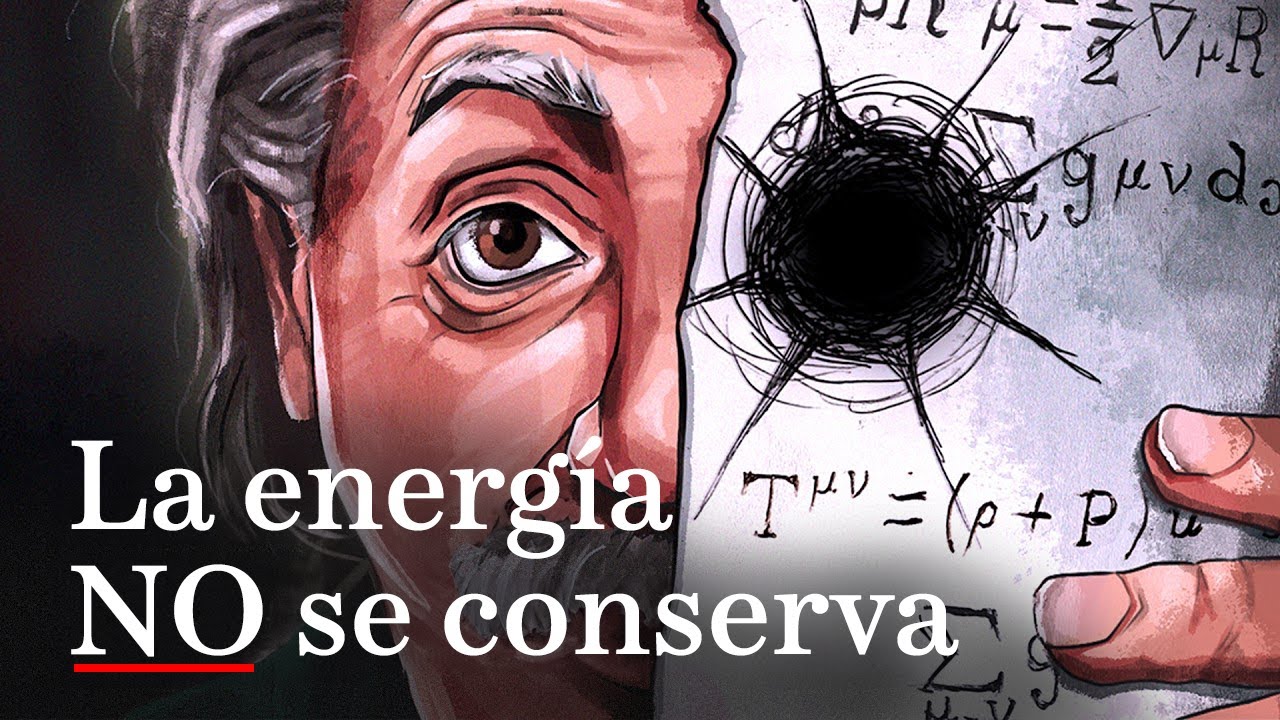
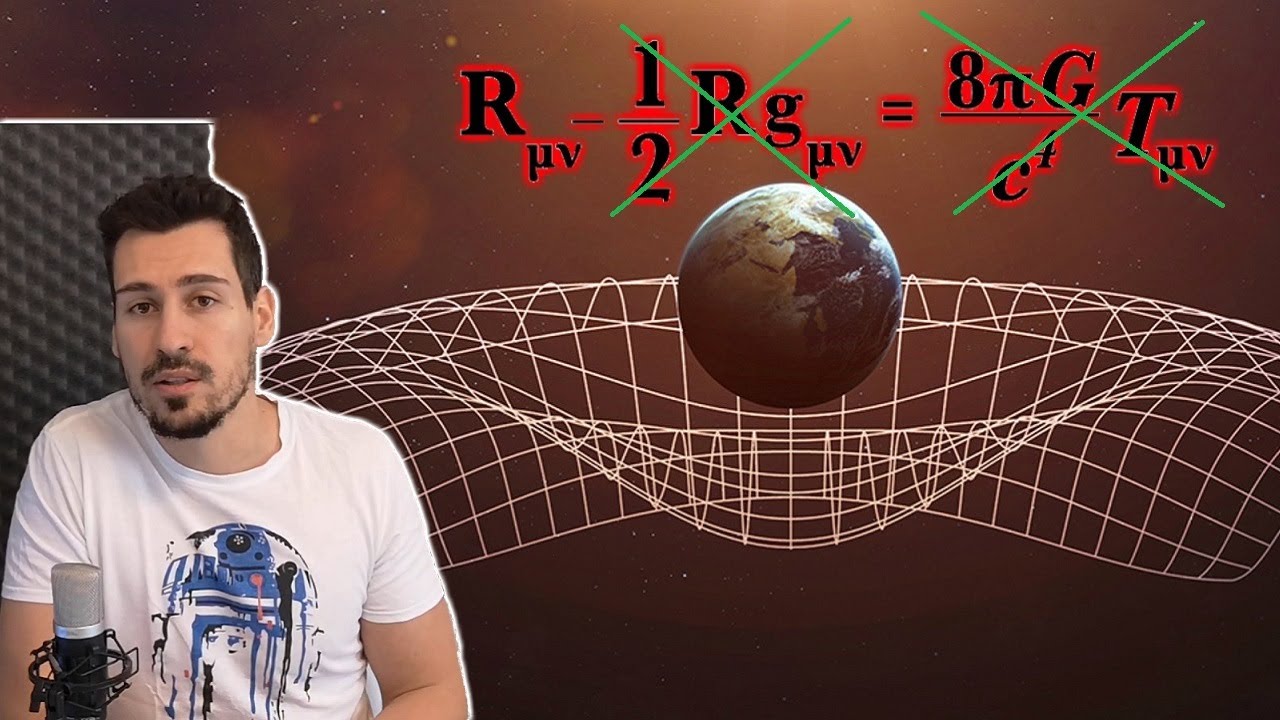






Einstein's Field Equations (Gμν + Λgμν = 8πG/c⁴Tμν) describe how mass and energy (represented by the stress-energy-momentum tensor Tμν) determine the curvature of space-time (described by the Einstein tensor Gμν = Rμν - ½gμνR), where Rμν is the Ricci curvature tensor, R is the curvature scalar, gμν is the metric tensor, and Λ is the cosmological constant; this equation fundamentally states that mass tells space-time how to curve and curved space-time tells mass how to move.
Einstein Field Equations for Beginners: General Relativity Explained
Added:Basic principles of Special Relativity, including the concepts of four-vectors, spacetime intervals, and the constancy of the speed of light.
Fundamental concepts of linear algebra and multivariable calculus, such as partial derivatives, coordinate transformations, and matrix operations.
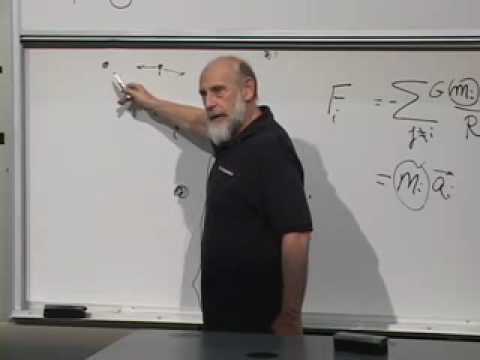
Newtonian gravitation and the principle of equivalence, which provides the physical intuition for treating gravity as spacetime curvature.
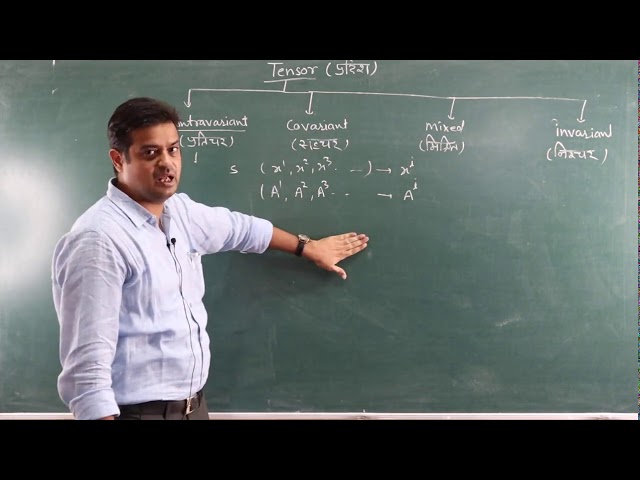
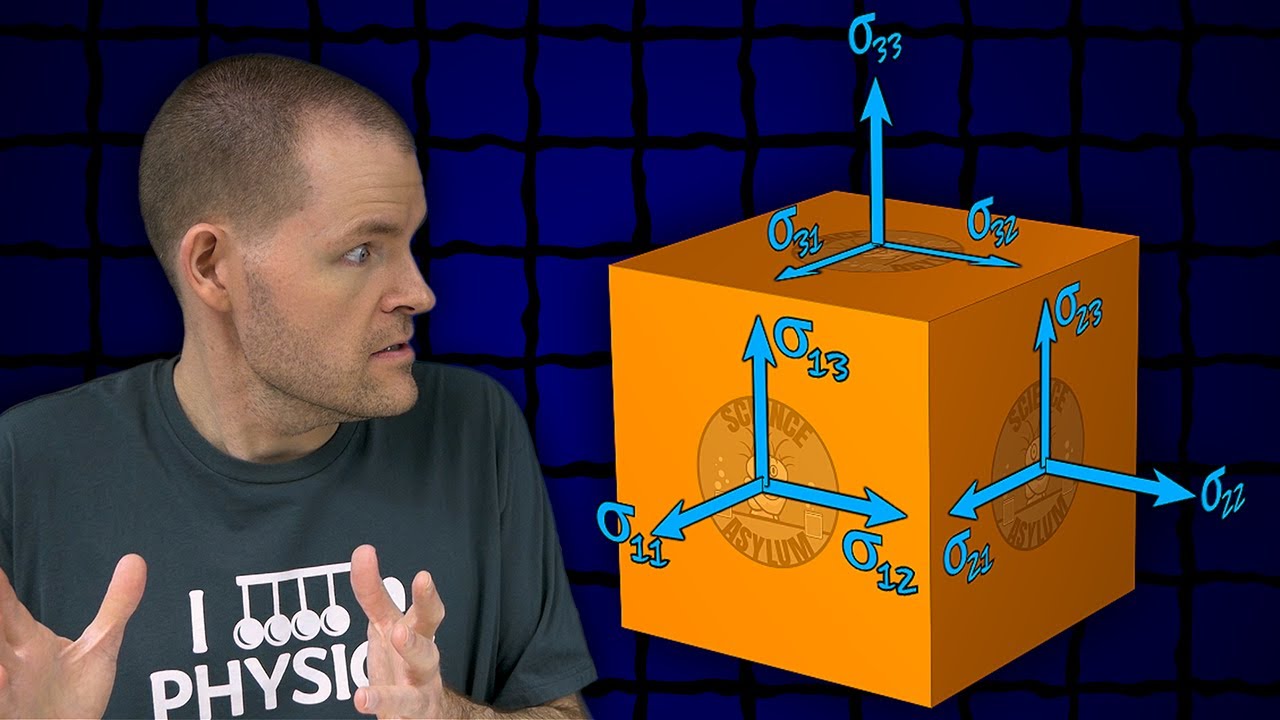
A conceptual introduction to tensors and how they are used to describe physical properties independently of coordinate systems.
The Schwarzschild metric and its application to describing the spacetime around static, spherically symmetric masses like black holes.
Friedmann-Lemaître-Robertson-Walker (FLRW) cosmology, which applies the Einstein Field Equations to the evolution and expansion of the universe.
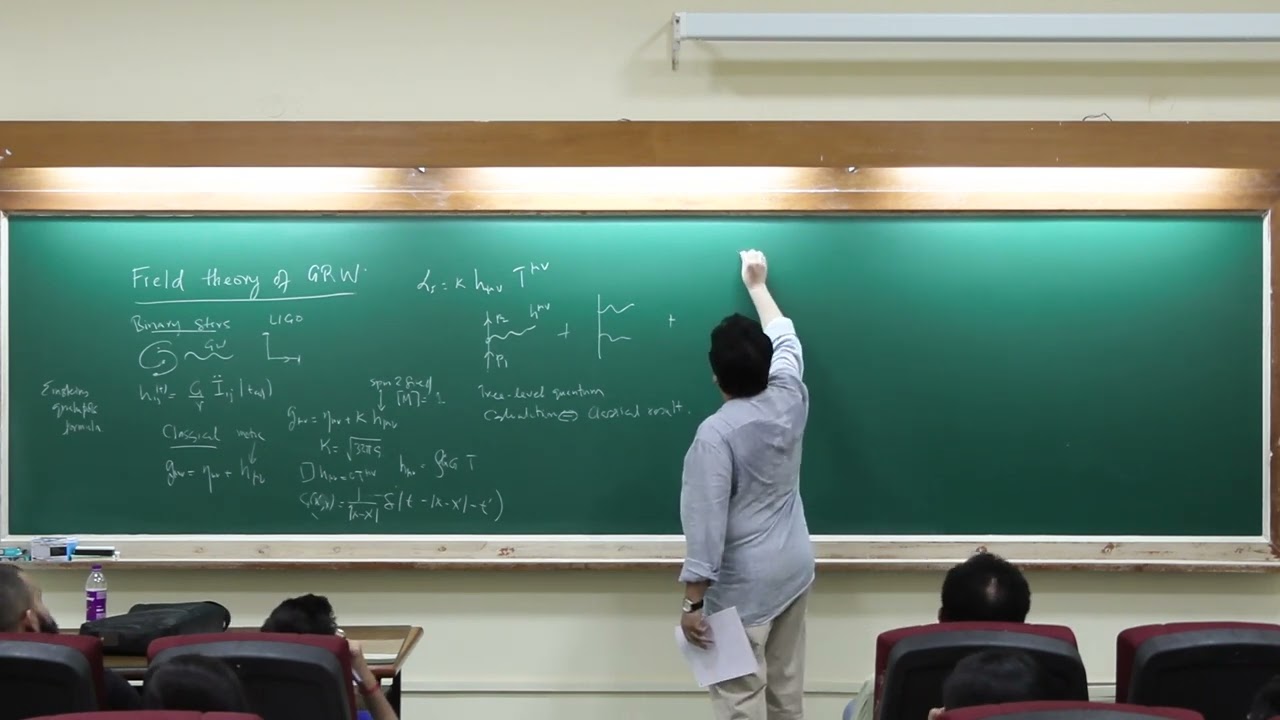
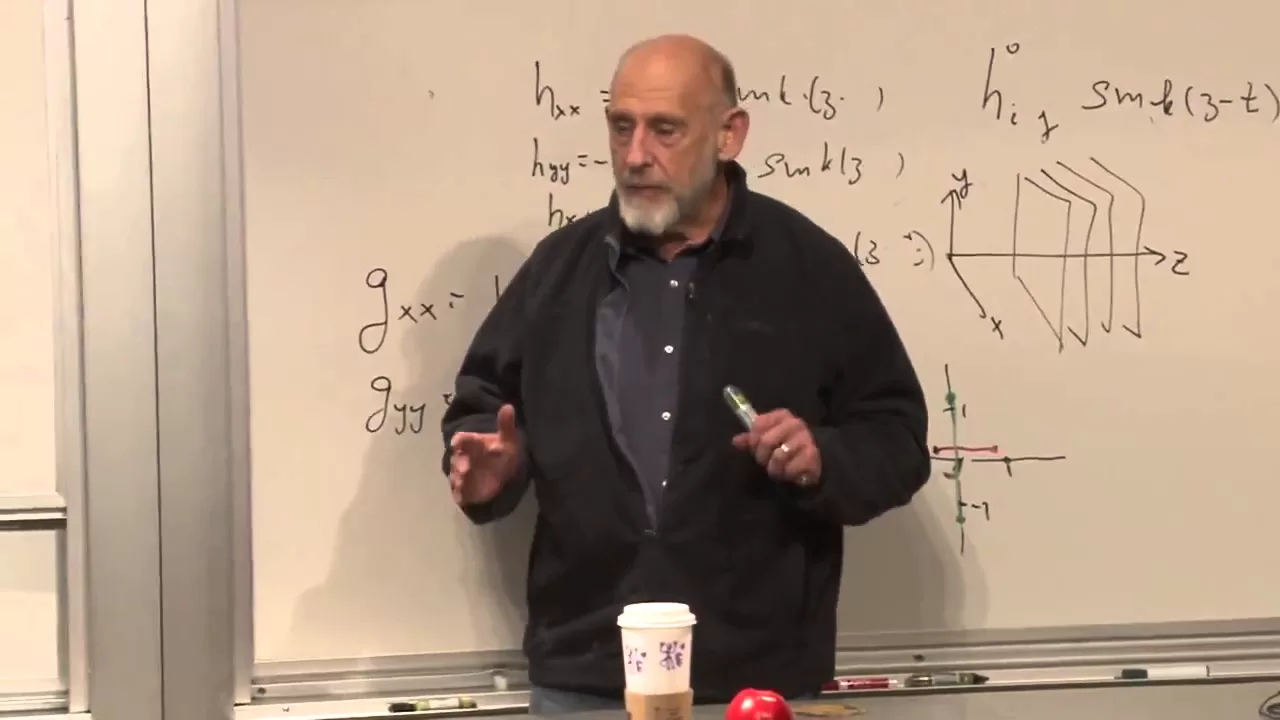
Linearized gravity and the mathematical derivation of gravitational waves, as well as their astrophysical implications.
Advanced differential geometry, including deep dives into manifolds, connection coefficients (Christoffel symbols), and the Riemann curvature tensor.
4.6M views49.7Klikes2:06:22Original Release: 2013-06-22
hello today I'm going to try to derive the Einstein field equations this will be a basic introduction it won't be rigorous it will cover the essence but it will still be quite complex if you want more detail then I refer you to Professor Leonard Susskind excellent lectures that he gave from October to December 2008 at Stanford I've put a link to the YouTube version of these lectures in an annotation on this video I am going to follow his approach so that it will be familiar to you but I shall do it in a much more simplified version and let's always remember that it took Einstein ten years to develop these equations and he had access to many maths professors on the way as usual I'm making the assumption that you understand calculus and basic geometry and that you've also seen or are aware of the information in my general relativity videos that are already up on YouTube and in particular that you are aware of two key points the first is what is called the principle of equivalence and what that says is that if you are in a box with no windows then you can't tell the difference between being in outer space and accelerating with an acceleration G or being in the same box on the surface of the earth stationary but subject to the gravitational force which carries an acceleration G there is no experiment let's put you in the box there is no experiment that you can do that will distinguish between those two situations now that is actually not quite true the difference of course is that if you are in outer space traveling with an acceleration G then all parts of this box including you are accelerating at the acceleration G if you are on earth then because the value of G varies according to the height above the earth the value of G at this point will be ever so slightly greater than the value of G at this point and so there is a slight difference in the value of G in this situation and if you can measure that then you can tell the difference that difference is called the tidal force but apart from that Einstein said that that was a principle of equivalence you can't tell the difference whether you are accelerating at GE or subject to a gravitational force which is represented by the acceleration G the second principle is that light bends in a gravitational field this was Einstein's reasoning if you take the person who is in the box that is accelerating through space with an acceleration G and here is the box and this time we're going to shine a light from this side of the box to the other side of the box but of course that will take a finite time albeit small and if this box is accelerating with an acceleration G by the time the light gets halfway across the box will have accelerated a little bit further forward so it will now be here which means the light will have reached that position there by the time the light gets to the right hand side the box will of course have accelerated still further and now the light which of course is just going in a straight line will reach here so if you look at it it appears within the box that the light has gone from here to a point lower down to a point even lower down in other words the overall impression is that the light has gone from here to here to here and that's a curve at least it should be if I've drawn it properly so Einstein says if that is what happens when you are accelerating through space with acceleration G since the principal the equivalent says you can't tell the difference between that and being stationary on earth subject to an acceleration G then the same thing should happen in this scenario here that light will appear to bend in a gravitational field now of course he could have been wrong but in fact this was shown to be true during a solar eclipse what happens during a solar eclipse is that the moon essentially blocks the Sun said that from the earth the Sun as it were is blotted out and what was noted from the position on earth was that they could see a star just slightly to the right of the Sun but they knew astronomers knew that that star actually was located behind the Sun and it shouldn't have been possible to see it and the explanation was that what was actually happening was that light from That star was being bent in the gravitational field of the Sun and then coming to us on earth giving the impression that the star was here when in fact the star was really here but the light was being bent in the Sun's gravitational field now here was the problem for Einstein Newton's law of gravitation which everybody had thought had served as well for so long says that the gravitational force is equal to the gravitational constant times the mass of one body multiplied by the mass of another body divided by the distance between them R squared or divided by the distance squared and that's fine except that in this situation here light is bending in a gravitational field but photons of light have no mass so these two mass terms were at least the Sun has an S but the photon doesn't so this form of Newton's law doesn't work if it is going to apply to light five photons have no maths so Einstein came up with a completely different approach to gravity instead of there being gravity he said actually what is happening is that all forms of motion are represented by movement in curved space-time and I can illustrate that in this way let's suppose that we take a trampoline this is the surface of the trampoline and that's representing space-time and we put a small nut marble on that trampoline the marble will have virtually no effect it might make a very tiny indentation on the trampoline but now let's suppose I get on the trampoline if I get on the trampoline with my weight the trampoline is going to bend quite substantially and that is the equivalent of bent space-time or curved space-time what's going to happen to this marble well the marble is now going to fall towards me the analogy is not brilliant but it'll do for our purposes now Newton said that that movement towards me was caused by gravitational attraction Einstein on the other hand says no what is happening is the marble is moving along the shortest path in curved space-time so that when the earth goes around the Sun there's the Sun and here's the earth in a reasonable circular orbit going around the Sun Newton says that there's a gravitational force between the Sun and the earth which provides the centripetal force that keeps the earth in orbit Einstein says no that's not it at all what happens is the Sun being massive curves space-time and the earth is simply going round that curve in a straight line in curved space-time now you might be wondering two things firstly what is space-time secondly why did Einstein think that it would be curved well space-time is really just space and time all thought of as one set of coordinates we usually think of space as having three dimensions which we represent by three what are called orthogonal axes they are at right angles to one another so we normally have the x axis the y axis and the z axis or if you like we have three dimensions in space up and down back and forth and side to side if you add a time dimension to that you get four-dimensional space-time problem with four-dimensional spacetime is it's very difficult to draw because we can only conceive three dimensions so I'm going to cheat and I'm going to draw one dimension of time and one dimension of space which is the x axis I could've caused or another dimension this way but I'll just leave it as one dimension of time and one dimension of space now if you draw a constant velocity in space-time you get a straight line because a straight line is distance divided by time it's a constant distance divided by a constant time and that is a constant velocity but if you accelerate in space-time you get a curve the reason of course being that acceleration means that the longer the time the further you go so there is a curve in the acceleration and because gravity causes acceleration it causes a graph which is curved in these space-time coordinates and Einstein's view was that therefore in some way space-time must be curved if it is creating an acceleration which has the effect of creating a curve in those space-time coordinates well that's the end of the introduction so now it's time to introduce you to the einstein field equations that we're killing to try to derive and there they are you may observe that there is only one equation but in fact that's not true because you will notice that there are some indices mu and nu which arrive arise in several places in the equations now mu and nu represent the dimensions of space-time not one two and three naught is time one is the x axis two is the y axis and z is the sorry three is the z axis so mu and nu can each take four values between naught and 3 and the combination of mu and nu means that there are 16 variations of this equation with mu and nu having numbers between naught and 3 you might therefore think that there are 16 equations in four-dimensional space-time but in fact 6 of them are duplicates so in fact it reduces to 10 so you are looking at 10 Einstein field equations now what all these hieroglyphics mean will you'll be pleased to know that some of them you already know you will know what 1/2 is you know what 8 is you know what PI is G is the good old fashioned gravitational constant and C is the speed of light so there are only a few things that we need to sort out first we've got this peculiar term R mu nu which is called the Ricci curvature tensor will derive that they need two places we've got this term G mu nu G mu nu is the metric tensor will derive that then we have R but with no indices that's called the curvature scalar and we'll show what that is then we've got capital lambda which turns out to be the cosmological constant and we'll explain the reason for that and finally we've got T mu nu which is the stress energy momentum tensor and we'll try to explain what that is now the whole point about this equation is that it balances two things everything on the left-hand side refers to curvature of space-time everything on the right-hand side is to do with mass and energy and as some people have some sometimes helpfully said that what Einstein field equations basically say is that mass tells space-time how to curve and curved space-time tells más how to move so here's our agenda for the remainder of this video we've done the introduction next we shall do metric tensors then we'll move on to Christoffel symbols which are capital gamma terms you may wonder why I need to do that because they don't appear to feature in the Einstein field equation but they are heavily involved in the Ricci curvature tensor so we'll need the Christoffel symbol then we'll look at curvature itself which will enable us to derive the Ricci curvature tensor and the curvature scalar then we'll look at the stress energy momentum tensor and then the cosmological constant and finally we'll put it all together you may want to take a break through this video just to collect your thoughts indeed before we move on to the next section you might fancy a break now okay part two the metric tensor we're going to consider a field we could consider any field a magnetic field an electric field a temperature field I'm going to consider one of the most basic fields of all a field with grass where the cows graze here is my field and it's going to be a very bumpy field there are hills all over my field and here my standing on one of the hills and the value of the field is going to be for the height above sea level so we usually give the value Phi and everywhere you'll agree in my field there will be a height above sea level that I can measure and that height will constantly change because my field is a very bumpy field now how do I know where I am well I can impose a set of coordinates here's my x co-ordinate here's my y-coordinate and I am then at that position that position on the x coordinate and that position on the y coordinate it's a bit like a map reference so I uniquely define my position and for every position I take I can find a value of Phi which is essentially the height above sea level of my position in the field the question I now want to ask is how does that height change if I move a little bit and you should immediately respond that it depends on which direction I move the reason for that is let's suppose that part of the field consists of a reach now a ridges something where the slope goes down on one side and down on the other side but along the top it's flat so if I'm standing on the top of the ridge and I move let's say this is the X direction if I move in the X direction I go down the ridge quite substantially but if I go in the Y direction let's say that's the Y direction I'm just walking along the top of the ridge and that's flat so direction of movement is important in the X direction I would drop considerably in the Y direction I stay on level ground now how can I tell by how much the height will vary as I move along well let's consider a gradient here is a gradient which I'm going to call a one-in-ten gradient what that means is that for every 10 meters that I walk along I will drop 1 meter so if I start here and I walk 10 meters by the time I get to the end I have not only walked 10 meters along I have dropped 1 meter down and the way you would describe that mathematically is you would say that the change in height as I walk along is equal to the gradient which we express as defy by the X the rate of change of height with distance that's what 1 in 10 is the rate of change in five the distance multiplied by the distance you actually walk DX let's just try that for a moment the change in height will equal the gradient well I told you what the gradient is it's 1 in 10 and let's say I walk 5 meters so that the distance DX is 5 meters that means that D Phi will equal 5 over 10 which of course is a half a meter so what we've just calculated is that if you walk 5 meters along a one-in-ten gradient your height changes by half a meter but this is the general form you change in height or change in the value of field is equal to the gradient multiplied by the distance you travel now clearly in my field I'm not going to have clear gradients like this because it's a very bumpy and irregular field but over a very very small distance which is why I've put DX and D fine that will be true but as I said direction matters so consequently one would have to say that the change of height if you are traveling in the X Direction is equal to the gradient in the X Direction multiplied the distance multiplied by the distance you walk in the X direction or you can also say that the change in height in the Y Direction is equal to the gradient in the Y Direction multiplied by the distance you walk in the Y direction which is fine and these two gray ian's will not of course be the same if we were on the ridge this would be a very steep gradient in the X direction but there would be a level gradient in the Y direction of course I may not want to walk in just the X or the y direction let's suppose that instead of walking in X or Y direction I want to simply walk in that direction just to be awkward well of course that is that is simply a combination of walking in the Y direction and walking in the X direction and in fact we can regard these as vectors and in my video on the manipulation of vectors I showed that when you want to add vectors together you do it by a tip-to-tail process so that in fact you take these two vectors dy and DX and you put them tip-to-tail it doesn't matter which way you do it so let's take DX it's like that then dy goes the tip of the X vector matches the tail of the Y vector so this is the X this is dy and then the resultant is the tail of the first and the tip of the last so that becomes the resultant vector which we call d s and we can use pythagoras to work out what d s is of course the s squared is equal to DX squared plus dy squared that of course is very simple if you want to add the vectors together that gives you this is the magnitude but for purposes of adding the vectors together we simply say that D s and we put a line above it to indicate that it's a vector is equal to DX + D Y or if we want to know what the change in height is we can say that the change in height as we go along the path s is equal to the change in height as we go along the path X plus the change in height as we go along the path why but these two terms here D X D Phi X and D Phi Y we calculated up here that's what these two terms say so I'm going to substitute these values into this formula here and that will give me that D Phi s is equal to now for D Phi X I'm going to replace that by the gradient times the distance and here I'm going to replace this by the gradient but this time in the Y Direction times the distance in the Y direction and to be absolutely proper about all of this what I should actually write here is I'm going to give these gradient terms curly DS and the reason I'm going to do that is because that's what's called a partial derivative it simply indicates that although this is the derivative with respect to X there are other derivatives in this case a derivative in respect to Y it's not the only derivative so it's called a partial derivative and it's indicated as a partial derivative derivative by virtue of having a curly D now I want to pause for a while while I do a in the miniature change and I promise you it won't hurt up to now I have been using the coordinates x and y I am now going to change them wherever I have used X before I'm going to call that x1 and wherever I have used Y before I'm going to call that X 2 why do I do that well for three dimensions in space we typically use XY and Z as our coordinates suppose I needed another coordinate what letter am I going to use there isn't one after Zed I could of course find another spare letter but letters of the alphabet alphabet tend to be used for different purposes in physics and it you become very confusing whereas if I relay bullies x1 x2 and x3 if I need another coordinate it's a piece of cake it's x4 indeed I can even have an X naught which I will actually use for a time coordinate but find these further dimensions of space I can have X 4 X 5 X 6 and so on there's no limit so firstly changing the coordinates into this system means I've got an unlimited number of coordinates if I need them or dimensions of space and secondly it releases the Y system which I'm going to use for a different purpose a bit later on so now I'm going to rewrite this equation here in my new coordinates simply replacing X by X 1 and Y by X 2 they're exactly the same I've just called them by different names so if I do that I will get that D Phi which is the overall change in height as far as my field is concerned it's going to be equal to the gradient which is defined by the X and now that's the x1 times the distance I move DX 1 plus the gradient in the Y direction which is now the DX 2 Direction times the distance I move in the X 2 direction and of course I could add further terms X 3 X 4 X 5 as many as I need I'm only going to work in two dimensions to keep it simple and I think you'll see that this equation here can be simplified by saying that D Phi is equal to the sum over N of the gradient divided by the n sorry divided by the X n multiplied by the X n when n is 1 you get that term there when n is 2 you get this term here and the sum term means you just add them together so this is a very handy way of summarizing the change in the value of field according to all of these values and you'll notice that n is the summation term you have to do this for all values of n here I'm only having two dimensions but however many dimensions you have you need that number of terms and I'm going to call that equation number I hope you can see that let's just write that again equation number one and I'll put a box around it so that when we refer to it later you'll be able to spot it now here comes the general problem with relativity being special relativity or general relativity any rules that you come up with must be independent of the frame of reference that you're using to make the observation in my videos on special relativity which I will refer to during the course of this presentation we show that different observers measure different distances and different times depending on their relative velocity that was called length contraction and time dilation so if you want to have something that is going to be universally true you have to make sure that it is true in all reference frames so when I took my field where I was standing on the hills and I put myself at position P I set a coordinate system which I call the XY coordinate system but subsequently renamed x1 x2 and I said that was my map reference x1 and x2 define my position but somebody else could come along and create another set of coordinates which we will call y1 and y2 and now P of course I haven't changed my position I'm still standing on the hill at position P but as far as the y frame of reference is concerned the coordinates are quite different y1 and y2 are quite different from x1 and x2 even though I'm at the same place and you'll notice that if I want to express y1 in terms of x-coordinates I have to express it both in terms of an X 1 coordinate and next to co-ordinate in other words the y1 position for my point P is actually made up of an X 1 and then X 2 so the question then that we have to come up with is if we know if I know all the gradients which remember we describe this V Phi by DX in in the X frame of reference how can we find all the gradients in the y frame of reference and more to the point how can we relate the two and for this we use what's called the chain rule we say that / dy and I'm going to pick the y1 coordinate you could pick y2 but I'm just going to pick Y 1 that is equal now according to the chain rule that's equal to defy by the X 1 times DX 1 by dy 1 plus D Phi by DX 2 times the X 2 by dy 1 so you'll notice we're only ever sticking to the Y 1 coordinate but we sum over the X 2 coordinates because remember I said that in order to identify the Y 1 coordinate you need to know all of the other x-coordinates this can be summarized as D Phi by D Y and now I'm going to call this D Y n because it could be any could be 1 or 2 in my two dimensional system and that's going to be the sum over m of D Phi by DX M times DX M by dy n now let's just look at this and compare it to this what I've done is I've put the general value of n in for Y here I just had y1 but it could have been Y to you have to pick which one you want it's either one or it's two but M is a summation term you sum over n when N is 1 you get that term when M is 2 you get that term this is going to be equation number 2 and I'll put a box around that as well but let me just repeat and emphasize n is the value you choose it's either y1 or it's y2 you make the choice but M is a summation term you have to sum over all the values of X just to get one of the values with respect to Y now I want to introduce you to the concept of tensors we mentioned that when we looked at the Einstein field equations there were several tensors what is a tensor well let me start off by talking about a scalar a scalar is something that has magnitude but no direction temperature would be a good example of a scalar it just has a value 32 degrees centigrade a scalar is what's called a tensor of Rank 0 now consider a vector a vector of course has magnitude and direction so it has a length and it has a direction which is often described as the angle to one of the axes in this case to the x-axis and a vector is described as a tensor of Rank 1 and how does a vector transform well we can use equation 1 that we derived earlier and which is showing on the screen so you recognize it and we just make a slight adjustment to so that instead of D Phi and D X we replace it by the vectors themselves so we would simply say that the vector in the Y frame of reference and with the Co ordinate n which we choose is equal to the sum over m where m is now the summation term of the as it were gradient which is dy n over the X M where m is the summation term times the vector in the x frame of reference M so that is the way in which we and I shall call that equation number 3 that's the way vectors transform we're using equation 1 that we derived and modifying it slightly that the vector in the wall rather the length coordinate of the vector in the Y frame of reference is equal to the sum of the of this gradient term times the M where m is summed of course coordinate in the X frame of reference and you have to sum over these terms in order to get the enth coordinate in the y frame of reference the tensors that we will be interested in are tensors of rank two and what a tense of rank two is is a combination of vectors where there is a fixed relationship between the two so let's just think of some system which has a combination of vectors let's take a very simple one let's put a block on the floor and we're going to apply a force to it in order to move the block a certain distance X in this direction and the work done will be the force times the distance but of course we can't just take the force we have to take the component of the force that is moving in the direction we want to go so if that angle is alpha then the component of the force acting in the direction of movement is F cosine alpha so the work done will be the component of the force that's in the direction we want to move times the distance we travel and you can think of F and X as being vectors X has a magnitude and the direction the direction is in the X Direction F has a component that has a magnitude and a direction the component at least of force in the X direction it has magnitude and direction so we've got essentially something which combines two vectors now the question is suppose the force is in that direction then the angle alpha will be 90 degrees and the cosine of alpha is zero and therefore the work done will be zero because of course the block won't move if you're pushing down on the block you're not going to get it to move in the X direction and here's the thing but it doesn't matter what frame of reference you apply to this system whatever frame of reference you apply that block will not move the value of the work done will be zero in all frames of reference and that's the value of a tensor a tensor is the relationship between two vectors and if the relationship if the tensor has a value of zero in one frame of reference it must have a value of zero in all frames of reference if that block doesn't move it doesn't move it doesn't matter what frame of reference you apply to observe it it doesn't move tensors therefore our relationships between fixed relationships between two vectors in such a way that if that lationship equals zero in one frame of reference it equals zero in all frames of reference and that is why tensors are so important in einstein field equations so let's consider a combination of vectors doesn't matter what it is for these purposes we're going to take vector a and we're going to take the length coordinate of that vector remember there are dimensions in space I am actually using only two dimensions for this simplistic analysis so M is either one or two you choose which one you want it to be and we take another vector B and we'll take the nth co-ordinate that can be one or two you choose and we say that the combination of the two becomes a tensor of Rank 2 which we indicate by saying that it has those two coordinates M or two indices m and N equals the vector a with the coordinate or the dimension M and chord and vector B with the nth dimension so obviously if there are if I'm talking about two dimensional space where M can be either 1 or 2 and n can be 1 or 2 then T MN there can be 4 versions of that tensor where m and M each have values 1 and 2 if you've got three dimensions of space m and n can each have values 1 2 3 and so t MN has nine different versions if there are four dimensions of space time one time three dimensions t MN will have 16 different values well now I'm going to use equation three that we derived earlier and which should be showing on the screen to take the vectors a and B so we're going to take a.m. in the y frame of reference and B M in the y frame of reference and we're going to try and see what they are in the x frame of reference using equation three well you can see that we've just got to replace V in equation three by a and then B so let's do a first of all we need a some term I can't use em anymore because that's already been used here so I'll just introduce a value R remember this is a summation term it's called a dummy variable it doesn't matter what you put and that's going to be dy m by DX ah times a in the X frame of reference ah that does the vector a and now we need to do the vector B in the X frame of reference which again from Equation three comes I now need another summation term it's called it s and that's going to be dy n by the X s times B in the X frame of reference s so you sum over the are terms and you sum over the S terms but m and n are chosen they're the values you happen to choose for this particular equation well let's look and see what this reduces to firstly am BN well that's just the tensor t MN in the y frame of reference because that's what we selected here and that is going to be equal to the sum over R and s and that's not quite the right way to do it but essentially you've got to some terms here which I'm just going to simplify here x dy M by the X R and then you've got a dy in DX s times a X R B X s that's that term and that term but what is this well if you look at this term up here you'll see that it's just another tensor in this case it's the tensor in the X frame of reference but its indices are R and s and that I'm going to call equation four and I'll put a block around that because we may need that in the future and that is called it gets a technical term it's called the contravariant transformation it's the transformation from the y frame of reference to the x frame of reference for tensors there is an equivalent form of tensor transformation that is called the covariant transformation where the indices which instead of being upstairs go downstairs but then the dy by the X terms are changed into DX by dy terms so let me just write that out you get the T and now it's in the Y frame of reference but the M&N go downstairs so I'll put the M&N down here and to make it clear I'll put Y in brackets so TMM in the y frame of reference are equal to again you've got this summation term over R and s and now these two terms just go upside down DX R by dy M DX s by dy n just inverting these terms here and then the tensor terms again goes downstairs but it's in the X frame of reference and that is called the covariant transformation and to call that equation number five so this is called the contravariant this is called the covariant contravariant had the indices upstairs covariant have the indices downstairs contravariant have dy by the X terms covariant had DX by dy terms and it is actually the covariant form of transformation that is going to be of interest to us now I want to do a little bit of manipulation with something as basic as pythagoras pythagoras applies to a right angled triangle and if this is dx1 using our frame of reference in the X frame of reference and this is x2 this is the s the hypotenuse then of course you can easily say that according to Pythagoras D s squared is equal to DX 1 squared plus DX 2 squared and if there were further dimensions you would have it plus DX 3 squared and so on and your agree with you not that that is simply the summation over m of DX m times DX m in other words when m is 1 you get DX 1 squared that's that term when M is 2 you get DX M you get DX M is 2 DX 2 all squared that's to that term if M were 3 you would get the further term DX 3 squared now I'm going to make it a little bit more complicated but you'll see why of course in a minute that means that D s squared is equal to the sum over m and n what am i doing of DX m times DX n now you will say no that cannot be right because there is no combination of DX 1 DX 2 in Pythagoras there is only DX 1 squared and DX 2 squared if you do this you're going to get a DX 1 DX 2 term and we don't need it perfectly true so we add a further term which is called Delta M N and that term is called the Kronecker Delta and the thing about the Kronecker Delta is it has the value of 1 if M equals in and it has the value of 0 if M does not equal n so when M n then you simply get the squared terms that you want when M does not equal M then this whole term becomes 0 because Delta MN is 0 so if M does not equal n all the cross terms come out and we'll need that approach it's a very complicated way of describing Pythagoras Delta MN remembers the clinica Delta it equals 1 if M equals n it equals 0 if M does not equal N and therefore avoids any of the dx1 dx2 terms that you don't need in Pythagoras so I've rewritten that formula that we just derived I've simply put the chronica Delta at the beginning rather than at the end it doesn't matter where it goes and now I want to remind you of equation one that we derived and which should be on the screen and I'm going to rewrite that in a slightly different form I'm going to say that DX m is equal to DX m by dy R times dy bar and you'll notice that the difference is that instead of Phi in equation one I've used X M instead of using M as the dummy summation term I've used ah and I've changed round the x and y-coordinates there's no reason why I shouldn't do that so now I'm going to take the value of DX m which is this according to equation 1 and substitute it in this equation here and then I'll do the same for DX n so what I'm going to get is that D s squared is equal to Delta MN which is this term here plus the summation term which we don't need to worry too much about Einstein actually dropped it he said it was implicit he didn't even bother to put it in but I'll just keep it there to show that there is a summation going on and then instead of DX M I'm going to put this term here which is d X M by dy R times dy R and then we're going to multiply by dxn which I'm going to put the equivalent version here which is going to be DX and by dy I now need another summation term call it s times dy s so this term is simply this term equals this this term is this term modified equals this and now I can rearrange that so that I can say that D s squared is equal to Delta M n we need a summation term let's just bring the two gradients together DX M by dy r DX n by dy s and that leaves us these two terms here dy r dy s and that's as it were a form of Pythagoras but this term here is called the metric tensor it's G M N and if you look you'll see that there's an equivalence with what we derived up here as pythagoras pythagoras was simply the summation term with a chronicle delta which made sure you didn't get any cross terms here we've got exactly the same thing we've got d r squared is equal to combination of these two elements here but instead of having just a simple chronica delta we've now got a more complicated metric tensor so we can now write that d s squared is equal to the metric tensor g MN times dy r dy s and of course there's a sum a sh gM contains a summation term for flat space it's pretty obvious that g MN is simply gonna reduce to the Kronecker Delta term that should be d m n Delta MN so it will be 1 when R equals s and it will be 0 when R doesn't equal so for flatspace the metric tensor will either be 1 or 0 depending on where the R equals s or not but here's the rub suppose you aren't in flat space in flat space it is perfectly true that if that's DX 1 and DX 2 and that's d s it is true in flat space that D s squared equals DX 1 squared plus DX 2 squared that's Pythagoras in flat space but that is not true if you take a sphere and you try to draw a triangle on the surface of a sphere on the surface then this formula which we derived which is just lame Pythagoras that is not true on the surface of a sphere and how do you make the correction for that surface you make the correction by introducing this metric tensor so if you like you can think of the metric tensor as the device which makes corrections to pythagoras when you have got the right angle triangle on a curved space instead of a flat space so you can begin to see the value of the metric tensor if we're going to talk about curved space-time so here is the einstein field equations or here are the einstein field equations and the g mu nu terms are the metric tensors we just derived why have they got mu nu instead of em n the answer is that you use mu nu when you also include space-time what I just derived was solely associated with space m and n if you want to introduce time as well then you say mu nu where mu can now be either 0 which means that's the time component or 1 2 3 which are the three space components so that is the metric tensor and you may now like to take another break okay we now proceed to part three the Christoffel symbols now you'll remember that I said that the important thing about tensors was that they represent a fixed relationship between two vectors and they are independent of the coordinate system in particular if one tensor is zero in one coordinate system it will be zero in all coordinate systems so let's suppose that we have a tensor it's called it W and we'll take the N and M coordinates in the X frame of reference and we'll say that that is equal to another tensor also with N and M coordinates in the X frame of reference if that is true in the X frame of reference it must be true in all frames of reference to take my example of the field right at the beginning if the height of the field is 2 meters it matters not what frame of reference you're talking about it will always be 2 meters but here's the problem the problem is that the derivatives of tensors do not necessarily transform between frames of reference and we're going to need derivatives of tensors so we need to know what goes wrong so let's take a tensor in the X frame of reference which we'll call t m in in the x frame of reference and let's say that that equals the derivative of a vector V with respect to N in the X frame of reference now the question is does that same tensor in the y frame of reference equal the derivative of the vector M with respect to Y in the Y frame of reference is that true so the answer is no sadly and we'll find out why I'm going back to equation five which should appear on the screen but I'm just going to rewrite it exactly as it was that the tensor T my a TM n in the y frame of reference is equal to the XR by dy m times DX s by dy n times t RS in the x frame of reference that was just equation five I dropped you'll notice the summation term just as Einstein did and the s and our terms are dummy variables you need to sum over them but let's drop the the the summation term well let's just rewrite that that is going to be I'm just going to rewrite this these terms here DX r by dy m times DX s times dy n but instead of TR s in the X frame of reference I'm going to write use this term here but of course in shape I'm going to change em and end to R and s so this now becomes from the equation above D V R X divided by or is it work with respect to DX s I've simply written t RS in this form here a DV by DX term now if you look at that combination of tones there you've got what is essentially the inverse of the chain rule this is a DX s term V is this is a DX s term you can in a sense contract this so it simply becomes DV R by D Y N and so you get the T M and Y which is what we're trying to calculate so T MN in the y frame of reference is equal to this term here DX R by dy M times this contracted which is just DB R by D Y so this DV are in the x frame of reference / devo dy n and the question we want to ask is does that equal DVM by dy n in the y frame of reference so does it equal equal question mark does it equal because we don't know whether it does DVM in the y frame of reference by dy n well what is this term DVM by D Y n let's just write that out the V M by dy n I'm going to use equation 5 which is actually a tensor term but remember tensors you can reduce two vectors just by dropping one of the indices and if you just do it for a single index and you can see that dy DV M by dy n is actually equal to the derivative of with respect to Y n of DX r by dy m times V R in the X frame of reference that is what DV m by dy n is if you take it from Equation number five but looking at it only with one index but this is a differentiation of a product and you should know that if you differentiate a product let's differentiate a times B then the differential of a product will be a times D B plus B times D a so if this is a and this is B then the differential of that differential of a B will equal so we've now got that DVM y by the Y n which is this term here is equal to a DB which is DX R by D Y M times DB which is D V R in the X frame by dy n that's d B plus B which is V R X which will stick out here times da which is the combination of these two differentials so we've got D by dy n times DX R by dy m D that's that combination there now observe that this term here is equal to this term here TM n y equals that term there and we were asking does that term there equal this term and this term equals yes we've got exactly the same answer that we wanted those two are exactly the same except there's an additional term here so actually they are not equal we've got this additional thing here and that combination of differentials just that little combination there is called gamma capital gamma it's actually given the title the Christoffel symbol and we represent the indices that appear here by putting since there's an R upstairs we'll put an R upstairs and since there's an N and an end downstairs we'll put an N and the name downstairs so that symbol that Christoffel symbol that capital gamma is simply a shorthand way of writing this double differential pair it's the extra term that says that those two things are not equal in other words let's just make it clear what we asked was does TM n in the y frame of reference equal DVM by D Y N and the answer was no it doesn't because there's that extra term and the way we get round that extra term is we say that t MN y does equal a new concept which we will call the covariant derivative that's what that symbol means of the M so it's not the ordinary derivative we shown it was not we're gonna call it the covariant derivative and what is the covariant derivative well the covariant derivative is going to be the ordinary derivative the VM by dy n which is what we thought it was but it wasn't plus the Christoffel symbol plus the correction term multiplied by the arc ex and so we've now got a transformation where you've got derivatives which has to include this Christoffel symbol it's the extra term and I'm gonna call that equation 7 so let's put a box around it and now we can ask ourselves the question so what is this Christoffel symbol and it's the compensation for the fact that the ordinary derivative of a tensor in one frame of reference does not transform you need the covariant derivative in order that you can get a transformation of a derivative of a vector which is a part of a tensor and that's important because a lot of the Einstein field equations required derivatives of tensors well we just did that using vectors we're going to need to expand that for the purposes of tensors so let's take the covariant derivative I'm going to have to use P because I'm going to use M and in in a moment because I'm going to do the covariant derivative of the tensor T M in and that is going to be if you look at the equation that we just derived which is equation number 7 showing essentially if I double that up for two indices I'm gonna get the ordinary derivative t MN by T y PE you will see how that derives from equation seven but now I'm going to need to Christoffel symbols so I'm going to need one for the M element and one for the N element so this is going to be plus another Christoffel symbol for the M element and that's the transformation of a tensor from one frame of reference to another and we'll call that equation number eight now what about the covariant derivative of the metric tensor that we derived earlier let's just remind ourselves what the metric tensor was we started off with good old Pythagoras where this was the X 1 this is the X 2 this is DS and we say that the S squared equals DX 1 squared plus DX 2 all squared and we said that you could rewrite that as the sum of DX n times DX and or if you like you could write that as the sum of DX m DX n times the Kronecker Delta M n where remember the Kronecker Delta was 1 when M equals n and it was 0 when M does not equal n and we said that on flat space that is essentially G MN for flat space it's not true for curved space indeed that's the reason you have the metric tensor G MN it corrects Pythagoras for curved space now what is the derivative we'll call it the covariant derivative of G MN let's say with respect to R in the X frame of reference if we are talking about flat space well in flat space the metric tensor is either 1 or it is 0 it is a constant so the covariant derivative of a constant in flat space is 0 but what did I tell you about derivatives of tensors if you've got a value of 0 in one frame of reference then you've got a value of 0 in all frames of reference so consequently the derivative of the metric tensor well the covariant derivative of the metric tensor will zero in all frames of reference which means if we take this formula up here equation number eight and replace just write it down again but put T sorry put G in in place of all the t's we will have a transformation and or a value of the covariant derivative of G in terms of all these terms but the covariant of G of course always equals zero so if we replace T's by G's then this all becomes zero so let's just do it I'm going to take equation number eight and I'm simply going to write it out again exactly as it was but this time I'm going to substitute G for all the t's so I'm going to get DG m n by d YP plus the Christoffel symbol p.m. and R of G are n plus the Christoffel symbol P n R of G M R and well I can now tell you is that that the covariant derivative equals zero so I can put that as zero and now I've got an equation which has got the metric tensor in it and a derivative of the metric tensor and the Christoffel symbol so I ought to be able to rearrange that equation so that I can express the Christoffel symbol in terms of the metric tensor now for that you need a mathematician so you go along to your friendly mathematical professor and I daresay Einstein did the same and he will tell you that if you've got a Christoffel symbol with just a B and C then that is going to be equal to take a deep breath 1/2 G a de where D is an additional term it becomes an additional summation term to the derivative of G DC / DX B or by DX B + remember the mathematicians come up with this so we naturally take their word for it - I hope this is going to fit in d G BC by DX D and I'll call that equation 9 and what you've got courtesy of the mathematicians is you've taken this term which we ourselves managed to derive you've jiggled in about so that you've got because it equals zero you've got the gamma terms the Christoffel terms expressed in terms of the metric tensor and first derivatives of the metric tensor so what can you say about this Christoffel symbol firstly it's not itself a tensor it's in the sense it's a correction term Christoffel symbol will be equal to zero in flat space but it won't be equal to zero in curvilinear time space or space time and you'll also notice that it can be expressed wholly in terms of the metric tensor and the first derivatives of big metric tensor and you might ask yourself why have we spent all this time trying to find a thing called a Christoffel symbol when it doesn't even feature in the einstein field equations you will not see a Christoffel symbol in that equation in those equations the answer's no you won't but that's because the Christoffel symbol is buried in the Ricci curvature tensor and that's what we're going on to next but first I think it's possibly time for another break ok so now we come on to curvature if we're going to talk about curved space time we've ever understand what curvature means let us take a path in flat space flat space fell flat space-time my paper is flat what you do is you take a vector a vector of course will have magnitude and direction and what you do is you what's called parallel transport it around the path that means you keep the same length of vector and you keep it oriented in the same way so it travels parallel to itself so all of those lines are intended to be my drawing may not make it quite so obvious but they are intended to be the same length and all of the vectors are parallel so they just keep parallel for themselves until you get back to where you started and of course when you get back to where you started your vector will be of the same length and it will be in the same direction because it's always moved parallel to itself so it will come back to where it started okay all very well and good but now let's take a code here is a cone which I have made for illustration purposes as you can see it's curved cone but I can do is I can cut down the side of the cone and open it up so if I make a cut along one line I can then open the cone up and if he comes flat and it has that kind of shape so let me recreate the cone I just bring those two lines together when it's a cone that edge is joined up so in a sense this edge here and this edge here are the same line the same point on the cone so let's just draw what the code looks like when you open it up you cut down this point here and you open it up and you get a shape that looks like it's a circle but with a slice taken out of it that's the cone just a quick reminder there is the cone and remember that the line o ay and the line OB when they are in a cone are the same line it's that dotted line now I'm going to do a bit of parallel transporting and to remember where the vector was let me just take that V out of the way and put it there a B I'm going to have a vector which continues the line OB so just a straight continuation and now I'm going to parallel transport that vector around the cone remember it stays the same length though mine may not it always stays parallel and we keep going until we get to a and we stop because a is point B remember they are the same points on the cone but what has happened well the length of the vector is the same but the direction of the vector has changed you can tell it's changed direction because I started it as being an extension of the line OB and OB is the same as the line o a remember it's this dotted line here so if the vector were to be in the same direction it should end up like that but it didn't he ended up like this it's gone through an angle so although the length has remained the same the direction of the vector has changed and that is a measure of curvature if you parallel transport a vector around a surface and you don't get back and you get back to the same position remember position a is position B you get back to the same point but the vector has changed direction then you've gone round occur so that's how we're going to define curvature an angle change in the vector when you parallel transport it transported around a surface if it's a flat surface as we showed no change in direction if there's a curved surface it changes direction now I'm just going to take a slight diversion and a pause to deal with two definitions the first is what's called a commutator commutator czar written like this square brackets a and B and all that means is a B minus B a a times B minus B times a now of course if we are simply talking about pure numbers then that will equal 0 3 times 2 minus 2 times 3 is 0 the point about commutator is they don't always equal 0 and I'm particularly going to look at one which is the commutator of D by DX and some function of X that's my commutator and I'm going to show that that actually equals D FX divided by DX it doesn't equal 0 so let's just do a quick proof remember that the commutator is a B minus B a so it's going to be that times that minus that times that so let's just write that out that's going to be d by DX of F X minus FX times D by DX now you've got to apply a D by DX to something so let's just call it V but here we've got the differentiation of a product and just as we did before we can say that D a B is equal to BD a plus a DB doesn't matter which way around you do it differential of a product BD a plus a DB where this is a and this is B so consequently this term here using this formula here will equal B which is V times da which is D FX by the X plus a which is FX times DB DV v DX that is that term and we must remember that term there which is minus FX DV by DX and you'll see that that term and that term are equal so one minus the other is zero and you're left with V times DF x times DX well V is something we simply inserted so we can now take that out and now you've got that the commutator is equal to DF X by DX which is what we wanted to show in the first place so let's now take two coordinates which do not necessarily have to be right angles this is the X mu of coordinate this is the X new coordinate and I'm going to have a distance which I'm going to call DX mu and I'm gonna have a distance this way which is DX new so a distance DX mu in the X view coordinate system and a distance DX new in the X new Co ordinate what I'm going to do is construct a parallelogram from that so essentially it's going to be a parallelogram where the length of these two are going to be DX mu and that's the same there and the length of these two sides D X new so far so good and now I'm going to do a parallel transport around this path we're going to go from a to B to C to D and back to a again but I'm going to call the return point a-prime because I'm not sure that we're going to get back the victor will be exactly the same when it gets to a prime so the vector at a prime may not be the same as the vector at a if we have gone round a curved surface now let's just take two paths consider two parts the first is VC minus VD that's the essentially what we're talking about there is the difference between the vector at Point C and the vector at Point D and compare that with the vector at point B and the vector at Point a now if we are going around a flat surface then the C minus PD will equal VB minus VA and that whole term will equal zero but what this is actually representing is the differences in the D mu direction because it's that's the or the DX mu direction because that's the directions that we're moving here similarly if you take the C minus V B which is this path here minus VD minus VA prime you get the difference in the DX new direction because that's that path there and that path there they're parallel in flat space there would be no difference but in curved space there might be and you're now looking at the difference in the D new direction now let's have a look at the difference of the differences if we take this term here and we subtract from it this term here what do we get well let's have a look at the VB term we've got a minus VB and the minus minus VB that becomes plus so we get a minus plus zero we get no resultant VB term then took an pc we've got a plus VC minus VC the VC term goes BD we've got a minus VD minus a minus VD so it's plus minus plus the VD term goes as well what about VA we've got a minus minus so that becomes a plus so we've got VA and then we've got for VA prime we've got a minus minus minus so three minuses make a minor so that becomes minus V a prime and that's the difference of differences that's going to be the change in the vector as it is parallel transported around that parallelogram as I say in flat space no problem DV will be zero because there won't be any change it will just parallel transport round it will come back to the same magnitude and the same direction but it is in curved space there will be a difference not in length but in angle of the vector now let's take this first term here VC minus VD what actually is that well that is the change as the vector goes from C to D along a distance DX mu so VC minus VD is simply the change in the vector along the distance X mu multi multiplied by the distance you travel which of course is DX mu multiplied of course by the vector itself so what we're saying is that the change in the vector between C and D is the gradient remember we did this right at the beginning with our field the gradient multiplied by the distance times of course the value of the vector but we've just learned that we need to be very careful about ordinary derivatives when you're talking about curves you need to use the covariant derivative so actually to be more accurate we better call this the covariant derivative so instead of using this gradient we're going to use the covariant derivative times DX mu that's this term here times the value of the vector that's a much healthier way of doing it because we've just learned that you have to be very careful about ordinary derivatives when you're transforming between different reference systems now what is this term BC - VD minus VB minus VA that is the difference in the differences on on a line which is separated by the distance DX nu so essentially what you're doing is you're looking at the difference of vectors with a separation of DX nu which means you have to apply a new gradient to it so VC minus VD minus VB minus VA which is this term here which is as I said the difference in the vectors in those two lines separated by different distance DX nu well we said that VC minus VD is the covariant derivative times the distance times all that sorry not knew that V times the value of the vector but the difference is essentially another differential and it's the differential in the new direction so we've now got to add covariant derivative in the new direction times the distance away so that is effectively what that difference that difference equals what about this one here well this one will just be the opposite in other words VC minus VB minus V - VA prime is just gonna be well VC minus VB will be the covariant derivative but this time in the new direction so now we need covariant direction in the new direction times DX nu times the value of the vector but this subtraction means that you're looking at the difference between this line and this line separated by DX mu so you're essentially applying another differential but this time in that mu direction so we've now got that that term is essentially that term and this term is essentially this term and what we said was that if you subtract that or if you subtract that term from that term you get VA minus V prime a prime which is the difference in the vector the difference between the vector at the starting point and the vector at the end point so if you subtract this term from this term you're going to get DV the difference in the vectors so let's write it out DV is going to be equal to that term minus that term which is gamma nu sorry a very derivative new covariant derivative mu doesn't matter which order we put these in DX nu DX mu V minus this term covariant derivative mu covariant derivative nu DX mu DX nu V and we can pull out the DX nu DX mu and V because author again doesn't matter here so that becomes DX mu DX nu V into what's left which is covariant new covariant mu minus covariant mu covariant nu and that you'll recognize of course is simply the definition of commutator which is of course simply Delta Nu comma Delta mu not Delta's covariant derivatives off but you'll remember that from Equation seven the covariant derivative is equal to the ordinary derivative incidentally when I write D nu like that what I really mean is D by the X nu it's just a shorthand plus a gamma term I won't write out the full details of it but there was a gamma term remember that was the correcting term the Christoffel symbol term so wherever we have this covariant form we'll remember from Equation 7 that the covariant form is the ordinary derivative plus this correcting term which involves the Christoffel symbol so on that basis the commutator of which we identified before is going to be equal that times that minus that times that that's what a commutator is but remember that the covariant derivative is the ordinary derivative times the assorting plus the Christoffel term so we now get that that is equivalent to this term is d nu plus a Christoffel symbol associated with nu times this term which is the d mu plus the Christoffel symbol associated with mu minus this term times this term I hope you can see that and let's just multiply that all out so we've got a D nu times D mu term then we've got a gamma nu times D mu then we've got a Dinu times gamma mu and finally we've got a gamma nu gamma mu and that's that all multiplied out from that we have to subtract this term well let's multiply that out we've got a d mu times d nu those should be curly DS by the way all of these should be curly DS plus we've got a D mu gamma nu term then we've got a gamma mu D nu term and finally we've got a gamma mu gamma nu term right let's do the subtractions D nu D mu minus D mu D nu is equal to 0 because for ordinary derivatives the order doesn't matter gamma nu D mu minus D mu gamma nu will let a commutator in fact that is equal to the minus the commutator of D mu gamma nu gamma nu D nu is equal to minus the commutator of D nu gamma nu we've got another commutator here D nu gamma mu minus gamma nu D nu well that's just the commutator of D nu gamma mu then we've got gamma nu gamma mu minus gamma mu gamma nu and that again is going to be the commutator of whoops the commutator of gamma nu gamma mu so just remind you that was the commutator of the two covariant vectors here or two covariant terms here becomes this term here but you may remember when I took that diversion to talk about commutator z' I said that if you have a function like that that equals the derivative of the gamma term with respect to X mu and this becomes the derivative of the gamma term with respect to X nu and this entire term is called the Riemann tensor and you'll notice that it is made up of Christoffel symbols and derivatives of Christoffel symbols it's called the Riemann tensor I can tell you that for our purposes it is also and can be regarded as the Ricci tensor which we need and that's why we needed to derive the Christoffel symbols because as you can see the Ricci tensor contains Christoffel symbols and derivatives of Christoffel symbols and the Ricci tensor remember was the first term in the Einstein field equations which I'm showing you now just to remind you so what we've just shown is that the change in the vector remember the angle of vector rather than the length is equal to DX mu DX nu times V times the commutator covariant nu covariant Moo and that term we said was the Riemann tensor but for our purposes it's also the Ricci tensor so let's just take stock of where we've got to we've just shown that the Ricci tensor is made up of Christoffel symbols and the derivatives of Christoffel symbols but what our Christoffel symbols will go back to equation 9 and you see that Christoffel symbols are made up of metric tensors and the derivatives of metric tensors and what are metric tensors they can be thought of as the device that you need to correct for Pythagoras on a curved surface now what I can also tell you is that from the Ricci tensor arm you knew you can derive what is called a curvature scalar it is simply a scalar it is not a tensor not a vector at just a scalar just as for example if you take the dot product of two vectors you get the scalar you can take the Ricci tensor and from it you can create a curvature scalar the point about that is if the curvature scalar is not zero then the surface is not flat okay let's just review where we've got to we've covered the metric tensor G mu nu we've covered the Ricci tensor R mu nu which includes a lot of Christoffel symbols we've covered the curvature scalar R and so we've covered most of mine Stein's field equations there are just two more terms to go the stress energy momentum tensor T mu nu and the cosmological constant capital lambda but first time for another break okay we're now ready to do the stress energy momentum tensor T mu nu what is the shortest distance between two answer a straight line what is the shortest distance between two points say on the surface of a sphere not two points on a circle but two points on the surface of a sphere the answer is the shortest distance is what is called a geodesic and on a sphere on the earth for example the equator is a geodesic any line of longitude is a geodesic the shortest distance between two points where you have to go round the curve you can't go in a straight line is called a geodesic and we can define what's called a tangent vector DX mu by D tau as a rate of change of the distance that we travel with respect to time I'm using tau because tau is what's called proper time you can find out what proper time is from my videos on special relativity the important point about proper time is it is the time which all observers no matter what frame of reference therein can agree on so if we use tau we know that there can be no arguments about what we mean so we're looking about the rate of change of distance with time and that's called a tangent vector and what we want to say is that the derivative of that tangent vector must equal zero in order to find the minimum distance so generally speaking if you want to find the minimum in a curve you take the derivative you take thee and you set that derivative equal to zero and that will give you the minimum it also gives you incidentally the maximum but in this case we're talking about the minimum so if you take the derivative of the tangent vector and set it to zero you will get as it were the path for the geodesic the shortest distance now when I say take the derivative remember we must always be cautious about derivatives in in general relativity we've already learned that can come a cropper if we take ordinary derivatives we need to go for the covariant derivative so let's take the covariant derivative of this tangent vector DX mu by D tau and from Equation 7 which should be on the screen you can see that that will essentially be the ordinary derivative plus a gamma term which I won't fill out but there is a gamma term remember that's the correcting term and what we can say is for the geodesic this term must equal zero so you've got this term Plus this term equals zero let's look at this term here this is essentially a double differential with respect to time it is if you like D to X mu D tau squared what does that look like isn't that acceleration the rate of change of the rate of change of distance with time D to X by DT squared is acceleration and that equals well if that Plus that equals naught this equals minus the gamma term well what does that look like let's remember that general relativity and Newton's law of gravitation need to be the same when you're just talking about ordinary masses ordinary speeds low speeds you're not talking a black about black holes because Newton's law of gravitation very nicely describes what appears to be gravity and so in the simple case general relativity and Newton's law must conform to the same thing Newton's law says that force is mass times acceleration or if you like that acceleration is a force term divided by mass and here we've got an acceleration is equal to minus a gamma term so what we can say is that that gamma term is the equivalent of force in Newton's laws and there'll be a mass term in it as well but mass is constant so let's forget about that this gamma term this Christoffel symbol has a kind of broad equivalence to force now to save time I just rewritten equation nine that we derived for the Christoffel symbol remember we said that it consists of metric tensor plus derivatives of the metric tensor now let's consider a situation where we're talking about low gravity low speed we're not in black holes we're not anything like that is just ordinary space slow movement general relativity must reduce to no to Newtonian gravity when that happens G becomes 1 and the derivative terms are very very small with one exception and that is the time term and time remember has mu and nu equal to 0 so the DG 0 0 0 by DX time component is the only term in the derivatives that has any significance all the rest when you're talking about slow speed small masses no black holes all these other terms are very very small the only one that has any significance is the time term and this term G becomes 1 and so that gamma term reduces to 1/2 that G becomes 1 so we can ignore that multiplied by all of this lot which is simply DG 0 0 0 by DX and that we said was equivalent to a force term so the force is kind of equivalent to this term here but in Newtonian mechanics force is minus the derivative of the potential for example if the potential energy near the earth is equal to mg X where X is the height above the earth then the force it will usually be given as minus mg X of course then the force will be minus D Phi by the X which equals minus mg the minus term simply indicates that the force is acting in one direction that X is measured in the other direction so all I'm showing here is that in Newtonian mechanics force is minus the derivative of the potential now we just show that the Christoffel symbol capital gamma is the equivalent of a force term and in ordinary space where we're not anywhere near black holes that it equalled the derivative of the time component of the metric tensor with respect to X and we've also just shown that force is minus the potential or the derivative of the potential with respect to X and so we can see that if gamma is a force term that these two terms are broadly equivalent and thus you get that G naught naught is equal to 2 Phi plus a constant from the integration that you need to do but you can forget all about the constant because as soon as we differentiate again that constant will go there is probably a minus sign in there somewhere but we don't need to worry too much about that either we're looking at the principle here what we're saying is that because the Christoffel symbol equals that and Christoffel symbol has a kind of force equivalence and in Newtonian mechanics force is equal to minus that if Rachele of the potential energy that you can therefore equate these two terms and if you equate those two terms essentially the metric tensor or the time value of the metric tensor is equal to two times the potential energy plus a constant now we said that force is minus D Phi sorry is minus D Phi by DX but of course we really need to do that in three dimensions and so that normally reduces to what is called the divergence of Phi where the divergence term is simply a D by DX plus a D by dy plus a D by DZ D term and that of course should be minus there but we also know from Newton's law of gravitation that the force is equal to minus G the gravitational constant times the mass of one object times the mass of the object other object divided by the square of the distance between them so let's consider an object of mass M and let's consider a distance R from mass M and we ask ourselves the question what is the force acting on a unit mass place a distance R from M well if the unit mass that means the unit mass is 1 the force will be minus G M over R squared because M is 1 what is therefore the force capability across the whole of that surface of that sphere well that's going to be the integral of F da where da is the area of the surface of the sphere and that's going to be the integral of the force which is minus GM over R squared times da well if you integrate out that of course is simply going to be equal to minus GM over R squared times times the entire area of the surface of that sphere of radius R which is 4 PI R squared the R Squared's cancel and so you find that that reduces to minus GM times 4 pi now there is a theorem called the divergence theorem which I won't derive but you can look it up I'll write it out first it says that the integral of F Da over an area is equal to the integral over the volume of Dell F DV and what that means in layman's terms is that the outward flux through the area of a sphere is equal to the volume integral of the divergence of the force that's just a divergence theorem that can be derived and you can look it up I also just want to remind you that density is mass divided by volume and that therefore you can say that the mass of an object will be the integral of the density with respect to volume so now I'm going to take F da which we calculated to be this term and set it equal to this term so you've now got that F dot Da is four pi G times M or more accurately minus four PI G times M but for M I'm going to use the integral of Rho DV density times volume that's F da or more accurately this the integral of F dot Da and that's going to be the integral of the volume of DF DV or del F DV the divergence of F well although it's not really proper to do it you can cancel out the D V's essentially what you're left with is that del F the divergence of F is equal to four PI G Rev actually minus four PI G unfortunately I had a camera failure for the next section so I'm just repeating the flow of the argument we've shown that the force is minus the derivative of the potential in Newtonian mechanics we've also just shown that the derivative of the force is equal to minus four PI G low consequently if the force is minus the derivative of Phi the derivative of force is the derivative of minus the derivative of Phi and that equals minus four PI G Rho in other words minus the derivative squared of Phi B potential equals four PI G Rho the minuses on both sides cancel earlier we showed that the time component of the metric tensor G zero zero equals twice the potential plus a constant which means that the potential is 1/2 the metric tensor I've dropped the constant that you'll see there's no problem without doing so because as soon as you do do a derivative of Phi derivative squared of Phi which is this term here replacing Phi by 1/2 G zero zero the constants will all go of course so now you've got that the derivative squared of Phi is four PI G Rho so the derivative squared of half the time component the metric tensor equals four PI G Rho and if you multiply both sides of the equation by two you get that the derivative squared of the metric tensor equals eight pi gee ro the problem with that is it's not a tensor equation and for general relativity we need tensor equations so what we're looking for is something that looks similar to it but we're on the left hand side of the equation you've got a tensor and on the right-hand side of the equation you've got tensor so we want something that has the form of G mu nu which is actually called Einsteins tensor is equal to 8 pi G but instead of having the mass density term Rho we want a tensor for energy something that contains all the mass energy stress pressure terms that you can have so we've essentially got to find something for this and something for that let's look at the T mu nu side of it first if you go back to my video on special relativity e equals mc-squared part 5 and go to the point in the video which is 2 minutes and 10 seconds in you'll find that we derive what is called a momentum four-vector the four vectors of course one dimension of time three dimensions of space and you'll find that we defined that momentum four-vector as being mass multiplied by X naught over tau X 1 over tau X 2 over tau and X 3 over tau and this is simply obviously that's the time component the X component the Y component and the Z component in the four dimensions of space-time divided by tau the proper time the time that everybody agrees and what we showed was that if you reduce this term you get essentially an MC squared which is energy e equals MC squared and these terms all effectively become the momentum in the different coordinates so it's MV in the x-direction MV in the y-direction and MV in the same direction so this for momentum reduces out to basic rest mass energy plus momenta in the three coordinates of space well that's fine but that is just of course essentially a vector we need a tensor we need not P that T mu nu and that means we need a four by four matrix and to save time I've drawn one and there it is you will see that T has all the values of mu and nu from naught to 3 and what do all these values mean well the top one T naught naught that is going to be the time component of the of the of the energy stress energy momentum tensor and that has this kind of equivalence it's the energy part of the tensor the three components along the top here I want to call the energy flow parts of the tensor the three components here I want to call the momentum density of the tensor and the nine components which are left are essentially the momentum flux stress pressure parts of the tensor now those we are embodying every part of energy that we can think of whether it be pure energy rest mass energy momentum stress all of it somehow finds a place in this stress energy momentum tensor it is if you like a measure of energy per unit volume now energy has the same units as work so we can think of this as work per unit volume work is Force Times distance distance is a length volume is a length cubed so that's equivalent force divided by a length squared which is force over area which is of course the units of pressure so that's how energy per unit volume can also embrace pressure or stress so that's given us we can't derive it but I'm trying to illustrate how we get here that's given us a stress energy momentum tensor with 16 different terms some of which it turns out are duplicates it comes in the form of a matrix it embodies all forms of energy and it's the stress energy momentum tensor that we use on the right-hand side of the Einstein field equation so now we've got on the right-hand side we've got the 8 pi G that we derived but we're going to replace the density term that we came up with with this new stress energy momentum tensor and we're going to have something on the left-hand side now what could it be this is as it were the mass term on this side we need something that is the space-time curvature term so Einstein thought that the obvious candidate for it would be the Ricci curvature tensor ah mutant ooh but there's a problem the problem is that we have a thing called energy conservation energy can be neither created nor destroyed so if you take the derivative of the energy tensor it should be zero there is no change in energy the problem is if you take the derivative of the Ricci tensor it does not equal zero so that equation can't be true because the derivative one side would be zero the derivative of the other side would not a bear in mind that we must always when we're talking about general relativity and field equations never do ordinary derivatives you will come unstuck we must always use the covariant derivative so if we've got that the covariant derivative of the energy side is zero we need something on the left-hand side whose derivative will equal zero now what Einstein actually found was that the covariant derivative of the Ricci tensor was not zero but it actually was one half times the covariant derivative of the metric tensor times the curvature scalar which we spoke about earlier have you got an equation like that you can bring everything to one side and essentially you get that the covariant derivative of the Ricci tensor minus half times the metric tensor times the curvature scalar equals zero and now we've got a covariant derivative of the term which equals zero we've got the covariant derivative of t MV equals zero and the covariant derivative of this term equals zero therefore that term and that term must be equivalent and so we've now got a left-hand side of the equation R mu nu minus 1/2 G mu nu times R equals the right-hand side of the equation when it's not just team you knew of course it's 8 pi G T mu nu and we're almost there it turns out four dimensional purposes you need to have a C to the fourth term here but that's essentially just a constant for dimensional purposes but Einstein realized he'd forgotten something you remember that earlier we showed that the covariant derivative of the metric tensor equals zero because it did it in one frame and therefore it must do it in all frames and therefore we could have included the we could have included the metric tensor in this equation here not just as a multiplier of R but in its own right and of course we could have included it with any constant in front of it so Einstein therefore decided that you needed to include this term in this equation again so now you need armed you knew minus 1/2 G mu nu R which is this just system here and now you need to include the fact that you could have had a metric tensor term in here so we'll add it and we will have a constant which we'll call capital lambda multiplied by the metric tensor and that equals 8 pi G T mu nu divided by C to the fourth this part you'll remember was the Einstein tensor G mu nu what is this capital lambda term where it's called the cosmological constant and curiously it is the constant which Einstein first thought of way back when he was trying to identify how you could describe space in mathematical terms now he was being told at the time that space was fixed and unchanging but nothing moved in space if he looked at it over a huge cosmological time and space frame obviously the earth goes around the Sun but generally speaking everything stays as it is that's what people thought an Einstein said well that can't be right because gravity would tend to make all the galaxies pull together and if I'm being told that they are not pulling together there must be something which is balancing gravity and pushing the galaxies apart so that gravitational attraction is being balanced by the thing that's pushing them apart and he found that you could reintroduce that into his Einstein field equations as the constant that you multiplied by the metric tensor this term is a very very small term and you will often find it will be left out of the Einstein field patience it only becomes relevant when you're talking about major cosmological scales and that's it we have derived in sorts the Einstein field equations just to remind you mu and nu are of course the time and space dimensions naught one two and three and therefore there are sixteen equations there but six of them are identical to another six so it reduces to just ten if you want more information I remind you that Leonard Susskind professor Leonard Susskind of Stanford University gave an excellent series in 2008 and I gave you the link to that at the beginning of this video that's it we're done the Einstein field equations for beginners
Up Next
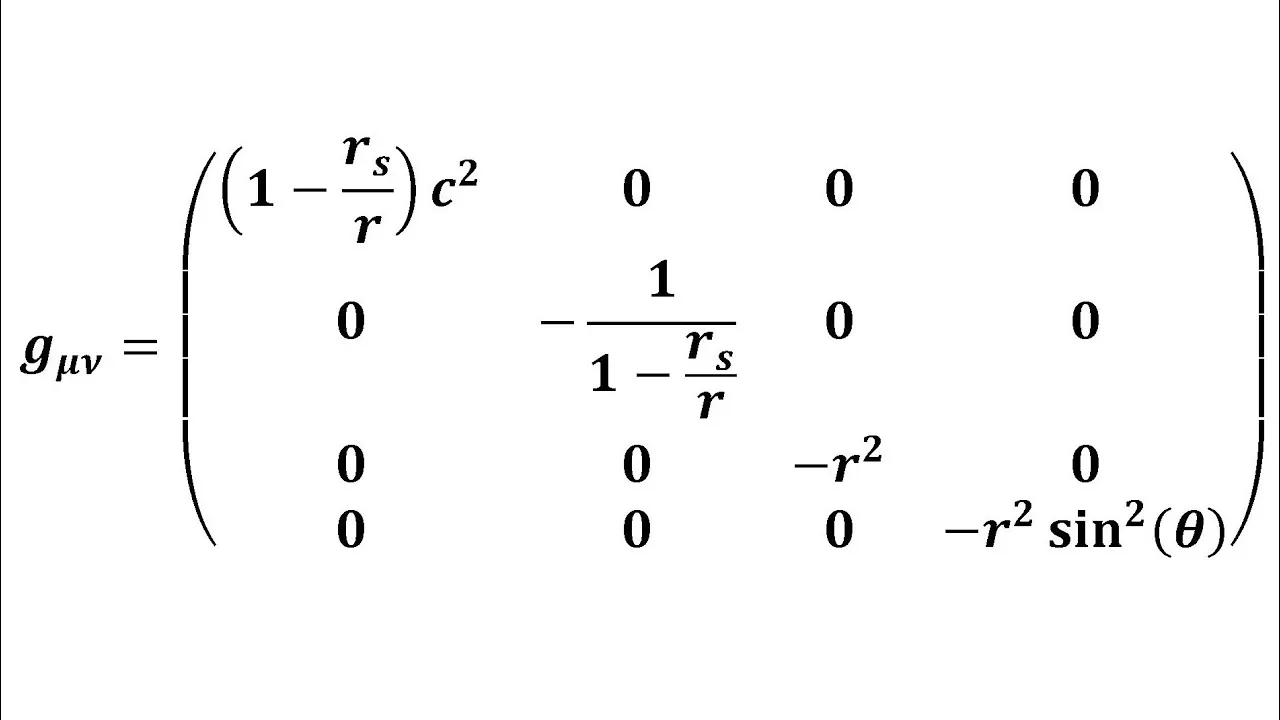
83:58
Deriving the Schwarzschild Metric from the Einstein Equations
@DietterichLabs
23K views•2018-05-07

4:32
How Tuned Mass Dampers Stop Structures from Shaking
@MinutePhysics
573K views•2018-08-28

32:32
NMR Spin Physics I: Zeeman Effect, Resonance Condition & Larmor Frequency
@nptel-indianinstituteofsci8064
2.3K views•2024-01-17

33:44
The Blue LED: A Decade-Long Scientific Challenge Explained
@veritasium
46.5M views•2024-02-08
Related Study Plans & Knowledge Roadmaps
Structured learning paths in Physics
physics
Medical Physics: Imaging, MRI & Radiotherapy
01Foundations of Radiation and Matter Interaction
02X-Ray Imaging and Computed Tomography (CT)
03Magnetic Resonance Imaging (MRI) Physics
+ 3 more learning modules
15h6 modules
Explore Roadmap
physics
Nuclear Physics (Decay, Fission & Reactors)
01Atomic Structure and the Binding Force
02Radioactive Decay and Half-Life
03Nuclear Fission Mechanics and Chain Reactions
+ 2 more learning modules
12h5 modules
Explore Roadmap
physics
Soft Matter (Polymers, Colloids & Rheology)
01Foundations of Soft Matter & Thermal Forces
02Polymer Physics and Macromolecules
03Colloids, Surfactants, and Self-Assembly
+ 2 more learning modules
38h5 modules
Explore Roadmap
physics
Analytical Mechanics: Lagrangian & Hamiltonian
01Mathematical Foundations: Calculus of Variations
02From Newtonian Mechanics to Constraint Dynamics
03The Principle of Least Action & Lagrangian Mechanics
+ 3 more learning modules
28h6 modules
Explore Roadmap