









![11 [저자직강] 제대로 시작하는 기초통계학 2판, 4-1 확률과 의사결정](https://i.ytimg.com/vi/wo9T1VXQ2Ro/maxresdefault.jpg)





![Биология поведения человека: Лекция #2. Эволюция поведения, I [Роберт Сапольски, 2010. Стэнфорд]](https://i.ytimg.com/vi_webp/FG9m17PwLGE/maxresdefault.webp)





Game theory, pioneered by John von Neumann and expanded by John Nash, provides a mathematical framework for analyzing strategic interactions where rational decision-makers anticipate and respond to each other's choices; this framework has transformed understanding of business strategy, political negotiations, international relations, and human behavior by revealing that optimal decisions depend not just on individual goals but on how those decisions interact with and affect others' choices.
Game Theory Explained: Strategy and Its Impact on Global Power and Economy
Added:Rational Choice Theory: Understanding how individuals make decisions by weighing costs, benefits, and personal utility.
Basic Microeconomics: Familiarity with market structures, competition, and how agents (firms, consumers) interact.
Introduction to International Relations: Fundamental concepts of geopolitics, state actors, and cooperative vs. competitive foreign policy.
Elementary Probability and Decision Making: Conceptual comfort with risk, expected value, and decision trees under uncertainty.
Nash Equilibrium and Non-Zero-Sum Games: Exploring John Nash's expansion of game theory beyond von Neumann's zero-sum models to analyze mutual cooperation and conflict.
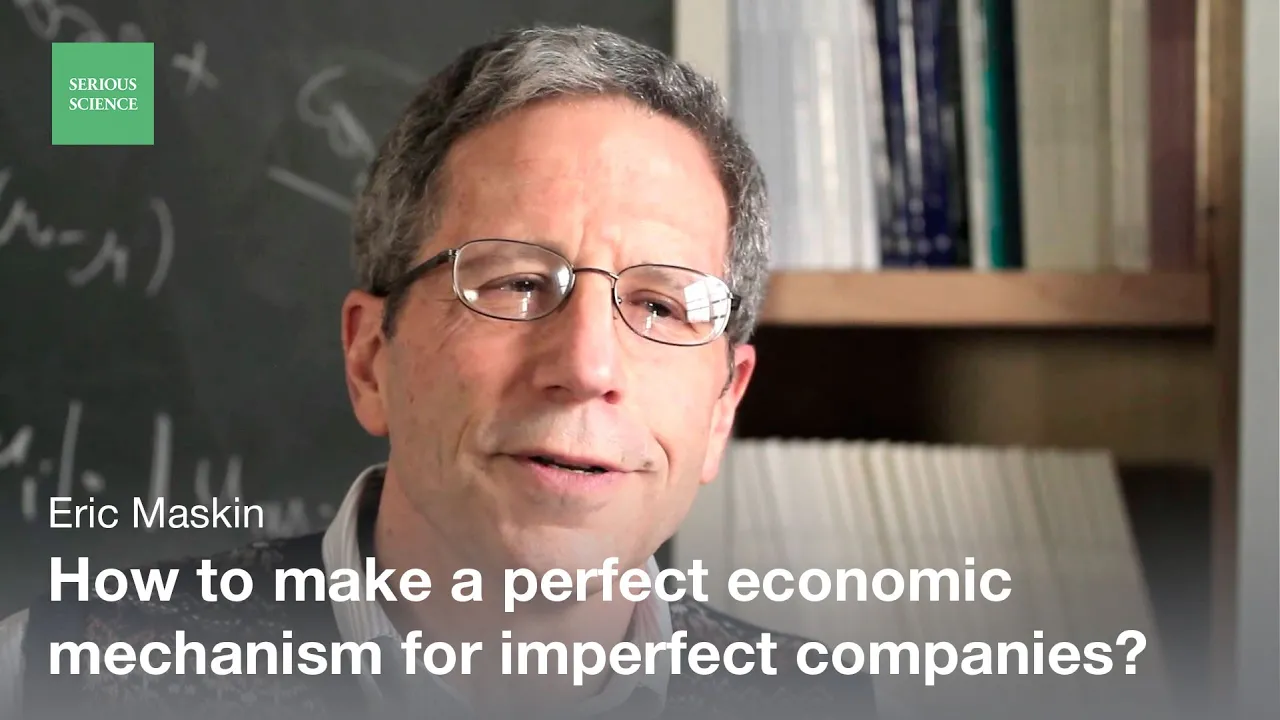
Mechanism Design Theory: The study of 'reverse game theory' to design rules, incentives, and institutions that lead to optimal economic and social outcomes.
Evolutionary Game Theory: Applying strategic frameworks to biology, sociology, and long-term cultural evolution (e.g., the Hawk-Dove game).
Geopolitical Deterrence and Cold War Strategy: Analyzing real-world historical applications like Mutually Assured Destruction (MAD) and modern nuclear brinkmanship.
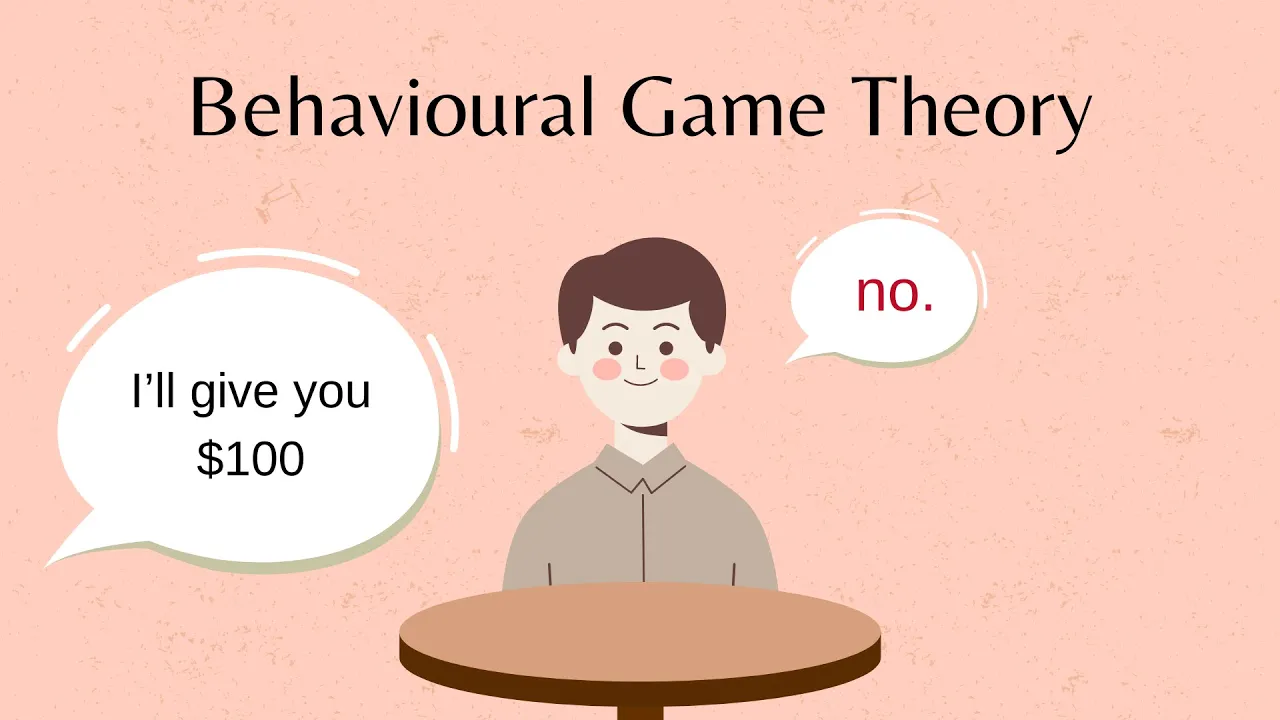
Behavioral Game Theory: Examining how human psychology and bounded rationality cause real-world decision-makers to deviate from purely mathematical game-theoretic predictions.
184.5K views3.2Klikes1:23:12Original Release: 2025-04-09
[Music] Welcome to history with BM Research. In this documentary, we will explore how John von Newman's game theory revolutionized strategy in business, politics, and global affairs. We will uncover how this powerful framework continues to shape decision-making, negotiations, and power dynamics across our interconnected world. Let's begin the journey. In the early years of the 20th century, Budapest became a quiet cradle of intellectual brilliance among its cobbled streets and quiet cafes. A boy named John von Newman began displaying signs of genius that would one day transform how the world thought about strategy. Even as a child, his memory stunned tutors. And by the time he reached adolescence, he was performing complex calculations faster than adults could write them down. Born in 193, Von Newman's education was a blend of classical European rigor and curiosity that refused to rest. His talents spanned across mathematics, physics, economics, and logic. But it was his ability to leap across disciplines that marked him as truly extraordinary. While his early training in chemistry brought him to universities in Berlin and Zurich, it was mathematics that claimed his mind, drawing him deeper into abstract reasoning and formal systems. The world was changing rapidly. The aftermath of the First World War left nations broken and economies vulnerable. And in this volatile backdrop, intellectual circles searched for tools to better understand human conflict and cooperation. Von Newman's sharp mind absorbed the lessons of this environment, recognizing that logic could be used not just to understand numbers or particles, but to grasp the core of human decision-making itself. By the 1920s, von Newman had already published foundational work in set theory and was being noticed by leading mathematicians across Europe. Yet, his vision extended beyond the chalkboard. He saw mathematics as a language capable of describing the world, not merely calculating it. It was this drive to translate complex realities into clear systems that would eventually lead him to the earliest seeds of game theory as Europe edged toward crisis once again in the 30s. Von Newman moved to the United States, accepting a position at Princeton University. There at the newly formed Institute for Advanced Study, he worked alongside intellectual titans like Albert Einstein and Kurt Girdle. It was not simply a place of ideas. It was a pressure cooker of invention, a sanctuary where logic and speculation coexisted in disciplined harmony. During this time, Von Newman's interests increasingly turned toward problems of choice and competition. How do rational individuals act in conflict? Can outcomes be predicted when multiple actors each pursue their own goals?
These questions, once the domain of philosophy or political science, were now being attacked with mathematical precision. And von Newman, with his characteristic blend of abstraction and practicality, began constructing a framework that could simulate real life decisions as structured games. What fascinated him was not just the pursuit of winning, but the logic behind it. In scenarios where one person's gain meant another's loss, patterns began to emerge. With meticulous calculation, von Newman demonstrated that even in the chaos of competition, there could exist optimal strategies, rules of engagement that maximized outcomes for rational players. In 1944, this vision crystallized in a seminal publication, theory of games and economic behavior, co-authored with economist Oscar Morgan Stern. Together, they merged von Newman's mathematical formalism with Morgan Stern's economic insights, forging a new language to describe strategic interaction. It was the birth of game theory, a discipline that would go on to influence everything from boardroom tactics to battlefield decisions. Yet, even at this moment of breakthrough, von Newman remained restless. His wartime contributions to the Manhattan project and later to the development of early computers showcased the breadth of his influence, but the core of his thinking remained tethered to the power of structured reasoning. He believed that through mathematics, one could reveal the skeleton beneath complex realities, exposing the logic of diplomacy, warfare, negotiation, and economics. Von Newman's personal life mirrored the complexity of his work.
Known for his humor, love of fast cars, and evenings filled with conversation and fine wine, he was as much a social dynamo as a scholar. Yet those who worked with him often remarked on the singular intensity of his focus, the way he could reduce convoluted arguments to their essence with just a few quiet words. His worldview was shaped by both optimism and caution. He saw in game theory not only a way to understand the world, but a potential guide for avoiding disaster. If leaders could be taught to see the consequences of their actions through the lens of rational strategy, perhaps miscalculation and destruction could be avoided. This belief would influence the way game theory would be used in politics, especially in the nuclear age. By the time of his death in 1957, von Newman had laid the foundations for one of the most influential theories of the modern age. Yet, he left behind more than equations. He left a new way of thinking about human behavior, a method to anticipate, outmaneuver, and sometimes cooperate. His work marked the beginning of a long journey, one that would carry game theory far beyond his desk into the chambers of power and the heart of modern decision-making.
By the early 1940s, John von Newman had already carved a name for himself as one of the most brilliant minds in mathematics. But it was his growing obsession with strategy, decision-making, and structured conflict that led to the birth of game theory. The idea that human interactions, whether in games, war, or economics, could be modeled mathematically, was revolutionary. and von Newman was determined to prove it.
He had hinted at this possibility in the late 1920s with a paper that introduced the minimax theorem, a concept stating that in two-player zero sum games, there always exists a strategy for each player where one minimizes the maximum possible loss. This simple insight, though buried in dense mathematics, was profound. It suggested that even when people compete with conflicting interests, their choices could follow predictable logic.
Yet, the real leap came when von Newman partnered with economist Oscar Morgan Stern. Together, they saw the potential to bridge mathematics and economics to apply this theory not just to card games or war simulations, but to real world problems where stakes involved resources, power, and survival. Morgan Stern brought a deep understanding of how individuals behave in markets while von Newman provided the logical structure to encode those behaviors.
Their collaboration was intense and methodical. Drawing from economics, philosophy, statistics, and logic. They knew that to describe strategic interaction, they needed a new kind of language, one that didn't merely describe outcomes, but the process by which decisions were made. In doing so, they introduced the concept of players, strategies, and payoffs, terms now familiar in economic and political science, but groundbreaking at the time.
in 1944. Their work culminated in the publication of theory of games and economic behavior. The book was dense, technical, and sprawling. Yet, it planted seeds that would transform multiple disciplines. At its core, it treated rational individuals as decision-makers who calculated the outcomes of their actions, assumed the rationality of others, and adapted their strategies accordingly. This new model of thinking challenged traditional economic theories which often assumed isolated decision-making or static environments. Von Newman and Morgan Stern's approach introduced interdependence recognizing that one player's move influenced the other's response and that this dynamic created an evolving web of strategies. They classified games into types cooperative and non-ooperative, zero sum and nonzero sum. simultaneous and sequential. Each required a different method of analysis, but across them all, a central insight prevailed. Rational actors could in theory be guided by logical strategies that maximize their outcomes. Zero some games received early focus where one player's gain equal the other's loss, like chess or poker. These games provided clean models for testing the theory, but they also represented a broader reality. Conflicts in politics, war, and business often follow similar rules. Von Newman saw these interactions not as chaos, but as complex systems governed by structure and balance. Even aggression and deception could be modeled if one understood the incentives and limitations of each participant.
Their work also introduced utility, a measure of how much a player values an outcome. This allowed economists and strategists to go beyond monetary gain, incorporating preferences, risk tolerance, and subjective decision-making into the mathematical model. Reception of the book was mixed at first. It was too abstract for many economists, too focused on ideal rationality for psychologists, and too technical for political theorists. But among a small group of thinkers, it sparked a revolution. They saw that game theory could reframe how we think about conflict, negotiation, and cooperation.
As the Second World War raged on and global politics became more strategic, the implications of game theory grew more urgent. Could war be prevented by modeling decision-making? Could diplomacy be guided by mathematics? Von Newman believed it could, and game theory was his tool. He began working with government agencies and military planners, refining the theory for practical application. The line between abstract mathematics and real world strategy began to blur. And soon game theory was no longer just an academic curiosity. It was becoming a tool of statecraft. The simplicity of the premise. Players making choices to maximize their advantage masked the depth of insight it offered. Game theory allowed analysts to anticipate moves, understand hidden motives, and predict the likely paths of conflict or cooperation. It was this shift from pure logic to applied strategy that ensured game theory survival beyond the ivory tower. It would soon find its place in nuclear policy, corporate decision-making, and international negotiations.
But that journey had only just begun.
With its foundation laid in this partnership between mathematician and economist, game theory emerged not merely as a model of games, but as a model of life itself, where every choice carried consequence, and every move was shaped by the expectation of others responses.
As game theory took its first firm steps into strategic analysis, the earliest models centered around one powerful idea, zero sum logic. In these games, what one player gains, the other must lose. The stakes are perfectly balanced and the tension is absolute. Von Newman found these scenarios elegant because they revealed the harsh clarity of conflict, stripped of emotion, sentiment, or compromise. Such models weren't built to reflect every kind of human interaction, but they captured the essence of pure competition. War, duels, market share battles, even highstakes negotiations, each could be seen through this unforgiving lens. Von Newman's minimax theorem first introduced in the 1920s now returned as a cornerstone of zero sum analysis. It argued that players acting rationally should adopt strategies that minimize their maximum possible loss regardless of what the opponent does. This wasn't just abstract theory. It was a blueprint for decision-making under pressure. Imagine two generals, each unsure of the other's next move, but both understanding the terrain, resources, and stakes. Instead of guessing, they could use game theory to identify optimal strategies, ones that would protect them against the worst outcomes while pushing toward victory. These ideas began to influence military planners during and after the Second World War. At a time when national survival was at stake, strategy could no longer rely on instinct alone.
It required tools, models, and mathematical reasoning. Von Newman's zero sum logic fit perfectly into this emerging world of rational analysis. One striking feature of zero sum games was that they could often be solved. If players had complete information and used optimal strategies, the outcome could be predicted. The game became a matter of endurance and precision, not chance. This made it ideal for applications where uncertainty could be reduced or modeled. Poker became a favorite metaphor for Von Newman, not because of the cards, but because of the bluffing. In poker, players act with limited information, yet still try to outmaneuver one another. The idea that strategy involves managing what the opponent believes you might do, not just what you actually plan, was central to van Newman's thinking. He emphasized that randomization was often key. In zero sum games, being predictable is dangerous. To stay competitive, players must sometimes make moves not because they are best in isolation, but because they prevent the opponent from exploiting patterns. This concept called a mixed strategy was one of Von Newman's major contributions and it fundamentally changed how strategists viewed decision-making. Mixed strategies weren't about chaos. They were calculated unpredictability, controlled randomness designed to keep the opponent guessing.
This notion would later become essential in military tactics, economic pricing, and even cyber security. In practice, zero sum thinking offered a sharp tool, but also a narrow one. It assumed the players could not benefit simultaneously, leaving no room for cooperation or mutual gain. Yet, for many real world scenarios, especially during the Cold War, this logic felt uncomfortably appropriate as nations faced off in ideological and military rivalry, locked in games where one side security was often seen as the other's threat. It was during this period that game theory began influencing policies of deterrence, defense spending, and arms races. Military advisers applied zero sum logic to simulate confrontations, balance risk, and identify the limits of escalation. Von Newman himself became a key figure in this process, consulting with Iran Corporation and US government agencies, helping design systems where logic governed life or death choices. But the reach of zero sum thinking wasn't limited to warfare. Businesses also began to see its value. In competitive markets, especially between dominant firms, the actions of one often directly harm or benefit the other. Price cuts, advertising campaigns, patent races, these could all be analyzed through the zero sum lens. Game theory provided a way to calculate strategic advantage rather than merely chase it. Even legal battles, labor disputes, and sports competitions found parallels in zero sum modeling. Where resources were limited and the struggle over them was intense.
This framework offered clarity. However, as game theory matured, so did its limitations. Von Newman himself understood that most human interactions were not entirely zero sum. But by mastering this extreme form, he built a foundation that allowed deeper models to emerge. It was a necessary beginning, rigid, sharp, and instructive. The beauty of zero sum logic was that it forced clarity. Players couldn't afford to pretend. The logic of the game compelled honesty of purpose even when deceit was part of the strategy. As the field grew, future theorists would expand the framework, introducing concepts of cooperation, shared benefit, and evolving strategies. But those expansions would always rest on the clean architecture Von Newman had built, one where two players face each other across a table. Each move carrying consequence, each outcome carved in balance.
As the world shifted into the uneasy aftermath of the Second World War, game theory began finding its place far from lecture halls and into the corridors of power. No longer just a mathematical abstraction, it was now being adapted to the harsh realities of political conflict, diplomacy, and global survival. Von Newman with his reputation as both a genius and a realist became a central figure in this transformation.
The newly emerging geopolitical landscape was tense. The cold war was brewing and with it came a new kind of warfare, one not fought on open battlefields but through deterrence, espionage and nuclear threats. In such a volatile environment, decisions could not rely on impulse. They needed structure. They needed models that could predict reactions, weigh outcomes, and stabilize fear with logic. Game theory's early emphasis on zero sum games seemed tailorade for this confrontation. One side's gain was often seen as the others loss, and both the United States and the Soviet Union understood that perception shaped strategy as much as weapons did.
Mutual suspicion defined every diplomatic move and under that pressure.
Von Newman's ideas flourished. He worked with Irand Corporation, a think tank designed to bridge academic theory with practical policy. There, Von Newman helped shape strategies that would influence nuclear deterrence, proposing systems where mutual destruction was not just possible, but calculable. Game theory became the lens through which policymakers viewed escalation, retaliation, and negotiation. The concept of deterrence itself took on new meaning. It was no longer just about strength. It became about signaling intent, controlling perceptions, and maintaining balance. If either side believed they could gain an advantage by striking first, war would erupt. But if both believed the other would retaliate with equal or greater force, then neither would strike. Game theory provided a framework to ensure that this delicate balance could be maintained.
This became known as mutually assured destruction, a brutal yet stable outcome where the best strategy was no strategy at all. To act was to lose and to wait was to survive. Game theory didn't create this logic, but it revealed it.
It translated fear into equations and gave military planners a strange sense of control over chaos. But it wasn't just about nuclear weapons. Game theory also began to shape conventional diplomacy. When nations negotiated treaties, signed alliances, or imposed sanctions, theorists could use game models to simulate outcomes, identify risks, and expose weaknesses in negotiation. Diplomatic standoffs like the Berlin blockade or the Cuban missile crisis were increasingly analyzed through the lens of strategic games.
Advisers mapped out possible moves, predicted responses, and looked for equilibrium points, situations where no party could improve its position by acting alone. The concept of equilibrium, though further developed by others, found its roots in the clarity von Newman brought to strategic analysis. Game theory also influenced domestic politics. As governments planned policy decisions, political strategists began using the theory to understand voter behavior, opposition responses, and legislative bargaining.
Every vote, every alliance, every compromise became a move on a complex board where outcomes depended not just on goals but on anticipating the reactions of others. This was the power of game theory. It didn't tell decision makers what to want. It showed them how to pursue it strategically even when faced with opposition, delay, or uncertainty. In a world where no one acted in isolation, this framework offered an edge. Of course, real world politics often defied perfect logic.
Leaders could act irrationally, emotions could override strategy, and public opinion could change everything overnight. Yet game theory's value lay in showing what should happen if all players acted rationally. This baseline helped policymakers identify when they were entering dangerous territory where miscalculation could lead to disaster.
Von Newman himself believed that rationality was not just a tool but a necessity in highstakes environments. He argued only logic could protect civilization from self-destruction. His warnings were often stark, but his influence was undeniable. The logic of game theory began to inform arms control agreements, diplomatic engagements, and military doctrines across the world. By the midentth century, game theory had left the classroom behind. It was now a political force, not because it dictated choices, but because it revealed consequences. And as leaders faced a future shaped by suspicion and risk, von Newman's work reminded them that survival too could be a game if played with precision, patience, and reason. As game theory gained traction in global strategy and economic policy, a new mind stepped onto the stage. John Nash, a young mathematician with a quiet intensity and a revolutionary idea.
While von Newman had built the foundation of zero sum games, Nash expanded the theory into broader and more realistic territory where players didn't always win by making others lose.
In the late 1940s, Nash introduced a concept that would change everything. Equilibrium in non-zero sum games. In these scenarios, outcomes weren't simply win-lose.
players could benefit simultaneously or harm themselves through poor coordination. The world was full of such games where strategy was shaped not just by competition but by the need to anticipate and adapt to others decisions. Nash equilibrium occurs when each player chooses a strategy knowing the strategies of others and no one has an incentive to change. It's a point of mutual best response where all players settle into a pattern of behavior that given the choices of others cannot be improved upon by unilateral change. This idea may seem simple, but its implications are vast. It introduced stability into games without the rigid zero sum condition and allowed theorists to model everything from traffic patterns to pricing decisions, coalition politics to military standoffs. Nash equilibrium became a universal principle of strategic behavior, a way to understand how rational choices interact, stabilize, or spiral into conflict. Unlike vaugh Newman's strictly competitive games, Nash's model allowed for cooperation, coordination, and shared benefit, but it also revealed the possibility of inefficient equilibrium where all players settle into suboptimal outcomes because no one can improve their situation alone. This helped explain real world dilemmas like the prisoner's dilemma, where mutual cooperation offers the best result. Yet rational players acting individually choose to betray each other. The introduction of Nash equilibrium was a turning point. It shifted game theory from an elite tool of warfare and diplomacy into a general model for human interaction. Suddenly, economists saw new ways to analyze markets. Politicians found methods to map coalition dynamics and sociologists began using games to study group behavior. Though Nash's work was initially published in brief and highly technical form, its importance grew steadily. Eventually, his contributions would earn him the Nobel Prize in economics. But during the early years, it was the elegance of his idea that quietly transformed the field. What made Nash equilibrium so powerful was its realism. People don't act in isolation, nor do they always act destructively. Most of life is spent navigating a web of expectations, pressures, and reciprocal choices. Nash equilibrium gave theorists a tool to explore that balance, not just to predict outcomes, but to understand why certain patterns of behavior persist even when better alternatives exist. In business, this model became essential.
Competitors often reach stable positions not because they are ideal but because any shift would provoke retaliation. In politics, policy decisions often settle into deadlock where no side gains from making the first move. In diplomacy, fragile peace agreements hold because any break would trigger consequences neither side wants. Nash equilibrium helped explain these patterns and more importantly offered a way to influence them. By understanding what holds an equilibrium in place, strategists could look for ways to shift incentives, break impasses, or stabilize agreements. The relationship between Nash and Von Newman was complex. Though they approached game theory from different angles, their ideas complemented each other. Von Newman had created the logic of strategic opposition. Nash added the mathematics of interdependence. Together, their work created a comprehensive view of human strategy, one that could explain war and peace, rivalry and alliance, conflict and cooperation. Nash's insight also laid the groundwork for evolutionary game theory, where strategies change over time based on success, not just logic. This opened new doors in biology, psychology, and artificial intelligence.
As researchers applied game principles to systems that learn, adapt, and evolve. Though Nash struggled personally for many years, his intellectual legacy endured. His equilibrium became a cornerstone of economics, political science, and international relations. It was more than a mathematical result. It was a way of seeing the world where each decision was shaped by the choices of others and every outcome was part of a larger pattern. As game theory moved deeper into practical application, Nash's work gave it stability, predictability, and nuance. Strategic interaction was no longer about domination alone. It was about balance, expectations, and the quiet power of mutual calculation.
As the logic of game theory matured, its reach began to extend into boardrooms, factories, and corporate negotiations.
Businesses like nations are strategic players. They compete for resources, respond to rivals, and make decisions based not only on market conditions, but on what others might do. Game theory offered a language to describe these interactions and a toolkit to shape them. One of the earliest and most compelling applications was in bargaining. When two firms or individuals negotiate over prices, contracts or partnerships, they each aim to secure the best possible outcome. But success often depends not on the strength of one side, but on how each side perceives the other's options, power, and willingness to walk away. Von Newman and Morgan Stern had already hinted at these dynamics. But the theory took new shape when adapted to real world negotiations. The concept of threats and promises became central.
Parties could influence the other side, not just through offers, but by shaping expectations. A credible threat to leave the table, to match a price, to undercut a rival became a tool as valuable as any financial asset. In these strategic games, information was everything. The more one player knew about the others goals, constraints, and fallback options, the more leverage they had.
This gave rise to what theorists called games of incomplete information.
situations where uncertainty about the opponent's motives or capabilities becomes part of the game itself. Game theory helped formalize this kind of strategic thinking. It showed that revealing too much could weaken a position while selective transparency could build trust or sow confusion.
Every move became a signal and every silence a potential strategy. In competitive markets, businesses often face what resembles a prisoner's dilemma. Two firms might benefit from mutual restraint, say, by avoiding a price war, but each has an incentive to undercut the other and gain market share. The result is often mutual harm, unless they can coordinate, enforce agreements, or build reputational mechanisms that encourage cooperation over time. mergers, partnerships, and even advertising campaigns began to be viewed as strategic plays within a larger game. The goal wasn't just to sell a product or enter a market. It was to anticipate responses, set traps, or force competitors into defensive positions. Game theory helped clarify these moves, allowing businesses to think not only in terms of supply and demand, but in terms of rivals perceptions and likely counter moves.
One classic model, the entry deterrence game, illustrated how incumbent firms could prevent new players from entering a market, not by being stronger, but by convincing newcomers that entry would be impritable. This might involve temporary losses, public commitments, or aggressive signals designed to create fear of retaliation. Game theory gave these maneuvers structure, showing when such strategies made sense and when they were just costly bluffs. In labor relations, game theory proved equally valuable. Union negotiations, wage bargaining, and strikes could all be framed as strategic games. Each side calculated not only what it wanted, but how long it could hold out, what the other side might concede, and what signals to send through timing, messaging, and symbolic actions. Supply chain coordination, joint ventures, and outsourcing decisions also began to reflect strategic interdependence. Game theorists helped firms design contracts and incentives that aligned long-term goals between partners, reducing the temptation to cheat or defect and promoting stable cooperation. Over time, this logic began influencing executive training and business education. Case studies evolved from linear narratives into dynamic games where multiple actors pursued overlapping objectives and had to predict, adapt, and respond to each other's actions.
Strategy was no longer about vision alone. It was about calculation.
Companies that embraced game theoretic thinking gained a competitive edge. They could simulate outcomes, test assumptions, and prepare for contingencies in ways that gave them flexibility and foresight. Whether entering a new market, launching a product, or negotiating terms, these firms operated with an invisible advantage, a deeper grasp of interaction itself. Still, the theory was not without its critics. Real life players are often irrational, driven by emotion, loyalty, or impulse. Yet even here, game theory offered insights by identifying where behavior diverged from rational predictions. It pointed to hidden values, unseen pressures, or evolving norms that reshaped the game. What began as abstract mathematics became a mirror held up to the business world, revealing patterns, tensions, and opportunities invisible to those relying solely on intuition. Through game theory, business became not just a matter of economics, but of strategy, foresight, and structured interaction, where every choice sent ripples across a shared and competitive space. In the competitive heart of modern markets, price becomes both weapon and shield. Firms battle not just for customers, but for dominance, survival, and future advantage. Game theory offered a way to understand this battlefield, especially in industries where a few powerful firms interact repeatedly, watching each other, anticipating each move, and adjusting in response. These are the igopies where strategic pricing decisions shape the entire market. Unlike perfect competition, where prices are set by impersonal forces, or monopolies, where a single player controls the game, igopolies are intensely interactive. One firm's price cut can trigger a chain reaction, prompting others to follow suit, eroding profits and leading to destructive price wars. Game theory explained how and why these cycles happen, and more importantly, how they might be avoided. One of the most studied models in this area is the Bertrand competition where two or more firms compete by setting prices rather than quantities. If products are identical, the logic suggests firms will keep undercutting each other until prices fall to the level of marginal cost, wiping out all profit. This race to the bottom, though rare in pure form, became a cautionary tale for industries tempted by aggressive pricing. Game theorists showed that even a small number of competitors, if thinking strategically, could escape this fate.
The key lay in repeated interactions. If firms expected to compete again tomorrow, next month, or next year, they had incentives to avoid destructive behavior today. Price wars became games of patience and trust where cooperation could emerge, not through goodwill, but through cold calculation. This led to the development of trigger strategies where firms cooperated by maintaining higher prices but punished undercutting with aggressive retaliation. These strategies didn't require formal agreements just the shadow of the future and the credibility of response. Game theory demonstrated that under certain conditions such tacit coordination could be stable even without collusion.
However, stability was fragile. A newcomer to the market unfamiliar with the unspoken rules could disrupt the equilibrium or a firm facing financial pressure might break ranks hoping for a short-term gain. These events in game theoretic terms change the payoff matrix, shifting incentives and reshaping strategies. In real markets, firms rarely compete on price alone.
They bundle services, build brands, create loyalty programs, and differentiate products to soften the blow of direct price comparison. Yet, game theory still applied. Every decision, whether to discount, hold firm, or add value, was made in relation to what others were expected to do. The Stackleberg model added another layer, showing what happens when one firm moves first and the others follow. The leader by committing to a strategy could shape the reactions of rivals often gaining a lasting advantage. This explained why some firms aggressively entered markets early, even at a loss, just to control the terms of future competition. These strategic pricing games were not confined to manufacturing or retail.
Airlines, telecommunications, energy providers, and even tech platforms engaged in similar interactions. When Uber entered new cities, it often priced below cost to capture users, daring competitors to match its losses. Game theory helped explain this logic, identifying it as a play for long-term dominance, where the present pain served future payoff. In global markets, trade wars took on similar dynamics. Countries imposing tariffs faced retaliation, escalation, and potential collapse of cooperative norms. Game theory framed these interactions as multiplayer repeated games where outcomes depended not only on current moves, but on trust, reputation, and the threat of future response. In all these cases, the central insight was clear. The value of commitment. A firm or country that could credibly commit to a strategy, whether aggressive or restrained, often controlled the game. This was not about bluffing. It was about making choices visible, believable, and hard to reverse. The ethics of these strategies remained debated. Could tacet collusion be distinguished from illegal price fixing? Were dominant firms manipulating markets or just playing smart game? As game theory expanded its reach, it found fertile ground in the arena of political behavior. While military and economic applications had already proven its value, politics with its shifting alliances, competing interests and strategic maneuvering offered a dynamic field where the logic of games could explain both stability and chaos. At its core, politics is a game of negotiation and coalition. Legislators form alliances to pass laws. Parties maneuver to secure votes. Governments balance domestic pressure with international obligations. In each of these scenarios, success depends on understanding not just one's own preferences, but how others will respond. Game theory formalized this structure, showing how different players, each pursuing their own interests, could end up cooperating, compromising, or deadlocked based on strategic incentives. In parliamentary systems, coalition formation is often a mathematical puzzle. No party may have a majority on its own, so alliances must be formed. Game theory models these scenarios as cooperative games where different combinations of players can form winning coalitions. The key question becomes not who has the most votes, but who has bargaining power. A smaller party may be pivotal if its support determines whether a coalition succeeds or fails. This leverage, measurable through concepts like the Shappley value, turns game theory into a tool for predicting political influence beyond raw numbers. In electoral politics, candidates don't just promote ideas. They strategize based on what their opponents might say or do. They adjust policies, messaging, and timing to attract undecided voters or prevent vote splitting. Game theory helps model these calculations, especially in multicandidate races where positioning matters as much as popularity. Voters themselves can be seen as strategic actors, choosing not always based on preference, but on outcome. This explains phenomena like tactical voting where a person selects a less preferred candidate to prevent an undesirable one from winning. Beyond elections, legislative bargaining mirrors business negotiations. Lawmakers propose bills, offer amendments, and trade support across issues. Each move is part of a larger strategy. Game theory helps model these sequences as extensive form games where each player's move depends on previous actions and expectations about future ones. This framework highlights the value of timing, compromise, and credibility in political success. Game theory also offers insights into agenda setting where the person who controls what is voted on can shape outcomes dramatically. By structuring choices carefully, a political actor can guide a group toward an otherwise unlikely decision. This power is subtle but enormous, and game theory maps out its impact with precision. In international politics, strategic interaction is even more complex. Nations don't just respond to threats, they anticipate long-term consequences, react to alliances, and weigh credibility on a global stage.
Game theory explains how treaties form, how sanctions might backfire, and why sometimes peace is upheld not by trust, but by fear of retaliation. Concepts like sequential games, signaling, and incomplete information allow analysts to decode diplomatic behavior, not just as policy, but as structured interaction.
One historical example is arms negotiations. During the Cold War, nations made concessions slowly, carefully, and often symbolically, testing whether the other side would reciprocate. Each move was a message.
Game theory captured this logic, showing how the structure of choices and timing determined whether cooperation emerged or collapsed. In modern times, trade agreements, environmental pacts, and migration policy all operate under similar dynamics. Nations calculate not just their direct benefit, but how others might react. Defection by one country can trigger retaliation or undermine the deal. This interconnected logic makes game theory essential for understanding both success and failure in global governance. Despite its rational core, game theory also highlights the limits of strategy. Not all players have equal power. Not all follow logic. Some act from ideology, emotion or misinformation. But even in these cases, game theory helps by clarifying the structure, revealing when breakdowns come from incentives, misaligned expectations, or asymmetric power. In the world of politics, perception often becomes reality.
Leaders must not only act strategically, they must appear to do so. Game theory frames this performance as part of the game. Public speeches, symbolic gestures, even calculated silence, all become moves in a broader contest of influence and intent. As political life grows more complex, game theory doesn't offer simple answers. It offers better questions. It shows how power works when everyone is watching everyone else. How choices ripple outward and how stability, conflict, and cooperation are shaped not just by values, but by the game's leaders play. In many real world situations, the most important decisions are made not in the open, but in shadows where information is uneven and intentions are unclear. These are the games of asymmetric information where one player knows more than the other. Game theory became crucial in understanding these scenarios, especially in business, finance, diplomacy, and even everyday choices like hiring or buying.
Traditional models assumed all players had complete information. But life rarely works that way. A seller might know more about a product's defects than the buyer. A politician may hide true motives behind public promises. A company might mask its financial health from competitors. When one player acts on knowledge the other lacks, the strategic game changes completely. Game theorists developed models to explore this imbalance. The most famous is the signaling game where the informed player takes action to convey credibility. For example, a job applicant with high ability might obtain a degree not just for knowledge but to signal competence.
The degree becomes a costly signal valuable because it's hard to fake.
Employers knowing this interpret the signal as a measure of quality. On the other side is screening where the less informed player creates situations that reveal hidden information. Insurance companies use deductibles and questionnaires to screen for risk levels. Governments use tax audits and investigations to detect evasion. These strategies create games within games where each move extracts or disguises information. These dynamics also explain market failures. In the classic model of the lemons market, buyers can't tell the difference between highquality and lowquality goods. As a result, they offer only average prices. Sellers of good products then leave the market and only bad products remain. This negative spiral caused entirely by information gaps can destroy entire industries. Game theory highlighted this risk and helped economists design mechanisms to restore trust like warranties, certification, and transparency rules. In finance, asymmetric information shapes stock prices, investment behavior, and corporate governance. Company insiders know more than outside investors. Their actions, buying or selling shares, issuing dividends, delaying announcements, become signals to the market. Game theory helped explain how markets interpret these signals and why rumors or incomplete data can cause massive volatility. In international relations, hidden information drives much of strategic behavior. Countries may possess secret weapons, undisclosed alliances, or internal weaknesses. Their opponents must guess, sometimes accurately, sometimes not. These situations are modeled as beesian games where players update their beliefs based on observed actions. Bluffing becomes rational. Silence can be louder than words. Game theory gives structure to this uncertainty. One powerful application is in crisis diplomacy. A state may threaten war not because it wants it, but to make its opponent back down. If the threat is believed, it may work. But if it's doubted, escalation can follow. Game theory shows that for a threat to succeed, it must be credible.
The opponent must believe the issuer has both the ability and the willingness to act. This creates pressure to signal resolve through troop movements, public statements, or risky commitments. These ideas have influenced nuclear strategy, peace negotiations, and counterterrorism. Governments use signals to deter aggression, reassure allies, and shape global expectations.
Even silence can be part of a plan, creating ambiguity that forces rivals to think twice before making a move. In corporate settings, similar games play out. When a company launches a new product, it may exaggerate its features to stall competitors. When a CEO resigns suddenly, markets speculate on hidden trouble. When a firm buys back shares, investors must ask, "Is it confident or just trying to boost short-term price?"
Each action is a signal. Each interpretation is a guess. Game theory helps players navigate this fog with calculated reasoning. But asymmetric games also expose vulnerabilities. Players may lie, mislead, or withhold information, not out of malice, but as strategy. This creates ethical tension. Should firms be forced to disclose more? Should nations reveal military capabilities? Should platforms regulate how data is shared?
Game theory doesn't answer these moral questions, but it reveals the trade-offs. It shows that secrecy can be protective or dangerous. That transparency can build trust or invite attack. That the flow of information shapes not just decisions, but the entire structure of strategic interaction. In a world overflowing with data, the real game is often about what's not said, who knows what, and when that knowledge becomes visible.
Game theory turns that uncertainty into a map, one that players can use to survive, compete, or cooperate in the shadows. As nations entered a more interconnected age, the stakes of strategic decision-making expanded from individual rivalries to complex global systems. Game theory became essential in modeling the delicate balance of international relations where war, peace, trade, and cooperation hung on the actions of multiple interdependent players. Unlike one-on-one contests, global diplomacy involves a web of actors, each with unique goals, alliances, and resources. One country's move can ripple across continents, triggering shifts in behavior far beyond its borders. Game theory adapted to this complexity with multiplayer games, where outcomes depended not just on direct actions, but on reactions and perceptions across the system. Nowhere was this more visible than in the Cold War when two superpowers backed by shifting coalitions engaged in a prolonged strategic standoff. Game theorists helped design doctrines that balanced aggression with restraint, most famously through the concept of mutually assured destruction. If both sides knew that launching a nuclear attack would guarantee their own destruction, the most rational move became in action.
Paradoxically, stability was maintained not through trust, but through fear and equilibrium. But the global stage involved more than military tension. As trade networks grew, so did the need to model economic interaction between countries. Tariff negotiations, currency manipulation, and market access became strategic moves. Each nation tried to improve its own position without triggering retaliation or collapse of cooperation. Game theory framed these choices as repeated games where decisions today influenced credibility and behavior tomorrow. International organizations like the World Trade Organization and United Nations began using game theoretic models to analyze member behavior. If one country defected from an agreement, imposing tariffs or breaking a treaty, others might retaliate. The threat of punishment encouraged cooperation. Over time, game theory revealed that long-term engagement increased the likelihood of compliance even among rivals. In environmental policy, game theory explained why cooperation was so hard to achieve. Climate change posed a global threat, but the costs of reducing emissions were born nationally. Each country faced the temptation to free ride, letting others make sacrifices while enjoying the benefits. This dilemma mirrored the tragedy of the commons, a classic game where shared resources are overused because individual incentives diverge from collective needs. The solution, theorists argued, lay in designing enforcement mechanisms. Treaties needed built-in penalties for non-compliance, monitoring systems, and rewards for leadership. Game theory didn't just describe the problem. It offered a framework for institutional design.
Nations could create systems where cooperation became the rational choice, not just the ethical one. Security alliances also reflected strategic interdependence. NATO, for instance, is built on a collective defense promise.
If one member is attacked, all respond.
Game theory showed how this commitment, though costly, created deterrence. An attack on one risked retaliation by many. But for the alliance to work, all members had to believe that others would honor the commitment. The credibility of this promise, backed by past actions, joint exercises, and political signaling, became its greatest strength.
Game theory also played a role in peace negotiations. In conflict zones, waring factions must decide whether to keep fighting or settle. Each side fears that if it lays down arms first, it will be betrayed. This standoff modeled as a sequential game highlights the importance of trust building measures, third-party guarantees, and phased agreements. By designing negotiations as structured games, peacekeepers could reduce uncertainty and create paths towards stable resolution. Even in emerging challenges like cyber warfare, space exploration, and artificial intelligence, game theory continues to offer insight. These are new arenas, but the core problem remains strategic interaction under uncertainty. Nations build capabilities while trying to prevent arms races. They sign treaties while monitoring violations. They cooperate, but always calculate. In diplomacy, actions speak louder than words. Game theory helps decode those actions, revealing motives, testing credibility, and predicting escalation.
It shows how small moves, sanctions, visits, deployments can shift the balance. It helps nations avoid traps, seize opportunities, and manage complexity without slipping into chaos.
Global games are rarely fair. Power is uneven. Information is scarce. Mistakes are costly. But in that tension lies a pattern, a set of choices shaped by the logic of interaction. Game theory maps those patterns, giving leaders a strategic lens through which to view the world not as a set of isolated problems, but as an ongoing game, one in which every move matters. In the real world, most interactions are not isolated. Rivals don't meet just once. They meet again and again. Businesses compete across quarters. Nations negotiate across decades. Individuals form reputations that last. Game theory adapted to this reality with the study of repeated games where strategies evolve over time and past behavior influences future outcomes. Repeated play transforms the logic of decision-making. In a single round game, defection, cheating, undercutting, or betraying might be the most rational move. But in repeated games, players weigh short-term gains against long-term costs. Today's betrayal might bring punishment tomorrow. Reputation becomes currency.
Forgiveness becomes strategy.
Cooperation, once fragile, becomes rational when the shadow of the future looms large. One of the most famous illustrations of this is the iterated prisoners dilemma. When played once, each player has an incentive to defect.
But when played repeatedly, cooperation can emerge. Players learn from each round. They punish betrayal. They reward honesty. Strategies like tit fortat, starting with cooperation, then mirroring the opponent's last move, proved remarkably robust. It was simple, forgiving, and tough. It thrived in simulations and inspired real world analogies. In business, repeated games explain why firms might avoid aggressive tactics. A company could slash prices today to drive out a competitor. But if that competitor survives, it may retaliate for years. Game theory suggests that restraint today can buy peace tomorrow. Similarly, partnerships flourish when both sides know the relationship will continue. Trust becomes a strategic asset, not just a moral virtue. In diplomacy, repeated games help stabilize fragile peace.
Ceasefires hold not because trust is perfect, but because violation brings consequence. Nations track one another's behavior. A history of cooperation earns goodwill. A pattern of betrayal draws sanctions or isolation. Treaties often include phased implementation, allowing each party to build confidence as commitments are met. These are all tools drawn from the logic of repeated play.
Environmental agreements follow similar logic. No single nation can solve climate change alone. Success depends on mutual sustained effort. Game theory helps design these agreements with trigger strategies where cooperation is maintained as long as others comply and affection is met with collective response. This creates a balance where the cost of breaking the deal outweighs the temptation of short-term gain.
Repeated games also help explain the role of trust in social systems.
Communities, markets, and political networks rely on expectations shaped by history. When people or institutions consistently act in good faith, others respond in kind. But once trust is broken, it's hard to rebuild. Game theory captures this dynamic, showing how reputation affects future choices and how incentives can be aligned to rebuild damaged relationships. The structure of repeated games allows for richer strategies. Players can bluff, signal, punish, reward, or test opponents over time. This dynamic complexity makes repeated games closer to real life than single move models. It also reveals how small choices, tiny acts of fairness or betrayal, can have cascading effects through many rounds of interaction. Technological platforms like online marketplaces or social networks also rely on repeated game dynamics. Buyers and sellers build ratings. Users gain or lose privileges based on past behavior. Algorithms promote those who cooperate with community rules. Game theory explains how these systems sustain order without direct enforcement by making long-term incentives align with short-term behavior. However, repeated play also introduces risks. Long-term rivalries can harden into patterns of mutual punishment. Groups may fall into cycles of vengeance where past betrayals fuel endless retaliation. Game theory highlights the need for exit options, reconciliation mechanisms, and credible signals of change to break destructive loops and restore cooperation. In evolutionary biology, repeated interaction gave rise to reciprocal altruism, a theory suggesting that organisms evolve to cooperate when future interaction is likely. From vampire bats sharing blood to humans forming communities, game theory helped biologists understand how cooperation could emerge even in a competitive world. The logic of repeated games was not just a human invention. It was a force of nature. Ultimately, repeated games remind us that strategy is not about the next move alone. It's about the pattern, the memory, the signal you send when you act. Whether in politics, business, science or everyday life, the principle remains the same. What you do today shapes what others expect tomorrow. Game theory gave this principle mathematical clarity, but its message reaches beyond formulas. In a connected world, the game is never truly over. Every move echoes into the next and the next and the next. As game theory continued to evolve, it encountered a challenge that no model could ignore. Human behavior often breaks the rules. The early foundations of the theory assumed rational actors, calculating their moves with perfect logic and clear preferences. But real people often behave unpredictably, swayed by emotion, influenced by fairness, confused by risk, or simply unaware of optimal strategies. This gap between theory and reality gave rise to behavioral game theory, a branch that blends psychology with strategic logic. It doesn't discard the mathematical core. Instead, it enhances it with empirical insights, testing how people actually play games in laboratories, markets, and daily life. One of the earliest insights came from the ultimatum game. In this simple scenario, one player proposes how to divide a sum of money and the other can accept or reject it. If rejected, both get nothing. Classical game theory predicts that the proposer will offer the smallest possible amount and the responder will accept since something is better than nothing. But in practice, people often reject unfair offers even at personal cost. This behavior revealed something powerful. Fairness matters.
People don't just care about their own payoff. They care how that payoff compares to others. They punish greed.
They reward generosity. Game theorists began incorporating these preferences into models, recognizing that social norms, identity, and emotion all shape strategy. Another breakthrough came from experiments on trust and reciprocity. In repeated games, people often cooperate more than theory predicts. They give others a chance. They respond to kindness with kindness, and they retaliate against betrayal. This emotional logic, sometimes labeled irrational, turns out to be deeply strategic when relationships matter.
Loss aversion is another human trait that reshapes game outcomes. People fear losses more than they value equivalent gains. This means they may avoid risk even when the odds are favorable. Game theory adjusted to include prospect theory which accounts for how players perceive gains, losses, and probabilities in skewed ways. The result was a model closer to real life decision-making. Cognitive limitations also affect play. Players may fail to anticipate others moves, struggle to imagine future consequences, or misjudge probabilities. In real world negotiations, people often fall into traps, not because they lack information, but because they fail to think several steps ahead. Behavioral models introduce the idea of bounded rationality, where players are strategic, but only within the limits of memory, attention, and understanding.
This shift also affected how strategists interpreted signaling. In classical games, players send signals intentionally, expecting others to interpret them correctly. But in behavioral settings, signals may be misunderstood. Cultural context, body language, timing, all influence perception. Misinterpretation leads to misplays. Behavioral game theory highlights the fragile bridge between intention and response. In group settings, humans also struggle with coordination. Even when players share interests, they may fail to align.
Without clear communication, players hesitate. They fear being the only one to act. These coordination games, ranging from voting to protests, show how social cues, expectations, and focal points guide collective action. Game theorists also explored inequity aversion where players dislike unequal outcomes even when they personally benefit. In lab settings, people sometimes give up money to equalize payoffs. This preference reshapes games like auctions, bargaining, and division problems. It suggests that fairness is not just moral, it's strategic, especially in societies where cooperation depends on shared norms. In negotiations, behavioral insights help explain tactics that classical models miss. Emotional displays, strategic silence, and symbolic gestures can influence outcomes. Anger, for example, may signal commitment. Regret may restore trust. Behavioral game theory helps decode these moves, blending logic with psychology. This understanding reshaped fields from marketing to public policy. In pricing strategies, firms appeal to emotion and framing, offering free gifts or limited time discounts not because they change payoffs, but because they change perception. In policym, nudges are designed to steer behavior without coercion, adjusting the game subtly but powerfully. In law, judges and jurors respond not only to evidence, but to fairness, sympathy, and narrative. In education, students cooperate or compete based on classroom norms, peer pressure, and identity.
Behavioral game theory revealed how deeply context and culture matter, and how even simple games become complex when played by humans. This fusion of disciplines made game theory more human, more realistic, and more powerful. It no longer assumed perfect players. It embraced flawed, emotional, social beings. It kept the structure of games but filled them with life. Human nature once seen as noise in the system became part of the system itself. And in doing so, it gave game theory a new mission not just to predict what people should do, but to understand what they actually do and why. As the 21st century unfolded, game theory entered a new era, one defined not just by human decision makers, but by algorithms. Digital platforms, artificial intelligence, and online markets began playing games of their own at speeds and scales beyond human capacity. Game theory, once designed to model people, now evolved to guide machines. At the core of this transformation was the rise of auction theory which found a natural home on the internet. Search engines auction ad space in milliseconds. E-commerce platforms adjust prices based on demand and competition. Government agencies allocate spectrum for wireless networks using complex auction formats. Game theorists helped design these systems to ensure efficiency, fairness, and strategic resilience. The Victory Clark Groves VCG mechanism, for instance, allowed biders to reveal their true values without fear of being exploited.
It aligned incentives, reduced manipulation, and maximized social welfare. These auctions weren't just mathematical puzzles. They became billiondoll applications of game theory, shaping the structure of digital economies. Online marketplaces like eBay and Amazon became battlegrounds of strategic pricing. Sellers monitored competitors, adjusted prices automatically, and used bots to undercut rivals. What began as simple competition became a high-speed game of prediction and adaptation. Algorithms learned to bluff, to anticipate counter moves, and to optimize for visibility and profit.
Artificial intelligence deepened this shift. In games like chess and go, AI agents didn't just outperform humans.
They introduced new strategies, some of which no human had imagined. Game theory helped these agents model opponents, explore branching paths of play, and converge on equilibrium strategies. In multiplayer online games, AI bots adapted to human behavior, forming alliances, breaking them, and learning from defeat. But beyond entertainment, AI entered strategic domains, finance, cyber security, and warfare. Autonomous systems needed to decide when to act, when to wait, and how to interpret hostile signals. Game theoretic models were used to train them, ensuring that their behavior remained stable and predictable under pressure. In cyber security, for instance, adversarial games model the interaction between attackers and defenders. A hacker probes for weakness while a system adjusts its defenses. Game theory helped organizations allocate resources, anticipate threats, and design protocols that adapt dynamically. The goal was not just protection, but strategic resilience. In the world of big data mechanism design, a reverse form of game theory grew in importance. Instead of predicting how players will behave, it asked, "How can we build rules that encourage good behavior from the start?"
Whether in digital marketplaces, voting systems, or collaborative platforms, designers used game theory to create environments where rational agents would contribute fairly, truthfully, and efficiently. Social networks like Facebook, Twitter, and YouTube also became arenas of strategic interaction.
Users seek attention, influence, or engagement. Platforms adjust algorithms to promote certain behaviors. Game theorists studied information cascades, network effects, and strategic posting, revealing how opinions spread, how misinformation takes root, and how group behavior can be nudged through subtle design choices. Even in health and epidemiology, game theory found new relevance. During pandemics, individuals decide whether to vaccinate, isolate, or travel. Their choices depend not just on personal risk, but on what others are doing. Game theory modeled these decisions, helping policymakers design incentives and messaging to maximize public cooperation. Meanwhile, blockchain technology and cryptocurrencies introduced new economic systems governed by code. Here trust was enforced not by institutions but by protocols. Game theory was used to prevent cheating, validate transactions, and reward honest behavior. Consensus algorithms like proof of work and proof of stake relied on strategic incentives to function. Without game theory, these systems would collapse into fraud and chaos. This digital revolution didn't replace humans. It reshaped how humans and machines interacted. Smart contracts executed deals automatically. Platforms matched users based on predicted preferences. Recommendation engines shaped what people saw, liked, and believed. Every click, every view, every transaction became part of a larger invisible game. Yet with power came complexity. Algorithms played fast and hard, but not always fairly. They could amplify bias, trigger market crashes, or escalate conflict. Game theorists now faced a new challenge, not just optimizing performance, but ensuring accountability. They asked how to align artificial agents with human values, how to prevent arms races between algorithms, and how to design systems that remain ethical under pressure. In this new frontier, game theory became more than a tool of strategy. It became a framework for governance of machines, markets, and minds. It shaped how we build the systems we now depend on, and how we guard against their unintended consequences. Code and competition now run in parallel. The old games of diplomacy and negotiation are joined by games of algorithms, data, and digital dominance. And in this expanding world of artificial strategy, the lessons of von Newman, Nash, and generations of game theorists remain more relevant than ever. From its birth in the mind of John von Newman to its integration in global systems and artificial intelligence, game theory has reshaped how the world thinks about strategy. What began as a mathematical model of conflict has evolved into a universal framework for decision-making touching politics, economics, psychology, and technology.
Yet, its greatest legacy may not lie in its formulas, but in how it changed our understanding of choice itself. Game theory taught us that every decision is made in relation to others. It revealed that rational behavior doesn't occur in a vacuum. Each move anticipates response. Each outcome depends on expectation. Whether in the quiet calculation of a CEO, the tense standoff of rival states, or the subtle behavior of social groups, game theory mapped the invisible patterns that govern interaction. Its earliest applications were forged in the fires of global conflict. Von Newman used its logic to model military scenarios and nuclear deterrence, transforming geopolitical thinking. Later, Nash extended the theory to situations of mutual influence where stability came not from domination but from equilibrium. These models became tools of survival in a divided world. In business, game theory became a strategy guide. firms planned pricing, product launches, and market entry using models that anticipated rival reactions.
Negotiations, contracts, and competitive advantage were no longer left to intuition. They became structured games where leverage, timing, and credibility could be calculated. In politics, the theory explained elections, coalitions, legislation, and public policy. It clarified how power is distributed, how alliances are formed, and how outcomes are shaped not just by votes, but by agendas and negotiation. It revealed the machinery behind compromise and the traps of inaction. In diplomacy, game theory offered insight into treaties, sanctions, deterrence, and peace. It showed that trust could be built through structure and that stability could emerge not from agreement alone but from carefully designed incentives and punishments. Even the most fragile piece could be held by the logic of interaction. In technology, game theory entered the code. Digital platforms, algorithms, and smart systems began playing games of their own, setting prices, allocating resources, and responding to users. Game theory guided their behavior, helping designers build systems that balance competition and cooperation, truth, and incentive. In human behavior, the theory met its mirror. People broke the rules. They cared about fairness, reputation, emotion, and identity. Behavioral game theory adjusted its models, embracing the complexity of real decision-making.
It showed that irrationality itself could be modeled and often predicted.
Through it all, game theory remained more than an academic tool. It became a way of seeing, a method for untangling conflict, a lens through which power, choice, and consequence could be understood more clearly. It helps societies manage scarce resources, avoid mutual harm, and design cooperation in an uncertain world. Its influence continues to grow. Climate agreements, cyber warfare, trade disputes, and digital economies all rely on strategic insight. As global challenges become more interconnected, the need for structured reasoning becomes even more urgent. Game theory helps prevent collapse, not by solving problems outright, but by framing them clearly.
And yet, its limits are as important as its power. Game theory doesn't dictate values. It doesn't decide what's fair or just. It offers no moral compass. It simply reveals what happens when individuals pursue their goals under given rules. The task of choosing the right rules and the right goals remains a human one. In the decades to come, as artificial intelligence grows more sophisticated, game theory will play a critical role in aligning machines with human priorities. It will help balance speed with safety, autonomy with accountability. It will guide the design of systems that must act under uncertainty, on our behalf, and sometimes beyond our control. John von Newman once said that there's no sense in being precise when you don't even know what you're talking about. But when it came to strategic behavior, he gave the world precision where there had only been chaos. His legacy lives on not only in equations, but in the thousands of games large and small that shape our world. Every negotiation, every competition, every alliance is a game. Not always fair, not always rational, but structured, responsive, and real. And in each of these games, the legacy of game theory endures, not as a prediction machine, but as a guide to better play. Its deepest insight is simple. The best move is never made alone. The smartest strategy begins by seeing the board, understanding the players, and knowing that in every choice we move together. Thank you for watching this documentary on game theory and its impact. We hope you enjoyed learning with us. Please share your thoughts in the comments and let us know how we can improve. Your feedback helps us make better content. See you in the next video on history with BM research.
Up Next

7:43
Quiet Workplace Retaliation: 7 Signs Managers Use
@reginamoldenlaw
37.9K views•2025-09-22

46:36
Retention Habits of Top DTC Ecommerce Brands Revealed
@SendItPodcast
44K views•2026-03-03

15:23
Decoy Effect: How Pricing Psychology Influences Consumer Spending
@bobinvestsUS
90K views•2026-01-05

17:30
The Planned Obsolescence of Light Bulbs and Tech
@veritasium
25.3M views•2021-03-26
Related Study Plans & Knowledge Roadmaps
Structured learning paths in Business
business
Pop-Up Retail: Strategy, Design & Execution
01Introduction to Pop-Up Retail & Strategic Goal Setting
02Budgeting, Site Selection, and Legal Essentials
03Experiential Retail Design & Visual Merchandising
+ 2 more learning modules
15h5 modules
Explore Roadmap
business
Reg CF: Startup Funding, Marketing & Launch
01Introduction to Equity Crowdfunding & Reg CF
02Platform Selection & Legal Preparation
03Crafting High-Converting Campaign Assets
+ 2 more learning modules
14h5 modules
Explore Roadmap
business
Productized Services: Scaling Solo Freelance
01Foundations of Productized Services
02Packaging and Scope Definition
03Pricing and Subscription Models
+ 2 more learning modules
15h5 modules
Explore Roadmap
business
Gov Procurement: Find, Bid & Win Contracts
01Introduction to Government Procurement & Business Setup
02Small Business Certifications & Set-Asides
03Finding and Analyzing Contract Opportunities
+ 2 more learning modules
14h5 modules
Explore Roadmap