


























The Mars Perseverance rover, launched on July 30, 2020, represents NASA's most advanced robotic explorer, featuring sophisticated systems including a nuclear power source (RTG), Terrain Relative Navigation for autonomous landing, and the Ingenuity helicopter—the first aircraft to fly on another planet. The rover conducts scientific research in Jezero Crater, searching for signs of ancient life by analyzing rocks and soil with instruments like SuperCam, PIXL, and MOXIE, while preparing for future human exploration by demonstrating technologies for oxygen production and sample caching.
How NASA's Perseverance Rover Works: Mars Exploration Explained
Added:Basic Martian geography and environmental conditions, such as its thin atmosphere, extreme temperatures, and gravity relative to Earth.
Fundamentals of astrobiology, specifically what constitutes a 'biosignature' and why water is key to searching for past microscopic life.
Core principles of robotics and remote control, including the challenges of signal latency (communication delay) between Earth and Mars.
Elementary physics of spectroscopy, to understand how scientific instruments identify chemical elements using light and radiation.
The Mars Sample Return (MSR) campaign, focusing on how NASA and ESA plan to retrieve the physical samples cached by Perseverance.
In-Situ Resource Utilization (ISRU) technologies, such as the MOXIE instrument's role in producing oxygen from the Martian atmosphere for future human missions.
Deep-dive into robotic autonomous navigation (AutoNav) systems, including computer vision and pathfinding algorithms used in space exploration.
Comparative planetary science, examining how findings on Mars relate to potential habitability on icy moons like Europa and Enceladus.
4.8M views60.7Klikes16:31Original Release: 2022-07-01
- [Jared] This is the Mars Rover Perseverance, the most advanced robot to land on another planet.
In this video, we'll take a look at how it was built, the Atlas V launch, the journey to Mars, and the scientific instruments that allow it to study the surface.
(dissonant electronic music) (dramatic ethereal music begins) On February 18, 2021, the Perseverance rover successfully touched down on Mars.
It costs a total of 2.5 billion U.S. dollars.
It has many scientific instruments to help study Mars search for signs of life and prepare the way for future human explorers.
Perseverance is of course not the first rover to visit Mars.
Sojourner was in 1997, a very small rover, and here's a person for size comparison.
Spirit and Opportunity, in 2004.
These were identical rovers sent just a few weeks apart from each other.
Curiosity landed in 2012 and then Perseverance in 2021, same size as Curiosity, but much more advanced technology.
This is not a complete list.
This just shows the most recent rovers sent by NASA in the United States.
For most of this video, I'll be focusing on Perseverance.
NASA designs and builds the rovers in Pasadena, California, at the Jet Propulsion Laboratory, or JPL for short.
This took about eight years of designing, building, and testing to get Perseverance ready to go.
It was built in a clean room that's free from dust or other contaminants.
It's designed to work on another planet, different atmosphere, different gravity, and most of all no repair station.
It has to be engineered so well that it can last for years on its own.
On top of that, it has to be light and compact so it can fit inside of the launch vehicle.
Once it was ready to go, the rover was carefully packaged up and then flown across the United States to Kennedy Space Center in Florida.
This is where the launch happened, the same place that NASA has been launching rockets since the 1960s.
Perseverance was installed along with several other components that went along for the journey to Mars.
We'll talk about each one of these pieces later in the video.
This was all put inside of the Payload Fairing, then taken to the rocket and then lifted up to the very top.
This rocket is called an Atlas V.
It's made by a company called the United Launch Alliance, or ULA for short.
Let me point out that the rover was actually upside down for the launch.
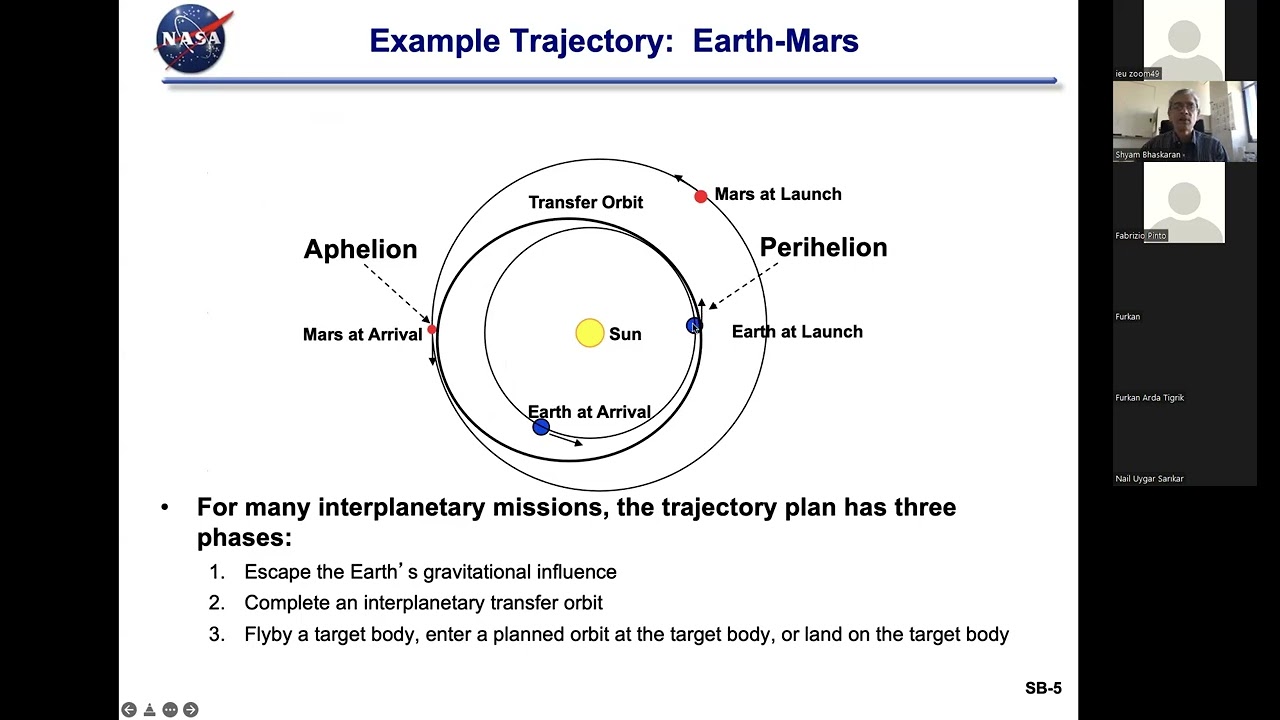
The best time to launch to Mars is about every 26 months.
If we show this with the correct scale, you can barely even see the Sun.
For this animation, I'm gonna show this out of scale so we can see this a little better.
For the Earth to get around the Sun, it takes exactly one year, right?
No surprises there.
Mars, on the other hand, takes almost two years to get around the Sun.
The best time to launch is right before Earth and Mars are lined up.
This is called a Launch Window, and it happens about every 26 months.
Perseverance was launched on July 30, 2020.
(dramatic ethereal music continues) The four solid rocket boosters use up all their fuel first.
At 1:49, they are jettisoned, or separated, from the rocket.
At 3:27, the payload fairing is jettisoned, which exposes the spacecraft.
Next up, the main booster runs out of fuel.
At 4:28, the main booster is separated, and it will fall back to the Earth.
This is called the Centaur Stage.
Its main engine now fires up.
This is what gets us into orbit around the Earth.
At 11:30, the engines shut off.
This is called the Coast Phase.
We'll stay here for about a half-hour.
It's a good time to check things out and make sure that everything is still working as it should.
And then, we relight the engines for about eight minutes.
This is called the Earth Escape Burn.
This is what gets us on a path towards Mars.
Then the spacecraft separates.
It's traveling at 41,000 kilometers per hour, and it will take about seven months to reach Mars.
Our spacecraft is made up of a few pieces.
Here's the rover, all folded up inside the Descent Stage.
This has eight rocket engines on it.
The Heat Shield, which slows us down through the atmosphere and protects the rover.
The Backshell, which protects the rover as it descends to the surface of Mars.
And this is the Cruise Stage, provides power, fuel tanks and thrusters, and also keeps in communication with Earth.
This whole assembly stays together during the seven-month journey to Mars.
We'll need to adjust our path along the way.
We do this with the thrusters on the side of the cruise stage.
This is called a Trajectory Correction Maneuver, or TCM, and there are several of them on the way to Mars.
(dramatic ethereal music continues) Landing on the surface of Mars is nothing short of intense.
They call this EDL, or Entry, Descent, and Landing, often nicknamed the 7 Minutes of Terror.
This is because, if anything goes wrong, it will likely fail to get the rover safely to the surface.
At the time of landing, it will take about 11 minutes for any signals to reach Earth.
This is, of course, traveling at the speed of light, the fastest that we know how to communicate.
It doesn't seem very fast, does it?
11 minutes is a long time.
To put this in perspective, from Earth to the Moon, light takes just over one second to get there.
When the Apollo astronauts were landing on the Moon, NASA could communicate with them almost in real time.
It would take about 2 1/2 seconds to receive a reply.
On Mars, this is completely different.
If something goes wrong during the landing, Mission Control won't hear about it for 11 minutes, and any reply would take another 11 minutes to get all the way back.
By this point, it will already be over, either a safe landing or a crash.
This means the computers, electronics, and the software must be smart enough to do everything on their own.
EDL: Entry, Descent, and Landing.
Let's follow this through step by step.
About 10 minutes before entering the atmosphere, the Cruise Stage is detached because it's no longer needed.
Small thrusters on the backshell will now be used to steer the spacecraft.
Next comes atmospheric entry.
The heat shield will protect the rover during this time.
(dramatic ethereal music continues) Once we get about 11 kilometers above the ground, then the parachute can deploy.
It uses a technology called Range Trigger which finds out how close we are from the landing site and then deploys the parachute at just the right moment.
Next step is Heat Shield Separation.
For the first time, the Perseverance rover can now see the Martian surface down below.
Now we use Terrain Relative Navigation.
The rover will be taking pictures of the ground beneath it and comparing these to maps of Mars.
This will be used to safely steer the rover towards the intended landing site.
Next comes Backshell Separation.
All that's left is the descent stage and the rover.
The rockets on the descent stage fire up to slow us down as we get closer to the surface.
Then the rover separates, but still attached by some cables.
They call this the Sky Crane Maneuver.
The final part everyone is waiting for. Touchdown.
The cables are cut, and the descent stage flies off into the distance for a crash landing far away from the rover.
Now it's time to check out the rover systems, deploy the mast, and then the robotic arm in the very front.
The main purpose of the Perseverance rover is to look for signs of life.
It landed in Jezero Crater, which billions of years ago used to be filled with water.
Where there is water, there is usually life, or at least signs that life existed in the past.
Perseverance rover has an array of advanced scientific instruments to study the surface of Mars.
If you remember from earlier, the rover is enormous.
It's about the size of a car.
The main body of the rover, they call the WEB, Warm Electronics Box.
Then you've got six wheels, three on each side, that are made of aluminum.
The front and back wheels can turn, allowing the rover to spin a full 360 degrees.
The Suspension System allows the rover to travel over rough terrain.
You never know what kind of obstacles you're gonna come across on Mars.
But to be more realistic, the rover would be going about this fast.
It has a top speed of.1 kilometers per hour.
The slow speed is mainly for the safety and stability of the rover.
This is the Remote Sensing Mast.
This is the place where you'll find some of the cameras and sensors of the rover.
It's just a little taller than the height of a human.
The idea is to give us a similar view of what a person would see if they were here on Mars.
This big circle up on top is called the SuperCam.
It's basically a laser that can identify chemicals in rocks from as much as seven meters away.
This is the Mastcam-Z.
These are the main cameras on the rover that can even take high definition video.
Navigation cameras are used to help the rover safely drive on the surface of Mars.
Right below is the Mars Environmental Dynamics Analyzer, or MEDA.
This is studying the weather and atmosphere on Mars.
The rover has two microphones, one on the mast and then another on the side of the rover.
Then we have the HazCams, which is short for hazard camera.
There's some in the front here, but also in the back.
Like the name says, these cameras help avoid hazards and obstacles while driving around on Mars.
The power source for the rover is called the Radioisotope Thermoelectric Generator, or RTG for short.
It's a nuclear power source.
The decay of radioactive elements generates heat, which can then be turned into electricity.
Some of the previous rovers use solar panels to generate power from the sunlight, but this doesn't work at night, and if too much dust gets on it, well then it's game over.
Both Curiosity and Perseverance use the RTG, which means a lot more flexibility in regards to power.
This is RIMFAX, or Radar Imager for Mars' Subsurface Experiment.
This uses radar waves to study the ground up to nine meters below the surface of Mars.
Then there's MOXIE, Mars Oxygen In-Situ Resource Utilization Experiment.
This takes the carbon dioxide on Mars and turns it into oxygen.
This kind of technology will be very important once we start sending humans to Mars.
And of course, the robot arm in the very front of the rover.
This has a few tools at the end with some really big NASA acronyms, so here we go.
PIXL.
This helps to determine what chemicals make up the rocks on a very small scale.
WATSON, another powerful camera to see the rocks with fine detail.
And then SHERLOC. This provides fine scale imaging.
At the end of the arm is the Coring Drill.
This is capable of drilling and collecting samples that will be stored onboard the rover.
(drill whirring) Then it will take these samples and place them inside of the rover.
Future mission is planned to take these samples from the surface of Mars and return them to Earth so we can study them further.
So how does Perseverance communicate back to Earth?
The best way is to use the Mars Relay Network, which consists of several satellites in orbit around Mars.
These were launched long before Perseverance got to Mars.
These satellites are also used for science and to communicate with other rovers that are also on Mars.
For example, one of these satellites is called the Mars Reconnaissance Orbiter.
So Perseverance can send data to the satellite, which will then send it directly back home to Earth.
On the surface of Earth, NASA uses massive satellite dishes to communicate with spacecraft throughout the solar system.
This is part of the Deep Space Network.
There are three main locations for these satellite dishes: Goldstone, California, Madrid, Spain, and Canberra, Australia.
No matter which way the Earth is facing, it will always be able to receive signals from Mars or other distant places in our Solar System.
Perseverance has three antennas on board.
The UHF Antenna, or Ultra-High Frequency Antenna.
This communicates directly with satellites above, primarily used to send large amounts of information.
The High-Gain Antenna transmits directly to and from Earth.
And then the Low-Gain Antenna, mostly used just to receive data from Earth.
Of course, we can't forget about Ingenuity.
This is the helicopter that was sent to Mars along with the rover.
Now where would you put a helicopter on the rover?
Look closely.
You'll see a little, tiny black compartment right here.
This is where it was stored.
About two months after landing, the helicopter was finally deployed onto the surface.
The process took about a week to complete.
First, the cover is removed, and we expose the helicopter.
Then it's unlatched, carefully folded down, the legs come out and dropped onto the surface.
Perseverance can drive away, and Ingenuity can start to absorb the sunlight on its solar panels.
The helicopter has two rotors that rotate in opposite directions.
On Earth, most helicopter blades spin at only a few hundred RPMs, or Rotations Per Minute.
For a helicopter to work on Mars, we have to spin the blades a lot faster.
This is because the air is much thinner here.
The first test flight of Ingenuity happened about two months after landing on Mars, the first helicopter to fly around on another planet, and it turned out to be a huge success.
As of this video, there's been a handful of flights, and Ingenuity is still operational.
Perseverance paves the way for future missions, where we will hopefully be able to return Martian samples back to Earth.
And of course, the next major milestone, sending humans to Mars.
(dramatic ethereal music fades) (dramatic ethereal music)
Up Next

100:24
How the Mars Rover Suspension Was Invented | Engineering Documentary
@GearSkeptic
55.7K views•2026-01-19

30:32
Ultrasonic Transducers: Resonant Frequency Measurement and Horn Design
@imajeenyus42
229.9K views•2017-02-22
11:32
How Does an Elevator Work? | Anatomy and Safety Mechanisms Explained
@JaredOwen
6.6M views•2023-04-06
33:39
How a Student's Question Saved a NYC Skyscraper from Collapse
@veritasium
22.8M views•2025-04-26
Related Study Plans & Knowledge Roadmaps
Structured learning paths in Engineering
engineering
Building Acoustic Levitators: Physics & Arduino
01The Physics of Sound and Standing Waves
02Piezoelectric Transducers and H-Bridge Drivers
03Arduino Programming: Generating 40 kHz Signals
+ 2 more learning modules
14h5 modules
Explore Roadmap
engineering
Building Peltier Cloud Chambers: Particle Tracks
01Cosmic Rays & Cloud Chamber Physics
02Thermoelectric Cooling (TEC) Fundamentals
03Custom Liquid-Cooling Loop Design
+ 2 more learning modules
18h5 modules
Explore Roadmap
engineering
Yagi-Uda Antennas: Modeling, Build & VNA Test
01Introduction to RF and Antenna Fundamentals
02Yagi-Uda Antenna Design Principles
03Antenna Modeling and Simulation in 4NEC2
+ 2 more learning modules
18h5 modules
Explore Roadmap
engineering
ECG Monitor Design: Op-Amps, Filters & Noise
01Electronics & Breadboard Basics
02Op-Amps and Instrumentation Amplifiers
03Bioelectricity and ECG Fundamentals
+ 2 more learning modules
18h5 modules
Explore Roadmap