




















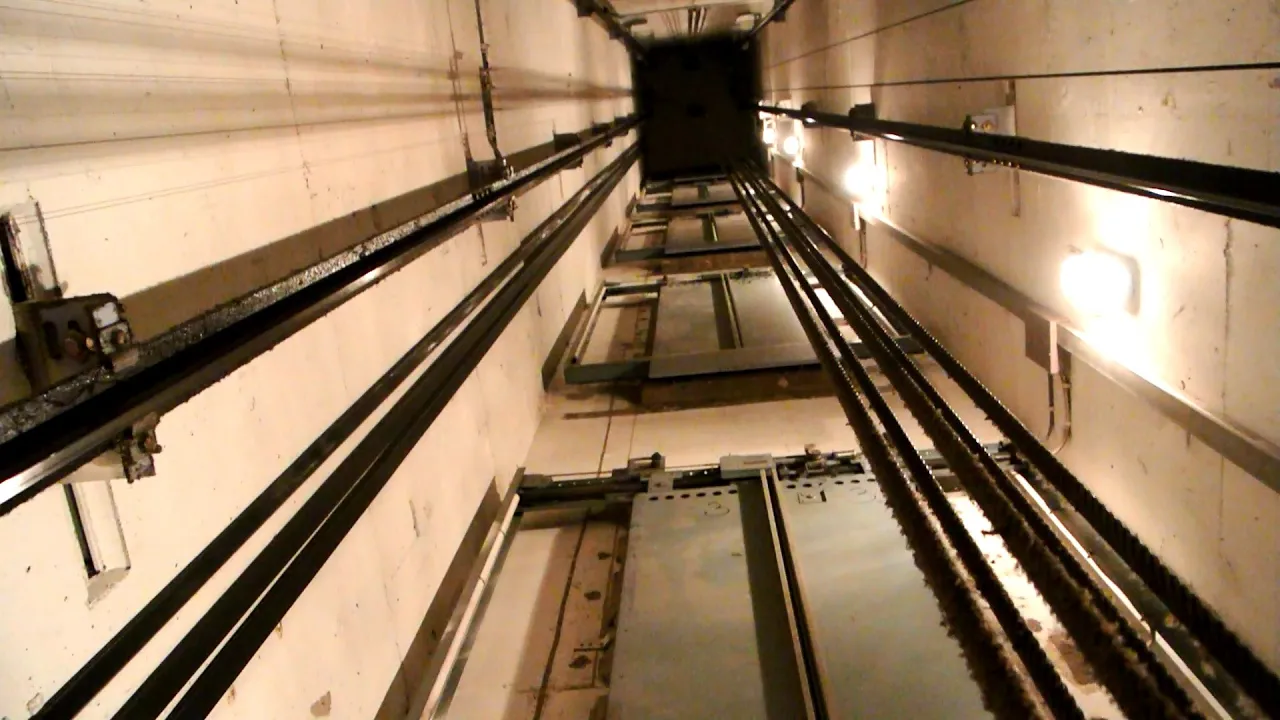







Elevators operate through a combination of mechanical systems including traction cables, counterweights, and sophisticated safety mechanisms. Traction elevators use an electric motor in a machine room to turn a sheave (pulley) that lifts the cab via cables, while a counterweight reduces motor strain by balancing the cab's weight. Safety systems include multiple cables (typically 4-8), an emergency brake at the cab bottom that grips guide rails if the main cables fail, and an overspeed governor with flyweights that activate emergency brakes if the elevator descends too rapidly. These innovations, beginning with Elisha Otis's 1850s safety mechanism, enable modern skyscrapers to reach unprecedented heights while maintaining passenger safety.
How Does an Elevator Work? | Anatomy and Safety Mechanisms Explained
Added:Basic principles of Newtonian physics, specifically gravity, tension, force, and mechanical equilibrium.
The concept of simple machines, particularly pulleys and how they provide mechanical advantage.
Fundamentals of rotational motion and torque, as applied to motors and sheaves.
Basic understanding of friction and how kinetic energy is converted into thermal energy during braking.
Advanced control systems and dispatch algorithms, such as destination dispatch, used to optimize elevator traffic in high-rise buildings.
The engineering differences and specific use cases between traction elevators and hydraulic elevator systems.
International safety codes and maintenance engineering standards, such as ASME A17.1 / CSA B44.
Cutting-edge elevator innovations, including rope-less magnetic levitation (maglev) multi-directional elevator systems.
6.6M views119.2Klikes11:32Original Release: 2023-04-06
- [Jared] Elevators revolutionized the way we build and live in our cities.
In this video, we'll be exploring the different parts of an elevator, how it works, and then the safety mechanisms which protect us as we ride these amazing machines.
(electricity crackling) (logo booms) In the 1800s, architects and engineers were pushing the boundaries of how high we could build.
As these buildings increased in height, there was somewhat of a limit.
It was hard to utilize the upper floors because you had to walk up a lot of stairs, and no one really wanted to do that every day.
The reason we started to build higher is because of elevators. (elevator door dings) In many parts of the world, it is referred to as a lift, but in this video, I'll use the word elevator.
The elevator is not a recent invention.
The idea of using a machine to lift things in the air, this is not a new idea.
It can be traced back to ancient civilizations over 2000 years ago.
Various lifting devices such as hoists or cranes, these have been used in various places like factories and construction sites; but lifting people, that usually wasn't done.
If that rope snaps, there is nothing stopping you from falling to the ground.
In the early 1850s, Elisha Otis invented a safety mechanism that changed everything.
Let's take a look.
(gentle music) This is a simple lift that can be raised or lowered by the rope.
The safety mechanism is made up of a leaf spring, two pivot arms, and the teeth on both sides.
When the lift is being pulled upward, the pivot arms are rotated, allowing the elevator to rise.
But if the rope suddenly loses tension for any reason, the leaf spring immediately pushes the pivot arms down, which then comes in contact with the metal teeth.
This stops the elevator from falling to the ground.
Mr. Otis was so sure of his invention that he demonstrated it to a crowd of people at the World's Fair.
He lifted himself up on the elevator and then had someone cut the supporting rope above.
He only fell a few centimeters.
This demonstration convinced the public that elevators could be safe enough for people to ride.
Elevators today have multiple safety mechanisms in place, but it all started with Elisha Otis.
Over the coming decades, elevator shafts became the core of most buildings.
This allowed for skyscrapers to reach new heights and for the buildings to be fully utilized.
And of course, we have to mention the revolving stairs, or more commonly known today, the escalator, helpful for moving large amounts of people but only up a few floors.
Once those buildings get really tall, the best solution?
(elevator door dings) The elevator.
(lively music) (elevator door dings) Ah, that music.
But for this video, we'll pick up the pace just a little bit.
(upbeat music) Let's go over some basic parts of the elevator.
Now, there's a lot of different elevator companies and different ways to make elevators.
Some of the mechanisms and names will be slightly different depending on the elevator, so keep that in mind.
This is called the shaft or the hoistway, the elevator pit at the very bottom, then we have the cab, which moves up or down inside the shaft, and these are the guide rails.
The cab usually has guide rollers to move it along the rails.
There are two main types of elevators, hydraulic elevators and traction elevators.
In real simple terms, traction elevators lift the cab from above using cables, and the hydraulic elevators push the cab up from underneath.
For most of this video, we're gonna look at traction elevators.
These are the ones you'll find in really tall skyscrapers.
But first, let's at least get the basics of the hydraulic elevator.
This uses a cylinder and a piston.
These usually extend several floors beneath the ground so there's enough length to push the elevator up.
Close by, you'll find a machine room with a pump unit filled with oil.
When the elevator needs to go up, the oil is pumped through the pipes and into the cylinder.
The pressure pushes the piston up, which raises the elevator into the air.
You'll find hydraulic elevators in smaller buildings, usually not more than six stories tall.
This is due to the length of the cylinder and the pressure involved to push the piston up.
(bright upbeat music) Okay, traction elevators.
Are you ready?
Traction elevators are most common in taller buildings.
In some places in the world, these elevators can service more than 100 floors.
Let's not get two carried away, though.
I'm gonna demonstrate this with just four floors.
We'll keep things simple.
At the very top is the machine room.
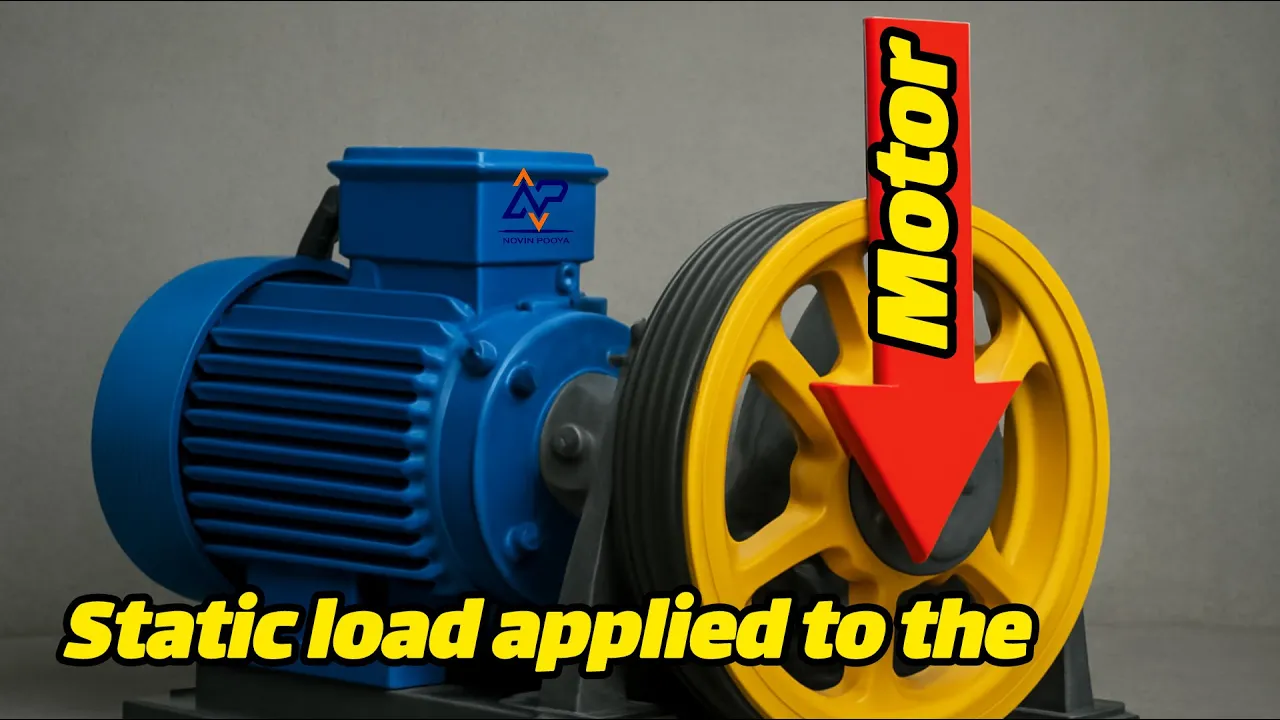
This is where you'll find the electric motor.
The motor pulls the cables by turning the sheave, which is basically a special kind of pulley.
On one side, the cables go down and attach to the cab, and on the other side, it attaches to the counterweight.
The counterweight moves opposite to the elevator cab.
So why do we have this counterweight?
Without the counterweight, the motor would have an enormous amount of tension on only one side.
It would have to work a lot harder to lift or lower the cab.
The counterweight makes it so that there is less strain on the motor.
All it has to do is tip the balance so the elevator moves up or down.
The counterweight will weigh as much as the cab when it's about halfway filled up.
Ideally, the system will work best if it's perfectly balanced, but this won't always be the case.
The weight of the elevator cab will frequently change.
This is the controller box.
It's like the brains of the elevator, safely moving it up and down.
Not all traction elevators are going to have a dedicated machine room.
They're able to fit the motor and other components at the very top of the elevator shaft.
They refer to this as a machine room less elevator, or MRL.
We won't go into detail about these, but I at least wanna mention them so you know that they exist.
Elevators have many safety features built in to protect the passengers riding in the cab.
First, you have the machine brake.
This is used to stop the spinning of the motor and hold the cab steady.
There are usually at least four cables holding up the cab, sometimes as many as eight cables.
Each of these cables is strong enough to hold the weight of a fully-loaded elevator.
The likelihood of all of these cables snapping is very small, but if it did happen, you would still be safe.
Let me show you.
Do you remember Mr. Otis' safety mechanism at the beginning of this video?
The modern version of this is a little different, but the main idea is still the same.
At the bottom of the elevator cab is the emergency brake.
There are two clamps, and these are located on both sides of the guide rail.
Normally, they don't touch so the elevator is allowed to move up and down.
But if the lever is pulled, then they move in and grip the guide rail which stops the elevator from falling.
The lever is connected to a cable, and this is a separate cable from the ones that lift the cab.
This cable attaches to another wheel at the top.
Let's take a look.
Back up here in the machine room, this device is called the overspeed governor.
Normally, this spins along with the elevator cab as it moves up and down.
Inside is a mechanism with two flyweights.
Let's say, for whatever reason, that the cab starts to move downward too quickly.
The overspeed governor will spin faster.
It spins too fast, these flyweights will move outward and catch the gear teeth on the side.
This will stop the spinning, which stops the cable, and the weight of the cab now causes the lever to go up, and there's clamps on both sides of the elevator, which firmly hold it in place.
Now, if you do happen to get stuck in an elevator, don't try and force the door and climb out.
Press the emergency call button to get connected with someone who can send help.
Let's talk about that door mechanism.
(elevator door dings) There are essentially two doors on an elevator.
On each floor, you'll find a door.
These are usually called the hoistway doors.
And then on the elevator cab itself, you'll find the cab door.
So when these are together, we have the cab door and the hoistway door.
We don't want either door to open unless the cab has come to a complete stop at the correct floor. (elevator door dings) These doors also have sensors so they won't close if something is in the way, and the elevator won't start moving until the doors are completely closed.
Let's look at just the cab for a minute.
The door operator is located at the top.
This turns some gears, which pulls on the lever, which slides the door open.
Notice how each of the hoistway doors does not have a way to open by themselves.
The doors can only be opened by the door operator on top of the cab.
When this opens, it will pull the hoistway door with it.
Each of the hoistway doors has an interlock.
This ensures that it won't open until the cab is right behind it.
Let's look at the mechanism.
Each hoistway door has a beak.
When this is down, the door won't open.
Push up on this bar, and the beak goes up.
This allows the door to open.
Down below, you'll find two black pickup rollers.
Push the one on the left, and it rotates, which pushes up on the bar, which unlocks the door.
So how does this get unlocked then?
Well, I'm glad you asked.
On the cab door, there's a piece called the clutch.
As the cab moves up and down, the clutch moves right around the rollers.
When the cab stops, the cab door will open.
The clutch will push on the pickup roller, which will unlock the mechanism.
Both doors can now slide open together.
In a rescue situation, or maybe even for maintenance, the workers can use a special key to unlock the door, even if the cab isn't right behind it.
Now, a key like this should only be used by authorized personnel who have a good reason to be opening the door.
And of course, be safe around elevators.
Please don't be fooling around.
Be responsible and use these machines as they are intended to be used.
(uplifting music) My name's Jared.
I create 3D animations to show and explain how things work.
Click the cards to watch another video, or click here to subscribe.
Thanks for watching, and I'll see you next time.
(uplifting music)
Up Next

17:03
Elevator Systems Fundamentals: Dover B.E.S.T. Training Video
@ElevatoringProductions
27.2K views•2019-06-04
30:32
Ultrasonic Transducers: Resonant Frequency Measurement and Horn Design
@imajeenyus42
229.9K views•2017-02-22

16:31
How NASA's Perseverance Rover Works: Mars Exploration Explained
@JaredOwen
4.8M views•2022-07-01
33:39
How a Student's Question Saved a NYC Skyscraper from Collapse
@veritasium
22.8M views•2025-04-26
Related Study Plans & Knowledge Roadmaps
Structured learning paths in Engineering
engineering
Building Acoustic Levitators: Physics & Arduino
01The Physics of Sound and Standing Waves
02Piezoelectric Transducers and H-Bridge Drivers
03Arduino Programming: Generating 40 kHz Signals
+ 2 more learning modules
14h5 modules
Explore Roadmap
engineering
Building Peltier Cloud Chambers: Particle Tracks
01Cosmic Rays & Cloud Chamber Physics
02Thermoelectric Cooling (TEC) Fundamentals
03Custom Liquid-Cooling Loop Design
+ 2 more learning modules
18h5 modules
Explore Roadmap
engineering
Yagi-Uda Antennas: Modeling, Build & VNA Test
01Introduction to RF and Antenna Fundamentals
02Yagi-Uda Antenna Design Principles
03Antenna Modeling and Simulation in 4NEC2
+ 2 more learning modules
18h5 modules
Explore Roadmap
engineering
ECG Monitor Design: Op-Amps, Filters & Noise
01Electronics & Breadboard Basics
02Op-Amps and Instrumentation Amplifiers
03Bioelectricity and ECG Fundamentals
+ 2 more learning modules
18h5 modules
Explore Roadmap