








![10년마다 군사 쿠데타 터지는 나라, 튀르키예의 현대사 [지구본 초대석]](https://i.ytimg.com/vi/UQj1G-rn5Hs/maxresdefault.jpg)







The 1960 Turkish coup demonstrates how military forces can intervene in democratic processes when civilian governments become authoritarian; the Democrat Party government of Adnan Menderes, despite winning elections, faced growing unrest due to repressive policies, economic mismanagement, and religious tensions, ultimately leading the Turkish Armed Forces to overthrow the government in a bloodless coup on May 27, 1960, establishing a pattern of military intervention that would repeat multiple times throughout Turkey's history.
1960 Turkish Coup d'État and the Cold War: A Historical Analysis
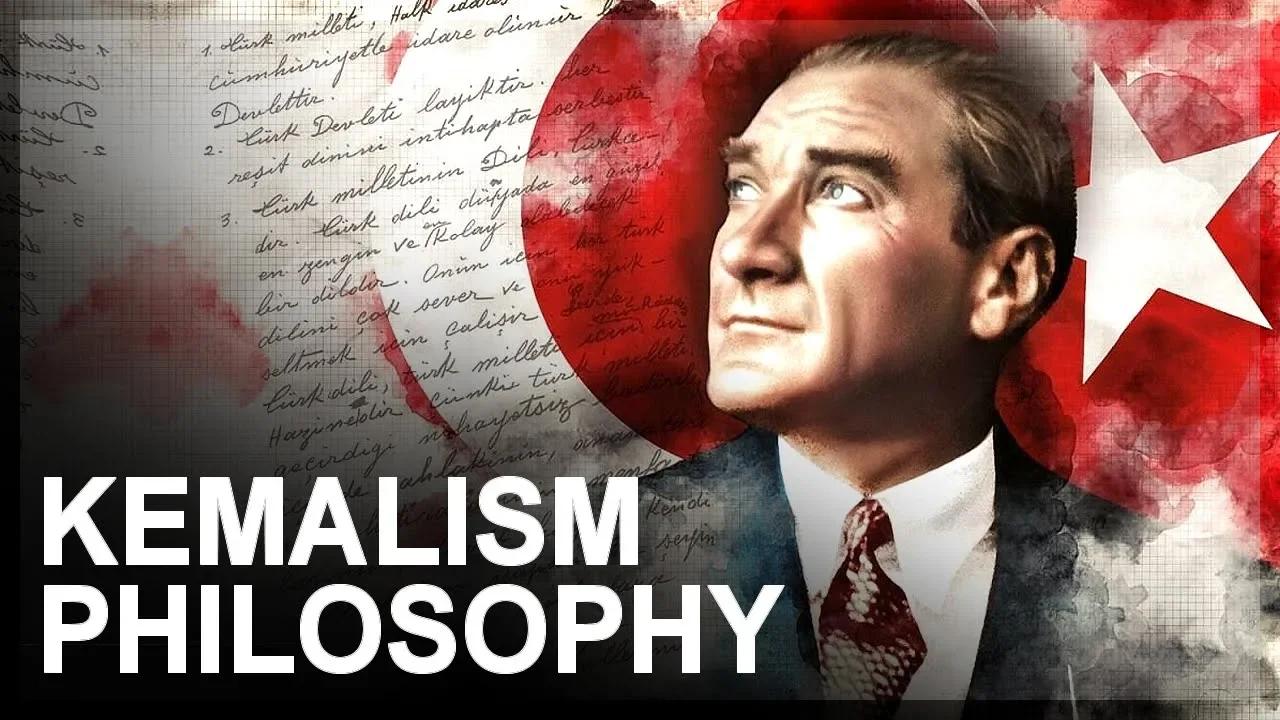
Added:The foundational principles of Kemalism and the historic role of the Turkish Armed Forces as the self-appointed guardians of secularism and the state.
The political transition of Turkey from a single-party state to a multi-party democracy, specifically the rise of the Democrat Party (DP) in the 1950 election.
The geopolitical alignment of Turkey during the early Cold War, including the Truman Doctrine, Turkey's integration into NATO in 1952, and its strategic value against the USSR.
The Yassıada Trials, the execution of Prime Minister Adnan Menderes, and the implementation of the highly liberal 1961 Turkish Constitution.
The comparative study of subsequent Turkish military interventions (1971, 1980, 1997, and the 2016 coup attempt) to identify patterns in Turkish civil-military relations.
The impact of the 1960 coup on US-Turkish relations, leading up to major Cold War friction points such as the Cuban Missile Crisis and the Cyprus dispute.
Academic theories of military praetorianism and democratic consolidation in developing nations during the 20th century.
101.1K views4.3Klikes19:27Original Release: 2021-09-25
In an episode a long time ago, in a galaxy far far away, we talked about the situation in post-war Turkey. It’s a story of questionable governments, Soviet intimidation, and seemingly infinite Marshall Plan dollars. Now, where we left off that particular episode was in the buildup to the 1960 Turkish election when the Democrat Party government of Adnan Menderes responded to increasing agitation and unrest from the Republican People’s Party or CHP, led by Ismet Inonu, by suspending all political parties and declaring martial law. I’m your host David and today, we are going to finally pick up where we left off the Turkish story. This is...The Cold War!
What Turkey needed in 1960 was a champion, which is what YOU can have thanks to the sponsor of today’s video, Raid: Shadow Legends! Raid has over 600 Champions to choose from, each coming from a unique faction! Make sure you’ve downloaded Raid Shadow Legends to your phone or PC using the link below so that you can meet fantasy's favourite bad guys, the Orcs! Orcs get a bad rap - but in RAID, they’re not all bad. Created by the dark lord Siroth, they have a good reason to dislike humans. After a brutal war fought against the Bannerlords, High Elves, and Sacred Order, their lands were annexed, forcing most Orc clans to become nomadic. Now - they’re mostly just trying to survive. Here are a few of our favorite Orc heroes! We love that Raid is always adding new stuff, and this month, a huge new Doom Tower update is released with 2 huge new Bosses to take on - Astranyx the Dark Fae and Bommal the Dreadhorn! The month is packed with awesome events and tournaments - including one very special event with a brand-new feature: Super Raids. Super Raids let you double up your rewards from hitting dungeons and massively speed up your progress. If you wanna get a huge head start in Raid, all you have to do is hit the link in the description and you’ll get an epic hero Chonoru, 200k Silver, 1 xp boost, 1 energy refill and 1 Ancient Shard! Download Raid and I will see YOU in the game!
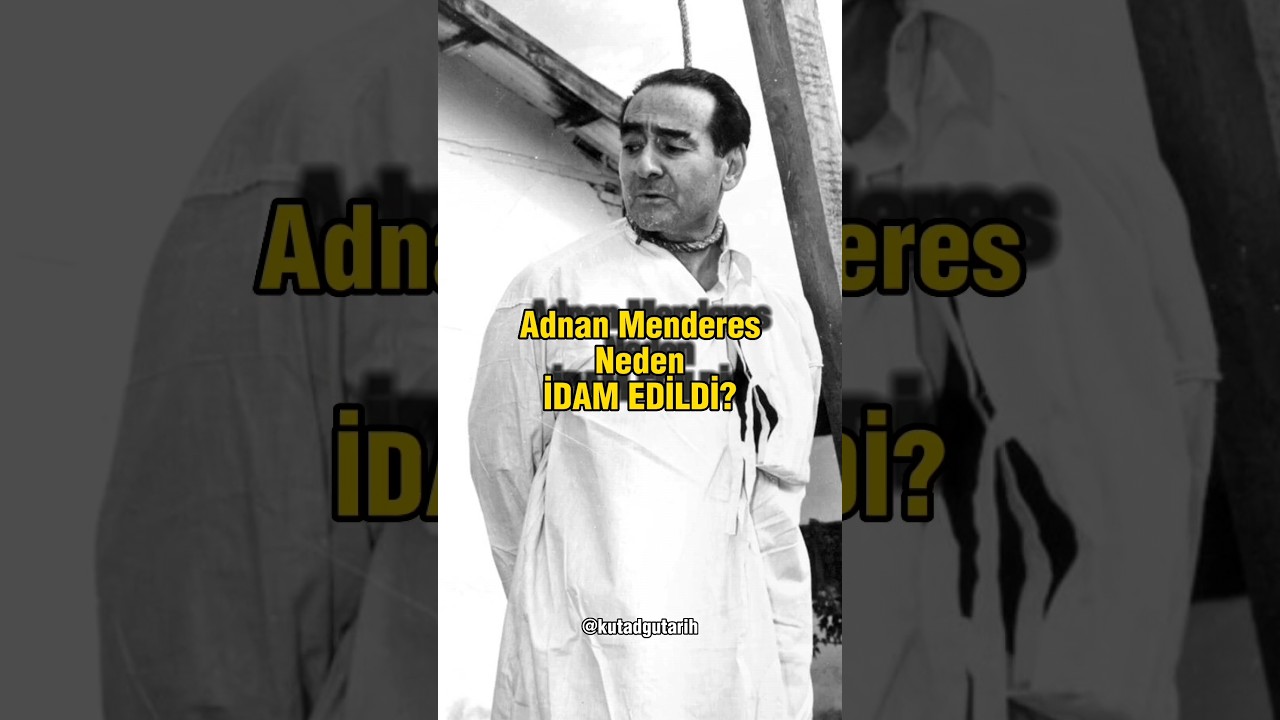
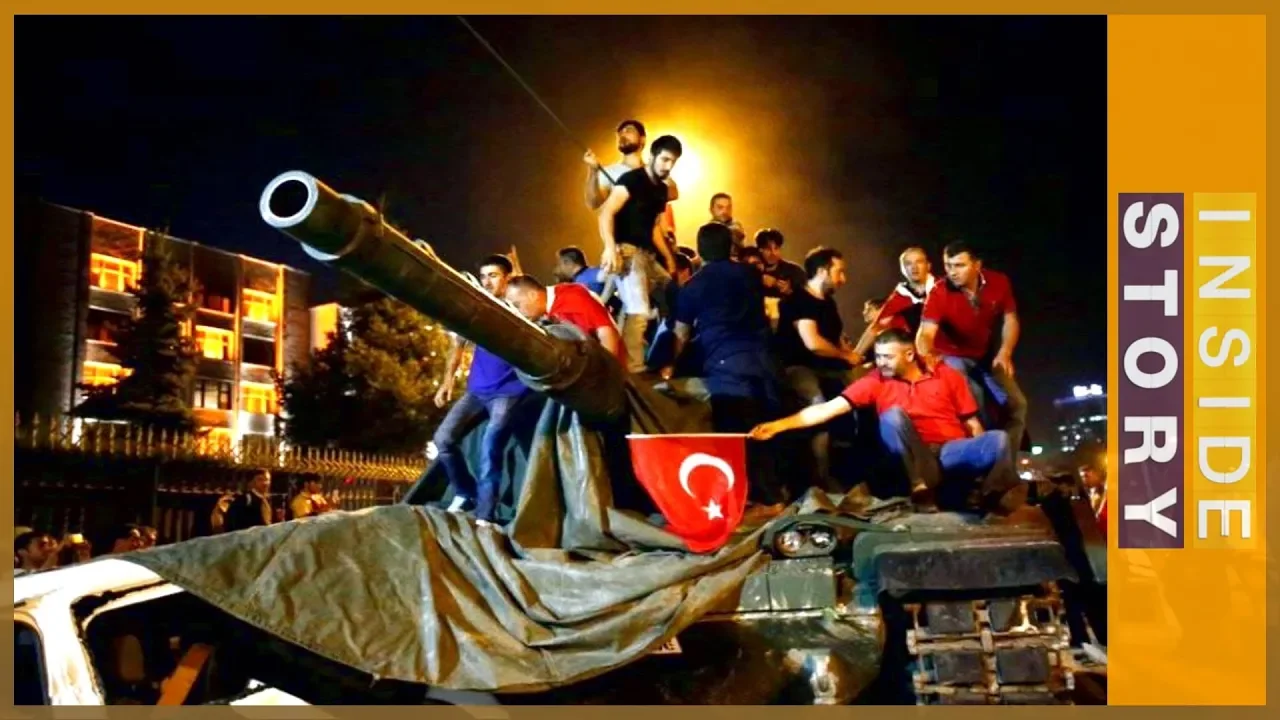
But first, a quick recap of where we left off. Turkey had remained neutral during the Second World War, and its already precarious economic situation was exacerbated by the need to maintain a large standing army to prevent possible interference from either the Axis or the Allied powers. Although Inonu had ruled the one-party state since the death of Kemal Ataturk, the promise of Western financial support in exchange for the democratization of Turkey was a carrot that Inonu could not ignore. The introduction of multi-party politics in Turkey was also consistent with the country’s position as a founding member of the UN and the UN Charter which placed an emphasis on the importance of human rights and democracy. As for the American-led West, its interest in Turkey was considerable, although the cynic in me feels their interest was less in ensuring the Turkish people had a political voice and was more about ensuring that Communism, and the Soviet Union, couldn’t obtain a foothold in a key strategic location. A Sovietized Turkey would have given the Soviet Union an easy strike position towards the middle eastern oil fields as well as unfettered Naval access to the Mediterranean while also threatening the vital Suez Canal zone. So, the strengthening of Western relations with Turkey, including its membership to NATO in 1952 were major strategic victories. Now, Inonu and the CHP had begun to lay the groundwork for a transition to democracy and multi-party politics as early as 1945, bemoaning in a speech the lack of opposition and contested elections. It didn’t take long after this for four of the leading dissenting members of the CHP to sign a memorandum calling for democratization and fair elections. In response, the CHP forced them to leave the party and the four men, including Adnan Menderes and Celal Bayar, formed a new political party, the Demokrat Party. The new DP quickly attracted the attention and support of CHP members who were disenchanted or tired of Inonu. The DP however, was careful to still proclaim their adherence to the core principles of Kemalism; both secular and pro-Western. Where the DP diverged from the CHP was largely on economic matters. The CHP wanted to continue with its policies of statism while the DP wanted increased economic liberties and freedoms from government direction. 1946 saw Turkey’s first contested election, one which the CHP won comfortably, amid claims of electoral fraud made by the DP. Despite the CHP’s victory, the period that followed did see change begin to happen in the country. This was largely driven by the DP’s role in Opposition. Laws on land distribution were liberalized giving more people access to farming opportunities, the ban on trade unions was removed, and some of the negative pressure on religious education were decreased. The DP was leaning into the religion card for support...Turkey, despite the secularism of the Kemalist movement, was still very much a religious and conservative society, which the DP took advantage of, positioning itself as being more friendly towards religion while painting the CHP as the enemy of Islam. This was highlighted when the CHP banned the Arabic call to prayer. Capitalizing on this in the 1950 election, the DP won 408 seats compared to only 69 for the CHP. For the first time since the creation of the Turkish Republic, the CHP was not in power. Adnan Menderes, as party leader, assumed the role of Prime Minister and Celal Bayar was elected President by the Parliament. The ascent to power of Menderes and the DP changed the power dynamic in the country. While the CHP elites had been largely made up of people with backgrounds in the military and from the urban bureaucracy, the elected representatives of the DP were businessmen and landowners with more provincial backgrounds. One of the first steps the DP took after assuming power was to lift the ban on the Arabic call to prayer as well as the restrictions on religious programming on the radio. But Menderes also continued to foster Turkey’s ties to the West, responding to the UNs call for a coalition of troops to be sent to the Korean Peninsula after the outbreak of war there. In fact, Turkey was the 2nd country to agree to send troops, after the United States. Turkey’s commitment and sacrifice in Korea, which saw over 700 dead, helped make the case for Turkey’s acceptance into NATO in 1952. The Menderes government also benefited from those sweet sweet Marshall Plan dollars which allowed for economic growth in Turkey. This growth allowed for easier access to business loans from the West, which further allowed the Turkish economy to strengthen and grow, resulting in infrastructure growth, especially roads, to assist in that growth. All of this helped to further boost the popularity of the DP with the Turkish people. But, and there is always a but, this growth also coincided with an increase in certain repressions by the Menderes government. This included such actions as the seizure of significant amounts of CHP assets, the forced closure of the Millet Party and their single Parliamentary MP on the grounds that the Party was a religious organization. The Village Institutes, teacher training enterprises that the CHP had established in the villages, were also closed down. And yet, despite this, the DP continued to be popular, even increasing its seat count in the 1954 elections, winning 508 seats and a massive 57.5% of the popular vote. This second DP term however was more...problematic. Economic growth slowed, shortages of consumer goods began to appear and the authoritarian trend of the DP continued. September of 1955 saw a pogrom carried out against the Greek minority in Turkey resulting in the deaths of between 11 and 30 people. The DP was widely implicated in the orchestration of the pogrom, but the DP used it as an opportunity to crush dissent in the country. Blaming communists for the attacks on the Greek community, many prominent Turkish Communist Party activists were arrested. Menderes also used the pogrom as an opportunity to shut down the “Cyprus is Turkish” organization which was poised to cause a potential rift with Greece, another Western ally. In response to these actions by Menderes, four prominent Democrat Party MPs, including one of the original four founders of the party Fuat Koprulu, quit the DP and established the Hurriyet Party. In summary, Menderes and the DP were stirring up violence and dissent in order to use it as a pretext to extend their own direct power over the country. So, amid this political instability, growing economic challenges and before things could deteriorate further, Menderes decided to call early elections in 1957. The DP won again, but had lost 10% of the popular vote compared to 1954 and had lost seats in parliament to the CHP and several other opposition parties. The new Menderes government had further troubles to deal with as foreign loans became due and needed to be repaid. Feeling a lack of options, managing this included the rapid devaluation of the currency, hurting the economic growth which the DP depended on to win votes. In real terms, the currency devaluations shredded the savings of many and made monthly wages irrelevant. And through all of this, Menderes’s authoritarianism continued to grow. The press found itself censored, journalists were arrested and some news outlets, including the pro-CHP newspaper Ulus was shut down. And then in 1959, the leader of the CHP Inonu was attacked at a CHP rally being held in one of the regions and then again, a few days later at a rally in Istanbul. It is most likely that these attacks were at least condoned, if not sponsored, by the DP and its supporters. But publicly, the DP-dominated Parliament established a commission in order to investigate the actions of the media and the opposition. The Commission, made up exclusively of Demokrat Party MPs came to a conclusion that the CHP had united all the destructive forces in the country to its banner and were inciting the people and the army against the government. As you can imagine, the situation in the country was tense. Which is an understatement, by the way. Inonu, himself a former soldier and a war hero, had a very loyal following among military circles in Turkey, and he warned Menderes to restrain his actions. Inonu even went so far as to state that he would not be able to save Menderes if the turmoil in the country continued. His statement, made on April 18 1960, was: "Even I cannot even save you if you continue to follow this path. Revolution is a legitimate right for nations once the necessary conditions are set." This was basically a thinly veiled warning to Menderes that the army could and probably would intervene against the DP government. This brings us now to late April of 1960. By this time, student protests were becoming a regular occurrence and Menderes decided to crack down on them, calling out the police to forcibly break up the protests. He even went so far as to declare martial law. In early May however, Menderes found himself accidentally confronted with protestors who attacked him and even managed to force him to publicly resign from office. Bayar, the President, however refused to accept the resignation and urged a further crack-down on the protestors. OK, now while all this was going on, there was also action happening on the international stage. Turkey, suffering an economic downturn, was finding it difficult to sign new loans with Western partners. As a result, Menderes began to court the Soviet Union as a source of international aid and was even planning a state visit to Moscow to help him in this goal. This naturally, was a cause for great concern internationally but even more so among many Turks, especially those in the armed forces. So this actually brings us to a perfect time to discuss the Turkish Armed Forces. The military in Turkey considered itself to be the guardians of the secular Turkish state. It was very much a bastion of pro-Western thought and naturally, any attempts in the country to improve its relations with the Soviet Union were going to be met with disapproval. As early as 1957, young officers, mostly colonels and other lower ranked officers, had been organizing committees without the knowledge of their commanders, in order to plan a possible overthrow of the Menderes government. By 1960, these plans were prepared and ready to be carried out. A Committee of National Unity was formed with the aim of executing the coup. It called for the deployment of troops to both Istanbul and Ankara where key installations like the Parliament and the state radio would be occupied and Menderes would be arrested as well as other key DP politicians, forcing them to accept a new political reality. On the 27th of May, 1960 the Committee took action, moving troops loyal to the Committee into Ankara and occupied the State Radio station. One of the Committee leaders, Alparslan Turkesh broadcast a statement announcing the coup, asking people to stay in their homes and that the Turkish Armed Forces had taken over the country in a bloodless effort to regain control over the situation in the country. Following the announcement, high ranking military officers who were known to be loyal to Menderes or whose loyalties were unknown were also placed under arrest. Included in these arrests were President Celal Bayar as well as various government ministers in Ankara. Menderes, who was travelling outside of Ankara, was arrested and brought to the capital. General Ragip Gumushpala, the commander of the 3rd Army at the time of the coup, was initially opposed to it and threatened to move troops under his command into Ankara in order to suppress the coup. He would only agree to stand down if the more senior military commanders agreed to the coup. This left very few individuals who could intervene. But, when the former commander of allTurkish Land Forces, Cemal Gursel, came out in favour of the coup, Gumushpala stood down his troops, opening the path for a full military takeover. At 11:30am on the 27th of May, Cemal Gursel entered Ankara and that afternoon made a radio broadcast to the nation that the Armed Forces had taken over and the Committee of National Unity was now in charge. The arrested, including Menderes and Bayar were taken to the island of Yassiada, south of Istanbul, in the Sea of Marmara. Over the course of the following year, court proceedings for the arrested took place on the island. The court was composed of judges appointed by the new military junta that had established itself. Charges included high treason, misuse of public funds and abrogation of the constitution. At the end of the trial, 15 men were given death sentences, although this was commuted to life in prison for 12 of them, including Celal Bayar. On September 16, 1961 the former Minister of Foreign Affairs Fatin Rustu Zorlu and the former Minister of Finance Hasan Polatkan were hanged to death. The following day, the same sentence was carried out on Adnan Menderes. The Armed Forces remained in direct control of Turkey after the May 27 Coup but they did organize and run elections in October 1961. These elections were largely to oversee the return of administrative control of Turkey to civilian government and the Generals retained executive command, with Inonu in the role of Prime Minister. Free and full elections would not be held again in Turkey until 1965. As for International reactions to the 1960 coup, the major governments of the West, including the United States and Great Britain, were comfortable with the results. The increasingly fractious relationship with Menderes had been causing concern for Western governments who looked to Turkey as a vital strategic ally against the Soviets. The US military relied heavily on the airbase at Adana, now called Incirlik Air Base, which was used to launch reconnaissance missions against the USSR and would be used to recover long-range strategic bombers in the event of a shooting war with the Soviet Union. And not to mention of course that an agreement had been reached in 1959 to allow the deployment of Jupiter medium-range ballistic missiles to Turkey in order to further threaten the USSR with their freedom. So, the replacement of Menderes with sympathetic men in uniform was of great comfort to the West. The 1960 coup was a first for the Turkish Republic, but certainly wasn’t the last with 3 more occurring just in the 20th Century. Turkey through this time period was a country where the military was seen to play a vital role in maintaining order and stability and was held in very high regard by most people as a result. What this created in Turkey was a situation where the armed forces could exert a great deal of influence over the running of the country even when they were not in direct control. It acted as a stabilizing force and maintained momentum but also meant radical reforms with which the military disagreed with were doomed from the outset. In a Cold War context, this meant that Turkey remained a firm ally on the southern flank of NATO with very low risk of the country being turned into an ally of the Soviet Union. A veneer of democracy could be presented overtop of an anti-democratic deep state, influenced and guided by a secular and pro-Western military. Not the first time we’ve heard this story and certainly not the last. We hope you’ve enjoyed today’s episode and to make sure you don’t miss all of our future episodes, please make sure you are subscribed to our channel and have consulted the military junta who are REALLY in control of this channel for permission to press the Bell Button. We can be reached via email at [email protected]. And we are active on facebook and instagram at TheColdWarTV. If you enjoy our work your financial support would be greatly appreciated via www.patreon.com/thecoldwar or through YouTube membership!. This is the Cold War Channel and don’t forget, “The trouble with a cold war is that it doesn't take too long before it becomes heated.”
Up Next
51:47
Alan Turing: The Codebreaker Who Shortened WWII | Full Documentary
@SLICEHistory
464.1K views•2023-06-18

33:02
The Great Schism of 1054: Causes and Consequences
@SacredCathedrals
113.5K views•2026-02-19
91:57
The Geopolitics of the Ukraine War and the Rise of Global Autocracy
@JordanHarbingerShow
468K views•2025-04-19
17:05
Understanding the Cold War: Superpower Conflicts and the Road to Détente
@OverSimplified
46.1M views•2019-01-24
Related Study Plans & Knowledge Roadmaps
Structured learning paths in History
history
Byzantine Iconoclasm: Theology, Art & Politics
01Foundations of Byzantium and Early Christian Images
02The First Iconoclasm: Leo III and the Crisis of Images
03Empress Irene, Nicaea II, and the Second Iconoclasm
+ 2 more learning modules
9h5 modules
Explore Roadmap
history
Iranian Revolution (Causes, Events & Legacy)
01The Pahlavi Dynasty and the Roots of Discontent
02The Spark of Rebellion and the Rise of Khomeini
031979: The Fall of the Shah and the Climax of the Revolution
+ 2 more learning modules
8h5 modules
Explore Roadmap
history
Mali Empire: Mansa Musa, Trade & Timbuktu
01Foundations of the Mali Empire
02The Trans-Saharan Gold and Salt Trade
03The Reign and Pilgrimage of Mansa Musa
+ 1 more learning modules
6h4 modules
Explore Roadmap
history
1947 Partition: Politics, Borders & Legacies
01Foundations of British India and the Divide
02The Political Negotiations and the Mountbatten Plan
03Drawing the Boundary: The Radcliffe Line
+ 2 more learning modules
8h5 modules
Explore Roadmap