




![Movies I Love (and so can you): Dr. Strangelove (1964) [*Spoilers*]](https://i.ytimg.com/vi/jqnEy8D3Nxo/maxresdefault.jpg)






![[Jeju Forum 2020-The APLN Sessions] Session 2: 국제 핵군축·비확산 체제의 강화](https://i.ytimg.com/vi/GR8n2-XR-sg/maxresdefault.jpg)
A liberal international order is essential for global peace and prosperity in the nuclear age, as interconnected nations cannot pursue zero-sum competition without risking mutual destruction; cooperation through institutions like the UN, based on principles of peace, sustainable development, and human rights, offers the best path forward despite current challenges with leadership and governance structures.
Jeffrey Sachs on Global Order & Nuclear Risk | Full Talk
Added:The definition and historical context of the 'Liberal International Order' established post-World War II, including the roles of the US, IMF, World Bank, and NATO.
The core structure, charter, and decision-making processes of the United Nations, particularly the division of power between the General Assembly and the Security Council.
Basic theories of International Relations, specifically the tension between Realism (balance of power, state self-interest) and Liberalism (cooperative international institutions).
The history of Cold War nuclear diplomacy, including the concepts of Nuclear Deterrence, Mutually Assured Destruction (MAD), and historical non-proliferation treaties.
The transition from a unipolar global order to a multipolar world, focusing on the rising geopolitical and economic influence of China, Russia, and the Global South.
Specific proposals and structural barriers to reforming the UN Security Council, such as expanding permanent membership and altering veto powers.
The concept of 'Thucydides's Trap' and its application to modern US-China strategic competition and diplomatic signaling.
Contemporary challenges in nuclear disarmament, including the collapse of legacy arms control treaties and the impact of cyber warfare and AI on nuclear command systems.
1.1M views28.3Klikes1:21:39Original Release: 2024-10-30
[Music] tonight's guest is University professor and director of the center for sustainable development at Columbia University where he directed the Earth Institute from 2002 until 2016 he's been special adviser to three United Nations Secretary General and currently serves as a sustainable development goals Advocate under Secretary General Antonio guz he has received 42 honory doctorates and his recent Awards include the 2022 Tang prize in sustainable development and the Order of the cross from the president of Estonia he'll be beginning with a short speech on whether there can ever truly be a liberal International order please give a warm welcome to Professor Jeffrey saaks [Applause] what did you say I'm going to talk about whether there can ever be a um liberal International order thank you good I absolutely refused to hear the question before I entered the room so uh that a good topic what kind of international order or disorder we're going to have thank you for having me and my wife here this evening so I'm looking forward to a great discussion we are in a a period of huge change and very dangerous change right now and um I'm here to tell you uh to help lead a safe way out of this uh for some reason uh the general generation of politicians running the world right now is not very prudent very wise and is not leading us to safety we're in an extraordinarily dangerous time and that is not uh intrinsic to our circumstances at all because we could view with the same conditions that we have we could view our situation as uh wonderfully uh promising uh exciting a time when the whole world could be achieving very big things we could understand which we don't yet that we are not in a game of who's number one or who's ahead uh or who runs the world we're all uh blessedly stuck together on this planet and we're all G to have pretty much the same outcome either a good outcome or a disaster and the old ideas that it's really important who sets the rules and really important who wins uh the wars are very outmoded and they're outmoded for two fundamental reasons one we just can't go on with the kind of wars that we have and that threaten our are very survival every day because we are in the nuclear age and we have conflicts among nuclear powers that threaten our very survival this is something new in history we were uh as a species one could even say we seem to be very prone to war and War has been part of human existence but things are are different now uh actually one of the uh wonderful lines of President John F Kennedy and his speech writer Theodore senson which I like so much are his words from the inaugural address when he said uh for our times uh are very different we hold in our mortal hands the ability to end all forms of human poverty and all forms of human life and this that was was 1961 this remains our most significant issue which is we are so close to disaster every day because we are not properly LED and because our ideas about the international order are way out of date now the second reason as I mentioned of the two is that we're so interconnected now that the whole idea that there can be winners and losers on a completely interconnected planet really makes no sense maybe it made sense and it was immoral before but now it really does not make sense to think that there's going to be uh a way on a planet with so much interaction every day with complex global scale interactions and with a climate and environmental stress that is potentially disastrous for every part of the world that some somehow we're going to be able to do well while half the world is uh struggling to survive and that is an old idea in fact one of the old ideas quite disastrous which came uh actually came uh from uh England in 1798 of Thomas malus uh who was very clever so he posed a real problem he got the wrong answer but he posed a real problem uh he basically said there's not enough to go around so we're condemned to Poverty uh if not at all times at least uh anytime we are able to lift our head above poverty we'll be driven back down to Poverty by population increase and we'll never really be able to surmount subsistence and uh Charles Darwin had a aha when he read the principles of population and said aha that's where natural selection comes from uh it comes from the fact that there are always more organisms than can be supported in their physical environment and that was then taken by uh others further uh and said well that's our struggle for survival on this planet as human beings and as nations against Nations or as races against races were in a struggle for survival and that is social Darwinism and uh it's even more extreme versions this idea is wrong uh and it's wrong for understandable and identifiable reasons that would take a long time to uh discuss fully but suffice it to say uh one two peculiar things that malus got wrong he thought that richer people uh would have more surviving children because children would survive in a higher income uh context and therefore there would always be above subsistence a survival rate of children that would increase the population but what he didn't foresee was Modern contraceptives and changing culture so that at higher incomes people have fewer children in fact they don't even have enough to replace the adult generation in the high income World fertility rates are are now uh in many places each mother having on average or each 10 mothers having Seven Daughters uh that will replace them in the Next Generation meaning a declining population so he didn't understand that and he didn't understand the benefits of technological Advance because that was about to explode after 1798 in ways that he didn't Vision but the legacy of that idea is that we're in a struggle and it's us or them and of course the worst horrific vision of that was Hitler's which is that we need living room laban's room uh because otherwise the German Aryan people will not survive so we need to conquer the lands of the Slavs to the East and that was a real idea by the way that he picked up from German scientists who had picked it up from social darwinists in this country who had picked it up from Darwin who had picked it up from malus and it's actually a set of ideas it's not just Insanity it was a set of ideas widely circulating among German so social thinkers and among German scientists in fact in the early uh 1900s well thank goodness it's wrong we're not in a struggle between the US and China there's no basis for this we're not in any intrinsic war between the US and Russia and Russia by the way despite every single thing that's said every single day truly really does not want more land it's already 11 time zones the last thing that they need or want is more land the war is about completely different things than everything you and I read about in our newspapers every day because our newspapers are telling us stories that ultimately come back to narratives conceived in the US defense department in the CIA and that are completely bogus so what about this International order the international order is extremely dangerous because we're packed to the gills with nuclear weapons we are uh at a brink of environmental disaster we are led by to put it politely well I can't put it I need to put it politely but leaders who are not quite up to the challenge we Face uh and are not uh properly addressing the challenge and personally it's uh a little bit of a relief for me to be here because yesterday when I was at the Oxford Union I could only think about Boris Johnson being president of the Oxford Union and um here I can think about KES being president of the the Cambridge Union I feel so much better and so much more at home um in in that regard although I loved the event yesterday and Bojo wasn't there um but but he was there in spirit in my remarks because he's an example of one of the most disastrous politicians of our age and has done a profound disservice in the world and continues to be a danger for all of us and I don't say it lightly and I don't say it in a partisan way I just say it that um people like that are extremely dangerous and how casual they throw around our lives so the question and I'll sit down in a moment so we can have a discussion uh the the question could we have a an international order that is peaceful secure ordered improving the well-being of people around the world the answer is absolutely yes is that what we have right now the answer is absolutely not do we have the makings of what it could be my answer has been for uh most of my profession professional life yes we could make the United Nations actually fulfill its purpose that's why I have devoted the last 25 years to the un uh in pretty much uh volunteer work every day because I think it's our best hope for making a global order that truly is what we want and need it's not working right now it doesn't make me cynical it makes me worried it makes me sad because I think I I can see why it doesn't work it was set up in 1945 so that the great Powers would have a veto uh and that is certainly the single most debilitating aspect of the UN because if we had a system where the general assembly as flawed as it is actually had enforceable uh legal uh remit if you look at the decisions of the general assembly over the years they're actually very very good and the world would be a lot better place if we Guided by that rather than by the great power vetos so all of this is to say I don't think we're so far from a vision of what we could have of course we just had a summit of the future at the UN which put forward a lot of ideas for un reform that are very good so we can reform what we have but I think the idea of an international governance system uh that is based on peace sustainable development and human rights is really a good and smart one and it's not so far from implementation except we need uh in my view the main job that I feel is uh trying to help my former students and friends and colleagues and teachers in Washington real uh so that they understand that we're in a different world and that we do not need us leadership at all what we just need is US decency and cooperation so that's all I wanted to start by saying thank you for the question uh and uh we'll get [Applause] started thank you so much for that I thought that was really fascinating um so what we're going to do now is I'm going to ask a few questions for this next little bit of the talk and then after that going to open it up to um questions from anyone in the audience so I just wanted to start ding things back a bit towards your sort of academic background in development and I wanted to ask you why do you think it is since 2008 in particular and continuing towards today that foreign aid has lost ground in the conversation in a lot of Western countries particularly in the UK where we've reduced it down to 0.5% of GDP what what would you say is behind that and why is there a reluctance to accept the importance of foreign aid relative to changing government structures in developing countries yeah great um you know I trained as an economist uh in international finance actually not in in development and my the greatest influence on me then and I would say until today was John mayor kan's uh not so much his macroeconomics though I uh loved that when I first learned it I thought that is the coolest thing in the world that you can turn the dials and get the economy to operate and uh and stay at full employment and and you could solve the model to know how much the dial should be turned I it was so much fun and uh I I loved it from uh from the the first moment but what really influenced me was The Economic Consequences of the Peace in 1919 which is K's remarkable essay as a very unhappy disgruntled member of the British delegation to the Treaty of Versa negotiations and of course the whole book was saying what you Lloyd George and Clemens so and woodro Wilson have agreed in the Treaty of Versailles is going to create chaos inter Allied debts War debts War reparations is going to create chaos and of course can's proved to be prophetic in that and he said in 1919 that by imposing this uh harsh piece this carthaginian piece uh the monsters would arise in the Next Generation uh with a Vengeance that we couldn't even imagine the quotations are marvelous because he was also such a great writer and such a great stylist but he called it right and it made a huge impression on me and so so I started out in finance and uh when I began to be active in uh problem solving and that came because some former students of mine in Bolivia came back to the campus at Harvard and said we have a hyperinflation and it was a very good moment in my life because uh these Bolivian students the former students called The Faculty to come to discuss the Bolivian hyperinflation and I was the only one that showed up I didn't know anything but anyway thank goodness the ones that really knew something didn't show up so I had my shot uh and uh I think there was another senior person but I stood up in the middle of it and I said that's actually not how hyperinflation works you know I knew all the theoretical paper so I wrote something on the Blackboard and a voice from the back of the room said if you're so smart you should come to Bolivia and um secret I had to go home to look on a map where Bolivia was I had no idea I I knew was pretty sure it was in the Americas but I didn't really know where it was and and then I found out and I decided that I would go and uh in any event canes really influenced me because I got there and was an impoverished place and was at the time the seventh highest hyperinflation that had occurred on the planet there have been several more since then um and I was able to use standard monetary economics to end the hyperinflation and as soon as it ended then the IMF said okay now Bolivia has to start paying debt that it hasn't been paying up until now and I said no that's going to blow up this beautiful stabilization and look how poor these people are let them go let them get on with things and Cain said don't be mean don't be vindictive be nice to people that are in need and I ended up because I found a wonderful senior gentleman in the IMF who uh took me under his protective Wing because I didn't know what I was doing I was a kid in to all intents and purposes he sax is right why don't we try to forgive some of this debt and in the end Bolivia got a big debt relief and the stabilization held and uh and that was good also for me professionally because then many other countries said well help us get rid of our debt uh and uh which I I did over the coming years including in Central Europe and and uh uh the former Soviet Union after um uh the revolution of 1989 and the end of the Soviet Union in 1991 and that's how I got involved D in in Russian and Ukrainian issues back then but uh my idea all along was be nice to people in need because otherwise things come back to haunt you and when you're very rich you don't even notice I mean the Bolivia's debt was nothing and by the way the whole developing country debt was quite manageable if it was viewed uh in a decent way and I was also schooled in uh Winston Churchill's not exactly correct saying about the Marshall Plan that it was the most unsorted event in history uh and I believe the Marshall Plan was a completely altruistic wonderful uh Act of the United States uh after World War II to rebuild Europe and that's how I was raised and how I was taught and in fact it's much more complicated because it was a cold War instrument of policy and there's a lot of dark side to it and it helped to fund the CIA operations and it did many other things so it's not a completely unsorted act but it was an effective act anyway uh and it helped to restart the European economies so all of this is to say I believed what's wrong with a little transfer from a very rich world to uh poor people and I basically believed that all my life and I've tried uh for a long time I tried to raise development assistance and I worked with Bono in 2005 at Glenn Eagles that make poverty history and we're going to get Aid up to 0.7% which was the UN standard that every rich country should give 0.7% of its Aid and so on and I wrote the end of poverty in 2005 based on the idea still be nice come on we're rich help poor people it's a trap get them out of the Trap then they can go on with their own development it's not all charity just it's a little bit of helping to overcome this extreme condition when you're poor so you have no money to invest in the things that would make you not poor so there is a trap uh and it still applies to many places in the world and if it's not literally a trap of poverty if poor countries can find their way out they could find their way out much faster and with much less suffering and with much uh more productive lives if we helped so I worked on that for a long time but over time I discovered a lot of the deep dark truths of American foreign policy that I did not appreciate did not understand growing up I knew things weren't right uh because I marched against the Vietnam war in the 1960s as a high school student and I was never and but I did not appreciate the darkness of much of American foreign policy and British uh Imperial policy and uh Britain's cheerleading of americ ameran foreign policy and uh That Grew on me over time plus uh it's a little complicated so it's actually worth just explaining one thing uh in in operant conditioning when you're conditioning a rat to press a lever or you're conditioning a human being to press uh a button uh to do something if you wanted uh decondition take away the uh the uh stimulus response you can uh go cold turkey and then the response doesn't work uh and uh there is Fade Out over time but if you uh give a victory every once in a while still to pressing the lever it prolongs the agony of phasing out the conditioning for a very long time and I mentioned this because in my career everyone once in a while the US would do a nice thing and so I came to believe that if I was persistent enough I was pretty persuasive and I could always convince them to do uh the right thing so there were a few successes along the way and lots of frustrations but the few successes just made me absolutely sure that one more conversation one more debate uh one more argument with another president or a secretary of state or his advisor would be enough to turn the tide and it took me a long time to stop pressing that lever uh because there's really a lot of nastiness and I stopped going to Washington and talking about development Aid in Washington probably about 10 years ago I would say imagine we're not in 19th century uh Britain ruling the Seas uh which was a basis for British hemony in the 19th century so he says and I say to him China's not able to defeat us the only risk we Face from China the only risk we Face from China is nuclear war so stay away from nuclear war stop playing with Taiwan the way you're doing sorry it's stupid stop provoking things and footnote we provoke the war in Ukraine I could go go on for about 8 hours on that and maybe it's worth 5 minutes but we provoke the war in Ukraine absolutely surely and we'll do the same with Taiwan and we'll lose any war that happens but maybe the world will end also over this stupidity and the people in Washington are stupid I'm telling you I know them this is not my surmise and I just read an unbelievably stupid article in an unbelievably awful Journal called Foreign Affairs by what's her name first name I don't remember Carlin is her second name oh my God it's about how we have to prepare for the next War not I don't think the word diplomacy is mentioned one time so the first thing is John says professor mishan says uh yeah China can't defeat us we can't defeat China but China could Annoy Us and it will Annoy Us more if China's the hegemon of East Asia so we have to prevent China from being the hegemon of East Asia so that the United States is the only hemon in the world the only Regional hemon what a what a thing to do that could provoke nuclear war and I said but John that could lead to war between the US and China yeah yeah it's actually likely or it's possible he says maybe we could avoid it but it's quite possible he said no you take the expected value of total Annihilation it's got a big negative sign it's minus infinity as far as I'm concerned and so you don't do that you don't put any positive probability on something like that so this is the first point of disagreement the second point of disagreement is essentially about Game Theory everyone here knows the prisoners dilemma the prisoners dilemma is a situation where it pays to cooperate but the dominant strategy for each player is to not cooperate because if the other side cooperates you cheat and you win and if the other side doesn't cooperate you certainly don't play the sucker and so you end up non-cooperative non-cooperative and you're off to the races in war and that's Game Theory and that's what's taught at Rand and that's what these people in Washington think and that's how they play and that's how they talk and the fact is though you put real people and I mean non economic students real people uh into an experimental game and they cooperate half the time three quers of the time and then Wonder of Wonders you let the two people talk beforehand not to make a binding agreement agreement just to chat hey why don't we both cooperate for example no signed contract in Game Theory that's called cheap talk it should have no effect on the equilibrium but in real human practice if you put two normal people in a prisoners dilemma game they cooperate half the time if you let them have pre-play communication they cooperate more than 90% of the time they're human beings so my advice is hey why doesn't President Biden or somebody that actually can function as a president in the future uh actually talk to President Putin you know actually understand President Putin's point of view why is this war going on discuss it you know cooperation could rise enormously there's a second point of Game Theory which is very important called the folk theorem which is that if you're in repeated play of the prisoners dilemma and there's no set terminal date then you should cooperate so you don't mess up Trust of the two sides because you're playing also against future actions and you want to show I'm trustworthy or trustworthy we can gain from cooperation period after period and that's another way to sustain the good outcome in a prisoner's dilemma so I view international relations Theory realist Theory as essentially being the prisoners dilemma or the hsian Dilemma of nation states in an anarchic environment and my argument is it's not so anarchic it's not so threatening the only real threat is nuclear war so stay away from that that's the bright red line for all of us and cooperation is just not so hard and I Look to many examples in history where cooperation worked and I wrote a book in 2013 about one such episode because I found it completely amazing when I learned about it and that was the aftermath of the Cuban Missile Crisis when first of all Kennedy rejected the advice of all his advisers except one cuz they all said go bomb these sites in Cuba and now in retrospect we almost surely would not be here talking today had we gone on to do that but Kennedy was very much more cautious and he spent all the days of the crisis asking what's going through kev's mind he's a human being what's he doing and he finally came to the realization you know this is not meant by kushev to be the end of the world this is not meant this is we we can both pull back and that's what they ended up doing and then that was October 1962 and in 1963 Kennedy made a campaign for peace that culminated that led to the partial new nuclear testband treaty which was signed with the Soviet Union in July 1963 and it culminated I think in Kennedy's assassination because there were enough people in the US government that didn't like his peace initiatives and so I think it was an inside job and I think the evidence grows all the time that it was um but in any event Kennedy's idea was the two sides can make peace and when he said that and he said it in the most beautiful terms and his speech writer was a a gifted gifted person named Theodore Sorenson that I got to know luckily because he lived in our neighborhood uh when uh I came to Columbia University and I got to know him um he said in the most eloquent and beautiful words imaginable we can make peace even with the Soviet Union even at the height of the Cold War and he said it's so beautifully that when kushev heard the speech he immediately called the American Envoy ail Herman and said I want to make peace with your president because he was inspired by the words actually and they made peace and that treaty lasted and it led to the nuclear nonproliferation treaty 5 years later it changed the world and so that's the optimistic side go for peace Instead This awful president of ours when when he could function still he was terrible Biden all he could do was insult Putin every moment how are you going to make peace if all you do is throw insults at the at the one who heads a country with 6,000 nuclear warheads this is crazy it's Reckless and the whole place in Washington is filled with these people people who are playing game theory who know just what Putin's going to do who know we have no alternative but to increase our military this woman Carlin who was a senior uh official under uh Biden in the defense department that wrote this article says we have no choice but to deter through building our military she doesn't even mention the idea that there could be diplomacy with China This Woman's an ignoramus I'm sorry I've been to China 100 times at least there's no intrinsic battle with China none whatsoever China's not out to defeat the US and couldn't do so in a million years anyway we'd all perish and China never China's Never by the way even once invaded a country overseas in its whole history of 2,240 five years since 221 BC when the chin Empire unified China did they ever invade Japan not once did they ever invade Korea not once did they ever invade Vietnam yes 17 years in that 2,000 years for actually 17 years in one month 1420 to 1436 and then one month in 1979 and the United States we've never been at peace all we do is war and you know what the truth is we learned it from here because the British Empire was the most militarized Society imaginable and unfortunately the leaders of this country and it turns out not to matter which party because starmer is as bad as Boris Johnson all they know is military it's unbelievable what's the first thing that starmer does when he becomes prime minister he goes to Kiev to pledge the endless support of uh the US by the way because Britain doesn't do anything uh the endless support of the United States to the defeat of Russia and then he flies across the Atlantic to try to convince Biden to authorize what authorized means is for the US military to enable deep strikes in inside Russia that's really a clever thing to do especially because Putin said well then we'd be at war with each other and we'd be forced to reconsider our nuclear strategy and then we have our CIA director in this this would be great for the West End theater by the way because it's a kind of parody the CIA director meets with the MI6 director on stage recently here and says oh don't worry about Putin's Bluff well my advice is if you're going to say that say that before we're all annihilated because no one's going to hear you after we're all annihilated how do we know he's bluffing he's not bluffing if this if Russia is fundamentally threatened so that's I don't remember what you asked me but that's my answer thank you very much um we're going to try and have some time for a few audience questions I appreciate we're running into L but if you just stick your hand up I already see lots around just wait until you get a microphone and um ask a question we'll go here in the suit in the second row me yeah I stand up please do thank you thank you very much that was quite um remarkable it definitely isn't sort of the mainstream opinion I guess um so you talked about how there isn't this kind of struggle with China and how the United States the US Empire doesn't need to position itself as kind of a leader um but there is kind of a struggle between if not between us and China between democracy and dictatorship in sort of various countries various economies various circles um and the United States is at the Forefront of that at least in economic terms um and of course with dictatorships now becoming a lot more sustainable you know they're not kind of obsessed with this uh self-subsistence they're all trading with each other um is there any way in which there is still a fight on our hands when it comes to politics well i' I'd love for the United States to be a functioning democracy uh and to be a good example for other countries uh I don't believe the US has any right or any ability to uh put in place a democracy in any other country nor do I Believe by the way that American democracy functions as a real democracy anymore on on the life and death issues nobody has asked the American people anything about all these wars for decades and by the way I can tell you and I'm telling you authoritatively and truly they lie about every goddamn thing about these wars and so that's not Dem that's not democracy either everything is phony everything is narrative and so on the war and peace issues the public has no say at all if you were to ask the American people now and in fact Gallup does uh do you support Biden's foreign policy I think the support is you can look it up 25 to 35% perhaps I don't even think it reaches 35% where's the Democracy in this it's a game this is the Deep State and they have their Wars and every war has been phony some Wars the American people are basically never told about for example the war in Syria and you may actually hear from grownup reporters who are lying through their teeth or ignorant Beyond imagining that oh the war in Syria yes Russia intervened in Syria well do you know that the that Obama tasks the CIA to overthrow the Syrian government starting four years before Russia intervened what kind of nonsense is that and how many times did the New York Times report on operation Timber Sycamore which was the presidential order to the CIA to overthrow Bashar al-assad three times in 10 years this is not democracy this is a game and it's a game of narrative why did the US invade Iraq in 2003 well first of all it was completely phony pretenses it wasn't oh we were so wrong they didn't have weapons of mass destruction they actually did focus groups in the fall of 2002 to find out what would sell that war to the American people Abe shulsky if you want to know the name of the pr genius they did focus groups on the war they wanted the war all the time they had to figure out how to sell the war to the American people how to scare the out of the American people it was a phony War where did that war come from you know what it's quite surprising that war came from Netanyahu actually you know that it's weird and the way it is is that Netanyahu had from 1995 onward the theory that the only way we're going to get rid of Hamas and Hezbollah is by toppling the governments that support them that's Iraq Syria and Iran and the guy's nothing if not obsessive and we're he's still trying to get us to fight Iran this day this week he's a deep dark son of a sorry to tell you because he's gotten us into endless Wars and because of the power of all of this in the US politics he's gotten his way but that war was totally phony so what is this democracy versus dictatorship come on this is these are not even sensible terms and even if they were sensible terms under the UN Charter we can have our democracy you do what you want it happens to be the case that China has had a centralized administrative state for 2,245 years ever since Emperor chin shiwangi unified the Chin Dynasty there have been a few periods of also of of disintegration of the dynasties but if you look through the chin the Han the Tang the song the Ming the Ching till today till the PRC this is the same structure by the way this is an administrative State ruling over almost the same region by the way for more than 2,000 years so and it by the way it has been wondrously effective for a long time at keeping the internal peace China's only wars were nomadic invasions from the steppins in the North and then one crazed well then the Mongols invading part of that and one absolutely craz Shogun in this in the 1590s trying to take over China and he made it as far as Korea and was killed uh other than that this has been actually exceptional statecraft until Britain had the genius idea of fighting a war to sell opium in China in 1839 one of the most noble efforts imaginable uh and um that started the modern era of China so I don't buy it at all but even if it were true it's illegal under international law unwise and uh you know look at the great accomplishment of pouring in I don't know how many hundreds of billions of dollars into Afghanistan for 20 years to get from the Taliban regime to the Taliban regime this is American genius at democracy promotion they don't care at all about democracy by the way at all they topple governments they don't like that won't do their bidding they topple democracies if they don't like them they'll topple anybody that they don't like that's how it's worked all along they never said oh we can't topple mosc in 1953 he's a democratic government no they toppled a democratic government in Iran and put in a police state which led to wonderful long-term relations with Iran because they really love the American people for that so this is not about democracy this is a game and it's a terrible game and it's a secret game and it's played by the CIA which is the most important agency in the United States because they have complete secrecy complete unaccountability there was one review of the CIA 49 years ago the church committee and nothing since then and as one of our CIA directors they're all I was going to say one of the worst but they're all the same by the time they get there or by the time they leave there because the agency takes takes them over uh Pompeo said as he was proudly explaining the role of the CIA to some Texas students a few years ago and you can find it online he said what do we what do we teach at the CIA uh to lie cheat and steal and that's a pretty good encapsulation of the methodology and that is a very dangerous World being created that way so China is not going to turn the us into a dictatorship maybe the US will turn into a dictatorship maybe it will just turn into a Plano plutocracy maybe it will turn into a military industrial State as the complete dominance I don't know but it's not not going to come from China it's going to come from inside that's where our risk is let's go go there in the orange jumper thank you uh I have a very simple question what is your view on the upcoming US election and who do you think will further let's say will make the situation better for all of us thank you somebody else um uh I'm a firm non voter in November sorry to say that's not the High principled View uh everyone's supposed to vote and cherish their vote but I will not vote for a candidate that doesn't meet the minimum threshold for being president of the United States and we have two candidates lead candidates that don't and so I decided I'm not voting uh period uh because I want a candidate that actually uh has some possibility of doing something now maybe they will but not based on what they say every day is a profession of love for Israel's murderous Reign uh in the Middle East okay by itself I wouldn't support that that's enough for me because Israel is committing a genocide in Gaza and it's sickening and it's obvious and we see it every day and if a candidate can't figure out to say something about that I can't support them period but then K Harris who would normally be my candidate because I was a lifelong Democratic Party voter although with great disappointment whether they won or lost because when they won I was disappointed with what they did when they lost I was disappointed that my candidate lost so I've never been happy for a while uh about us politics it's been five miserable presidents as far as I'm concerned from CL from Clinton Bush Obama Trump Biden awful all of them they brought us to the brink of nuclear war I don't can't forgive him for that kind of recklessness but when it comes to Ukraine uh Harris says we stand with Ukraine just everybody understand what does it mean to stand with Ukraine like Boris Johnson stands with Ukraine it means 2,000 ukrainians killed or wounded severely every single day that's not standing with Ukraine that is standing with the destruction of Ukraine it's exactly the opposite and so that's a purely orwellian idea that we're standing with Ukraine by continuing this war and that's what she says because she doesn't seem to have any idea other than what she's told to say or she says her ideas and either way I can't vote for her and with Trump don't even get me started so uh the answer is I don't see either of them based on what they're saying right now doing much but I think there's another point that is important in this I'm not without hope for a quite different reason and that is that our politics is not determined by American Presidents our politics is determined by the security State apparatus and what is happening right now is not an America's security interest and so they could change their mind and President Putin said something actually very interesting in an interview in 2017 I think in figuro uh by the time that he had uh had three presidents as his counterparts uh Bush Obama and Trump and he said to this reporter French reporter in 2017 he said you know I've dealt with three American Presidents now they come into office with ideas but then men in dark suits and blue ties come to tell them how the real situation is and you never hear of those ideas again and this is uh from a a a very tough-minded leader who was himself kg B he understands how the American system works very well he understands what the CIA means for American foreign policy he understands that American foreign policy is very deeply rooted it's not this one wins then Obama changes everything and then Trump comes in and changes nothing like that by the way this has been a consistent foreign policy arguably since 19 certainly since 1991 and arguably Le since 1945 and by the way British foreign policy is the same and I would say arguably British foreign policy Visa V Russia goes back to 1840 it was around 1840 that the British uh government got the idea that Russia was a threat to Britain to the British Empire uh through Central Asia and the idea that uh Britain was going to that Russia was going to invade India through the kyber pass and this became an eday fix and it became the basis for the Crimean War in 1853 to 1856 and russophobia basically never abated of course at two junctures Britain uh aligned with the Soviet Union uh or aligned with Russia in World War I and aligned with the Soviet Union in World War II and the Soviet Union of course with 27 million dead broke the back of Hitler's Army not Britain or the United States which take all the credit for it they can't even remember they don't even invite the Russian leaders and Russia bore the whole brunt of fighting the verm but then as soon as you know in the middle of 1945 after 27 million dead in the Soviet Union and an alliance with the Soviet Union Churchill asked the war office to uh consider what about invading the Soviet Union now operation Unthinkable in other words let's continue the war Germany just surrendered now we should go invade the Soviet Union that was not put as a defensive war game that was an actual idea of Churchill in the summer of 1945 and the United States said no I actually let's not have another War right now but that's a kind of that's a little weird by the way but that's how Britain has thought for so my point is these are very deep consistent Trends and Britain taught the United States everything it knows and we continue on the same deep Trend and so when ask me what the election's going to mean what we need is that the Pentagon and the CIA and the other intelligence agencies come to understand we're in a multi-polar world we Face a nuclear superpower in China a nuclear superpower in Russia there is no meaning of Victory tragedy is not an option as far as I'm concerned for a policy and so we need a different strategy and then somebody in a dark suit and a blue tie will come to tell whoever's president that we're doing it differently now and that's what we can hope for wonderful I think we have time for one one more question potentially two if this one is a a shorter one but we will go we'll go over there in the scarf in the fifth room um thank you for coming to speak here today I think a lot of what you said is the truth and it's refreshing to hear it um I just wondered how would you go about dismantling these institutions of power in US foreign policy I know APAC in particular has a huge influence over not only who comes and who's elected but what they do what they do once they are um how would you ever go about persuading officials to cut those ties yeah so I think uh APAC of course is the Israel Lobby it's been extremely influential for decades uh it's a significant campaign funer but it's also one of the paradoxes of American power which is that a few hundred million dollars buys tens of billions of dollars of us response basically our Congress sells itself for very cheap uh if you have uh you know a few hundred million dollars you too can buy American foreign policy uh so uh this is uh the ironic part of this what to do my view is that there are that this will change actually but I want it to change fast because the the the danger is very high and literally every day Netanyahu is trying to provoke a war with Iran right now which could quickly escalate into something absolutely awful uh I think two two things can change this one is American public opinion which I say doesn't count for very much in in these issues but is absolutely against what Israel is doing and this has been a shocking period it's so vulgar it's so out there the bombing is so relentless uh the uh the the viciousness of it is so terrible that it has shocked the American people especially uh young people but actually the few times I've said that on air lots of older people have written to me indignantly saying I'm against Israel too what it's doing so it's it's actually a pretty widespread View the second thing is that world opinion is shocked and not only World opinion political opinion worldwide so I hang out at the UN Israel has no backing at the UN for what it's doing what it has is the US veto and Europe as usual hiding behind the us or abstaining in votes even the European Union's divided because it's so awful what's going on that Ireland and uh and Spain and um Norway and others are recognizing the state of Palestine despite the US saying don't do that but on resolution after resol resolution there's an overwhelming majority against Israel's actions there was this July an international court of justice ruling on the illegality of Israel's occupation I think there's likely to be an icj ruling in the coming months that we'll find I believe Israel to be in violation of the 1948 genocide convention that also will be a shocking moment and I think it's likely although you can only imagine the lobbying pressure uh that is being put on right now so these are two forces that are at Play My Idea specifically is I'm urging actually quite actively uh the organization of Islamic cooperation and the Arab League to put forward a specific plan now now I believe based on international law that the only way forward that can possibly uh become established is a state of Palestine agreed on international law alongside a state of Israel and that the two-state solution which goes back to the 1947 partition plan is in meshed in countless un Security Council and general assembly res resolutions and the icj ruling which talks about the border of the 4th of June 1967 before The Six Day War so what I am urging and hoping for is that the organization of Islamic cooperation which is 57 uh Islamic uh Nation Islamic majority Nations and uh the um Arab League specifically put forward a plan for a two-state solution peace un sec Security Council oversight of uh Armed Forces to keep the two sides apart I think more than normal peacekeepers but really uh stationing troops basically to keep the two sides apart and Iran saying yes we stop our Aid to Hezbollah and to Hamas in the context of a state of Palestine being achieved and the US says we drop the sanctions against Iran at the same moment so we put all the pieces together and say voila uh this is something that is of mutual benefit for everybody uh the only one that opposes this in my view is the extremists in Israel uh represented by Netanyahu smotri benir uh and the other extremists in this uh utterly uh obnoxious and genocidal government uh that is in power in Israel right now and uh it's just uh one vote away in my estimation which is the US veto and I believe that if the security state in the United States looks uh honestly and dispassionately at this if the American people understand how many wars Netanyahu has led the American people into and what a disaster this has been that actually it's possible to change um it's not uh a sure deal by any means but I want the rest of the world to say to the United States you not Israel you are the obstacle to peace the only obstacle remaining because we don't need Israel's approval for this why should Israel have a veto over a state of Palestine of course it has no veto in international law it's you the United States that's using the veto and I want the world to say that clearly with a plan and to be able to say to the Israeli people this is not about squandering your safety it's about actually your safety as in a most fundamental way okay I think we have time for one very quick final question um we'll go to you on the front row there in the on the blue shell the left thank you so much Professor saaks uh by your logic of nuclear war having an expected value of negative Infinity it seems seems that the US should never interfere when a nuclear power is doing something bad extending this logic one could argue that if Nazi Germany had nuclear weapons we should have just let them walk all over Europe and Russia is there a case in which the US should militarily intervene even if there is some chance of nuclear war the US should intervene if we are attacked that's different we should not intervene to provoke and that's the big difference so let me just explain in two minutes the Ukraine war this is not an attack by Putin on Ukraine in the way that we are told every day this started in 1990 February 9th 1990 James Baker III our secretary of state said to m gorbachov NATO will not move one inch Eastward if you agree to German unification basically ending World War II and uh gorbachov said that's very important yes NATO doesn't move and we agreed to German unification the us then cheated on this already starting in 1994 when Clinton signed off on a basically a plan to expand NATO all the way to Ukraine this is when the so-called neocons took power and uh Clinton was the first agent of this and the expansion of NATO started in 1999 with Poland Hungary and Czech Republic at that point Russia didn't much care there was no border other than with the Kingsburg but other than that there was no direct threat then uh the US uh led the bombing of Serbia in 1999 that was bad by the way uh because that was a use of NATO to bomb a European Capital Belgrade 78 straight days to break the country apart the Russians didn't like that very much but Putin became president they swallowed it they complained but uh even Putin started out uh Pro European pro-american actually asked maybe we should join NATO when there was still the idea of some kind of mutually respectful relationship then 911 came then came uh Afghanistan and the Russians said yeah we'll support you we understand to root out Terror but then came two other decisive actions in 2002 the United States unilaterally walked out of the anti-ballistic missile treaty this was probably the most decisive event never discussed in this context but what it did was trigger the US putting in missile systems in Eastern Europe that Russia views as a dire direct threat to National Security by making possible a decapitation strike of missiles that are a few minutes away from Moscow and we put in two agis missile systems we say its defense Russia says how do we know it's not Tomahawk nuclear tip missiles in your silos you've told us we have nothing to do with this and so we walked out of the ABM Treaty unilaterally in 2002 and then in 2003 we invaded Iraq on completely phony pretenses as I've explained in 200 uh 4 five we engaged in a soft regime change operation in Ukraine uh the so-called first color Revolution it put in office somebody that I knew and was I was friends with the and I'm kind of distantly friends with the president yusenko uh because I was an adviser to the Ukrainian government in 1993 94 95 and then the US had its dirty hands in this it should not medal in other Count's elections but in 2009 yanukovich won the election and he became president and in 2010 on the basis of neutrality for Ukraine that calmed things down because the US was pushing NATO but the people of Ukraine on the opinion polls didn't even want to be a NATO they knew that the country is divided between ethnic Ukrainian ethnic Russian what do we want with this we want to stay away from your problems so in February 22nd 2014 the United States particip ated actively in the overthrow of yanukovich a typical us regime change operation have no doubt about it and the Russians did us a favor they intercepted a really ugly call between Victoria nuland my colleague at Columbia University now uh and if you know her name and what she's done have sympathy for me um really uh between her and uh the US ambassador to Ukraine Jeffrey Pat who's a senior State Department official till today and they talked about regime change they said who's going to be the next government ah why don't we pick this one no Klitschko shouldn't go in it should be yatsenuk ah yes it was yatsenuk and we'll get we'll get the big guy Biden to come in and do an attab boy they say you know Pat him on the back it's great so they made the new government and I happened to be invited to go there soon after that not knowing any of the background and then some of it was in a very ugly way explained to me after I arrived how the US had participated in this all of this is to say the us then said okay now NATO is really going to enlarge and Putin kept saying stop you promis no NATO enlargement it's been by the way I forgot to mention in 2004 Estonia lvia Lithuania Bulgaria Romania SLO Slovakia Slovenia seven more countries in the not one inch Eastward and then okay it's a long story but the US kept rejecting the basic idea don't expand NATO to Russia's Border in a context where we're putting in goddamn missile system after breaking a treaty 2019 we walked out of the intermediate nuclear force treaty in 2017 we walked out of the jcpoa the treaty with Iran this is the partner this is the trust building in other words it's completely Reckless US foreign policy on December 15th 2021 Putin put on the table a draft Russia US security agreement you can find it online the basis of it is no NATO enlargement I called the White House that next week after that begging them take the negotiations Putin's offered something avoid this war oh Jeff there's not going to be a war announc that NATO's not going to enlarge oh don't worry NATO's not going to en large I said oh you're going to have a war over something that's not going to happen why don't you announce them he said no no our policy is an open door this is Jake Sullivan our policy is an Open Door Policy open door for NATO enlargement that is under the category of by the way you don't have your right to put your military bases anywhere you want and expect peace in this world you have to have some Prudence there's no such thing as an open door that we're going to be there and we're going to put our missile systems there and that's our right there's no right to that we declared in 1823 Europeans don't come to the Western Hemisphere that's the Monroe Doctrine the whole Western Hemisphere after all okay anyway they turned down the negotiations then the special military operation started and 5 days later zalinsky says okay okay neutrality and then the Turks said we'll we'll mediate this and I flew to ankora to discuss it with the Turkish negotiators because I wanted to hear exactly what was going on so what was going on was they reached an agreement with a few odds and ends and then the United States and Britain said no way you guys fight on we got your back we don't have your front you're all gonna die but we got your back as we kept pushing them into the front lines that's 600,000 deaths now of ukrainians since Boris Johnson flew to keev to tell them to be brave absolutely ghastly so when you think about your question we have to understand we're not dealing with as we're told every day with this madman like Hitler coming at us and violating this and violating that and he's going to take over Europe This is complete bogus fake history that is a purely PR Narrative of the US government and it doesn't stand up at all to anyone that knows anything and if you try to say a word word of this I got completely cut out of the New York Times back in 2022 after writing my whole life columns for them oh I send this okay and by the way online it's not even space you know there's no limit they can publish 700 words they would not publish since then 700 words for me about what I saw with my own eyes about what this war is about they won't do it we're playing games here so God forbid a nuclear power comes at us I don't know what's going to happen but we came at them and we should stop going after China and Taiwan it's not our goddamn business Taiwan is part of China the Taiwanese said it in the Republic of of China the People's Republic of China said it we agreed to it in countless Comm when we made diplomatic relations with China so what the hell are we doing sending armaments to Taiwan unilaterally having our speakers of the house go to Taiwan inviting a disaster in the future having Publications like you can read now it's worth looking at the Navy just issued a plan about 3 weeks ago it says we have to prepare for war with China by 2027 doesn't say we'll have a war with China it says we have to prepare for war with China by 2027 we are not playing a video game they're playing with your futures it's completely unbelievable to me China's not threatening anybody abroad anybody and even the South China Sea disputes over these shs you know where China's putting on some armaments that's because if you read the first page of US military Doctrine it is to create choke points in China's sea Lanes China's not interested in a few rocks it's interested in not having the US block at Sea Lanes that's all we have to understand the most basic points stay out of each other's Lane so that we don't end up all dead it's not so hard and by the way if you study another game theory structure and it's quite interesting for you to do for people who are formal analysts if you study the hawk Dove game or the game of chicken as it's sometimes called which says if the other side threatens a nuclear war don't get into a nuclear war but if they're being doish you threaten to scare the wits out of them but if both sides Collide then we have nuclear Armageddon if you study that game formally and there's a payoff structure for it and you put as I suggest a minus infinity in the uh in in the uh quadrant of H Hawk then the equilibrium solution is dove Dove okay the mixed strategy is to put zero probability on playing Hawk because when you multiply minus infinity times any finite probability positive probability you get minus infinity and so the logic is don't play chicken with nuclear arms don't and to the CIA director I say don't tell me whether Putin's bluffing or not I read your memo of 2008 about how much Russia is concerned about NATO enlargement to Ukraine it was leaked by Julian Assange by the way the same guy who's our CIA director was US ambassador to Russia then in 2008 he wrote a memo called net means net which explained how it's not just Putin it's the whole Russian political class against having NATO uh in Ukraine and then he tells us now don't worry about it because they're playing games with you and me and I really resented so if we someday face this catastrophe that you're presenting there won't be a good answer by the way president Kennedy incidentally in the middle of the Cuban Missile Crisis made a side remark he said I'd rather have my daughter be red than Dead uh when uh the bumper sticker slogan was better dead than red and he said it the opposite you know he's a human being he was a wonderful human being and so I don't know what the answer to the question is God forbid but we're not in that situation right now and the way to get out of that situation is not only to stay out of each other's red lines but also to disarm we've got to get back to nuclear arms control we have a treaty to eliminate nuclear arms signed by I think now it's a 100 countries and and ratified by nearly 100 countries and many others have signed but not one nuclear power so far but that's the right answer is we have to get out of this what President Kennedy called The Sword of dam of nuclear the nuclear sort of Damocles hanging over our heads which is really the greatest risk that we face of all thank you that is sadly we have time for I'll have a couple more things to say in a second but first hope you all to join me in saying thank you to Professor saaks for such an interesting [Applause] [Music]
Up Next
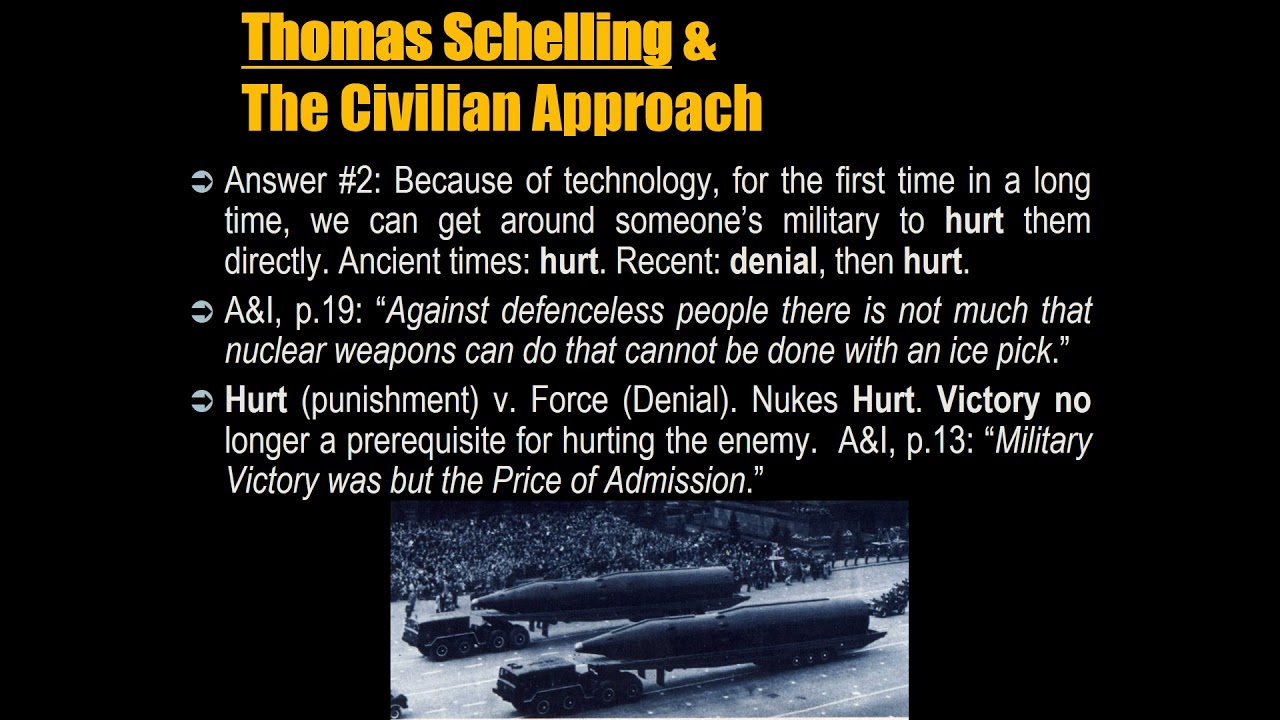
20:25
Nuclear Strategy Lecture 11: Nuclear Doctrine Part 1 | Nuclear Theory and Cold War
@julianspencer-churchill219
1.9K views•2021-09-19

24:30
BRICS Pay and de-dollarization: A New Financial Order Emerges? | 55 chars
@DannyHaiphongYT
164.6K views•2024-10-22
7:33
Government Surveillance Methods: 10 Ways You May Be Watched
@BeAmazed
1.6M views•2017-04-09
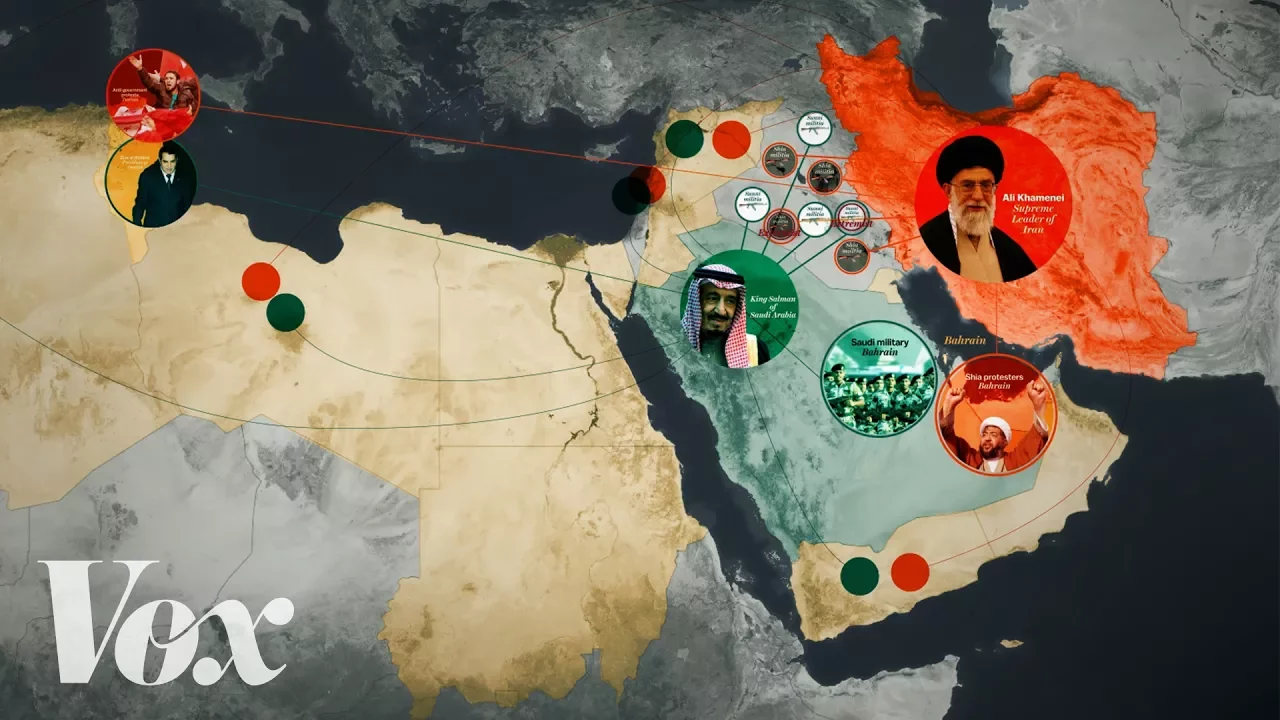
10:19
Explaining the Saudi-Iranian Proxy Conflict in the Middle East
@Vox
18.2M views•2017-07-17
Related Study Plans & Knowledge Roadmaps
Structured learning paths in Political Science
political-science
Economic Statecraft: Sanctions & Chokepoints
01Foundations of Geoeconomics and Economic Statecraft
02The Mechanics of Weaponized Interdependence
03International Sanctions: Types, Implementation, and Efficacy
+ 2 more learning modules
12h5 modules
Explore Roadmap
political-science
Central Bank Independence: Politics & Policy
01Foundations of Central Banking and Monetary Policy
02The Time Inconsistency Problem & Inflation Bias
03The Delegation Model and Designing Independence
+ 2 more learning modules
12h5 modules
Explore Roadmap
political-science
Consociationalism: Power-Sharing & Stability
01Democratic Dilemmas in Divided Societies
02Introduction to Consociational Democracy
03The Four Pillars of Consociational Design
+ 2 more learning modules
12h5 modules
Explore Roadmap
political-science
Rebel Governance: Legitimacy, Economy & State
01Foundations of Rebel Governance and Statehood
02Establishing Political Legitimacy and the Rebel Social Contract
03Wartime Economies and Rebel Resource Management
+ 2 more learning modules
14h5 modules
Explore Roadmap