The invention of the Steadicam by Garrett Brown revolutionized filmmaking by allowing cameras to be disconnected from the operator's body movements, enabling filmmakers to capture dynamic, impossible shots that were previously unachievable with handheld cameras, and this innovation quickly spread globally through 35mm film, transforming the entire film industry.
How the Steadicam Revolutionized Filmmaking and Camera Technology
Added:Deep Dive
Basic camera movement terminology and techniques, such as panning, tilting, tracking, and dolly shots.

Aksi Nyata Modul 2.1 Pembelajaran Berdiferensiasi
331
Panning is horizontal camera movement from left to right or right to left. Tilting is vertical camera movement looking up or down. Dolly or tracking involves moving the camera on a tripod toward (dolly in) or away from (dolly out) the subject. These fundamental movements form the basis of all camera work in video production and are essential for creating dynamic visual storytelling.
Click to watch →

shots and angles
160
Basic camera movements include pan (horizontal movement left to right), tilt (vertical movement up and down), and track or dolly (movement along a track following a subject). Pan reveals parts of scenery previously not visible. Tilt is typically done with a tripod to avoid shake. Track movement follows subjects smoothly, especially in song sequences. These movements work alongside shots and angles to create dynamic visual storytelling.
Click to watch →

Pro 3d Camera Animation Tips and Techniques | Improve Your Animation
313
Five fundamental camera movement techniques include: Zoom (changing lens focal length to simulate moving closer/further), Pan (horizontal rotation on central axis from fixed position), Tilt (vertical movement on axis like looking up/down), Dolly (camera physically moving on track toward/away from subject), and Tracking (camera following a subject). Dolly differs from zoom as it involves physical camera movement rather than optical adjustment.
Click to watch →

Basic Video Production Skills
1.3K
When the camera is on a tripod, moving it side to side is called panning (e.g., following someone walking across the street). Pointing the camera up or down is called tilting. Moving the camera toward or away from the subject is called tracking, which can be achieved by placing the camera on a dolly and wheeling it, or by hand-holding the camera and physically moving closer or away.
Click to watch →
Основные и Базовые Операторские Приемы
14.8K
This video explains four fundamental camera movement techniques used in filmmaking: panning (horizontal camera rotation left or right), tilting (vertical camera rotation up or down), crane shots (camera raised or lowered on a crane), and dolly movements (camera moving forward, backward, or sideways). Each technique serves specific narrative purposes: panning reveals new information or follows action, tilting creates atmosphere and establishes character situations, crane shots provide dramatic perspectives, and dolly movements enhance emotional impact by approaching or isolating characters. Understanding these basic camera movements is essential for any film enthusiast to analyze and appreciate how filmmakers use camera motion to tell stories.
Click to watch →
Deep Dive
The historical limitations of early cinematic camera rigs, including the physical constraints of heavy studio cameras and shaky handheld shooting.

Григорий Пернавский: Русский кинематограф Первой мировой войны
3.2K
Early cinema equipment was extremely heavy, weighing approximately 10 poods (160 pounds), making handheld operation impossible. Cameras required tripods and manual crank operation, with operators achieving only 16-18 frames per second instead of the standard 24. This resulted in slightly accelerated motion in footage. The first handheld camera capable of handheld operation was not developed until 1929. These limitations meant World War I newsreels could only capture static scenes like artillery positions and troop movements, with dynamic camera movements impossible due to equipment weight.
Click to watch →
La PRUEBA EXTRATERRESTRE que NADIE ha Podido Refutar – Skinny Bob Revelado
133.8K
Video stabilizers did not exist until 1970, so cameramen of the 1940s were trained to achieve the most stable and clear shots possible, even in difficult situations. Yet Skinny Bob presents a series of blurry and shaky images, raising questions about whether the footage was deliberately chosen for its instability or filmed by someone unable to hold the camera steadily.
Click to watch →
3 Techniques For Shooting With A Handheld Camera
61.9K
Digital cinema cameras are heavy, and film cameras with loaded magazines are even heavier. When holding stationary shots in uncomfortable positions for extended periods, operators experience muscle fatigue. As muscles tire, tremors and shakes transfer to the camera image, degrading quality. This physical limitation makes long handheld shots challenging without proper support or breaks.
Click to watch →

Atlas Camera Support
48.2K
Camera support systems, such as the Atlas Camera Support, function as a 'third arm' that transfers the weight of heavy camera rigs from the shoulders and arms to the hips and waist, reducing physical strain and improving handheld shot stability by distributing the load through a vest and adjustable carbon fiber rods.
Click to watch →

BBC The Camera That Changed The World 2011
827
In the 1950s, cameras were designed for shooting drama in studios and were as heavy and cumbersome as lawnmowers, requiring tripod support. Sound equipment was even heavier, needing two or more men to operate. This resulted in documentaries that were as stilted as the equipment. Filmmakers dreamed of following action as it happened, but the bulky equipment made this impossible. Jean-Pierre Rouch used a small wind-up camera to follow action wherever it took him, but it could only capture 20-second chunks and made noise that interfered with recording sound.
Click to watch →
Deep Dive
Fundamental principles of physics related to camera stabilization, specifically inertia, center of gravity, and the mechanics of gimbals.

Gimbal Nasıl Çalışır? (4K)
7.5K
Understanding how systems work enables more efficient use and problem-solving. When moving a camera, desired movements include smooth approaches toward subjects, while undesired movements include shaking and tilting. The fundamental challenge is that any movement affects the center of gravity, causing oscillations. Human hands naturally produce physiological tremors due to muscle contractions. Modern gimbals address this using IMU sensors (gyroscopes and accelerometers) that detect unwanted movements across three axes, then use brushless motors to apply equal and opposite movements, canceling out unwanted motion.
Click to watch →

HOW MUCH CAN THE RONIN-S HOLD?
90.9K
The center of mass (center of gravity) in camera equipment is rarely located at the physical center of the camera. It is an imaginary point, sometimes located outside the physical object (known as a hollow point). For gimbals, this concept is crucial because the camera's weight distribution must be balanced across the X, Y, and Z axes. When the camera is too front-heavy, the counterweight must be slid backward; when too bottom-heavy, it must be raised. Perfect balance is achieved when the camera stays stationary in any position.
Click to watch →

Gudsen MOZA-An Universal Guide of Gimbal For Beginners
85.5K
This section introduces the evolution of camera stabilization technology. Before 1975, only dolly and camera crane movements were available. In 1975, Garrett Brown invented the Steadicam, a handheld device that allowed smooth camera movement without jerky motion. This became a generic term for all camera stabilizers. The modern 3-axis gimbal represents the latest advancement, offering various options for DSLR, mirrorless, and mobile cameras. Goodson offers three types of gimbals: DSLR (3.2 kg payload), mirrorless (lighter construction), and mobile phone (very lightweight). The section also covers the physical principles of stabilization, explaining how center of gravity and support lines determine stability, and how the human body uses wrist, elbow, and shoulder joints to maintain balance through constant readjustment controlled by the brain.
Click to watch →

Question of the Week - How Do Stabilized Gimbals Work?
1.2K
Gimbal operation relies on fundamental physics principles. Newton's First Law explains why objects resist changes in motion, requiring continuous energy input. Newton's Second Law (F=ma) determines the force needed to move payloads, converting battery potential energy into kinetic motion. Newton's Third Law requires motors to overcome equal and opposite reactive forces. Proper balancing establishes the center point for efficient operation, while motor power must handle both payload mass and frictional losses.
Click to watch →

Gimbal tự chế quay phim cực đã và tiện lợi.
127.2K
The creator explains that the gimbal works based on the principle of gravity and center of mass. When a device is placed on the gimbal, the gravitational force naturally keeps it level and stable. This principle allows the device to maintain a horizontal position regardless of how the user moves their hands.
Click to watch →
Deep Dive
The concept of narrative blocking—how directors choreograph actors and cameras within a physical space to tell a story.
Film Blocking Explained (How Directors Control Movement)
16.8K
Film blocking is the strategic arrangement of actors and cameras within a scene to visually tell a story, where directors use techniques like actor positioning (as seen in The Godfather where Don Corleone's office placement establishes authority), cross movements, and camera movements (such as continuous tracking shots in Birdman or long takes in 1917) to convey emotions and narrative without dialogue; directors collaborate with actors and crew during pre-production to translate script elements into visual storytelling, ensuring every movement serves the story's emotional and narrative goals.
Click to watch →

Горизонт в композиции и блокинг
79.3K
Blocking, originally a theatrical term, refers to actor positioning and movement on stage. In cinema, it accounts for camera relationships, lighting, and location features. Blocking requires creative approach despite its utilitarian role, translating narrative intentions into visual language. A simple dialogue scene becomes compelling only with unique visual context and progression. Camera movement significantly affects complexity—static cameras create simpler relationships while dynamic movements add sophistication. Location selection is crucial because positioning actors within meaningful spaces enhances storytelling. Scenes with character movement should advance characters toward meaningful narrative points, creating visual chains that connect scenes. Blocking functions as narrative design, determining participants, spatial filling, character direction, and consequences.
Click to watch →

"Many Men" - Sahil Cheema | Sikander Kahlon | Prodbywizrd | BTS (Behind the Scenes)
885
Scene blocking choreographs actor movements to tell stories through physical action. Effective blocking conveys narrative information without dialogue, such as showing a dangerous transaction through nervous body language and spatial relationships. Directors guide actors through specific instructions including eye lines, physical actions, and spatial awareness. The process requires understanding how physical movement creates meaning and how camera angles enhance the storytelling impact.
Click to watch →
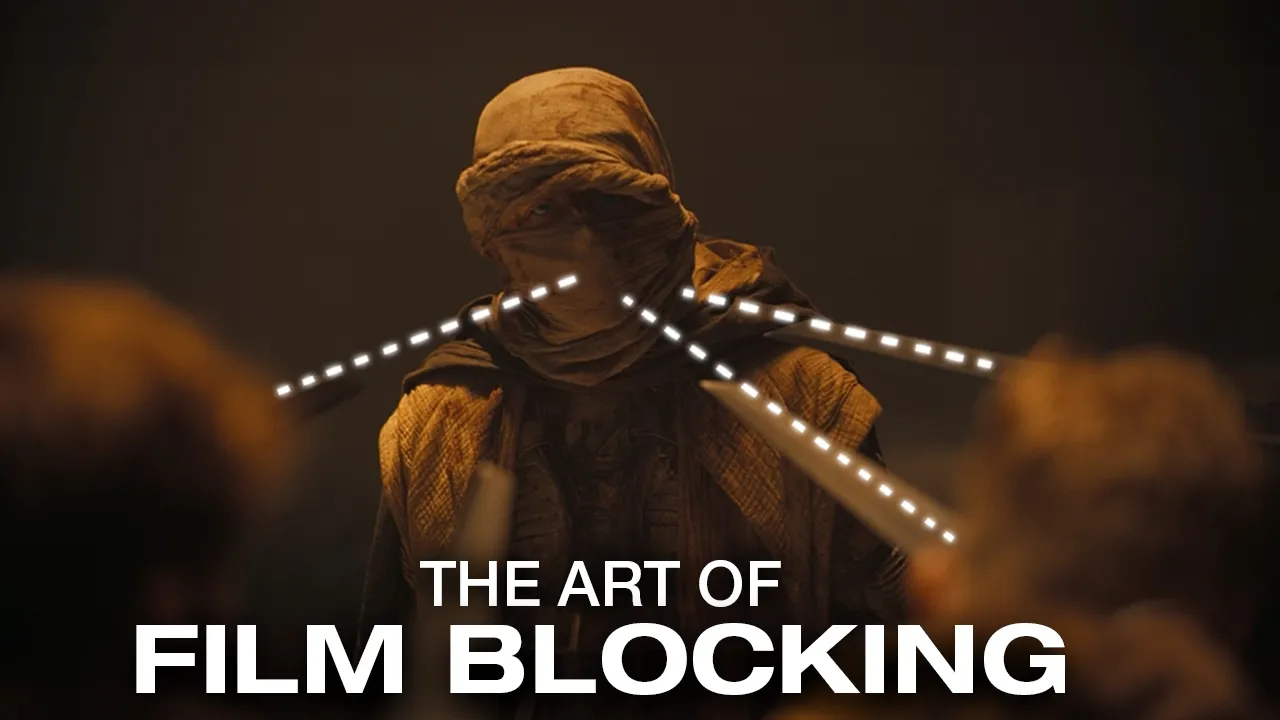
Film Blocking: The SECRET to Visual Storytelling
68.5K
Film blocking is the careful coordination of actors' placement, camera movement, and all visual elements within a scene. It serves as a crucial storytelling tool that directs audience attention, conveys emotional tone, and contributes to the overall narrative flow of a film. The process involves thoughtfully choreographing every motion of the camera and everything within the frame to serve the story.
Click to watch →
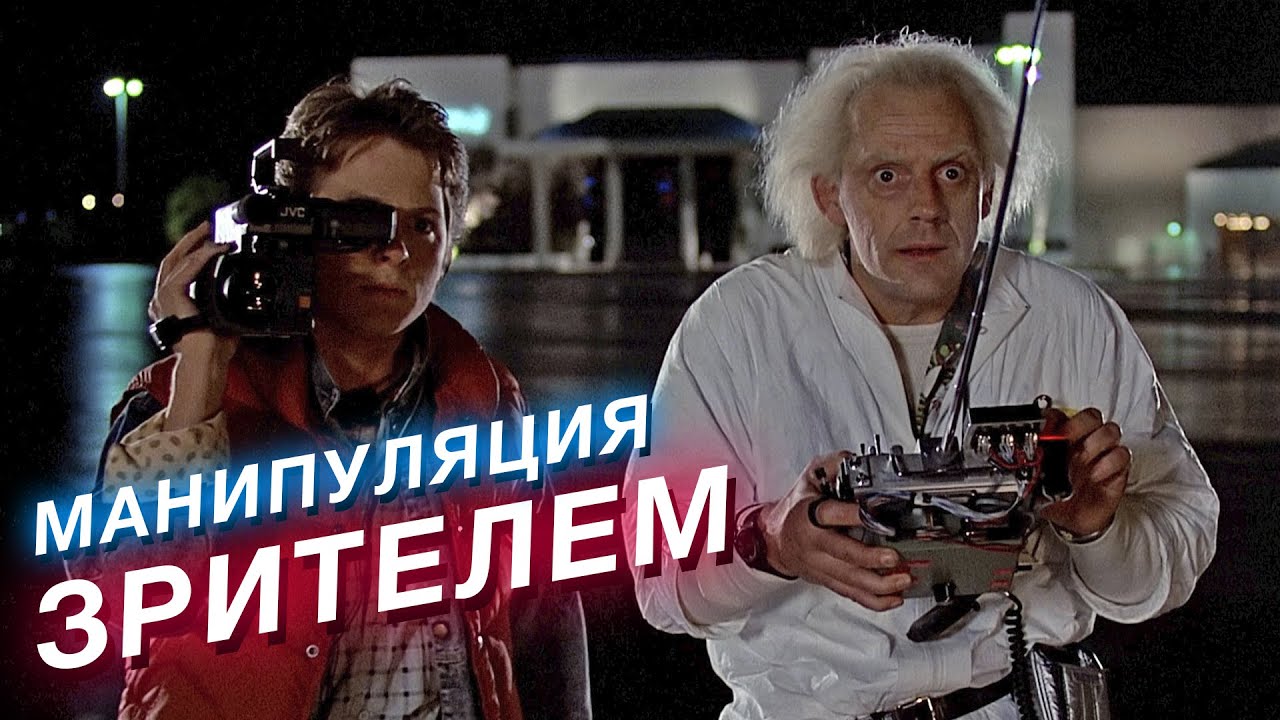
Как фильмы манипулируют зрителем — самые важные приёмы в хорошем кино
73.3K
Blocking is the fundamental concept governing how actions and information are presented in film. Unlike theatrical 'mise-en-scène' which focuses on actor positioning, blocking encompasses all movement within the frame—including actors, objects, and camera movement. In Back to the Future's opening scene, blocking reveals character relationships, motivations, and plot elements through coordinated camera and actor movement. The camera glides through the laboratory, showing Doc Brown's automated but messy lifestyle, while Marti's skateboard and Nike shoes reveal his personality. Blocking synchronizes camera movement with actor movement, ensuring viewers see exactly what the narrative requires.
Click to watch →
Prerequisite Knowledge
- Concept 01Basic camera movement terminology and techniques, such as panning, tilting, tracking, and dolly shots.
- Concept 02The historical limitations of early cinematic camera rigs, including the physical constraints of heavy studio cameras and shaky handheld shooting.
- Concept 03Fundamental principles of physics related to camera stabilization, specifically inertia, center of gravity, and the mechanics of gimbals.
- Concept 04The concept of narrative blocking—how directors choreograph actors and cameras within a physical space to tell a story.
Subsequent Learning
- Step 01In-depth analysis of landmark Steadicam shots in film history, such as those in Stanley Kubrick's 'The Shining' or Martin Scorsese's 'Goodfellas'.
- Step 02The technological evolution from mechanical counterweight stabilizers to modern electronic 3-axis motorized gimbals and active in-camera stabilization (IBIS).
- Step 03The physical mechanics and operational artistry of Steadicam rigging, including vest adjustments, iso-elastic arms, and sled balancing.
- Step 04Advanced cinematography techniques enabled by stabilization, such as choreographing complex, unbroken long takes ('oners').
- Step 05The integration of stabilizing technology with modern camera gear, such as body-mounted rigs in action sports, drone cinematography, and virtual production environments.
Impossible Shots
Handheld Issue
Key Invention
Impossible Feat
Viral Success
Impossible Shots
0:00Playing Section
- 1
Created a demo for the study cam.
- 2
It featured thirty impossible shots.
The Critique of Unmotivated Movement and the Erosion of Compositional Rigor
While the Steadicam revolutionized fluid camera movement, some film theorists and directors argue its widespread adoption led to an era of 'unmotivated' camera motion and a decline in classical compositional discipline. Traditionalists favor locked-down tripods or rigid dolly tracks—pioneered by filmmakers who demand absolute geometric control over the frame—arguing that the Steadicam introduces an organic, 'floaty' drift that can distract from the narrative. This perspective contends that constant, effortless movement often replaces deliberate, static framing, prioritizing technological wizardry over purposeful visual storytelling.
Deep Dive
In-depth analysis of landmark Steadicam shots in film history, such as those in Stanley Kubrick's 'The Shining' or Martin Scorsese's 'Goodfellas'.

When The Long Shot Is Actually Clever | Vanity Fair
47.2K
The Shining (1980) featured one of the first uses of the Steadicam, invented by Garrett Brown in 1975, allowing smooth handheld-style shots without shakiness. This revolutionized movement in confined spaces, inspiring Goodfellas and Birdman. The Sacrifice (1986) by Andrei Tarkovsky featured a 6+ minute long take of a building consumed by flames, requiring careful planning and ultimately two takes due to practical constraints. The Player (1992) opened with an 8-minute continuous shot weaving through a movie studio backlot, creating meta-commentary on filmmaking.
Click to watch →

The Shining (1980) KILL COUNT
11.6M
The Shining was only the seventh movie to use the Steadicam stabilizing tool, which allows a camera operator to get smooth shots without the usual shakiness of a handheld camera. The Steadicam was operated by Garrett Brown, the inventor of the device. The film's long fluid tracking shots, particularly Danny riding his big wheel around the hotel, are part of this film's memorable iconography. The scene also features awesome sound design as Danny rides over rugs and hardwood floors.
Click to watch →
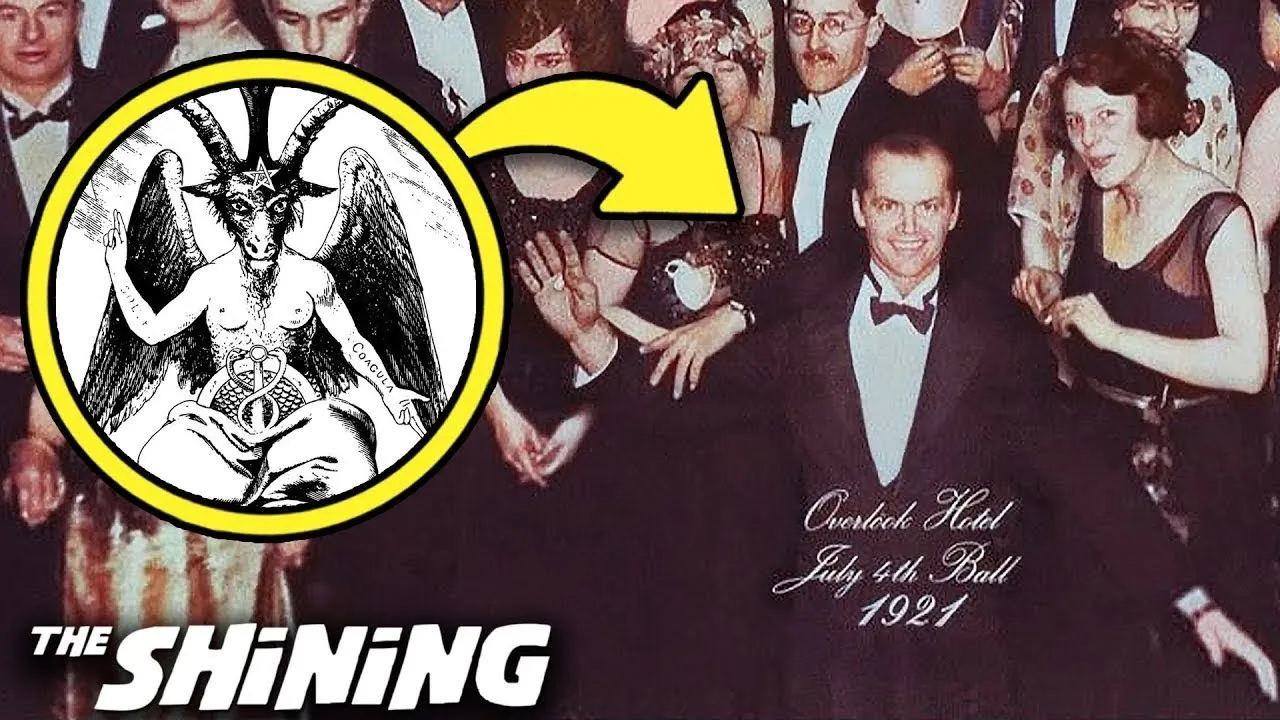
THE SHINING (1980) Breakdown | Ending Explained, Easter Eggs, Creepy Hidden Details & Film Analysis
184.4K
Stanley Kubrick used the Steadicam technique throughout The Shining, which was revolutionary at the time. This allows the camera to follow characters through the hotel smoothly, creating shots like the one following Danny around. Kubrick mentioned that the camera work following Danny around was similar to what was used in the maze scene, and he repeats his motifs to build that sense of dread. The Steadicam creates an intimate, almost voyeuristic feel that makes the audience feel like they're following the characters through the hotel's impossible layout.
Click to watch →
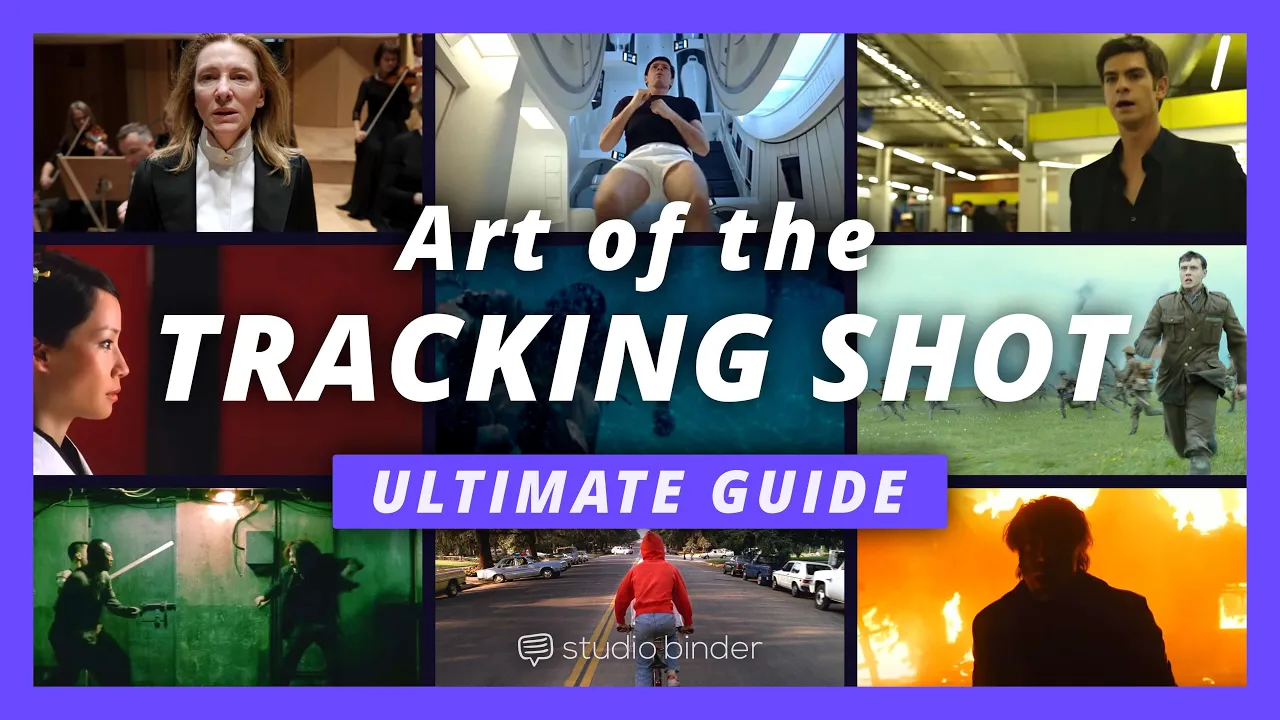
Ultimate Guide to the Tracking Shot — Cinematic Camera Movement Explained
280.3K
Steadicam technology allows for smooth tracking shots without being confined to tracks. One of the most famous examples is Martin Scorsese's use of Steadicam in Goodfellas, where he floats through the crowded Copa Cabana—a feat nearly impossible on a dolly. The smoothness of Steadicam emphasizes characters at the top of their game, creating an effortless visual experience.
Click to watch →

La evolución de EL RESPLANDOR, la adaptación llena de MALTRATOS
54.1K
For the scenes in the maze, the director wanted to incorporate new technology. Recently, the Steadicam had been launched, a camera stabilizing mount that was responsible for eliminating the operator's movement. Stanley Kubrick contracted the creator of the device himself to help in the film. He liked the result so much that he incorporated it in 70% of the scenes of the movie. He even rewrote scenes of Danny to be able to make different traveling shots at eye level of that character. The director sought to generate the greatest impact from the visual perspective.
Click to watch →
Deep Dive
The technological evolution from mechanical counterweight stabilizers to modern electronic 3-axis motorized gimbals and active in-camera stabilization (IBIS).
![STABILIZZATORI: La guida DEFINITIVA. [Come NON sbagliare acquisto]](https://i.ytimg.com/vi/qckT9a5f_nk/maxresdefault.jpg)
STABILIZZATORI: La guida DEFINITIVA. [Come NON sbagliare acquisto]
1.7K
This section traces the evolution from mechanical to electronic stabilization. Freefly System pioneered the three-axis stabilizer by adapting aerospace stabilization technology for ground use, creating the Movi N10. This revolutionized stabilization by offering customizable control over camera response through gyroscopes and lithium batteries. The technology evolved through models like M5, M15, and M1 Pro, eventually leading to the Ronin series. The key advantage is the ability to eliminate shakiness in specific movements, though vertical jiggling remains unaddressed. This technology represents the electronic evolution of mechanical stabilization principles.
Click to watch →
Gudsen MOZA-An Universal Guide of Gimbal For Beginners
85.5K
This section introduces the evolution of camera stabilization technology. Before 1975, only dolly and camera crane movements were available. In 1975, Garrett Brown invented the Steadicam, a handheld device that allowed smooth camera movement without jerky motion. This became a generic term for all camera stabilizers. The modern 3-axis gimbal represents the latest advancement, offering various options for DSLR, mirrorless, and mobile cameras. Goodson offers three types of gimbals: DSLR (3.2 kg payload), mirrorless (lighter construction), and mobile phone (very lightweight). The section also covers the physical principles of stabilization, explaining how center of gravity and support lines determine stability, and how the human body uses wrist, elbow, and shoulder joints to maintain balance through constant readjustment controlled by the brain.
Click to watch →

How Filmmaking has changed in modern times
10.7K
Steadicam operators used counterweights and physics to smooth movement but required years of training and upper body strength. Motorized three-axis gimbals like DJI Ronin changed everything by using tiny motors and sensors to counteract shake 1,000 times per second. A $500 gimbal can produce Hollywood-level tracking shots after an afternoon of practice. This floating camera look is now ubiquitous in music videos, indie films, and big-budget productions like The Creator.
Click to watch →
COMPRENDRE ET UTILISER LA STABILISATION INTERNE DES CAMERAS
4.2K
IBIS is a mechanical stabilization system built into the camera body, not the lens. It compensates for camera shake and micro-movements through a five-axis stabilization system. This technology has become nearly standard across many manufacturers, particularly in mirrorless hybrid cameras. Unlike electronic stabilization, IBIS physically moves the sensor to counteract camera movement, providing more effective stabilization for handheld shooting.
Click to watch →
The Camera That Just Keeps Getting Better...
30.6K
Electronic image stabilization (IBIS) is an in-camera stabilization technology that compensates for camera shake by moving the image sensor. The Lumix S52's new IBIS system represents a significant advancement, providing stabilization quality comparable to external gimbals while maintaining a more natural handheld feel. This feature allows filmmakers to achieve gimbal-like stability without the bulk and complexity of external stabilization equipment.
Click to watch →
Deep Dive
The physical mechanics and operational artistry of Steadicam rigging, including vest adjustments, iso-elastic arms, and sled balancing.

Weird Stuff I Got From California (Where else?)
169.1K
The Steadicam arm is a large chunk of aluminum that slides into a socket block. The bolts must be set very carefully to balance the thing. The sled has a conventional gimbal (three-axis bearing) that provides isolation. To balance the sled, you put it in a special stand and adjust until it takes about 3 seconds to go vertical when dropped. The arm has parallel arms with springs inside that allow the camera to float in space with minimal effort.
Click to watch →
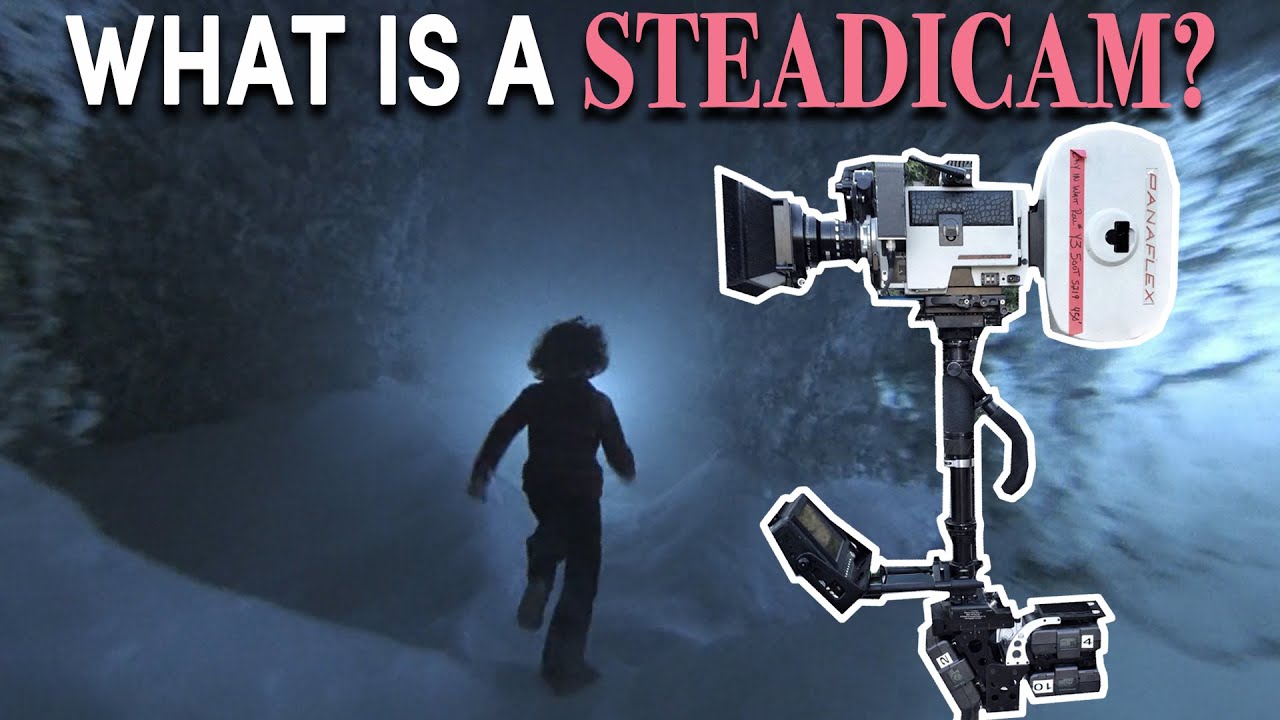
What A Steadicam Operator Does On Set: Crew Breakdown
54.7K
A Steadicam is a perfectly balanced, weighted gimbal attached to the camera operator's body that isolates the camera from the operator's movement. The system consists of three basic sections: the vest (worn by the operator), the arm (connecting the vest to the sled), and the sled (which holds the camera). The sled includes a flat top stage where the camera sits and a post connecting to a monitor mount and battery base. The camera and monitor/battery sections are positioned so their weights are counterbalanced, similar to balancing a sword on a finger. This perfect balance adds weight for stability and positions the center of gravity exactly at the operator's grip, allowing delicate adjustments. The substantial weight is supported by a gimbal attached to the post, enabling the operator to maneuver the camera with floating stability using body motion and grip control.
Click to watch →

Steadicam beginners guide part 1 (setup / balance / explanation of parts tutorial)
127.5K
A Steadicam rig achieves smooth handheld footage by adding weight to the camera to isolate it from body movements, with proper setup requiring careful preparation of the camera (removing unnecessary weight, adding a V-mate plate, marking the balance point), positioning the gimbal high on the post, and adjusting the drop time (typically 2-3 seconds) before performing static balance (leveling front-to-back and side-to-side) followed by dynamic balance testing through spinning the post; the vest must fit properly with the socket block aligned to the operator's dominant side, and the arm requires tuning to ensure both arms share equal workload for smooth tracking.
Click to watch →
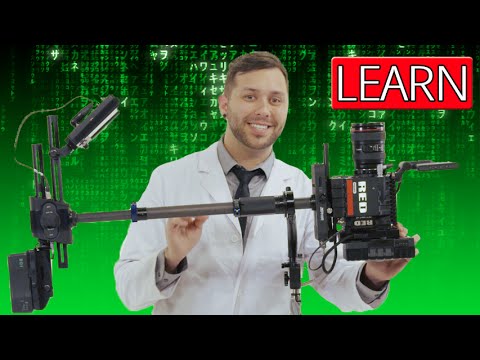
Learn How to Balance the Steadicam Zephyr! - LEARN @ YouTube Spaces!
86.2K
To balance a Steadicam Zephyr (designed for cameras 9-24 lb), first find the camera's center point by rolling it back and forth until it naturally balances, then mark this point and mount the dovetail plate at the intersection. Set up the SE stand with sandbagging and attach the sled. Achieve vertical balance by positioning the sled parallel to the C-stand using the silver knob and inching knobs. For static balance, measure drop time by holding the camera lens parallel to the ground and counting seconds for the center post to cross the C-stand; the ideal drop time is approximately 3 seconds. Adjust the center post position to achieve this drop time. For dynamic balance, point the camera lens toward the horizon and drop the rig to test for axis twist, adjusting monitor or battery position to achieve even crossing. The balancing process is iterative, cycling through vertical balance, static balance, and dynamic balance adjustments.
Click to watch →

STEADICAM TUTORIAL - THE STEADICAM CRAFT
104.2K
The vest distributes weight evenly across the body with adjustable straps and a hip/quick-release mechanism. The socket block attaches via a clamp that can be collapsed or extended based on operator height. The quick release feature is critical for safety in dangerous situations—pulling the handle separates the rig from the operator, and this must be tested before every shoot day. The vest should never be worn with the arm swinging freely, and the back pad must be centered properly. The arm post connects to the vest socket block and must be tightened securely. The post height determines camera height—raising increases by approximately 5-6 inches. For low mode, a J-bracket lowers the gimbal yolk by approximately 8 inches. The J-bracket should be clocked slightly for optimal performance. The post extends about 15 inches from fully collapsed. The only time to bend at the waist is when lifting the rig from the docking stand—approach square, bend, ensure full engagement, stand up straight while letting the arm take the weight, then lift the aircraft pin and bring the rig beside you.
Click to watch →
Deep Dive
Advanced cinematography techniques enabled by stabilization, such as choreographing complex, unbroken long takes ('oners').

Murder by the Book (1971) Columbo- Deep Dive Review | Jack Cassidy, Peter Falk, Martin Milner, Colby
238.8K
During the kitchen scene, Spielberg employs a long take (called 'oners'), which is one continuous shot without cuts. This was one of Spielberg's signature filmmaking techniques. Other directors known for long takes include Orson Welles, Billy Wilder, Quentin Tarantino, Yasujiro Ozu, David Lynch, Sergio Leone, Ingmar Bergman, and Alfred Hitchcock. Long takes require careful choreography and planning but create immersive viewing experiences.
Click to watch →
Зачем Нужны Длинные Кадры в Кино?
11.3K
Advanced cinematographic techniques enhance the power of long takes. Intra-frame montage changes composition within a single shot without cutting, while inter-frame montage combines different shots through editing. Double exposure overlays two shots with identical composition, creating the illusion of a single continuous piece. In 'All the President's Men', a two-minute long take uses double exposure to show the progression of events in the Washington Post office, demonstrating how characters become absorbed in their investigation. The zoom technique, more characteristic of reporter work, combined with zone lenses that allow different focus settings in different frame areas, creates visual anomalies that communicate narrative information. These techniques allow filmmakers to show the culmination of dramatic conflict within a single frame, with the camera itself becoming a character in the film.
Click to watch →
The Art Of The Long Take
31.3K
Long takes are extended continuous shots that enhance audience immersion by providing real-time continuity, building emotional tension through prolonged engagement, and revealing character relationships and spatial environments without cuts; filmmakers achieve these shots using various techniques including stationary cameras, handheld operation, Steadicam or gimbal stabilization, crane movements, dolly tracks, and combined camera movements, while overcoming technical challenges like wireless transmission, lighting consistency, and synchronization of camera and actor movements.
Click to watch →
12 Best Long Takes in Film History
2M
A long take is a continuous, unbroken shot that challenges filmmakers to choreograph complex scenes with meticulous precision, often requiring innovative solutions like custom camera rigs, strategic set design, and extensive rehearsal; these extended shots serve as powerful narrative tools that immerse audiences in the story's world, enhance emotional impact, and demonstrate a director's technical mastery, as exemplified by the 12 most celebrated long takes in film history including the 12.5-minute opening of Gravity and the 4-minute hospital shootout from Hard Boiled.
Click to watch →

Escupir en el tiempo CAP 15. "CHILDREN OF MEN" Ft. Tato Alexander y Renato Guillén
48.8K
The hosts trace the development of long take techniques in cinema to Stanley Kubrick's The Shining, where he pioneered camera movement through hotel corridors without rails. They explain that Kubrick collaborated with NASA engineers to develop a camera stabilization system originally designed for lunar missions, which allowed for smoother camera movements in The Shining.
Click to watch →
Deep Dive
The integration of stabilizing technology with modern camera gear, such as body-mounted rigs in action sports, drone cinematography, and virtual production environments.

Ready Rig Gimbal Support with DJI Ronin-M 3-Axis as body mounted camera stabilizer
15.5K
Body-mounted camera stabilization systems transfer camera weight from the operator's shoulders to their hips through a pulley system, enabling extended handheld operation without fatigue while maintaining stability through Y-axis stabilization and quick-release mounting mechanisms.
Click to watch →
RodeCaster Video Core Officially Realesed & What if we could Turn Back Time?
384
Modern live production relies on software integration enabling automatic device detection and unified control across multiple hardware components. Button integration allows physical controls on one device to operate functions on another, creating unified control surfaces with more buttons than any single device provides. Combining multiple pieces of equipment creates more powerful systems than any single device alone. Three-gimbal camera stabilization systems provide superior stabilization by allowing independent movement along three axes (pitch, yaw, roll), enabling cameras to maintain level orientation even when panning horizontally while tilted. This is essential for overhead or ceiling-mounted cameras tracking subjects at various angles. Two-gimbal systems have inherent limitations—they cannot compensate for all movement combinations simultaneously, causing footage to become unstable when tilting and panning. Three-gimbal systems are more complex and expensive but provide consistent, professional-quality stabilization in dynamic production environments.
Click to watch →
¿Con una full frame haces mejores fotos o cobras más? Un café con Joan Vendrell y Guillem Calatrava
48.2K
Image stabilization technology in cameras can be implemented at the lens level, the sensor level, or through a combination of both. Body-mounted stabilization provides stabilization across all lenses used with the camera, while lens-mounted stabilization is specific to individual lenses. The combination of body and lens stabilization can provide superior results, particularly for video work and low-light photography. This technology allows photographers to achieve sharp images at slower shutter speeds than would otherwise be possible.
Click to watch →

UNBOXING NUEVA CAMARA PARA IRL
70.1K
This segment covers the stabilization and mounting technologies that make action cameras practical for dynamic recording scenarios. The video explains image stabilization systems like HyperSmooth 2.0 that compensate for vibrations from vehicles or handheld use. It also demonstrates various mounting solutions including flexible tripod bases, chest mounts, and modular accessories that can be transformed into different configurations. The segment emphasizes how these features enable stable, professional-quality recordings in challenging environments.
Click to watch →
Trends from the Trenches NAB edition - April 2014
5.3K
Camera stabilization and rigging technology has democratized professional cinematography. Gimbal systems like the Defy G12 at $2,600 offer multiple operation modes including automatic tracking and manual joystick control. Overhead flying systems like the Doctor Cam support cameras from small formats to the C500 with cable runs up to a mile. Tracking devices like the Amy use sensors to automatically follow subjects, enabling hands-free operation. LED lighting technology, exemplified by the Photoflex North Star Light, provides continuous light sources more versatile than strobes, offering multiple light sources in single units for complex lighting setups.
Click to watch →
Impossible Shots
Handheld Issue
Key Invention
Impossible Feat
Viral Success
Impossible Shots
0:00- 1
Created a demo for the study cam.
- 2
It featured thirty impossible shots.
The Critique of Unmotivated Movement and the Erosion of Compositional Rigor
While the Steadicam revolutionized fluid camera movement, some film theorists and directors argue its widespread adoption led to an era of 'unmotivated' camera motion and a decline in classical compositional discipline. Traditionalists favor locked-down tripods or rigid dolly tracks—pioneered by filmmakers who demand absolute geometric control over the frame—arguing that the Steadicam introduces an organic, 'floaty' drift that can distract from the narrative. This perspective contends that constant, effortless movement often replaces deliberate, static framing, prioritizing technological wizardry over purposeful visual storytelling.
Basic camera movement terminology and techniques, such as panning, tilting, tracking, and dolly shots.
The historical limitations of early cinematic camera rigs, including the physical constraints of heavy studio cameras and shaky handheld shooting.
Fundamental principles of physics related to camera stabilization, specifically inertia, center of gravity, and the mechanics of gimbals.
The concept of narrative blocking—how directors choreograph actors and cameras within a physical space to tell a story.
In-depth analysis of landmark Steadicam shots in film history, such as those in Stanley Kubrick's 'The Shining' or Martin Scorsese's 'Goodfellas'.
The technological evolution from mechanical counterweight stabilizers to modern electronic 3-axis motorized gimbals and active in-camera stabilization (IBIS).
The physical mechanics and operational artistry of Steadicam rigging, including vest adjustments, iso-elastic arms, and sled balancing.
Advanced cinematography techniques enabled by stabilization, such as choreographing complex, unbroken long takes ('oners').
The integration of stabilizing technology with modern camera gear, such as body-mounted rigs in action sports, drone cinematography, and virtual production environments.
269 views4likes0:48@philmooreOriginal Release: 2025-06-21
the demo we made for the study cam, which was 30 impossible shots.
I liked handheld. I did not like the way it looked then or now.
And so what I needed was a way to disconnect the camera from the person.
The great thing about that invention is you can shoot something that anybody in the business will know is impossible.
[Music] It went quote viral in 35mm. Copies of it went around the world and was seen by, you know, everybody that was anybody in the business.
[Music]
Up Next
6:36
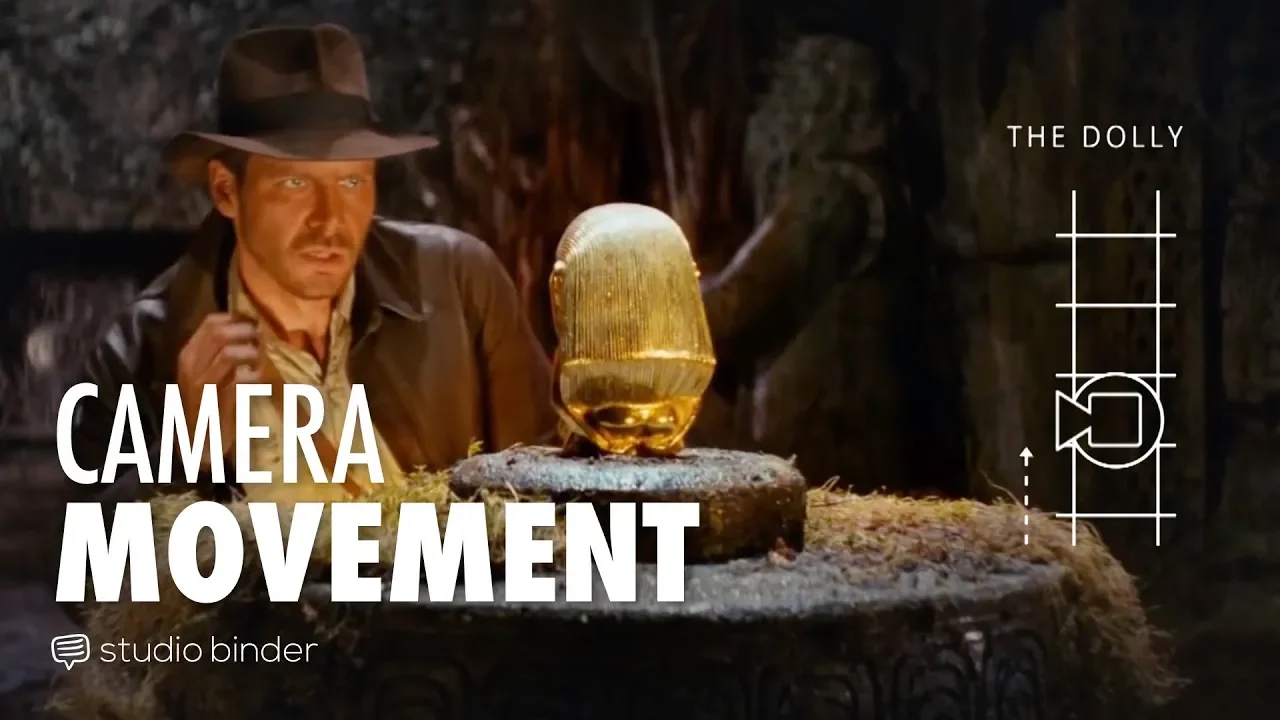
Directing Camera Movement in Film: Techniques for Directors
@StudioBinder
1.2M views•2018-07-30

12:54
Triumph of Orthodoxy Icon: Byzantine Art & History Explained
@BenCallan
2.1K views•2024-08-06

9:49
FastAPI vs Flask vs Django: Choosing the Right Python Web Framework
@TechWithTim
302.5K views•2024-05-26

1:42
Game of Thrones Opening Credits: A Cinematic Analysis
@gameofthrones
46.3M views•2011-04-18
Related Study Plans & Knowledge Roadmaps
Structured learning paths in General & Interdisciplinary Studies
general-studies
Elevator Engineering: History, Physics & Cities
01From Hoists to Safety Brakes: The Dawn of Vertical Lift
02Hydraulic vs. Traction: The Engineering Physics of Elevators
03Modern Speed, Safety, and Algorithms
+ 2 more learning modules
12h5 modules
Explore Roadmap
general-studies
Rubber: Material Science, History & Geopolitics
01Origins of Natural Rubber & Mesoamerican History
02The Chemistry of Natural Rubber & Vulcanization
03The Geopolitics of the Rubber Boom & Colonization
+ 2 more learning modules
12h5 modules
Explore Roadmap
general-studies
Containerization: Evolution, Logistics & Trade
01Ancient Trade & Bulk Cargo: Amphorae to Barrels
02The Industrial Revolution & Cardboard Packaging
03The Containerization Revolution: Malcom McLean
+ 2 more learning modules
12h5 modules
Explore Roadmap
general-studies
Textile Tech: Evolution, Labor & Global Impact
01Pre-Industrial Textiles: Handloom & Cottage Industry
02Mechanization: The Spinning Jenny to the Power Loom
03The Factory System & Global Labor Transformation
+ 2 more learning modules
10h5 modules
Explore Roadmap