





![(2. Bölüm) Aeneis: Roma Destanının Analizi [Pietas veya Sadakat]](https://i.ytimg.com/vi/HB_tDUuXdTQ/maxresdefault.jpg)

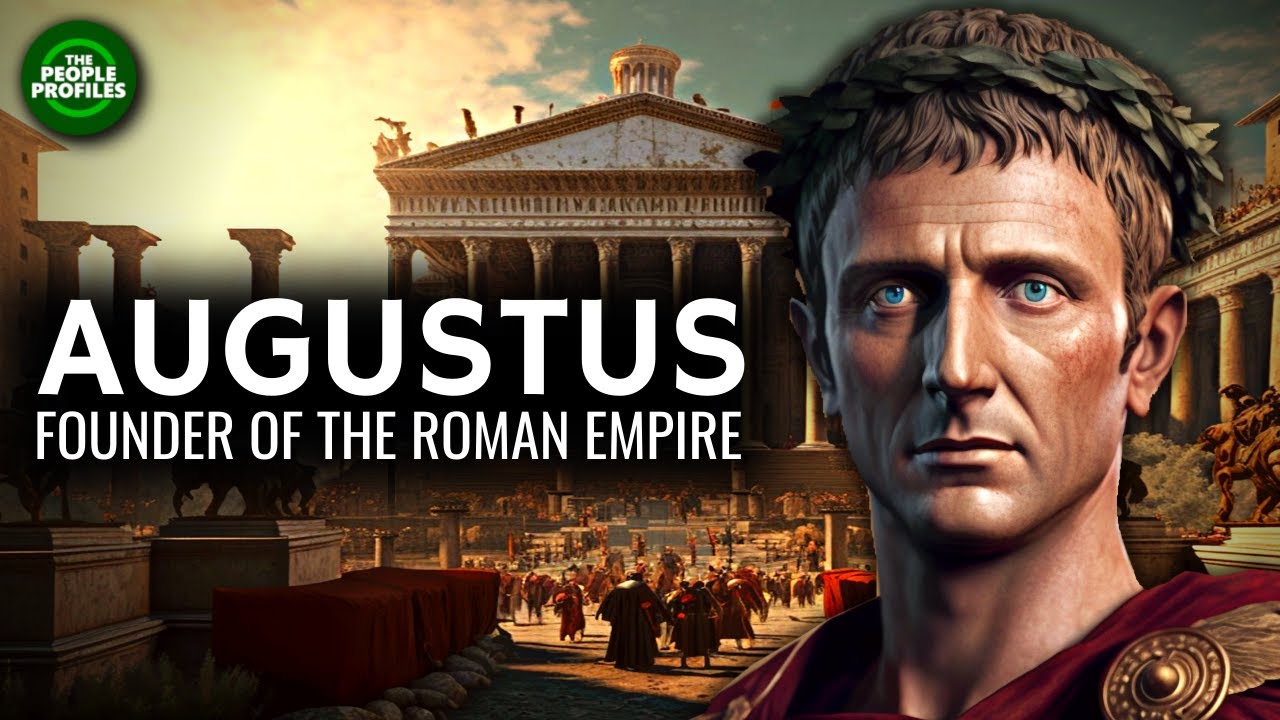











Augustus employed a sophisticated propaganda system using culture, art, and architecture to legitimize his autocratic rule and promote Roman values; he strategically used monuments like the Ara Pacis and Forum of Augustus, literature such as Virgil's Aeneid connecting him to divine ancestry through Venus, and coins to create an omnipresent image of himself as a semi-divine leader who restored Rome's glory, thereby establishing a model for imperial propaganda that reached virtually all citizens regardless of literacy level.
Augustan Propaganda: Roman Cultural Imperialism
Added:The historical transition from the Roman Republic to the Roman Empire, including the civil wars and the political rise of Octavian (later Caesar Augustus).
The fundamental concepts of political propaganda, state-sponsored patronage, and how ruling elites use visual and literary media to legitimize authority.
Traditional Roman cultural values, specifically 'pietas' (duty/piety), 'gravitas', and 'mos maiorum' (ancestral custom), which Augustus sought to revive.
Familiarity with the Golden Age of Latin literature and the role of key figures like Virgil, Horace, and Maecenas in the imperial circle.
An in-depth iconographic analysis of major Augustan monuments, such as the Ara Pacis Augustae, the Forum of Augustus, and the Augustus of Prima Porta statue.
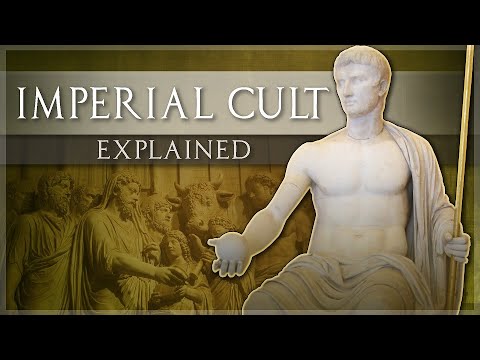
The development and spread of the Imperial Cult across the Roman provinces and how subsequent emperors adapted Augustan propaganda strategies.
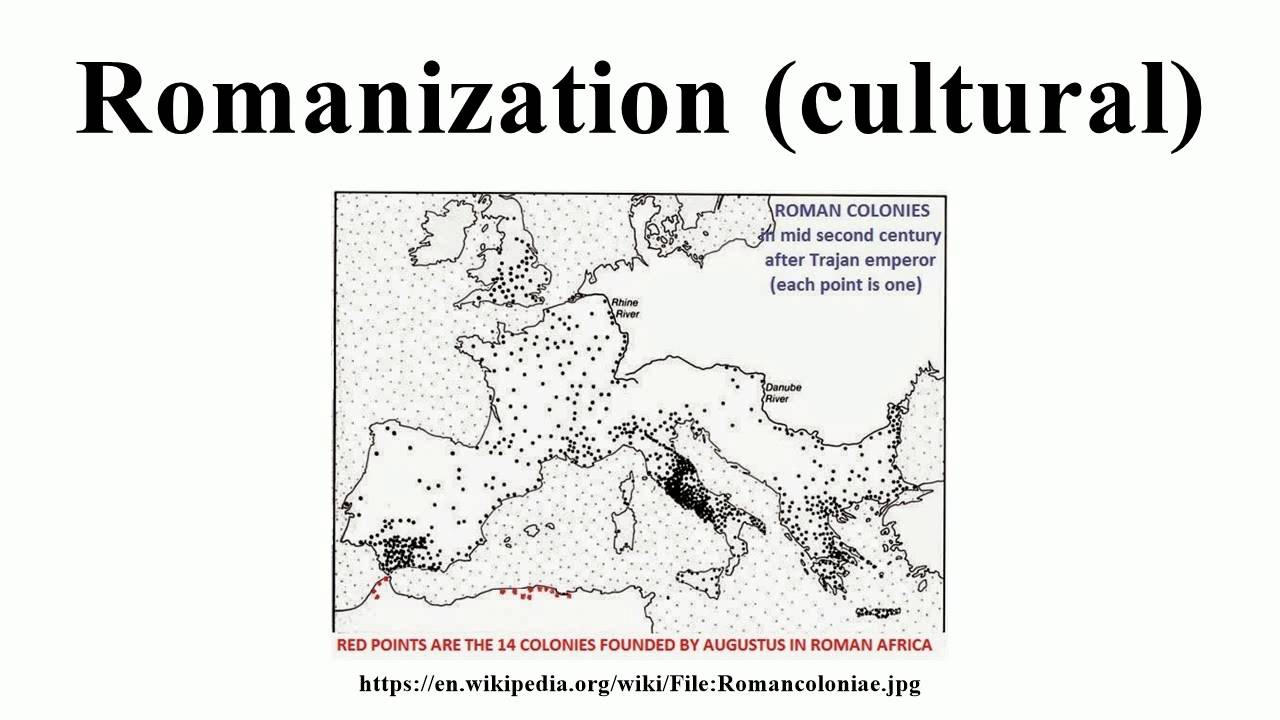
The socio-political process of 'Romanization' and cultural imperialism, examining how provincial populations adopted, adapted, or resisted Roman identity.
A comparative study analyzing the similarities and differences between Roman imperial propaganda and modern political myth-making, soft power, and state media.
2.1K views54likes37:54Original Release: 2019-08-18
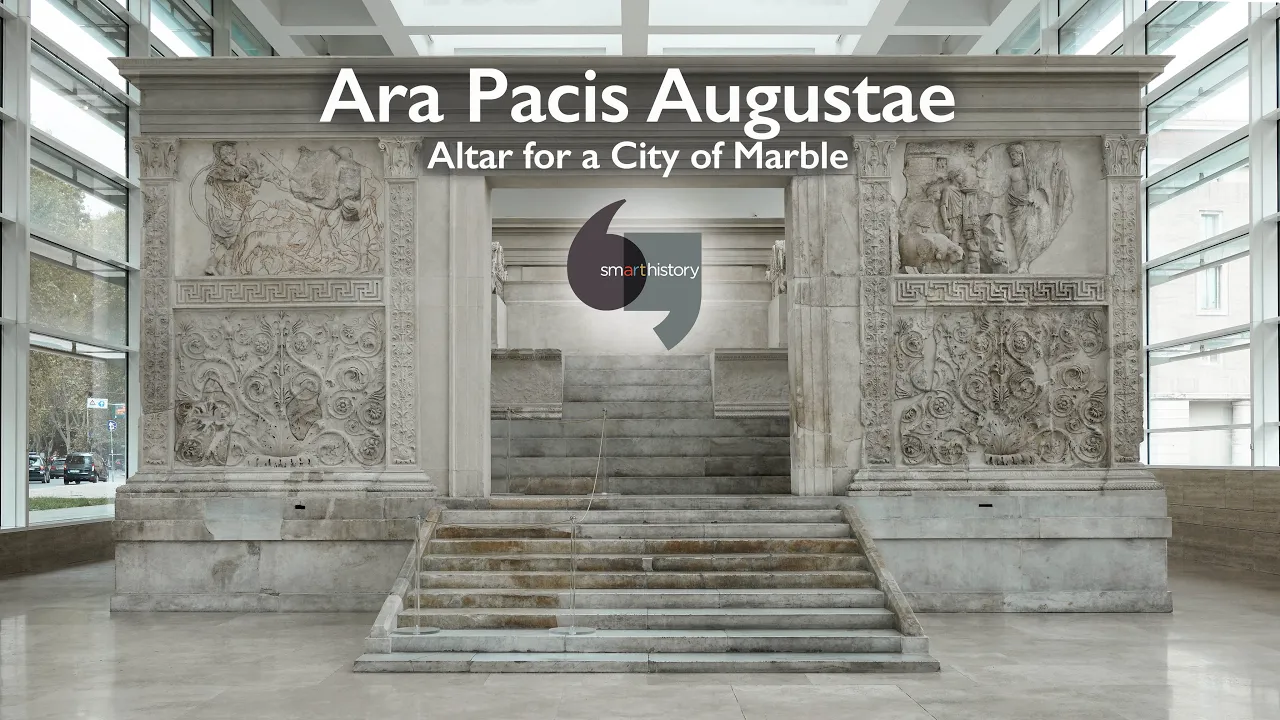
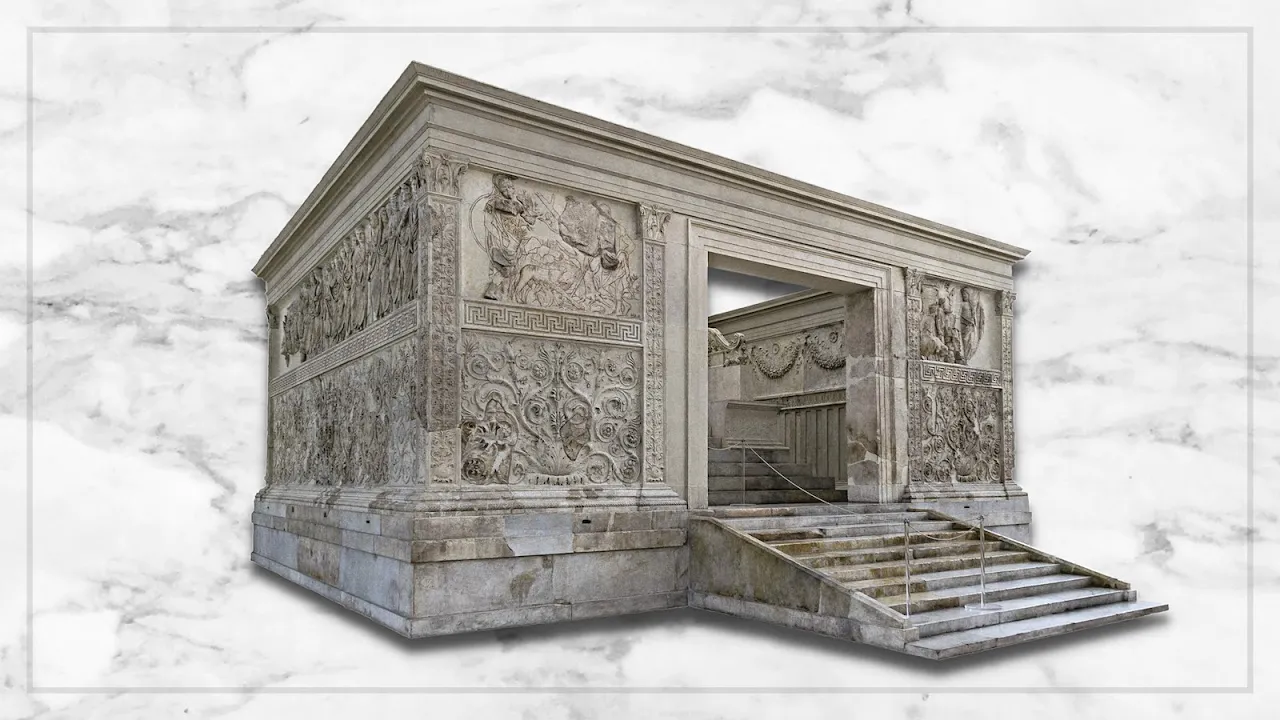
we're going to look now at how august's employed culture for propaganda purposes as a means of social control and as a means of promoting his own control over the empire before August Asst there were many great public men marius sulla julius caesar and they all carried out public works so there are physical recollections if you will of these men so for example the one which most people remember is Pompey Magnus building the first permanent theater in Rome that's a big deal and of course we all remember that when Julius Caesar was murdered the Senate was actually meeting temporarily in the theater complex of Pompeii because the the Senate house to Korea had been burned down there's no trace of SOLAS theatre today but it did exist sulla rebuilt the temple of Jupiter Capitolinus and he rebuilt the Senate house and he had planned to build a public records office the images of which are on the screen now that actually did happen you can see the archway in the most recent photograph there and you can connect up with the archways in the mock image beneath it Julius Caesar when I think further than anyone before him in terms of Mon monumentally memorializing himself about the Basilica Yulia and the forum you Liam including the Temple of Venus Genetrix Venis the birth giver Gina yeah penis a birth giver I think he paid for the restoration of the basilic Amelia and he replaced solos Santos so solar built a Senate house Caesar replaced it all large-scale public works by which these men would be remembered but when we come to Augustus it kicks up a level and all Gustus was very very savvy in he understood the way that public physical objects could actually be an instrument of government he wanted to imprint his personality across the entire empire most of the constructions that we've looked at were literally in Rome Augustus understood the necessity of having this kind of monument across the empire he would use culture art and architecture as a means of propaganda and of aggrandizing himself making himself look big and important to this end and again it's very savvy of augustus here coming through the civil war a time of enormous tumult augustus hark back to a mythological legendary roman past when Rome was glorious and when the Republic worked and men were noble and like most dictators I'm not entirely sure that he's harking back to a place that was real but nostalgia is a powerful tool in the hands of a an autocrat and Augustus certainly made use of that emotion before we start though we need to remember that all Gustus he promoted the idea that he was restoring something he wasn't creating a new Empire he wasn't an autocrat he was simply returning Rome to the glory that it once had but actually that's a political sleight of hand in that he was actually creating something relatively new and that it was an autocrat governing behind the appearance of a republic I'm going to mention exemplary tea a couple of times through this presentation and exemplary tea in the study of ancient Rome is a really complex collection of threats for our purposes we just need to understand exemplary as in a sense of making an example is the use of Roman culture to point up kinds of behavior and it was important in order to promote an image of the Emperor later on later than our period people started in the Roman world they started to talk of something called Romani toss Romanus now much as it's outside our period it's still very much applied that Augustus wanted to promote a certain kind of Roman behavior part of which was where to us this idea of masculinity which I will come to later so in a lot of Roman literature they told stories which actually had a moral or a lesson about what was expected of a Roman person when it came to behavior so if we look at the story of Corrick Coriolanus or horatii or less these are stories of soldiers who encourage a certain kind of masculinity and it's sort of setting up idealized forms of Roman masculinity and idealized forms of Roman behavior but the idea of exemplary learning lessons through these different art forms it comes through in literature in statues and public monuments in coins these are forms of art which are actually forms of instruction for Roman people in that you would look at a statue and you would you were meant to think that is how I should behave I'm not going to spend any time looking into the ways in which some Roman artists subverted this exemplar 'ti for example of it who wrote reasonably fully on kinds of Roman behavior which were not acceptable in August's brave new world to the extent that all Gustus eventually exiled the poet but the fact that Ovid was subvert in exemplary means exemplary had to exist so all the way through we need to think about how these different monuments could have posed lessons for the person the average Roman who observed them I'll give you an example now this picture is of Augustus it's called the old Costas of primaporta primaporta is just where it was found the statue was created in 20 BC II and it's a demonstration of Augustus as a military leader you can see him in full military costume it has the outstretched arm suggesting he is leading the way but if we have a look at the detail on the breastplate which has been enlarged there for you you can actually see one character here and he is holding up a Roman standard this was a symbol that was carried by a Roman legion when they went into battle this image you see in front of you is the Parthian forces returning to or Gustus the standards of the legions that were lost by marcus crassus when he invaded parthia and there had been previous attempts to recover those standards which failed Julius Caesar was about to go and retrieve them when he was killed Mark Antony he had a venture in Parthia which ended very badly and he failed to return them and August's not through military means it was actually an act of diplomacy I think we might actually call it ransom he managed to retrieve these standards but you will notice it's being presented as a military victory because it was important for Augustus to appear as a military figure surrounding him we can see above below and left and right a number of Roman gods Kahless the god of the sky soul the god of the Sun and on and on and on this is to link Augustus into notions of divinity he claims to be descended from Venus from Aphrodite as the Greeks would have er and I'll come on to that shortly and to that end you can see at his right leg there is a small child who is Cupid the son of Venus naturally riding a dolphin and again in the one statute you have leadership you have military prowess you have success and you have a link to divine family heritage when you bear in mind how many people in Rome could read that is a powerful image to present but all Gustus wanted to be a number of things and we can see in this statue created in 12 BC would leave Augustus is the Pontifex Maximus the head of the state religion his head is covered for a sacrifice and what we need to take away from this is that the statues that we see of all Gustus there are only a handful of different types dotted around the empire but they're all fairly similar very few of them show or Gustus as an old man he can be shown as a military leader he can be shown as a religious leader he can be shown as a civic leader as a politician but he is always well predominantly there are three or four different types but he's given an ageless quality he's never shown as an old man he's rarely shown as a very young man the idea is that wherever you are in the Empire you should receive this impression that this man is a powerful figure in all these different areas of Roman life okay so there are the statues which have all these symbolic interpretations but there are messages to the Roman people of people who would see them he also had monuments and statues erected to his family in order to establish that the imperial family was worthy of their status they are descended from gods so here he erected the temple to the divine Julius who was his uncle and if Julius was divine then by inheritance or Gustus is at least somewhat divine but if Augustus is related to Julius Ulysses related back to the original ulis who's related to Aeneas and Aeneas is the son of Venus in front of the temple of Julius there was a rostrum a speaker's platform and along the front it was decorated with the Prowse the the front part of Marc Antony's ships that were sunk at Actium so in front of the speaker's platform we're politicians lawyers people would stand in a dress crowd in the Roman Forum there were also reminders of Augustus's most famous and most significant military success in the defeat of Mark Antony all those Prowse of the ships he also built triumphal arches in Rome one commemorating the Battle of Actium where he defeated Mark Antony but he also erected a triumphal arch to commemorate the success in having the standards returned from Pothier which again was a diplomatic success but erecting a triumphal arch gives it the appearance of a military success as we know Julius Caesar Senate had been burned down in 44 BCE so August's rebuilt it sometimes the Senate house is referred to as the Curia the Curia and obviously he had his name written large on the side of this building and the start of each Senate meeting in the new Senate House began with worship of a statue of the goddess of victory meeting in order to commemorate Augustus 'iz victory in the civil wars so the start of every meeting of the Senate they were reminding themselves that old Gustus had brought peace after the civil wars now on some level it may have been conscious or unconscious but that is encouraging people to remember all Gustus is worth having as a leader because he brought some kind of peace while I'm talking about the Senate house he was awarded by the Senate as something called the clip pea sweat tortoise a shield of honors and inscribed around the shield it was made of gold it proclaimed four virtues which Augustus apparently had Huertas pietas clementa Yost idea valor piety clemency and justice and these four virtues are they're taken straight out of Roman exemplary these are modes of behavior which the Romans admire and you see it in all of their literature and you see it in their statues and their representations of people I just mentioned in passing but I'm sure we'll come back to at least the weird tossed part of that especially he built another forum another large public square but in this particular a public square the forum of Augustus he really went to town in terms of promoting himself and his place in the overarching history of Rome by the end of this slide you will think he was pretty power-crazed but in propaganda terms it's hard to think of anything that would be more accomplished than this he vowed at the Battle of Actium that he would build a temple to Mars the God of War in order to give praise for avenging the people who had killed his great-uncle so when Mark Antony is killed Augustus makes this pledge to build a temple to Mars Ultor Mars the Avenger it just occurs to me that the Marvel Avengers may be called the old tortoise in a Latin I'll need to look that up in so we have the the temple of Mars and you can see in the picture at the top of the screen there big temple and at the bottom of the screen you can see what's left of it but in this new public space he had erected a hundred and eight statues of figures from Rome's legendary history down the left-hand side of the forum it was men such as Coriolanus for our tears Cobb Claire's legendary military figures from from Livi I guess predominantly these are the men who fought and lived well and sacrificed for Rome so on one side of the forum you've got these giants of Roman history really promoting this idea that Rome is a military society and the military life to fight for Rome to die for Rome to sacrifice for Rome is the correct way to behave but then you go to the other side of the Augustine forum and it's all statues of men from the Giulio Claudian family augustus his family Julius Caesar's family tracing the heritage all the way back to Romulus and Aeneas and this is really really transparent isn't it it's an attempt to show how August's fits into the epic legendary mythic history and culture of Rome his entire family is associated with it this way and then as if that were not enough in the center there was a giant statue of August's in full military uniform I would imagine not entirely dissimilar to the old Gustus of primaporta so if you were standing in the Augustine forum it would be impossible to come away and not think or Gustus is a powerful man but also it is right that he rules Rome because of this huge connection to Roman as' Romana to us he didn't stop there he built a theater to his nephew Mark Ellis on Marcellus who died when he was 21 and according to some historians Mark Ellis was the person Augustus really wanted to inherit the position of Emperor after he died but he died too young he also built a mausoleum up until that point the the mausoleum of Halicarnassus in Turkey Greece re in Greece was the largest family tomb in the world Augustus built one that was even bigger and he built it way before he died and built in 28 BCE it was 40 meters high and on top of that obviously because this is or Gustus were talking about a massive bronze statue of Augustus himself as it happens this year I think the August is the mausoleum of Augustus has just reopened after being restored so if you find yourself in Rome that would be worth having a look at obviously the bronze statue is long gone that would have been pilfered by somebody in the distant past nonetheless it's just reopened it's what it seemed he built the ARA Pacis the ARA Pacis or ARA Pacis depends on your pronunciation the altar of peace he built in the Campus Martius the Mars fields which were just outside the city boundary in the west of the city on this flat plain and it was a commemoration of the peace which August's had established after the civil wars it was actually built at the side of a Piazza and the Piazza the square was marked out with lines which formed a sundial and the pointer of the sundial in the middle was an obelisk which had been brought back from Egypt and that obelisk being Egyptian was a reminder of yes you guessed it Cleopatra who august's defeated when she was when she sided with Mark Antony so the sundial is a commemoration of an Augustine victory the ARA Pacis is a commemoration of Augustine peace theater of Mark Ellis is a commemoration of Augustus's family the mausoleum of Augustus the commemoration of Augustus's family and then the last monument there as guest ideal we are goose T the deeds of the divine or Gustus now this is interesting in the sense that the majority of Romans would not be able to read this it was a monument public inscription of 35 paragraphs on two bronze columns outside the mausoleum of Augustus and it split into four sections and each section deals with a different part of Augustus his reign and it's all in the first person and it's all Gustus speaking directly to the reader saying I did this I did this and when I was this years old I did this and I did this and I did this and it's kind of overwhelming just this relentless torrent of statement of achievement and some of it's true he bends the truth frequently he omits things from time to time and it's an attempt to absolutely a grand I stand big up to express the vastness of the achievements of Augustus not everybody could read it though in fact it's estimated the very small percentage of the population would be able to read it so what's the point of doing it well if you imagine those achievements written up large in a public monument you would get a sense of this being a huge display and even if you can't read if somebody would tell you oh these are the achievements of all justice you would immediately think blimey he did a lot so much as it might not be the perfect form of propaganda for people who can't read on the other side of that coin it kind of is people can't read the details of it they get a sense of the scale and that's what whole Gustus was about the res gestae is a form of literature first person written by Augustus not entirely true very much for propaganda purposes but throughout his time Augustus through one of his left hands my canis or my scene is depending on your pronunciation they cut they cultivated they gathered around them the most gifted writers in Rome and it's kind of like if you can imagine Donald Trump very suddenly saying right I'm gonna start paying Martin Scorsese and Francis Ford Coppola and Steven Spielberg and all the great film directors Michael Bay maybe not Michael Bay but if if a leader of a country started gathering these film directors around them and paying the money and supporting them you might start thinking what do they get out of it well there is a chance that they can influence the content of what is being produced but also they can look good in reflection Donald Trump whatever you think of Donald Trump if Steven Spielberg were to make a film and say this is only possible because of Donald Trump you would say well Donald Trump's done something good there you get the idea and in this case we have Virgil of it Horace property Asst you know all the the big writers of the era an august's benefited by being associated to them as it happens through some of these writers he actually had more of an influence than them was merely casual it was away and I'm just reading this directly from the slide way of reconciling men's minds to the new order of things and of investing the actual state of affairs with an ideal glory and majesty now that really pertains to Virgil I would say more than the others but certainly in Horace we can see bits of that as well let's see Virgil wrote the Aeneid is an epic poem chanting the voyage of Nass one of the heroes from the Trojan War and Aeneas sails away from Troy after it falls to the Greeks and he is told that he must go and establish a new colony which would become Roman II civilization Aeneas his son was ulis or Ascanius or hasta Neos from whom Julius Caesar was descended and subsequently Augustus was connected to Julius Caesar Aeneas the son of Venus or a DJ so August's could claim to be descended from the goddess if he can connect himself to a nurse which Virgil does as it happens and this is interesting for trivia purposes Virgil died before he was completely satisfied that was finished and did not want it to be published but it was published and we still have it today and I think at least part of that is because this was a useful text in connecting or Gustus to the gods Romana toss as I say it was a concept that was really talked about by the Romans more into the first and second centuries CE II but we can use it because it encapsulates some of the virtues and behaviors which would later become Romana toss Aeneas as a fictional well we would say a fictional character the Romans would say very much a real character who knows maybe over right but he embedded some behaviors which August's wanted to promote to Rome an ass's military figure he and all Gustus wanted more Romans to join the armies he was devoted to the gods he was a man of honor and he would sacrifice to a greater purpose in this case Rome famously and this is where people do take sides on an s famously he falls in love with Dido the queen of Carthage the Vinny Qian Queen and Lisa saying that the gods insist that he should continue with his voyage to found a new new settlement and many readers find it difficult to forgive an ace for that anyway and this would say that giving up Dido was a sacrifice for a greater good of Rome remember those four virtues which are on the the shield in the Senate house we lattice which is a kind of Roman masculinity good behavior according to manliness PA tasks devotion to the gods clementa clemency not being too bloodthirsty and that's closely linked to eustacia justness being fair in næss encapsulate a number of those things though there are certain instances in leonesse where he slipped beyond them anyway Horace and virtual wrote extensively on how a Roman a Roman man especially should act sometimes Roman women and it coincided with row with or Gustus wanting to make moral reforms in Rome as is always the way during the time of crisis in a state people hark back to the past when things seem to be more stable and more understandable I think at the moment with brexit we're seeing a little bit of that that everything seems to be chaotic and a lot of people are harking back to times when things were better discussion anyway many Roman citizens felt that their traditional virtues of austere duty and healthy poverty were being eroded and August's believed he must restore the faith and values of old Rome the need to revive the customs and traditions of the past a return to old fashioned conservatism so in 18 BCE he introduces a law called the lex Juliet the adult arias Kookaburra co-heir candy which made which paid a criminal act for a woman to have an affair there were other laws for men but this is the the Lex Giulia and there was also the second law Lex Julia demerit andis aadmi abuse which penalized unmarried men and childless couples in order to increase the birth rate and you know he wanted people to have children and to marry and to stay together this very traditional family unit which he believed had been at least some way responsible for the the problems of the previous fifty to a hundred years I mean ignoring all of the economic and social causes behind the fall of the Republic that we don't need to get into here and of course it was slightly hypocritical because all Gustus as the emperor was telling people you should marry and you should have children and if you don't you will be punished Augustus and Olivia his wife his second wife didn't have children so he was asking average Romans to stick to a standard which he didn't keep to himself he also introduced religious reforms encouraging more adherence to traditional worship which links to the idea of pietas which links to and near Aeneas in the Aeneid he's often called pious Aeneas because he was so imbued with the traditional Roman religion we are near the end don't panic coins are important for propaganda purposes because they are amongst the first widespread representation of any person's name and their face have you imagined a new king or a new queen or a new ruler coming to power anywhere in the ancient world how do you get their face known by people in provinces or colonies or territories far beyond where happen to live mm-hmm coins statues are expensive and take time public monuments of vastly expensive and so on coins everybody needs them everybody's got to use them so Augustus employed coins to reinforce this sense of ubiquity the sensor he is everywhere and again if he's presenting himself as some kind of divine figure Deary Augustin de el gusto so the divine or Gustus he needs to make sure everybody is aware of who he is 90% it's estimated that 90% of the Roman world could not read or write so sending out the res gestae to the provinces was not worthless because it happened there are several places around the Empire where copies were erected but it's not nearly as powerful as coins where you have a figure of somebody's face and then on the obverse something symbolic which can be easily understood and in the late Republic people who put out coins tended to commemorate themselves and their families but in the Republican period coins were actually quite cluttered difficult to read the images weren't always clear the fonts that the typing was difficult to distinguish not impossible and you know we're still able to decipher them today but when you compare them to Augustus's coins or justices are really quite spare much clearer so the example you have in front of us here got on one side Gustus his face you can make outs case are on the left-hand side and then on the other side a crocodile above it I get to capita beneath very very straightforward even for those of you who don't have any Latin to read that and understand that it means the capture of Egypt and this was the coin issued after the defeat of Antony and Cleopatra so it's a way of spreading the news of a great military success to people who can't read who live thousands of miles away from the center of Rome powerful propaganda there's no scanning for this because it is so huge take your own notes make sure that you stick that you include the the Latin terms because those are the ones which you must be using remember for our purposes the word is precise so in summary all of this all of this was an extensive attempt to promote Rome Anytus Roman --less an idea or gustas had of what Romans should be monuments public buildings sculptures literature and coins to emphasize the far-reaching power of the Emperor wherever you are in the Empire you will have some sort of familiarity with the face of the Emperor or the deeds of the Emperor or the power of the Emperor through one or all of these things it was a means of social reform by encouraging public morality through these moral laws which were then reinforced with the literature and the monuments and public control if you imagine that especially the Augustine forum it must have been quite intimidating to to feel that amount of power there the word of course is Imperium all of it underscores the notion of augustus is descended from gods that he is the right person to rule that he you know there's no debate here is the there's there's no Brutus waiting in the wings here a much as them may well have been people opposed to Augustus the scale of his propaganda machine means that they just sort of fade away and finally the importance of statues and coins especially means that the message of Augustus as the Emperor as the power force for the Empire is accessible to almost anyone in the Roman world whether you can read or not whether you are Roman or not whether you are Italian or not you get the message and I think this is one of the first times we see such a vastly widespread promotion of one individual as a force of power certainly on this scale as usual if you have any questions see me in class
Up Next
36:02
Constantine's Use of Trajan: Power, Imitation, and Ideology in Ancient Rome
@YSJEvents
190 views•2021-09-21

12:54
Triumph of Orthodoxy Icon: Byzantine Art & History Explained
@BenCallan
2.1K views•2024-08-06

9:49
FastAPI vs Flask vs Django: Choosing the Right Python Web Framework
@TechWithTim
302.5K views•2024-05-26

1:42
Game of Thrones Opening Credits: A Cinematic Analysis
@gameofthrones
46.3M views•2011-04-18
Related Study Plans & Knowledge Roadmaps
Structured learning paths in General & Interdisciplinary Studies
general-studies
Elevator Engineering: History, Physics & Cities
01From Hoists to Safety Brakes: The Dawn of Vertical Lift
02Hydraulic vs. Traction: The Engineering Physics of Elevators
03Modern Speed, Safety, and Algorithms
+ 2 more learning modules
12h5 modules
Explore Roadmap
general-studies
Rubber: Material Science, History & Geopolitics
01Origins of Natural Rubber & Mesoamerican History
02The Chemistry of Natural Rubber & Vulcanization
03The Geopolitics of the Rubber Boom & Colonization
+ 2 more learning modules
12h5 modules
Explore Roadmap
general-studies
Containerization: Evolution, Logistics & Trade
01Ancient Trade & Bulk Cargo: Amphorae to Barrels
02The Industrial Revolution & Cardboard Packaging
03The Containerization Revolution: Malcom McLean
+ 2 more learning modules
12h5 modules
Explore Roadmap
general-studies
Textile Tech: Evolution, Labor & Global Impact
01Pre-Industrial Textiles: Handloom & Cottage Industry
02Mechanization: The Spinning Jenny to the Power Loom
03The Factory System & Global Labor Transformation
+ 2 more learning modules
10h5 modules
Explore Roadmap