















![Le pouvoir impérial à Rome : une monarchie qui ne dit pas son nom ? avec Stéphane Benoist [3/3]](https://i.ytimg.com/vi_webp/nz8RbA7cJVg/maxresdefault.webp)




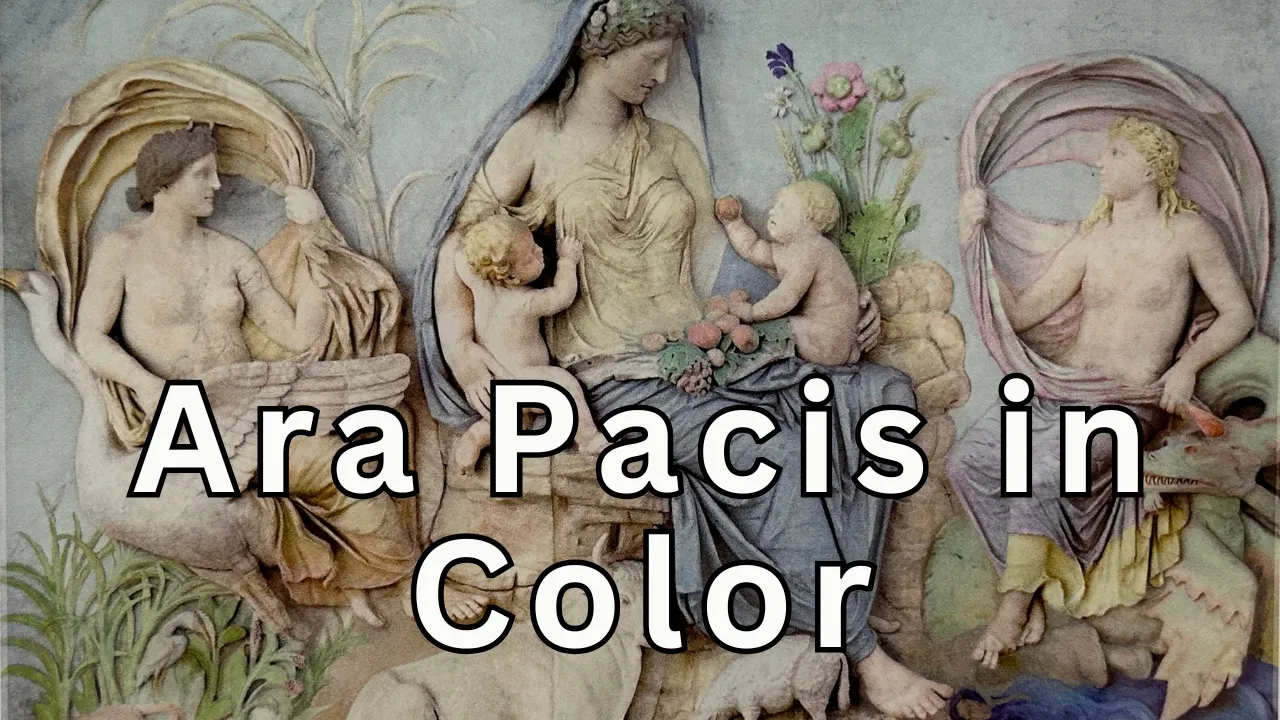
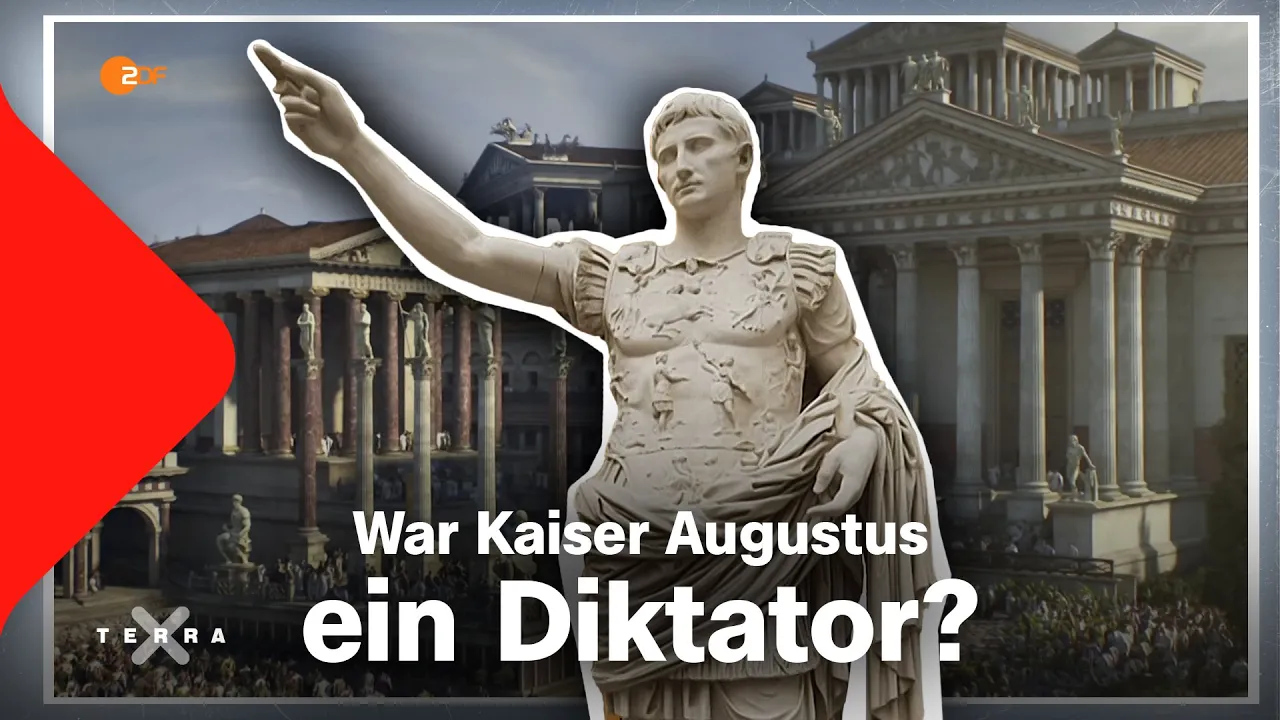
Augustus, the first Roman emperor, mastered the art of ruling through carefully crafted imagery while maintaining absolute power behind a republican façade; the Ara Pacis Augustae (Altar of Augustan Peace), constructed between 13-9 BC, exemplifies this political strategy by depicting Pax (Peace) surrounded by nature and infants, symbolizing the moral and cultural rebirth of Rome under Augustus' reign, where the emperor presented himself as a benevolent statesman rather than a monarch, using religious symbolism and artistic representation to legitimize his autocratic rule while claiming to have restored the Republic.
Augustus and the Ara Pacis: The Altar of Peace in Ancient Rome
Added:The collapse of the Roman Republic and the rise of Octavian (later Augustus) following the civil wars.
The concept of the 'Pax Romana' (Roman Peace) and how Augustus utilized it to legitimize his autocratic rule.
Basic Roman religious practices, particularly the role of civic altars and animal sacrifice in state religion.
The use of public art and architecture as primary mediums for political propaganda in a largely illiterate ancient society.
An in-depth iconographic analysis of the Ara Pacis reliefs, including the depictions of the imperial family, Tellus/Pax, and mythological founders.
Augustus' wider building program in the Campus Martius, including his Mausoleum and the Horologium Augusti (sundial).
How subsequent Roman emperors (such as Vespasian or Trajan) adapted Augustan visual ideology for their own monument building projects.
The modern political reception of the Ara Pacis, particularly its excavation and reconstruction under Benito Mussolini's Fascist regime in the 1930s.
182.9K views7Klikes14:25Original Release: 2023-05-12
Five days after the funeral of Augustus, when the gargantuan pyre had finally cooled, Empress Livia and a small band of retainers walked barefoot through the cinders to recover the emperor’s bones.
The remains were sealed in a golden urn.
Then the mourners turned toward the great mausoleum Augustus had been built for himself forty years before.
Advancing in a ragged line, they passed a monumental altar, its painted walls grayed by falling ash.
On the side facing them was carved a procession; and there, in high relief, was Augustus himself, young and healthy, a half-smile on his lips, striding confidently into the future.
The man was dead; but the image lived on.
The Ara Pacis Augustae, or Altar of the Augustan Peace, epitomizes the reign of a man who ruled through images.
Augustus never forgot that Julius Caesar, his adopted father, had been assassinated for failing to adapt his ambitions to the sensibilities of the Senate.
To avoid that fate, Augustus took pains to grasp the substance while avoiding the semblance of absolute power.
Although he kept an iron grip on the treasury and armies, he claimed to have restored the Republic, and insisted on no title grander than “princeps” – first citizen.
He came to power through a savage civil war, but presented himself as a bringer of peace.
He brought revolution, and called it tradition – and because he was convincing enough, and lived long enough, his fictions became reality.
Nowhere is this dance of image and substance more apparent, or more fascinating, than in the reliefs of the Ara Pacis.
The Ara Pacis was constructed between 13 and 9 BC to celebrate Augustus’ return to Rome after a long absence in the western provinces.
It was located in the Campus Martius, a level floodplain just north of the city, and integrated into a complex of monuments celebrating the Princeps.
A short distance to the north was the immense Mausoleum of Augustus.
Just west, and joined to the Ara Pacis by a broad plaza, was the Horologium – a colossal sundial that used a seventy-foot obelisk as its gnomon.
The Horologium was configured so that on September 23, Augustus’ birthday, the shadow of the obelisk would point directly to the Ara Pacis, suggesting that the sun god Apollo – the emperor’s patron – had smiled on the day of his birth.
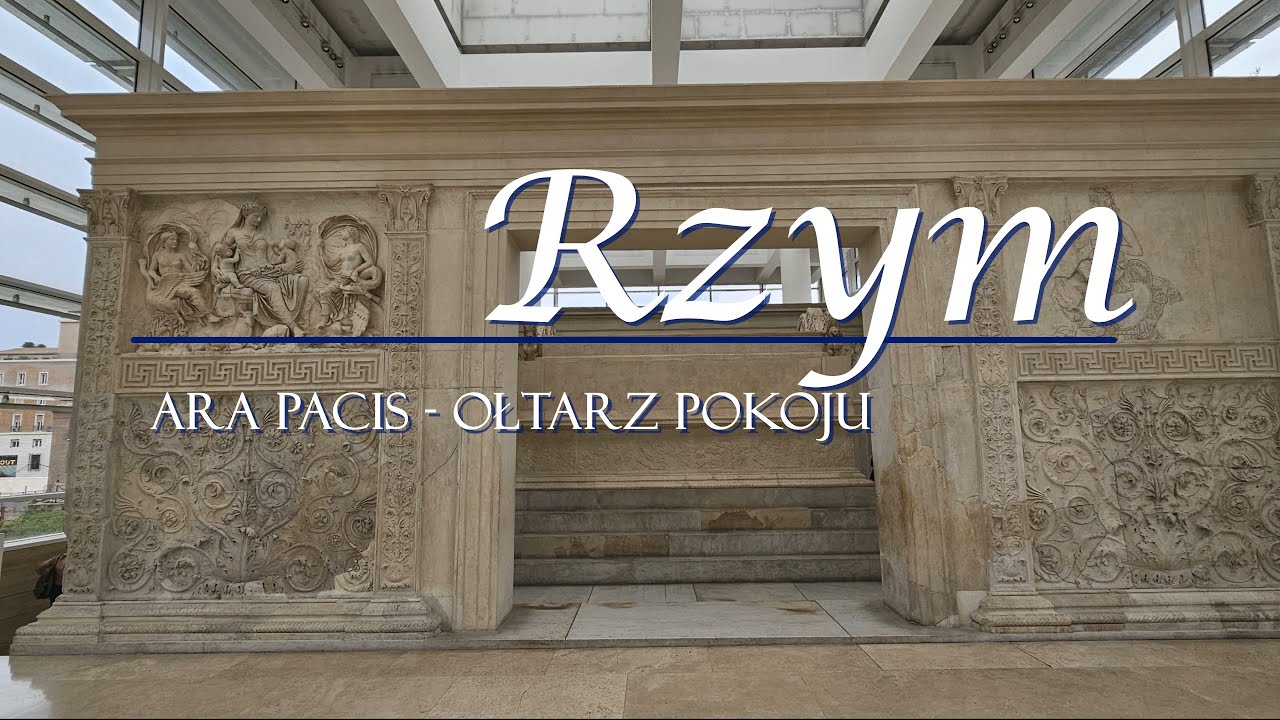
The Ara Pacis was an altar surrounded by an enclosure.
The U-shaped altar itself has always been overshadowed by the marble enclosure walls, which were decorated inside and out with painted reliefs celebrating the goddess to whom the altar was dedicated: Pax, or Peace.
The goddess is represented in the so-called Tellus relief on the eastern enclosure wall.
Flanked by personifications of the Sky and Sea, Pax sits on an outcropping, surrounded by sprouting plants and docile animals.
In her lap she holds two infants and a cornucopia of fruit.
Her arms are spread protectively over the babies.
Her face is appropriately serene.
This representation of Pax, which associates the blessings of Peace with the regenerating power of nature, captures the heart of the Augustan message: the civil wars are over, and the good old days of prosperity and virtue, when man lived in harmony with nature, have returned.
By the time the Ara Pacis was completed, the Roman world had been at peace for more than twenty years.
Wars were still fought – but now they were waged against barbarians on distant frontiers.
The city of Rome itself was tranquil, and the power of Augustus – unobtrusive but inescapable – was unchallenged.
Older Romans, however, remembered the bloodshed that came before, and a time when Augustus was still Octavian – a pale and sickly teenager known, if at all, as the great-nephew of Julius Caesar.
Before we continue, a brief word about this video’s sponsor.
If you’re planning to visit the Ara Pacis and Rome’s other ancient wonders, I recommend Through Eternity Tours.
In addition to their bestselling tours of the Colosseum and Vatican, Through Eternity offers a range of itineraries, which take in everything from the Forum and Nero’s Golden House to sites not found in any guidebook.
If you’d like to explore Rome with Through Eternity’s expert guides, use the discount code TOLDINSTONE2023 to save 5% on your purchase of any group or private tour.
See the video description for a link and additional details.
Back to our topic.
Gaius Octavius Thurinus, the future Augustus, was born in 63 BC.
His father came from a family that, though distinguished, was not of Senatorial rank.
His mother Atia, however, was Julius Caesar’s niece.
Though the young Octavius was raised primarily by his grandmother Julia, Caesar’s sister, he had little contact with Caesar himself until 46 BC, when he was invited to join his great-uncle’s campaign against the sons of Pompey in Spain.
Too sick to sail with Caesar in the fall, but desperate not to be left behind, he hired a small boat to bring him across the Mediterranean in the stormy winter months.
Shipwrecked on the Spanish coast, he and a small band of companions made their way through enemy territory to Caesar’s camp.
When they arrived, Caesar – impressed by his nephew’s resourcefulness – began to favor the boy; and once he had defeated the Pompeians and returned to Rome, he wrote a new will, in which he adopted Octavius and made him his heir.
On the Ides of March, 44 BC, while Octavius was studying in Greece, Caesar was assassinated.
In the confusion that followed, the conspirators, led by the Brutus and Cassius, established an uneasy truce with Caesar’s friends and allies, who were led by Mark Antony.
Into this situation stepped Octavius, now calling himself Gaius Julius Caesar Octavianus, to reflect his adoption by Caesar.
To Antony’s intense irritation, the eighteen-year old began to present himself as the leader of the Caesarian party, commemorating Caesar at every opportunity and playing for the favor of his veterans.
For a few months, Octavian sided with the Senate against Antonius – but by the summer of 43, recognizing each other as natural allies, Octavian and Antony had reconciled, and joined with the Caesarian general Lepidus to create the political alliance known as the Second Triumvirate.
Brutus, Cassius, and the other conspirators were hunted down and slain; Lepidus was shunted aside, and Octavian, still only in his early twenties, emerged as one of the two most powerful men in the Roman Empire.
By informal agreement, Octavian and Antony divided the provinces between them.
While Octavian remained in Rome, orchestrating the defeat of Pompey’s last remaining son, Antony spent the bulk of his time in the east, where –like Caesar before him – he became enamored with Cleopatra.
Neglecting his wife in Rome – who happened to be Octavian’s sister – he made Cleopatra his consort, and had three children with her.
For this and other reasons, the relationship between Octavian and Antony, always a matter of convenience, gradually cooled.
Octavian began to wage a propaganda war against his rival, presenting himself as the protector of traditional Roman values, and criticizing Antonius as the debauched servant of Cleopatra.
Finally, in 31 BC, Octavian convinced the Senate to declare war on Antony.
The decisive moment in the ensuing conflict was the naval battle of Actium, where Octavian’s forces confronted those of Antony and Cleopatra.
Octavian’s navy consisted primarily of small, swift liburnian galleys, each capable of holding a few dozen heavy marines and one or two ballistae.
Antony and Cleopatra’s fleet, though less numerous, had much larger ships – some with as many as ten banks of oars, and capable of carrying several hundred soldiers and six or more ballistae.
Octavian’s ships attacked Antony’s larger galleys in groups of two or three, sweeping their decks with flaming ballista bolts and volleys of arrows.
Antony’s galleys rammed and sank their smaller opponents.
Octavian’s fleet was slowly gaining the upper hand when, for mysterious reasons, Cleopatra’s galleys withdrew from the fight.
Antony turned to follow her, and the battle became a rout.
Octavian pursued his enemies to Alexandria, where both Antony and Cleopatra committed suicide.
Egypt became a province, and Octavian returned triumphant to Rome.
No one knew what to expect next.
Octavian had the absolute loyalty of fifty legions; and, having seized the treasures of Egypt, he had the money to pay them.
If he wished, there was nothing to prevent him from ruling Rome as a king.
But Octavian was far too savvy to attempt anything so blatant.
After triumphing, he ceremoniously laid down his unconstitutional powers, proclaimed the restoration of the Republic, and took on a new role as first citizen of the restored government.
Behind the Republican façade, his power was still absolute; he paid, and so controlled, virtually the entire army, could veto any legislation that displeased him, and enjoyed unchallengeable personal prestige.
His careful observance of traditional forms, however, placated the all-important aristocracy.
The finishing touch was the name “Augustus” – meaning “revered or illustrious one” – which he adopted in 27 BC.
This title, with its implications of moral and divine authority, was perfectly suited to the princeps’ informal brand of autocracy.
Closely related to Augustus’ faux-Republican style of rule was his endorsement of traditional religion and morality.
He reconstructed no fewer than 82 temples in the city of Rome, assumed the position of Pontifex Maximus, revived or invented a series of sacred festivals, and promulgated laws promoting marriage and ethical behavior.
The cult of Pax and the Ara Pacis represent the capstone of the Augustan moral agenda.
Pax personified both the peace that the princeps maintained and the moral, cultural, and physical rebirth associated with his reign.
Equally importantly, the reliefs of the Ara Pacis itself seamlessly connected the reign of Princeps with the favor of the gods.
The north and south enclosure walls of the Ara Pacis show Augustus and his family, the chief priests, and a number of eminent senators marching in a grand procession.
The reliefs are probably not meant to represent any single occasion, but to project an idealized vision of the divinely-sanctioned sociopolitical order Augustus claimed to have restored.
The Princeps himself appears on the south wall, flanked by the high priests of the state cults in their spiked caps.
A short distance behind is Marcus Agrippa, Augustus’ best general and closest friend.
Julia, Agrippa’s wife and Augustus’ only child, walks just behind her husband.
Within a few years of the altar’s completion, Augustus would exile her from Rome for violating his laws on adultery – an indication of how far he would go to protect the image of moral authority he had so carefully crafted.
The ambitious boy Gaius Octavius Thurinus, the ruthless warlord Gaius Julius Caesar Octavianus, and the benevolent statesman Imperator Caesar Augustus were the same person.
But they were very different personas – each, in its way, as carefully composed as the reliefs of the Ara Pacis.
As he lay dying in his villa at Nola, Augustus ordered a mirror brought in so that he could see his reflection a final time.
Regarding himself critically, he ordered slaves to comb his hair and set his slack jaw straight.
Then, smiling at the friends gathered around his bed, he rasped: “If I have played my part well, applaud as I leave the stage.” A few minutes later, he breathed his last.
The man was dead, but the image lived on.
If you’re interested in more toldinstone content (including my podcast), check out my channel Toldinstone Footnotes.
I also have a channel called Scenic Routes to the Past, which is dedicated to historically-themed travel.
You'll find both channels linked in the description.
Please consider joining other viewers in supporting toldinstone on Patreon.
You might also enjoy my book, Naked Statues, Fat Gladiators, and War Elephants.
Thanks for watching.
Up Next
12:17
Virgil: The Poet Who Forged Roman Identity in the Aeneid
@OverlySarcasticProductions
429.1K views•2022-10-14

33:02
The Great Schism of 1054: Causes and Consequences
@SacredCathedrals
113.5K views•2026-02-19
38:03
Roman Forum Walking Tour: Age of Augustus History
@toldinstone
211.1K views•2018-10-18

17:05
Understanding the Cold War: Superpower Conflicts and the Road to Détente
@OverSimplified
46.1M views•2019-01-24
Related Study Plans & Knowledge Roadmaps
Structured learning paths in History
history
Byzantine Iconoclasm: Theology, Art & Politics
01Foundations of Byzantium and Early Christian Images
02The First Iconoclasm: Leo III and the Crisis of Images
03Empress Irene, Nicaea II, and the Second Iconoclasm
+ 2 more learning modules
9h5 modules
Explore Roadmap
history
Iranian Revolution (Causes, Events & Legacy)
01The Pahlavi Dynasty and the Roots of Discontent
02The Spark of Rebellion and the Rise of Khomeini
031979: The Fall of the Shah and the Climax of the Revolution
+ 2 more learning modules
8h5 modules
Explore Roadmap
history
Mali Empire: Mansa Musa, Trade & Timbuktu
01Foundations of the Mali Empire
02The Trans-Saharan Gold and Salt Trade
03The Reign and Pilgrimage of Mansa Musa
+ 1 more learning modules
6h4 modules
Explore Roadmap
history
1947 Partition: Politics, Borders & Legacies
01Foundations of British India and the Divide
02The Political Negotiations and the Mountbatten Plan
03Drawing the Boundary: The Radcliffe Line
+ 2 more learning modules
8h5 modules
Explore Roadmap