





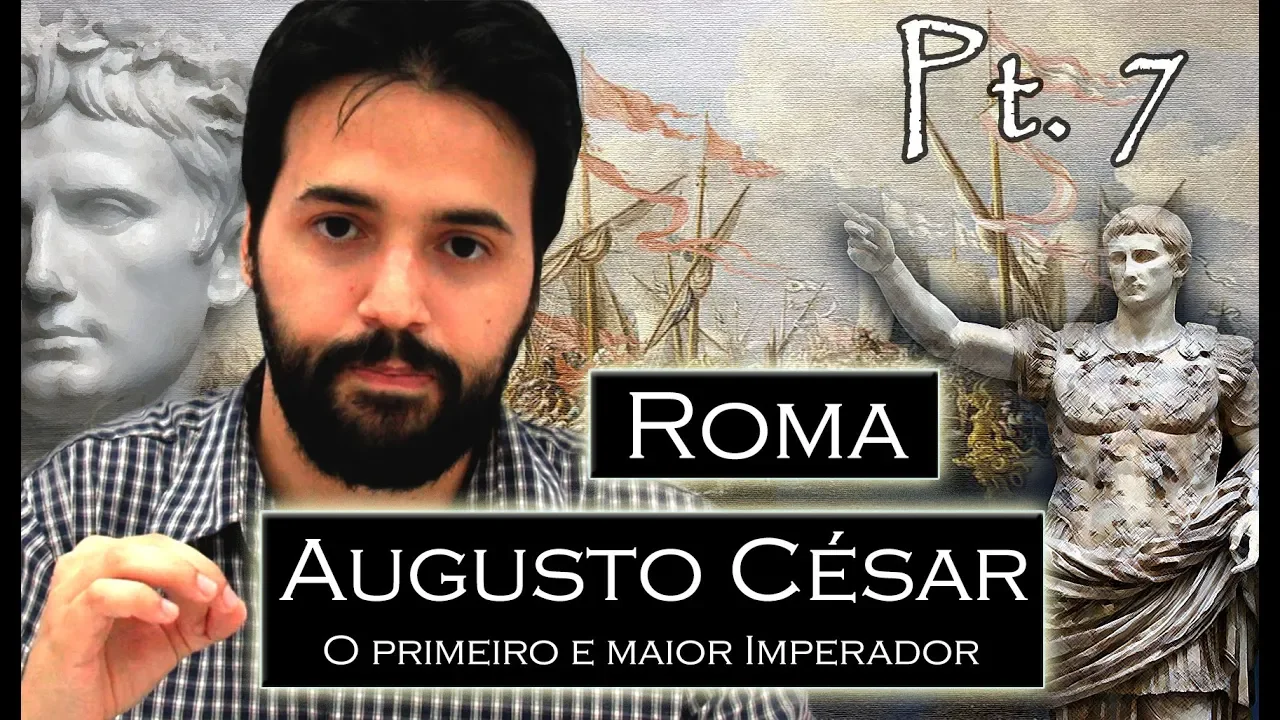









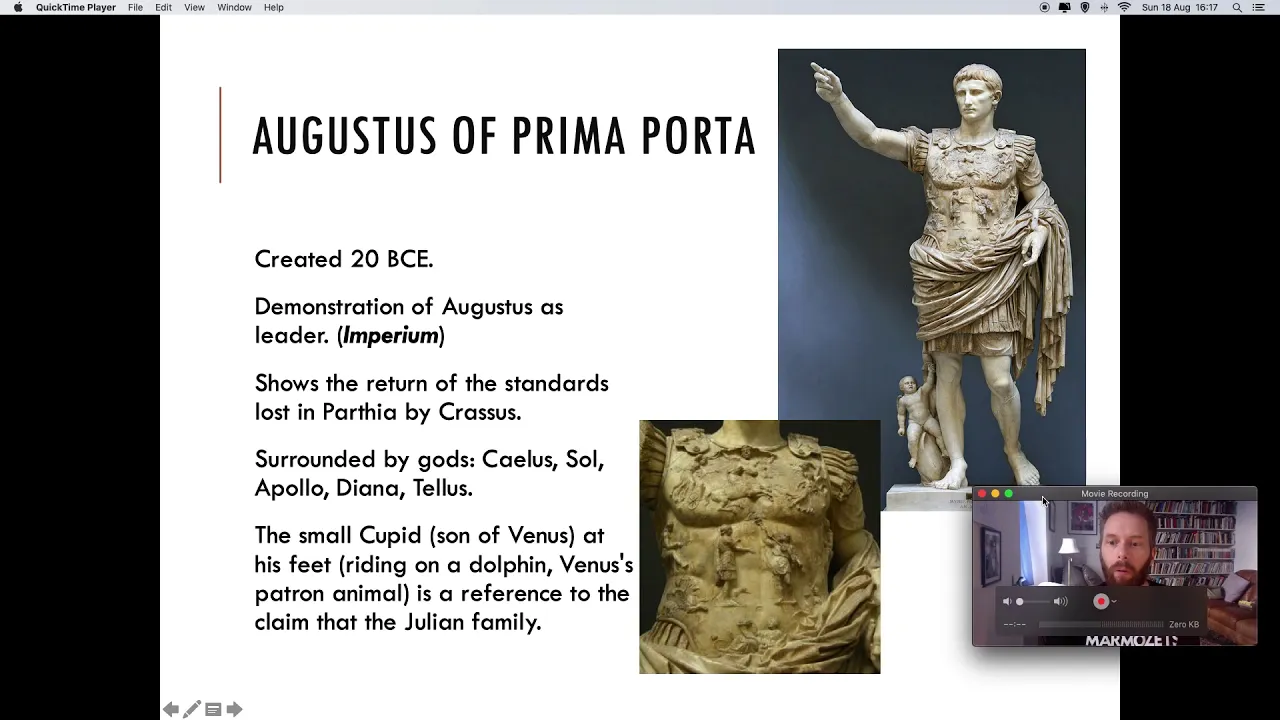


Augustus (formerly Octavian) transformed the Roman Republic into an empire by consolidating power through strategic political maneuvering rather than overt monarchy; he maintained the appearance of republican institutions while holding multiple key positions simultaneously, using propaganda, public works, and literature to legitimize his rule and establish over 1,000 years of Roman imperial stability.
Augustus and the Foundation of the Roman Empire: A Historical Analysis
Added:The political structure of the late Roman Republic, including the roles of the Senate, consuls, and the tribunes, and how power was traditionally balanced.
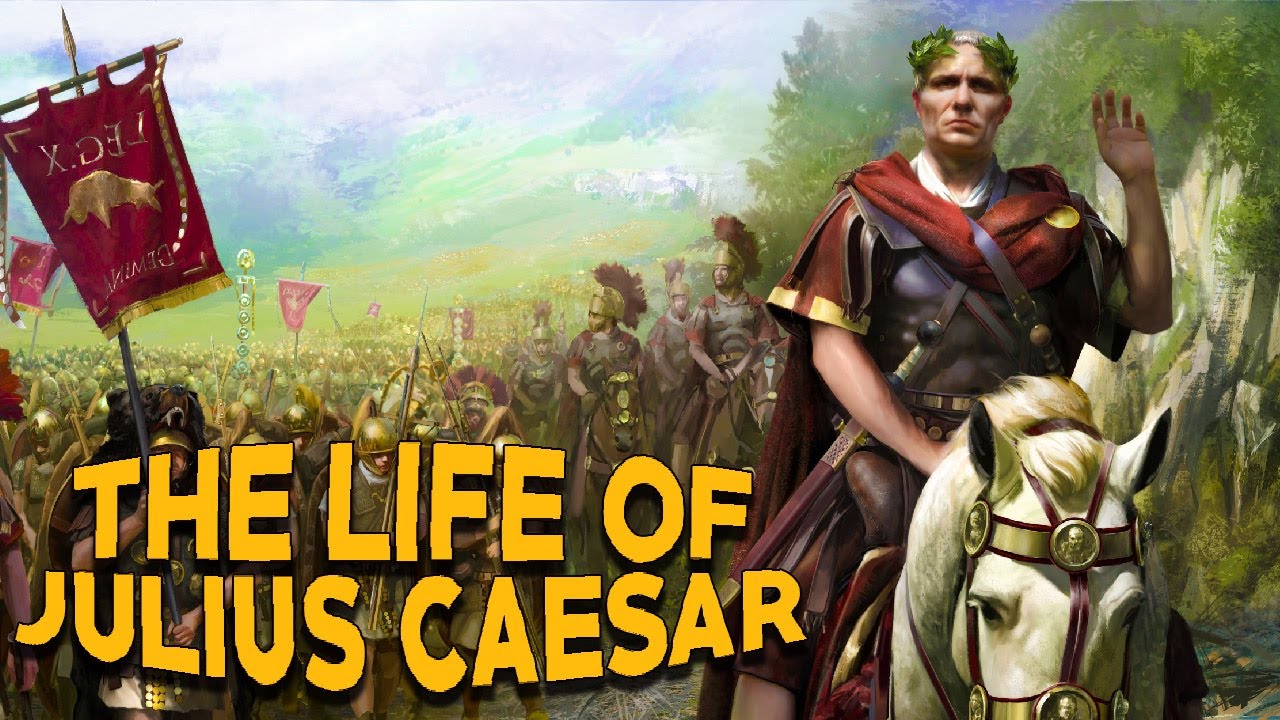
The rise and fall of Julius Caesar, his dictatorship, and the destabilizing civil wars that followed his assassination in 44 BCE.
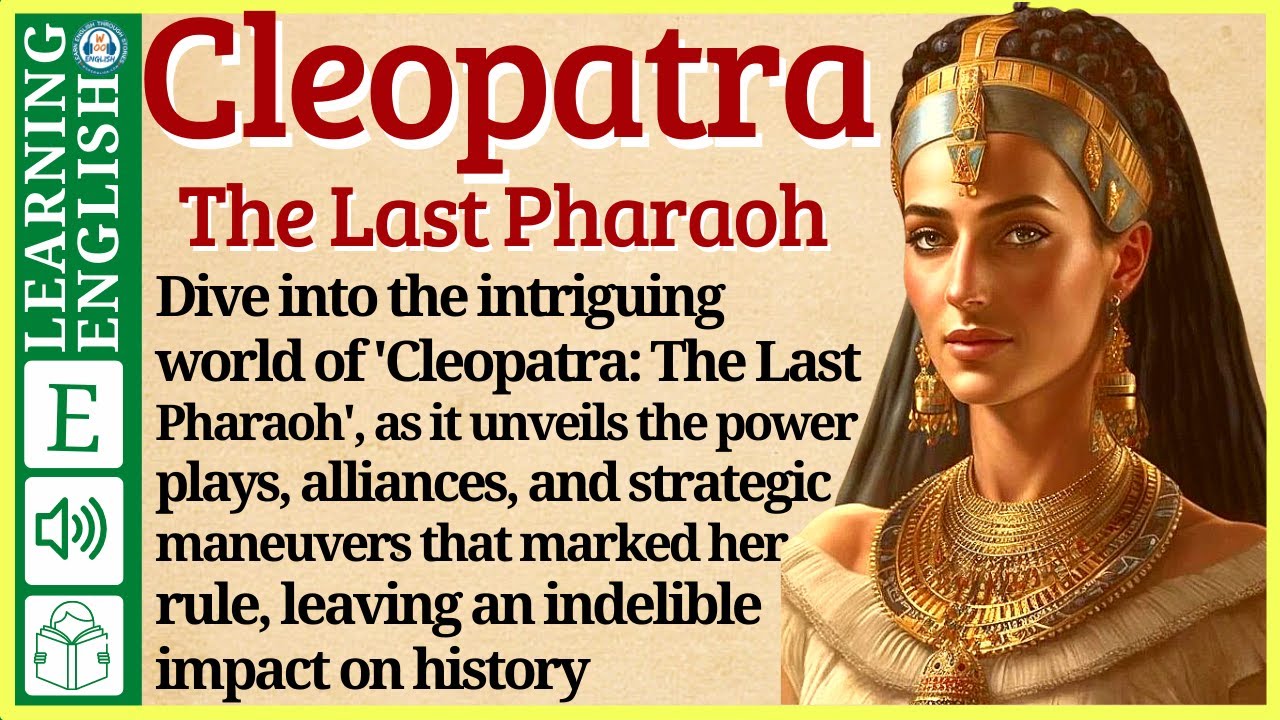
The formation and collapse of the Second Triumvirate, specifically the rivalry between Octavian and Mark Antony leading to the Battle of Actium.
The concept of 'imperium' and how military command historically translated into political influence in Roman society.
The Pax Romana (Roman Peace) and the long-term socio-economic impacts of Augustus's administrative and provincial reforms.
The succession challenge in the early Empire and the subsequent reign of the Julio-Claudian dynasty (Tiberius, Caligula, Claudius, and Nero).
The use of classical art, literature, and architecture as imperial propaganda, focusing on Virgil's 'Aeneid' and the Ara Pacis.
The institutional shift from the 'Principate' (where the emperor acted as first citizen) to the 'Dominate' (authoritarian rule) in later Roman history.
597.6K views15.5Klikes9:33Original Release: 2018-09-21
At barely 35 years old, Octavian Caesar, the great nephew of one prematurely perforated Julius, was the most powerful man in Rome. In the span of a decade and a half, the "Impressive young man" as Cicero called him, cleverly swayed the people to view him as the rightful heir to the legacy of his, big air quotes here, "Father," Julius Caesar, and he then struck up an alliance with a prominent general Marcus Antonius to secure revenge against the big C's assassins. From there, he spent the next decade consolidating his power in the Western Republic, casting his Co-Triumvir Marcus Antonius as a turncoat slave to his mistress Cleopatra, because she was the queen of the last non Rome corner of the Mediterranean, and it wasn't gonna conquer itself, soooo you need a reason. After waging (and winning) a war against the both of them, Egypt got annexed, and the Roman Republic was pacified by the might of Octavian, now known by the name Augustus.
But there's one problem. We've been in a situation like this before, so if things are gonna change, what happens next? How could the Republic be restored if there's one man now clearly more powerful than anyone else?
Well, as we'll see, even though the road to the Roman Empire wasn't the most obvious, Augustus, ever the clever little son of a God, pulled it off. First things first, when he returned to Rome from yoinking Egypt, he astutely dodged the subject of whether or not he was going to make like his old man and fashion himself a king.
Instead he pulled a Bane and insisted that he was (In Bane voice) "Restoring the republic and returning it to you, the people!
Indeed!
I am Bane!"
(In normal voice) Um, anyway. And since Augustus had already offed the other two triumvirs, uh, he ditched the now awkward title and resigned most of his official power.
He, didn't do the Bane voice though, that would have gotten really old really fast, but he did stay on his consul and remain the effective governor of Egypt, Spain, Gaul, The Levant, and Illyria.
So he had insane funds, lots of territory, and most of Rome's legions in his back pocket. That would make for some large pockets. It's like Pokemon, but instead it's just tons of humans and coins in a giant burlap sack.
Anyway, he took on the generally ceremonial role of Princeps Senatus, the first man of the Senate, but since Octavian had stacked the Senate in his favor over the past few years, it effectively meant that he dictated legislation, and that was basically his trick. He never changed any core institutions, he just happens to hold several different key positions of extreme power all at once.
The totalitarianism was a total accident, he swears.
Whereas the Big C rolled into Rome like "What up, I'm dictator for life" and got immediately murdered because his plot armor was nowhere near as strong as he thought, Augustus was much more aware of feelings on the ground and played himself up as a peace bringer above everything else. Nobody had the reasons and especially not the means to start another Civil War at this point. Half a decade into his not quite rule over his not quite empire, the senate gave its official thumbs up to his peace bringing, republic restoring, Pax Romana securing ways, and then after that there were statues of him going up everywhere, there were coins bearing his face all over the place, and there was a shield in the senate house with an inscription about how full of justice and piety he is... Okay, now it's point taken he's definitely a king.
But, I'll be honest with you, to the Romans at this point, a good king was vastly preferable to the stabbier alternative.
Hundred years of civil war will do that to ya. The closest substitute for an all-out rebellion happened a few years into the empire where this guy Cornelius Gallus, the governor of Egypt of all places, won a small campaign and erected a monument to his victory.
Augustus, though visibly shaken by the crash of Antony and Cleopatra flashbacks, did the noble thing and mailed Gallus a letter of stern reprimand, and then also a dagger for which to impale himself. (yikes) Gallus, guilty of little more than a bit of pride and governing while Alexandrian, went down without a fight. After that, Rome collectively kept its mouth shut and Augustus kept a very keen eye on Egypt. On the foreign fronts, Augustus expanded Rome's borders to more or less what they'd be for the next few centuries.
He also secured a peace deal with the Parthian's, who had been a particularly troublesome thorn in Rome's side for almost a century.
As I'm sure Crassus would tell you. On the domestic side the Princeps selected senators, magistrates, and generals to keep everything running smoothly. this allowed him the time to just go nuts on public works.
He subsidized hundreds of temples, including the symbolism rich forum of Augustus, which, fun fact, was the go-to place to dump all of your treasure whenever you made a big campaign or conquest, so by the later time of the Roman Empire, it was almost impossible to walk through the place because it was so full of treasure.
He also funded Agrippas Pantheon.
THE Pantheon, I might add, a structure that, much like Agrippa himself, is so impressive that it's almost insulting. This gorgeous open topped dome is made of poured concrete, meaning that the shape would have had to have been cast all in one go. Agrippa, dude, I get that you're cooler than all of us, but you don't have to rub it in our faces all the time, come on. And on the literary front, Augustus had his poet's working in high gear to crank out some of Rome's best literature. Which is, you know to say any literature at all. The Greeks did it better, that's just a fact, moving on. And it probably goes without saying that the most famous Augustan era work, (although let's be honest, the only famous Roman work, don't @ me) is Virgil's Aeneid, a masterful poem glorifying Rome's epic ancestry and Trojan history. If your memories foggy, I got a pal who's got a summary. And while Virgil slides a non-negligible amount of digs at his boss, The Aeneid is still a key component of the so-called Augustine program in the arts, literature, and architecture. The celebration of just how dang aaaaa-mazing Rome was, glorious you might say, and the coolness of Augustus for making Rome its best, most glorious self. The saying Augustus found Rome a city of bricks and left it a city of marble isn't completely true, but it is no secret that Rome was a backwater compared to Alexandria in Caesars day, and Augustus did a lot to make Rome a place that didn't entirely suck to actually live in. However, it wasn't all smiles in Augustan Rome, as the poet Ovid needs to be absolutely certain you know. The short of it is that Augustus tried to impose new laws on marriage, so our boy Ovid decided to write a giant poem about where and how to seduce any man or woman in Rome. As it happens, the "How" often involves seducing the maid first, which I don't quite follow, but Rome was a different place so who knows, and the "Where" was pretty much every monument that Augustus built.
Unsurprisingly, the new emperor was less than pleased at the thought of those wild youths using his carefully crafted highbrow iconography as set dressing for casual hookups, and Ovid got exiled to the Black Sea for the rest of his life.
Coincidentally, Augustus also exiled his own daughter at the same time.
I'm not necessarily saying that one and two go together, but I am saying that it would have been completely in character for Mr. "Hey, if you're trying to smash, why don't you check out the Circus Maximus?"
Ovid. One successful empire later Augustus died in 14 AD at the ripe old age of 75. By the time he died, almost no one could remember what the Old Republic was even like either, because they were too young, too murdered, or because Disney made it non-canon. Although Augustus was one of Rome's longest-serving emperors, he suffered from a persistent and recurring sickness that almost killed him pretty much every other year.
Yeah, throughout this whole process, not only did he have to contend with Brutus, Cassius, and Antony all trying to kill him, He also had to, you know, not die to RNG. And speaking of dying, his wife Livia had a curious relationship to the suspicious number of heirs that Augustus lost. See, being Emperor and all, Augustus wanted to choose a successor, so he groomed his nephew Marcellus to become emperor, but then he died. Oh, well, you know, that's-that's Roman medicine for you, So then he started preparing his stepson Drusus, and- NOPE, he's dead too.
O-kaaayy, how about his two Grandkids Gaius and Lucius, and ARE YOU KIDDING ME? Okay, deep breaths, so, um, Drusus has a son named Germanicus who's a really really good general. Uhh, him? No, Livia gave the Empire to his idiot uncle Tiberius instead?
Okay, no, no, that-that-that's fine, it's just a, you know, total dumpster fire that ensued, but I mean, you do you.
*sighs* Ok, Livia, I'm not-I'm not saying that you're a duplicitous child murderer. Tacitus very much is, several times, but I'm not. I am, however, still blaming Tiberius on you because that one's, that was your fault, but we're out of time, so we're gonna get to him and all the others next time. So, to conclude. While historians have written about Augustus up and down the timeline, he did us all a favor by providing us with one of the first autobiographies. Upon his death, He published the "Res Gestae Divi Avgvsti." Basically, the awesome stuff I did. Some of it is embellished, some of it is straight-up lies, but it shows what he thinks mattered most about himself, and it was the stability that he brought to Rome. At the end of the day, that's why this whole emperor thing worked at all.
I have some serious problems with Augustus, and whether I like or hate the man depends on the day, but I can't deny that amid all the senator murdering and human sacrificing and all the other times that he went way too far when he didn't need to, he laid the ground work for over 1,000 more years of Rome, and I have to give him props for that. His ascent to power was far from guaranteed, but this nineteen year old kid out strategized all of Rome, and then one Empire later, this kid is a 75 year old man who- Oh, yeah, that's that's right. He's dead. Um so Tiberius time?
Ohhhh, gods help me So fun fact about the Pantheon, Agrippa's one actually burned down and was rebuilt using the original designs in Hadrian's day. One of the key design differences though is that the new dome was made with concrete that had mixed in volcanic ash, which ended up making it super strong, which is one of the really cool reasons behind its miraculous 2000 years survival to the present day. After all this time it's still here and it's still perfect.
Up Next

102:24
Rome in the 1st Century: Augustus' Rise to Power | Documentary
@ezgicihan2915
677K views•2016-06-11

33:02
The Great Schism of 1054: Causes and Consequences
@SacredCathedrals
113.5K views•2026-02-19
12:17
Virgil: The Poet Who Forged Roman Identity in the Aeneid
@OverlySarcasticProductions
429.1K views•2022-10-14
17:05
Understanding the Cold War: Superpower Conflicts and the Road to Détente
@OverSimplified
46.1M views•2019-01-24
Related Study Plans & Knowledge Roadmaps
Structured learning paths in History
history
Byzantine Iconoclasm: Theology, Art & Politics
01Foundations of Byzantium and Early Christian Images
02The First Iconoclasm: Leo III and the Crisis of Images
03Empress Irene, Nicaea II, and the Second Iconoclasm
+ 2 more learning modules
9h5 modules
Explore Roadmap
history
Iranian Revolution (Causes, Events & Legacy)
01The Pahlavi Dynasty and the Roots of Discontent
02The Spark of Rebellion and the Rise of Khomeini
031979: The Fall of the Shah and the Climax of the Revolution
+ 2 more learning modules
8h5 modules
Explore Roadmap
history
Mali Empire: Mansa Musa, Trade & Timbuktu
01Foundations of the Mali Empire
02The Trans-Saharan Gold and Salt Trade
03The Reign and Pilgrimage of Mansa Musa
+ 1 more learning modules
6h4 modules
Explore Roadmap
history
1947 Partition: Politics, Borders & Legacies
01Foundations of British India and the Divide
02The Political Negotiations and the Mountbatten Plan
03Drawing the Boundary: The Radcliffe Line
+ 2 more learning modules
8h5 modules
Explore Roadmap