







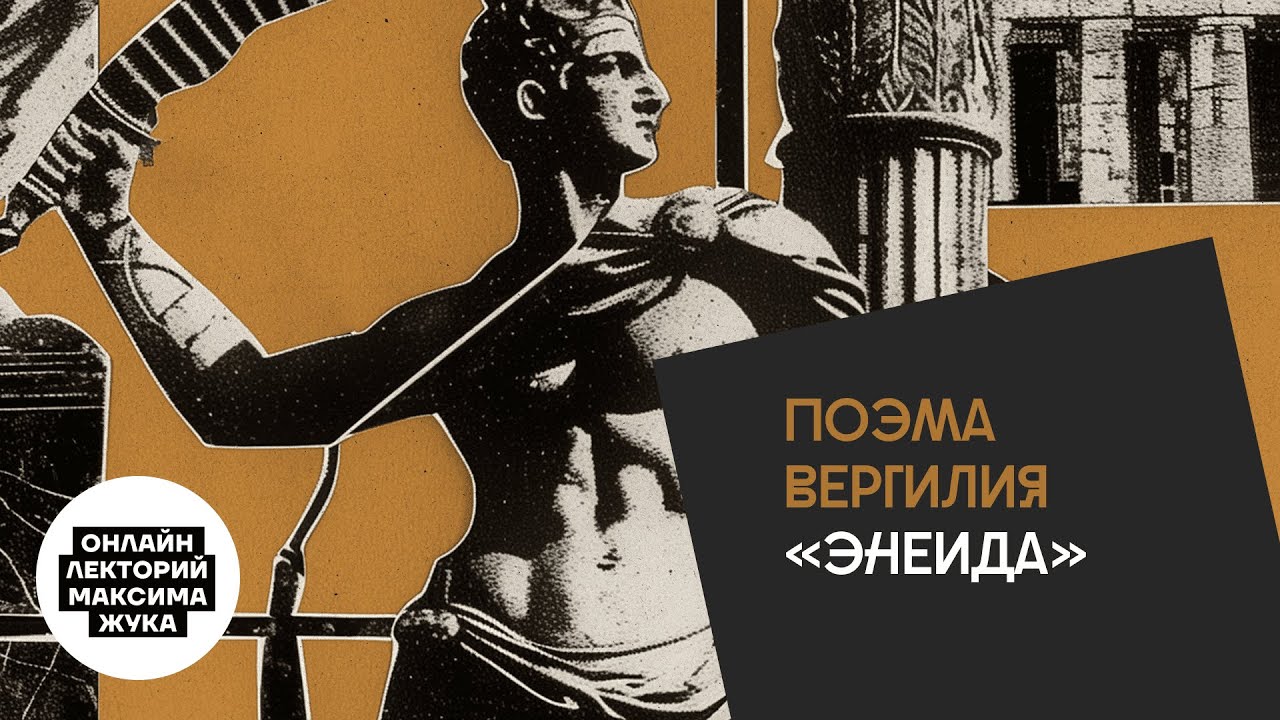
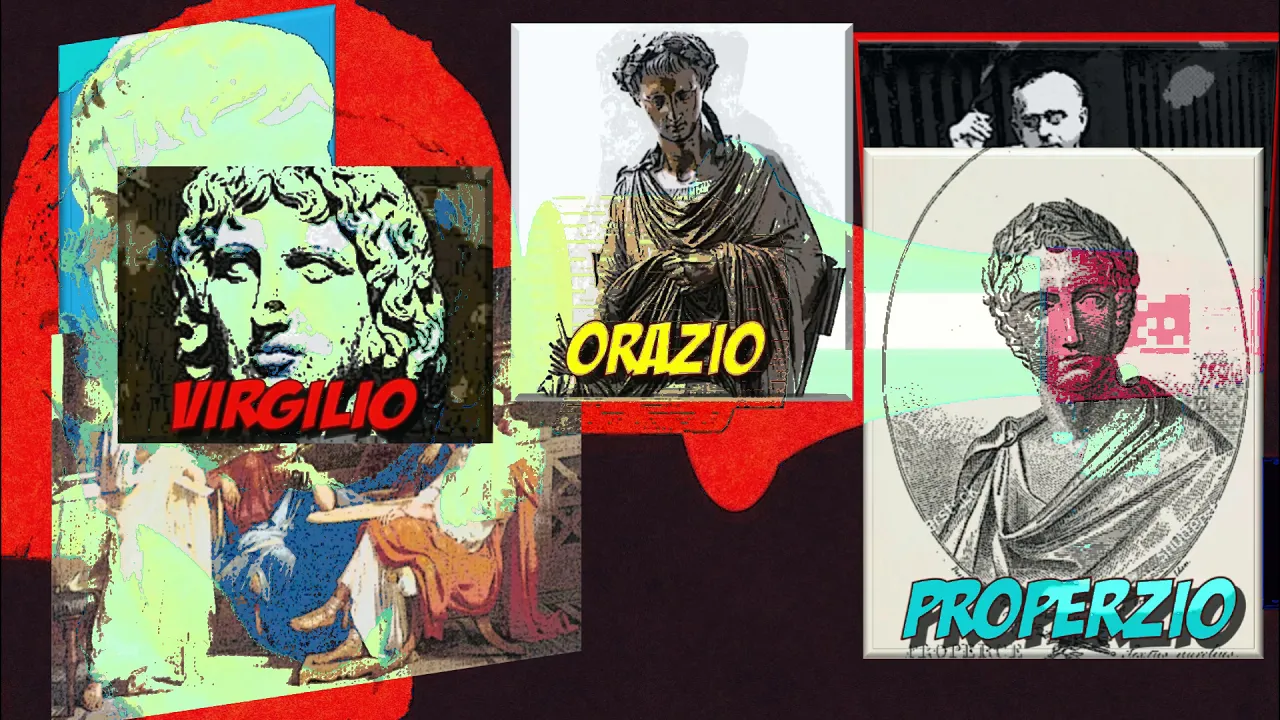





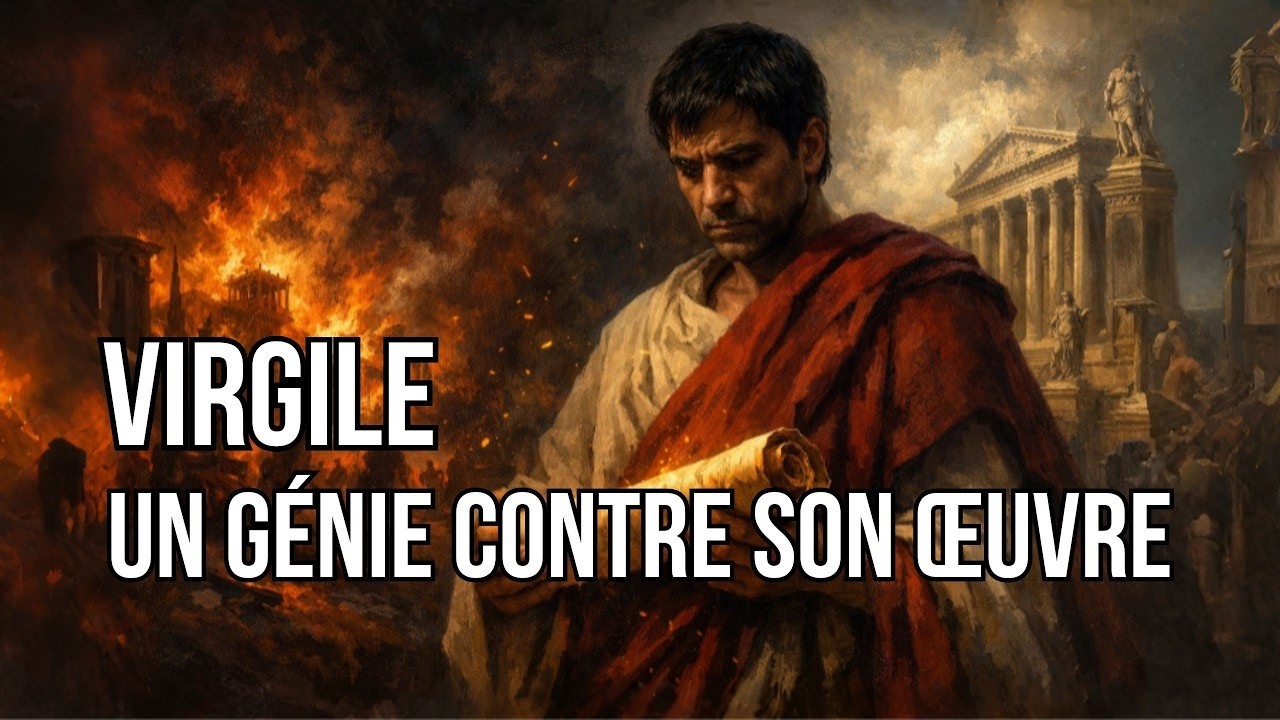



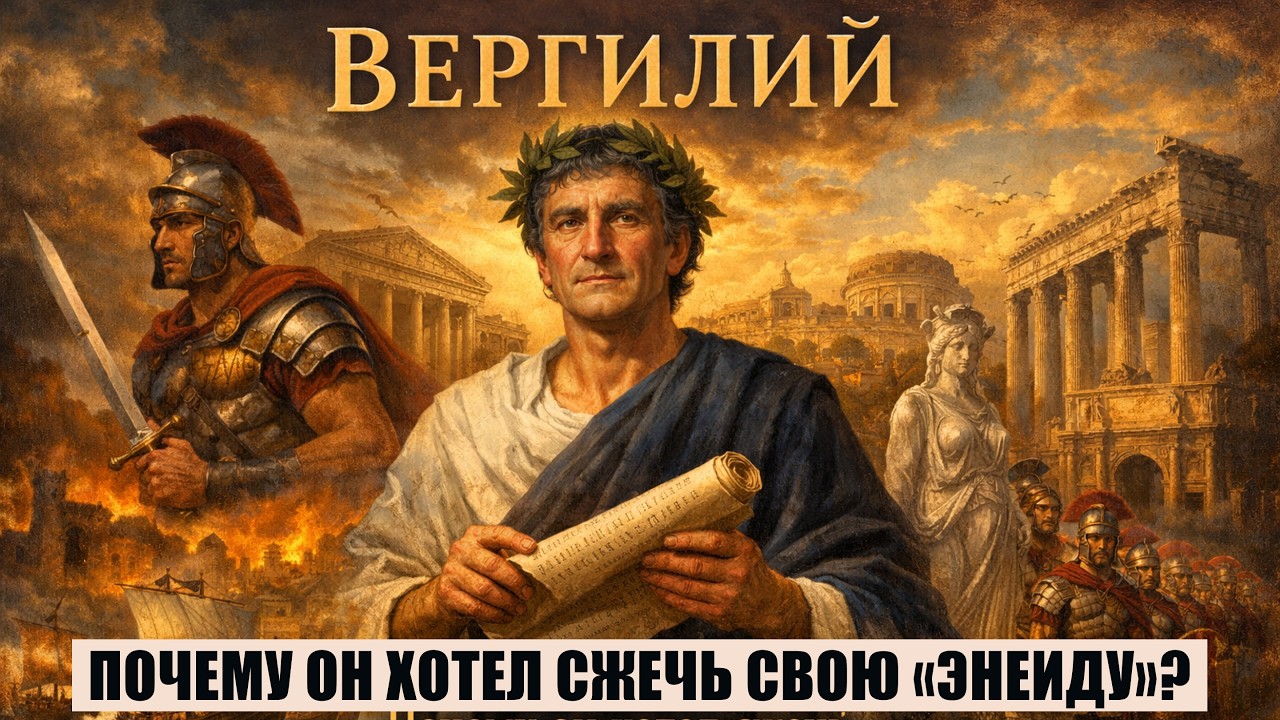

Virgil (70-19 BC) created a comprehensive cultural identity for Rome through his epic poetry, particularly The Aeneid, which reimagined Greek literary traditions to establish a distinctly Roman mythology centered on Aeneas as the legendary founder of Rome, thereby legitimizing Augustus's rule and transforming Roman literature from derivative Greek works into a powerful tool for national unification and imperial propaganda.
Virgil: The Poet Who Forged Roman Identity in the Aeneid
Added:The historical transition from the Roman Republic to the Roman Empire under Augustus Caesar, including the concept of the Pax Romana.
Familiarity with Homer's 'Iliad' and 'Odissey', which serve as the primary literary models and structural blueprints for the 'Aeneid'.
The foundational myths of Rome, particularly the Trojan War mythos and the legend of Romulus and Remus.
The role of literary patronage in Augustan Rome, specifically the circle of Maecenas and the relationship between poets and state ideology.
A comparative study of Ovid's 'Metamorphoses' to contrast Virgil's epic alignment with Augustan ideals against Ovid's more subversive mythology.
The literary reception of Virgil in the Middle Ages and Renaissance, particularly his role as Dante's guide in 'The Divine Comedy'.
The modern academic debate regarding the 'two voices' of the 'Aeneid' (the public voice of imperial celebration versus the private voice of melancholy and loss).
The evolution of the pastoral and didactic poetry genres through a detailed reading of Virgil's 'Eclogues' and 'Georgics'.
429.1K views22.9Klikes12:17Original Release: 2022-10-14
I think it’s fair to say the Romans are not best known for their Literature, and while that is frankly a shame, I can very much understand why. When an unstoppable train of legionaries comes battering down your door in their imperialistic quest to confiscate the entire Mediterranean Sea, you are unlikely to be focusing on the stylistic choices in their poetry. No amount of artistic alliteration would alleviate the absolute atrocities suffered by the people and kingdoms who found themselves the new beneficiaries of the Roman Peace. And even during the subsequent Pax Romana when life was at least nominally chill, most Romans engaged with their culture through the physical art and architecture that dominated civic spaces all throughout the empire.
Very little Latin is necessary to understand that Marcus Agrippa made this bigass temple, as public megaworks have a conspicuous habit of speaking for themselves. BUT, if Rome wanted to become more than a land of soldiers and engineers and ascribe some sense of purpose to its world conquering-ness, it needed to start writing stuff. Now by the time of the first emperor Augustus, Greece had been hard at work for nearly a millennium, and their immense catalogue of epics, poems, plays, and philosophies had become a core pillar of Roman culture. However, seeing as those were all written in Greek, the citizens were hungry for more literature in the Latin language. That’s not to say Romans didn’t have a strong start in the 200s BC, as they came out the gate with the invention of the sitcom by comedy playwrights like Plautus. For context, most of Shakespeare’s comedies are adaptations of Plautus, and for further context, Roman comedy is absolutely hilarious. This seemingly contrasts with the straight-laced, stuff-upper-lip that we observe in Cicero’s formal letters on politics and philosophy, or in the utterly emotionless war commentaries by Caesar – but as soon as we expand our sample size beyond politicians, we observe, perhaps unsurprisingly, that the Romans were really quite expressive writers.. Take the first-century BC poet Catullus, whose verses painstakingly chronicled the emotional rollercoaster of his affair with an aristocratic woman; the poor lovebird probably felt more ecstasy and heartbreak in his 30 year lifespan than most people get in a century, and some of his poems would make even Sappho blush. So the Romans clearly had poetry, and expressive poetry at that – defying the stereotype of the cold, unfeeling statesman – but there is one attribute that binds early roman literature together and distinguishes it from the Greek: it’s all concerned with what is. Family dynamics, politics, war, love affairs: all varied topics, but all part of the everyday world and deeply familiar to the Roman audience.
And so enters Virgil, a poet perfectly timed to meet the new Roman world, or perhaps, the empire of Augustus was lucky to have dawned during Virgil’s lifetime. It’s hard to convey how transformative Virgil’s poetry was for Roman culture, but it’s harder to imagine what Rome would have been like without him. With just three works in his lifetime, one of them unfinished, Virgil built on the foundations of Greek literature, stepped beyond the familiar world, and created, in beautiful Latin, a comprehensive cultural identity for the Roman people. So, to see how this humble poet marks the high point of Latin Literature and hard-carried the entire ethos of the empire, Let’s do some History. Publius Vergilius Maro was born in 70 BC just outside the northern Italian city of Mantua and would have grown up in a republic that only knew chaos. Coming off of a decade of civil wars with several more on the way once Caesar crosses the Rubicon in 49 BC, the prevailing attitudes in the mid first century would have ranged from Glum to outright Doom. And Virgil, who all his life was terribly shy and frequently sick, wanted absolutely nothing to do with it. In his youth he studied law, but once he got to Rome he spoke in court exactly once and immediately decided to leave. This choice may have also been influenced by the General Caesar recently being stabbed to death 23 times by the Senate. Either way, good to leave, so Virgil hopped down to Naples to study stoic philosophy, met the young poet Horace while he was there, and at that time began working on his first poetry collection, The Eclogues.
Inspired by some earlier Greek work, this is a set of 10 poems praising life in the countryside, where farmers talk about their land, young men bemoan unrequited love, singers compete with each other, and life is good. Well, at least it’s supposed to be, as the poems are loosely set in the Greek wilderness of Arcadia, but there are some curiously modern inclusions, as those farmers in poem 1 are actually talking about how their lands just got confiscated. See, though Virgil got out of Rome, politics marched on, sometimes literally, as Caesar’s allies Octavian and Marcus Antonius waged a war against the Assassins, and after their victory at the battle of Philippi, Octavian paid off his armies with farmlands seized from towns in Italy, of which Virgil’s hometown was one. So the Eclogues are establishing what will become a running theme of the natural world under threat from disaster and political chaos. But all is not lost, as Eclogue 4 promises a golden age dawning with the arrival of a young boy, and depending on how you read that metaphor it could be anybody from the child of Antony and Octavia, a metaphor for Virgil’s poetry, or… as later Romans believed: Baby Jesus. Taken all together, the Eclogues see Virgil refashioning Arcadia from a distant mythological land into contemporary Italy; beauty, crisis and all. He also took the leap of using the old Greek Dactylic Hexameter, the metrical structure of Homer’s Iliad and Odyssey, but in Latin. He was not the first to do this, but he was the best, and the Eclogues catapulted Virgil into literary stardom. A year after their publication in 38 BC, Virgil made friends with Gaius Maecenas, patron of the arts and close associate of Caesar Octavian, now de facto ruler of the western Mediterranean. In the following decades, Maecenas would become the primary driver of Roman literature under the Augustan Program, which is a flashy way to say minister of propaganda. But we’re not there yet, because it’s still 37 BC, and Virgil was just gifted a house on the Esquiline hill in Rome, but he once again immediately left for the countryside. Absolute boss move.
In the 30s BC, Virgil’s private life of writing poetry out in the country once again ran parallel with a Roman civil war, as Octavian vied with his former friend Antony for control of the Mediterranean world, culminating in the battle of Actium in 32 BC. So two years later, Virgil presented Maecenas and the triumphant Octavian with a poem about… farms. Specifically, it’s an instruction manual for farming, growing trees, animal husbandry, and beekeeping, all written in meter, full of poetic flourishes and mythological allusions, and somehow actually really good?
How does he keep getting away with this? This collection, called the Georgics, echoed his early work’s presentation of an ideal pastoral world threatened by natural and man-made crises, as disasters, storms, wars, and corruption all come to cause a ruckus at various points in the poem. Like the Eclogues, this work weaves ancient mythology in alongside very contemporary ideas and fears, but it also marks Virgil’s first contribution to the Augustan program: bees.
Let me explain – Bees are adorable, and they make delicious honey, but they are also an excellent model for organizing society. So Virgil’s observations on beekeeping double as a guide for bringing Roman civilization back from the disorder of all those civil wars. You will note, kind viewer, that bees are recognized not only for their efficient teamwork, but also for the curious fact that bees operate under a monarchy, not as a tyrant, but in a reciprocal relationship as the patron guardian of the whole colony. This will become a very Augustan idea, and there’s frankly a whole hive’s-worth of philosophically-nuanced Bee ContentTM in book 4 of the Georgics. My ability to say that sentence with a straight face should be a testament to this man’s insane skills.
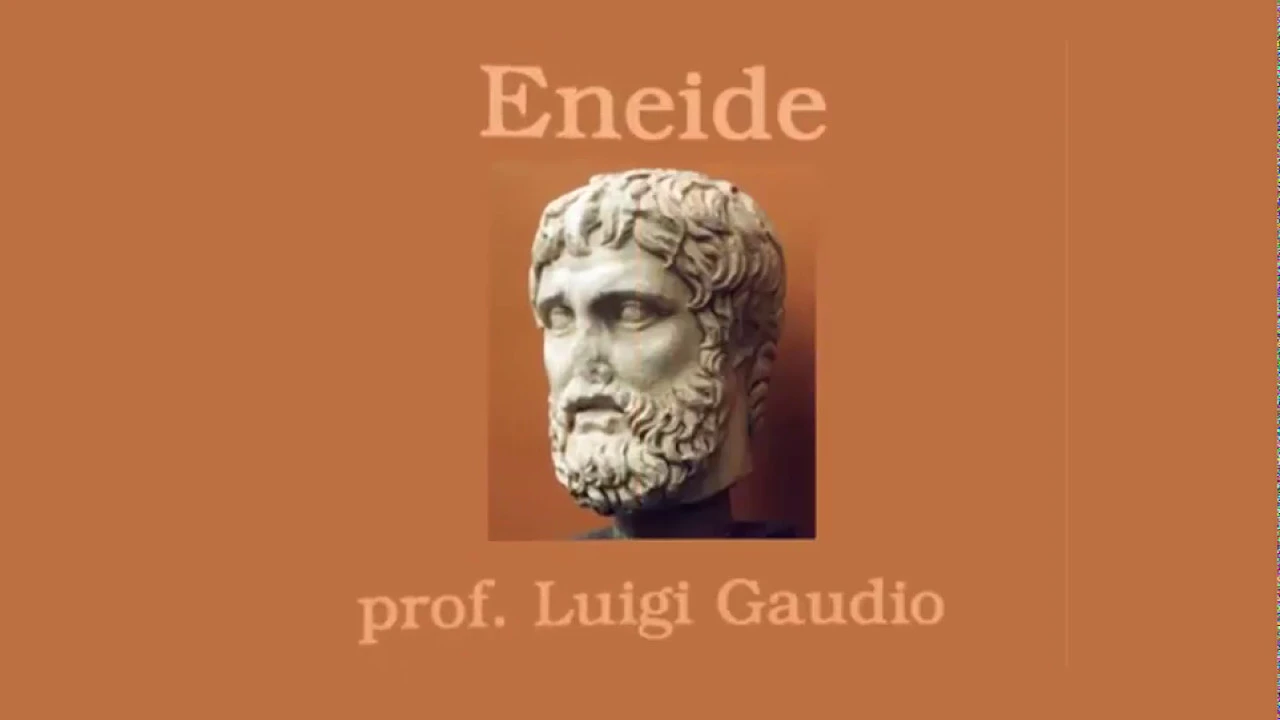
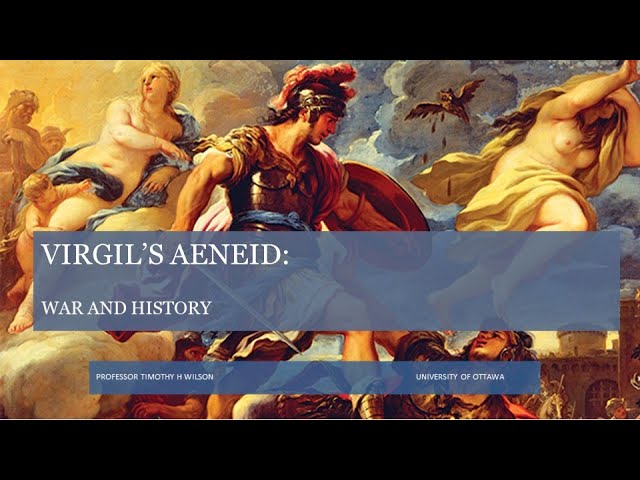
Because it’s comparatively easy to make a good poem out of action and drama, but to make high art out of a gardening textbook is some real talent… Now with that said, for his next poem, Virgil did take on a tale of action and drama, and it. is. spectacular. So in the years after Actium, Octavian became Augustus, Rome became an Empire, and Maecenas’ circle of poets became the voice of Roman culture. To mark his achievement, Augustus went absolutely nuts on public works, but also wanted to portray his reign as the start of a new golden age, and to do that, Virgil looked backwards: to the earliest foundations of Roman history and of Greek literature, and those 2 threads converged on The Trojan War. Specifically, legend went that the Trojan prince Aeneas, son of the goddess Venus, escaped the burning city and somehow made it over to Italy, where his distant descendants Romulus and Remus would later found the city of Rome. And seeing as Augustus claimed descent from Aeneas, Virgil could praise the emperor indirectly without writing him in as a Marius Sue. Keep in mind this also gives Virgil cover to criticize the great Princeps, because Aeneas represents Rome’s best and worst attributes. He’s written to be pious, dedicated, cold, stubborn, and rageful all at once. In practice, he’s the full inversion of the cunning and charming Odysseus. That comparison is handy, because, on paper, the Aeneid is a Romanized retread of the Iliad and Odyssey, but remember the Georgics was a farming manual, so there’s a lot more going on here than just Homer II.0. To summarize the over-plot, Aeneas washes up on the shores of Carthage, has a brief affair with Queen Dido until he’s gently reminded about his cosmic destiny to find Italy and establish an empire. So he leaves, she died mad about it, and Aeneas makes it to Italy, but has to fight a war about it with Prince Turnus of the Rutuli to cement his claim to Latium and also win the hand of Lavinia in marriage, which evidence suggests he sees exclusively as a business commitment. The plot in itself isn’t groundbreaking, but it’s the details and the style that elevate it into one of the best pieces of poetry in the world. For instance, as Aeneas is crossing the Aegean sea, the one thing he brings with him are the Penates, which become the household gods specific to Roman religion, and when mourning the death of his father Anchises he holds the very first Parentalia, a traditional Roman funerary festival. Aeneas leaving Troy and journeying toward Italy parallels his slow progression of becoming more Roman over the course of the epic, establishing a continuity between the ancient past and the new Augustan golden age. He’s not just going to a place, he’s creating a new identity, just as Virgil is creating a new identity for Rome by composing a distinctly Roman mythology. Aeneas of course serves as a vehicle for Augustan glory, specifically in the scenes where he goes into the underworld and sees Augustus at the head of a metaphorical roman triumph, and later receives a shield forged by Vulcan with Augustus’ victory at Actium front and center, but his characterization and structural role make him into a singular symbol of Rome. His destiny is to found a civilization he’ll never live to enjoy, but he does it anyway because selflessness is the currency of Roman heroism, and that all begins in Aeneas.
Now just as the poem begins In Media Res, with Aeneas caught in a storm at sea wishing he had died at Troy, mood, it also ends in the middle of the action, closing literally three lines after Aeneas kills his rival Turnus. Thing is, the Aeneid is unfinished: several lines have incomplete meter, as Virgil died of a fever in 19 BC while traveling from Greece, and he wanted three more years to polish the poem, but all evidence indicates this abrupt climax was the intended ending, which is frankly a baller move on Virgil’s part. Less cash money of him was his request that the unfinished poem be burned – maybe as a cover for his criticisms of Augustus, maybe because he was that much of a perfectionist – but literally everyone up to and including the emperor stepped in to ensure the poem was published. With scenes like the retelling of the sack of Troy, Aeneas and Dido’s let’s call it “wedding” in the cave, Dido’s silence in the underworld, and Aeneas grieving over the death of his battle companion, the epic far transcends any mere asset-flip of Homeric material. In fact, Virgil’s deliberately-composed poetry is far more robust than the rigid and formulaic Greek that was passed down through ancient oral traditions. Virgil’s Latin is varied and ornate and dynamic and it makes me want to learn Latin again, which is by far the best compliment I can give him. There are, rightly, mountains of scholarship on Virgil, because he’s such an essential presence in Roman culture, Augustus doesn’t work without Virgil in his corner, and I dare say there is no empire without the Aeneid. Now Go Read It. Thank you so much for watching. I could have easily made this video triple the length, because Virgil slaps harder than a roman legion armed with padleboards, but I, like Aeneas, am demonstrating selfless heroism.
And Vanity. Anyhow, Virgil is best boy and you should all for-real read the Aeneid, I’ve linked the David Ferry translation in the description below, and I will see you in the next video.
Up Next
9:59
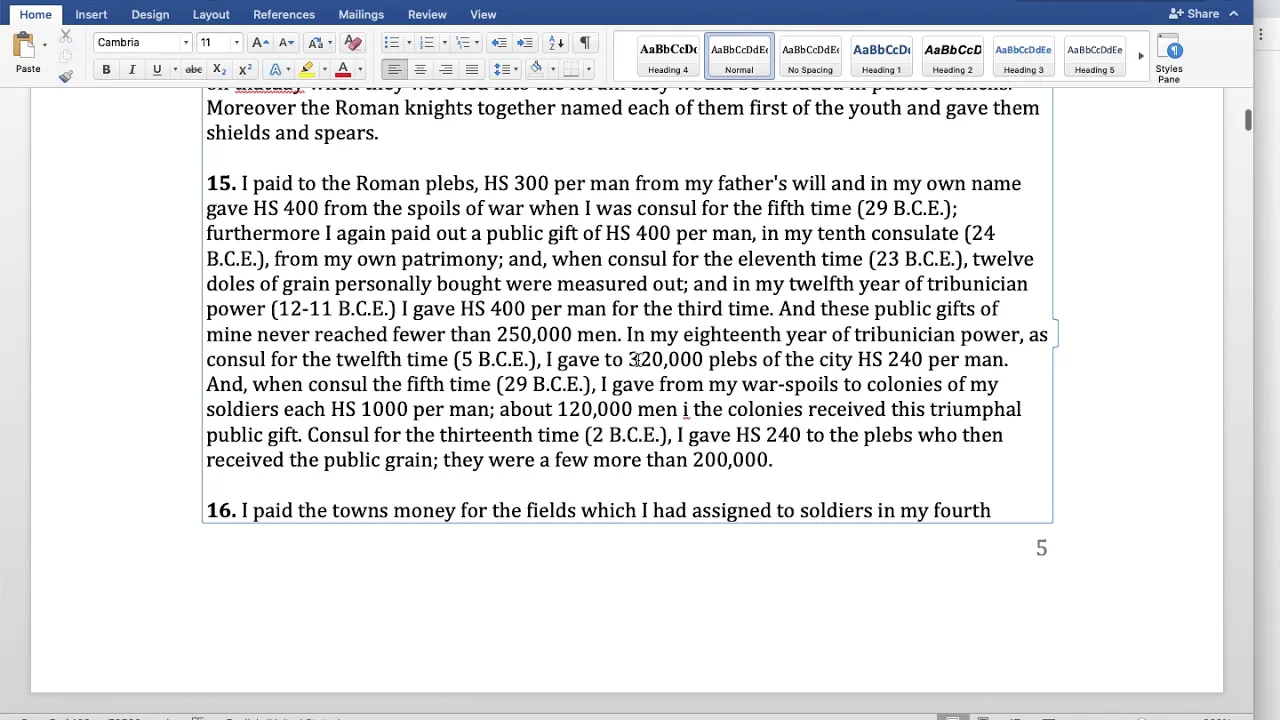
Res Gestae of Augustus: Text Analysis and Political Themes
@Obezags
1.4K views•2020-03-24

33:02
The Great Schism of 1054: Causes and Consequences
@SacredCathedrals
113.5K views•2026-02-19

9:33
Augustus and the Foundation of the Roman Empire: A Historical Analysis
@OverlySarcasticProductions
597.6K views•2018-09-21
17:05
Understanding the Cold War: Superpower Conflicts and the Road to Détente
@OverSimplified
46.1M views•2019-01-24
Related Study Plans & Knowledge Roadmaps
Structured learning paths in History
history
Byzantine Iconoclasm: Theology, Art & Politics
01Foundations of Byzantium and Early Christian Images
02The First Iconoclasm: Leo III and the Crisis of Images
03Empress Irene, Nicaea II, and the Second Iconoclasm
+ 2 more learning modules
9h5 modules
Explore Roadmap
history
Iranian Revolution (Causes, Events & Legacy)
01The Pahlavi Dynasty and the Roots of Discontent
02The Spark of Rebellion and the Rise of Khomeini
031979: The Fall of the Shah and the Climax of the Revolution
+ 2 more learning modules
8h5 modules
Explore Roadmap
history
Mali Empire: Mansa Musa, Trade & Timbuktu
01Foundations of the Mali Empire
02The Trans-Saharan Gold and Salt Trade
03The Reign and Pilgrimage of Mansa Musa
+ 1 more learning modules
6h4 modules
Explore Roadmap
history
1947 Partition: Politics, Borders & Legacies
01Foundations of British India and the Divide
02The Political Negotiations and the Mountbatten Plan
03Drawing the Boundary: The Radcliffe Line
+ 2 more learning modules
8h5 modules
Explore Roadmap