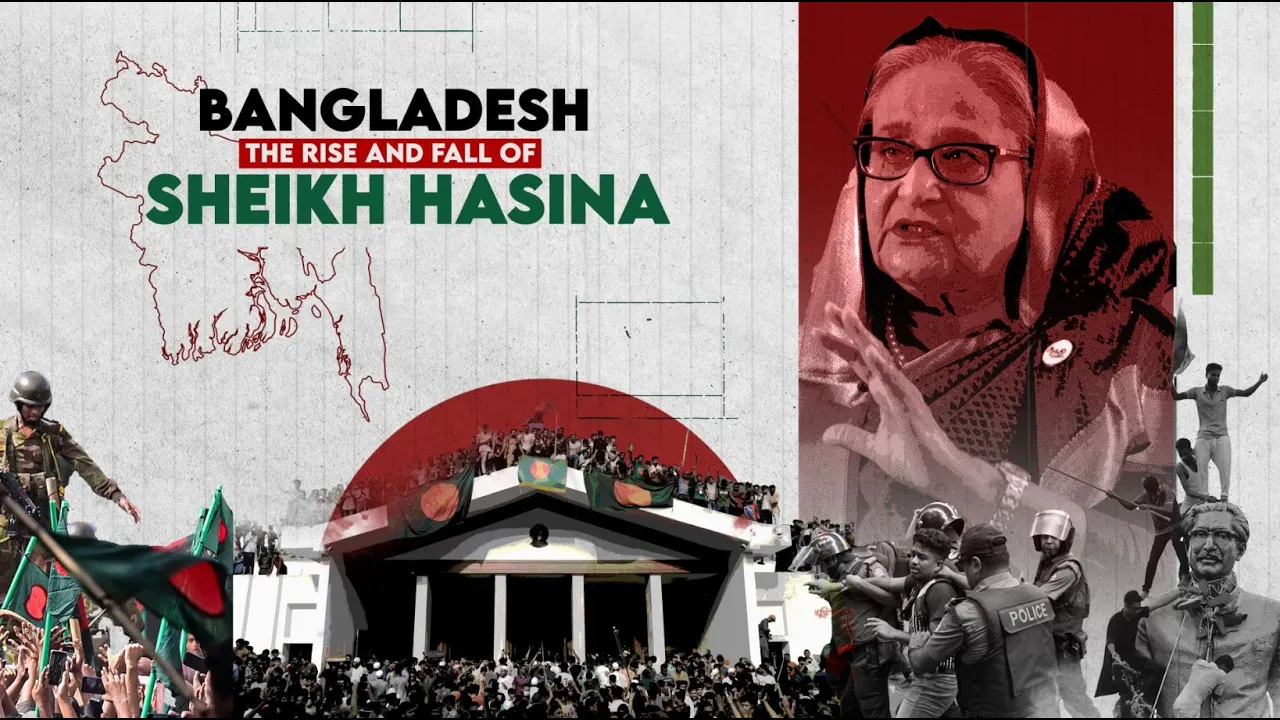











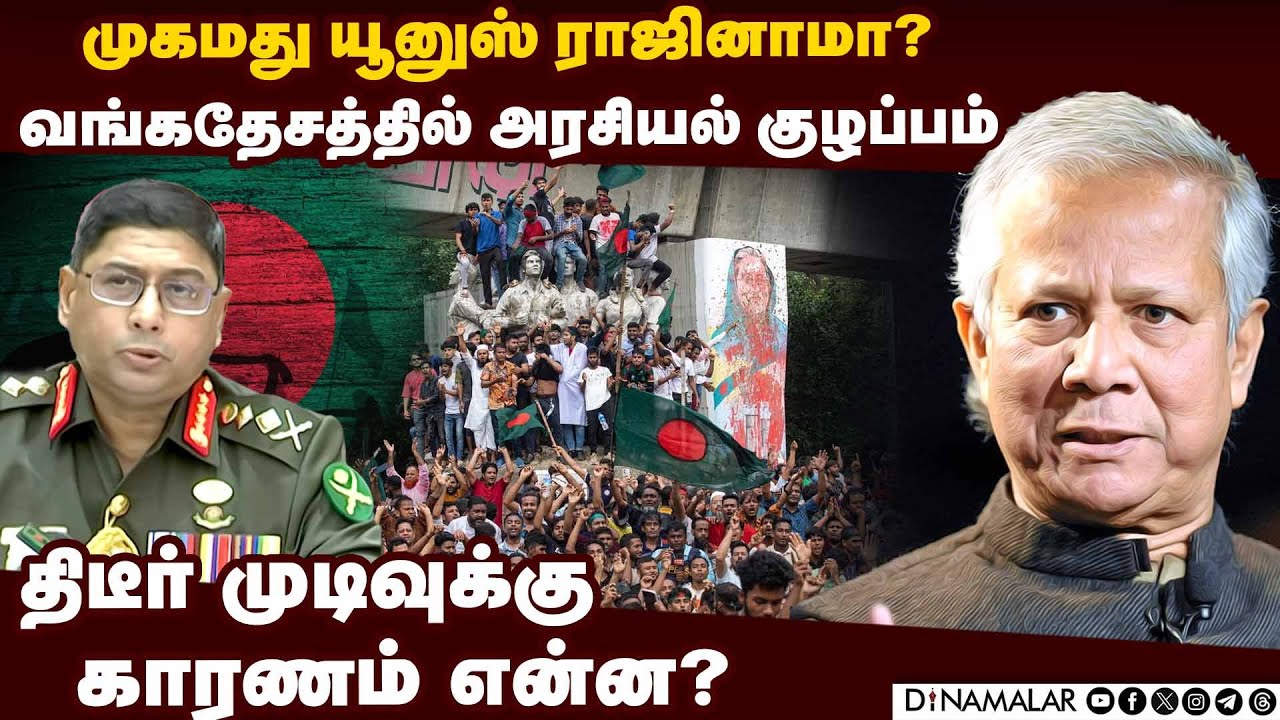
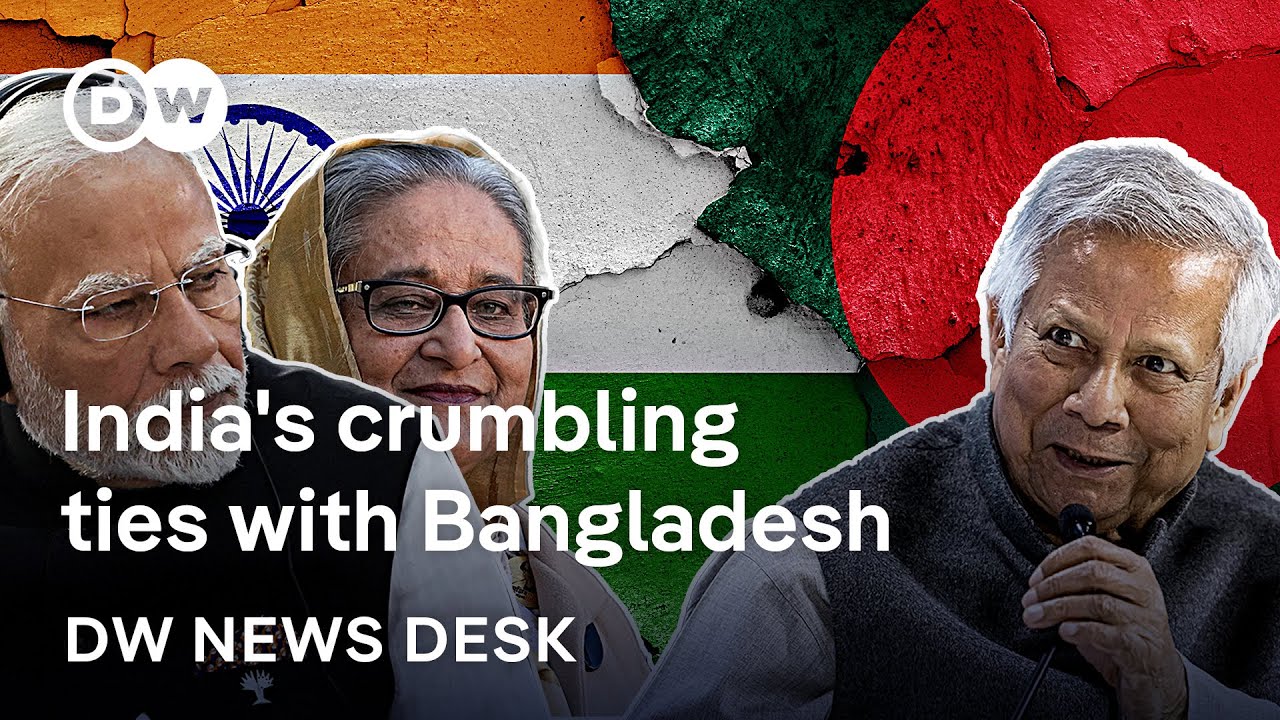




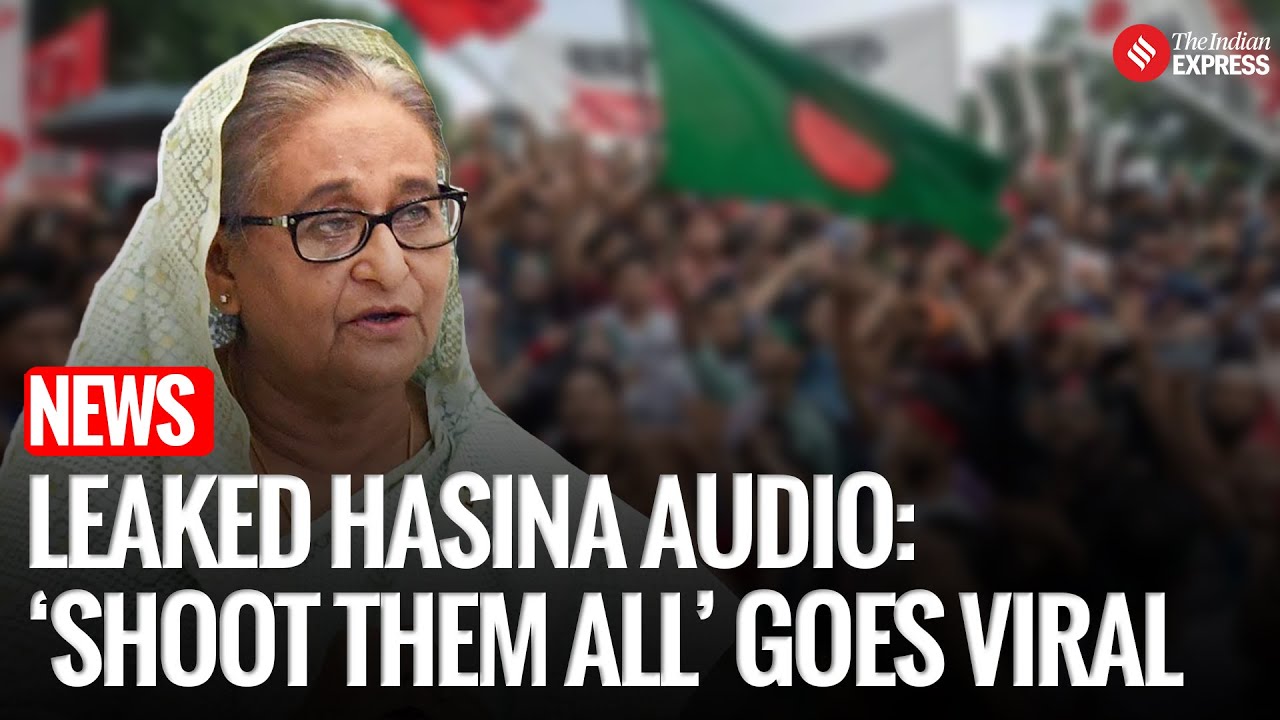
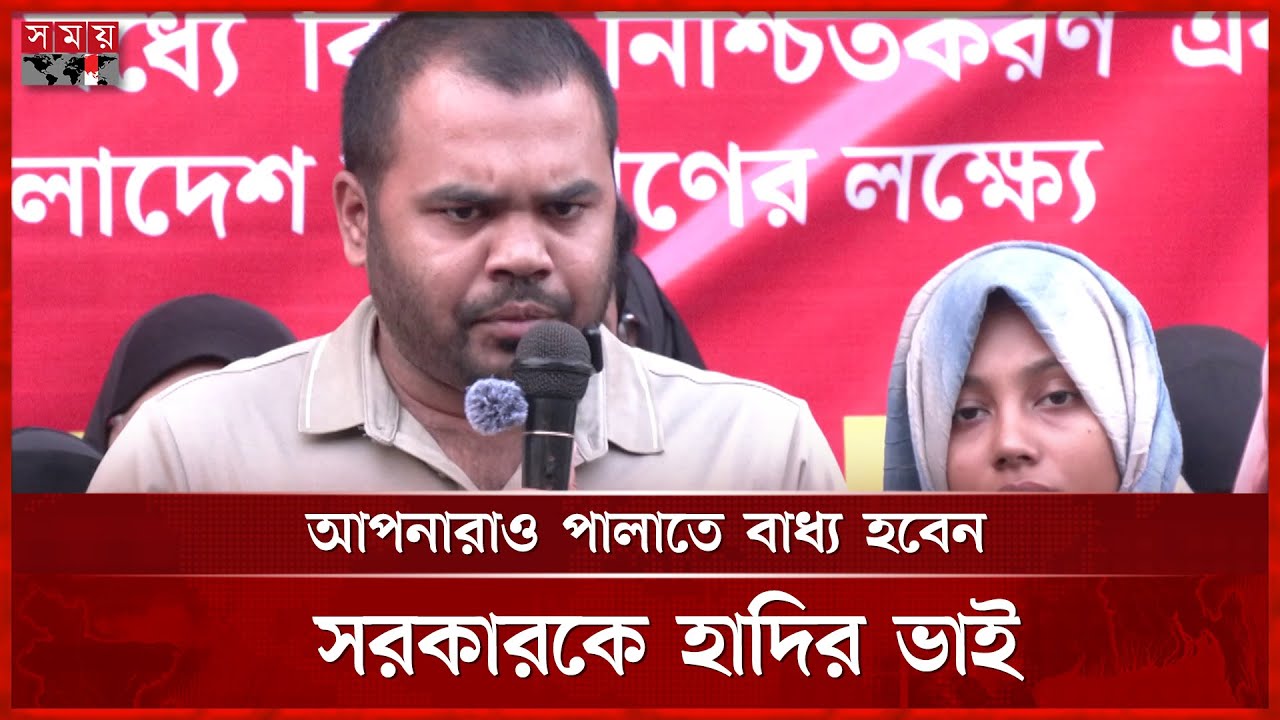

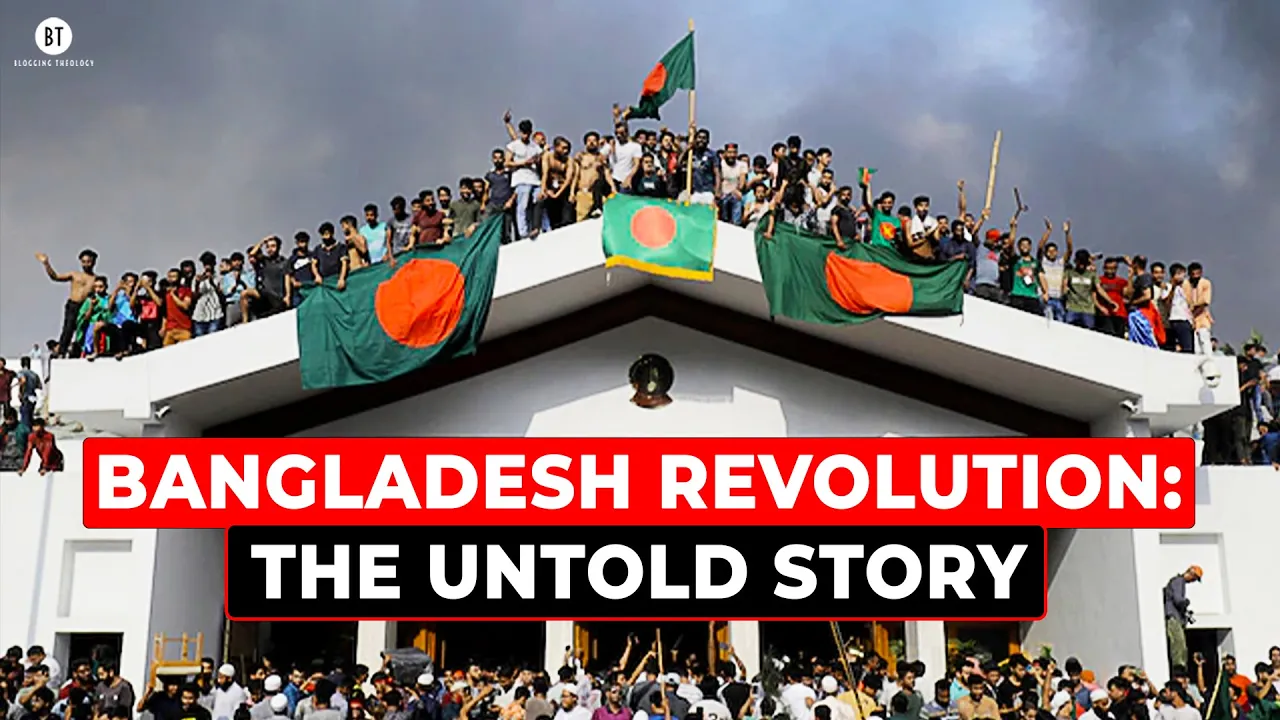
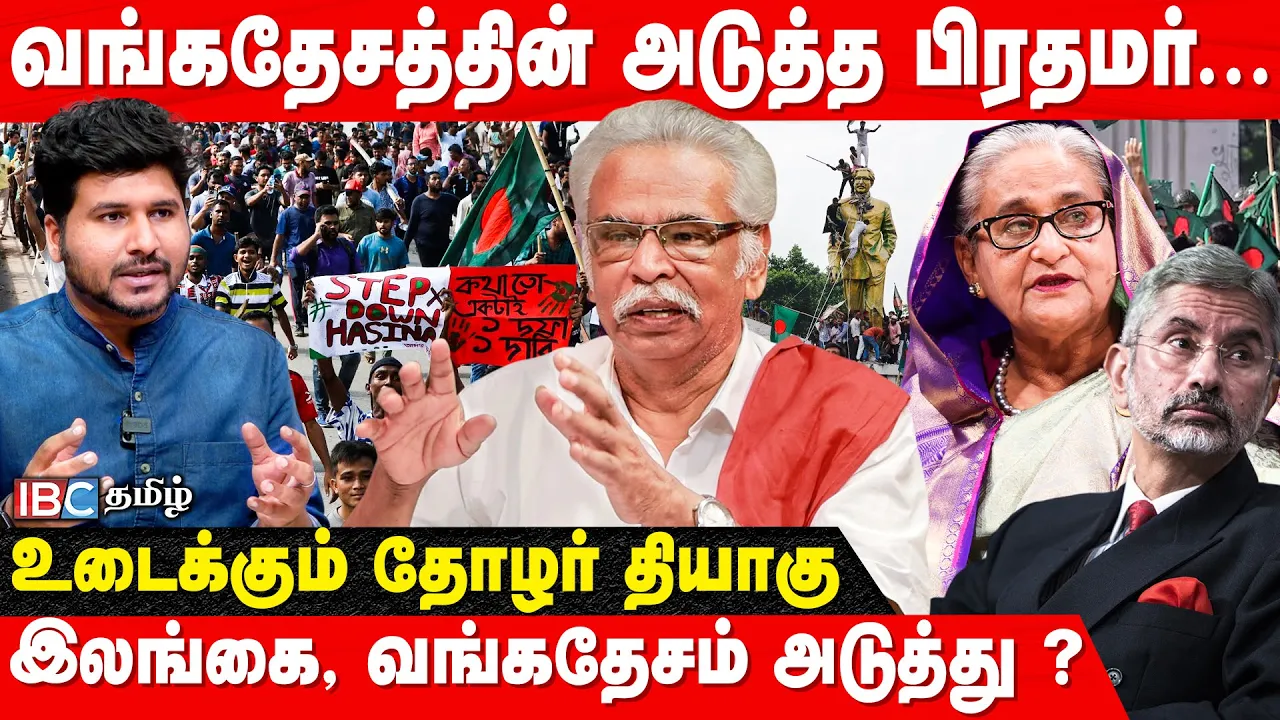
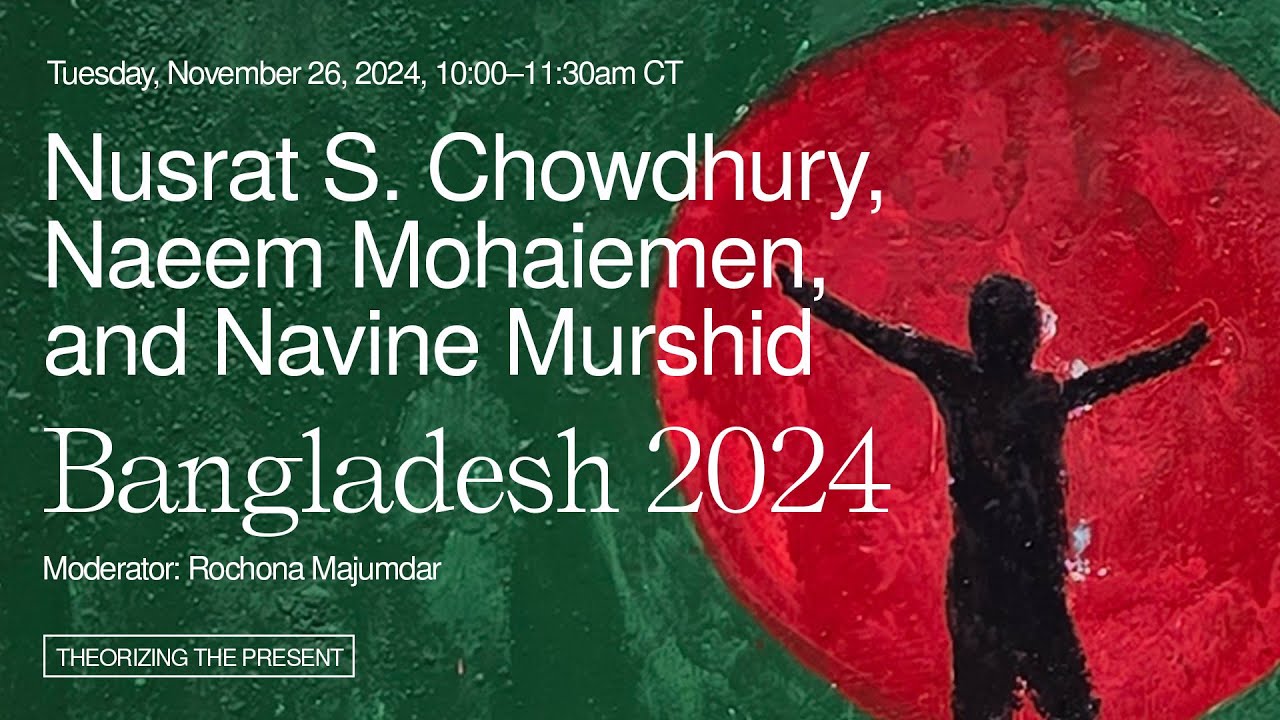

When an authoritarian leader's security forces become alienated from their commander due to excessive violence and political repression, the military's withdrawal of support can rapidly accelerate the collapse of the regime, as demonstrated by the 2024 Bangladesh uprising where junior officers' refusal to follow orders to shoot civilians led to the army's definitive break from Sheikh Hasina's government.
Bangladesh Uprising: Sheikh Hasina's Fall | Al Jazeera Investigates
Added:Understanding the history of Sheikh Hasina's regime and the Awami League's dominant party system in Bangladesh since 2009.
The origins and mechanics of the 2024 Quota Reform Movement, specifically how the reservation of government jobs triggered mass student dissatisfaction.
The historical role of the Bangladesh Military in domestic politics, including its past interventions, coups, and relationship with civilian leadership.
Theoretical concepts of democratic backsliding, authoritarian consolidation, and the role of state-controlled security apparatuses in suppressing dissent.
Analyzing the challenges of constitutional reform, state rebuilding, and the role of the interim government led by Nobel Laureate Muhammad Yunus.
Evaluating the geopolitical shifts in South Asia following Sheikh Hasina's ouster, specifically focusing on Bangladesh's relations with India, China, and the United States.
Investigating transitional justice mechanisms, human rights accountability, and the prosecution of state-sponsored violence committed during the protests.
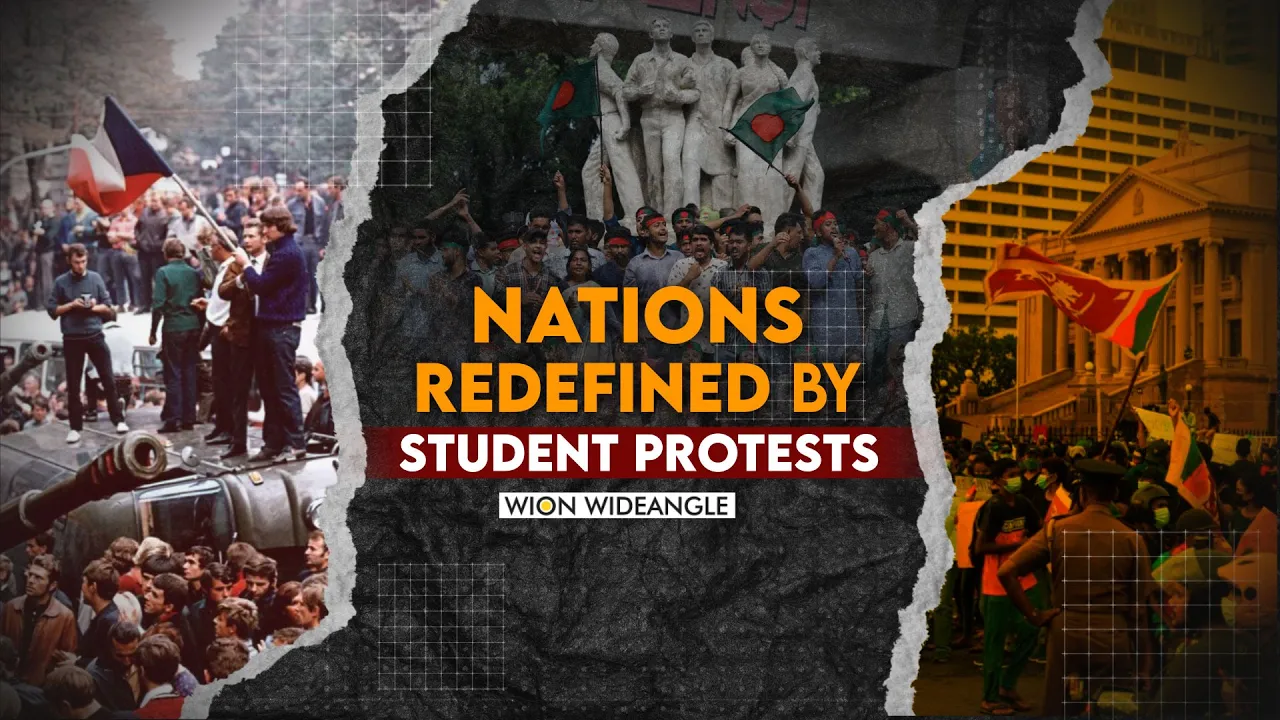
A comparative political study of student-led popular uprisings globally, comparing Bangladesh's 2024 uprising to events like the Arab Spring or Sri Lanka's 2022 protests.
65.2K views3Klikes32:23Original Release: 2025-09-16
[Music] Al Jazzer podcasts.
>> I love the country. I have no interest in power and I'm not attached to it at all.
>> That's Shikasina addressing a group of business leaders on July 22nd, 2024.
[Music] I am the prime minister, the daughter of the father of the nation.
>> During the internet blackout in that last week of July when her government cut off all access to Wi-Fi and cellular data, Sha Casino went in a bit of a media blitz. With no social media to compete with, she had the airwaves to herself. She could control the narrative.
With a mother's tenderness, she embraced them as her own, a figure Bengali had placed their faith in.
[Music] On July 25th, she toured a metro station that had been vandalized and set on fire during the protests.
Am I the one who's going to write the metro rail? Why so much anger towards it?
On July 26th, she cried with patients at a hospital.
>> They would attack even where people are receiving medical treatment. There's nothing more disgusting than that.
On July 28th, she hosted a group of grieving families at her official residence in the center of Taka, the Gonopon.
On the guest list was the family of Abu Sed, whose killing by police supercharged the uprising the previous week. Here's Abu Saied's sister.
They had us sit at the front. There was a list of families of the martyrs and our name was at the top. We stood up and she Cassina approached us and spoke to my parents and comforted them.
>> She Cassina invoked her own personal tragedy.
>> Our baba my family they killed them all. My sister and I were abroad.
>> It's the familiar sight. Hina in her headscarf projecting humility, sympathy.
>> I understand your struggle. I am with you and my goal will be to find those responsible.
>> The problem was that after weeks of killing students and 15 years of increasingly authoritarian rule, the people of Bangladesh just weren't buying it anymore.
>> It was too little, too late. By that time, so many lives were lost.
Zena Tazarin is a reporter for the Daily Star, Bangladesh's largest English language newspaper.
>> She cried crocodile tears.
>> What was the reaction to that?
>> I mean, we couldn't stop laughing. She was a terrible actor.
>> And bringing victim's families to her residence to comfort them. That wasn't playing well either, especially because according to Abu Saied's father, at least the invitation wasn't optional.
They forced us to come >> otherwise they might have tortured us in another way.
>> During that meeting, Abu Saied's sister confronted Shik Hassina directly about her brother's death.
[Music] >> I said, "My brother deserves justice. He was a student. Let him receive justice."
And they said, "Yes, we will get justice for your brother. We will investigate who killed him and what happened.
I said, "My brother died after being shot by the police. You can see it in the video footage. What more is there to investigate?"
[Music] >> If Shikina's goal during this period was to mllify the nation, it didn't work.
Here's Abu Saied's mother.
It seemed to me that Athena had ordered the police to kill my son. Otherwise, why would the police kill my son? I just want my son to get justice. Those who murdered my son should be hanged.
This is Alazer Investigates. I'm Kevin Herzen.
[Music] This is 36th July Uprising in Bangladesh. Episode 4, Chain of Command.
[Music] In a few short weeks, things had escalated beyond imagination.
Shakasino was running out of moves, and every attempt to shore up her position seemed to backfire. From the Razakar remarks to Abu Sed, from cutting the internet to shooting from helicopters, her cruelty managed to inspire an opposition coalition that stretched across the economic and cultural divide.
From rickshaw pullers to the GCam aunties, the city's wealthiest women.
[Music] On July 28th, Shikasina played her last best hand. Six student leaders who had been captured by security forces appeared on camera to read a statement.
Our main demand was the logical reform of the quota system that has already been fulfilled by the government. We are calling off the movement.
For a minute there, it seemed like the students had caved. Shik Cassina had won. But there was clearly something off, says Daily Star reporter Zena Tazarim.
>> It felt like a hostage video. Seriously, I mean, their body language was stiff and they were all ashenfaced.
>> The students looked traumatized.
>> It was visible. I mean, even a blind could sense that they were being coerced to call off the movement.
It did not have the effect that Sha Cassina had planned. Even people in her inner circle knew this strategy was doomed to fail.
>> It was a bad idea.
>> This man was one of Shikasena's intelligence officers. He agreed to speak only on the condition of confidentiality. So, we'll have an actor read his words.
>> This type of thing doesn't work. People understand what is going on.
And sure enough, a few hours later, word came down that in fact, no one was calling off anything and that the movement would continue. If anything, it actually turbocharged things, says student leader Shadik Cayam.
From August 1st, we knew Hina's days were numbered.
Before that point, the students had a list of nine demands for the government.
From then, we had only one demand, the resignation of Hassina.
In our final two episodes, we'll tell the story of the final 3 days of Sha Casino's rule. August 3rd, a pivotal meeting of military personnel. August 4th, a final flailing act of deadly violence which culminated with the now famous march to Dhaka on August 5th.
Hena fleeing for her life and the people storming her official residence in celebration.
>> We follow them.
>> So now we're on a pedal rickshaw across campus. I'm just trying to make sure I don't fall off this thing.
Thank you.
>> So, we're here on the campus of Dhaka University where on the 3rd of August they had a massive protest where they all gathered at the old language movement monument which has symbolically been a place to gather.
This was the largest gathering yet.
Despite the killings, the internet blackout, the people kept coming and coming.
Taka University student Ashifa Katum says the crowd that day was as diverse as it was massive.
[Applause] >> I saw girls with tattoos and sleeveless tops, famous singers, actors, people from all walks of life. Even the huju community were buying water and handing it out to everyone. Even those who had always been their political rivals. All kinds of people were there. Honestly, it was a united Bangladesh.
Those who missed that day, they simply wouldn't be able to imagine it.
>> The people were demanding change. Little did they know that across town, a very influential group was about to make that change inevitable.
>> There's a recurring historical theme in South Asian politics. When the politicians fail, the generals step in.
It's hard to overstate just how important the army is in Bangladesh.
It's always loomed over the country's civilian governments, periodically taking complete control.
By the beginning of August 2024, it was pretty clear that the politicians were failing. The question was, would the generals step in? But actually, the seeds of change came from below.
We connected with each other on 1st August. No more. Enough is enough.
>> A serving officer agreed to speak to Alazer. For his safety, his words are voiced by an actor. He said he and his fellow officers had been watching the events of the past few weeks with increasing amounts of concern and even disgust.
So, they hatched a plan. On 3rd August, we staged something so that chief of army staff need to sit with all the officers.
>> The goal was to get the top brass in a room with all of them so that they could speak with one voice, make their displeasure known. He says they started a rumor that the junior officers were going to stage a coup.
>> They knew that if a coup was orchestrated, then the first victim will be the senior leadership. We staged this mechanism just to bring them onto the discussion table >> and it worked. The plan got their boss's attention. A Darbar, which is a regular assembly where the army chief addresses his subordinates, was scheduled for midday August 3rd. It would be held at Helmet Hall, a large auditorium at Army headquarters.
Normally, it's the chief who does all the talking, but this time he was also doing some listening.
[Music] We scripted questions so we can analyze them to that direction.
>> The junior officers wrote out several questions to direct to the army chief and started reading them off one by one.
>> First question was this. Why are we opening fire to the innocent people? We don't know who is our friend or foe. The army is a society within a society. Our friends, our son, our kids, they are civilian now. They are just blaming us.
>> The officers stated in no uncertain terms that they were done, that they didn't want to kill anymore or see any more students be killed. Chief of Army Staff General Walker listened from the stage.
In an interview with the AJI unit, he described it as a productive meeting.
Said he was grateful for the feedback.
It was a very serious discussions, very good interaction with the officers. I told my perspective, they gave out their thoughts, ideas. It was very helpful.
>> But others who were in the hall remember it pretty differently. They say the atmosphere was tense as he took it all in. There was a look of concern on his face.
>> He was absolutely worried. He was tensed, impulsed. He could not even sit properly, very nervous.
>> The meeting was supposed to last a couple of hours, but after six or seven questions from the ranks, Walker called it. He told the assembled officers and all who had joined via teley link, "That's it. We're not shooting anymore."
And then he left.
>> No more firing. The conference is hereby stopped.
>> The Darbar was done. And with that, the army was changing course.
[Music] >> It was the junior officers who decided they were no longer going to shoot on their own people. And the generals did not have a choice.
>> Photographer Shahid Alam.
>> The generals were all handpicked by Hassina. They were people who over the last 15 16 years had been selectively taken because they would be part of the army league machinery. They were the ones getting the benefits. Once the junior officers rebelled, the generals knew they no longer had the guns.
They're not the ones in the street shooting. So the ground had moved from under their feet.
>> To put it in the simplest terms, as of this meeting, the army was no longer with her. Hina must have known this spelled the end.
Later that day, her only living sibling arrived in Taka, Shik Rahana.
We're told it was her job to convince Shikina to stand down and it wouldn't be easy.
Inside sources say Hina was increasingly agitated, isolated, and paranoid.
This feeling that everyone was out to get her wasn't unfamiliar.
After the break, producer Tammericar on how this became a defining feature of her leadership and led to some very dark places for the people of Bangladesh.
[Music] I'm Charles Dance, your narrator for Hindsight, a dramatized podcast from Alazer. We carry on exploring the lives of history's most notable figures from Rosa Parks to Paul Pot. Hindsight from Alazer. Wherever you get your podcasts, [Music] August 21st, 2004.
Shake Hassina is wrapping up a speech outside the Alamy League party office in Taka.
Supporters crowd the street.
Just as she's about to step down from the makeshift stage, it happens.
>> A series of explosions rip through the air, echoing off the buildings around them.
13 grenades have just been hurled into the dense crowd.
>> The grenade blast killed dozens of people and wounded more than 500, including Hina, who suffered severe injuries in one ear.
>> Shake Hina survives, but the attack changes her. She points the finger at the then governing Bangladesh Nationalist Party, the BNP, accusing them of helping to orchestrate it. A charge that the BNP's always contested.
>> This government, coalition government, Chamat BNP government who believes in fanatics terrorist politics, this government should go. our prime minister should step down.
>> From that point on, Shik Hassina's decisions are those of a leader under siege.
Flash forward to 2009. Hassina is back in power, elected prime minister for a second time after first serving in the 1990s.
It's a landslide and at first there's optimism.
>> Election officials say the Awami League overwhelmingly dominated the first parliamentary election here in 7 years.
>> But it doesn't last. By her reelection campaign in 2014, the political landscape has shifted. The BNP are demanding the vote be overseen by a neutral caretaker government. When Hina refuses, they pull out entirely.
>> The election in Bangladesh is over. The ruling Awami League returned to power.
>> That boycott clears the way for the Awami League to consolidate power and sets the stage for one party rule to take hold in Bangladesh.
For more than a decade before the student movement, Shik Hassina's government increases control over public criticism.
In 2018, it passes the digital security act, giving the government sweeping powers to control online speech.
Rights groups say it's been used to go after activists, journalists, anyone who criticizes the state.
>> Last year, political cartoonist Ahmed Kabir Kishar and 10 others were arrested.
Bangladesh.
>> I could never imagine that one day I would be facing jail terms and torture just for drawing political cartoons and making critical comments.
Over the years, Hassina dramatically expands Bangladesh's security apparatus.
She puts loyalists at the helm of police and intelligence agencies. It's under her that the rapid action battalion, RAB, a paramilitary unit that operates with almost total impunity, becomes notorious with human rights groups calling it a government death squad. NOS's have alleged that the RAB and other Bangladeshi law enforcement are responsible for more than 600 disappearances since 2009.
[Music] [Applause] When the student protests come around, this machinery built for surveillance, political control, and rapid response is on full display.
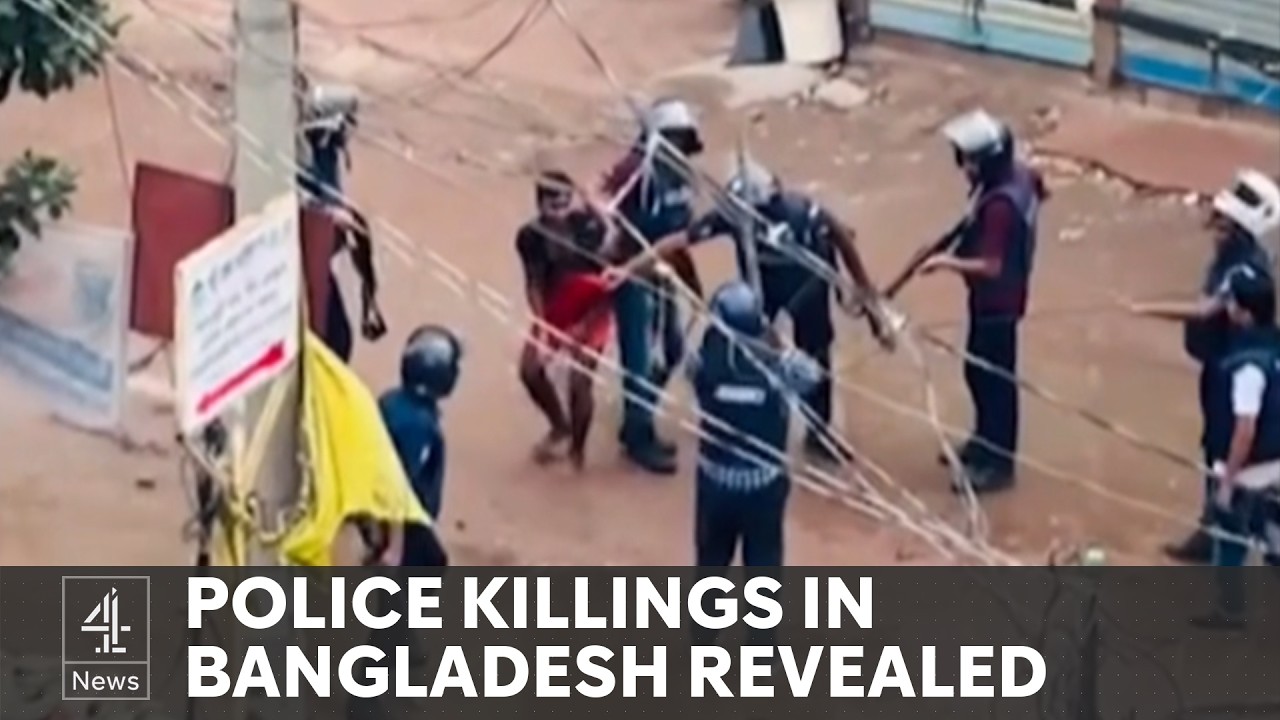
Shoot on site curfews, tear gas, stun grenades, rubber bullets, even live ammunition used to break the movement.
25-year-old college student Minul Islam, who according to his family, was not involved in any protest, was caught in the middle and shot in the chest by police.
>> I am a poor person and lost my only son to bullets.
By early August 2024, as the student protests roll into their third week, democracy feels like a fading memory.
Observers say Hina's regime is paralyzed by paranoia and relying on coordinated and calculated militarized oppression.
The only question is how long can it hold on?
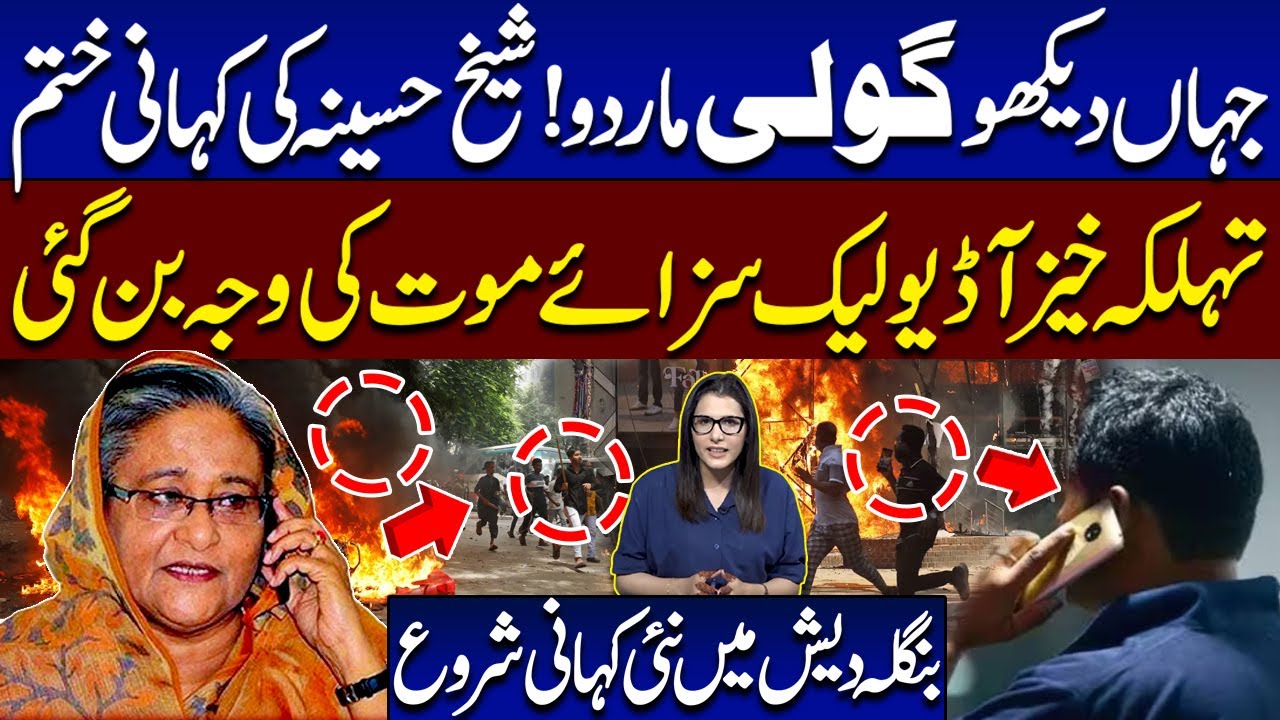
[Music] I am sending RAB to all the gathering spots.
>> This is a phone call obtained exclusively by the AJI unit of Shikina talking to one of her advisers.
They are discussing how to deal with fires being set by protesters.
They are the ones igniting the fires. Do they not have homes? There is no time to sit around. They're burning our houses, so theirs will be burnt by the public.
>> These calls reveal her state of mind. As the uprising wore on, she was very much in an eye for an eye mentality.
>> There's no point in doing anything else.
You burn down and we'll burn down too.
>> Police commissioner.
>> The police commissioner said it too. We have to stop them.
>> If we are not on the ground, they will not get motivated. I told RAB to go there with helicopters. Also told BGB.
>> August 4th was the Awami League's last gasp. The army had stepped back, but Sha Cassina remained defiant. She felt betrayed and still had people willing to commit violence on her behalf.
The police, Bangladesh Border Guards, BGP, the Rapid Action Battalion, RAB, and of course her most loyal Awami League foot soldiers, the Jubo League and the Chhatra League. The Chacha League was out for blood that day >> on the 4th of August. Chhatra League, Jubilee League men, they came down fiercely on the general public.
>> Daily Star reporter Zena Tasarin.
>> My office was vandalized.
It's like it was ravaged because we were the only other newspaper that was still reporting on the death toll. At this point, it looked like a war zone because it's a glass building.
The night before the fourth there was a declaration we will empty the streets of Dhaka in 7 minutes and that was the promise of Chhatra League.
>> Andelib Chowri is an English professor at independent university Bangladesh a private university.
My students were gathering and I remember begging them after having seen that Jake you know let's not go to the streets tomorrow let's just take one day off let's not do anything you know why don't you guys stay home and they said to me the declaration they did we'll be on the streets now like how are they going to empty them out >> and these kids showed up on the streets and again shamed us >> one of those students doing the shaming was proposi who we met in episode one >> every night we used to think that This might be our last night together.
>> Propi attended Jiangar Nagar University which is northwest of Dhaka. But she says she spent these last few days on the streets of the capital.
>> I was staying there with my friends and we started to think like we could not see the sunrise or we could not see the sunset. What would be our last meal? You know we was to make fun about this.
>> Yeah. Well, it's a Bengali thing. You guys laugh through the pain a lot. Yeah.
And I vividly remember during the 4th of August, we somehow sensed that we could get killed.
>> Wow. Every day you said goodbye.
[Applause] >> There were coordinated attacks all over the country that day.
According to the UN, police and Awami League supporters and at least one member of parliament fired at largely peaceful protesters in Ashulia Savar district.
Three children and four men suffered gunshot injuries.
Taka University student Ashifa Katum was in Taka's main square Shabag when things kicked off.
That day we heard 22 people had been killed at Karon Bazer. So much information was coming in. I can't confirm all of it but that's what we heard. We also heard snipers firing from above at Bangla Motor. Shots were fired from the metro line that runs over Shabbag.
[Applause] In the north of Taka in Mirur, armed Awami League supporters led by another member of parliament launched a coordinated and deadly attack with police, firing on protesters from nearby buildings.
>> Tajul Islam is prosecuting the Hwam League government for the student killings. He says at this point, Shik Casina started to lash out at the army.
We have the testimonies from the persons who were with her during the last 24 hours before her departure and they have stated that she was so angry. She was so desperate and she was asking the army chief why are you not being able to clean the protesters. Police is doing a very good job.
She was asking her chief of armed forces, then the law enforcement agencies that, "Hey, I got you lots of fancy tunes, lots of fancy gadgets. Just use all of them."
It's at this point when word comes down.
Responding to the day's violent attacks and a rumor that Sha Cassina was planning to once again shut off the internet, the student organizers would bring the much anticipated March to Dhaka forward.
It was now scheduled for the very next day, August 5th. In preparation, the prime minister chaired a meeting of the National Security Council.
There were many. It was around, say, 50 people.
>> This intelligence officer was at the meeting.
>> Meeting started probably 1 hour after the scheduled time.
According to the UN, the meeting included the chiefs of Army, Air Force, Navy, BGB, DGFI, NSI, police, and its special branch, and the ministers of home affairs, education, and foreign affairs, too. It was a packed house. And this intelligence source says it was uncomfortable from the start.
>> People are tensed. People were unsure about what's going to happen next day.
She Casino was doing her best to project confidence.
>> She laughed a little and greeted everyone openly. She was trying to show that nothing was very wrong and she was confident to handle this type of situation. But I found her towards the end of the meeting very muted and very nervous at that time.
They discussed re-imposing and enforcing a curfew to prevent the march to Dhaka.
There was another security council meeting later that night. We're told they talked a lot about the casualties among their own people, Awami League police, but never mentioned the students.
Awami League people and police are dying. But what is the toll on the demonstrators on the students? Nobody has raised on that forum. So she was upset. She said all the intelligence and the other people that you have failed to give me the proper information in time.
>> But that's because she didn't want to hear it.
>> Everybody was saying what she wanted to hear. They never used to say that there is widespread dissatisfaction against her in the country. They never say that.
They never say that it will not be wise to handle it as a law and order situation. It's a political situation.
They never say so. They never say that the common people are also participating and they have a legitimate right to speak.
>> Photographer Shahadul.
I think what also happened is as she got more and more aggressive and paranoid and dictatorial, the group around her, the bubble around her hardened. I think there might have been a time when people could have told her this is perhaps not the best way. In July, August she was completely separated from anyone. No one was there.
By the evening of August 4th, it was confirmed the march to Sataka was happening. It would be the largest mass mobilization of the uprising so far. No one knew how many people would come. The army chief and other security officials reassured the prime minister that Taka could be held. A plan was agreed according to which the army and BGB would deploy alongside the police and block protesters from accessing central Dhaka if necessary by force.
[Music] The battle lines were drawn. The next day would change everything.
That's next time on Alazer Investigates.
[Music] Alazer's investigative unit approached all parties featured in this series. An Awami League spokesperson said, "We're sorry if the family of Abu Saied felt intimidated. The government's resolve to look into potential misconduct by all parties engaged in violence was genuine.
Sha Cassina denies saying the police had done a good job by killing people. The statement said Sheina and her former ministers were not personally responsible for or directed the use of lethal force against crowds. They say there is nothing in the phone recording that implicates the prime minister in the illegitimate use of force and that the helicopters were deployed to protect people and property. They say certain claims uncovered by the United Nations investigators are based on testimony of witnesses handpicked by the interim government and are unsupported by proper evidence.
This episode was written and produced by me, Kevin Herton, and Tamara Condocar with Craig Pennington, who is also our audio editor. Additional editing by Manny Peneritos. Clean Cuts did the final sound mix. Blackbox composed original music for this series. Will Thorne is the executive producer and Nay Alvarez is Alazer's head of audio.
We will see you next time.
[Music]
Up Next
10:23
How Romans Told Time: Ancient Timekeeping Methods Explained
@InvictaHistory
356.7K views•2019-04-26

33:02
The Great Schism of 1054: Causes and Consequences
@SacredCathedrals
113.5K views•2026-02-19
43:41
Iran 1979: Anatomy of a Revolution | History Documentary
@aljazeeraenglish
575.5K views•2019-02-04
17:05
Understanding the Cold War: Superpower Conflicts and the Road to Détente
@OverSimplified
46.1M views•2019-01-24
Related Study Plans & Knowledge Roadmaps
Structured learning paths in History
history
Byzantine Iconoclasm: Theology, Art & Politics
01Foundations of Byzantium and Early Christian Images
02The First Iconoclasm: Leo III and the Crisis of Images
03Empress Irene, Nicaea II, and the Second Iconoclasm
+ 2 more learning modules
9h5 modules
Explore Roadmap
history
Iranian Revolution (Causes, Events & Legacy)
01The Pahlavi Dynasty and the Roots of Discontent
02The Spark of Rebellion and the Rise of Khomeini
031979: The Fall of the Shah and the Climax of the Revolution
+ 2 more learning modules
8h5 modules
Explore Roadmap
history
Mali Empire: Mansa Musa, Trade & Timbuktu
01Foundations of the Mali Empire
02The Trans-Saharan Gold and Salt Trade
03The Reign and Pilgrimage of Mansa Musa
+ 1 more learning modules
6h4 modules
Explore Roadmap
history
1947 Partition: Politics, Borders & Legacies
01Foundations of British India and the Divide
02The Political Negotiations and the Mountbatten Plan
03Drawing the Boundary: The Radcliffe Line
+ 2 more learning modules
8h5 modules
Explore Roadmap