




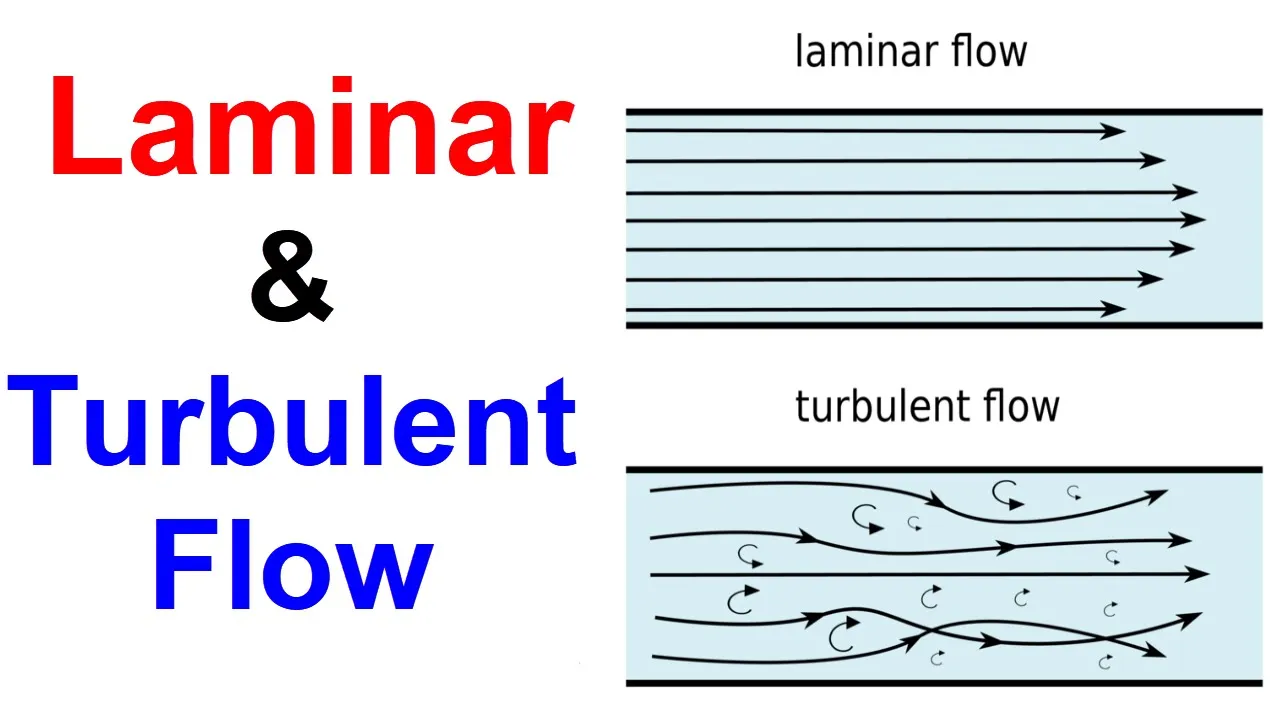
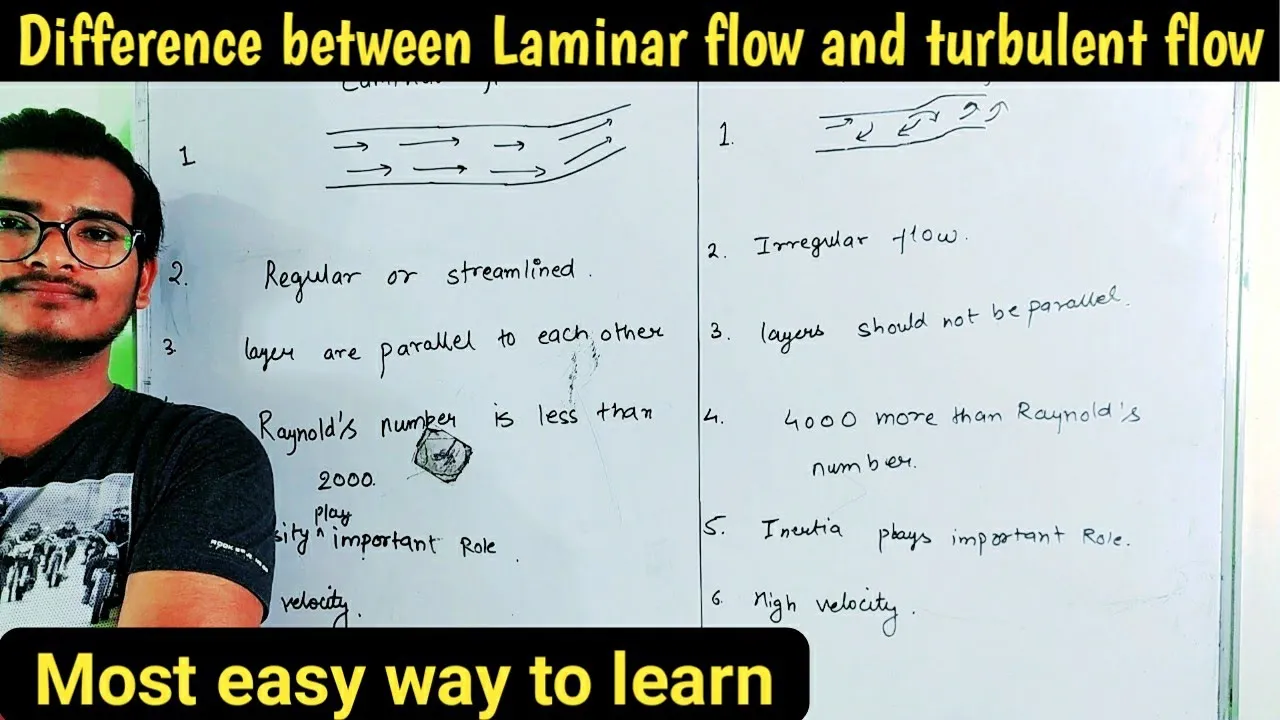






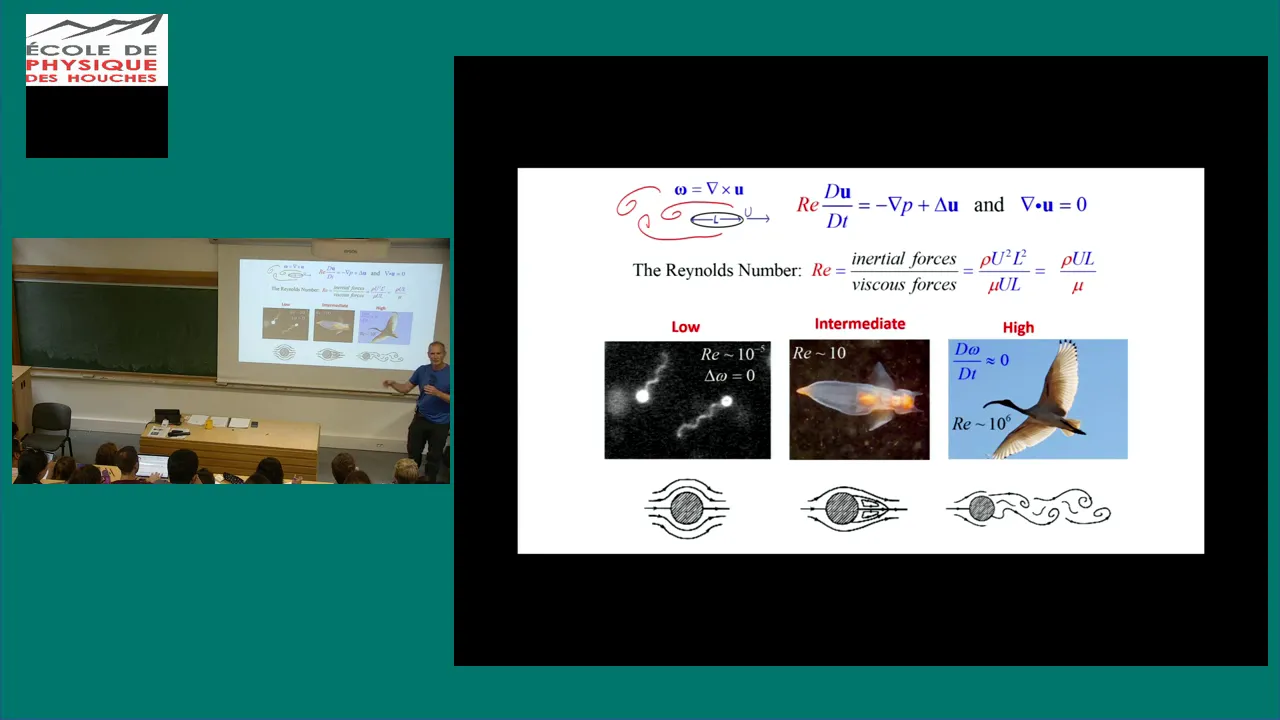














The Reynolds number, which is the ratio of inertial forces to viscous forces in a fluid, determines whether flow around an object is laminar or turbulent; at low Reynolds numbers (where viscous forces dominate), flow remains smooth and attached to surfaces, while at high Reynolds numbers (where inertial forces dominate), flow separates from surfaces and generates turbulent vortices, and this principle allows researchers to study fluid interactions with objects of any size and shape in any fluid by matching Reynolds numbers between different experimental setups.
Reynolds Number & Flow Around Objects | Physics of Life
Added:Basic fluid properties, specifically the definitions of fluid density, dynamic viscosity, and kinematic viscosity.
The qualitative difference between laminar (smooth, orderly) and turbulent (chaotic, mixing) fluid flow.
The physical concept of inertial forces versus viscous forces within a moving fluid.
Fundamental principles of fluid dynamics, such as velocity vectors and streamlines.
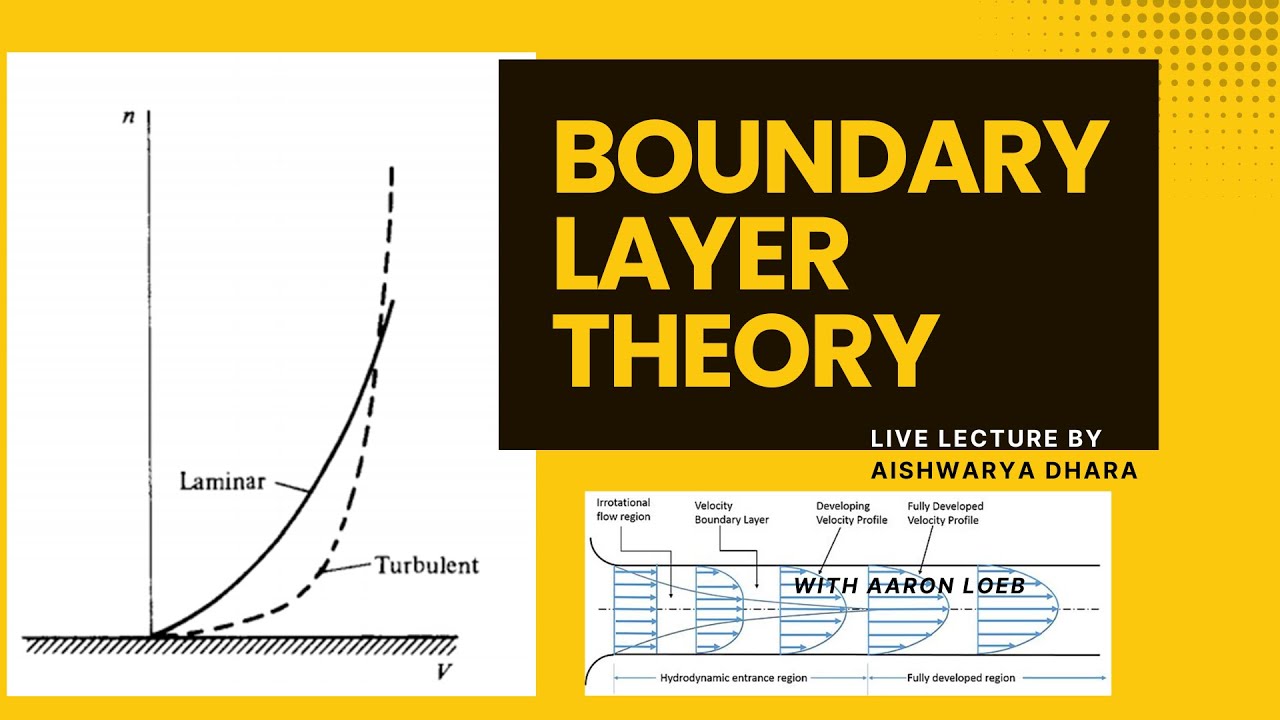
Boundary layer theory and flow separation, explaining how fluid behaves immediately adjacent to an object's surface.
The phenomenon of vortex shedding and the formation of a Kármán vortex street behind cylindrical obstacles.
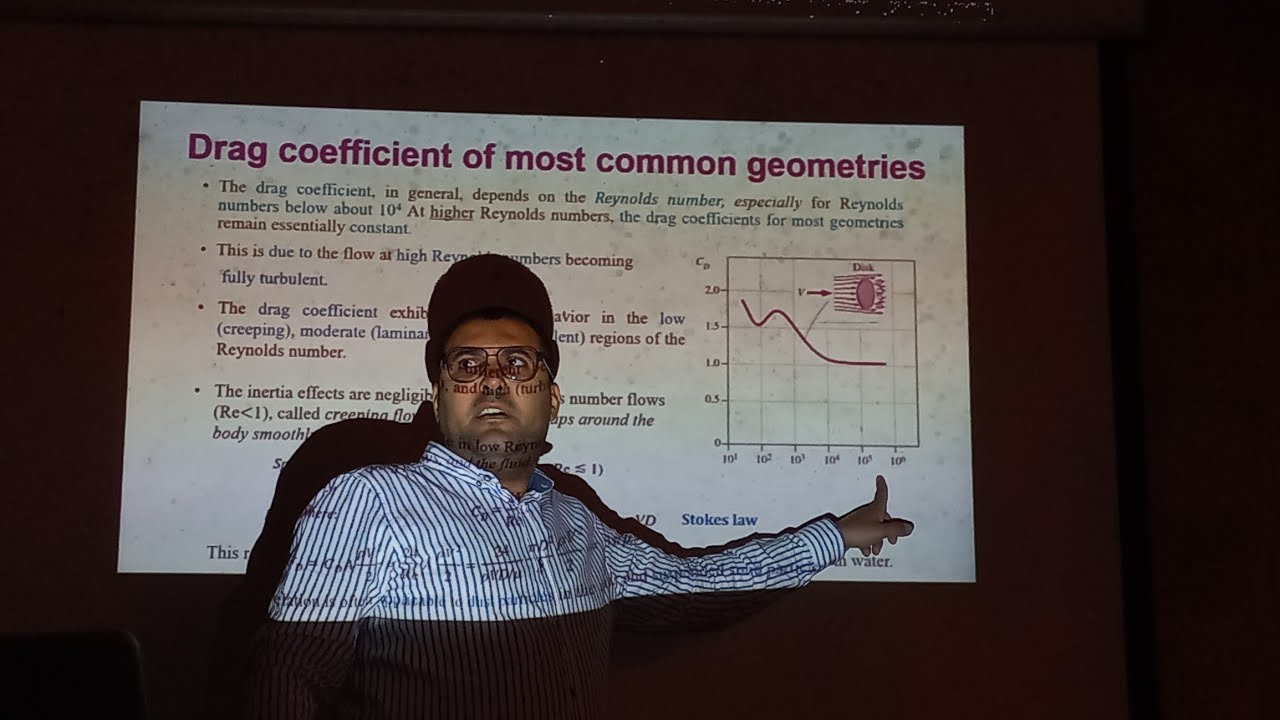
The relationship between Reynolds number and drag coefficients for different aerodynamic shapes.
Biological applications of fluid dynamics, such as locomotion at low Reynolds numbers (microorganisms) versus high Reynolds numbers (fish and birds).
258.6K views2Klikes10:57Original Release: 2009-11-23
[Music] good day to you we're here today at ESF hydrology and hydraulics laboratory and we're going to be studying flows around objects today and this is the device we're going to be using to do it this is a flume and we're going to be filling it up with water and we're going to be putting things in it and we're going to watch how flows uh go around those objects using a fluorescent die when an object interacts with a flowing fluid there are two forces that need to be accounted for one is one is the inertia of the fluid and the other is its viscosity when living things interact flowing fluids they come in a variety of sizes and shapes and they can occur in one of two fluids either air or water and both of those things are going to impact upon the inertia and the viscosity of the of the interaction with the object now this might seem to indicate that we have a lot of experimental work to do if we want to look at clows over Leaf in air for example that might indicate that we have to take a leaf and we have to put it into a wind tunnel and we have to measure how that leaf interacts with air fortunately there's a tool at our at our disposal that lets us get around all that it's called the Reynolds number and the Reynolds number is simply the ratio of the inertial force over the viscous Force One of the beautiful things that the Reynolds number does for us is it enables us to look at a model or an object and put it in a convenient fluid such as air rather than water or water rather than air and as long as we can get the flows and the interaction with the rentals numbers being the same that is with the same ratio of inertial to viscous forces we can characterize flows of objects of any size and any shape and in any fluid in calculating the rentals number the first thing we need to do is to be able to measure the velocity of the flow to measure velocity we're going to use this bobber plunk it in the water and measure the time it takes to get from here to a point 2 m down using this stopwatch so here we go that's a zero point and that took 15.7 seconds to go 2 m that works out to be about 0.13 m/s we're going to be looking at flows around a fairly simple shape today namely a circular cross-section that's provided by this PVC pipe we're going to be immersing the PVC pipe in The Flume and looking at how uh water flows around that now an important part of the Reynolds number is the diameter of this and uh in this case the diameter of this PVC pipe is 115 mm and we can vary Reynolds number by putting in a pipe of a different diameter and we're going to be be using this narrow piece of PV PVC pipe and that has a diameter of about 15 mm this is about 1/10 the diameter of this and this small pipe will give a Reynolds number about one10 the rental number that we get with a large PVC pipe we're going to visualize flow using a stream of fluorescing Dy which fluoresces bright green under an ultraviolet light here we're injecting Dy from a small tube positioned just Upstream you can clearly see the Stream lines as the fluid flows around the large tube you can also visualize the quite complex flows that result here we're dealing with Reynold's numbers up around 15,000 or so which is the range where turbulent flows are quite common let's now look at these flows a bit more closely turbulent flow around the cylinder has three major components at the cylinder's Leading Edge there is a zone of relative stagnation as the Upstream flow encounters the cylinder and is temporarily brought to rest there as the water flows around the cylinder's lateral surface the flow is laminer and smooth finally just behind the cylinder's lateral face is a so-called zone of Separation where turbulent vortices are generated as the laminer flow just Upstream separates from the cylinder as Parcels of fluid in rotational motion the separation occurs in part because the fluid behind the cylinder's trailing EDG actually is moving in the opposite direction to the prevailing flow when this retrograde flow and encounters the prevailing flow this imparts the rotational motion to the fluid which separates as a Vortex the retrograde flow also produces a zone of relative stagnation behind the cylinder seen in the accumulation of Dy there now let's go to the smaller cylinder and lower Reynolds numbers to see what happens with a smaller cylinder we're dealing with Reynolds numbers on the order of about 2,000 or so the weight behind the cylinder is still turbulent but compared to the larger cylinder and the higher rentals numbers there it is more orderly specifically we see a phenomenon known as a Vortex Street where turbulent vortices are shed first from one side of the cylinder then the other we also see vortices are retained behind the cylinder for a short time then shed if we drop the flow rate very low we can bring Reynolds numbers down into the hundreds there are still vortices being generated but they they now have an obviously laminer component to them this means that viscous forces holding the flow together are now similar in magnitude to the inertial forces that initiate turbulence it's even possible with a few tricks with The Flume to drive Reynolds numbers for the small cylinder down into the tens and single digits there's still a very slight rotational component to the flow but the flow is definitively laminer held together strongly by viscosity we saw at high Reynolds numbers that turbulent vortices are generated at the at the trailing edge of the cylinder what we'd like to do now is to look at those flows near the surface a bit more closely and to do that we've rigged up a special device it's a PVC pipe just like uh we saw in the other uh video or the other segment but instead we now have a little Port through here uh drilled in the surface of the pipe where we can eject Florine Dy and what we'll do is we'll put the pipe in The Flume and we'll set it so that dye can be injected at the Leading Edge and rotate it around so that we can see how flows uh flows vary with with the with the position of of that port on the pipe turbulence arises from the way pressure is distributed over a surface interacting with flow according to the bruli principle pressure will be high and positive at the leading surface but will fall to negative at the object's lateral trailing surfaces negative pressures are particularly strong at the lateral surface this imparts a complex flow in the same direction as the prevailing flow at the leading surface but retrograde to the prevailing flow at the trailing surface when the two flows meet this imparts rotational momentum to a parcel of fluid this is the origin of the turbulent Vortex let's see if we can visualize these patterns of flow when Dy is released at the leading surface we see it come momentarily to rest before it flows around the cylinder the stagnation is evident also at the trailing surface note how the flow first is up and then down this corresponds to the alternating generation of vortices that we see in a Vortex Street at about 55° Upstream flow over the cylinder is laminer and in the same direction as the prevailing flow at about- 30° with respect to the prevailing flow there is obvious retrograde flow from the back to the front of the cylinder the separation zone is evident at about minus 40° with respect to the prevailing flow you can see the vortices lifting off the cylinder so what we've seen today is that when a fluid flows around an object it flows around it in two very distinct ways at low flow rates you get nice smooth laminer flow over the surface of the object but as you get to higher and higher speeds that nice smooth laminer flow makes a transition to a more complicated turbulent flow now the transition from laminer flow to turbulent flow is tied in with the patterns of flow and pressure on the surface of this specifically along the Leading Edge of the pipe the pressures are high but they become negative up along the lateral part of the pipe this means that there's going to be a forward flow right near the surface of the pipe along the trailing Edge and that imparts to the fluid flow the circular motion that is characteristic of turbulent flow one of the other things that we found is that you can use the Reynolds number to actually uh model this uh process in a more General way so for example on The Flume here we looked at flows around a circular pipe in water but we could as just as very easily uh use that what we found here to understand how air might flow around a circular pipe so for example here on The Flume we were looking at a water speed of about the tenth of a meter per second that gave us Reynolds numbers on the order of about 15,000 for this particular pipe now if I had air in here rather than water I would get the very same rennolds numbers at a wind speed of about 2 m/s what this means is that the patterns of flow and the transitions to turbulence that you see uh would happen in the very same way at a wind speed of 2 m/s as it happens in water at a water speed of about1 m/s and so you can use this generality of analysis to answer all kinds of interesting questions which we'll be looking at in more detail in another video well that's all for today and we will see you another [Music] time
Up Next

3:28
Lift vs Coefficient of Lift: Key Differences Explained
@flightclubonline
64.3K views•2021-08-04

12:53
21cm Hyperfine Transition in Neutral Hydrogen: Radio Astronomy Basics
@AaronRobertParsons
12.4K views•2011-10-13

32:32
NMR Spin Physics I: Zeeman Effect, Resonance Condition & Larmor Frequency
@nptel-indianinstituteofsci8064
2.3K views•2024-01-17

27:14
Entropy and the Second Law of Thermodynamics Explained
@veritasium
27.5M views•2023-07-01
Related Study Plans & Knowledge Roadmaps
Structured learning paths in Physics
physics
Nuclear Physics (Decay, Fission & Reactors)
01Atomic Structure and the Binding Force
02Radioactive Decay and Half-Life
03Nuclear Fission Mechanics and Chain Reactions
+ 2 more learning modules
12h5 modules
Explore Roadmap
physics
Soft Matter (Polymers, Colloids & Rheology)
01Foundations of Soft Matter & Thermal Forces
02Polymer Physics and Macromolecules
03Colloids, Surfactants, and Self-Assembly
+ 2 more learning modules
38h5 modules
Explore Roadmap
physics
Analytical Mechanics: Lagrangian & Hamiltonian
01Mathematical Foundations: Calculus of Variations
02From Newtonian Mechanics to Constraint Dynamics
03The Principle of Least Action & Lagrangian Mechanics
+ 3 more learning modules
28h6 modules
Explore Roadmap
physics
General Relativity (Spacetime & Cosmology)
01Foundations of Relativity: Special Relativity
02The Geometry of Spacetime: Equivalence Principle & Curvature
03Einstein's Field Equations: The Mathematics of Gravity
+ 2 more learning modules
55h5 modules
Explore Roadmap